蔚来

Search documents
2025年港股再融资规模略超IPO
Zheng Quan Ri Bao· 2026-01-05 17:08
Core Insights - The Hong Kong stock market's refinancing activities in 2025 were exceptionally active, with a total of approximately HKD 325.32 billion raised through various methods, significantly surpassing the previous year [1] - Placement became the primary method for refinancing, with 345 companies initiating 463 placements, raising HKD 289.62 billion, slightly exceeding the HKD 285.69 billion raised through IPOs [1] - Leading companies like BYD and Xiaomi spearheaded large-scale refinancing efforts, focusing on industry integration and technological development [2] Group 1: Refinancing Trends - In 2025, the refinancing market in Hong Kong saw significant participation from industry leaders, with BYD raising HKD 43.51 billion and Xiaomi raising HKD 42.6 billion [2] - Other notable companies included NIO and Horizon Robotics, which collectively raised over HKD 11 billion, focusing on core technology breakthroughs and operational stability [2] - The refinancing activities reflect a trend of companies engaging in multiple rounds of financing, with firms like SenseTime and China Ruoyi completing several placements throughout the year [4] Group 2: Mechanisms and Strategies - The "old before new" placement system in Hong Kong allows companies to quickly raise funds by transferring existing shares before issuing new ones, significantly shortening the financing cycle [5] - This method typically offers discounts of 5% to 12% compared to market prices, effectively attracting institutional investors [5] - New companies listed in 2025, such as Boreton and Jiangsu Hongxin, quickly initiated refinancing to leverage their post-IPO stock price advantages [6] Group 3: Strategic Focus - The funds raised through refinancing are often directed towards capacity expansion and R&D, particularly in high-growth sectors like technology and renewable energy [3] - Companies like GCL-Poly announced specific uses for their raised funds, including structural adjustments in polysilicon production and enhancing R&D capabilities [2] - The trend of "going global" is also evident, with many Hong Kong-listed companies pursuing international expansion strategies while ensuring compliance with local regulations [7]



道指涨超600点创历史新高,脑再生科技大涨23%,中概股走低,蔚来跌超5%,现货黄金站上4450美元
2 1 Shi Ji Jing Ji Bao Dao· 2026-01-05 15:36
| 美股指数 LA | | | | --- | --- | --- | | 道琼斯 | 纳斯达克 | 标普500 | | 49004.97 | 23436.38 | 6905.41 | | +622.58 +1.29% | +200.75 +0.86% | +46.94 +0.68% | | 中国余龙 | 纳指100期货 | 标普500期货 | | 7760.82 | 25633.25 | 6943.50 | | -98.83 -1.26% +248.00 +0.98% +43.00 +0.62% | | | 科技股普涨,美股科技七巨头涨近1%,特斯拉涨近4%,亚马逊涨超2%。台积电涨逾1%,盘中一度大涨3%再创历史新高,总市值达1.7万亿美元。消息面 上,高盛上调台积电目标价35%。 | 名称 | 现价 | 涨跌幅 | | --- | --- | --- | | 特斯拉(TESLA) | 454.550 | 3.76% | | 亚马逊(AMAZON) | 232.400 | 2.60% | | 脸书(META PLATFORMS) | 662.250 | 1.82% | | 谷歌(ALPHABET)-C | ...


造车新势力2025生死局:零跑交付59万辆成黑马,蔚小理加速转型
2 1 Shi Ji Jing Ji Bao Dao· 2026-01-05 14:59
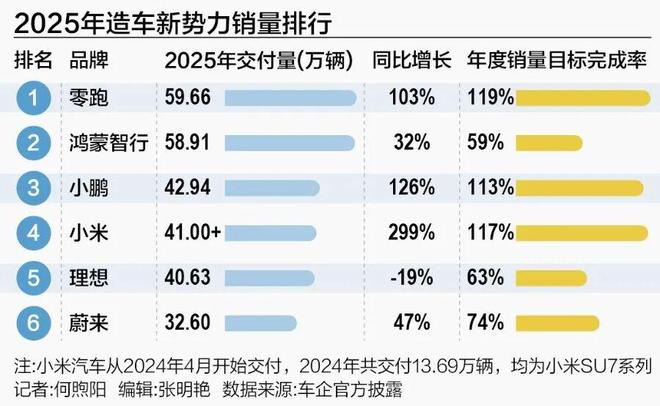
Core Insights - The 2025 new energy vehicle market has shown a stark polarization, with new entrants like "Honglingmi" (Hongmeng Zhixing, Leap Motor, Xiaomi) rapidly gaining market share while established players like NIO and Li Auto struggle to maintain their positions [1][4] Group 1: Market Performance - Leap Motor achieved the highest sales among new forces with 596,600 units delivered in 2025, marking a 103% year-on-year growth and exceeding its annual sales target by 19% [2][4] - Hongmeng Zhixing followed closely with 589,100 units delivered, a 32% increase, although it did not meet its annual sales target [2][6] - Xiaomi delivered over 410,000 units, achieving a remarkable 299% growth and surpassing its sales target by 17% [2][5] - NIO and Li Auto faced challenges, with NIO delivering 326,000 units (47% of its target) and Li Auto delivering 406,300 units, a 19% decline from the previous year [2][10] Group 2: Strategic Developments - Leap Motor's success is attributed to its focus on in-house research and development, establishing 17 component factories and achieving a parts-sharing rate of 88% across its models, which helps maintain competitive pricing [5][6] - Xiaomi's strategy leverages its consumer electronics background, emphasizing user engagement and ecosystem integration, which has proven effective in rapidly building market presence [6][8] - Hongmeng Zhixing is diversifying its product range to reduce reliance on its flagship model, with new models achieving significant sales growth [6][8] Group 3: Challenges and Future Outlook - Leap Motor must prove its capabilities in the high-end market while addressing its shortcomings in smart technology investments [7][8] - Xiaomi faces potential backlash from its strong personal branding and must navigate user sentiment carefully following safety incidents [8] - The traditional leaders, NIO and Li Auto, are undergoing painful transformations, with NIO focusing on operational efficiency and product refinement, while Li Auto is struggling with declining sales and competition from new entrants [10][17] Group 4: Industry Dynamics - The market is witnessing a brutal elimination process, with companies like Neta facing bankruptcy and others like WM Motor and HiPhi attempting to revive their operations amid financial difficulties [19][20] - The competition is shifting towards a focus on systemic capabilities, where companies that can balance technology development, product iteration, and operational efficiency will thrive [24][25]

造车新势力2025生死局:零跑交付59万辆成黑马,蔚小理加速转型
21世纪经济报道· 2026-01-05 14:49
Core Viewpoint - The 2025 new energy vehicle market has shown a stark polarization, with emerging brands like "Honglingmi" (Hongmeng Zhixing, Leap Motor, Xiaomi) rapidly gaining market share while established players like NIO and Li Auto struggle to maintain their positions [1][4]. Group 1: Performance of New Energy Vehicle Brands - Leap Motor emerged as the biggest dark horse in 2025, achieving a delivery volume of 596,600 units, marking a 103% year-on-year growth and completing 1,119% of its annual sales target [2][4]. - Hongmeng Zhixing delivered 589,100 units, a 32% increase, while Xiaomi's deliveries exceeded 410,000 units, achieving a remarkable 299% growth [2][6]. - Li Auto and NIO faced challenges, with Li Auto's deliveries declining by 19% to 406,300 units, and NIO delivering 326,000 units, a 47% increase but still below expectations [2][12]. Group 2: Strategic Shifts and Challenges - Leap Motor's success is attributed to its focus on self-research and development, achieving a gross margin of 14%-15% while maintaining competitive pricing [5][4]. - Xiaomi's strategy leverages its consumer electronics background, achieving a high completion rate of 117% for its annual sales target, but faces challenges related to brand perception and safety concerns [6][7]. - Hongmeng Zhixing is working to diversify its brand portfolio beyond the AITO series, which accounted for over 70% of its sales, to reduce dependency on a single model [7][6]. Group 3: Transformation of Established Players - The former "big three" of new energy vehicles, NIO, Li Auto, and Xpeng, are undergoing significant transformations, with NIO and Li Auto failing to meet their sales targets [9][12]. - Xpeng has successfully pivoted to a more pragmatic approach, achieving 429,400 units sold in 2025, the only one among the three to meet its annual target [10][11]. - NIO has initiated a restructuring process to focus on core operations and has seen success with new models like the L90 and ES8, which have become popular in the market [11][12]. Group 4: Struggles of Other Brands - Neta Motors has faced severe challenges, leading to bankruptcy restructuring due to a lack of core technology and declining sales [15][16]. - WM Motor and HiPhi are also attempting to revive their operations, but face significant financial hurdles and market skepticism regarding their recovery plans [16][18]. - The overall landscape of new energy vehicles is marked by intense competition, with companies needing to balance technology development, product iteration, and operational efficiency to survive [19][20].
贵金属深夜全线暴涨,钯银铂涨超5%,油价直线拉升
21世纪经济报道· 2026-01-05 14:49
记者丨 吴斌 编辑丨和佳 在美国"闪击"委内瑞拉后,金融市场也随之震动,现货黄金和白银价格大幅上涨,国际油价则反应平淡,甚至"不涨反跌"。 1月5日,布伦特原油开盘一度短暂下跌1.2%至60美元/桶,不过此后价格有所反弹,截至22:22,涨近1%。贵金属市场的反应更加激烈,现 货黄金在经历了一周的下跌后强劲反弹,大涨超2%,冲破4420美元/盎司关口;现货白银大涨逾5%,升破76美元/盎司,现货铂金、现货钯 金涨幅均超5%,股债汇市场暂时反应不大。 | W | 贵金属 | | | --- | --- | --- | | 名称 | 现价 | 涨跌幅 ▼ | | GFEX + | 452.85 | 8.88% | | PD.GFE | | | | COMEX M-自 | 76.4250 | 7.62% | | QI.CMX | | | | COMEX自银 | 76.420 | 7.61% | | SI.CMX | | | | GFEX铂 | 583.95 | 6.48% | | PT.GFE | | | | NYMEX铂 | 2276.3 | 6.52% | | PL.NYM | | | | 现货铂金(美元/ | ...

至信股份成功举行网上路演 2025年归母净利润预增逾25%
Xin Lang Cai Jing· 2026-01-05 14:11
公司财务总监邓平提供的一组数据显示,2022年度至2024年度公司营业收入和扣非后归母净利润复合增 长率分别为21.52%和88.02%,业务规模和盈利能力稳健增长。随着新能源汽车市场的扩容,公司积极 调整产品结构,新能源车型的收入占比从25.27%显著提升至71.42%,成为业绩增速的重要来源。2025 年1-9月,公司实现营业收入26.97亿元,扣非后归母净利润1.55亿元,分别同比增长28.52%和25.76%, 继续保持较快增长。基于目前的经营状况和市场环境,公司预计2025年度实现营业收入39.00亿元至 40.50亿元,同比增长26.30%至31.16%;预计实现归母净利润2.55亿元至2.65亿元,同比增长25.02%至 29.92%;预计扣非后净利润2.35亿元至2.45亿元,增幅27.22%至32.63%。 展望未来,陈志宇表示,将以本次上市为新起点,在国家积极支持汽车工业发展的政策背景下,紧抓市 场机遇,在稳固现有客户的基础上,积极拓展优质新客户,提升新能源车型产品占比;通过高效自动化 设备扩张产能,优化产品结构,重点发展轻量化产品,为更多客户提供优质产品和服务,持续夯实技术 护城河、优化 ...
80后“最美女老板”,干成充电桩之王!但被地产商坑惨了
Xin Lang Cai Jing· 2026-01-05 14:05
Core Viewpoint - Wanbang Digital Energy has officially submitted its prospectus to the Hong Kong Stock Exchange, aiming to become the second smart charging pile operator listed in Hong Kong after Zhida Technology [1][7]. Company Overview - Wanbang Digital Energy is the parent company of Star Charge, which operates 702,000 charging piles, making it the second-largest in China, following Telai Electric with 792,000 charging piles [5][6][36]. - The founder, Shao Danwei, has a remarkable background, transitioning from a sales consultant to the president of Wanbang Automotive Group, achieving significant growth during her tenure [8][10][39]. Market Position - According to its prospectus, Wanbang claims to be the largest global supplier of smart charging equipment based on revenue, sales volume, and sales value for 2024, with a global sales volume exceeding 470,000 units [11][40]. - The company holds a market share of 5.3% in sales volume and 4.19% in sales revenue among the top competitors in the industry [13][43]. Financial Performance - Wanbang Digital Energy's revenue comes from three main segments: smart charging equipment and services, microgrid systems, and large-scale energy storage systems, with the first segment accounting for approximately 70% of total revenue [16][45]. - The company reported revenues of RMB 3.474 billion, RMB 4.182 billion, and RMB 3.072 billion for the years 2023, 2024, and the first nine months of 2025, respectively, with corresponding profits of RMB 493 million, RMB 336 million, and RMB 301 million [17][46]. Profitability Metrics - The gross profit margins for 2023, 2024, and the first nine months of 2025 were 33.4%, 29.2%, and 24.6%, respectively, while net profit margins were 14.2%, 8.0%, and 9.8% [19][47]. - The company has been highlighted as the only consistently profitable operator in the charging pile sector in China [15][44]. Industry Challenges - The charging pile market is highly competitive, with major players like Telai Electric, State Grid, and various automotive companies vying for market share, which puts pressure on profit margins [24][53]. - Wanbang Digital Energy has faced challenges, including issues with receivables from real estate developers, which have impacted its financial stability [26][55]. Investment Interest - Despite the challenges, there is significant interest in the sector, with investments from firms like CICC and Schneider Electric in Wanbang Digital Energy [29][58].
一线调查丨有门店单日客流量破千!“新‘国补’+车企限时促销”点燃元旦车市 销售忙到没空吃饭
Mei Ri Jing Ji Xin Wen· 2026-01-05 13:31
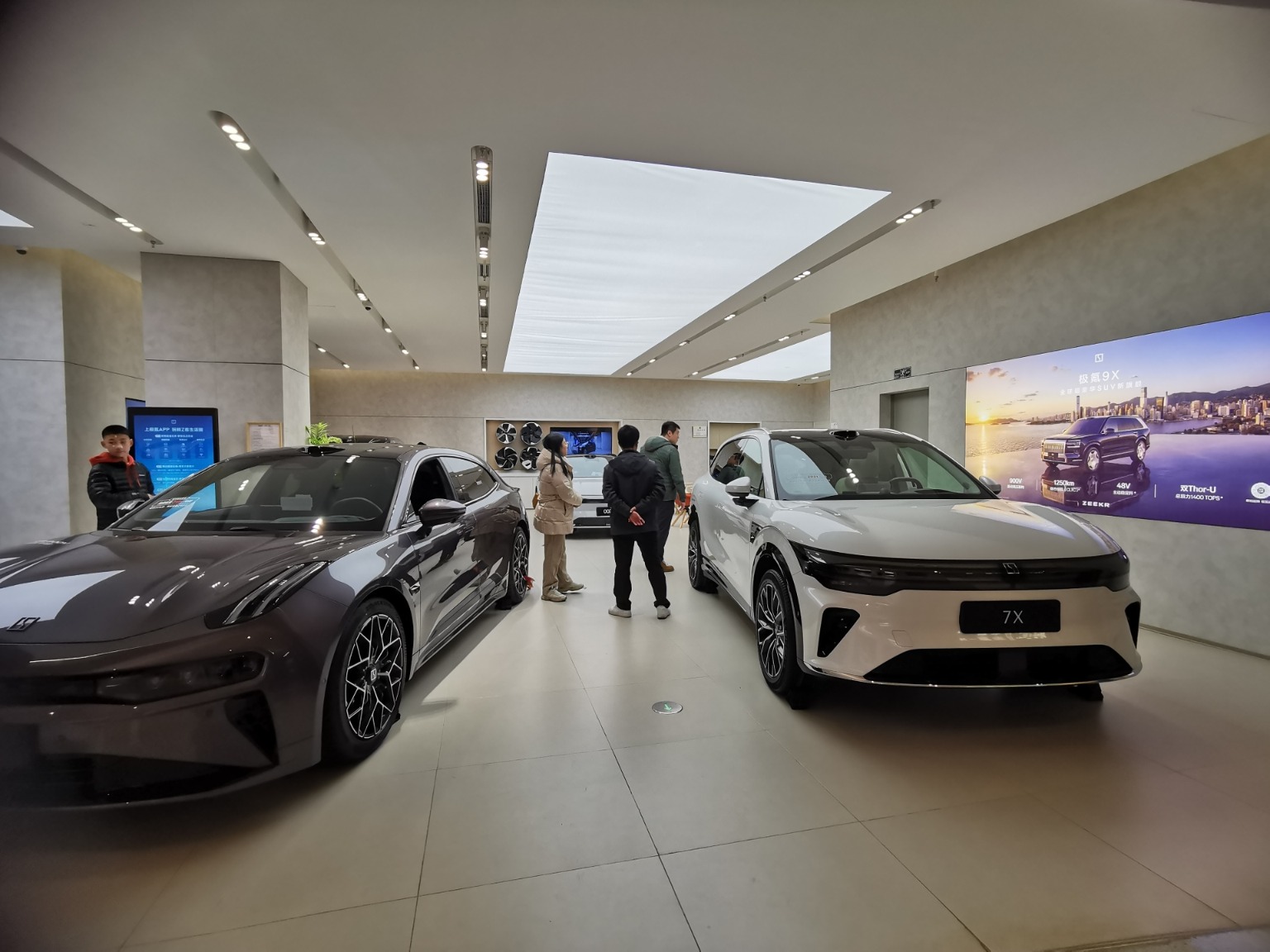
Core Viewpoint - The introduction of the new "National Subsidy" policy for 2026 is expected to stimulate automobile consumption, particularly in the electric vehicle (EV) sector, as it offers various incentives and promotional activities from car manufacturers [16][20]. Group 1: Consumer Behavior and Demand - Many consumers, like Tan Rui, are waiting for the new "National Subsidy" to finalize their vehicle purchases, indicating a strong demand for new cars during the holiday season [1][2]. - Sales personnel report a significant increase in foot traffic at dealerships, with daily customer visits exceeding a thousand due to the holiday and the new subsidy announcements [2]. Group 2: Promotional Strategies by Car Manufacturers - Various car manufacturers have launched promotional strategies, including limited-time subsidies on vehicle purchase taxes, zero-interest financing, and cash discounts, in response to the new subsidy policy [2][3]. - Over ten automotive brands have introduced January promotional policies affecting more than 70 vehicle models [2]. Group 3: Tax Subsidy Details - Starting January 1, 2026, buyers of new energy vehicles will be required to pay a 5% vehicle purchase tax, but many brands are offering tax subsidies to offset this cost [3][6]. - For example, brands like Zhiji and Zeekr are providing tax subsidies ranging from 7,000 to 12,000 yuan for specific models during the promotional period [6][10]. Group 4: Price Adjustments and Market Strategy - BMW has announced price adjustments for several models, with significant reductions aimed at aligning with market demand rather than initiating a price war [11][14]. - The adjustments include substantial price cuts, such as a 301,000 yuan reduction for the i7 M70L, reflecting a strategic response to consumer preferences [11][14]. Group 5: Impact of New Subsidy Policies - The new "National Subsidy" policy includes changes to the vehicle purchase tax and the structure of subsidies, which are expected to mitigate the impact of tax adjustments on the market [16][17]. - The subsidy for scrapping old vehicles is capped at 20,000 yuan, while the replacement subsidy is limited to 13,000 yuan, with the overall subsidy structure shifting from fixed amounts to a percentage of the vehicle price [17][20]. Group 6: Regional Implementation of Subsidy Policies - Several regions, including Jiangxi and Hebei, have begun implementing the new subsidy policies, allowing consumers to apply for up to 20,000 yuan in subsidies for vehicle purchases [19]. - The central government has allocated 62.5 billion yuan for the first batch of subsidies, indicating strong support for the "old for new" vehicle replacement initiative [19][20]. Group 7: Market Outlook - The "old for new" vehicle replacement policy has been a significant driver of growth in the automotive market, with over 11.5 million vehicles replaced in 2025, generating substantial sales revenue [20]. - Industry experts predict that the new policies will lead to a positive growth trend in the automotive market in the first quarter of 2026 [20].
2025年港股市场再融资规模小幅超越IPO募资规模
Zheng Quan Ri Bao Zhi Sheng· 2026-01-05 13:13
Core Insights - The Hong Kong stock market's refinancing activity surged in 2025, with a total of approximately HKD 325.32 billion raised through various methods, significantly exceeding the previous year's figures [1] - Placement became the dominant method for refinancing, with 345 companies initiating 463 placements, raising HKD 289.62 billion, slightly surpassing the HKD 285.69 billion raised through IPOs [1] - Leading companies like BYD and Xiaomi spearheaded large-scale refinancing efforts, focusing on industry integration and technological development [2] Group 1: Refinancing Trends - In 2025, the refinancing market in Hong Kong was notably active, with a total of HKD 325.32 billion raised, primarily through placements [1] - Placement emerged as the main refinancing method, with 345 companies conducting 463 placements, raising HKD 289.62 billion, which slightly exceeded the IPO fundraising of HKD 285.69 billion [1] - The stability of rights issues and consideration issues was noted, with rights issues raising approximately HKD 8.14 billion and consideration issues raising about HKD 27.57 billion [1] Group 2: Leading Companies - Major companies like BYD, Xiaomi, and China Hongqiao led the refinancing efforts, with BYD raising HKD 43.51 billion and Xiaomi raising HKD 42.6 billion [2] - The refinancing focus for these leading firms included investments in AI and automotive technology for BYD and business line expansion for Xiaomi [2] - NIO and Horizon Robotics also participated significantly, with NIO raising a total of HKD 11.91 billion through two placements [2] Group 3: Multiple Financing Rounds - Some companies engaged in multiple rounds of refinancing, with firms like China Ruoyi and China Jinshi conducting more than two rounds in 2025 [4] - SenseTime, a leading AI company, completed two rounds of financing in July and December, raising HKD 2.5 billion and HKD 3.15 billion respectively [4] - The trend of frequent refinancing reflects the ongoing financial pressures faced by companies, particularly in the new energy vehicle sector [4] Group 4: Efficient Financing Mechanisms - The "old before new" placement model was utilized by companies like China Hongqiao and Derin Holdings, allowing for significant financing while maintaining market stability [5] - This model enables companies to quickly complete fundraising through the transfer of existing shares followed by the issuance of new shares, significantly shortening the financing cycle [5] - The typical discount for placements ranges from 5% to 12%, effectively attracting institutional investors [5] Group 5: New Listings and Market Expansion - New companies listed on the Hong Kong stock market accelerated their refinancing activities post-IPO, leveraging stock price advantages [6] - Companies like Boreton and Jiangsu Hongxin quickly initiated refinancing after their listings, while Yujian Technology conducted two rounds of financing in 2025 [6] - The trend of "going global" was noted, with many companies pursuing IPOs in Hong Kong to expand their international presence, although compliance with local regulations remains a critical consideration [6]
江淮观察|安徽最大两个城市,与北上广深一起进行一项试点
Sou Hu Cai Jing· 2026-01-05 13:01
Core Viewpoint - The central economic work conference emphasizes "domestic demand as the main driver, building a strong domestic market" as a priority for economic tasks in 2026, with specific deployments such as "deeply implementing special actions to boost consumption" and "releasing the potential of service consumption" [2] Group 1: Pilot Cities and Economic Context - Hefei and Wuhu, as the largest cities in Anhui, have been selected as part of a national pilot program to explore new consumption formats, models, and scenarios, alongside major cities like Beijing and Shanghai [2][5] - The pilot program aims to stimulate consumption through supply-side reforms, creating new demand and gradually establishing a long-term mechanism to promote consumption and activate the market [2][5] Group 2: Implementation Focus - The pilot program will focus on three main areas: 1. Establishing a service system for the "first launch economy" [7] 2. Innovating diversified service consumption scenarios [7] 3. Supporting cross-industry collaborations with well-known IPs [7] - Hefei and Wuhu are expected to receive 400 million yuan and 300 million yuan in central government subsidies, respectively, to support these initiatives [8] Group 3: Local Economic Development - Hefei has shown significant growth in its consumption sector, with 21 national-level pilot projects approved, accumulating over 1 billion yuan in national funding [10] - Wuhu's retail sales of consumer goods have grown from 189.3 billion yuan in 2020 to 201.8 billion yuan in 2024, with an average annual growth rate of about 7% [13] Group 4: Strategic Goals - Hefei aims to become an "international consumption center city," while Wuhu targets the establishment of a landmark "new product launch center" [3][16] - Both cities plan to attract high-profile domestic and international brands to set up flagship stores and host high-end launch events [16] Group 5: Innovation in Consumption Scenarios - Hefei plans to develop new cultural facilities and immersive experiences, while Wuhu will leverage digital technology to create new tourism consumption scenarios [17][18] - The focus will also be on revitalizing traditional brands and creating themed experiences to enhance consumer engagement [20]