
华熙生物

Search documents
第六届和君小镇董秘论坛隆重举行,五大主题点明机会和前途
Sou Hu Cai Jing· 2025-06-10 12:11
瑞财经 钟鸣辰2025年6月6日至8日,第六届"和君小镇·中国上市公司董秘论坛"在江西会昌和君小镇盛大 举行。论坛由江西省科学院、华东师范大学产业技术研究院、和君集团、和君职业学院联合主办,和君 董秘邦、和君小镇承办。论坛围绕科技、消费、出海、并购重组、股票投资等五大主题展开,点明机 会、呈现前途。 蜜雪冰城、伊利股份、吉利汽车、华熙生物、华大智造、天元宠物、安必平等200多家上市公司和拟上 市公司董秘和高管参加了论坛,这些公司的市值累计超过一万亿元人民币。 同时参会的还有华夏基金、沙特阿美战略投资、中海油基金、美的资本、深创投、元禾资本等30多家投 资机构的管理者及合伙人,这些投资机构管理的资本规模累计超过二万亿元人民币。 两个"万亿规模",构成本届论坛的基本含金量。而出席论坛的20多位演讲嘉宾和广大参会者的思想见 地、专业水准和能力经验,更是无价之宝。 "2025年,经济大势怎么看、产业趋势怎么走、上市公司怎么干、股票投资怎么选?"是本届"和君小镇· 中国上市公司董秘论坛"的主题,也是广大上市公司、投资机构和政府招商引资部门的共同关切。论坛 由四场内容构成: 第一场是"科技与产业",院士、科学家和企业家代 ...


2025年美容护理中期投资策略:领跑新消费,美妆个护全面崛起
Shenwan Hongyuan Securities· 2025-06-10 04:18
Group 1 - The beauty and personal care sector has shown strong performance in Q1 2025, with the SW Beauty Care Index rising by 13.4%, leading all 31 SW primary industries [4][10][12] - The cosmetics segment is focusing on enhancing brand matrices and introducing new ingredients, benefiting from an optimized competitive landscape [4][6] - The medical beauty market is evolving with new products stimulating consumer interest, and domestic companies are expected to become major competitors in the light medical beauty sector [4][6] Group 2 - The e-commerce sector is witnessing new consumption models and brands, which are helping to drive growth in the industry [4][6] - The report recommends several companies in the cosmetics sector, including Up Beauty and Proya, which have low PE multiples and strong growth potential [4][6] - In the medical beauty segment, companies with high R&D barriers and strong profitability, such as Aimeike, are highlighted as key investment opportunities [4][6] Group 3 - The personal care market is projected to reach CNY 283.3 billion by 2024, with a compound annual growth rate (CAGR) of 8.4% from 2023 to 2028 [32][34] - Domestic brands are increasingly replacing foreign brands in the personal care sector, with a notable rise in innovative products and marketing strategies [32][36] - The high-end market is experiencing significant growth, with premium products seeing a 27% increase in average transaction value in H2 2024 [44]




华熙生物回应争议:透明质酸业务并未承压 重组胶原蛋白尚需验证
Zheng Quan Shi Bao Wang· 2025-06-09 08:55
Core Viewpoint - The ongoing debate regarding "recombinant collagen" has raised significant industry and market attention, with the company emphasizing the need to correct misleading perceptions in the capital market that deviate from scientific and industrial fundamentals [1][2]. Group 1: Company Position on Recombinant Collagen - The company argues that recombinant collagen is a minor branch of collagen research and industrial transformation, with the main advancements in protein research being led by life science institutions and pharmaceutical companies, not cosmetic firms [1][2]. - The company highlights that there is currently no international approval for medical devices based on recombinant collagen, indicating the need for longer observation periods in this field [2]. - The company asserts that the growth of its hyaluronic acid business remains stable, with an annual growth rate exceeding 10%, while the recombinant collagen market lacks a mature international market comparable to hyaluronic acid [3][4]. Group 2: Market Dynamics and Performance - The company clarifies that its performance adjustments are not solely due to the rise of recombinant collagen, as its hyaluronic acid business continues to grow, particularly in the pharmaceutical-grade and overseas export segments, which have seen over 20% growth [3][4]. - The decline in overall performance is attributed to a downturn in consumer goods and one-time asset impairment losses, rather than the emergence of recombinant collagen as a competitive force [4]. - The company emphasizes that the concept of "recombinant collagen" is often misrepresented, as it does not meet the academic standards required for biological functionality [5][6]. Group 3: Industry Ecosystem and Communication - The company stresses the importance of establishing a credible foundation for domestic brands, which should not rely on the misuse of academic terms and concepts that mislead consumers [7]. - The company calls for a collaborative effort among industry participants, regulatory bodies, and media to enhance understanding and improve the overall ecosystem, ensuring that scientific and industrial developments are accurately represented [9]. - The company plans to strengthen professional communication with the capital market, recognizing the need for better understanding of the biological sciences among analysts and investors [8].
四川大决策投顾:医美行业空间广阔
Zhong Guo Chan Ye Jing Ji Xin Xi Wang· 2025-06-09 07:29
Core Insights - The medical beauty industry is rapidly emerging, driven by advancements in medical technology and evolving consumer perceptions, expanding from traditional cosmetic surgery to non-invasive beauty treatments, laser skincare, and body management [1][16] - The industry is experiencing significant growth potential due to improved consumer decision-making facilitated by big data, alongside a push towards standardization through enhanced regulation [1][16] - The long-term outlook for the industry remains positive, supported by rising disposable incomes and increasing demand for quality living [1][16] Industry Overview - Medical beauty, abbreviated as "医美," utilizes medical methods, including drugs, instruments, and surgeries, to enhance external beauty and improve physiological functions [2] - The industry encompasses various segments, including facial beauty, body beauty, skin beauty, non-invasive beauty, and oral beauty [2] Market Trends - Consumer acceptance of light medical beauty is increasing, with 34% of consumers planning to engage in light medical beauty services in the coming year, reflecting a 36% year-on-year growth [5] - The emerging consumer base includes young people, men, and consumers from lower-tier markets, indicating a shift in demand driven by changing aesthetic values and rational consumption attitudes [5] Industry Structure - The medical beauty industry chain consists of upstream products and equipment, midstream service providers, and downstream customer acquisition platforms, with a stable upstream structure and a competitive midstream landscape [7][8] - Upstream manufacturers face high entry barriers due to regulatory requirements and technical challenges, making it the most profitable segment of the industry [8] - The downstream market is characterized by intense competition and low concentration, with 71% of service providers being private clinics or beauty salons [10] Market Size and Growth - The Chinese medical beauty market has shown steady growth, with a compound annual growth rate (CAGR) of 17.5% from 2017 to 2021, reaching nearly 190 billion yuan, and is projected to grow at a CAGR of 15.2% to nearly 400 billion yuan by 2026 [11] - The penetration rate of medical beauty services in China was 4.5% in 2022, indicating significant room for growth compared to Japan (11.3%), the U.S. (17.2%), and South Korea (22.0%) [11] Regulatory Environment - The industry has faced challenges such as varying qualifications, false advertising, and price transparency issues, prompting the government to enhance regulatory frameworks and industry standards [14] - Increased compliance awareness among institutions and improved consumer protection mechanisms are expected to foster a healthier development phase for the industry [14] Investment Opportunities - Key companies in the medical beauty sector include Aimeike, Huaxi Biological, Longzi Co., and Huadong Pharmaceutical, which are positioned to benefit from the industry's growth and regulatory improvements [16]


华熙VS巨子的生物战,已经打到了「滴血验胶原」
3 6 Ke· 2025-06-09 04:58
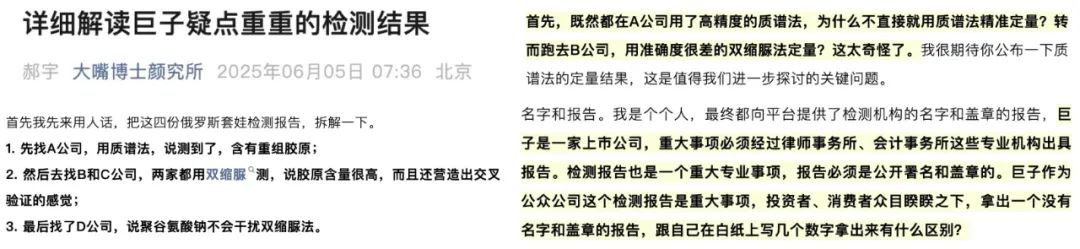
Core Viewpoint - The ongoing public dispute between two major players in the beauty industry, Huaxi Biological and Juzhi Biological, has escalated into a fierce battle over allegations of fraud and market manipulation, significantly impacting their market positions and stock prices [1][4][34]. Group 1: Background and Timeline - The conflict began on May 17 when Huaxi Biological publicly criticized several brokerage reports that favored Juzhi Biological's products, suggesting they misled the market [5][6]. - On May 24, beauty influencer Hao Yu accused Juzhi Biological of fraud regarding its "collagen stick" product, claiming the actual collagen content was only 0.0177%, far below the labeled 0.1% [16][17]. - Following these allegations, Juzhi Biological issued a rebuttal, presenting an internal quality inspection report to counter the fraud claims [18][19]. Group 2: Market Impact - Since the dispute began, Huaxi Biological's stock price has increased by approximately 6.8%, while Juzhi Biological's stock has seen a cumulative decline of 25.20%, resulting in a market value loss of over 16 billion HKD [34]. - The consumer market has also reacted, with Juzhi Biological's product ranking dropping significantly on e-commerce platforms, indicating a shift in consumer perception [36]. Group 3: Industry Dynamics - The conflict highlights a broader competition between two factions in the beauty industry: the hyaluronic acid camp represented by Huaxi Biological and the recombinant collagen camp led by Juzhi Biological [39]. - The rise of recombinant collagen products has been attributed to a lack of standardized regulations and testing methods, allowing companies like Juzhi Biological to capitalize on marketing without stringent scientific backing [41]. - In contrast, Huaxi Biological has faced significant challenges, with its market value plummeting from 140 billion to 26.1 billion, while Juzhi Biological's market capitalization has surged by 230% since its IPO [37].
2025年美妆公司智能化转型7大头部企业战略路径分化
Xi Niu Cai Jing· 2025-06-09 01:59
近日,国家药监局在广州召开化妆品备案管理智能化转型工作视频会,会上强调围绕高水平安全、高质量发展、高效能治理的化妆品智能化转型方向,但同 时也提出要全面加强化妆品智慧监管能力建设,不断提升化妆品监管信息化、数字化和智能化水平。 化妆品生产与运营的智能化已经是行业大势所趋,以七大头部企业为例: 作者:苏苏 来源:首席消费官 以"药+妆"祛痘为核心理念的贝泰妮,构建了"AI诊断+个性化方案+私域服务"全链路; 华熙生物的AI战略则是通过"技术+生态+产业链"的三维布局,推动企业从生物制造向生物智造升级; 珀莱雅的布局则是以"技术+组织+全球化"为战略方向,企图构建科技驱动的美妆生态; 上海家化通过研发、定制化、数据资产三位一体,力争将技术优势转化为产品价值。 整体来看,国内头部美妆企业呈现拥抱AI的态度积极、AI应用场景多元、AI的应用到基础运营向高端开发跃迁、对于AI的投入从单一场景试水向生态布局 升级的现状。而此次监管的提示,也预示着美妆产业智能化将从野蛮生长向规范化路径转变。 从运营到研发 AI的深度技术融合 据年报披露,福瑞达2024年致力于推进理想皮肤微生态研究与AI数据模型开发,实施研发投入刚性增长机 ...


医美材料大战正式打响,谁能胜出?
3 6 Ke· 2025-06-09 01:04
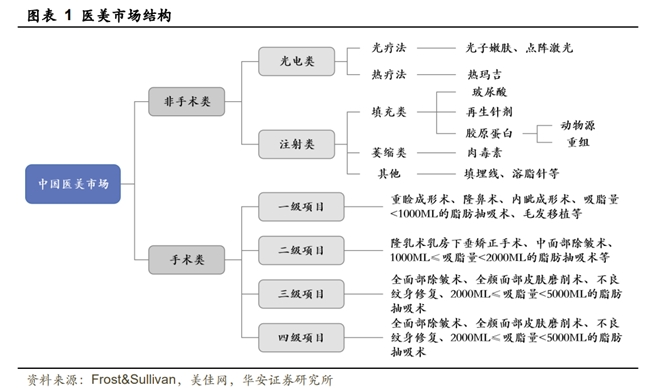
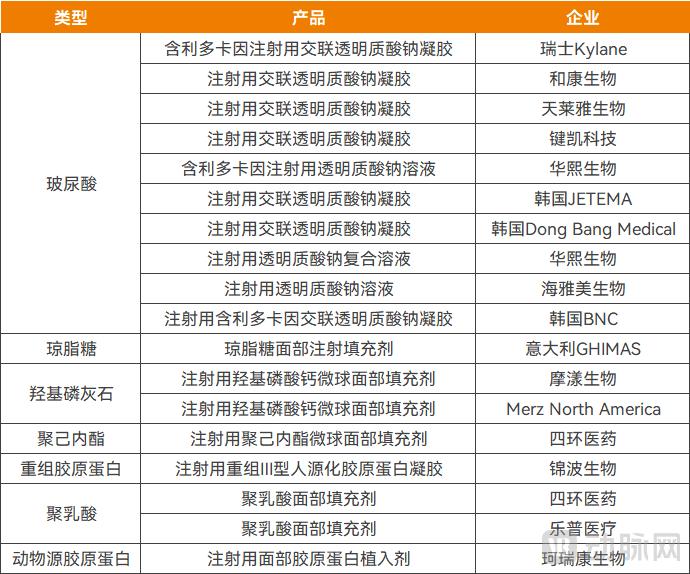
Core Insights - The medical beauty materials market is entering a competitive phase in 2025, with significant approvals for new materials such as agarose and hydroxyapatite, indicating a growing diversity of products [1][10] - The approval of various injection fillers, including recombinant collagen and animal-derived collagen, highlights the rapid development and commercialization of medical beauty materials [1][4] - Investment in medical beauty materials companies has surged, with 12 companies securing funding in the first five months of 2025, reflecting strong interest from investors [4][5] Regulatory Approvals - Hydroxyapatite received two approvals in 2025, with the first compliant product for medical beauty injections approved in February [10] - Agarose also saw its first approval in January 2025, marking a significant milestone for this material in the domestic market [10] - Over 110 products for medical beauty injections have been approved in China, primarily classified as Class III medical devices [2][4] Market Dynamics - The competition for the first regulatory approval (Class III certificate) is intense, as it provides a significant market advantage [10][12] - Companies are increasingly focusing on developing new materials and applications, with many aiming to secure the first approval in various new material categories [11][12] - The market is characterized by a mix of established companies and startups, all vying for a share of the growing medical beauty sector [15][16] Investment Trends - Notable investments in medical beauty materials companies include significant funding rounds for firms like 聚源生物 and 未名拾光, indicating robust investor confidence [5][6] - The trend of startups receiving funding is expected to continue, as the demand for innovative medical beauty solutions grows [4][5] Product Development - Companies are exploring the combination of different materials to enhance product competitiveness, with a focus on safety and efficacy [14][15] - New materials such as PDRN, silk protein, and chitosan are being investigated for their applications in medical beauty and functional skincare [16][17] - The development of multi-indication products is becoming a strategic focus, with companies aiming to address various aesthetic needs [13][15] Future Outlook - The medical beauty market is anticipated to expand, driven by the introduction of new materials and innovative applications [16][17] - The interplay between medical beauty and skincare sectors is expected to create a positive feedback loop, enhancing market growth [16][17] - Ultimately, the success of new materials will depend on their clinical validation and real-world application, as safety and effectiveness remain paramount [16][17]


东北985,走出一支创投天团
36氪· 2025-06-08 23:57
Core Viewpoint - Harbin Institute of Technology (HIT) celebrates its 105th anniversary, highlighting its contributions to engineering and technology, and its role in fostering innovation and entrepreneurship among its alumni [5][6][20]. Group 1: Innovation and Entrepreneurship - HIT has a strong legacy of producing talent that contributes significantly to various key industries, including aerospace, defense, and advanced manufacturing [5][6]. - Alumni from HIT are actively involved in innovative ventures, with notable companies like Faowei and Shanhai Innovation securing significant funding rounds [8][10][11]. - The establishment of the Harbin Institute of Technology Advanced Technology Research Institute aims to facilitate the transformation of scientific achievements into practical applications, having already engaged over 100 investment institutions and incubated 32 new companies [6][11][20]. Group 2: Investment Activities - HIT's asset investment department was established in 1993, focusing on the commercialization of high-tech achievements and optimizing capital structures [18]. - The investment activities are concentrated in high-end manufacturing and services, particularly in sectors like biomedical and semiconductor technology [18][19]. - HIT has formed strategic partnerships with local governments and investment groups, enhancing its capacity to support technology transfer and commercialization [19][20]. Group 3: Market Presence and IPOs - Several HIT-affiliated companies are preparing for IPOs, including Xidian Co., which has become the first listed company in the domestic probe station sector [13][14]. - Other notable projects include surgical robotics companies that are also in the pipeline for public offerings, showcasing the growing influence of HIT in the tech market [15][16]. Group 4: Research and Development - HIT has established numerous collaborations with local enterprises, significantly increasing its patent transfers and technology contract registrations, leading the province in technology commercialization [21][22]. - The university's focus on hard technology has resulted in the emergence of innovative companies in robotics and aerospace, contributing to regional economic development [22][23].

“玻尿酸女王”赵燕陷转型焦虑 华熙生物净利降70%营收落后巨子生物
Chang Jiang Shang Bao· 2025-06-08 23:20
长江商报消息 ●长江商报记者 汪静 "成分之争"的风波演变成两大医美巨头间的攻防战,华熙生物(688363.SH)与巨子生物(02367.HK) 之争逐渐白热化。在这背后,"玻尿酸女王"赵燕的焦虑已跃然纸上。 同处医美行业,华熙生物与巨子生物的核心产品重组胶原蛋白与玻尿酸均为具有填充、修复功能的生物 材料。过去,凭借着玻尿酸这一明星成分,华熙生物赢得了业绩与股价的双丰收,也将创始人赵燕送上 了山东女首富的宝座。 随着重组胶原蛋白等新型成分的崛起,华熙生物遭到了上市以来最严峻的挑战——2024年营收同比下滑 11.61%至53.71亿元,净利润骤降70.59%至1.74亿元,核心业务板块收入锐减32.68%。而2024年,医美 新贵巨子生物的营收约55.39亿元,净利润约20.62亿元,双双大幅增长。 "我们正在经历的不是市场周期的简单波动,而是一场关乎企业生存逻辑的深刻变革。"在华熙生物2024 年财报发布后的董事会上,赵燕的发言掷地有声。 赵燕出生于1966年,毕业于华东师范大学生物系,毕业后曾留校担任助教。1988年,海南建省的浪潮 中,赵燕感到机遇来临,于是辞去教职,与其他三名想要创业的大学老师凑了50 ...
聊聊新消费与科技的投资机会
Ge Long Hui· 2025-06-08 18:53
Group 1: New Consumption Trends - The rise of new consumption reflects a shift from traditional asset accumulation to emotional and personalized experiences, driven by generational changes in consumer preferences [2][4] - The "self-pleasing consumption" initiative in Shanghai emphasizes the importance of emotional value over basic functionality, indicating a significant change in consumer behavior [2] - Companies like Guangbo Co. and Mixue Ice City are leveraging flexible supply chains and rapid product iterations to capture growth in the new consumption sector [2] Group 2: Key Investment Themes in Technology - The commercialization of IP and the trend of "潮玩" (trendy toys) highlight the potential of emotional connections and cultural recognition in driving consumer engagement, with companies like Pop Mart and Aofei Entertainment leading the way [4] - The integration of traditional culture with modern design is revitalizing industries such as gold jewelry, with brands like Lao Pu Gold and Lao Feng Xiang achieving significant premium pricing through cultural and design attributes [4] - The pet economy is expanding due to changing family structures and increasing single populations, with companies like Zhongchong Co. and Petty Co. capitalizing on this trend [4] Group 3: Technological Advancements and Market Opportunities - The importance of domestic technology capabilities is underscored by the rise of Huawei's Ascend ecosystem, which is crucial for building a self-sufficient digital infrastructure [7] - The Chinese consumer electronics industry is positioned for growth, driven by a large affluent and middle-class population with strong purchasing power for innovative products [7] - The demand for computing power is surging due to advancements in AI and big data, creating opportunities in data centers and cloud services, with companies like Taicheng Light and Shenghong Co. playing significant roles [7]


