
小米

Search documents
东山精密20251022
2025-10-22 14:56
Summary of Dongshan Precision's Conference Call Industry and Company Overview - **Company**: Dongshan Precision - **Industry**: PCB (Printed Circuit Board) manufacturing, AI technology, automotive components, and consumer electronics Key Points and Arguments Financial Performance - **Revenue**: In Q3 2025, total revenue reached 27.07 billion yuan, a year-on-year increase of 2.28% driven primarily by the PCB business [4][5] - **Net Profit**: Net profit attributable to shareholders decreased by 14.61% to 1.223 billion yuan [2][4] - **Gross Margin**: Gross margin slightly improved to 13.79%, despite increased depreciation and amortization costs of 200-300 million yuan due to new capacity coming online [2][4] - **Cash Flow**: Operating cash flow net amount was 2.95 billion yuan, showing slight growth year-on-year [4] Business Segments Performance - **Soft Board Business**: Benefited from new model releases, leading to revenue recovery [2][4] - **AI Demand**: Increased demand for HDI (High-Density Interconnect) and high-layer boards due to AI applications [2][4] - **Hard Disk Business**: Maintained steady performance [2] - **Touch Display and Precision Manufacturing**: Performance was subdued due to external factors [2] - **LED Business**: Continued decline due to industry demand weakness and overcapacity [2][4] Strategic Initiatives - **AI Infrastructure**: The company is actively investing in AI-related PCB production, with phase one expected to be operational by mid-2026 [2][6] - **Acquisition of Solstice Optoelectronics**: The acquisition is progressing, with most of the share transfer payment completed [2][8] - **Apple iPhone 17**: Sales performance has been strong, with millions of Display components delivered [2][6] Future Outlook - **MOTEC AI PCD Orders**: New capacity expected to be ready by Q2 2026, primarily to meet domestic cloud service provider demands [2][7] - **Automotive Business**: Efforts to expand into domestic new energy vehicle companies are ongoing, with stable demand from overseas clients [2][7] - **CMD Acquisition**: Ongoing with plans to stabilize and optimize production capacity in Europe [3][11] Challenges and Risks - **Management Expenses**: Increased management expenses by 151 million yuan year-on-year, primarily due to intermediary fees related to acquisitions [4][21] - **Trade Conflicts**: Minimal direct impact from US-China trade tensions, with a dual circulation strategy in place [2][15] Other Important Insights - **LED and Touch Display Strategy**: Plans to dispose of underperforming LED business while continuing to develop touch display products in collaboration with partners [2][14] - **Market Position**: The company has established a strong position in the soft board market, ranking second globally and first domestically [2][22] - **Future Strategic Direction**: Focus on leveraging flexible PCBs, touch displays, and precision manufacturing to support stable cash flow and drive AI infrastructure development [2][24] This summary encapsulates the key insights from Dongshan Precision's conference call, highlighting financial performance, strategic initiatives, and future outlook while addressing challenges faced by the company.

港股速报|港股全天表现疲软 泡泡玛特获多家大行“买入评级”
Mei Ri Jing Ji Xin Wen· 2025-10-22 09:10
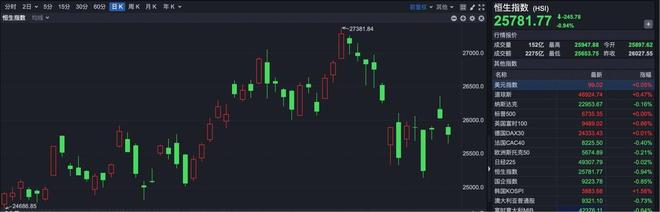
今日(10月22日),港股市场全天表现低迷。 截至收盘,恒指报收于25781.77点,下跌245.78点,跌幅0.94%。 打开百度APP畅享高清图片 恒生科技指数报收于5923.09点,下跌84.85点,跌幅1.41%。 消息面,美银重申泡泡玛特"买入"评级,预计第四季将持续推出新产品。美银证券发表研究报告指出, 泡泡玛特第三季业绩表现强劲,收入按年增长245%至250%,超出市场预期。该行重申"买入"评级,目 标价为400港元。 此外,中银国际上调泡泡玛特目标价至405.6港元,维持"买入"评级。 瑞银上调泡泡玛特目标价至435港元;摩根大通上调泡泡玛特目标价至350港元;里昂维持泡泡玛特"跑 赢大市"评级。 焦点公司方面,中铝国际(601068.SH)A股涨停,带动H股午后飙升,最终收盘大涨30%。 消息面,有媒体称,力拓考虑与中铝集团进行资产换股权交易,但截至发稿,公司方面尚无正式消息发 布。 另外,泡泡玛特(09992.HK)公布财报后,今日高开近8%,但随后涨幅收窄,最终上涨2.4%,报256.4 港元。 其他方面,盘面上,科网股全线下跌,网易跌超3%,联想跌超2%,快手、百度、阿里巴巴、哔哩哔 ...


智能驾驶深度报告:世界模型与VLA技术路线并行发展
Guoyuan Securities· 2025-10-22 08:56
Investment Rating - The report does not explicitly state an investment rating for the smart driving industry Core Insights - The smart driving industry is experiencing rapid evolution driven by "end-to-end" and "smart driving equity" concepts, with significant growth in both new energy vehicle sales and smart driving functionalities [3][4][9] - The penetration rate of L2-level smart driving in new energy vehicles in China has increased from approximately 7% in 2019 to around 65% by the first half of 2025, indicating a strong correlation between new energy vehicle sales and the adoption of smart driving technologies [9][10] - The smart driving market is projected to exceed 5 trillion yuan by 2030, with a compound annual growth rate driven by technological advancements and increased consumer acceptance [15][16] Summary by Sections 1. "Equity + End-to-End" Accelerating Smart Driving Evolution - The smart driving industry has seen a significant increase in new energy vehicle sales, which has created a positive feedback loop for the adoption of smart driving technologies [9][10] - The penetration of L2-level smart driving features in new energy vehicles has rapidly increased, reflecting the growing consumer acceptance and market expansion of smart driving technologies [9][10] 2. End-to-End Smart Driving Review - The evolution of end-to-end smart driving can be categorized into four main stages, with advancements in perception, decision-making, and control processes [30][32] - The introduction of the "occupancy network" has enhanced environmental perception capabilities, allowing for more accurate and stable decision-making in complex driving scenarios [46][47] 3. VLA Technology Route - The VLA (Vision-Language-Action) model is emerging as a key driver of paradigm shifts in autonomous driving, integrating visual, linguistic, and action modalities into a cohesive framework [70][71] - The VLA model's development is divided into four stages, with significant advancements in task understanding and execution capabilities [76][77] 4. World Model Technology Route - The world model approach emphasizes physical reasoning and spatial understanding, representing a long-term evolution path for smart driving technologies [69][70] - The integration of world models with cloud computing is expected to enhance the iterative optimization of end-to-end smart driving systems [65][66]




X @外汇交易员
外汇交易员· 2025-10-22 07:52
Industry Trend - Domestic mobile phone manufacturers such as Xiaomi and OPPO are accelerating their layout in compatibility with the Apple ecosystem [1] - OPPO mobile phones' remote control and file transfer functions for Mac are even better than most remote software [1] Technology Development - Huawei's HarmonyOS 6 will achieve cross-ecosystem interconnection, supporting data transfer with Apple devices without cellular data, enabling fast near-field data transmission and breaking device boundaries [1]
苹果(AAPL.US)iPhone Air国行首销现场反响平淡 线下店未见排队抢购
智通财经网· 2025-10-22 07:14
Core Insights - Apple's iPhone Air launched in China with a lukewarm consumer response, attributed to its high starting price of 7999 yuan and reliance on eSIM technology, which has seen slow adoption by local carriers [1] - Despite the initial reaction, the iPhone Air's lightweight design and new color options attracted attention, though most consumers opted for trial rather than purchase [1] - The iPhone 17 series, including the 17, 17 Pro, and 17 Pro Max, remains more popular, as they still support physical SIM cards, while the iPhone Air focuses on eSIM to enhance battery capacity [1] - Apple's sales in the Greater China region have begun to recover, with recent financial reports indicating growth after seven consecutive quarters of revenue decline [1] - The iPhone Air may provide new growth momentum for Apple amid competition from local brands like Huawei, Xiaomi, and OPPO [1] Competitive Landscape - Local competitors have launched similar lightweight and foldable models, and new flagship devices in the past week, making the iPhone Air's higher price point less attractive [2] - Consumers can often purchase higher-spec Android devices for less money, although Apple remains in the top tier of the market [2] - Demand for the new iPhone models is strong, with the iPhone 17 series seeing a 14% increase in sales compared to the iPhone 16 series within the first 10 days of launch in the US and China [2]

i6的战略意义
数说新能源· 2025-10-22 07:02
Core Viewpoint - Li Auto is undergoing a strategic transformation from a product-driven approach to a brand-driven one, expanding its focus from family vehicles to a broader concept of personal belonging space with the launch of the Li Auto i6 and the appointment of Yi Yangqianxi as its first brand ambassador [1][2][3] Group 1: Event Overview - Li Auto launched the Li i6, a new five-seat SUV priced starting at 249,800 yuan, aiming to penetrate the competitive 250,000 yuan SUV market [1] - The appointment of Yi Yangqianxi as the brand ambassador marks a significant shift in Li Auto's marketing strategy, reflecting a move towards a more personal and emotional branding approach [1][2] Group 2: Brand Transformation Logic - The shift from a "family car" focus to a broader "home" concept is driven by the need to cater to a diverse user base, particularly the younger generation [2][3] - Yi Yangqianxi's representation aligns with the new brand philosophy, emphasizing that everyone deserves their ideal space, resonating with the aspirations of contemporary youth [3] Group 3: Marketing Strategy Evolution - The brand ambassador strategy reflects a systematic upgrade in Li Auto's brand image and technical capabilities, with significant R&D investments of 2.8 billion yuan in Q2 and an expected annual investment of 12 billion yuan [4] - This dual focus on soft and hard strengths aims to create a deeper competitive moat, leveraging brand recognition to enhance user retention [4] Group 4: Product Competitiveness Analysis - The pricing strategy of the Li i6, set at 249,800 yuan, creates a clear product gradient compared to the i8, which starts at 321,800 yuan, positioning the i6 against competitors like Tesla Model Y and Xiaomi YU7 [5][6] - The i6 features an 800V high-voltage architecture, a 87.3 kWh lithium iron phosphate battery, and advanced intelligent configurations, including the MindGPT decision-making model and high-level driving assistance capabilities [6][7] Group 5: Market Environment and Competitive Landscape - The 250,000 yuan SUV market is highly competitive, with Tesla Model Y leading in sales, and other brands like Xiaomi YU7 and NIO also vying for market share [8][9] - Li Auto's sales in the first half of 2025 reached 203,900 units, only 32% of its annual target, indicating significant challenges in maintaining market position [9] Group 6: Sales Outlook and Market Expectations - Li Auto aims for monthly sales of 9,000 to 10,000 units for the i6, with an overall target of 18,000 to 20,000 units for its electric models [10][11] - The supply chain anticipates even higher expectations, with projections of 25,000 to 30,000 units per month, reflecting confidence in the i6's product strength [11] Group 7: Strategic Significance and Future Outlook - The launch of the i6 is crucial for Li Auto's pure electric strategy and is expected to boost sales amid recent declines [12][13] - The i6's introduction is anticipated to accelerate industry technology upgrades and reshape market pricing standards, potentially leading to a shift in marketing strategies within the electric vehicle sector [14][15]


Meta们的AI眼镜梦,绕不开中国供应链
Di Yi Cai Jing· 2025-10-22 06:53
Core Insights - The AI glasses market is rapidly evolving, with major players like Meta and Apple competing to launch innovative products, indicating a significant shift in consumer technology [1][10] - China is emerging as a key player in the global AI glasses supply chain, with over 80% of manufacturers based in the country, showcasing its competitive advantages in cost, efficiency, and technology [1][5][6] Market Trends - The global AI glasses market is projected to see a shipment volume of 4.065 million units in the first half of 2025, representing a year-on-year growth of 64.2% [4] - By 2029, the market is expected to exceed 40 million units, highlighting the increasing demand for AI glasses [4] Company Performance - Companies like GoerTek, Crystal Optoelectronics, and Sunny Optical Technology have seen significant stock price increases, with GoerTek's stock nearly doubling since April, reflecting investor confidence in the AI glasses sector [4][5] - GoerTek is reportedly securing orders for Meta's next-generation AI glasses, while Crystal Optoelectronics and Sunny Optical are recognized for their expertise in optical core technologies [4][5] Supply Chain Dynamics - China's supply chain capabilities are characterized by a comprehensive integration of components, including cameras, optical waveguides, MEMS, and batteries, with over 50% global market share in key areas [5][6] - The ability of Chinese manufacturers to deliver high-quality products at competitive prices is a crucial factor in the success of AI glasses [6][7] Technological Advancements - The industry is witnessing a shift from OEM (Original Equipment Manufacturer) to JDM (Joint Design Manufacturer) models, allowing Chinese companies to play a more active role in product design and innovation [7][8] - The integration of AI technology is expected to revolutionize user interaction with devices, potentially leading to a significant breakthrough akin to the "iPhone moment" for AI glasses by 2027 [10][14] Future Outlook - Experts predict that by 2027, AI glasses could replace smartphones as the primary device for interaction, contingent on advancements in technology and user experience [10][14][15] - Challenges such as interaction experience, computing power, battery life, and weight remain critical hurdles that need to be addressed for widespread adoption [15]



资讯日报:港股市场情绪回暖延续前日反弹-20251022
Guoxin Securities Hongkong· 2025-10-22 06:07
Market Overview - The Hong Kong stock market sentiment continues to improve, maintaining an upward trend from the previous day's rebound, with a net inflow of HKD 1.171 billion from southbound funds[9] - Major technology stocks saw a collective narrowing of gains in the afternoon, with Alibaba up 2% while Meituan turned negative and Xiaomi fell 1.44%[9] - The Hang Seng Index closed at 26,027.55, reflecting a weekly increase of 3.09% and a year-to-date increase of 29.87%[3] U.S. Market Performance - On October 21, the Dow Jones Industrial Average rose by 0.47%, reaching a new historical high, while the S&P 500 remained flat and the Nasdaq fell by 0.16%[9] - Notable performances included General Motors, which surged nearly 15%, marking its best single-day performance in five years, and Raytheon Technologies, which rose nearly 8%[9] - Beyond Meat experienced a dramatic increase of over 146%, with a cumulative rise of approximately 600% over three trading days[9] Sector Highlights - Semiconductor stocks, insurance stocks, and heavy machinery stocks maintained a generally upward trend despite narrowing gains in the afternoon[9] - Financial stocks, particularly Chinese securities firms and domestic insurance stocks, showed significant activity, with China Life rising over 6% and CICC up over 3%[9] - Gold and silver prices experienced a significant pullback, leading to declines in related stocks, with China Silver Group dropping over 6%[9] Key Index Performance - The Shanghai Composite Index closed at 3,916.33, up 1.36% for the day and 14.94% year-to-date[3] - The Hang Seng Tech Index closed at 6,007.94, reflecting a year-to-date increase of 33.49%[3] - The Nikkei 225 index rose by 0.27%, reaching a new closing historical high[9]
每日投资策略-20251022
Zhao Yin Guo Ji· 2025-10-22 04:01
Global Market Overview - The Hang Seng Index closed at 26,028, up 0.65% for the day and 29.75% year-to-date [1] - The Shanghai Composite Index rose by 1.36% to 3,916, with a year-to-date increase of 16.84% [1] - The Shenzhen Component Index increased by 1.76% to 2,463, showing a year-to-date rise of 25.83% [1] - The US markets showed mixed results, with the Dow Jones up 0.47% and the S&P 500 unchanged, while the Nasdaq fell by 0.16% [1] Sector Performance - The Hang Seng Financial Index rose by 1.06% to 45,270, with a year-to-date increase of 28.84% [2] - The Hang Seng Industrial and Commercial Index increased by 0.52% to 14,826, reflecting a year-to-date rise of 31.79% [2] - The Hang Seng Real Estate Index slightly decreased by 0.05% to 18,358, with a year-to-date increase of 23.10% [2] Capital Flows and Stock Performance - Southbound capital recorded a net inflow of HKD 1.17 billion, with notable net purchases in Pop Mart, Xiaomi, and Hua Hong Semiconductor [3] - Pop Mart's Q3 revenue is expected to grow by 245%-250% year-on-year, with overseas revenue increasing by 365%-370% [3] - A-shares in hardware equipment, semiconductors, and industrial trade showed strong gains, while coal, telecommunications, and household goods lagged [3] Economic and Policy Developments - The Chinese Commerce Minister held talks with EU officials to address semiconductor issues, emphasizing the importance of maintaining global supply chain stability [3] - Japan's new Prime Minister, Kishida, may influence the Bank of Japan to delay interest rate hikes, with market expectations for an October rate increase dropping to 25% [3] US Market Insights - US stock performance was mixed, with consumer discretionary, industrials, and healthcare sectors leading gains, while utilities, communication services, and materials declined [3] - Strong Q3 earnings reports have boosted investor sentiment, with 86% of companies exceeding earnings expectations [3] - Notable stock movements included significant gains for Coca-Cola and 3M, while Netflix faced a decline due to lower-than-expected earnings [3] Commodity and Currency Trends - US Treasury yields fell, while the dollar index continued to rise [3] - Gold and silver prices dropped amid reduced geopolitical tensions, although speculative long positions in these metals have increased [3] - Oil prices rebounded as the White House announced plans to purchase 1 million barrels for the Strategic Petroleum Reserve [3]
泡泡玛特第三季度业绩发布:整体收益同比增长245%至250%,聚焦港股消费ETF(513230)布局机遇
Mei Ri Jing Ji Xin Wen· 2025-10-22 02:45
Core Viewpoint - The Hong Kong stock market experienced a collective decline, with the Hang Seng Index falling 0.5% to below 26,000 points, while large tech stocks faced a downturn. However, innovative drug and new consumption sectors showed strength, indicating mixed market dynamics [1]. Group 1: Market Performance - The Hang Seng Index dropped 0.5%, and the Hang Seng Tech Index fell by 0.82% [1] - Major tech stocks declined across the board, while innovative drug stocks and new consumption stocks mostly rose [1] - The Hong Kong consumption ETF (513230) saw a slight decline, with holdings like Pop Mart rising over 6% [1] Group 2: Company Performance - Pop Mart, referred to as "the Moutai for young people," reported a 245% to 250% year-on-year increase in overall revenue for Q3 2025 [1] - Specifically, Pop Mart's revenue in China grew by 185% to 190%, with offline channels increasing by 130% to 135% and online channels surging by 300% to 305% [1] - The overseas market for Pop Mart experienced a remarkable growth rate of 365% to 370% year-on-year [1] Group 3: Future Outlook - Guotai Junan Securities maintains a bullish outlook for the Hong Kong stock market in Q4, suggesting that short-term fluctuations will not alter the overall bullish trend [1] - The potential return of foreign capital due to the Federal Reserve's interest rate cuts could exceed expectations, further supporting the market [1] - Continued inflow of southbound funds is anticipated, which may drive the Hong Kong market upward [1] Group 4: ETF Composition - The Hong Kong consumption ETF (513230) tracks the CSI Hong Kong Stock Connect Consumption Theme Index, encompassing leading companies in both internet e-commerce and new consumption sectors [2] - The ETF includes major players like Pop Mart, Lao Pu Gold, Miniso, Tencent, Kuaishou, Alibaba, and Xiaomi, highlighting its strong tech and consumption attributes [2]