千禾味业

Search documents
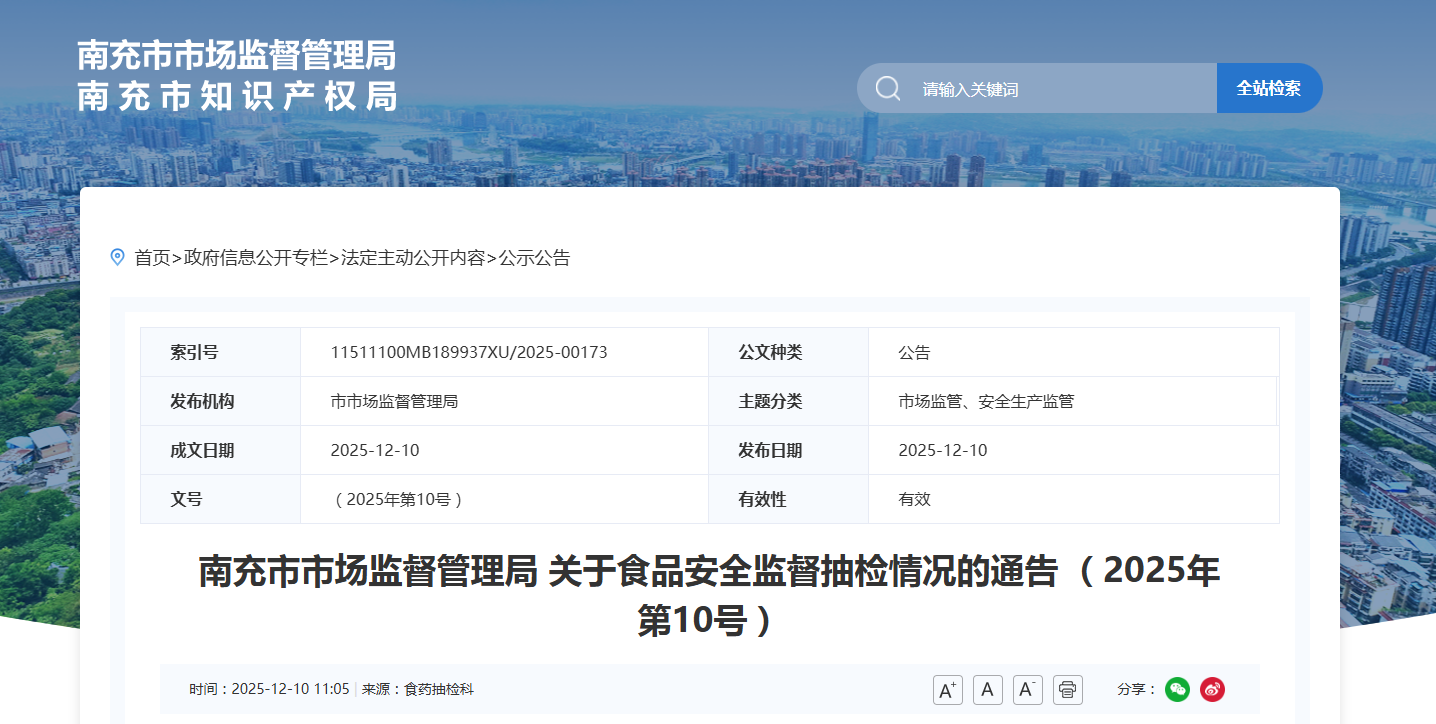
调味发酵品板块12月18日涨0.08%,千禾味业领涨,主力资金净流出1.07亿元
Zheng Xing Xing Ye Ri Bao· 2025-12-18 09:07
Group 1 - The seasoning and fermentation sector saw a slight increase of 0.08% on December 18, with Qianhe Flavor Industry leading the gains [1] - The Shanghai Composite Index closed at 3876.37, up 0.16%, while the Shenzhen Component Index closed at 13053.98, down 1.29% [1] - Qianhe Flavor Industry's stock price rose by 2.02% to 65.6, with a trading volume of 189,500 shares and a transaction value of 181 million yuan [1] Group 2 - The main funds in the seasoning and fermentation sector experienced a net outflow of 107 million yuan, while retail investors saw a net inflow of 114 million yuan [2] - The trading data indicates that major stocks like Lianhua Holdings and Fuling Mustard have varying levels of net inflow and outflow among institutional, retail, and speculative investors [3] - For instance, Lianhua Holdings had a net inflow of 14.88 million yuan from major funds, while it faced a net outflow of 21.99 million yuan from speculative funds [3]





中金2026年展望 | 食品饮料:筑底接近尾声,聚焦高质量增长
中金点睛· 2025-12-17 23:54
Core Viewpoint - The food and beverage industry is experiencing a new normal with a weak overall consumption environment, emphasizing high quality-price ratios, functionality, health, and emotional consumption trends. The liquor industry continues to face weak demand, while snacks and beverages show better performance. The industry is expected to maintain a weak recovery with strong differentiation, relying on product innovation, fragmented channel layouts, and expanding consumer demographics [2][3][10]. Liquor Industry - The liquor industry is undergoing significant adjustments due to weak demand and new regulations, with expectations for a turning point in the first half of 2026 as the supply-demand balance improves. The impact of policies on demand is expected to weaken, leading to a gradual recovery in consumption [6][7]. - The strategic focus of liquor companies has shifted from inventory pressure to exploring new growth areas, such as targeting younger consumers and embracing new retail channels. This shift is expected to lead to a clearer upward trend in financial reports by 2026 [8][9]. - High-end liquor is anticipated to lead the overall recovery, benefiting from brand loyalty and the resumption of business activities. The mid-range segment may face challenges but is also expected to see some recovery [9]. Snack and Beverage Industry - The overall demand for snacks is stabilizing at a low level, with a focus on quality-price ratios and emotional value. The snack industry is expected to continue expanding, particularly in channels like bulk snacks and membership supermarkets [11][12]. - The beverage industry is benefiting from health trends, with a notable increase in demand for low-sugar and functional drinks. The market for instant retail is also growing, with significant sales increases in snack brands through platforms like Meituan [21][22]. - The competition in the beverage sector is expected to remain intense, but price competition is easing, allowing for improved profit margins for leading companies [22][23]. Dairy and Frozen Food Industry - The dairy industry is experiencing a recovery in operational performance, with expectations for improved profitability as raw milk prices stabilize. The demand for liquid milk is projected to stabilize in 2026, with a potential turning point in the raw milk supply-demand balance [33][34][37]. - The frozen food industry is facing pressure from weak demand but is seeing a stabilization in competition. Companies are focusing on product innovation and new channel development to improve profitability [42][43]. Condiments and Health Products - The condiment industry is expected to see stable demand in 2025, with a focus on product upgrades and innovation from leading companies. The overall competitive landscape is anticipated to become less aggressive as inventory levels normalize [44][48]. - The health product sector is experiencing a shift towards online sales and long-tail brand growth. Leading brands are expected to stabilize their market share through channel expansion and product diversification [55][56].

超5万人下单的蛋挞背后,盒马、沃尔玛们盯上清洁标签
新消费智库· 2025-12-17 13:03
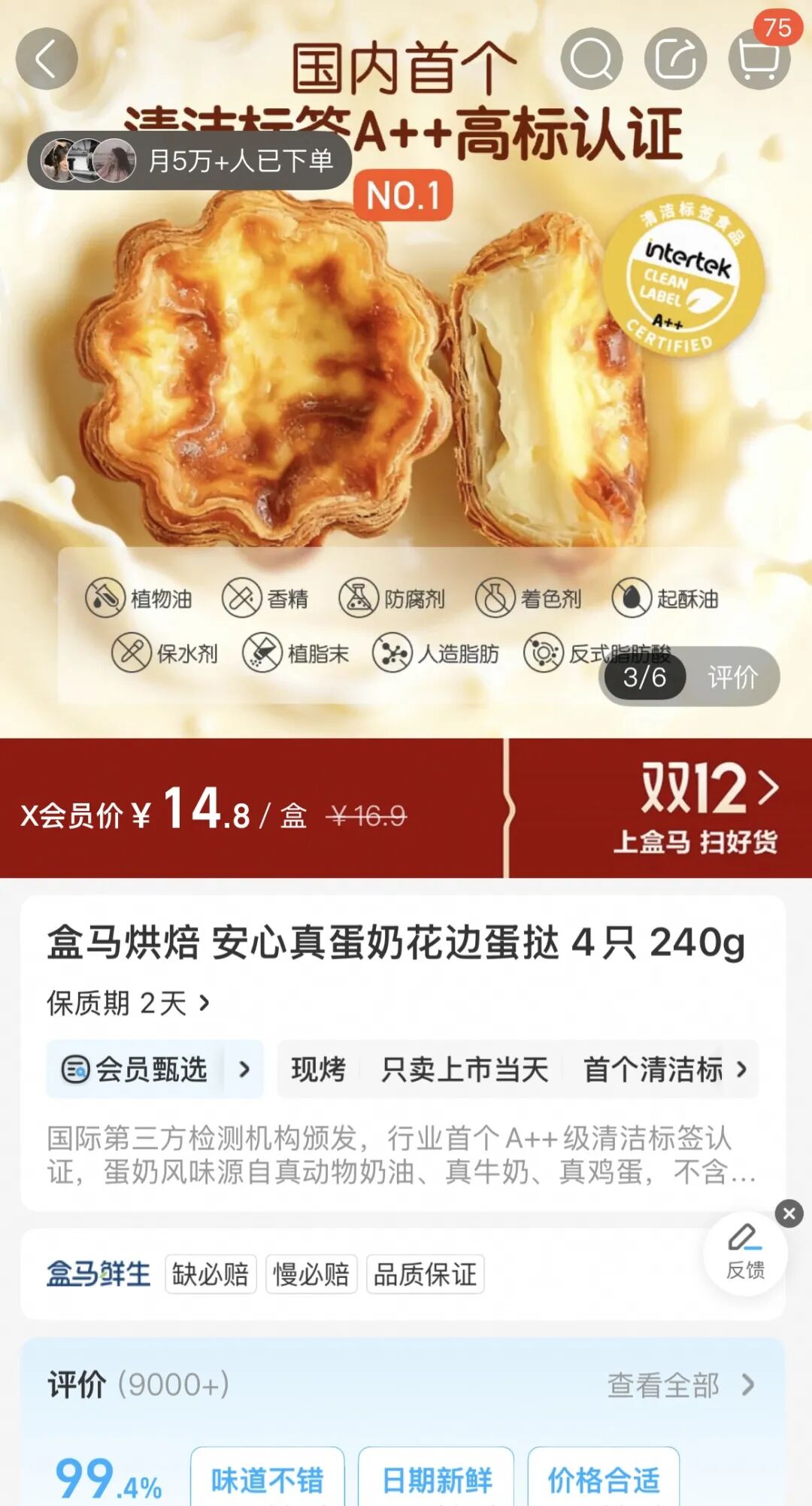
Core Viewpoint - The article discusses the rising trend of clean label products in the food and beverage industry, highlighting consumer demand for transparency in ingredient lists and the proactive steps taken by brands and retailers to meet this demand [3][10][12]. Group 1: Clean Label Trend - Clean label products are gaining traction, with retailers like Hema and Walmart launching their own clean label certified products [4][14]. - Hema's first clean label egg tart received over 50,000 orders, indicating strong consumer interest [8][16]. - Brands such as Yili's "Yizhi Niu" have obtained clean label certifications, addressing consumer concerns about meat safety and quality [9][35]. Group 2: Consumer Insights - A report by Ipsos and Xiaohongshu reveals that keywords like "clean ingredient list" and "clean label" are trending among consumers, who prioritize fresh, additive-free ingredients [10][12]. - Innova's report indicates that nearly three-quarters of consumers reconsider their purchases based on ingredient lists, preferring simple and recognizable components [12]. Group 3: Industry Standards and Certifications - The industry has seen the establishment of multiple clean label group standards, including those from the China Standardization Association and the China Food Industry Association [9][18]. - As of November, the clean label certification has been implemented in various product categories, including dairy, meat, and condiments [28][34]. Group 4: Retailer Initiatives - Retailers like Dingdong Maicai and Tmall Supermarket have created "clean ingredient" sections, showcasing products with transparent ingredient lists [20][22]. - Walmart's self-owned brand "Wojixian" emphasizes simple ingredients and freshness, aligning with the clean label trend [16][18]. Group 5: Brand Responses - Brands are actively seeking clean label certifications to enhance their market appeal, with many already benefiting from early adoption [26][27]. - The clean label trend is seen as an opportunity for innovation, particularly for mid-to-high-end products, as it aligns with consumer preferences for healthier options [51][52].



“调料大王”卡夫亨氏 “断舍离”,换帅、分拆与海天、千禾夹击下的自救行动
3 6 Ke· 2025-12-17 04:22
Core Viewpoint - Warren Buffett expressed "disappointment" regarding Kraft Heinz's latest split plan, marking a significant shift in sentiment after a decade of investment [1] Group 1: Company Strategy and Leadership Changes - Kraft Heinz is undergoing a radical split into two independent entities: Global Taste Elevation Co. and North American Grocery Co., with a focus on separating high-growth assets from underperforming ones [7] - Steve Cahillane, known for his successful restructuring of Kellogg and Kellanova, has been appointed as CEO to lead the Global Taste Elevation Co. [2][4] - The board's decision to hire a restructuring expert signals a need for significant value release rather than mere incremental improvements [7] Group 2: Market Performance and Challenges - Kraft Heinz's global net sales declined by 2.3% year-over-year, with a 3.5% drop in volume, indicating struggles in both established and emerging markets [8] - The Chinese market, deemed a "Must-Win Market," faces challenges from local competitors like Qianhe and Haitian, which have captured consumer interest and market share [8][11] - The company's reliance on a limited product range, particularly tomato ketchup and soy sauce, has hindered its ability to compete in the evolving market landscape [9] Group 3: Management and Operational Adjustments - A significant management overhaul in the China region has been initiated, with Fred Xiao appointed as the first local managing director in five years, emphasizing operational efficiency and supply chain improvements [12][14] - The new leadership aims to address past issues of excess inventory and strained distributor relationships, focusing on enhancing market responsiveness [14] - The success of the new management team will be critical, as failure to achieve growth targets may lead to the divestiture of the Chinese business [16]


“提振、细化、聚焦”——从中央经济工作会议及11月经济指标明确消费主线
2025-12-17 02:27
Summary of Conference Call Records Industry and Company Overview - The conference call discusses the overall economic environment in China, focusing on domestic demand and various sectors including retail, education, textiles, jewelry, and home appliances. [1][2][3] Key Points and Arguments Economic Policy and Domestic Demand - The central economic work conference emphasizes the importance of domestic demand, with a focus on detailed policy implementation to enhance consumer sentiment and valuation rather than merely increasing financial input [2][3] - The expectation for service consumption policies to intensify in 2026 and 2027, with specific attention to holiday promotions and paid leave policies that will benefit sectors like tourism and online travel agencies (OTA) [1][5][6] Sector-Specific Insights - **Retail Sector**: - Retail is expected to benefit from domestic demand policies and an extended Spring Festival holiday, with CPI improvements likely boosting supermarket revenues [1][10][11] - Key retail companies to watch include Chongqing Department Store, Bubugao, and Guijia Times [11] - **Education Sector**: - Vocational education institutions are anticipated to benefit from service-oriented consumption policies aimed at improving employment [7] - **Textile and Apparel Industry**: - The industry is experiencing a slowdown, but winter inventory clearance is expected to improve. Key players include home textile leaders like Luolai and sports brands with international multi-brand strategies [8] - **Jewelry Sector**: - The industry faces challenges from high gold prices, but companies with brand differentiation, such as Cao Hongji, are performing well. Potential turnaround stocks include Lao Fengxiang and Zhou Daxing [9] - **Home Appliance Industry**: - The market is stabilizing after a decline due to subsidy reductions, with a focus on product structure upgrades. Key players include Midea and Haier, as well as emerging smart hardware companies [14][16] Economic Data and Trends - Recent economic data shows a mixed performance, with social retail sales growth at 1.3%, indicating various underlying issues such as the weakening of trade-in effects and the impact of promotional events [4] - The focus should shift from short-term data fluctuations to the long-term effects of policy on sentiment and valuation [4][3] Investment Opportunities - **Tourism Stocks**: - OTA companies are highlighted as strong investment opportunities due to their profitability and the increasing interest from state-owned and local industry funds in scenic area companies [6] - **Consumer Goods**: - Companies in the beauty sector, such as Lin Qingxuan, are positioned to benefit from domestic demand growth, with a notable performance in their core products [11][12] - **Agriculture Sector**: - The agricultural sector is currently in a pessimistic state, but there is potential for recovery as supply constraints stimulate hidden demand. Recommended stocks include Muyuan Foods and Wens Foodstuffs [17] Risks and Challenges - The video sector is still facing performance challenges, particularly in the liquor segment, with a focus on companies with low inventory and strong performance potential [18] Additional Important Content - The emphasis on policy detail and implementation reflects a shift towards more actionable economic strategies, which may lead to improved consumer sentiment and market performance in the long run [2][3]
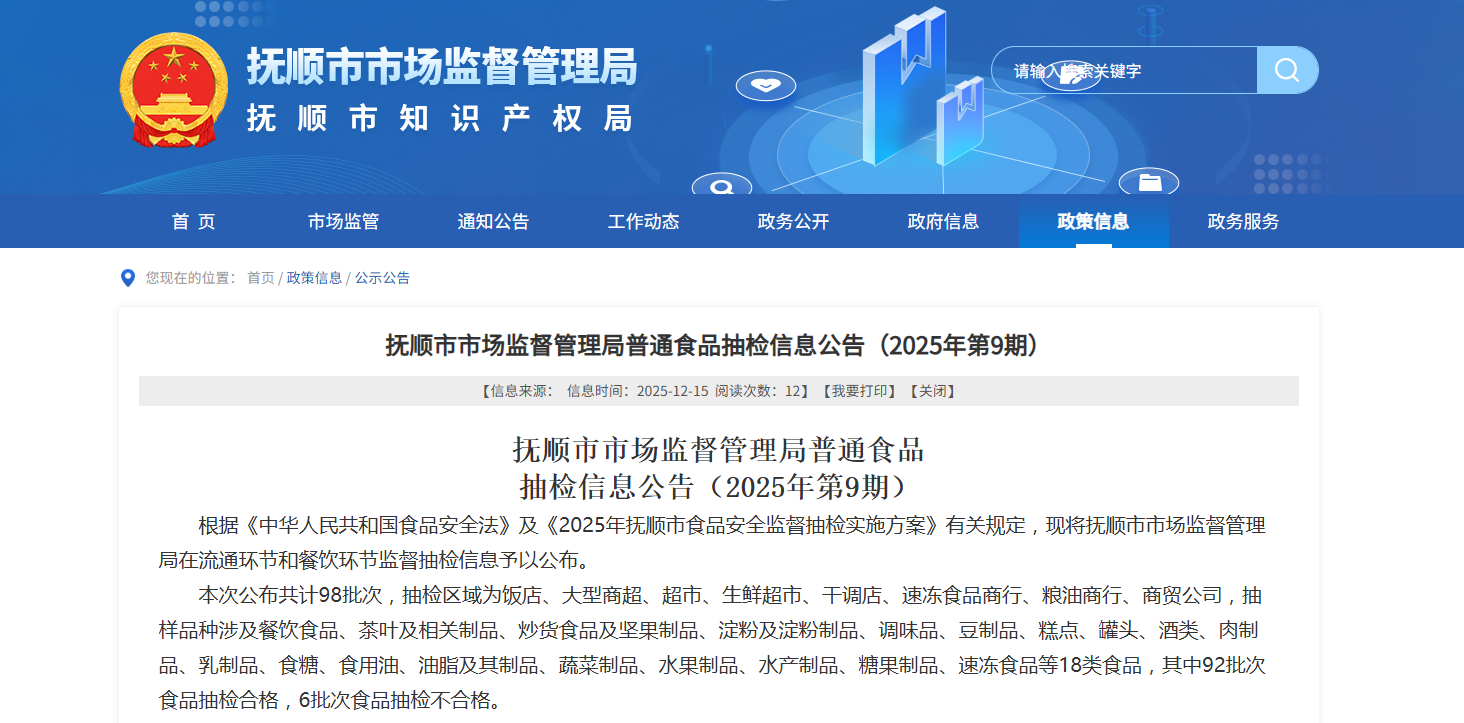
辽宁省抚顺市市场监督管理局普通食品抽检信息公告(2025年第9期)
Zhong Guo Zhi Liang Xin Wen Wang· 2025-12-15 07:37
不合格信息 根据《中华人民共和国食品安全法》及《2025年抚顺市食品安全监督抽检实施方案》有关规定,现将抚顺市市场监督管理局在流通环节和餐饮环节监督抽检 信息予以公布。 本次公布共计98批次,抽检区域为饭店、大型商超、超市、生鲜超市、干调店、速冻食品商行、粮油商行、商贸公司,抽样品种涉及餐饮食品、茶叶及相关 制品、炒货食品及坚果制品、淀粉及淀粉制品、调味品、豆制品、糕点、罐头、酒类、肉制品、乳制品、食糖、食用油、油脂及其制品、蔬菜制品、水果制 品、水产制品、糖果制品、速冻食品等18类食品,其中92批次食品抽检合格,6批次食品抽检不合格。 附:合格信息 | 序 | 标称生产企业名称 | 标称生产企业地址 | 被抽样单位名称 | 被抽样单 位所在省 | 食品名称 | 规格型号 | 生产日 期/批 | 备 | | --- | --- | --- | --- | --- | --- | --- | --- | --- | | 号 | | | | | | | | 注 | | | | | | 份 | | | 号 | | | 1 青岛雀巢有限公司 | | 青岛莱西市威海西路 | 抚顺市新抚区瑞达超市 | 辽宁 | 雀巢鹰唛 ...
食品饮料行业2026年投资策略:需求多元、供给升级,大众消费的嬗变与曙光
2025-12-15 01:55
Summary of the Food and Beverage Industry Conference Call Industry Overview - The food and beverage sector experienced a poor performance in 2025, with a year-on-year decline of 8.1%, primarily due to weak domestic demand and alcohol restrictions [1][8] - Despite the overall downturn, leading companies in the consumer goods segment demonstrated resilience, achieving a revenue growth of 4.5% and a profit increase of 2.3% in the first three quarters [1][8] - The industry is currently undervalued, with an absolute valuation of approximately 20 times PE, which is a 50% premium over the CSI 300 index, nearing levels seen in 2013-2014 [1][10] Key Factors Affecting Performance - Major factors impacting the 2025 performance include consumption scene restrictions, pessimistic sentiment, and profit pressures [2][3] - The ban on alcohol has negatively affected the consumption of liquor, beer, and the restaurant supply chain, putting pressure on earnings per share (EPS) [3] Investment Strategy for 2026 - The investment strategy for 2026 focuses on a bottom-up approach, particularly in the liquor sector, with an emphasis on identifying signs of recovery in distressed companies [1][9] - Recommended companies include Dongpeng, Weilong, Moutai, Anjuke, Qiaqia, Yanghe, and Qianhe Flavor Industry, along with opportunities in the upstream and downstream of the restaurant supply chain [1][9] Consumer Trends and Channel Changes - Future development in the consumer goods sector will hinge on adapting to modern consumption patterns, with accelerated channel transformations including traditional retail adjustments, O2O integration, and instant retail [1][13] - Companies need to optimize their channel systems to seize new retail opportunities and adapt to changing cooperation models [1][14] Expected Changes in Consumer Behavior - Consumer confidence is expected to improve in 2026, with a shift from extreme price comparison to a focus on high quality-to-price ratios [1][15] - The supply side will likely see broader opportunities for product and service innovation as consumers are willing to pay for added value that meets their needs [1][15] Company Performance Insights - As of December 5, 2025, 83 stocks in the food and beverage sector recorded positive growth, with a total market value increase of 21% and profit growth of 12.5% compared to the previous year [5] - Notable performers include Nongfu Spring, Weilong, and Babi Foods, with respective stock price increases of 57%, 51%, and 67% [5] Valuation and Trading Volume - The food and beverage industry's valuation is relatively low, with trading volumes declining sharply to around 1.4% in the fourth quarter, indicating increased industry pressure but also potential for value recovery [10][11] Sector-Specific Insights - The beer industry is expected to face weak growth prospects, with opportunities arising from differentiated products and the importance of new retail channels [4][17] - The snack industry is experiencing significant channel changes, with emerging channels like high-end membership supermarkets and instant retail showing strong vitality [21][22] - The dairy sector is under pressure, particularly liquid milk, but leading companies like Yili and Mengniu are optimistic about future growth due to proactive inventory management and product innovation [30] Recommendations for Investment - Investment recommendations include focusing on value recovery companies, value creation firms, and those with strong earnings certainty [7] - Specific recommendations for the restaurant supply chain include companies like Hai Tian and Anjuke, which are expected to benefit from demand recovery and improved operational efficiency [31][34] Conclusion - The food and beverage industry is navigating a challenging landscape with opportunities for recovery and growth in specific segments. Investors are advised to focus on companies that can adapt to changing consumer preferences and channel dynamics while capitalizing on the potential for value recovery in the sector.
"零添加"标识退场 千禾味业前三季度业绩双降
Zhong Guo Jing Ji Wang· 2025-12-15 01:33
Core Viewpoint - Qianhe Flavor Industry Co., Ltd. has experienced a decline in both revenue and net profit in the first three quarters of 2025, attributed to a brand trust crisis stemming from a detection scandal, reflecting a shift in the condiment industry from rapid growth to high-quality development [1][2]. Group 1: Company Performance - In the first three quarters of 2025, Qianhe Flavor achieved revenue of 1.987 billion yuan, a year-on-year decrease of 13.17%, and a net profit of 260 million yuan, down 26.13% [3]. - The third quarter alone saw revenue of 669 million yuan, a decline of 4.29%, and a net profit of approximately 86.34 million yuan, down 14.55% [3]. - The main offline channel revenue was 1.68 billion yuan, down 8.65%, while online sales were significantly weaker at 268 million yuan, down 33.84% [3]. Group 2: Industry Trends - The performance decline for Qianhe Flavor began in 2024, with revenue of 3.073 billion yuan, a decrease of 4.16%, and net profit of 514 million yuan, down 3.07%, ending years of consecutive growth [4]. - The number of "zero-additive" products in the condiment category surged from over 300 in Q2 2022 to over 800 by Q4 2024, with market share increasing from under 2.5% to nearly 5.5% [4]. - Major competitors like Haitian Flavor Industry have accelerated their "zero-additive" product lines, leading to intensified competition in the market [4]. Group 3: Regulatory Changes - The lack of standardized definitions for "zero-additive" products has led to confusion among consumers, with different brands interpreting the term variably [5][6]. - In March 2025, new regulations were introduced prohibiting the use of terms like "no additives" and "zero additives" on packaging, with a two-year transition period before enforcement begins in March 2027 [6][7]. - Qianhe Flavor has responded by removing "zero-additive" labels from its packaging and emphasizing transparency regarding the natural ingredients used in its products [7]. Group 4: Future Directions - The introduction of "clean label" standards aims to prioritize product quality, with new certifications focusing on natural ingredients and minimal additives [8]. - The upcoming implementation of stricter quality standards for soy sauce in December 2026 will require manufacturers to adhere to natural fermentation processes and enhance product transparency [9]. - The industry is expected to shift from marketing-driven strategies to a focus on genuine product quality and brand trust, with companies that adapt to regulatory changes and improve product quality likely to find new growth opportunities [9].
超5万人下单的蛋挞背后,盒马、沃尔玛们盯上清洁标签
Xin Lang Cai Jing· 2025-12-12 05:47
Core Insights - The clean label trend is gaining momentum in the food and beverage industry, with major retailers like Hema and Walmart launching their own clean label certified products [1][8] - Brands are actively pursuing clean label certifications to meet consumer demand for transparency and quality in ingredient lists [5][32] - The establishment of group standards for clean labels indicates a growing recognition of the importance of ingredient transparency among industry stakeholders [15][16] Group 1: Retailers and Clean Label Products - Hema and Walmart have introduced clean label certified products, emphasizing simple and fresh ingredients [8][9] - Hema's first A++ level clean label egg tart received over 50,000 orders shortly after launch, indicating strong consumer interest [5][9] - Walmart's self-owned brand, Woji Xian, has adopted a new brand philosophy focusing on simple ingredients and freshness [9][15] Group 2: Brand Initiatives and Certifications - Brands like Yili's "Yizhi Niu" have obtained clean label certifications, responding to consumer concerns about meat safety and quality [5][24] - The clean label certification process is becoming a common practice among various food categories, including dairy, meat, and condiments [24][32] - Several brands have already received clean label certifications from different testing institutions, showcasing the competitive landscape [24][27] Group 3: Consumer Trends and Preferences - Consumers are increasingly prioritizing clean ingredient lists, with reports indicating that nearly three-quarters of consumers reconsider purchases based on ingredient transparency [7][32] - The clean label concept, which originated in the West, is still relatively new in China, but consumer awareness is rapidly increasing [7][32] - The shift towards clean labels reflects a broader trend of consumers moving from simply wanting to be full to seeking healthier and more transparent food options [38][41] Group 4: Industry Standards and Future Outlook - The establishment of group standards for clean labels, such as the "Clean Label Food Authenticity Evaluation Guidelines," marks a significant step towards industry-wide recognition of clean labeling [15][16] - The clean label certification process is expected to expand to more product categories as consumer demand grows [32][41] - The clean label trend is seen as an opportunity for innovation in the food industry, particularly for mid-to-high-end products [41]

四川省南充市市场监督管理局关于食品安全监督抽检情况的通告(2025年第10号)
Zhong Guo Zhi Liang Xin Wen Wang· 2025-12-11 06:44
对抽检中发现的不合格食品,省市场监管局已要求属地市场监管部门开展核查处置。消费者如在市场上发现或购买到本次公布信息中所涉不合格产品,请拨 打政务服务便民热线12345反映。 本次食品安全监督抽检情况详见附件。 特此通告。 2.食品安全监督抽检产品合格信息(2025年第10号) 3.食品安全监督抽检产品不合格信息(2025年第10号) 4.不合格项目解读(2025年第10号) | 索引号 | 11511100MB189937XU/2025-00173 | 公文种类 | 公告 | | --- | --- | --- | --- | | 发布机构 | 市市场监督管理局 | 主题分类 | 市场监管、安全生产监管 | | 成文日期 | 2025-12-10 | 发布日期 | 2025-12-10 | | 文号 | (2025年第10号) | 有效性 | 有效 | 近期,南充市市场监督管理局组织开展食品安全监督抽检,抽取了酒类、餐饮食品、调味品、肉制品、食用农产品、蔬菜制品、水果制品等7类食品255批次 样品,检出30批次样品不合格,发现的主要问题是超限量超范围使用食品添加剂、农药残留超标等。 | 13(购 | 品药品检 ...