米哈游

Search documents
硬核技术铸“龙骨” 中国游戏出海按下“快进键”
Zhong Guo Jing Ji Wang· 2026-01-20 00:41
Core Insights - The Chinese cultural "new three" including online literature, online film and television, and online games have rapidly risen and gained popularity in overseas markets, with game exports becoming a new engine for China's service trade growth [1] - In the first half of 2025, the actual sales revenue of independently developed Chinese games in overseas markets reached $9.501 billion, a year-on-year increase of 11.07% [1] Group 1: Game Development and Technology - The first domestic 3A game "Black Myth: Wukong" showcases top-notch graphics and artistic expression, while "Yanyun Sixteen Sounds" utilizes nano-level detail rendering technology, achieving over 50 million views on overseas platforms [2] - Chinese game companies have developed a "premium R&D system" that enables them to produce high-quality mobile and cross-platform games, leveraging a deep understanding of the free-to-play model and refined operational capabilities [2][4] - The integration of AI-generated content (AIGC) is accelerating game exports, enhancing player experience through real-time NPC interactions and significantly improving production efficiency [3] Group 2: Cultural Integration and Global Appeal - The integration of traditional cultural IP with games is enhancing the global dissemination of Chinese culture, with games like "Black Myth: Wukong" and "Genshin Impact" incorporating cultural elements that resonate with international players [5][6] - The strategy of "core leading, shell universal" ensures that games maintain universally appealing core gameplay while integrating cultural elements as value-added content [6][7] Group 3: Policy Support and Market Strategy - The growth of Chinese games in overseas markets is supported by various government policies that provide institutional guarantees and promote systematic layouts for game exports [8] - Local governments, such as Guangdong and Beijing, are implementing policies to accelerate game exports and support the development of a collaborative ecosystem among game companies [8][9] Group 4: Future Growth Opportunities - Future growth in game exports will focus on refined operations in emerging markets, with an emphasis on deep customization based on local cultures and social habits [10] - The integration of AI technology is seen as a significant opportunity, with companies that embrace AI likely to gain a competitive edge [10] - Products that enable cross-platform data interoperability and create an ecosystem of "games + events + community" are identified as future growth points [10]
中国游戏出海按下“快进键”
Jing Ji Ri Bao· 2026-01-19 22:14
Core Insights - The Chinese cultural "new three" represented by online literature, online film and television, and online games has rapidly risen and gained popularity in overseas markets, with game exports becoming a new engine for the growth of China's service trade [1] - In the first half of 2025, the actual sales revenue of independently developed Chinese games in overseas markets reached $9.501 billion, a year-on-year increase of 11.07% [1] Group 1: Game Development and Technology - The first domestic 3A game "Black Myth: Wukong" showcases top-notch graphics technology and artistic expression, while "Yanyun Sixteen Sounds" utilizes nano-level detail rendering technology, achieving over 50 million views on overseas platforms [2] - Chinese game companies have developed a "premium R&D system" that enables them to produce high-quality mobile and cross-platform games, supported by a deep understanding of the free-to-play (F2P) model and refined operational capabilities [2][4] - The integration of artificial intelligence-generated content (AIGC) is accelerating game exports, enhancing player experience through real-time NPC interactions and significantly improving production efficiency [3] Group 2: Cultural Integration and Global Appeal - The integration of traditional cultural IP with games is enhancing the quality of the gaming industry and spreading Chinese culture to global players [5] - Games like "Black Myth: Wukong" and "Genshin Impact" incorporate elements of Chinese culture, such as using Pinyin for character names and designing events based on traditional festivals, which has sparked interest among international players [5][6] - The current trend in game exports has shifted from mere product output to cultural empowerment and systemic output, with major game companies actively participating in global competition [7] Group 3: Policy Support and Industry Growth - The growth of Chinese games in overseas markets is supported by various policies from national and local governments, which provide institutional guarantees for companies to expand internationally [8] - The Ministry of Commerce has outlined a comprehensive plan for the game export industry, covering everything from IP creation to overseas operations, with notable companies and games included in the national cultural export directory [8] - Local governments, such as Guangdong and Beijing, are implementing policies to accelerate the development of the gaming industry and support international market expansion [9] Group 4: Future Growth Opportunities - Future growth in game exports will focus on refined operations in emerging markets, with an emphasis on deep customization based on local cultures and social habits [10] - The integration of AI technology is seen as a significant opportunity that will transform game development and user experience, with companies that adopt AI early gaining a competitive edge [10] - Products that enable data interoperability across mobile, PC, and console platforms, as well as those that create an ecosystem of "games + events + community," are expected to drive future growth [10]
一年超8万家游戏公司成立,网易字节阿里老兵纷纷创业
3 6 Ke· 2026-01-19 12:41
Core Insights - The domestic gaming industry and user base experienced steady growth in 2025, with over 80,000 gaming companies established, marking an increase from over 50,000 in 2024 and over 60,000 in 2023 [1] - A wave of entrepreneurship is emerging in the gaming sector, with notable industry figures leaving established companies to start their own ventures [1][2] - Despite a competitive market, opportunities remain for new companies due to an influx of talented individuals and market openings created by larger firms focusing on leading projects [1] Company Developments - Guangzhou Fenglan Games, founded in January last year, has nearly 100 employees and is developing a hardcore space-themed SLG titled "Code: Space," set for its first test in March [2] - Chengdu Xiaozhiyou, founded by Chen Shaohao, has over 300 team members and is working on a UE5-based open-world action game, with significant past revenue from previous projects exceeding 30 billion [4] - Shanghai Mengshang Technology, founded by former MiHoYo technical director He Jia, focuses on AI gaming and has secured funding [7] - Guangzhou Jiezhi Information, co-founded by former NetEase executive Jin Tao, has received IP authorization for "Onmyoji" and is developing a project similar to a previously unapproved title [7] Trends in Entrepreneurship - Many former industry leaders are launching startups, often securing funding before product launches, indicating a strong demand for quality content providers [2][7] - Companies are increasingly exploring new directions such as AI-driven content and interactive gaming experiences, with several startups focusing on these emerging trends [13][15] - The SLG genre continues to attract attention, with global strategy mobile game revenue increasing by 20% year-on-year, prompting more companies to enter this space [20][22] Market Dynamics - The gaming industry remains volatile, yet this environment has created entrepreneurial opportunities for many professionals [26] - New companies are often targeting lighter, hybrid gameplay experiences, reflecting a shift in consumer preferences [20][22] - The rise of AI and interactive gaming is drawing interest from outside the traditional gaming sector, leading to innovative projects and collaborations [13][15]


2025全球收入Top20:第一名117亿,腾讯3款,米哈游1款,叠纸1款
3 6 Ke· 2026-01-19 02:48
Core Insights - The global mobile game revenue ranking for 2025 shows increased competition, with several games surpassing $1 billion in revenue, but Tencent's "Honor of Kings" remains the top earner at $1.68 billion [1][2]. Revenue Rankings - "Honor of Kings" generated $1.68 billion in 2025, a slight decrease from $1.74 billion in 2024, with the majority of revenue coming from China and the U.S. contributing approximately $8.5 million [1]. - "Last War" by FunFly achieved $1.57 billion in revenue, up from $1.1 billion in 2024, despite not being launched in mainland China [1]. - "Roblox" saw revenue growth to nearly $1.49 billion in 2025, up from $1.1 billion in 2024, driven by popular user-generated content [2]. - "Whiteout Survival" from Century Huatong increased its revenue from $936 million in 2024 to $1.4 billion in 2025, ranking fourth [2]. - "Royal Match" by Dream Games earned $1.37 billion in 2025, slightly down from $1.39 billion in 2024, possibly due to competition from its new title "Royal Kingdom" [3]. - "Monopoly Go" generated $1.36 billion in 2025, down from $1.43 billion in 2024, with significant revenue from web stores [3]. - "PUBG Mobile" reported $1.12 billion in revenue, showing slight growth, but faced a decline in momentum towards the end of 2025 [4]. - "Candy Crush Saga" achieved $1 billion in revenue, marking its first time surpassing this threshold, with a slight increase from $980 million in 2024 [4]. - "Coin Master" earned approximately $650 million, continuing a trend of declining revenue for the third consecutive year [5]. Additional Rankings - The 11th to 20th ranked games include "Gossip Harbor" at $550 million, "Pokémon Go" at $494 million, and "Clash Royale" at $453 million, with notable growth for "Gossip Harbor" and "Clash Royale" [6][7]. - "Pokémon Go" has seen a decline in revenue for four consecutive years, dropping below $500 million in 2025 [7]. - "Bun Bun Kingdom" generated nearly $450 million in its first year, indicating potential for future growth [8]. - "Honkai: Star Rail" experienced a revenue drop from $562 million in 2024 to $423 million in 2025, while "Genshin Impact" also saw a decline [8].


2025大战结束:点点2款产品分成后破100亿大关,米哈游排第5、第8、第18
3 6 Ke· 2026-01-18 23:26
Core Insights - The mobile gaming market in China is projected to see a 16% increase in overseas revenue in 2025 compared to 2024, with 30 games making the top list, including six new entries [1][28] - The 4X strategy genre remains the leading category for overseas revenue, accounting for over 30% of the top games [1][28] Group 1: Company Performance - Point Interactive leads in revenue with its game "Whiteout Survival," which is the only title exceeding $1 billion in overseas revenue, contributing over $4 billion globally by December 2025 [3] - Lemon Microfun has two titles in the top 30, with "Gossip Harbor" achieving a revenue increase of approximately 100% year-on-year, reaching over $70 million by December 2025 [5][12] - Mihayou has the most games in the top 30, with "Honkai: Star Rail," "Genshin Impact," and "Zero Zone" ranking 5th, 8th, and 18th respectively, primarily generating revenue from Japan, the US, and South Korea [12][28] Group 2: Game Highlights - "Kingshot" by Point Interactive, a 4X strategy game, has shown consistent monthly revenue growth since its launch in February 2025, ranking 3rd in the revenue list [3] - Florere Game's "Last Z: Survival Shooter" and "Dark War: Survival" both made their debut in the top 10, with the former achieving a revenue increase of over 15 times from early 2025 to December [14][15] - "Love and Deep Space" by Paper Games has seen a 70% increase in overseas revenue, ranking 15th in the top 30, with a total revenue exceeding $369 million [21][28] Group 3: Growth Trends - The growth leaderboard is dominated by mid-core games, with 11 4X strategy titles included, and 8 new games making the list [2] - Point Interactive's "Tasty Travels: Merge Game" saw a revenue increase from approximately $650,000 in January to $11 million by December, marking a nearly 17-fold growth [5] - "Merge Cooking" by Happibits entered the revenue list at 28th and the growth list at 13th, with a monthly growth rate of about 20% in Q1 2025 [10]

游戏厂商争先布局UGC 能否打造中国版“Roblox”?
Xin Lang Cai Jing· 2026-01-16 20:08
Core Insights - The article discusses the growing trend of User-Generated Content (UGC) in high Daily Active User (DAU) games, allowing players to create and share their own game content, which helps alleviate development pressures and enhances social engagement [2][6][10] Group 1: UGC Implementation in Games - Major DAU games are adopting UGC models to distribute development tasks to players, enabling them to create diverse gameplay experiences and address content development bottlenecks [2][6] - "Genshin Impact" launched its UGC mode "Thousand Star Realm" in October 2025, attracting over 30,000 creators and generating over 150 million total play sessions by January 3, 2026 [3] - Tencent's "Peacekeeper Elite" introduced its UGC mode "Oasis Genesis" in 2021, achieving over 33 million daily active users by Q3 2025, with player-created content expanding beyond traditional shooting genres [3][4] Group 2: Economic Impact of UGC - "Oasis Genesis" has reportedly distributed over 100 million yuan in incentives, with revenue from top player-created content reaching 5 million yuan in a single month [4] - UGC models provide additional monetization channels beyond traditional in-game purchases, allowing creators to earn from in-game transactions while platforms benefit from increased content consumption [7] Group 3: Challenges and Opportunities - The UGC model faces challenges in China, where previous attempts like Roblox struggled due to high entry barriers for creators and a lack of supportive infrastructure [9] - However, the current landscape shows promise, with a large user base in DAU games and improved support systems for creators, indicating potential for successful UGC implementation [10] Group 4: Role of AI in UGC Development - The advancement of generative AI is expected to lower the barriers for UGC creation, enabling faster game prototype development and enhancing the creative process [10][11] - AI tools are being integrated into UGC platforms to assist in content creation, quality assessment, and gameplay enhancement, potentially transforming the complexity and variety of UGC offerings [11]


49.5万留学生“集体回家”!政策红利拉满!一线城市抢人、大厂开招聘专场!
Sou Hu Cai Jing· 2026-01-16 16:41
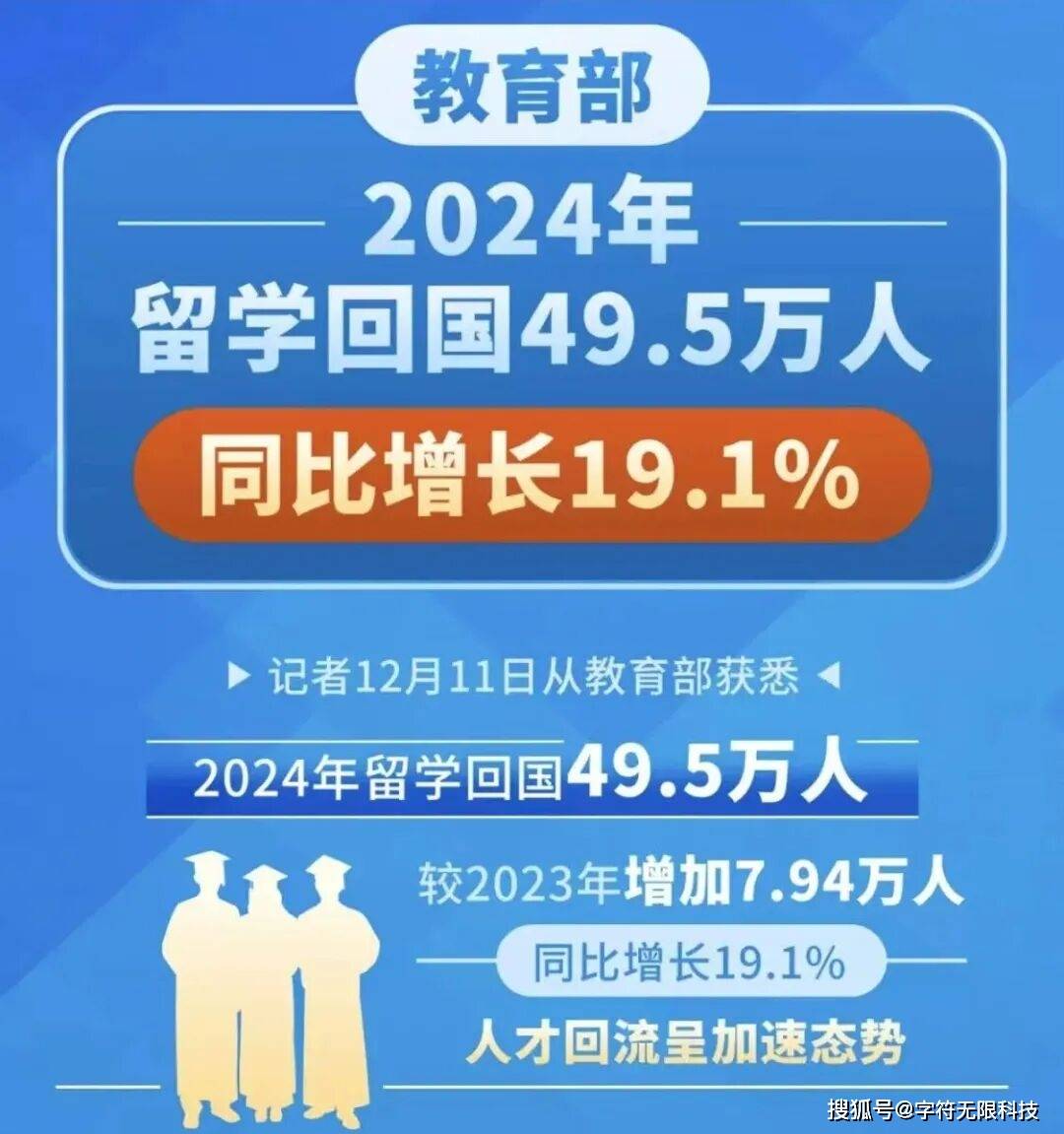
Group 1 - The core trend of returning overseas students is confirmed, with the number of returnees in 2024 reaching 495,000, an increase of 79,400 from 2023, representing a year-on-year growth of 19.1% [1] - From 1978 to 2024, a total of 8.88 million individuals have studied abroad, with 6.44 million choosing to return after completing their studies, indicating that two out of three students opt to return home [1] - The "returning heat" is not a short-term trend but a long-term phenomenon expected to continue for the next decade [1] Group 2 - The overseas job market is becoming increasingly challenging, with the H-1B visa acceptance rate in the U.S. dropping to a ten-year low of 14% in 2023, and other countries like the UK and EU tightening their immigration policies [3][5] - In contrast, domestic opportunities are growing, with the government integrating returning students into the national talent system, providing support for settlement, employment, and entrepreneurship [5][6] Group 3 - National policies are increasingly favorable towards returning students, with the Ministry of Education emphasizing their importance in the national talent pool and development strategy [6] - Major cities like Shanghai and Beijing have introduced attractive policies for returning students, including direct residency applications for graduates from top universities without social security payment requirements [9][10] Group 4 - Cities like Shenzhen are offering substantial subsidies for returning students starting businesses in strategic emerging industries, with potential grants reaching up to 1 million yuan [11][13] - Various provinces and cities are implementing their own entrepreneurial support and loan subsidy policies to attract overseas talent [13] Group 5 - Major tech companies are increasingly favoring returning students, with dedicated recruitment events for overseas graduates, allowing them to secure job offers independently from traditional recruitment processes [14][16] - Companies like Tencent, Huawei, and Alibaba are actively recruiting overseas talent, recognizing the need for interdisciplinary skills in emerging technology fields [16][18] Group 6 - The most popular fields for returning students include business and computer science, with business administration and finance being the top choices due to their promising career prospects [19][20] - The IT, internet, and gaming industries are significant employment sectors for returning talent, accounting for 15.4% of the job market for returnees [21] Group 7 - The domestic gaming market is thriving, with actual sales revenue reaching 350.79 billion yuan in 2024, a year-on-year increase of 7.68% [23] - Despite some companies closing overseas studios, the domestic gaming industry remains vibrant, with a significant demand for talent in game design and development [25][28]
米哈游双公司港股上市!揭秘游戏巨头的资本版图,青岛学到什么?
Sou Hu Cai Jing· 2026-01-16 14:37
Group 1 - The core focus of the article is on miHoYo's strategic investments and its dual role as both an investor and a client in the gaming and technology sectors [2][3] - miHoYo holds 7.34% of MiniMax, an AI company that provides technology for intelligent NPCs and scene generation in games, showcasing its investment and client relationship [5] - miHoYo also owns 11.86% of Suplay, which sells merchandise related to miHoYo's IP, indicating a strategy of leveraging investments to enhance its own product distribution [5][7] Group 2 - miHoYo has expanded its investment portfolio beyond gaming, venturing into AI, XR, nuclear fusion, and brain-computer interfaces, reflecting a significant shift in its business model [7][9] - The company was founded in 2011 by Cai Haoyu and has grown to become the highest-grossing game company globally (excluding the Chinese market) by 2021, with a valuation of 1.75 trillion [9][12] - The article highlights the collaboration between miHoYo and Qingdao through the "Qingdao Tongge Phase I" fund, which focuses on investing in hard technology sectors like integrated circuits and virtual reality [12][14] Group 3 - Qingdao's VR industry has lagged behind other cities, despite its historical prominence, with only one company making it to the top 50 VR companies in 2025 [14][16] - The article suggests that Qingdao can learn from miHoYo's success by fostering professional investment institutions and attracting talent to enhance its industrial development [16][20] - It emphasizes the importance of aligning investment strategies with emerging sectors and ensuring a robust supply chain to retain businesses [22][24]

这家上海游戏公司,悄悄投出3个IPO
AI研究所· 2026-01-16 11:03
Core Viewpoint - MiHoYo has established itself as a unique player in the domestic gaming industry, successfully competing with industry giants without relying on mergers and acquisitions, instead focusing on core products like "Genshin Impact" and "Honkai" series, while building a vast investment network across various sectors including AI, aerospace, and energy [1][6]. Investment Landscape - In early 2026, MiHoYo's investment strategy became more visible with the IPO applications of three companies: Suplay, MiniMax, and Soulgate, showcasing its diverse investment portfolio [2][3]. - MiHoYo holds significant stakes in these companies, being the largest external shareholder in Suplay (11.86%), an angel investor in MiniMax (approximately 6.4%), and a key institutional shareholder in Soulgate (5.47%) [3]. Strategic Focus - The investments in AI, trendy toys, and social platforms align with MiHoYo's vision of constructing a "virtual world," addressing three core aspects: technological foundation, IP monetization, and user entry points [8][9]. - MiniMax's technology is integrated into MiHoYo's games, enhancing content production efficiency and user interaction, with MiniMax's revenue reaching 380 million RMB in the first three quarters of 2025, a 174.7% year-on-year increase [13][14]. Monetization and User Engagement - Suplay has transformed its business model through MiHoYo's investment, significantly increasing its revenue from MiHoYo's IPs, which contributed over 60% of its earnings as of September 2025 [15][17]. - Soul, targeting Gen Z users, has become a crucial platform for virtual social interaction, with 390 million registered users and a daily active user rate of 1.1 million, 78.7% of whom are Gen Z [18][19]. Investment Strategy Evolution - MiHoYo's investment strategy shifted significantly in 2021, expanding beyond gaming content to include hard tech sectors like brain-computer interfaces and nuclear fusion, driven by strong cash flow from "Genshin Impact" [24][25]. - The company’s decision to avoid external investments allows it to focus on long-term strategic goals without pressure for short-term returns, with founders holding over 85% of the shares [26]. Long-term Vision - MiHoYo aims to create a virtual world that integrates social, consumer, work, and entertainment aspects, necessitating investments in diverse technologies like AI and energy [28][29]. - The company's investments are strategically aligned to build a technological foundation for this virtual world, indicating a comprehensive approach to future growth [30]. Conclusion - MiHoYo's investment strategy reflects a broader trend in the cultural technology industry, emphasizing the importance of integrating content, technology, and consumer engagement to maintain competitive advantage [32][33].
AI应用浪潮中-什么东西越涨越具吸引力
2026-01-16 02:53
Summary of Key Points from Conference Call Records Industry Overview - The media industry is currently experiencing overall weak performance, with the media index declining over 2.5% despite some segments showing investment potential [4][6] - Official media and state-owned enterprises, such as People’s Daily and Xinhua News, are gaining importance due to their high content weight, making them worthy of attention [4][12] Investment Opportunities - The gaming sector is expected to thrive in 2026, driven by multi-modal AI advancements. Companies like Kaixin Network and Century Huatong are anticipated to realize profits in 2026 [4][5] - The issuance of game licenses is expected to increase significantly in 2025, providing ample supply for the gaming industry. The total number of licenses issued in 2025 is projected to exceed 1,711, a 25% year-on-year increase [5][6] - Low-valuation gaming companies with solid fundamentals, such as Perfect World, Century Huatong, and Giant Network, are recommended for continued observation [4][5] Market Projections - The gaming market is projected to reach a peak of over 90 billion yuan in the third quarter of 2026, with an annual market size expected to hit 357 billion yuan [6] - The two-dimensional game market is anticipated to grow rapidly, potentially reaching 84.5 billion yuan by 2030, driven by a strong consumer base among post-2000 players [7] Performance of Chinese Companies - Chinese companies hold a significant position in the global mobile gaming market, with Tencent's Honor of Kings leading in revenue. Century Huatong's Endless Winter has seen explosive growth [6][8] - Chinese firms are achieving notable success in the two-dimensional game market, with several top titles developed or managed by them, such as "崩铁" and "恋与深空" [8] Trends in Game Development - The SLG (Strategy Game) category is performing well, particularly with the SLG + X model, which combines secondary gameplay to attract users. This trend is expected to continue [9] - The hybrid casual gaming segment has shown significant growth, with revenues doubling year-on-year in Q2 2025 and a staggering 114% increase in Q3 [9] Key Products and Companies to Watch - Notable upcoming products include new titles from Century Huatong, Shenzhou, Giant Network, and others, with significant IP launches expected in 2026 [10][11] Importance of Authoritative Media - In the current SEO to GO era, the reliability and accuracy of authoritative media have become crucial. The penetration rate of AI-generated content increases by 80% when information is cited by three or more authoritative sources [12] Risks for Investors - Investors should be aware of potential risks, including delays or quality issues with new game launches, international trade risks, industry regulatory risks, and the underperformance of AI technology implementation [13]