联想

Search documents
港股速报 | 港股全天走弱 南向资金回流抄底 创新药概念逆势走强
Mei Ri Jing Ji Xin Wen· 2025-11-14 08:42
Market Overview - The Hong Kong stock market experienced a decline today, with the Hang Seng Index closing at 26,572.46 points, down 500.57 points, representing a drop of 1.85% [2] - The Hang Seng Technology Index also fell, closing at 5,812.80 points, down 168.50 points, a decrease of 2.82% [5] Sector Performance - Technology stocks faced widespread declines, with Baidu Group-SW (09888.HK) dropping over 7%, JD Group-SW (09618.HK) down over 6%, and Alibaba-W (09988.HK) falling over 4% [5] - The lithium battery sector saw significant losses, with Tianqi Lithium (09696.HK) down over 4% and Ganfeng Lithium (01772.HK) down over 3% [5] - Chinese brokerage stocks weakened, with CITIC Securities (06030.HK) declining over 4% [5] - Conversely, the innovative drug sector saw gains, with Gilead Sciences-B (01672.HK) rising over 15%. The innovative drug sector reported a 36% year-on-year revenue growth in Q3, with continued quarter-on-quarter growth [5] Capital Flow - After a small net sell-off of southbound funds yesterday, there was a return of capital today, with a cumulative net purchase of Hong Kong stocks reaching 12.8 billion HKD by the end of the trading day [6] Future Outlook - Western Securities noted that the reopening of the U.S. government and the return of liquidity from the Federal Reserve could lead to a significant reversal of previous pessimistic trading assumptions. This may provide a larger rebound space for risk assets that had previously declined due to tightened liquidity [8] - The report suggests that the Hong Kong market, particularly the Hang Seng Technology Index, may benefit from this shift in liquidity, potentially leading to a strong rebound [8] - The current effective investment strategy is to maintain a positive yet cautious approach, focusing on balanced allocation and avoiding chasing high prices, while being vigilant about external factors such as U.S. Federal Reserve policies and U.S.-China relations [8]

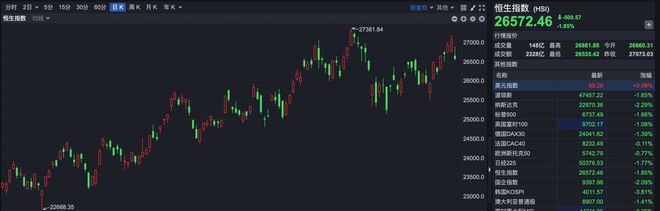
港股速报|港股全线低开 恒生科技指数跌超2%
Mei Ri Jing Ji Xin Wen· 2025-11-14 04:10
Market Overview - The Hong Kong stock market opened lower today, with the Hang Seng Index at 26,660.31 points, down 412.72 points, a decline of 1.52% [1] - The Hang Seng Technology Index reported 5,848.48 points, down 132.82 points, a decrease of 2.22% [2] Company Performance - Tencent Holdings (00700.HK) reported strong Q3 results, with revenue of 192.87 billion yuan, a year-on-year increase of 15% and a quarter-on-quarter increase of 5%. Net profit reached 63.13 billion yuan, up 19% year-on-year and 13% quarter-on-quarter. For the first nine months, total revenue was 557.40 billion yuan, a 14% increase year-on-year [4] - JD.com (09618.HK) experienced a decline in net profit, opening down 2.97%. Q3 total revenue was 299.06 billion yuan, a year-on-year increase of 14.85%, while net profit fell by 55.03% to 5.28 billion yuan [5] - SMIC (00981.HK) opened down over 1%. The company reported Q3 sales revenue of 2.38 billion USD, a year-on-year increase of 9.7% and a quarter-on-quarter increase of 7.8%. Gross margin was 22.0%, up 1.6 percentage points quarter-on-quarter, with capacity utilization rising to 95.8%, an increase of 3.3 percentage points [6] - Bilibili (09626.HK) turned a profit, opening down 3% before rebounding. Q3 net revenue was 7.69 billion yuan, a year-on-year increase of 5%, with net profit of 469 million yuan, marking a return to profitability. Daily active users reached 117 million, a 9% increase year-on-year [6] Market Trends - Recent market activity shows a clear rotation among sectors, with strong performance in biopharmaceuticals, lithium batteries, and paper industries, while energy sectors like oil and coal are under pressure due to falling international oil prices. This rotation indicates market vitality and suggests investors should pay attention to different sector drivers [7] - Despite noticeable market fluctuations, the foundation of the Hong Kong bull market remains intact, with expectations for a "volatile upward" trend driven by liquidity easing, policy support, and industrial upgrades [7]

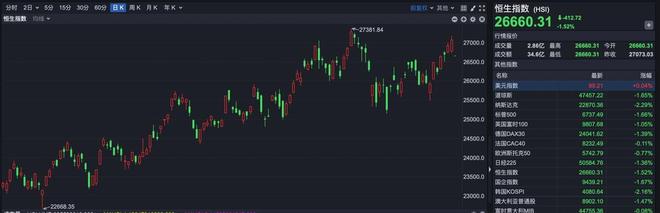
港股速报|突然反攻 恒指重回27000点 原因找到了!一个现象需警惕
Mei Ri Jing Ji Xin Wen· 2025-11-13 09:17
Market Performance - The Hong Kong stock market experienced a weak adjustment but saw a strong rebound after 2:30 PM, with the Hang Seng Index closing at 27,073.03 points, up 150.30 points, or 0.56% [1] - The Hang Seng Technology Index closed at 5,981.30 points, increasing by 47.31 points, or 0.80% [2] Alibaba's Impact - Alibaba's stock price initially fluctuated within a narrow range, with a maximum decline of nearly 1.5%, but surged after 2 PM, reaching a peak increase of over 5% before closing with a gain of 3.32% [4] - Positive news regarding Alibaba includes the secret launch of the "Qianwen" project, aimed at developing a personal AI assistant app to compete with ChatGPT, which is seen as a critical move in the AI sector [5] Investment Outlook - Alibaba is positioned as a full-stack AI service provider, with expected revenue growth and significant potential for profit margin improvement in the medium to long term [5] - The company plans to invest 380 billion yuan over the next three years, with a goal of achieving super artificial intelligence (ASI) [6] Sector Performance - The paper, non-ferrous metals, steel, electrical equipment, and semiconductor sectors showed strong performance, with notable gains from companies like Nine Dragons Paper and Ganfeng Lithium [6][7] - Despite the overall market strength, there was a notable shift in capital flows, with southbound funds ending a streak of net buying, resulting in a net sell of over 3.5 billion HKD [7][9]

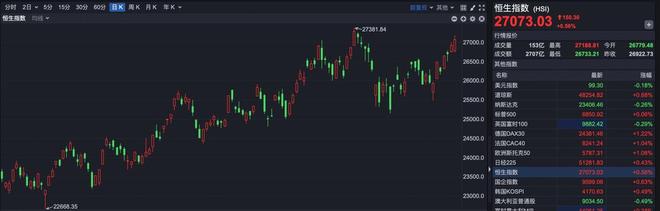
中国消费向新而行丨今年“双11” 融合有新意
Ren Min Ri Bao· 2025-11-12 02:15
Core Viewpoint - The article emphasizes the importance of expanding domestic demand as a strategic foundation, integrating consumer needs with supply, and enhancing the internal circulation of the economy during the "Double 11" shopping festival [1] Group 1: Online and Offline Integration - The "Double 11" event showcased a deep integration of online and offline shopping experiences, allowing consumers to experience products in-store while also having the option to order online for home delivery [2] - The Ministry of Commerce's initiative aims to promote the deep integration of physical retail and digital economy, enhancing retail efficiency and creating new productive forces [2] Group 2: Consumption Data and Trends - During the "Double 11" period, JD MALL's foot traffic increased by 30% year-on-year, with home goods sales rising by 191% and full-home customization sales growing nearly 7 times [3] - Meituan reported that nearly one million offline stores participated in its "Double 11" event, with significant sales increases in various categories, including over 100% growth for brands like Xiaomi and OPPO [3] Group 3: Consumption Experience and Service Integration - The event highlighted a shift from product purchasing to service enjoyment, with a focus on creating richer consumer experiences and breaking down industry barriers [4] - The automotive aftermarket saw significant growth, with tire sales on JD increasing over 4 times and car service orders rising by 165% during the event [4] Group 4: Global Market Expansion - The "Double 11" event expanded its reach to global markets, with significant sales growth in countries like Japan, South Korea, and Australia, and cross-border services seeing over 300% growth in transaction volume [5] - Taobao's international marketing efforts included a 1 billion yuan investment to help 100,000 merchants achieve doubled overseas sales during the event [5] Group 5: Supply and Demand Matching - The C2M (Customer-to-Manufacturer) model was highlighted as a successful approach for precise matching of supply and demand, with notable sales records for customized products [6] - In the 3C digital sector, the C2M model led to over 100% growth in sales, with significant customization ratios for gaming laptops and AI products [6] Group 6: Automotive Sector Innovations - The automotive sector is experiencing renewed vitality through supply-demand integration, with new energy vehicles being developed based on consumer preferences for price, space, safety, and range [7]

从工具变“数字伙伴” AI可穿戴设备“开挂”
Bei Jing Qing Nian Bao· 2025-11-11 19:03
Core Insights - The wearable device industry is evolving rapidly, with smart devices becoming essential digital partners in daily life, driven by continuous innovation from major companies like Baidu, Alibaba, and Huawei [3][4]. Market Overview - The global wearable device market is projected to reach $179.8 billion by 2024 and exceed $995.2 billion by 2034. In China, the market is expected to grow from approximately $9.9997 billion in 2024 to $22.98 billion by 2030, with a compound annual growth rate (CAGR) of about 14.3% [5]. Changing Consumer Demands - There has been a significant shift in consumer focus from "step counting" to "health improvement," with the latter rising from 0% in 2016 to 50% in 2023. Meanwhile, interest in step counting has decreased from 94.5% to 65.9% during the same period [6]. Product Innovations - Smart rings are gaining popularity due to their lightweight design and superior battery life, allowing for continuous wear without discomfort. They can monitor various health metrics, including sleep and heart rate, with some products offering features like sleep apnea detection [10][11]. AI Integration - The integration of AI technology is enhancing the functionality of smart glasses, which are being developed to serve as personal assistants capable of navigation, translation, and productivity tasks. The market for smart glasses is expected to see significant growth, with a 64.2% year-on-year increase in global shipments in the first half of the year [9]. Competitive Landscape - Major companies are launching AI smart glasses with unique features, such as hands-free recording and advanced navigation capabilities. The Chinese supply chain plays a crucial role, with over 80% of global smart glasses manufacturers based in China [9]. Future Trends - The wearable device market is expected to continue evolving towards creating an "ecosystem hub," integrating with smartphones, cars, and smart homes to provide a seamless user experience across various scenarios [6].

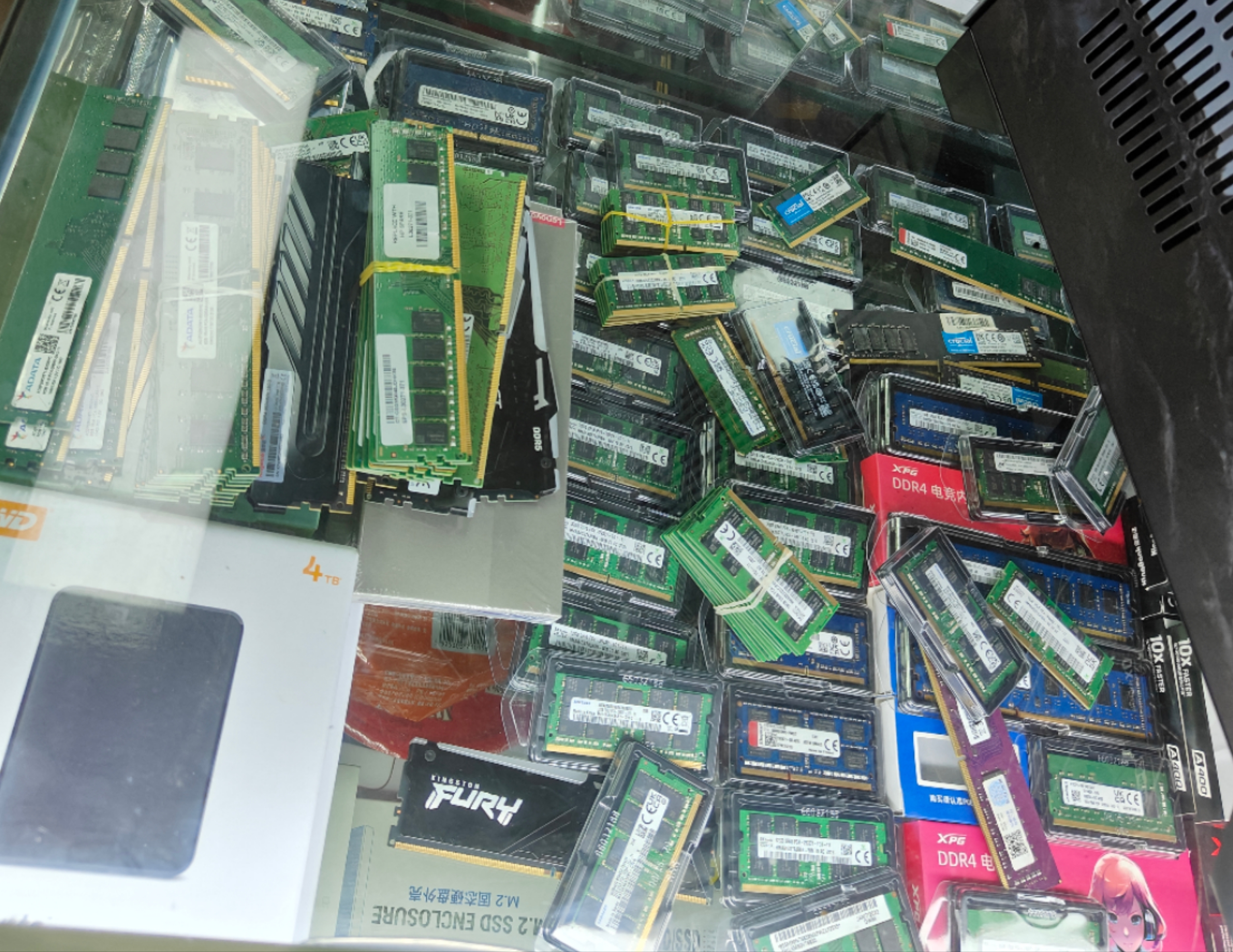
十款产品九款涨价超40%!存储价格双十一“反扑”
第一财经· 2025-11-11 10:34
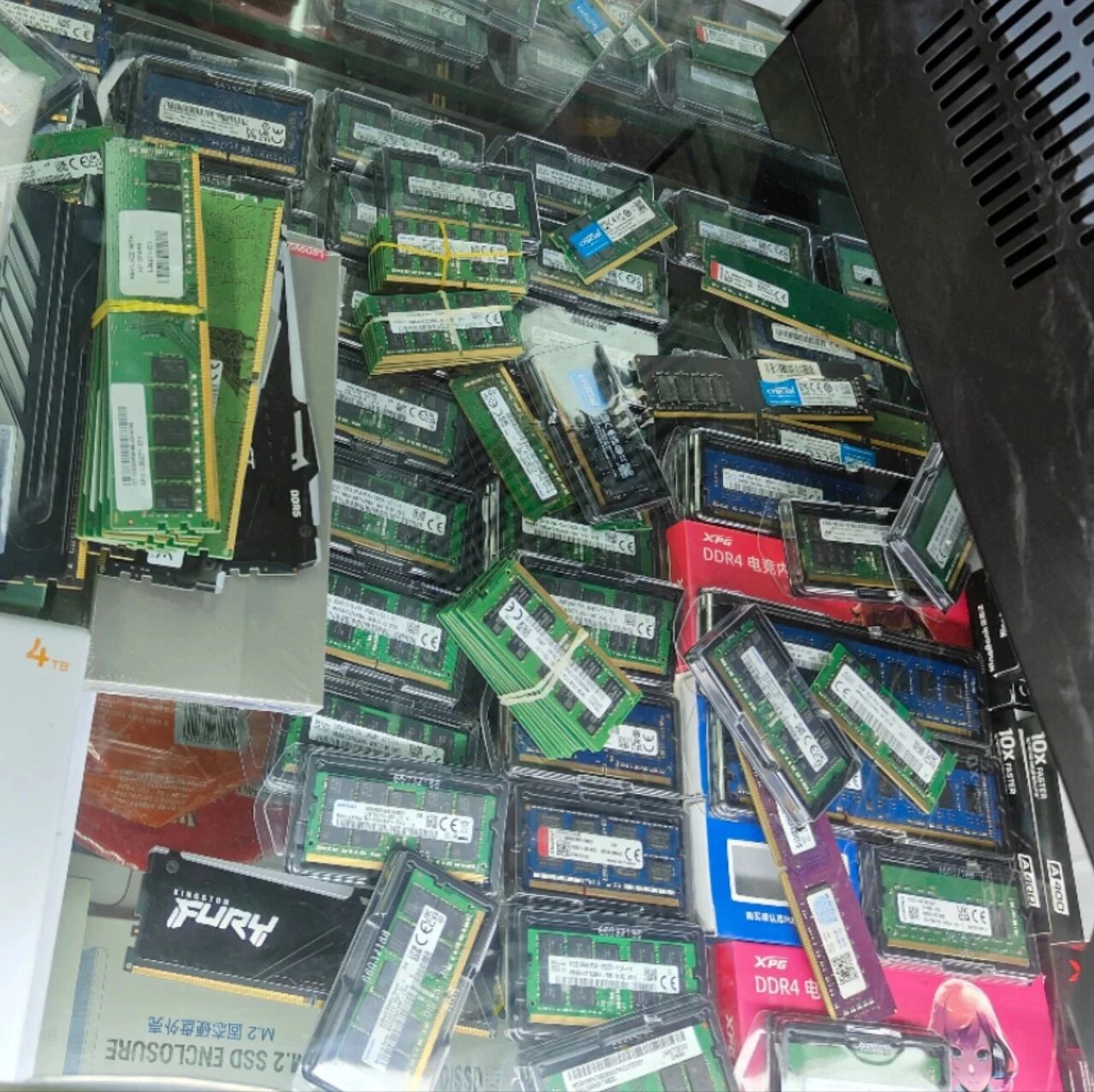
Core Insights - Storage product prices have not significantly decreased during the Double Eleven shopping festival, with some products even increasing in price compared to early November [3][4][5] - The price of DRAM and NAND flash memory has been rising due to increased demand from AI computing, leading to a supply shortage in the market [6][7] Price Trends - Many storage products on Tmall and JD have seen price increases since October, with some products experiencing price hikes of over 40% [5][6] - Specific examples include: - A G.Skill DDR5 24G×2 memory kit priced at 1899 yuan, up 400 yuan since early October [3] - An Adata DDR5 16G memory stick currently priced at 759 yuan, compared to 499-799 yuan in late October [4] - A Samsung DDR5 16G memory stick now at 849 yuan, up from below 500 yuan in early October [5] Market Dynamics - The increase in storage prices is attributed to a structural shift in production capacity towards server storage, impacting the supply for mobile and PC products [7] - TrendForce reports that the average price of DDR5 16G memory has risen by 4.24%, exceeding 23 USD, indicating a broader trend of price increases in the memory market [6][7] Stock Performance - Companies in the storage sector, such as Jiangbo Long, have seen stock prices rise significantly, with Jiangbo Long's stock increasing by 6.21% to reach a historical high [7] - Other related stocks have experienced fluctuations, with some, like Zhaoyi Innovation, seeing slight declines after reaching high prices [7]


十款产品九款涨价超40%!存储价格双十一“反扑”
Di Yi Cai Jing· 2025-11-11 10:08
Group 1 - The prices of storage products, including memory and SSDs, have increased significantly since early October, with many products currently priced higher than in early November [1][4][5] - In the Tmall memory sales ranking, several products have seen price increases, with one model rising by approximately 400 yuan since early October [1] - On JD.com, nine out of the top ten memory products have increased in price by over 40% since early October, with three products seeing price hikes of over 70% [4] Group 2 - The price of NAND flash memory products has also risen, with specific models showing price increases compared to early November [4][5] - The recent price surge in storage components is attributed to high demand driven by AI computing, which has strained storage capacity and created a supply-demand imbalance [5] - Market research indicates that the average price of DDR5 16G memory has increased by 4.24%, surpassing $23, while NAND flash prices have also seen notable increases [5] Group 3 - Storage manufacturer Jiangbolong reported that the price increase of storage wafers positively impacts the company's gross margin, leading to a stock price increase of 6.21% [6] - Some storage-related stocks have reached historical highs but have experienced corrections, with companies like Zhaoyi Innovation and Shannon Semiconductor seeing declines [6]
智元机器人完成股改;美团入局AI编程丨科技风向标
2 1 Shi Ji Jing Ji Bao Dao· 2025-11-11 02:46
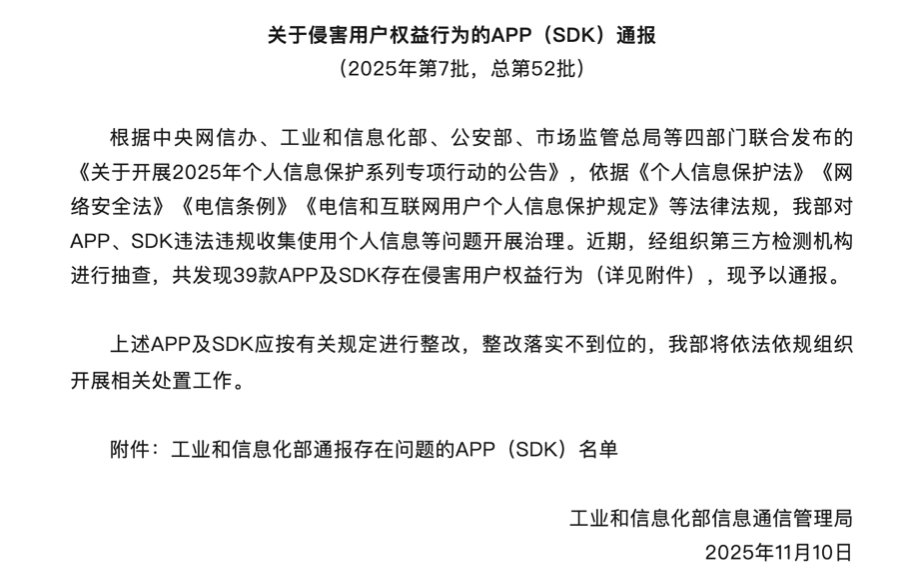
Group 1: AI and Technology Developments - Meituan has launched its first AI IDE product, CatPaw, which is currently in public testing and focuses on agent-driven programming with features like code completion and project debugging [2] - WeRide has received approval from the UAE government to operate a fully autonomous Robotaxi service in Abu Dhabi, marking a significant milestone in the Middle East for autonomous driving [13] - Baidu's Xiaodu AI glasses Pro have officially launched at a price of 2,299 yuan, with promotional pricing available, positioning it as a competitor in the AI eyewear market [25] Group 2: Corporate Actions and Financial Updates - Zhiyuan Robotics has undergone a corporate restructuring, changing its name and type to a joint-stock company, indicating a shift towards a more formal corporate structure [3] - Wenta Technology announced the completion of asset transfers related to a major sale, although some payments remain outstanding, totaling 700 million yuan and 1.61 billion yuan for various transactions [4] - Demingli is in the early stages of planning a refinancing initiative, with no specific details on the amount or method yet available, indicating potential future capital raising [6] Group 3: Partnerships and Agreements - Zhongbei Communication has signed a 1 billion yuan framework agreement with Hongxin Electronics for comprehensive computing services, highlighting a strategic partnership in high-performance computing [12] - China Mobile has participated in the D-round financing of New Stone Unmanned Vehicles, focusing on joint development in 5G vehicle networking and autonomous driving logistics [23] Group 4: Market and Regulatory Updates - The Ministry of Industry and Information Technology has reported that 39 apps, including Changba, have been flagged for violating user privacy rights, indicating increased regulatory scrutiny in the tech sector [7] - Arm plans to acquire DreamBig Semiconductor for $265 million to expand its presence in the data center and networking sectors, with the deal expected to close in the fourth quarter of the 2026 fiscal year [15][16]

智元机器人完成股改;美团入局AI编程丨新鲜早科技
2 1 Shi Ji Jing Ji Bao Dao· 2025-11-11 02:31
Group 1: Technology Developments - Meituan has launched its first AI IDE product, CatPaw, which is currently in public beta and features intelligent programming capabilities such as code completion and project debugging [2] - ZhiYuan Robotics has undergone a corporate restructuring, changing its name and type to a joint-stock company, indicating growth in the humanoid robotics sector [3] - Baidu's Xiaodu AI glasses Pro have officially launched at a price of 2,299 yuan, marking a significant entry into the AI eyewear market [23] Group 2: Corporate Transactions and Financial Updates - Wenta Technology announced the completion of asset transfers related to its sale to Luxshare Precision, with outstanding payments totaling 2.31 billion yuan yet to be settled [4] - Demingli is in the early stages of planning a refinancing initiative, with no specific details on the amount or method yet available [6] - Zhongbei Communication signed a 1 billion yuan comprehensive service framework agreement with Hongxin Electronics for high-performance computing resource services [10] Group 3: Industry Regulations and Compliance - The Ministry of Industry and Information Technology reported that 39 apps, including Changba, were found to be in violation of personal information protection regulations [7] - Douyin e-commerce clarified that rumors regarding penalties for selling Moutai below market price are unfounded, as the platform is focusing on combating false advertising [5] Group 4: Investment and Financing Activities - Tangjing Quantum has secured funding to accelerate technology development and expand production in the compound semiconductor materials sector [22] - China Mobile participated in the D-round financing of New Stone Unmanned Vehicles, aiming to enhance collaboration in 5G vehicle networking and autonomous driving [21] - Lingzhi Software is planning to acquire 100% of the shares of Kaimiride through a combination of cash and stock issuance, indicating a significant move in the financial IT services market [19]



AI广告,总是「降本增笑」?
3 6 Ke· 2025-11-10 23:41
Core Viewpoint - The rise of AI-generated advertisements, exemplified by Coca-Cola's recent holiday campaign, has sparked widespread criticism for lacking emotional depth and creativity, leading to a phenomenon described as "cost-cutting humor" rather than effective branding [1][3][12] Group 1: AI Advertising Trends - AI advertising has become a prevalent trend in the industry, with major brands like Coca-Cola, Nutella, Google, and H&M adopting AI to produce content more efficiently [8][16] - The initial promise of AI in advertising was to reduce costs and production time, allowing brands to generate materials in a fraction of the time previously required [10][16] - However, the actual outcome has often been a dilution of creativity and emotional resonance, with AI-generated content frequently criticized for its lack of authenticity and connection to audiences [3][12][15] Group 2: Audience Reception and Impact - The audience's reaction to AI advertisements often centers around their absurdities and technical flaws, rather than the intended brand message, leading to a focus on generating buzz rather than meaningful engagement [18][21] - Social media dynamics amplify this disconnect, where negative feedback can inadvertently increase visibility, leading brands to embrace this as a strategy for engagement [18][21] - The shift towards AI-generated content has resulted in a new advertising ecosystem where being ridiculed is sometimes preferable to being ignored, complicating the relationship between brands and consumers [21][23] Group 3: Future Implications - The trend of AI in advertising is likely to extend into other creative industries, such as film and television, potentially leading to a broader cultural shift where human creativity is undervalued [23][25] - As AI-generated content becomes more ubiquitous, there may be a future demand for human-created works to be marketed as unique and authentic, highlighting a potential backlash against AI reliance [25] - The long-term consequences of prioritizing efficiency over creativity could lead to a significant loss in the cultural and emotional depth of advertising and media [25]