52TOYS

Search documents
情绪消费托起千亿级潮玩产业
Mei Ri Shang Bao· 2025-08-28 22:18
Group 1: Company Overview - TOP TOY, a潮玩 brand under Miniso Group, recently received investment from Temasek, resulting in a post-investment valuation of approximately HKD 10 billion [1] - Established in December 2020, TOP TOY positions itself as a "global潮玩 collection store," offering over 10,000 SKUs across eight categories, with price ranges from 39 yuan to tens of thousands [1] - The company has adopted a dual-driven model of "licensed IP + original IP," with significant growth expected from its exclusive IP "Nommi糯米儿," projected to generate over 1 billion yuan in revenue across all channels in 2024 [1] Group 2: Industry Growth - The潮玩 market in China is in a rapid growth phase, with projections indicating that the industry scale will reach 110.1 billion yuan by 2026 [2] - A preliminary "IPO ladder" is forming in the潮玩 industry, with brands like 布鲁可 and 卡游 making significant strides towards public offerings, attracting substantial investor interest [2] - 布鲁可's IPO was notably successful, achieving a subscription rate of 6000 times during its offering phase, while 卡游 is expected to surpass 10 billion yuan in revenue in 2024 [2] Group 3: International Expansion - Leading潮玩 companies are prioritizing international expansion, with 泡泡玛特 establishing a localized global operation since 2018, achieving overseas revenue of 5.593 billion yuan in the first half of 2025, a year-on-year increase of 439.6% [3] - TOP TOY is expanding into Southeast Asia through a dual model of "store-in-store + independent stores," with its搪胶毛绒 series contributing 35% to overseas sales in Q1 2025 [3] - 布鲁可's overseas revenue share increased from 2% in 2024 to over 1 billion yuan in the first half of 2025, representing 8.3% of total revenue [3]


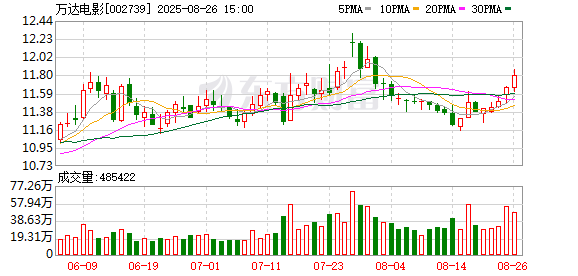
万达电影:2025年计划开业100家时光里艺术商店,将覆盖丰富的潮玩衍生品
Mei Ri Jing Ji Xin Wen· 2025-08-26 14:59
Core Viewpoint - Wanda Film is actively expanding its IP toy business by leveraging its extensive cinema resources and plans to open 100 "Time Space" art stores by 2025, focusing on immersive experiences and diverse product offerings [2] Group 1: Business Strategy - The company is utilizing its over 700 cinema locations to create immersive IP experience spaces called "Time Space," which will integrate toy retail, themed exhibitions, and limited-time events [2] - Wanda Film's subsidiary, Ying Shiguang, is transitioning towards a trend entertainment company by focusing on IP incubation, AI interactive experiences, and comprehensive consumer engagement [2] - The company has a diverse IP resource library that includes its own film and game IPs, leading licensed IPs, original IPs, and co-created IPs with artists [2] Group 2: Partnerships and Collaborations - Wanda Film has strategically invested in the IP toy brand "52TOYS," initiating collaboration in product development, marketing, and other related areas to enhance mutual benefits [2] - The partnership aims to leverage each other's strengths to boost the company's non-ticket revenue streams [2] Group 3: Future Plans - The company is in the early stages of these initiatives and is actively promoting them, with specific progress and developments to be disclosed in regular reports [2]


潮玩行业研究:潮玩千亿赛道空间广阔,文化与全球化打开成长天花板
Yuan Da Xin Xi· 2025-08-26 11:09
Group 1 - The industry is transitioning into a new development stage characterized by innovation-driven features, with a blend of various cultural elements such as traditional Chinese culture, anime, sci-fi, and trendy art [1][15][16] - The market for trendy toys is experiencing exponential growth, with the global retail market size increasing from $8.7 billion in 2015 to $19.8 billion in 2019, and projected to reach $44.8 billion by 2024, demonstrating strong resilience through economic cycles [3][25][26] - The Chinese trendy toy market has grown from 6.3 billion yuan in 2015 to 34.5 billion yuan in 2021, with an average annual growth rate of 34%, and is expected to maintain a compound growth rate of 24% from 2022 to 2026, potentially exceeding 110.1 billion yuan by 2026 [3][26][30] Group 2 - The industry is driven by a dual engine of IP licensing and original design, with leading companies building extensive IP matrices through self-owned and licensed IPs, enhancing product offerings across various categories [2][19][20] - The consumer base for trendy toys is expanding, with Z generation (born 1995-2009) representing 38.4% of the market, and a notable increase in adult consumers, particularly women aged 15-25, who account for 65% of plush toy purchases [12][36] - The competitive landscape is becoming increasingly complex, with over 49,000 companies in the trendy toy sector as of 2024, and new registrations growing by 34% year-on-year [41][43] Group 3 - The integration of new technologies such as AR and AI is reshaping product experiences and industry paradigms, enhancing interactivity and personalization in trendy toys [20][21][54] - The rise of domestic cultural IPs is significantly increasing market penetration, with companies like Pop Mart and 52TOYS developing a robust portfolio of original IPs [37][39] - The market is witnessing a diversification of product categories beyond blind boxes and figurines, including assembly blocks, plush toys, and trading cards, catering to a wide range of consumer preferences [2][20][33]
泡泡玛特引爆潮玩上市潮:窗口期盛宴还是盲盒赌局?
3 6 Ke· 2025-08-26 11:09
Core Viewpoint - The article highlights the surge of Chinese潮玩 (trendy toy) brands entering the global market, exemplified by the grand opening of Pop Mart's flagship store in Bangkok and its impressive financial performance, indicating a broader trend of IPOs in the潮玩 industry driven by consumer sentiment and favorable market conditions [2][3][4]. Group 1: Market Performance and Financial Highlights - Pop Mart reported a record half-year revenue of 138.8 billion RMB, a year-on-year increase of 204.4%, and an adjusted net profit of 47.1 billion RMB, up 362.8% [3]. - Following the financial report, Pop Mart's stock price surged to 326 HKD per share, with a market capitalization exceeding 430 billion HKD [3]. - TOP TOY, a潮玩 brand under Miniso, received a new round of investment led by Temasek, with a post-investment valuation of approximately 10 billion HKD [3]. Group 2: Industry Trends and Consumer Behavior - The潮玩 industry is experiencing a "sentiment consumption" boom, where consumers are increasingly willing to spend on products that provide immediate joy, especially during economic uncertainty [5]. - The younger generations (post-90s and post-00s) are becoming the main consumer group, showing a preference for潮玩 and other experiences that offer emotional satisfaction rather than traditional big-ticket items [5]. - The current market environment has created a rare valuation window for consumer brands, with several潮玩 companies preparing for IPOs amid a wave of successful listings in the Hong Kong market [6][8]. Group 3: Competitive Landscape and Global Expansion -潮玩 companies are adopting similar strategies for global expansion, focusing on Southeast Asia, particularly Thailand, which has a large young consumer base and is a tourism hub [10][13]. - The competitive edge lies in the ability to leverage popular IPs and create engaging marketing campaigns, often involving celebrity endorsements and social media buzz [11][14]. - Companies like TOP TOY and 52TOYS are investing heavily in IP development and partnerships to maintain relevance and drive sales, indicating a trend towards continuous innovation and adaptation [14][15]. Group 4: Strategic Considerations for IPOs - The rush to IPO is not merely for capital but also for strategic positioning, allowing companies to exit early investors and secure funds for future growth [9][15]. - Each潮玩 company has its unique approach, with TOP TOY leveraging its relationship with Miniso for supply chain advantages, while 52TOYS focuses on established IPs to drive sales [15][16]. - The overall strategy emphasizes rapid expansion and securing market share, as companies race to capture the attention of young consumers before the market dynamics shift [17]. Group 5: Future Outlook and Challenges - The潮玩 industry faces the challenge of sustaining interest in IPs, as the lifecycle of popular characters can be short-lived, necessitating ongoing investment in new content and partnerships [14][19]. - The current IPO frenzy may resemble a gamble, with companies hoping to replicate the success of Pop Mart, but the unpredictability of consumer preferences poses a significant risk [18][19]. - The long-term success of潮玩 brands in the global market will depend on their ability to innovate and adapt to changing consumer trends while effectively managing their growth strategies [19].
中期业绩扭亏为盈,中国儒意如何凭产业协同战略“深蹲起跳”?
Zhi Tong Cai Jing· 2025-08-26 03:09
Core Viewpoint - The company has demonstrated significant financial improvement in the first half of the year, with revenue reaching RMB 2.206 billion, a year-on-year increase of 20%, and a net profit of RMB 1.228 billion, successfully turning a profit, with adjusted net profit growing by 140% to RMB 1.303 billion, indicating a substantial enhancement in profitability [1] Group 1: Business Performance - The company's three core businesses—film, streaming media, and gaming—are working in synergy, driving substantial growth [2][7] - The content production segment generated RMB 570 million in revenue, with several popular films contributing significantly to the company's performance [2] - The gaming segment has become a new growth engine, with revenue of RMB 1.21 billion, reflecting a 40% year-on-year increase [5][6] Group 2: Future Growth Drivers - Multiple high-quality films are set to be released, providing strong momentum for future earnings growth [3] - The company is actively integrating AI technology into its operations, enhancing user experience and content personalization [4][6] - The company has made strategic investments in emerging sectors such as trendy toys and financial technology, expanding its business landscape [7][8] Group 3: Strategic Initiatives - The acquisition of 30% stake in Kuaiqian for RMB 240 million marks the company's entry into the third-party payment and fintech sector, enhancing its ecosystem [8][9] - The collaboration with 52TOYS in the trendy toy sector aims to tap into the growing "Guzi economy" and strengthen emotional connections with younger audiences [7] - The company is focused on creating a closed-loop of "content payment + fintech," which is expected to enhance its operational capabilities and drive new revenue streams [9]
中期业绩扭亏为盈,中国儒意(00136)如何凭产业协同战略“深蹲起跳”?
智通财经网· 2025-08-26 03:07
Core Viewpoint - The company has reported strong financial performance for the first half of the year, with revenue of RMB 2.206 billion, a year-on-year increase of 20%, and a net profit of RMB 1.228 billion, marking a significant turnaround from losses, with adjusted net profit rising 140% to RMB 1.303 billion, indicating a substantial improvement in profitability [1] Group 1: Business Performance - The content production segment generated revenue of RMB 570 million, driven by several successful film releases, including "Detective Chinatown 1900," which achieved a box office of RMB 3.6 billion, and "The Lychee of Chang'an," which reached RMB 647 million [2] - The game segment has become a new growth engine, with revenue of RMB 1.21 billion, reflecting a 40% year-on-year increase, supported by the successful launch of multiple new games [5] - The company is actively expanding into new business areas such as trendy toys and financial payments, enhancing its growth potential [7][8] Group 2: Strategic Initiatives - The company is focusing on synergistic effects among its three core businesses: film, streaming, and gaming, which are driving significant growth [1][5] - The company has made strategic investments, including acquiring a 30% stake in Kuaiqian for RMB 240 million, entering the third-party payment and fintech sector, which is expected to enhance its ecosystem [8][9] - The company is leveraging AI technology across its operations, improving content personalization and user experience in both streaming and gaming [6][4] Group 3: Future Outlook - The company anticipates further revenue growth in the second half of the year, supported by the release of several new films and games [1][2] - The integration of payment solutions with existing services is expected to create new revenue streams and enhance operational efficiency [9] - The overall strategic layout is clear, with significant collaborative effects expected to drive sustainable growth and open new avenues for profitability [9]
跨界步入新层次,《龙石战争》× 猛兽匣联动揭示的IP长线运营之道
Guan Cha Zhe Wang· 2025-08-23 07:35
Core Insights - The integration of gaming and toys is driving the next phase of China's gaming industry, with the market for the "Guzi economy" projected to reach 168.9 billion yuan in 2024 and the broader pan-anime and peripheral market expected to hit 597.7 billion yuan [1][3] Group 1: Market Dynamics - The gaming and toy sectors are experiencing a convergence, with significant market potential highlighted by the 2025 "Consumption Promotion Special Action Plan," which supports gaming, esports, and derivative products [3][4] - The collaboration between Jingxiu Games' "Dragon Stone War" and 52TOYS' IP "Beast Box" exemplifies this trend, leveraging shared IP ecosystems to enhance user engagement and explore the potential of the "he economy" [3][4] Group 2: User Engagement - The partnership targets a male audience that values strategy and emotional connections, with both brands focusing on "hardcore entertainment" [6][4] - "Dragon Stone War" features gameplay centered on strategy and dragon nurturing, while "Beast Box" is known for its unique design and storytelling, creating a complementary value loop [4][6] Group 3: Innovative Gameplay and Features - The collaboration introduces new gameplay elements in "Dragon Stone War," including the "Wind Tower" and a new hero, "Dio," which aligns with the mechanics of the "Beast Box" series [9][11] - Events like the "Golden Dragon City" and "Blind Box Party" integrate toy collection mechanics into the game, enhancing user experience through interactive elements [11][13] Group 4: IP Ecosystem and Resource Integration - The partnership exemplifies a dual operation model of "virtual and physical," extending the IP lifecycle and creating a healthy ecosystem where gaming and merchandise sales reinforce each other [13][15] - The integration of offline experiences, such as pop-up events, enhances player engagement and reflects the industry's adaptability to trends [17][19] Group 5: Future Outlook - The collaboration signifies a shift from competition based on traffic to one focused on IP value, with the potential for revenue growth and user acquisition [27][20] - The strategies employed by Jingxiu Games and 52TOYS provide a reusable template for IP-driven operations in the SLG category, indicating promising future developments [27][25]

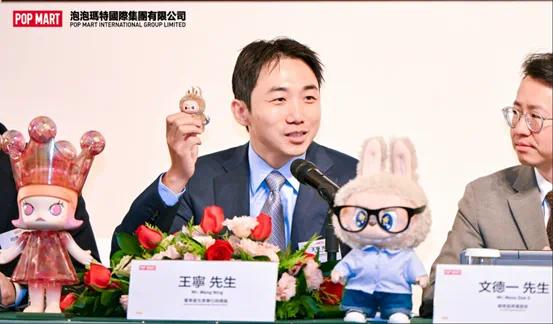
王宁掏出迷你版LABUBU
36氪· 2025-08-22 13:47
Core Viewpoint - The article discusses the impressive growth of Pop Mart, driven by the popularity of its LABUBU product, and highlights the challenges and expectations for future growth in the collectible toy market [4][10][12]. Financial Performance - In the first half of 2025, Pop Mart reported revenue of 138.8 billion RMB, a year-on-year increase of 204.4%, and an adjusted net profit of 47.1 billion RMB, up 362.8% [7]. - The LABUBU series generated 48.1 billion RMB in revenue, accounting for 34.7% of total revenue, significantly higher than previous years [7]. - The contribution of plush toys to Pop Mart's revenue rose from approximately 10% last year to 44% this year [7]. Market Expansion - Pop Mart experienced substantial growth in overseas markets, with revenue increases of 1142.3% in the Americas and 729.2% in Europe [8]. - The company opened 19 new stores in the U.S., making it the largest overseas market for Pop Mart, surpassing Hong Kong, Macau, and Taiwan [15]. - The average selling price in overseas markets increased by nearly 30% due to tariffs, yet consumer enthusiasm remained strong [17]. Product Strategy - The upcoming Mini LABUBU is expected to enhance its market presence and usage scenarios, potentially becoming a new hit product [4][5]. - Pop Mart is focusing on creating new IPs to sustain growth, with CRYBABY and Star People being highlighted as emerging characters [31][32]. Market Sentiment - Following the financial report, Pop Mart's stock price surged, reaching a historical high of 315.40 HKD per share, with a market capitalization exceeding 425.44 billion HKD [8]. - Despite optimism from mainstream institutions, there are concerns regarding the sustainability of LABUBU's popularity and the company's high valuation [10][11]. Competitive Landscape - The article notes that while Pop Mart currently faces no significant domestic competitors, the high profit margins in the collectible toy sector have attracted new entrants [36][37]. - Other companies in the collectible toy space, such as 52TOYS and TOP TOY, are noted to have weaker IP development compared to Pop Mart [36][38].

淡马锡,投了叶国富
3 6 Ke· 2025-08-22 08:35
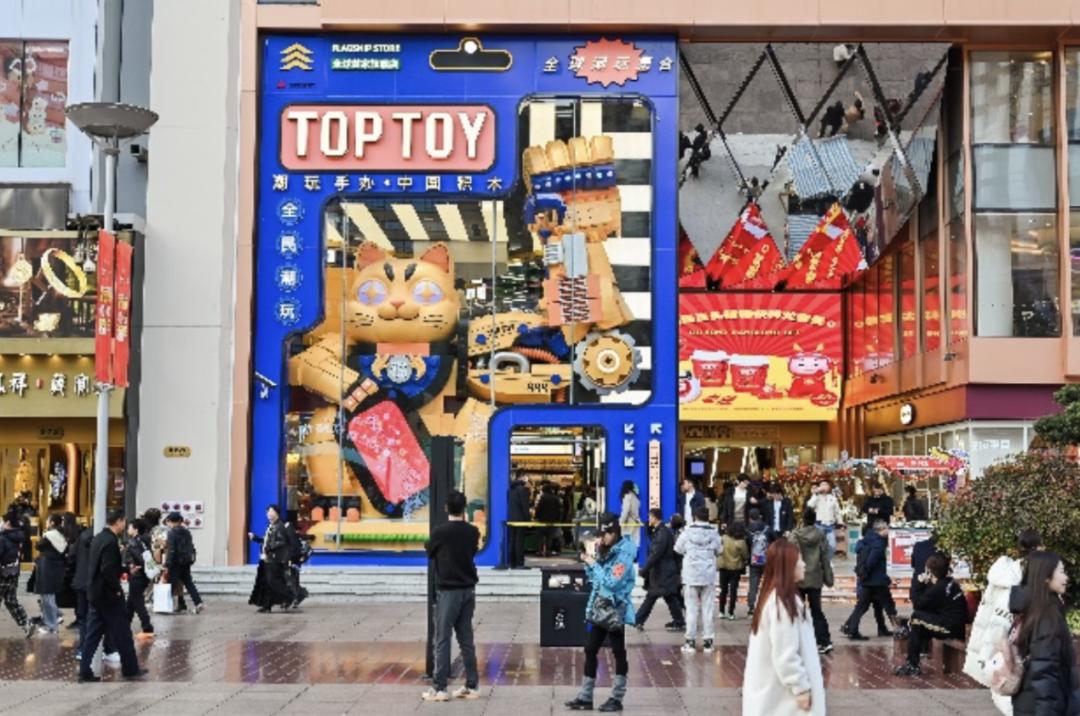
Core Insights - Miniso's subsidiary TOP TOY has secured strategic financing led by Temasek, achieving a post-investment valuation of approximately HKD 10 billion, indicating strong market recognition for its position in the global toy market [1][4][5] - TOP TOY's revenue for Q2 reached RMB 400 million, reflecting a year-on-year increase of 87%, and the brand is projected to become a new growth driver for Miniso [4][5] - The rapid expansion of TOP TOY, with 293 stores currently and plans for over 1,000 stores globally in the next five years, highlights the brand's aggressive growth strategy [2][4] Company Overview - TOP TOY, launched in late 2020, operates independently under Miniso and focuses on trendy toys, having over 10,000 SKUs across various categories [2][4] - The brand's global strategy includes opening stores in countries like Thailand, Indonesia, and Malaysia, with a goal of achieving over 50% of sales from international markets [4][5] - Miniso is evaluating the potential for a separate IPO for TOP TOY, which could further enhance its market presence [5][8] Market Context - The toy market, particularly the trendy toy segment, is experiencing significant growth, with competitors like Pop Mart achieving record performance and a market capitalization exceeding HKD 420 billion [1][9] - The competitive landscape is evolving, with various companies in the toy sector preparing for IPOs, indicating a robust interest in the market [10][11] - The rise of interest in IP-driven products among younger consumers is driving the growth of the toy industry, positioning companies that can effectively engage this demographic for future success [11]
淡马锡,投了叶国富
投资界· 2025-08-22 07:22
Core Viewpoint - The article highlights the booming trend of trendy toys, particularly focusing on the strategic financing of TOP TOY, a brand under Miniso, which has received significant investment from Temasek, leading to a post-investment valuation of approximately 10 billion HKD [2][5]. Group 1: TOP TOY's Growth and Market Position - TOP TOY reported a revenue of 400 million RMB in Q2 this year, marking an 87% year-on-year increase, and its total revenue for the first half of 2025 reached 740 million RMB, a 73% increase [8]. - The brand has expanded its store count to 293, with 98 new stores opened year-on-year, and plans to continue its aggressive expansion strategy [6][8]. - TOP TOY is exploring the possibility of a separate IPO, with aspirations to achieve this within three years, indicating a strong growth trajectory [9]. Group 2: Market Dynamics and Comparisons - The trendy toy market is experiencing significant growth, with competitors like Pop Mart achieving record performance, reporting a 204.4% year-on-year revenue increase to 13.88 billion RMB in the first half of 2025 [15]. - TOP TOY differentiates itself from Pop Mart by focusing on the secondary creation of major IPs, while Pop Mart primarily develops its own IPs [16]. - The article notes a growing consensus in the investment community that capturing the Z generation market is crucial for future success, as evidenced by various new entrants and IPOs in the trendy toy sector [18].