长安汽车

Search documents
L3级辅助驾驶落地在即 相比L2有何区别?
Xin Lang Cai Jing· 2025-12-26 06:42
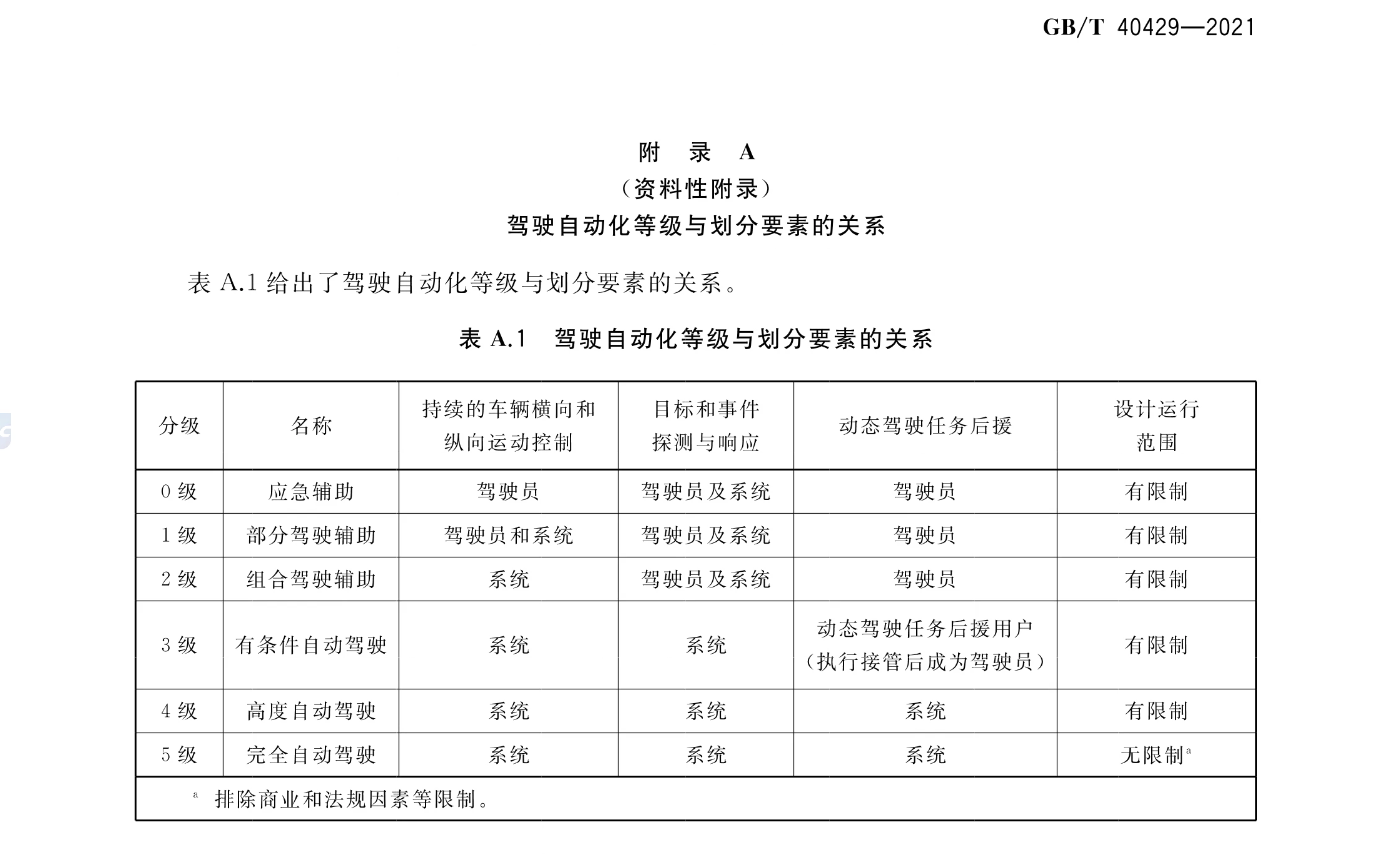
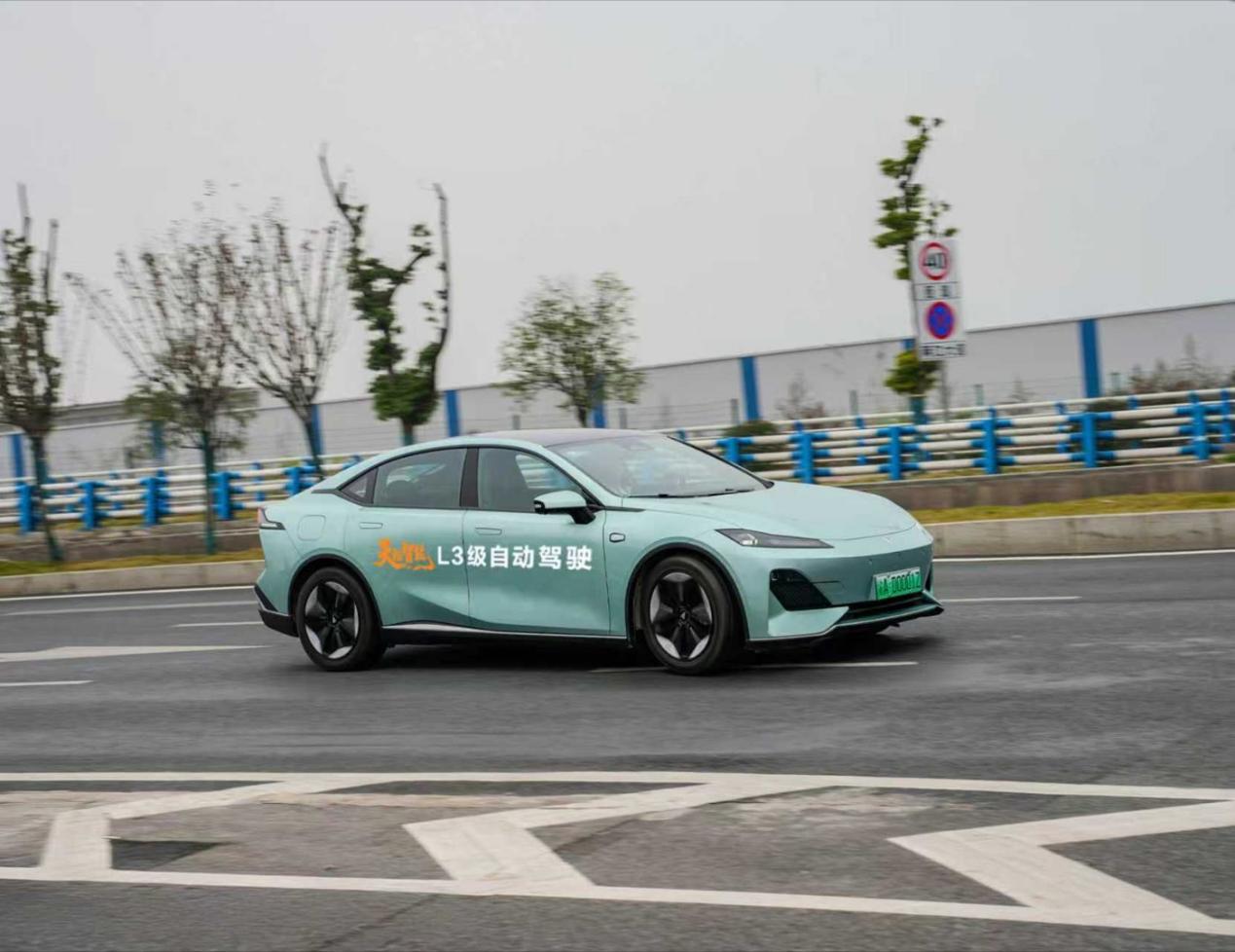
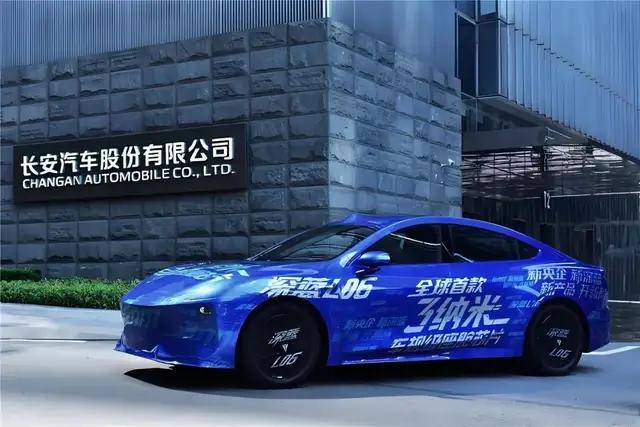
Core Viewpoint - The approval of L3 conditional autonomous driving for Changan Deep Blue and Arcfox models marks a significant advancement in China's autonomous driving technology, transitioning from "assisted driving" to "conditional driving" [1] Classification of Driving Automation Levels - China's driving automation levels are defined by the standard "Automotive Driving Automation Classification" (GB/T 40429-2021), which categorizes driving automation from Level 0 to Level 5 based on the execution capability of dynamic driving tasks [1] - Level 2 (Partial Automation) requires the driver to monitor the environment continuously, while Level 3 (Conditional Automation) allows the system to perform all dynamic driving tasks under specific conditions, with the driver needing to take over only when requested [4][5] Technical Differences Between L2 and L3 - L2 relies on a combination of cameras and millimeter-wave radar with processing power typically ≤100 TOPS, while L3 requires a more advanced setup with laser radar and multi-sensor fusion, demanding processing power ≥500 TOPS [8] - L3 systems feature dual-loop control and redundancy in braking systems, enhancing safety by ensuring functionality even if a single hardware component fails [10] Legal and Responsibility Framework - The key distinction between L2 and L3 is the shift in responsibility; L2 is "human-led, system-assisted," while L3 is "system-led, human fallback," clarifying liability during system activation and takeover requests [11] - Recent regulations from the Ministry of Industry and Information Technology outline the approval and operational rules for L3/L4 autonomous vehicles, establishing a legal framework for responsibility allocation [13] User Experience and Safety - L3 offers significant improvements in user experience, allowing drivers to disengage from constant monitoring under certain conditions, with manufacturers bearing liability in case of accidents [14] - Testing data indicates that L3 systems have a lower takeover rate compared to L2, with a response time of at least 10 seconds for drivers to take control when requested [14] Challenges and Future Outlook - Despite initial approvals, widespread adoption of L3 technology faces challenges including technical validation, regulatory refinement, and user education [15] - The government plans to expand L3 pilot programs and enhance related legal frameworks to promote the development of the autonomous driving industry [15]

三家股份行AIC首投均已落地 都投了什么?
2 1 Shi Ji Jing Ji Bao Dao· 2025-12-26 06:31
Core Insights - Three joint-stock banks under the AIC model have successfully completed their first external investments within a month of their establishment, focusing on technology-related sectors [1] Group 1: Investment Activities - Xingyin Investment has made at least three external investments, primarily in the lithium battery industry, including a C-round investment of 1 billion yuan in Ganfeng Lithium [2] - Zhaoyin Investment has also completed its first investment, contributing 5 billion yuan to Changan Automobile's subsidiary, Deep Blue Automotive, which is involved in intelligent vehicle technology [3] - Xinyin Jintou has invested approximately 64.42 million yuan in Shenzhen Ganghua Clean Energy, acquiring a 49% stake in the company [4] Group 2: Sector Focus - The three AICs have distinct sector focuses: Xingyin Investment targets the lithium battery and environmental refrigerant sectors, Zhaoyin Investment is concentrated on the smart automotive industry, and Xinyin Jintou is focused on clean energy [5] - Xingyin Investment's projects align with national "dual carbon" goals, emphasizing support for new energy and high-end manufacturing [5] Group 3: Strategic Collaborations - Xingyin Investment has signed project cooperation agreements with 12 companies, with a total intended investment exceeding 10 billion yuan [6] - Zhaoyin Investment's collaboration with Changan Automobile reflects a unique synergy within the bank's ecosystem, potentially leading to further capital market activities [6] - Xinyin Jintou aims to leverage its AIC license and resources from CITIC Group to serve local enterprises in the Guangdong-Hong Kong-Macao Greater Bay Area [7]
深蓝汽车完成C轮融资 总额61亿元
Zhong Guo Zhi Liang Xin Wen Wang· 2025-12-26 06:22
Group 1 - Changan's subsidiary, Deep Blue Automotive, has completed a Series C financing round totaling 6.122 billion yuan [1][3] - The financing was jointly contributed by Changan Automobile, Chongqing Yufu Holding Group Co., Ltd., and China Merchants Bank Financial Asset Investment Co., Ltd. [1][3] - Following the financing, Changan Automobile's shareholding remains at 50.9959%, while Yufu Group and China Merchants hold 12.0934% and 2.4187% respectively [3] Group 2 - The capital increase includes 3.122 billion yuan from Changan, which consists of 2.079 billion yuan in cash and intangible assets valued at 1.043 billion yuan [3] - Yufu Group contributed 2.5 billion yuan in cash, sourced from its own funds [3] - China Merchants invested 500 million yuan in cash, also from its own funds [3]

京东工业黄恺:以数智供应链为翼,护航中企出海高质量发展
Xin Lang Cai Jing· 2025-12-26 04:43
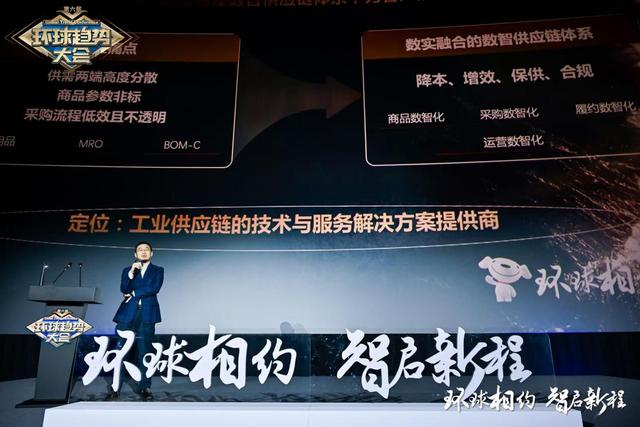
Core Insights - The article discusses the increasing importance of globalization for Chinese enterprises, particularly in the industrial sector, with overseas revenue for some leading companies reaching 30%-40% and showing steady growth [1][3] - JD Industrial aims to build a reliable global service system for outbound industrial enterprises, emphasizing the stability and reliability of supply chains over mere expansion speed [1][3] Group 1: Challenges in Global Expansion - Chinese enterprises face significant challenges when expanding overseas, including complex product standardization, tax system differences, and precise supply-demand matching [3] - Cross-border supply chains encounter notable pain points, such as high logistics costs, compliance standard discrepancies, and weak local supply chain infrastructure in emerging markets [3][5] - Common issues for outbound enterprises include difficulties in finding products, high prices, and delays in fulfillment, particularly concerning non-production materials [3][5] Group 2: JD Industrial's Global Strategy - JD Industrial has made progress in its globalization strategy, establishing partnerships in key overseas markets like Brazil and Indonesia, focusing on resource integration and local fulfillment networks [5] - The company has set up service bases in Vietnam, Thailand, and Hungary, providing services to over 100 enterprises across various sectors, including automotive manufacturing and electronics [5] - JD Industrial has identified three core phases of enterprise globalization and developed four supply chain solutions tailored to each phase, addressing specific needs such as project progression, cost control, and operational efficiency [5][6] Group 3: Technological Advancements - The application of smart technology is a core advantage for JD Industrial in serving outbound enterprises, with significant data accumulation through AI in the past year [6] - The use of the industrial large model JoyIndustrial has drastically reduced material matching time from one week to minutes, enhancing operational efficiency [6] - Supply chain resilience is identified as a key support for global expansion, characterized by visibility, selectivity, and controllability, which are essential for effective overseas operations [6][7]
61亿融资难掩困局,深蓝汽车的“输血”与“失血”赛跑
Sou Hu Cai Jing· 2025-12-26 04:24
Group 1 - The core point of the article highlights that despite the significant financing of 6.122 billion yuan, Deep Blue Automotive is still facing severe financial challenges, including continuous losses and an inability to meet sales targets [2][5][12] - Deep Blue Automotive completed a Series C financing round with contributions from Changan Automobile, Chongqing Yufu Holdings, and China Merchants Bank Financial Asset Investment Co., totaling 6.122 billion yuan, which increased its registered capital from approximately 328 million yuan to 466 million yuan [3][12] - The financing structure includes 3.122 billion yuan from Changan Automobile, which consists of 2.079 billion yuan in cash and 1.043 billion yuan in intangible assets, while Chongqing Yufu and China Merchants contributed 2.5 billion yuan and 500 million yuan in cash, respectively [3][12] Group 2 - Financial data reveals that as of October 31, 2025, Deep Blue Automotive has total assets of 31.474 billion yuan and total liabilities of 35.986 billion yuan, indicating a negative net asset position for three consecutive years [5][12] - Since its independent operation in 2022, Deep Blue has accumulated losses of 8.899 billion yuan, with annual losses of 3.196 billion yuan in 2022, 3.107 billion yuan in 2023, and 1.571 billion yuan in 2024, alongside a loss of 1.025 billion yuan in the first ten months of 2025 [5][12] - Despite achieving a monthly sales volume of around 30,000 units, which is considered the breakeven point, Deep Blue has not managed to stop its financial bleeding, indicating deeper issues in cost structure, product pricing, and operational efficiency [5][12] Group 3 - Deep Blue Automotive has failed to meet its annual sales targets for three consecutive years, with a reported global sales volume of 33,060 units in November 2025, representing an 8.2% year-on-year decline [6][12] - The best-selling model, the Deep Blue S05, accounted for nearly half of the total sales in November, highlighting a reliance on lower-end models rather than the higher-end offerings [6][12] - The performance of higher-end models like the Deep Blue S09 and G318 has been disappointing, with monthly sales below 2,000 units and only a few hundred units, respectively [7][12] Group 4 - Deep Blue Automotive's brand trust has been severely impacted due to consumer dissatisfaction, particularly following an incident involving mandatory full-screen advertisements during vehicle startup [9][12] - The slowdown in sales growth and ongoing losses create a vicious cycle, making it difficult to dilute high R&D and manufacturing costs, while insufficient profits hinder ongoing technological innovation and market expansion [9][12] - The competitive landscape in the domestic new energy vehicle market has shifted from "incremental competition" to "stock competition," with leading brands like BYD and Geely exerting pressure on second-tier players like Deep Blue [9][12] Group 5 - The recent financing is seen as a "timely rain" for Deep Blue, especially following its achievement of obtaining L3-level autonomous driving licenses, marking a significant technological milestone [11][12] - However, the capital market's patience with new energy vehicle companies is waning, and while the financing is substantial, it remains uncertain how long it will sustain Deep Blue's operational needs [12] - The financing will primarily support high-level intelligent driving, electric platform development, and global expansion, but it does not directly address the company's negative financial status [12]
国资委最新部署!加强上市公司质量和市值管理、大力推进重组并购
FOFWEEKLY· 2025-12-26 03:58
Core Viewpoint - The article emphasizes the importance of enhancing the quality and market value management of listed companies, promoting strategic and specialized restructuring, and high-quality mergers and acquisitions to ensure the effective start of the 15th Five-Year Plan [4]. Group 1: Central Enterprises' Performance - In the first eleven months, central enterprises achieved a value-added of 9.5 trillion yuan, representing a year-on-year growth of 1.4% [6]. - The fixed asset investment (excluding real estate) reached 3.3 trillion yuan, with a year-on-year increase of 0.7% [6]. - R&D investment amounted to 890.16 billion yuan, with an R&D intensity of 2.62%, indicating steady improvement in innovation capabilities [7]. Group 2: Strategic Focus for 2026 - The meeting outlined five key tasks for central enterprises in 2026, focusing on improving quality and efficiency, optimizing economic layout, enhancing independent innovation capabilities, deepening state-owned enterprise reforms, and ensuring social stability [9]. - Emphasis was placed on stabilizing operations and improving efficiency by utilizing big data models to capture potential market demands and enhance product and service quality [9]. - The article highlights the importance of strategic and specialized restructuring, with examples of successful integrations such as China Yajiang Group and China Chang'an Automobile [10]. Group 3: Reform and Innovation - The meeting stressed the need to advance reforms to a new level, with a focus on improving the modern enterprise system and enhancing management and operational frameworks [12]. - The article mentions the ongoing deepening of three system reforms, which aim to improve management levels and enhance the contractual management of managerial staff [13]. - Central enterprises are positioned as leaders in innovation-driven development, with plans to enhance the management of research organizations and foster a talent-friendly corporate ecosystem [13].

比亚迪大涨超6%
第一财经· 2025-12-26 03:30
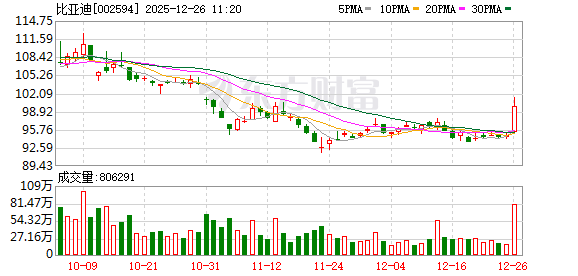
Group 1 - BYD's stock price increased by over 6% during trading on December 26, reaching 99.87 CNY per share, with over ten automotive stocks, including Great Wall Motors and SAIC Motor, also experiencing gains [1] - BYD's market capitalization is reported at 854.6 billion CNY, with a price-to-book ratio of 4.14 [2] - The article from the National Development and Reform Commission emphasizes the importance of regulating order and promoting innovation in the new energy vehicle, lithium battery, and photovoltaic industries, aiming to enhance industry concentration and create a globally leading technology hub during the 14th Five-Year Plan period [2]

比亚迪大涨超6%
Di Yi Cai Jing· 2025-12-26 03:20
Group 1 - BYD's stock price increased by over 6%, reaching 100.6 yuan per share as of the report [2] - The automotive sector showed strong performance, with over 10 automotive stocks, including Great Wall Motors, Seres, SAIC Motor, and Changan Automobile, experiencing gains [2] - The National Development and Reform Commission published an article emphasizing the importance of regulating order and promoting innovation in the "new three" industries, which include new energy vehicles, lithium batteries, and photovoltaics [2] Group 2 - The article highlights the need to address "involutionary" competition during the 14th Five-Year Plan period, aiming to maintain a fair competitive environment and increase industry concentration [2] - The goal is to establish a globally leading technological hub in these key industries [2]
磷酸铁锂厂商下月起集体涨价,新能车ETF(515700)冲击6连涨
Xin Lang Cai Jing· 2025-12-26 02:16
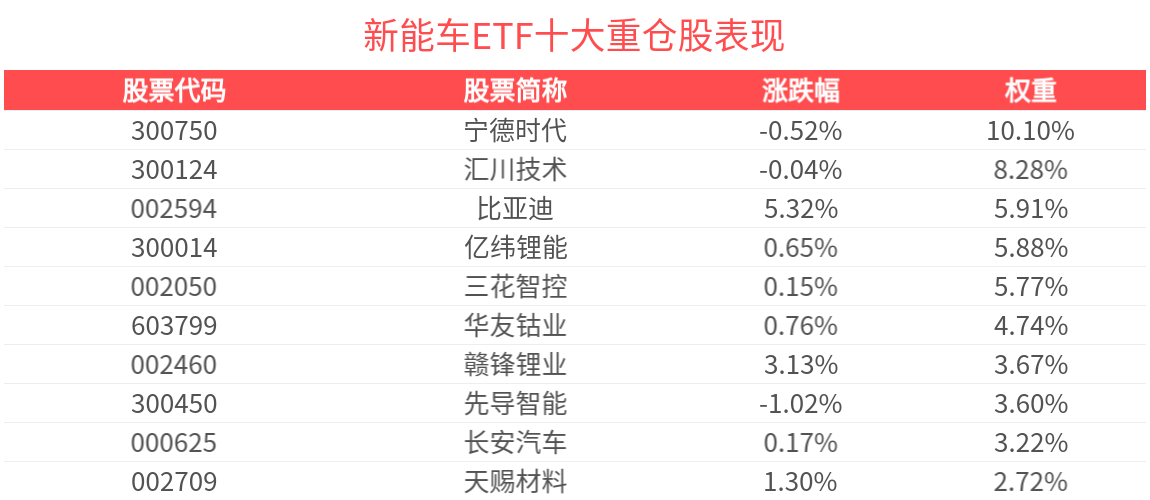
Core Viewpoint - The new energy vehicle (NEV) sector is experiencing significant growth, driven by rising lithium carbonate prices and increased demand for electric vehicles, with key companies in the industry showing strong stock performance [1][2]. Group 1: Market Performance - The China Securities New Energy Vehicle Industry Index (930997) rose by 1.50%, with notable gains from companies such as Tianhua New Energy (7.58%), Defang Nano (7.40%), and BYD (5.32%) [1]. - The New Energy Vehicle ETF (515700) increased by 1.59%, marking its sixth consecutive rise, with the latest price at 2.5 yuan [1]. - The latest scale of the New Energy Vehicle ETF reached 2.149 billion yuan, a one-month high [2]. Group 2: Lithium Prices and Industry Trends - According to Infolink Consulting, lithium carbonate prices continue to rise, with spodumene concentrate (SC6) CIF prices at $1,250 to $1,330 per ton, averaging $1,290, a nearly 20% increase over two weeks [1]. - The spot price for battery-grade lithium carbonate is between 95,000 to 102,000 yuan per ton, averaging approximately 98,000 yuan, reflecting an 8% increase from two weeks prior [1]. - Major domestic lithium iron phosphate manufacturers have initiated price hikes, with Hunan Yuno increasing processing fees by 3,000 yuan per ton starting January 2026 [1]. Group 3: Key Companies in the Index - The top ten weighted stocks in the China Securities New Energy Vehicle Industry Index account for 51.96% of the index, including CATL, Huichuan Technology, and BYD [3]. - The performance of these companies varies, with CATL showing a slight decline of 0.52%, while BYD increased by 5.32% [4].
万集科技20251225
2025-12-26 02:12
Summary of the Conference Call for Wanji Technology Industry and Company Overview - The conference call discusses the advancements in the autonomous driving industry, particularly focusing on Level 3 (L3) autonomous driving applications approved in Chongqing and Beijing, marking a significant shift from assisted driving to true autonomous driving [2][4] - Wanji Technology specializes in autonomous driving and intelligent networking, boasting the highest domestic 192-line lidar technology, validated by multiple mainstream automotive platforms [2][5] Core Insights and Arguments - The approval of L3 autonomous driving signifies a major milestone in China's conditional autonomous driving sector, with the first two models approved for production being from Changan Automobile and BAIC's Arcfox S6 [4] - The demand for lidar technology is increasing due to the commercialization of autonomous driving, with a focus on enhancing perception accuracy and computational requirements [2][6] - The industry consensus suggests that a hybrid solution combining vision and radar is likely to become the mainstream approach for future autonomous driving, providing higher precision and reliability [2][7] - Wanji Technology is actively involved in the construction of intelligent networking in cities like Hangzhou and Guangzhou, with single vehicle value ranging from thousands to tens of thousands of yuan, indicating a dynamic pricing model as applications deepen [2][10][11] Additional Important Content - The intelligent networking business is benefiting from government policies and urban development initiatives, with 20 pilot cities entering large-scale demonstration phases starting in 2024 [9] - The ETC (Electronic Toll Collection) pre-installation business is experiencing rapid growth, with monthly shipments reaching tens of thousands of units, reflecting the increasing market demand for smart driving solutions [12] - The rise in lidar shipments indicates a robust demand from the robotics industry, with both commercial and domestic robots expected to drive rapid development in the sector [3][13] - Wanji Technology's establishment of joint ventures aims to align with industry developments and strategic business growth [14] - There is speculation that Tesla's pure vision approach may evolve as lidar costs decrease and the company gains deeper insights into lidar technology [15]