海螺水泥

Search documents
趋势研判!2025年中国新型墙体材料行业发展全景分析:新型墙体材料的广泛应用是我国建筑业发展的必然趋势,前景广阔[图]
Chan Ye Xin Xi Wang· 2025-06-18 01:27
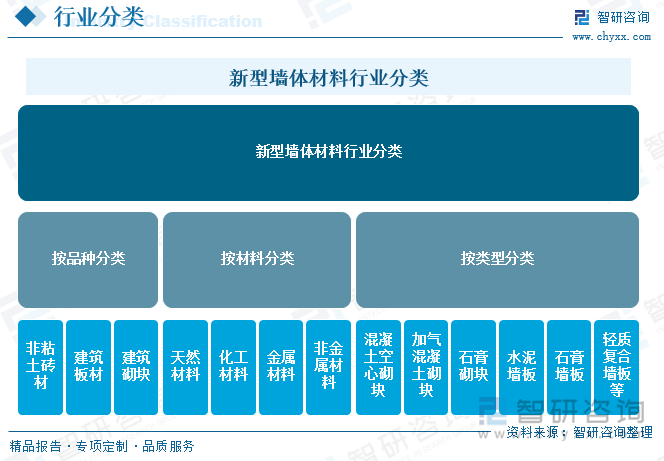
Core Viewpoint - The new wall materials industry is experiencing significant growth due to the increasing demand for lightweight, energy-efficient, and multifunctional building materials, with a projected market size of 13,200.7 billion yuan in 2024 and 13,489 billion yuan in 2025 [1][8][19]. Industry Definition and Classification - New wall materials are defined as lightweight, energy-saving, high-strength, and multifunctional building materials made from silicate-based raw materials like concrete, cement, and sand, incorporating industrial waste and construction debris [2][3]. - The classification of new wall materials includes non-clay brick materials, building panels, and building blocks, with types such as concrete hollow blocks, aerated concrete blocks, and gypsum boards [3]. Industry Development Status - The rapid expansion of the construction and real estate sectors in China has led to a conflict with environmental protection efforts, necessitating a shift towards energy-efficient buildings and the adoption of new wall materials [6][8]. - The market for new wall materials saw a decline from 15,620.1 billion yuan in 2021 to 13,200.7 billion yuan in 2024, with a slight recovery expected in 2025 [8]. Industry Chain Structure - The industry chain consists of upstream raw materials (concrete, cement, sand, industrial waste), midstream research and production of new wall materials, and downstream applications in real estate, infrastructure, and prefabricated buildings [10]. Industry Competition Landscape - Major players in the new wall materials market include China National Building Material Group, Anhui Conch Cement, and Xiamen Jianfa Group, which dominate a significant portion of the market share [15][19]. - The competition is intensifying as more companies invest in the research and development of new wall materials to meet the growing demand for environmentally friendly and energy-efficient construction solutions [15]. Industry Development Recommendations - The industry is encouraged to utilize agricultural and industrial waste in the production of new wall materials, which can lead to both environmental and economic benefits [23].




大兼并时代:中国汽车产业内卷终局推演
芯世相· 2025-06-17 04:12
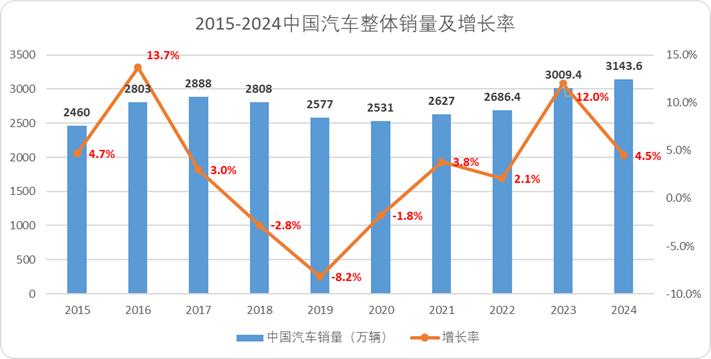
Core Viewpoint - The article discusses the impending wave of mergers and acquisitions in the Chinese automotive industry, driven by the challenges of "scale diseconomies" and the need for asset restructuring to improve efficiency and profitability [6][24][42]. Group 1: Current Industry Challenges - The automotive industry is facing deep-rooted issues that cannot be resolved merely by shortening payment terms, as this does not address the underlying competitive pressures [5]. - The concept of "scale diseconomies" is prevalent among Chinese car manufacturers, where despite high sales volumes, the efficiency of asset utilization has declined, leading to asset depreciation [14][22]. - The overall gross margin for A-share listed manufacturers reached 15.6% in 2024, the highest in nearly a decade, yet asset turnover ratios have not improved correspondingly, indicating inefficiencies [15][17]. Group 2: Mergers and Acquisitions as a Solution - The article posits that the automotive industry is on the brink of a significant merger wave, as companies seek to address the inefficiencies in their asset structures [24][42]. - Historical examples from Europe and Japan illustrate how mergers and acquisitions have been effective in restructuring and optimizing asset utilization in the automotive sector [31][32]. - The current economic depreciation rate for the automotive industry is estimated at 0.335, indicating that the conditions are ripe for a merger wave, as companies with lower depreciation rates can offer higher valuations [41][42].

美的、恒瑞和石头们横跨两地上市后,A股与H股“谁更具投资性价比”
Sou Hu Cai Jing· 2025-06-16 09:25
Core Viewpoint - The recent trend of leading A-share companies listing on H-shares is gaining momentum, with several companies successfully completing their listings in Hong Kong, enhancing their international market presence and brand recognition [1][2]. Group 1: H-share Listing Trend - Leading companies like Midea Group, CATL, and Heng Rui Pharmaceutical have recently listed on the Hong Kong Stock Exchange, indicating a growing trend among A-share companies to seek H-share listings [1]. - Stone Technology announced its intention to list on the Hong Kong Stock Exchange, further contributing to the ongoing "H-share boom" [2]. Group 2: Investment Considerations - Investors face a dilemma regarding whether to invest in A-shares or H-shares of companies listed on both exchanges, as each market has distinct advantages and disadvantages [2]. - Analysts highlight that H-shares generally trade at a discount compared to A-shares due to differences in investor structure, liquidity, and refinancing mechanisms [3][5]. Group 3: Price Discrepancies - The long-term price discrepancy between A-shares and H-shares is attributed to the lack of free convertibility and arbitrage mechanisms between the two markets [3]. - Currently, only 155 companies are listed on both A and H-shares, representing a small fraction of the total number of companies on the Hong Kong main board [5][6]. Group 4: Sector Analysis - The majority of companies listed on both exchanges are state-owned enterprises and belong to traditional economic sectors, such as finance and energy, which tend to attract dividend-focused investors [6]. - The analysis suggests that the price differences between A and H-shares can be better understood through a dividend perspective rather than purely market sentiment [6]. Group 5: Recent Market Dynamics - The phenomenon of "A-H share price inversion" has been observed, particularly with companies like CATL, where H-shares traded at a premium to A-shares, indicating a shift in market dynamics [7][9]. - The current macroeconomic environment and differing investor preferences contribute to the observed price behaviors between A and H-shares [9][10]. Group 6: Future Outlook - Companies like Stone Technology, which have a significant portion of their revenue from overseas markets, are expected to attract foreign investment and may experience similar price dynamics as seen with CATL [12][13]. - The ongoing trend of high dividend yields in the Hong Kong market, coupled with structural opportunities in sectors like new consumption and technology, positions H-shares favorably for investors [16][17].



2025年夏季建材行业投资策略:行业底部修复,配置价值逐步显现
Shenwan Hongyuan Securities· 2025-06-16 09:23
Group 1: Industry Overview - The construction materials industry is showing signs of recovery, with five key signals indicating that the worst is over, including price increases in multiple categories, improved cash flow quality, and reduced capital expenditure [3][20]. - The construction materials sector is gradually transitioning from underweight to neutral allocation, with new capital inflows expected to support valuation recovery [20]. Group 2: Cement Industry - The cement industry is expected to see a bottoming out of profits in 2024, with potential for capacity disposal in 2025. The average net profit per ton for cement companies is projected to be 13.7 yuan, close to historical lows [28][26]. - A total of 3,865.6 million tons of clinker capacity has been withdrawn, and further capacity reductions are anticipated as the industry moves towards rational competition [28][43]. - Major companies like Conch Cement are expected to maintain profitability due to their cost advantages and strategic positioning [54]. Group 3: Consumer Building Materials - The consumer building materials sector is experiencing price increases across multiple categories, indicating a potential turning point for the industry [3][11]. - Companies in this sector are showing improvements in cash quality and profitability, with a focus on the sustainability of demand in key urban areas [3][15]. Group 4: Fiberglass Industry - The fiberglass industry has seen multiple rounds of price increases within a year, leading to gradual profit recovery. The sector is expected to benefit from new applications and controlled capacity growth [3][61]. Group 5: Glass Industry - The flat glass sector is facing pressure from declining construction activity, with a need to monitor supply-side adjustments. The profitability of photovoltaic glass is under scrutiny following a surge in installations [3][76].


建材行业专题:下游需求收缩2024年经营承压,消费建材C端优势凸显
Guotou Securities· 2025-06-16 07:02
Investment Rating - The report maintains an investment rating of "Outperform the Market - A" for the building materials industry [4] Core Insights - The building materials industry is facing significant downward pressure due to a continued contraction in downstream demand, particularly in the real estate sector, leading to a substantial year-on-year decline in revenue and profit for 2024. However, there are signs of improvement in Q1 2025, with a notable recovery in profitability [1][19][20] Summary by Sections 1. Building Materials Industry Overview - In 2024, the building materials industry achieved revenue of 587.88 billion yuan, a year-on-year decrease of 15.10%, and a net profit attributable to shareholders of 19.51 billion yuan, down 47.94% year-on-year. The decline in net profit was more pronounced than the revenue drop, primarily due to an increase in expense ratios and credit impairment losses [1][19] - The overall gross margin for the building materials sector in 2024 was 19.93%, a slight decrease of 0.03 percentage points year-on-year, while the expense ratio increased to 14.10%, up 1.87 percentage points year-on-year [1][28] 2. Consumer Building Materials - The consumer building materials segment experienced a revenue of 127.64 billion yuan in 2024, down 7.01% year-on-year, with a net profit of 4.89 billion yuan, a decline of 45.08%. The drop in net profit was greater than the revenue decline due to a decrease in gross margin and an increase in expense ratios [2][45] - In 2025 Q1, the consumer building materials sector showed signs of recovery, with a notable improvement in operating cash flow and gross margins for certain sub-segments, such as boards and coatings [2][12] 3. Fiberglass Sector - The fiberglass sector reported revenue of 55.60 billion yuan in 2024, a decrease of 2.06% year-on-year, with a net profit of 3.30 billion yuan, down 46.99%. However, the decline in profit was less severe than in previous years, indicating a gradual recovery [3][13] - In 2025 Q1, the fiberglass sector saw a revenue increase of 25.24% year-on-year, with net profit soaring by 165.66%, attributed to price adjustments and improved demand [9][12] 4. Cement Sector - The cement sector faced a revenue drop of 21.81% in 2024, totaling 308.27 billion yuan, with a net profit of 9.83 billion yuan, down 40.49%. However, by 2025 Q1, the sector's revenue decline narrowed to 6.93%, and net profit increased by 119.22% [10][14] - The gross margin for the cement sector improved in 2025 Q1, reaching 15.75%, an increase of 4.49 percentage points year-on-year [10][54] 5. Glass Sector - The glass sector's revenue in 2024 was 51.15 billion yuan, a decrease of 11.59%, with a net profit of 0.29 billion yuan, down 93.22%. The sector continued to struggle with high inventory levels and declining prices [11][12] - In 2025 Q1, the glass sector's revenue was 10.52 billion yuan, down 19.51% year-on-year, but net profit improved to 0.45 billion yuan, a decrease of 56.16% [11][12] 6. Investment Recommendations - The report suggests focusing on leading companies in the consumer building materials sector, which are expected to see improvements in demand and profitability. Key companies to watch include Sanhe Tree, Rabbit Baby, Weixing New Materials, Beixin Building Materials, and Oriental Yuhong [12][14] - For the fiberglass sector, the report highlights the potential for significant earnings growth in 2025, particularly for companies with overseas production lines [13][14] - In the cement sector, the report notes that prices are still at historical lows, but improvements in supply-side policies could alleviate industry supply-demand imbalances [14]
恒生AH溢价指数创五年来新低 部分公司出现“H股溢价”现象
Shang Hai Zheng Quan Bao· 2025-06-15 17:55
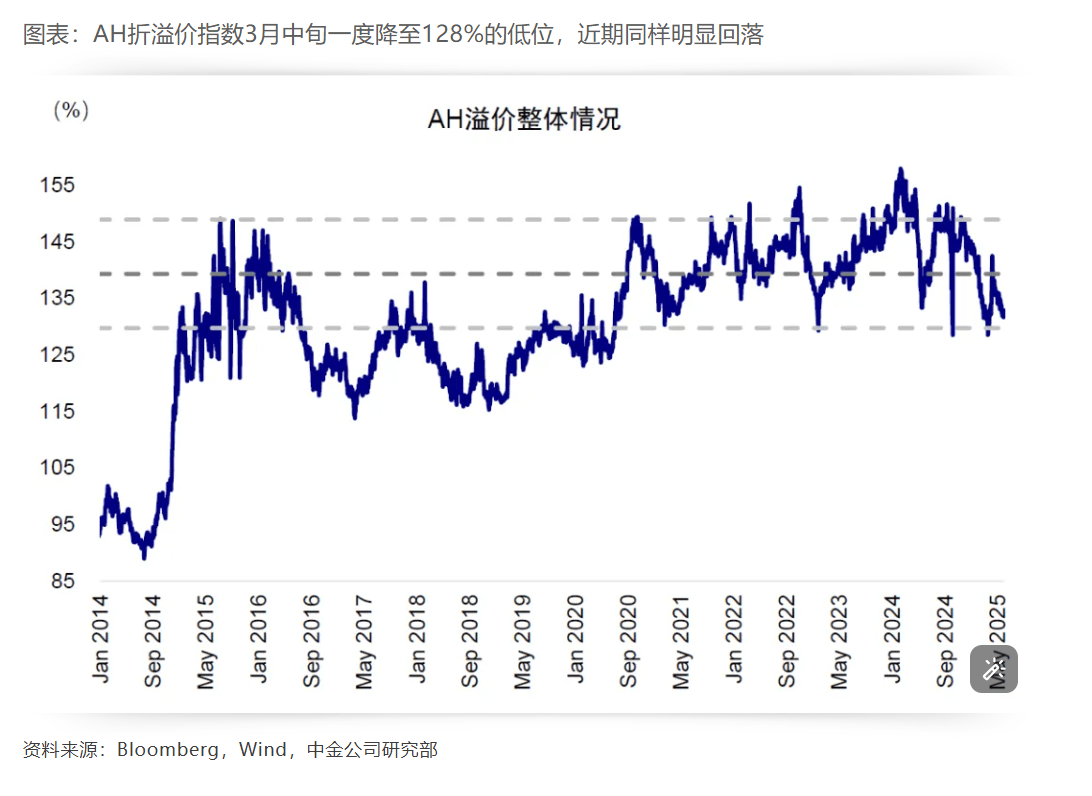
Group 1 - The Hong Kong stock index has shown strong performance this year, outperforming major global indices, while the Hang Seng AH Premium Index has been declining, reaching a low of 126.91 points on June 12, the lowest since June 2020 [1][2] - As of June 13, the Hang Seng AH Premium Index reported 128.05 points, indicating an overall decline of over 10% this year [1][2] - There are currently 42 companies with an AH premium rate exceeding 100%, while companies like CATL, WuXi AppTec, and China Merchants Bank have seen their H-share prices exceed A-share prices [1][2] Group 2 - The AH premium index has been rapidly converging since March, moving away from the previous range of 130 to 150 points [2] - The premium rates for sectors such as automotive, non-ferrous metals, media, and electric equipment have reached near ten-year lows, with some industries like machinery and transportation seeing rates below 10% [2] - Several banks have seen their H-shares rise over 20% this year, with significant reductions in AH premiums for banks like CITIC Bank and Agricultural Bank of China [2] Group 3 - Certain companies like WuXi AppTec and China Merchants Bank have exhibited AH discounts, indicating a shift in market pricing logic [3] - The Hong Kong market is influenced heavily by external factors, with significant inflows into the healthcare sector, which has outperformed A-share indices [3] - International investors favor companies with strong financials and stable cash flows, particularly in the pharmaceutical sector [3] Group 4 - Some high-quality companies have shown instances of H-share premiums over A-shares, driven by alignment with macro trends and foreign investment standards [4] - The phenomenon of AH discounts is influenced by trading enthusiasm and technical factors [4] Group 5 - The continuous convergence of the Hang Seng AH Premium Index is attributed to multiple factors [5] Group 6 - The Hong Kong market has outperformed, with the Hang Seng Index up 19.11% as of June 13, significantly better than A-share indices [6] - Southbound capital has net bought HKD 681.327 billion in the Hong Kong market this year, reflecting increased confidence in Chinese assets [6] - The strategic positioning of the Hong Kong market as a platform for RMB internationalization and the return of Chinese concept stocks has attracted both domestic and foreign investments [6]
国常会强调优化政策,更大力度推动地产止跌回稳
Huafu Securities· 2025-06-15 13:47
Investment Rating - The industry rating is "Outperform the Market" [7][70] Core Viewpoints - The State Council emphasized the need to optimize policies to stabilize expectations, activate demand, optimize supply, and mitigate risks in the real estate market, aiming to halt the decline and stabilize the market [2][12] - The People's Bank of China reported an increase of 10.68 trillion yuan in RMB loans in the first five months of 2025, with household loans increasing by 572.4 billion yuan, indicating a shift towards long-term loans [2][12] - Short-term and medium-term policies are expected to support the recovery of the real estate market, with a focus on interest rate reductions and policy adjustments to stimulate demand [2][12] Summary by Sections Investment Highlights - The report indicates that the construction materials sector is likely to benefit from the gradual recovery of the real estate market, with improved purchasing intentions and capabilities expected to stabilize the market fundamentals [5][12] - The report suggests that the basic fundamentals of the construction materials sector have limited room for further deterioration compared to the end of 2022, with a low dependency on large B channels by leading companies [5][12] Recent High-Frequency Data - As of June 13, 2025, the average price of bulk P.O 42.5 cement in China was 372.8 yuan/ton, showing a 0.1% decrease from the previous week and a 3.5% decrease year-on-year [3][13] - The average price of glass (5.00mm) was 1197.1 yuan/ton, reflecting a 0.5% decrease from the previous week and a 28.0% decrease year-on-year [3][21] Sector Review - The Shanghai Composite Index fell by 0.25%, while the Shenzhen Composite Index decreased by 0.33%. The construction materials index dropped by 2.77% [4][56] - Among sub-sectors, the performance varied, with pipe materials down by 0.09%, other building materials down by 2.1%, and cement manufacturing down by 2.7% [4][56] Investment Recommendations - The report recommends focusing on three main lines: high-quality companies benefiting from stock renovations, undervalued stocks with long-term alpha attributes, and leading cyclical building material companies showing signs of bottoming out [5][12]
大兼并时代:中国汽车产业内卷终局推演
虎嗅APP· 2025-06-13 09:57
Core Viewpoint - The article discusses the impending wave of mergers and acquisitions in the Chinese automotive industry as a necessary response to the current "scale inefficiency" faced by companies, driven by intense competition and market dynamics [3][18]. Group 1: Current Industry Challenges - The Chinese automotive industry is experiencing a "scale inefficiency" where despite record sales exceeding 30 million units and a growth rate nearing a decade high, the asset turnover ratios have not improved, indicating underlying financial issues [7][10]. - The average gross margin for A-share listed manufacturers reached 15.6% in 2024, the highest in nearly a decade, yet the overall asset turnover rate has declined, suggesting that profits are not translating into efficient asset utilization [8][10]. - The phenomenon of "scale inefficiency" is attributed to excessive capital expenditure without corresponding demand, leading to asset depreciation and underutilization [15][17]. Group 2: Future Outlook and Mergers - The article posits that the automotive industry's current "scale inefficiency" will likely lead to a restructuring of asset scales, with companies needing to either align their profit and asset statements or face further economic challenges [19][20]. - Historical examples from Europe and Japan illustrate how mergers and acquisitions can effectively address redundancy and improve asset value, suggesting that the Chinese automotive industry is on the brink of a similar transformation [22]. - The economic depreciation rate for the automotive industry is projected to be 0.335 in 2024, indicating that the conditions for a merger wave are present, as companies with lower depreciation rates can offer higher premiums in acquisitions [25][26].

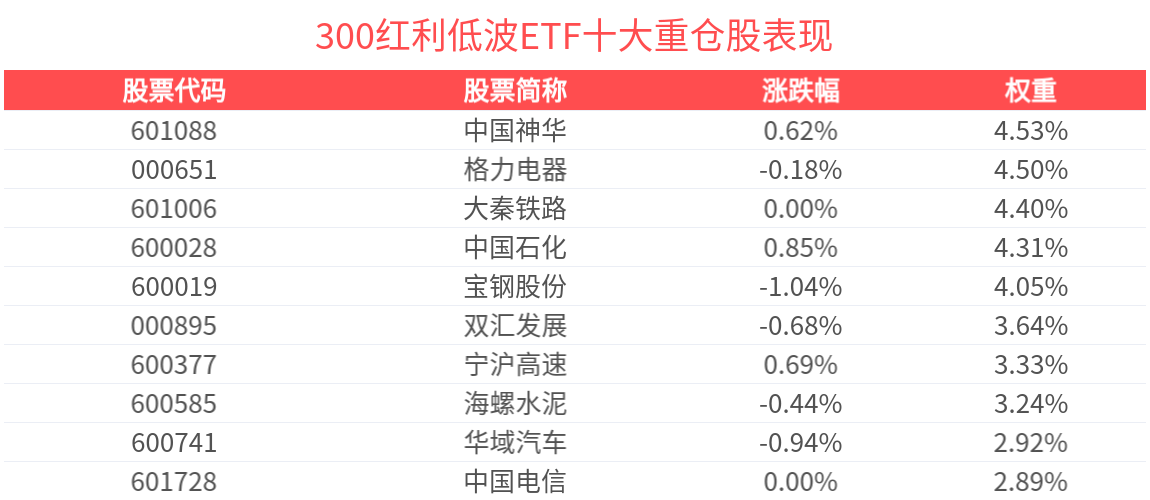
红利板块估值重塑预期升温,300红利低波ETF(515300)近9日“吸金”1.34亿元
Sou Hu Cai Jing· 2025-06-13 03:49
Core Viewpoint - The performance of the CSI 300 Dividend Low Volatility Index shows mixed results among its constituent stocks, with a slight overall decline, while the ETF associated with this index has seen significant inflows and strong long-term performance metrics [1][5]. Group 1: Index Performance - As of June 13, 2025, the CSI 300 Dividend Low Volatility Index decreased by 0.37% [1]. - The ETF associated with this index, CSI 300 Dividend Low Volatility ETF (515300), experienced a turnover of 4.49% during the trading session, with a total transaction value of 268 million yuan [1]. - Over the past month, the average daily transaction value of the ETF was 11.7 million yuan, and its latest scale reached 5.975 billion yuan [1]. Group 2: Stock Performance - Among the constituent stocks, Shanghai Port Group led with a gain of 1.39%, while Shanghai Bank, Industrial Bank, and Jiangsu Bank saw declines [1]. - The top ten weighted stocks in the index accounted for 36.97% of the total index weight, with China Shenhua and Gree Electric Appliances being the most significant contributors [2][4]. Group 3: Dividend and Investment Trends - The upcoming dividend season from May to July is expected to attract more investments into dividend-paying stocks, as the yield on dividend indices reaches new highs [5]. - Regulatory support for increasing insurance funds' market participation is anticipated to enhance the valuation expectations for dividend stocks [5]. - Investors without stock accounts can access investment opportunities through the corresponding CSI 300 Dividend Low Volatility ETF linked funds [5].






大兼并时代:中国汽车产业内卷终局推演
3 6 Ke· 2025-06-13 02:53
Group 1 - The core viewpoint of the article is that the Chinese automotive industry is on the brink of a major consolidation wave, driven by the need to address the inefficiencies and "scale diseconomies" present in the current market environment [1][10][21] - The proposal of a "60-day account period" is seen as a superficial solution that does not address the deeper issues of internal competition and pricing structures within the industry [1][4] - Wang Xia, the president of the chamber of commerce, emphasizes that mergers and acquisitions are a necessary response to the current state of "involution" in the industry, aligning with the analysis that a significant wave of consolidation is inevitable [1][10] Group 2 - The concept of "scale diseconomies" is highlighted, where despite increased sales and profits, the asset turnover ratios of major automotive manufacturers have declined, indicating inefficiencies in capital utilization [4][7][9] - The overall gross profit margin for A-share listed manufacturers reached 15.6% in 2024, the highest in nearly a decade, yet the complaints from industry leaders about profitability seem exaggerated given the sales growth [5][9] - The automotive industry is experiencing a structural transformation, with the economic depreciation rate for the industry reaching 0.335 in 2024, indicating a need for asset restructuring and consolidation [21][20] Group 3 - Historical examples from Europe and Japan illustrate how successful mergers and acquisitions have helped automotive companies optimize their asset utilization and navigate market challenges [16][17] - The article suggests that the current economic conditions and the high economic depreciation rates create a favorable environment for mergers and acquisitions in the automotive sector, similar to past trends in other industries like cement [20][21] - The automotive industry is at a critical juncture where leveraging the current market conditions for consolidation could help alleviate unnecessary competition and improve overall asset value [21][10]