
淘宝

Search documents
存量博弈 消费破局新十年
Mei Ri Jing Ji Xin Wen· 2025-12-14 12:57
Core Insights - The report emphasizes that the future of economic development will focus on quality improvement and resource optimization rather than mere expansion, highlighting the importance of innovation and long-term vision in navigating the current economic landscape [1] Group 1: Market Trends - The consumption industry is experiencing a clear trend of differentiation under the backdrop of stock competition, with the coffee and tea sectors becoming focal points for capital investment [3] - The domestic tourism industry is thriving, with nearly 5 billion domestic trips recorded in the first three quarters of the year, marking an 18% year-on-year increase [3] Group 2: Capital Dynamics - Foreign brands in the coffee and tea market are shifting from a global expansion model to a localized strategy, with significant investments from local partners, exemplified by Starbucks' collaboration with local capital [4] - The upcoming IPO wave in the new tea beverage sector is expected to enhance the supply chain and digital capabilities of various brands, leading to a pronounced "Matthew Effect" in the industry [5][6] Group 3: Global Expansion - New tea brands are poised for international expansion, leveraging their strong domestic market presence and operational capabilities, with a focus on regional management and product health [7] Group 4: Competitive Landscape - Major platforms like JD and Taobao are engaging in a fierce subsidy battle in the instant retail market, with total subsidies reaching approximately 65 billion to 90 billion yuan in the first half of 2025 [8] - The intense competition in the tea and coffee sectors has led to a paradox where increased orders do not necessarily translate to higher profits, as many brands struggle with low-margin orders [9] Group 5: Industry Evolution - The restaurant chain penetration rate in China has reached 25%, with a significant increase in new stores in lower-tier markets, indicating a shift in consumer demand towards branded and standardized dining experiences [10] - The rise of "small town tourism" reflects a changing consumer preference, with travelers seeking value and emotional resonance rather than just popular destinations [18][20] Group 6: Policy and Consumer Behavior - The cross-border tourism market in China is experiencing a dual prosperity driven by favorable policies and enhanced supply capabilities, with inbound tourism showing a 14.9% year-on-year increase [11][12] - The growth of tax refund stores and payment channels is stimulating outbound shopping, with tax refund sales increasing by 97.5% year-on-year [16] Group 7: New Service Models - The emergence of new service roles like "accompanying tours" reflects a shift in tourism services from functional to emotional, catering to consumers' desire for deeper experiences [24] Group 8: Cultural Integration - The integration of sports events with tourism is creating new consumption scenarios, as seen in the Jiangsu Super League, which has successfully linked sports with local tourism [21][22][23] Conclusion - The Chinese consumption market is navigating a path of quality enhancement and diversified breakthroughs, with the tea and coffee sectors undergoing significant transformations and the tourism industry capitalizing on policy advantages and changing consumer preferences [26]


传监管部门就豆包手机约谈字节跳动;雷军回应小米上架准新车;ChatGPT被控引发命案丨邦早报
创业邦· 2025-12-13 01:08
Group 1 - ByteDance is being questioned by Chinese regulators regarding the controversial smart assistant embedded in the upcoming Nubia M153 smartphone, raising concerns about cybersecurity, data security, and potential competition issues [4][5] - OpenAI and Microsoft are facing a lawsuit in the U.S. that links the ChatGPT AI chatbot to a murder case, marking the first instance of such a direct connection between AI chat tools and homicide [5] - Taobao has expanded its "no penalty for late delivery" policy nationwide, aiming to improve rider income and service efficiency through a positive incentive mechanism [5] Group 2 - JD.com is recruiting talent in the field of edge AI chips, focusing on integrated storage and computing chips for use in robots and smart home devices, offering salaries ranging from 40,000 to 100,000 [9][10] - Douyin has launched a "Douyin Pay" feature, allowing consumers to pay at merchant stores through the Douyin app, streamlining the payment process without needing to switch to third-party applications [10] - Honor's brand marketing president, Guo Rui, has left the company, potentially to pursue entrepreneurial ventures, after previously holding significant roles at Huawei and Honor [10] Group 3 - JD.com plans to invest 22 billion over the next five years to provide 150,000 housing units for delivery personnel, enhancing living conditions for its workers [13] - OpenAI has released GPT-5.2, which has shown improved benchmark scores compared to Google, indicating a competitive response to Google's advancements in AI [16] - SoftBank's Masayoshi Son has reduced the amount of shares pledged to lenders by 2.1 billion, reflecting a strategic move amid fluctuating tech wealth driven by AI investments [16] Group 4 - Wanda Film has completed a strategic investment in the interactive entertainment brand "Pailifang," aiming to explore new consumer scenarios in image socialization [17] - Several companies, including Nidejia and Bihui Biotechnology, have recently completed significant financing rounds, indicating active investment interest in various sectors [17][18] - Samsung has launched its first tri-fold smartphone, the Galaxy Z Trifold, in South Korea, priced at approximately 1.72 million KRW [18] Group 5 - Tesla's U.S. sales in November fell nearly 23% year-on-year, reaching the lowest level in four years, largely due to the removal of federal tax incentives for electric vehicles [23][27] - The global shipment of foldable smartphone panels is expected to grow by 46% by 2026, driven by demand from Apple's first foldable iPhone [23] - The Chinese market is seeing a significant increase in the box office for the 2025 New Year film season, surpassing 3.5 billion [25]

存量博弈 消费破局新十年——十个关键词,看懂中国消费存量竞争
Mei Ri Jing Ji Xin Wen· 2025-12-13 00:33
Core Insights - The consumption market in China is entering a golden period characterized by innovation resilience and value insight, despite ongoing economic challenges [1] - The "14th Annual Development Conference of Listed Companies" highlighted the shift from resource expansion to quality improvement and the importance of optimizing existing resources in the context of stock competition [5][4] Group 1: Economic Trends - The "14th Five-Year Plan" emphasizes high-quality development, focusing on optimizing increments and revitalizing existing resources [4] - In 2025, Hainan's retail sales of consumer goods reached 222.67 billion yuan, a year-on-year increase of 7.8%, significantly outperforming the national growth rate of 4.3% [5] Group 2: Industry Dynamics - The coffee and tea beverage sector is becoming a focal point for capital, with increased IPO and merger activities in 2025, indicating a trend towards resource integration and industry upgrading [7] - The domestic tea beverage market is projected to reach 374.9 billion yuan by 2025, with a compound annual growth rate exceeding 16% from 2023 to 2028 [14] Group 3: Capital and Market Strategies - Starbucks is shifting its strategy in China by forming a joint venture with Boyu Capital, allowing for localized operations and a projected retail business value exceeding 13 billion dollars [10] - The trend of "capital localization" is becoming crucial for foreign brands to adapt to the competitive landscape in China, as evidenced by Starbucks' partnership [12] Group 4: Consumer Behavior and Preferences - The demand for travel and tourism is robust, with nearly 5 billion domestic trips taken in the first three quarters of 2025, reflecting an 18% year-on-year increase [7] - The rise of "reverse tourism" indicates a shift in consumer preferences towards less crowded, value-oriented destinations, with significant growth in county-level tourism [29] Group 5: Digital and Supply Chain Innovations - New tea beverage brands are focusing on digital capabilities and supply chain enhancements post-IPO, aiming to optimize product development and operational efficiency [15] - The integration of digital and intelligent operations is becoming essential for brands to improve efficiency and user experience in the competitive landscape [19] Group 6: Cultural and Emotional Engagement - The emergence of "accompanying services" in tourism reflects a shift towards emotional and experiential value, indicating a growing market potential in the "accompanying economy" [38] - The integration of sports events with tourism is creating new consumption scenarios, as seen with the "Su Super" football league, which significantly boosted local tourism and spending [32][40] Group 7: Future Outlook - The competition in the consumption market will increasingly focus on supply chain depth, digital precision, emotional value, and IP collaboration, as brands seek to navigate the new economic landscape [42] - The resilience and vitality of China's consumption market will continue to be released through innovative strategies and a deep understanding of user demand changes [42]
一亿不够智元和宇树上春晚
3 6 Ke· 2025-12-12 03:55
烧一个亿抢着上春晚,宇树、智元又给具身智能加了把火。 12月10日,自媒体洒家君泽曝出,智元机器人和宇树科技正力争春晚赞助机会,智元报价6000万,宇树将报价升至1亿元。两位头部玩家的报价也"吓 退"了不少具身智能公司。截至目前,多家公司仍在争抢,最终的头号玩家还未确定。 随后,根据智通财经报道,智元机器人回应称"不是真的",宇树暂无公开表态。智元机器人否认的是报价数额,还是参与争夺春晚赞助机会,目前尚不明 确。但相关人士告诉镜相工作室,智元机器人6000万的报价确为"不实",有消息称去年春晚宇树机器人亮相扭秧歌,出价远高于这个数,6000万的报价在 春晚只能买一条口播。因此,今年想上春晚,恐怕要花更大的代价。 最终结果如何尚需春晚节目名单揭晓。不过,花大代价抢着上春晚,不是机器人创业公司钱太多,是春晚的诱惑实在太大。 2018年年末,罗振宇在"时间的朋友"跨年演讲中曾这样感慨,我们真的对春晚的力量一无所知。这个论断的依据是2016年到2018年连续三年拿下春晚"独 家互动合作伙伴"的淘宝。罗振宇说,淘宝在2017年双十一的基础上,为了承接春晚的流量再扩容3倍。但结果是,"春晚当晚登录的实际峰值,超过了双 十 ...

消费者维权指南:遇到不公,我应该去哪里投诉?
Xin Lang Cai Jing· 2025-12-12 01:53
在日常生活中,消费几乎无处不在。无论是线上购物、外出就餐,还是购买服务,我们都可能遇到商品 质量不符、服务承诺未兑现、甚至商家跑路等糟心问题。当沟通协商无果时,许多消费者面临的第一个 困惑就是:"我该去哪里投诉?" 这并非一个简单的问题,因为针对不同的消费领域、不同的诉求目 标,有效的投诉途径也各不相同。本文将为您系统梳理主流的消费投诉 【下载黑猫投诉客户端】渠 道,帮助您在需要时,能快速、准确地找到最适合的维权路径。 一、明确投诉对象与性质:选择渠道的第一步 在寻找投诉渠道前,首先要厘清两个关键点:投诉对象是谁(是平台内的商家、品牌方,还是独立的线 下门店?)以及问题性质是什么(是普通的消费纠纷,还是涉嫌违法经营?)。这直接决定了你该优先 使用哪种渠道。 例如,在电商平台购买到假货,投诉对象既是销售商家,也涉及提供交易场所的平台方。如果是在线下 健身房遇到预付卡退款难,投诉对象则是该健身房的经营企业。 二、核心官方投诉渠道:具备法律强制力的后盾 对于任何消费纠纷,最权威、最具法律强制力的途径始终是政府主管部门设立的渠道。 对于特定行业的问题,直接向其主管部委设立的投诉渠道反映,有时更具针对性。 三、第三方公 ...
江苏银行以金融活水滴灌消费全链条
Huan Qiu Lao Hu Cai Jing· 2025-12-11 12:29
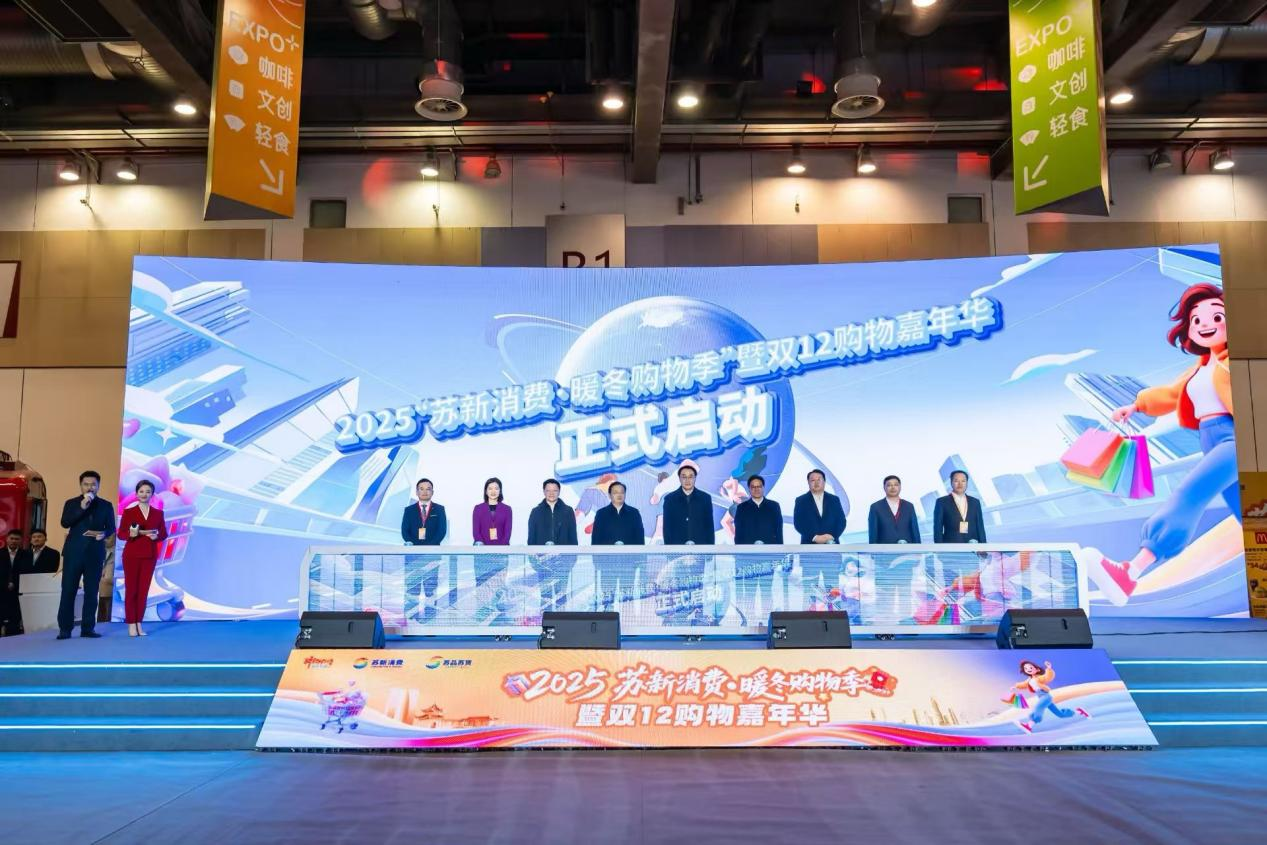
Group 1 - The core focus of Jiangsu Bank is to enhance consumer spending by providing subsidies and payment discounts in key sectors such as dining, 3C digital products, and home appliances, in anticipation of the upcoming Double Twelve shopping festival [1] - Jiangsu Bank is increasing resource investment in online platforms like Taobao and JD.com to promote "Su Products" and is also organizing exclusive offline activities to drive sales during the Double Twelve period [2] - The bank is collaborating with the provincial commerce department on the "Car Renewal" initiative, offering one-stop car purchasing solutions and exclusive financial products to support consumption upgrades [3] Group 2 - Jiangsu Bank has launched the "Fuel Jiangsu" incentive program in partnership with leading fuel companies, which includes a ticket incentive policy and consumption coupon usage guides to enhance participation and data scale [4] - The bank emphasizes the importance of "promoting consumption" as a key theme for the year, utilizing a combination of financial and non-financial strategies to stimulate domestic demand and support social welfare [4]

“横冲直撞”的AI手机来了
Di Yi Cai Jing Zi Xun· 2025-12-11 04:20
Core Insights - The article discusses the impact of AI technology on the traditional mobile ecosystem, highlighting the challenges and opportunities presented by ByteDance's initiatives and the collaboration with ZTE [2][3] - The competition in the industry is shifting from AGI and foundational model training to application deployment and entry point competition, creating a divide between "challengers" and "conservatives" [3][5] Group 1: AI Technology and Mobile Ecosystem - The AI assistant's core value lies in reducing user operation costs and enhancing interaction efficiency, representing a new evolution stage for smart terminals [3][5] - The introduction of AI capabilities in mobile devices is seen as a potential disruption to traditional app usage, as users can now rely on AI to complete tasks without manually navigating through multiple apps [6][9] - The AI phone, while innovative, is currently viewed as a "toy" rather than a fully developed product, indicating that the technology is still in its early stages [7][8] Group 2: Industry Response and Challenges - The mobile industry has not seen significant disruptive innovation for a long time, and there is a need for clearer rules and communication between AI phone manufacturers and app developers [9][10] - Concerns about privacy and security arise from granting AI systems access to sensitive data, necessitating a cautious approach to system-level permissions [9][10] - The potential for a technical arms race is anticipated, as traditional apps may implement measures to protect their data and user engagement from AI-driven solutions [6][10] Group 3: Future Outlook and Industry Dynamics - The future of the mobile ecosystem is expected to be diverse, involving various hardware and software service providers, with a need for unified standards to facilitate AI integration [14][15] - The competition between software ecosystem companies and hardware manufacturers is likely to evolve into a multipolar coexistence rather than a single dominant player [15][16] - The integration of software and hardware could lead to a new structural landscape in the industry, reshaping innovation paths and competitive relationships [15][16]

工信部通报24款APP及SDK存在侵害用户权益行为
Ren Min Wang· 2025-12-10 10:02
Core Viewpoint - The Ministry of Industry and Information Technology (MIIT) is taking action against 24 apps and SDKs for violating personal information protection laws, following a joint announcement by several government departments regarding a special campaign for personal information protection in 2025 [1] Group 1: Regulatory Actions - The MIIT is conducting governance on apps and SDKs that illegally collect and use personal information, as per the regulations outlined in the Personal Information Protection Law and other related laws [1] - A recent inspection by third-party testing agencies identified 24 apps and SDKs that infringe on user rights [1] - The MIIT has mandated that the identified apps and SDKs must rectify their issues according to relevant regulations, with potential legal actions for non-compliance [1]


双12是“盲盒”还是“真香”?消费观察:线上吐槽声不绝,线下家电“以旧换新”火爆
Sou Hu Cai Jing· 2025-12-10 08:19
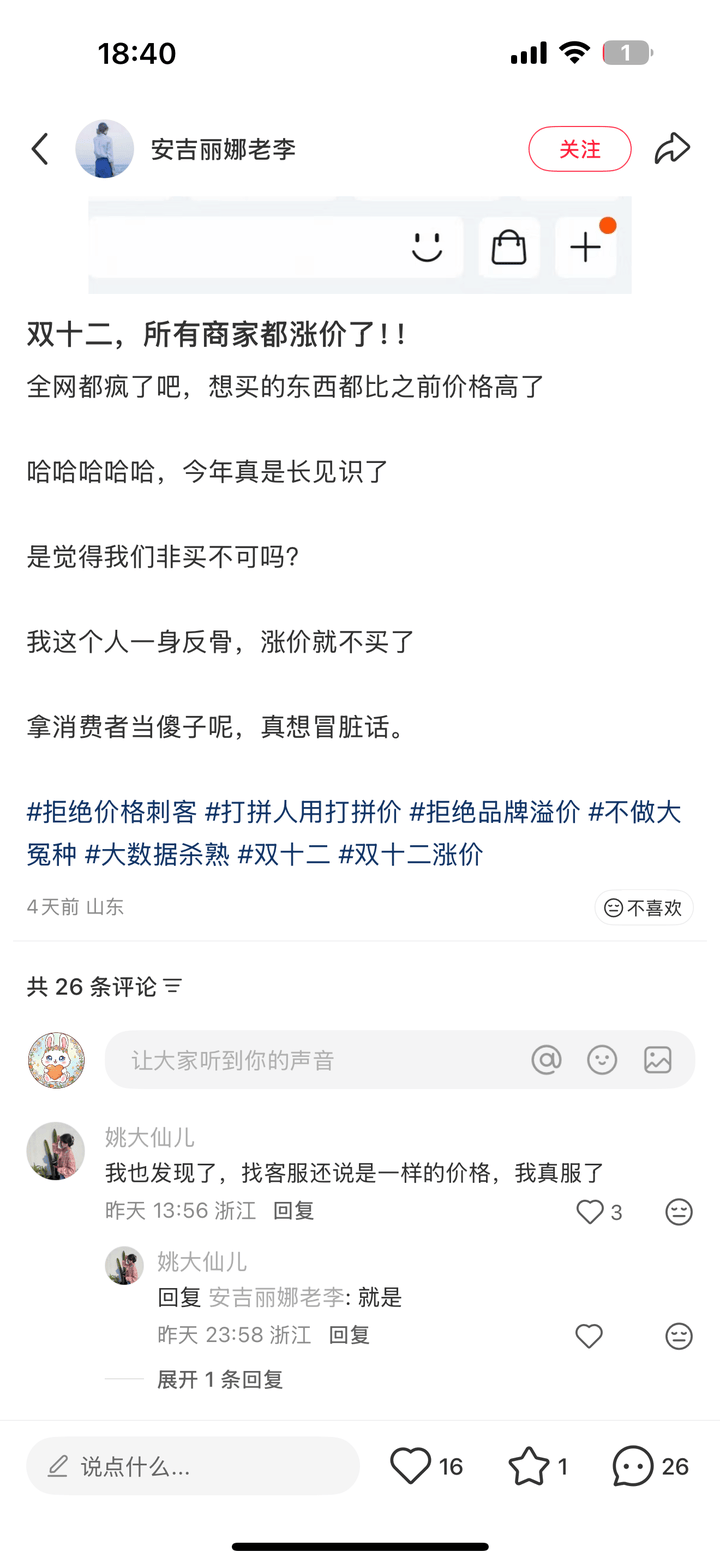
Core Viewpoint - The "Double Twelve" shopping festival has sparked mixed reactions among consumers, with complaints about price manipulation and complex rules contrasting with a booming offline appliance market driven by trade-in programs and consumer enthusiasm for upgraded products [1][10][11]. Group 1: Consumer Sentiment - Many consumers express frustration over perceived price hikes during the promotional period, with some stating they refuse to buy due to inflated prices [5][11]. - The complexity of promotional rules has led to consumer fatigue, with individuals feeling overwhelmed by the need to navigate various discounts and offers [7][11]. - A minority of consumers report successful purchases at lower prices, highlighting the disparity in experiences based on membership status and promotional strategies [5][11]. Group 2: E-commerce Platforms' Strategies - Major platforms like JD.com and Taobao have shifted their promotional strategies, concentrating discounts within a shorter time frame and offering layered incentives to stimulate consumer spending [8][11]. - JD.com focuses on large appliances and electronics with significant government subsidies, while Taobao emphasizes flexibility in everyday consumer goods [8][11]. - The platforms are adapting to a changing market by prioritizing live-streaming sales and daily retail operations over traditional promotional events [11][12]. Group 3: Offline Market Trends - The offline appliance market has seen a significant resurgence, with a reported 112% increase in trade-in orders and over 80% growth in foot traffic in certain stores during the "Double Twelve" period [10][11]. - Consumers are gravitating towards tangible shopping experiences, favoring the reliability of physical stores over the complexities of online promotions [10][12]. Group 4: Industry Observations - The decline in enthusiasm for the "Double Twelve" event reflects a broader shift in consumer behavior, moving from a festival-driven shopping culture to a more rational, everyday purchasing mindset [11][12]. - The changing landscape indicates a transition from platform-led promotional events to consumer-driven shopping habits, suggesting a need for businesses to adapt to these evolving preferences [12].

这一年,经济运行总体平稳、稳中有进
Ren Min Ri Bao· 2025-12-09 23:59
Economic Development - The year 2025 is significant for China's modernization process, with a focus on high-quality development and achieving major economic and social goals [1] - The Central Economic Work Conference has outlined systematic deployments for economic work in 2025, emphasizing the development of various economies such as the "first launch economy," "ice and snow economy," "silver economy," and others [1][2] First Launch Economy - The first launch economy is gaining traction, with cities like Beijing, Shanghai, and Chengdu enhancing policy support to attract new brands and stores, becoming a key driver for domestic demand [2] - Chengdu has seen the establishment of 631 first stores in the first three quarters of the year, indicating a growing trend towards first launches as a lifestyle choice [4][5] Ice and Snow Economy - The ice and snow economy is evolving from a seasonal focus to a year-round industry, with the scale expected to exceed 1 trillion yuan by 2025 [2] - Harbin's Ice and Snow World is under construction, featuring innovative attractions and a focus on diverse shopping and experiential dining to enhance consumer engagement [5][6] Silver Economy - The silver economy is expanding with new service models for the elderly, including specialized travel services that cater to their needs, reflecting a shift in consumption patterns towards quality and personalization [6][7] - In Yunnan, the elderly tourism market has seen significant growth, with over 80% of travelers being aged 60 and above [7] Platform Economy - The platform economy is transitioning from a "what to produce" model to a "what is needed" approach, enhancing consumer satisfaction through direct connections between platforms and manufacturers [8][9] - E-commerce platforms have facilitated significant growth in agricultural product sales, with rural online retail increasing by 7.5% year-on-year [9][10] County Economy - The county economy is thriving with initiatives like "Hundred Villages Thousand Lodgings," which promote eco-tourism and local agricultural products, leading to increased income for local residents [10][11] - In Luanchuan County, the integration of tourism and agriculture has resulted in a substantial rise in visitor numbers and revenue, with a focus on sustainable development [11] Marine Economy - The marine economy is advancing with innovations in shipbuilding and marine engineering, focusing on green technologies and zero-carbon emissions [12][13] - The Qingdao West Coast New Area has established a marine industry base that has seen a 16.9% increase in output value year-on-year [13] Bay Area Economy - The Guangdong-Hong Kong-Macao Greater Bay Area is fostering innovation and collaboration, with companies leveraging local resources for technological advancements [14] - The synergy between Hong Kong's research capabilities and the Pearl River Delta's industrial strengths is facilitating the commercialization of scientific achievements [14]