三星

Search documents
8点1氪丨机长、副机长被传驾驶舱内打架,长荣航空回应;小米正式回应米黑KOL合作事件;霸王茶姬通报“徒手搅拌奶茶”事件
3 6 Ke· 2026-01-07 00:20
Group 1 - xAI announced the completion of its E round financing, raising $20 billion, exceeding the initial target of $15 billion [3] - Tesla China launched a 5-year interest-free car purchase plan for Model 3 and Model Y, with down payments starting at 79,900 yuan and monthly payments as low as 1,918 yuan [5] - Disney's "Zootopia 2" has become the highest-grossing Hollywood film in China, with box office earnings of approximately 4.25 billion yuan (about $610 million) [13] Group 2 - Long-term CEO of Berkshire Hathaway, Warren Buffett, has handed over the CEO position to Greg Abel, who has received high praise for his management style [11] - Xiaomi responded to a controversy regarding a collaboration with KOLs, terminating the partnership and imposing penalties on involved personnel [2] - The Chinese tax law changes effective January 1, 2026, will exclude profit-making medical beauty institutions from VAT exemptions, impacting the industry significantly [4]
涨疯了!一盒价值400万元,堪比上海一套房
Mei Ri Jing Ji Xin Wen· 2026-01-06 23:28
Group 1 - The core viewpoint of the articles highlights a significant surge in the DRAM market, driven by rising prices and increasing demand from major tech companies for AI infrastructure [1][2][3] - Major memory manufacturers like Samsung and SK Hynix have announced price increases for DRAM products, with first-quarter prices expected to rise by 60-70% compared to the previous quarter [1] - The demand for server DRAM is expected to continue growing, with predictions of an average sales price increase of up to 144% for the year, benefiting companies like Micron, Samsung, and SK Hynix [2] Group 2 - The production focus on HBM3E by memory manufacturers is causing a backlog in server DRAM capacity, widening the supply-demand gap [2] - Major tech companies, including Google and Microsoft, are expanding their AI services, which is driving up the demand for general-purpose server DRAM [2] - The current DRAM price surge is described as the strongest in history, with prices for DDR4 and DDR5 memory increasing by 2-3 times within the year [3]


【早报】中方出手!禁止所有两用物项对日本军事用途出口;特朗普考虑动用美军等“一系列选项”获取格陵兰岛
财联社· 2026-01-06 23:09
Industry News - The Ministry of Commerce of China announced strengthened export controls on dual-use items to Japan, effective immediately, due to Japan's recent provocative statements regarding Taiwan, which violate the One China principle [2] - The 2026 National Foreign Exchange Management Work Conference will be held on January 5-6, focusing on optimizing trade foreign exchange management and supporting the development of new trade formats like cross-border e-commerce [3] - Star River Dynamics is set to launch the "Vesta-1 Sea Launch" commercial rocket mission soon [4] - The China Securities Index announced adjustments to the samples of the CSI 1000, CSI 500, and CSI A500 indices, effective after market close on January 9, 2026, with several companies being added and removed from these indices [4] Company News - Jia Mei Packaging announced a cumulative increase of 230% in stock price from December 17, 2025, to January 6, 2026, and will be suspended for verification [8] - Guosheng Technology reported a cumulative increase of 370.2% in stock price from October 31, 2025, to January 6, 2026, and will also be suspended for verification [8] - Brain-computer interface "unicorn" Qiangna Technology completed approximately 2 billion yuan in financing [9] - Chip Origin announced the completion of the acquisition of Zhudian Semiconductor [9] - Puni Testing expects a loss for the entire year of 2025 [9] - WuXi AppTec announced that 18 shareholders reduced their holdings by 2% from November 20, 2025, to January 5, 2026, and this reduction plan has been completed [9] - Super Electronics announced an increase in investment for its AI computing high-end printed circuit board expansion project from 1.468 billion yuan to 3.315 billion yuan [10]



三千多家展商同台,中企表现成为焦点,人工智能主导拉斯维加斯消费电子展
Huan Qiu Wang· 2026-01-06 22:57
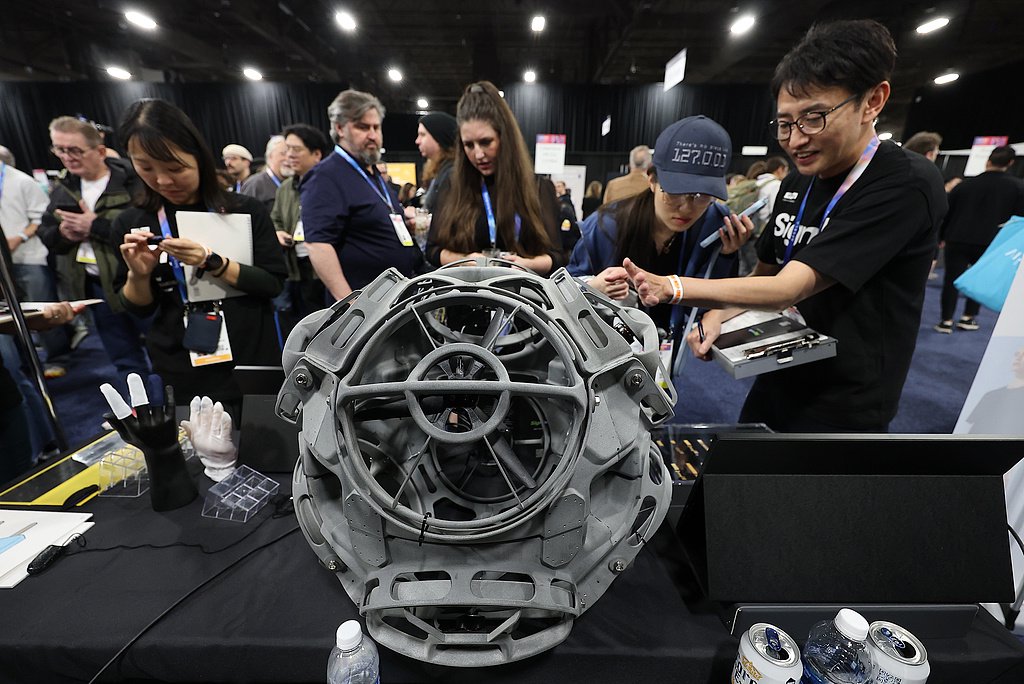
Core Insights - The CES 2026 is expected to showcase a significant focus on AI applications that are "human-centered," reflecting the industry's shift towards how consumers interact with technology [3][4] - Over 3,500 exhibitors are anticipated to participate, covering various sectors including robotics, healthcare, automotive, and gaming, with AI being a central theme [3][4] - The competition in the AI chip manufacturing sector is heating up, with major players like NVIDIA and AMD showcasing their latest technologies, indicating a forthcoming "chip war" at the event [5][6] Group 1 - The CES 2026 is being referred to as the "Spring Festival of the Tech World," with high expectations for AI to dominate the discussions and presentations [1] - The event will feature a record number of robotic products, particularly humanoid robots, aimed at testing consumer acceptance in various applications [4] - AI's impact on healthcare and autonomous mobility will be significant topics at the exhibition [4] Group 2 - NVIDIA's CEO announced the full production of their next-generation AI supercomputer chip platform, Vera Rubin, which will begin customer deliveries later this year [5] - The presence of major semiconductor CEOs, including those from Intel and Qualcomm, highlights the competitive landscape in AI infrastructure development [5] - Chinese companies are gaining prominence at CES, with their displays increasingly capturing attention, previously dominated by South Korean firms [7][8]

今晚,涨疯了!
Zhong Guo Ji Jin Bao· 2026-01-06 16:24
Core Viewpoint - The storage chip market is experiencing significant price increases driven by surging demand for AI infrastructure, with major companies like SanDisk and Micron seeing substantial stock price gains [3][5][6]. Group 1: Market Performance - U.S. stock indices continued to rise, with the Dow Jones up by 0.27%, Nasdaq by 0.19%, and S&P 500 by 0.22% [2]. - The market remains largely unaffected by geopolitical tensions in Venezuela, with a three-year bull market continuing, primarily fueled by demand for AI-related stocks [2][3]. - Major storage chip stocks saw significant gains, with SanDisk rising over 20%, Micron up over 6%, Western Digital up over 12%, and Seagate Technology up over 10% [3][4]. Group 2: Supply and Demand Dynamics - Analysts indicate that the surge in AI infrastructure demand is leading to a global supply crunch, which may persist for months or even years [5]. - Samsung's co-CEO described the current shortage as "unprecedented," aligning with warnings from industry peers about ongoing supply constraints [5]. - Market research firm TrendForce reported that prices in certain segments have more than doubled since February of last year, attracting traders to bet on the continuation of this upward trend [5]. Group 3: Future Outlook - Micron's CEO anticipates that the tight storage market conditions will extend beyond 2026, with the company's stock having surged 240% in 2025, significantly outperforming the Philadelphia Semiconductor Index's 42% increase [6]. - Analysts from Morningstar and JPMorgan estimate that the current "super cycle" in the market could last until 2027 or even longer [8]. Group 4: Sector Reactions - While storage chip companies are thriving, cooling system manufacturers are facing significant stock declines due to concerns about reduced demand for their products following comments from Nvidia's CEO [10]. - Companies like Johnson Controls and Modine Manufacturing saw their stock prices drop significantly, with Johnson Controls experiencing an intraday decline of up to 11% [10][13].



今晚,涨疯了!
中国基金报· 2026-01-06 16:16
Core Viewpoint - The article highlights the significant surge in storage chip prices driven by increased demand for AI infrastructure, with major companies in the sector experiencing substantial stock price increases [6][7]. Group 1: Market Performance - U.S. stock markets continued to rise, largely driven by demand for AI-related stocks, despite geopolitical tensions in Venezuela [2]. - Major chip companies, including SanDisk, Micron Technology, Western Digital, and Seagate, saw stock price increases of over 20%, 6%, 12%, and 10% respectively [4][6]. Group 2: Supply and Demand Dynamics - Analysts indicate that the global supply constraints in storage chips are expected to persist for months or even years due to the surge in AI infrastructure demand [6]. - Samsung's co-CEO described the current chip shortage as "unprecedented," aligning with warnings from industry peers about ongoing supply constraints [6]. Group 3: Price Trends - Market research firm TrendForce reported that prices in certain segments have more than doubled since February of the previous year, attracting traders to bet on continued price increases [6]. - Micron's CEO projected that tight market conditions for storage will extend beyond 2026, with the company's stock rising 240% in 2025, significantly outperforming the Philadelphia Semiconductor Index [7]. Group 4: Impact on Related Sectors - Cooling system manufacturers experienced significant stock declines due to concerns about data center demand for their products, following comments from NVIDIA's CEO regarding new cooling technologies [8][12]. - Companies like Johnson Controls and Modine Manufacturing saw stock drops of up to 11% and over 10% respectively, marking their largest intraday declines since 2022 [8].

扩产不能停!花旗:三星、台积电、英特尔三巨头资本开支将有积极指引
美股IPO· 2026-01-06 16:04
Core Viewpoint - Citigroup anticipates that TSMC will set its 2026 capital expenditure guidance in the range of $46 billion to $48 billion, while Intel's capital expenditure is expected to stabilize, and Samsung may increase its investment following Micron's expansion plans. The combined capital expenditures of these three companies account for approximately 59% of Citigroup's 2026 global WFE spending model, indicating their capital expenditure trends serve as a bellwether for the entire semiconductor equipment industry [1][3]. Group 1: TSMC - TSMC is expected to announce its 2026 capital expenditure guidance between $46 billion and $48 billion, with potential for upward adjustments throughout the year [5]. - Citigroup's model predicts TSMC's capital expenditure for 2026 to be $47 billion, with additional upward potential [5]. - Market expectations for TSMC's 2026 capital expenditure are around $50 billion, reflecting optimism regarding TSMC's expansion efforts [5]. Group 2: Intel - Citigroup forecasts Intel's 2026 capital expenditure to stabilize, benefiting from improvements in its backend customer pipeline, with projected expenditures of $18 billion in 2025 and $15 billion in 2026 [6]. - Intel is expected to maintain its 2025 capital expenditure guidance at $18 billion and project approximately $16 billion for 2026 [6]. - Despite a decrease in capital expenditure for 2026 compared to 2025, Intel's capital spending is expected to stabilize due to growth in its backend packaging business [6]. Group 3: Samsung - Citigroup believes Samsung's 2026 capital expenditure has room for upward adjustment, influenced by Micron's significant increase in capital expenditure guidance [7]. - Samsung's management has indicated a flexible approach to 2026 capital expenditure, planning to increase investments based on the growth in AI demand [7]. - Micron's recent announcement to raise its 2026 net capital expenditure from $18 billion to $20 billion, a 45% increase, may prompt Samsung to take similar actions to maintain its market position [8].


AI 算力破局关键!52 页先进封装报告逐页拆解(含隐藏机遇)
材料汇· 2026-01-06 16:00
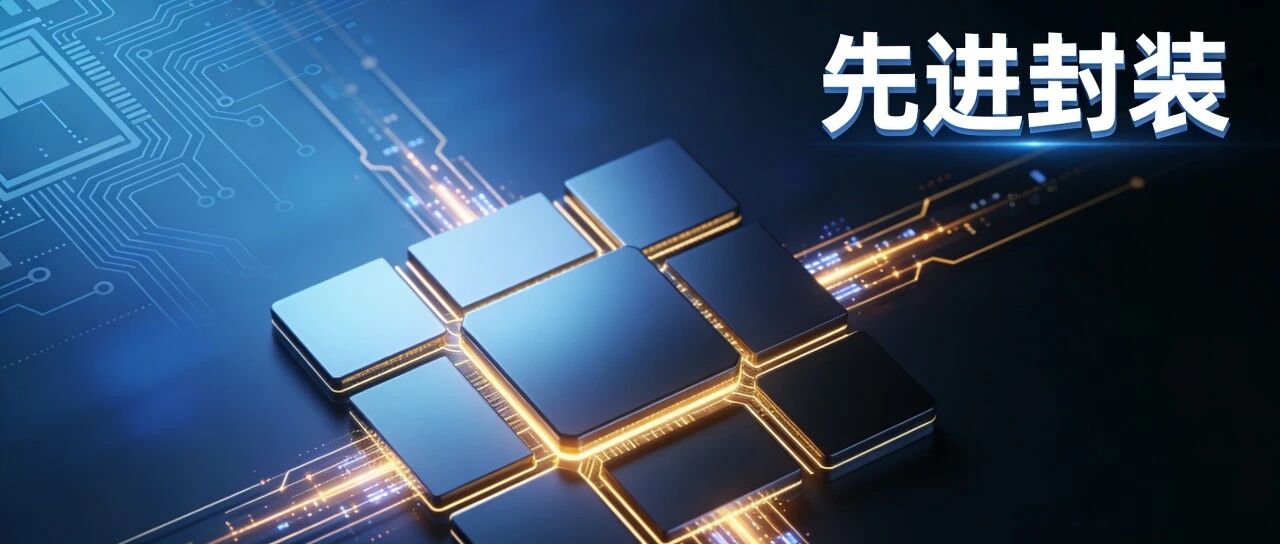
Core Insights - The article discusses the rising costs associated with advanced semiconductor processes, highlighting that the transition from planar FET to FinFET and Nanosheet technologies has led to exponential increases in design and manufacturing costs, making it difficult for small and medium enterprises to invest in advanced processes [8][9]. - The industry is shifting towards higher concentration among leading foundries, while advanced packaging technologies allow smaller companies to participate in high-end chip design without relying on advanced processes [9][11]. - The article emphasizes the importance of heterogeneous integration and the need for tailored architectures based on application scenarios, indicating a trend towards dynamic adjustments in advanced packaging strategies [25][56]. Cost Trends - Design costs have surged from $28 million for 65nm processes to $725 million for 2nm processes, with manufacturing investments also increasing significantly [9]. - The investment required for a 5nm factory is five times that of a 20nm factory, indicating a substantial financial barrier for smaller players in the industry [8]. Architectural Comparisons - The article compares four architectures, noting that smaller systems (like mobile chips) benefit from a "large chip + 3D stacking" approach, while larger systems (like AI servers) favor a "chiplet + 3D stacking" strategy to balance performance and cost [16][24]. - As system complexity increases, the advantages of chiplet-based designs become more pronounced, particularly in terms of cost efficiency [17][23]. Advanced Packaging Technologies - Advanced packaging is evolving to meet the demands of AI and high-performance computing, with technologies like 2.5D and 3D packaging becoming standard for high-end chips [36][72]. - The integration of HBM (High Bandwidth Memory) with 2.5D packaging has become a standard, driven by the need for high memory bandwidth in AI applications [29][36]. Interconnect Technologies - The article highlights the critical role of interconnect technologies in enhancing I/O density, with projections showing a significant increase in interconnect density from 1960s levels of 2/mm² to future levels of 131072/mm² [38]. - Advanced packaging is shifting from being a secondary process to a core component of performance enhancement, with interconnect-related technologies expected to yield higher profit margins than traditional packaging [39][42]. Market Dynamics - The article notes that the demand for advanced packaging is driven by the need for high bandwidth, miniaturization, and low power consumption, particularly in edge AI applications [49][50]. - The automotive sector's transition from distributed ECUs to centralized computing is pushing for higher integration levels, which in turn drives advancements in packaging technologies [53][56]. Technology Evolution - The evolution of packaging technologies is characterized by a shift from single technology optimization to system-level engineering design, necessitating cross-domain integration capabilities [68][70]. - The article outlines a clear roadmap for the evolution of interconnect technologies, indicating that the industry is entering a phase of rapid technological iteration driven by market demands [154][165]. Cost Structure - The cost structure for 2.5D packaging is primarily driven by the interposer (Si/mold/silicon bridge) and packaging substrate, while for 3D packaging, the key cost factor is the bonding process [168][169]. - The differences in cost structures dictate the profitability models for companies, with 2.5D packaging firms needing to manage interposer and substrate costs, while 3D packaging firms focus on optimizing bonding yields and efficiency [169].



中图科技冲刺科创板IPO:拟募资10.5亿元加码Mini/Micro LED等高端图形化衬底
Ju Chao Zi Xun· 2026-01-06 13:28
Core Viewpoint - The Shanghai Stock Exchange has officially accepted the IPO application of Guangdong Zhongtu Semiconductor Technology Co., Ltd. (Zhongtu Technology), a leading global manufacturer of patterned substrates essential for Gallium Nitride (GaN) epitaxy [1][4]. Group 1: Company Overview - Zhongtu Technology specializes in the research, production, and sales of patterned substrates, which are critical materials for GaN LED chips [3]. - The company utilizes semiconductor processes such as photolithography and etching to design microstructures on substrate surfaces, effectively addressing lattice, optical, and thermal matching challenges in GaN heteroepitaxy, thereby enhancing LED chip performance and yield [3]. Group 2: Product and Market Position - The main products include 2 to 6-inch patterned sapphire substrates (PSS) and 4 to 6-inch patterned composite substrates (MMS), widely used in Mini/Micro LED, automotive lighting, RGB direct display, backlight display, and lighting applications [3]. - Zhongtu Technology is one of the few companies capable of manufacturing nano-level PSS and 8-inch patterned substrates, with successful mass production of small cycle and composite material structure products for new display and automotive applications [3][4]. - The company has a leading position in the patterned substrate industry, with an annual production capacity of over 18 million 4-inch substrates and a global market share of approximately 32.76% in 2023 [4]. Group 3: Clientele and Applications - Direct clients include major LED chip companies such as Epistar, Seoul Viosys, Sanan Optoelectronics, and HC Semitek, with products serving well-known consumer electronics and new energy vehicle brands like Apple, Samsung, LG, Hisense, TCL, BYD, Seres, NIO, and Li Auto [4]. - Zhongtu Technology has entered the supply chains of leading companies in the Mini/Micro LED sector, showcasing strong core competitiveness [4]. Group 4: IPO and Fundraising - The company aims to raise 1.05 billion yuan through the IPO to invest in projects related to the industrialization of Mini/Micro LED and automotive LED chip patterned substrates, as well as to establish a semiconductor substrate material engineering technology research center and supplement working capital [4][5]. - The fundraising projects will focus on expanding the production capacity of high-end patterned substrates and composite material substrates, while also developing a technology research platform for large-size semiconductor substrates and Micro LED [5].

存储猛拉,AI存力超级周期到底有多神?
3 6 Ke· 2026-01-06 12:19
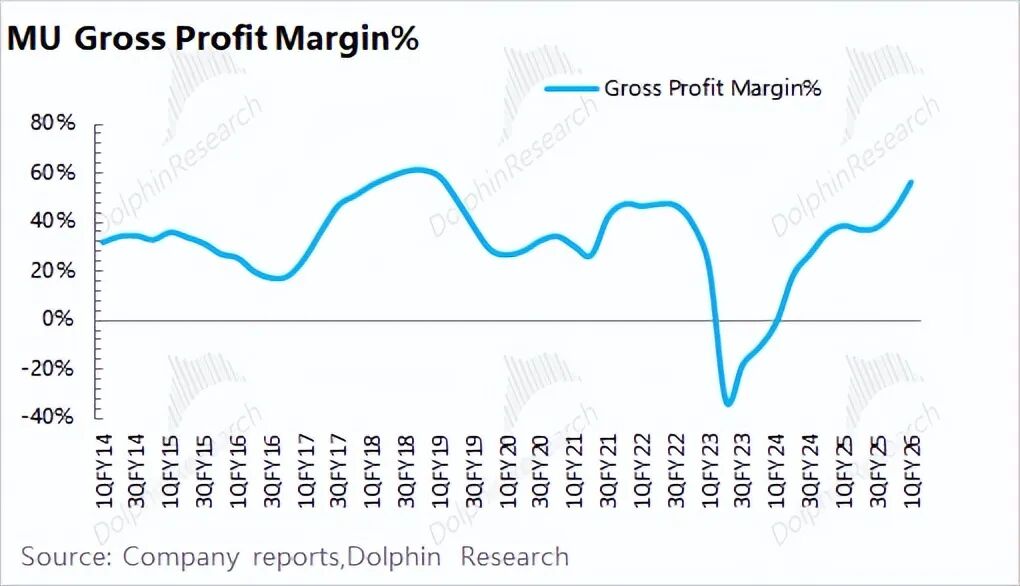
Core Insights - The storage industry is experiencing a significant upcycle driven by AI demand, extending from HBM to traditional storage sectors, with Micron's gross margin reaching a historical high of 66-68% for the next quarter, indicating a stronger cycle than previous ones [1][3]. Group 1: AI Demand and Storage Market Dynamics - The price increase of storage products reflects the supply-demand relationship in the market, primarily driven by AI server demand [3]. - The current AI storage cycle is characterized by a shift in focus from training to inference, leading to differentiated demands for "low latency, high capacity, and high bandwidth" storage [3][14]. - The three major manufacturers (Samsung, SK Hynix, Micron) are prioritizing capital expenditures towards HBM and DRAM, resulting in structural supply-demand imbalances and significant price increases [3][6]. Group 2: Role of Different Storage Types in AI Servers - HBM serves as the "performance ceiling" for AI servers, being a high-bandwidth, high-power product that directly impacts the model scale and response speed [11]. - DRAM (DDR5) acts as a data exchange hub, connecting HBM and NAND, and is crucial for handling concurrent tasks in AI servers [12]. - NAND (SSD) functions as a fast persistent layer for frequently accessed data, while HDD serves as a low-cost container for large volumes of cold data [12][14]. Group 3: Addressing the "Memory Wall" Challenge - The "memory wall" bottleneck arises from the disparity between computing speed and data transfer speed, leading to high GPU idle rates [5][16]. - Solutions to this issue include upgrading HBM to 16-Hi stacks to enhance bandwidth and implementing 3D stacked SRAM to reduce latency [18][19]. - The integration of computing capabilities within storage (compute-in-memory) is anticipated to be a long-term solution to the "memory wall" problem [21]. Group 4: HBM Market Supply and Demand - HBM demand is closely tied to AI chip shipments, with expectations for HBM supply to increase by over 60% by 2026 due to significant capital investments from the three major manufacturers [6][24]. - The combined monthly HBM production capacity of the three manufacturers is projected to rise from approximately 390,000 wafers to 510,000 wafers by the end of 2026, translating to an estimated supply of 41.9 billion GB of HBM [29][34]. - The HBM market is expected to be in a "tight balance" state in 2026, with demand estimated at around 42 billion GB, indicating a competitive landscape among manufacturers [39][40].