
三星

Search documents
早报 | 特朗普称美国将“管理”委内瑞拉直至“安全”过渡;官方通报湖北美术馆火灾;雷军回应“小字营销”;比亚迪首次超越特斯拉
虎嗅APP· 2026-01-04 00:08
大家早上好!这里是今天的早报,每天早上,我都会在这里跟你聊聊昨夜今晨发生了哪些大事儿。 昨夜今晨 【特朗普称美国将"管理"委内瑞拉直至实施"安全"过渡】 据央视新闻,当地时间1月3日,美国总统特朗普就美国对委内瑞拉的军事行动举行新闻发布会。 特朗普称,美国将"管理"委内瑞拉直至实施"安全"过渡。他还表示,马杜罗及其妻子都将面临美国司法审判。 特朗普没有为美国的占领设定时间限制。他声称何时将委内瑞拉交还给委内瑞拉人,将由美国决定。 特朗普说,美国对委内瑞拉的石油禁运仍完全有效。特朗普称,"美国在西半球的主导地位再也不会受到质 疑"。 当地时间1月3日中午11时39分,北京时间今天(1月4日)凌晨0时39分,美国总统特朗普、国防部长赫格塞思 在佛罗里达州海湖庄园就美军对委内瑞拉动武、将委内瑞拉总统马杜罗控制并移送出境举行记者会。 【外交部发言人就美国对委内瑞拉实施军事打击答记者问】 外交部发言人就美国对委内瑞拉实施军事打击答记者问。 问:据报道,美国对委内瑞拉实施军事打击。特朗普在"真实社交"发文称,美国已成功对委内瑞拉及其领导人 马杜罗实施大规模打击行动,马杜罗及其夫人已被控制并移送出境。中方对此有何评论? 答 ...


8点1氪:特朗普披露马杜罗被抓细节;最高降30万,宝马中国回应30多款车型降价;“最快女护士”张水华宣布辞职
36氪· 2026-01-04 00:06
Group 1 - The article discusses the details of a military operation by the U.S. to capture Venezuelan President Maduro and his wife, with Trump stating that the U.S. will "manage" Venezuela until a "safe" transition occurs [2][5][3] - The operation involved over 150 aircraft and lasted approximately 2 hours and 20 minutes, with one aircraft being hit but still operational [5][6] - Trump indicated that if necessary, the U.S. would conduct a "larger" second wave of strikes against Venezuela, although he suggested that this may not be needed at the moment [6] Group 2 - BMW China announced price adjustments for 31 models, with reductions exceeding 10% for 24 models and over 20% for 5 models, with the highest drop being 301,000 yuan for the i7 M70L [6] - Xiaomi refuted claims regarding the alleged "fake" zoom ring on the 17 Ultra Leica version, stating that the accusations were misleading and based on misinterpretations of a teardown video [4][8] - NIO's CEO Li Bin announced that the company plans to launch three new models in 2026, aiming to increase its market share in the high-end vehicle segment [8] Group 3 - The price of 25-year-old Flying Moutai has dropped to 1,495 yuan per bottle, reflecting a decrease of 15 yuan from the previous day [9] - Tesla's global vehicle deliveries for 2025 were reported at 1.636 million, marking an 8.6% decline year-over-year, and for the first time, being surpassed by BYD in annual electric vehicle sales [9] - China's National Medical Products Administration reported that 76 innovative drugs were approved in 2025, significantly surpassing the 48 approved in 2024, with a total authorization value exceeding 130 billion USD [11]
8点1氪丨小米辟谣“17 Ultra徕卡版变焦环造假”;最高降30万,宝马中国回应30多款车型降价;Netflix收购华纳后拟将上映期缩至17天
3 6 Ke· 2026-01-04 00:02
Group 1 - Trump announced the capture of Venezuelan President Maduro by U.S. military forces, stating that the U.S. will "manage" Venezuela until a "safe" transition is implemented [2] - The military operation involved over 150 aircraft and lasted approximately 2 hours and 20 minutes, with no U.S. casualties or equipment losses reported [2] - Maduro and his wife are to be sent to New York for judicial proceedings, facing charges related to "deadly drug terrorism" against the U.S. [2] Group 2 - BMW China announced a price adjustment for 31 key models starting January 1, 2026, with 24 models seeing price cuts exceeding 10% and some up to 30.1 million yuan [3][4] - The price adjustment aims to reflect changes in the official guidance price, with the lowest model now priced at 20.8 million yuan, making it competitive with domestic SUVs [3][4] Group 3 - NIO's CEO Li Bin announced in a company-wide letter that three new models will be launched in 2026, aiming to increase market share in the high-end vehicle segment [6] - NIO reported a record delivery of 48,135 vehicles in December 2025, marking a 46.9% year-on-year increase [6] Group 4 - The wholesale reference price for 25-year-old Flying Moutai has dropped to 1,495 yuan per bottle, reflecting a decrease of 15 yuan from the previous day [7] - The price for a full box of the same product is now reported at 1,505 yuan per bottle, down 20 yuan [7] Group 5 - Tesla reported a global delivery of 1.636 million vehicles in 2025, a decline of approximately 8.6%, marking the first time it has been surpassed in annual electric vehicle sales by BYD [8] Group 6 - Netflix plans to shorten the theatrical release window for Warner Bros. films to 17 days post-acquisition, raising concerns among traditional cinemas and Hollywood creators [11] - The current standard release window is around 45 days, and negotiations are expected to be contentious [11] Group 7 - Baidu announced plans to spin off Kunlun Chip and seek independent listing on the Hong Kong Stock Exchange, with the application already submitted [12]




穿戴设备市场研究报告!
Sou Hu Cai Jing· 2026-01-03 19:11
Group 1: Market Overview - The global wearable device market is expected to exceed $430 billion by 2025, with China leading the growth at over 20% [1][2] - The market is projected to reach a scale of over 600 billion yuan in China by 2026, with global shipments nearing 800 million units [1][2] - The growth is driven by health monitoring upgrades, 5G technology proliferation, and AI algorithm optimization [2] Group 2: Product Forms and Technological Innovations - Wearable devices are evolving from visible to "invisible" forms, with innovations in design and integration of health sensors [3] - The rise of smart rings, such as Samsung's Galaxy Ring, signifies a shift towards more discreet health monitoring solutions [3] - Flexible electronics technology is revolutionizing device forms, with companies like BOE producing ultra-thin flexible screens [6] Group 3: Application Scenarios and User Demands - The application scenarios for wearable devices are diversifying, expanding from health monitoring to medical intervention and smart home control [4] - Medical-grade features are becoming more prevalent, with a penetration rate exceeding 55% in health monitoring [16] - The demand for elderly care devices is increasing, with smart fall prevention products gaining traction in the market [17] Group 4: Competitive Landscape - The global wearable device market is characterized by a "three-legged" competition, with Chinese brands holding significant market shares [9] - Huawei leads the global market with a shipment of 28.6 million units, followed by Xiaomi and Apple [9][10] - In the Chinese market, Huawei, Xiaomi, and Little Genius dominate, with Huawei holding a 33.4% market share [10] Group 5: Future Market Trends - The global wearable device market is expected to continue growing, with shipments projected to exceed 850 million units by 2026 [12] - AI functionality penetration is anticipated to rise, with AI watches expected to exceed 25% market penetration by 2026 [12] - The Chinese wearable device market is forecasted to reach 600 billion yuan, with significant growth in medical-grade devices [13][14] Group 6: Key Brand Strategies - Huawei's strategy focuses on its HarmonyOS ecosystem and domestic chip breakthroughs, achieving significant market penetration [19] - Apple's differentiation lies in its high-end ecosystem and M-series chip advancements, maintaining a strong position in the premium market [20][21] - Xiaomi emphasizes high cost-performance and AIoT ecosystem integration, enhancing user experience through interconnected devices [23]

腾讯研究院AI速递 20260104
腾讯研究院· 2026-01-03 16:01
Group 1 - DeepSeek team released a new paper titled "Manifold-Constrained Hyper-Connections," co-authored by founder Liang Wenfeng, proposing the mHC scheme to stabilize large model training and enhance scalability [1] - The mHC scheme projects the residual mapping matrix onto a double-random matrix manifold space, preserving topological expressiveness while restoring the identity mapping property, controlling the signal amplification factor from 3000 to 1.6 [1] - Experiments with a 27B model show that mHC outperforms traditional HC across tasks like BBH and DROP, introducing only a 6.7% training time overhead, with a maximum improvement of 2.3 percentage points [1] Group 2 - Claude Code, launched 6 months ago, generated nearly $1 billion in annualized revenue, with project lead Boris Cherny confirming that 100% of code was completed by Claude Code in the past 30 days [2] - Key configurations include running 5 Claude instances in parallel on terminals, 5-10 Claude instances on the web, utilizing the Opus 4.5 model, and team collaboration through CLAUDE.md files integrated via GitHub actions [2] - Important techniques involve planning mode, slash command encapsulation for workflows, sub-agent handling of repetitive tasks, and PostToolUse hook for code formatting, with feedback loops for Claude to validate its work [2] Group 3 - Tesla's FSD V14.2 successfully completed a cross-country drive from Los Angeles to South Carolina in a 2025 Model 3, covering 2732.4 miles with zero human intervention, including parking and charging [3] - FSD V14.2 or pre-installed Grok shows significant enhancements in driving performance, perception capabilities, and decision-making logic, handling complex intersections and lane changes more decisively, resulting in a more human-like driving rhythm [3] - Tesla's end-to-end architecture contrasts with Waymo's modular approach, as demonstrated by a power outage in San Francisco that disrupted Waymo's operations, while Tesla's FSD remained largely unaffected [3] Group 4 - OpenAI is developing its first AI hardware, potentially a pen-shaped device or portable audio device, codenamed "Gumdrop," which integrates a microphone and camera to convert handwritten notes into text for ChatGPT [4] - The device is similar in size to an iPod Shuffle and aims to become the "third core device" following the iPhone and MacBook, initially planned for production by Luxshare Precision, later shifted to Foxconn, with manufacturing expected in Vietnam or the US [4] - OpenAI is also working on a new audio model architecture set to launch in Q1 2026, promising more natural emotional voices, more accurate and in-depth responses, and improved interruption handling capabilities [4] Group 5 - TSMC's N2 technology is set to enter mass production in Q4 2025, utilizing the first-generation nanosheet transistor (GAA) technology, achieving a 10%-15% performance improvement at the same power level compared to N3E, and a 25%-30% reduction in power consumption at the same speed [6] - The N2 process employs gate-all-around nanosheet transistors that wrap around the current channel, combined with SHPMIM capacitors, resulting in approximately a 20% increase in transistor density and over a 2x increase in capacitance density compared to N3E [6] - TSMC is expanding production simultaneously at its Kaohsiung and Hsinchu fabs, catering to both mobile and AI/HPC chip markets, with N2P and A16 expected to enter mass production in the second half of 2026 [6] Group 6 - Zhiyuan announced the launch of a "small-sized full-body force-controlled humanoid robot," named Q1, standing approximately 0.8 meters tall and capable of fitting into a 30-35L backpack, utilizing innovative materials and control algorithms to shrink QDD joints to "smaller than an egg" while maintaining full-size force control performance [7] - The Q1 robot employs advanced composite material technology for durability and is only 1/8 the size and weight of full-sized robots, with an open-source SDK and HDK supporting 3D printing for custom appearances [7] - It features the "Zhiyuan Lingxin" AI platform for natural conversation and encyclopedic Q&A, and through the "Zhiyuan Lingchuang" platform, users can arrange actions and logic like building blocks, positioning it as a desktop robot for individual creators [7] Group 7 - Elon Musk announced that Neuralink will begin large-scale production of brain-machine interface devices in 2026, transitioning to a streamlined, nearly fully automated surgical process, with electrode wires passing through the dura mater without the need for removal [8] - The new minimally invasive technology reduces costs, lowers risks, and shortens recovery times, making standardization more accessible; as of September 2025, Neuralink had served only 12 patients, increasing to 20 by December [8] - Founded in 2016, Neuralink focuses on treating neurological disorders such as paralysis, muscular atrophy, and Parkinson's disease, with the first patient, Noland Arbaugh, able to post and play games using only the brain chip post-surgery [8] Group 8 - Meta faced criticism from Turing Award winner LeCun after his departure, alleging that Llama 4's testing results were manipulated by using different models on various benchmarks to achieve better scores, leading to a loss of confidence from Zuckerberg in the original AI team [9] - LeCun criticized his 28-year-old supervisor, Alexandr Wang, for lacking research experience and understanding of research methodologies, asserting that Meta's hiring practices have led to a team overly influenced by large language models [9] - LeCun has founded AMI Labs, focusing on world models, with plans to release a "baby-level" model with preliminary physical intuition within 12 months, emphasizing the need for models to understand the physical world's operations rather than relying solely on language [9]

停工450天,订单锐减40%!外资集体“大撤离”,世界工厂时代结束了?
Sou Hu Cai Jing· 2026-01-03 14:57
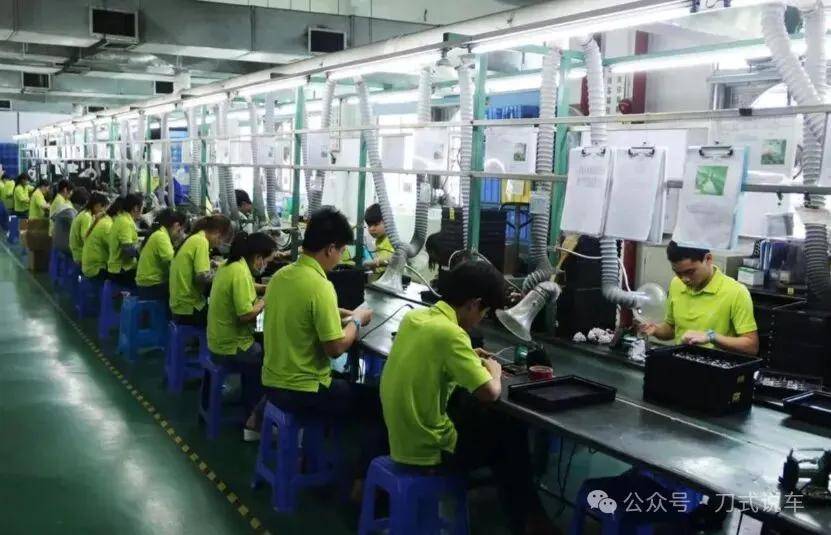
Core Viewpoint - Major companies, including Nike and Adidas, are relocating manufacturing out of China to Southeast Asian countries like Vietnam and Laos due to lower labor costs and favorable foreign investment policies [1][4] Group 1: Reasons for Relocation - The primary reasons for companies moving their factories include significantly lower labor costs in Southeast Asia, with Vietnam's average monthly salary being less than 3000 yuan compared to nearly 7000 yuan in China in 2023 [1][4] - Southeast Asian countries have implemented various tax incentives to attract foreign investment, such as Vietnam's "four years of income tax exemption" [4] - The international economic landscape has shifted, with a decline in the economies of the US and Europe, leading to a 40% reduction in orders from the US to China this year [4][5] Group 2: Impact on China's Manufacturing Status - The companies relocating are primarily in labor-intensive industries like apparel and electronics, which are seen as outdated sectors in China [5] - Despite the loss of some orders, many factories in Southeast Asia still rely on imports of equipment and raw materials from China, indicating that China remains integral to the supply chain [7] - China's manufacturing competitiveness remains strong, ranking second globally in the manufacturing competitiveness index in 2023, and is projected to regain the top position with a 19.4% lead over the US [8] Group 3: Future of Chinese Manufacturing - The development of high-end manufacturing is on the rise, with innovations like "original serum" breaking foreign technology monopolies and addressing health issues in the domestic market [10] - Economists emphasize the importance of maintaining low-end manufacturing to provide job opportunities for ordinary workers, especially in economically lagging regions [11] - The future trend is towards the continuous development of high-tech industries, with a focus on self-sufficiency to mitigate the risks associated with foreign market volatility [13]
显卡一夜飙至2.8万!AI吸干全球芯片产能 2026全球消费者买单
Xin Lang Cai Jing· 2026-01-03 05:55
Core Insights - The price of Nvidia's RTX 5090 has surged to over $4,000, marking a historical high, with both Nvidia and AMD planning to continuously raise graphics card prices monthly [1] - The demand for AI is significantly impacting global chip production, leading to a severe shortage of high-end chips and memory [1] - Major tech companies are aggressively stockpiling resources to build trillion-dollar AI infrastructure, resulting in a market squeeze for consumers [1] Industry Impact - The skyrocketing prices of graphics cards and memory are attributed to the overwhelming demand from AI servers for HBM (High Bandwidth Memory) and enterprise-grade DRAM, causing supply chain disruptions [1] - Storage giants like Samsung and SK Hynix are experiencing unprecedented order volumes, indicating a critical shortage in graphics cards and memory [1] - A warning from the Financial Times suggests that due to the chip shortage, consumers may face a 20% increase in prices for smartphones, computers, and home appliances this year [1]



观察 | AI热潮下的“隐形赢家”:一年涨559%,这门生意比挖金子还赚
未可知人工智能研究院· 2026-01-03 04:02
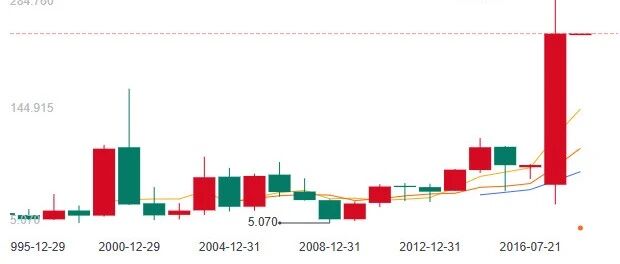
Core Viewpoint - The article emphasizes the importance of recognizing trends in the business world, highlighting that the infrastructure supporting these trends often contains the most certain investment opportunities. The significant rise in the stock price of SanDisk, which increased by 559% in 2025, exemplifies this point, as it outperformed well-known tech companies like Nvidia and Tesla [1][2]. Group 1: Market Dynamics - SanDisk's stock surge reflects a broader trend where storage companies dominated the top gainers in the market, with Western Digital, Micron, and Seagate also ranking high [2]. - The demand for storage in AI applications has skyrocketed, with a single AI server requiring 5 to 10 times more storage than traditional servers [4][5]. - The shift in AI usage from training to inference means that real-time data access is crucial, leading to increased demand for high-speed storage solutions [8]. Group 2: Supply and Demand - The supply-demand gap in the storage industry is significant, with predictions indicating a 26% increase in DRAM demand by 2026, while supply is expected to grow only by 20% [14]. - The price of enterprise SSDs has already risen by over 20% in Q4 2025, with some models experiencing increases of 30% to 40% [15]. - Major cloud service providers are stockpiling storage solutions, with investments in data center storage expected to exceed $1.2 trillion by 2025 [9]. Group 3: Industry Characteristics - The storage industry is typically cyclical, with cycles lasting about three years; however, the current AI-driven demand is extending this cycle [13]. - Companies are intentionally controlling production capacity to maintain price stability after previous downturns in the storage market [15]. - The competition for production capacity is heightened by the demand for High Bandwidth Memory (HBM), which is more profitable and is being prioritized by companies like SK Hynix [17]. Group 4: Investment Insights - Investors are encouraged to focus on "selling shovels" rather than "digging for gold," as infrastructure providers often benefit more than the leading tech companies during technological waves [19]. - Understanding the shifting bottlenecks in AI development can reveal new investment opportunities, as each bottleneck's resolution leads to the emergence of new challenges [20]. - Caution is advised as the storage sector shows signs of overheating, with potential price corrections expected if production capacity increases [20]. Group 5: Broader Industry Challenges - The AI industry faces significant challenges, including power shortages, rising costs, and data bottlenecks, which could hinder growth [22]. - Predictions indicate that by 2027, 40% of AI data centers may be limited by power shortages, impacting operational capabilities [22]. - The high costs associated with AI infrastructure investments raise questions about profitability and sustainability in the long term [22].
显卡价格暴涨,都怪AI
半导体行业观察· 2026-01-03 03:40
Core Viewpoint - The article highlights a severe supply-demand imbalance in the semiconductor market, particularly affecting graphics cards and memory chips, driven by the explosive growth in AI data centers, which is significantly impacting consumer electronics prices and availability [1][3][9]. Group 1: Graphics Card Market - The official price of Nvidia's RTX 5090 is $1999, but actual retail prices have surged to $4000, with predictions it may reach $5000, reflecting a 150% increase over the official price [1]. - Third-party graphics cards start at $2499, but online retailers are pricing them between $3000 and $4000, indicating a significant markup due to supply constraints [1]. - The gaming community is at a disadvantage in this competition for chip resources, as AI data centers consume the majority of available capacity [1]. Group 2: Memory Chip Crisis - The demand for high-bandwidth memory (HBM) has skyrocketed due to AI model training, leading to a severe shortage of consumer-grade DRAM chips [3]. - Memory prices have doubled in the past six months, increasing graphics card manufacturing costs by 80% [3]. - TrendForce predicts a 50%-55% increase in average DRAM prices by Q4 2025, while Citigroup expects an additional 40% rise by Q2 2026 [3][4]. Group 3: Supply Chain Issues - Major manufacturers like Samsung and SK Hynix have prioritized AI server markets, leading to a public acknowledgment of order volumes exceeding production capacity for 2026 [4]. - New chip factories require two to three years to build, meaning the supply shortage will not be resolved before 2027 [4]. - Nvidia's H200 chip, priced at $30,000 to $40,000, requires multiple HBM3e memory chips, further limiting availability for consumer markets [4]. Group 4: Impact on Consumers - Companies like Dell and Lenovo have reported unprecedented cost pressures, predicting a 5%-20% price increase for smartphones, computers, and home appliances in 2026 [6]. - Xiaomi has already raised prices for flagship models, citing supply chain pressures that will be greater in 2026 than in 2025 [6]. - Consumer electronics manufacturers have little negotiating power, as cloud service providers secure long-term contracts with chip manufacturers, forcing them to accept higher prices [6]. Group 5: Resource Allocation Imbalance - Morgan Stanley forecasts that spending on AI infrastructure by major U.S. tech companies will reach $620 billion in 2026, a 32% increase from 2025 [9]. - The demand from AI data centers far outweighs that of the consumer electronics market, leading to a prioritization of resources towards AI applications [9]. - Analysts warn that the current shortages could evolve into a supply chain crisis similar to that experienced during the pandemic, with ongoing tight supply expected through 2027 [9].

印度芯片,想成为全球第一
半导体行业观察· 2026-01-03 03:40
公众号记得加星标⭐️,第一时间看推送不会错过。 印度联邦政府部长阿什维尼・瓦什诺于 1 月 2 日(周五)表示,凭借本国的人才储备优势,印度有 望在 2032 年前跻身全球半导体制造四强,并在 2035 年成为该领域的头号强国。 这位电子和信息技术部部长指出,今年将有四家芯片企业正式投产,届时全球几乎所有头部汽车及电 信企业都将从这些印度本土工厂采购半导体产品。 瓦什诺透露,根据 "印度半导体计划",印度政府迄今已批准了 10 个制造项目,其中包含 2 座晶圆 厂以及 8 个芯片封装、测试与组装项目,累计投资额高达1.6 万亿卢比。 他进一步说明:"去年启动试生产的工厂将率先转入商业化量产,这两家企业分别是凯恩斯电子与中 央电力电子公司。美光科技也已于近期启动试生产,预计将于下月正式投产。位于阿萨姆邦的塔塔半 导体工厂将在年中启动试生产,并于年底实现商业化量产。" 此外,在 "设计关联激励计划"(DLI)的支持下,印度政府已助力 24 个由初创企业主导的芯片设计 项目落地,项目总价值达92 亿卢比。 瓦什诺强调,业界之所以看好印度在半导体领域的领导地位,核心原因在于政府对本土人才培养的高 度重视。 他指出,目 ...
