茶百道

Search documents
霸王茶姬考虑在香港上市?公司回应
Di Yi Cai Jing Zi Xun· 2026-01-08 06:33
Core Viewpoint - The Chinese tea beverage brand, Bawang Chaji, is reportedly considering a secondary listing in Hong Kong, with preliminary discussions with investment banks indicating a potential fundraising of several hundred million dollars, although the company has stated there are no current plans for such a listing [1]. Company Overview - Bawang Chaji was founded by Zhang Junjie in June 2017 in Kunming and has since opened over 7,000 stores globally, with registered membership exceeding 200 million [1]. - Zhang Junjie, who entered the milk tea industry at the age of 17, became the youngest "dark horse" on the 2025 Hurun Rich List with a wealth of 13.5 billion yuan [1]. Market Context - The competition in the tea beverage market has intensified, with several companies such as Hushang Ah Yi, Mixue Group, Guming, Chabaidao, and Nayuki Tea having successfully listed in Hong Kong [1]. - Bawang Chaji is notable for being the first Chinese new tea beverage brand to list on the NASDAQ [1].
霸王茶姬考虑在香港上市?公司回应
第一财经· 2026-01-08 06:27
Core Viewpoint - The Chinese tea beverage brand Bawang Chaji is reportedly considering a secondary listing in Hong Kong, with preliminary discussions with investment banks indicating a potential fundraising of several hundred million dollars, although the plan may not proceed and requires regulatory approval [1]. Company Overview - Bawang Chaji was founded by Zhang Junjie in June 2017 in Kunming and has since opened over 7,000 stores globally, with registered members exceeding 200 million [2]. - Zhang Junjie, who entered the milk tea industry at the age of 17, became the youngest individual on the 2025 Hurun Rich List with a wealth of 13.5 billion yuan [2]. Market Competition - The tea beverage market has become increasingly competitive, with several companies such as Heytea, Mixue Group, Guming, Cha Baidao, and Nayuki having successfully listed in Hong Kong [2]. - Unlike other tea brands that have gone public in Hong Kong, Bawang Chaji is the first Chinese new tea beverage brand to list on the NASDAQ [2].

当面包开始“奶茶化”
3 6 Ke· 2026-01-08 04:17
Core Insights - The trend of "milk tea-ification" in the baking industry reflects a shift towards incorporating popular milk tea ingredients like taro and glutinous rice into baked goods, appealing to younger consumers [2][3][5] - This trend is not merely a superficial addition of ingredients but represents a deeper strategy to attract young consumers by merging the successful elements of milk tea with traditional baked products [2][12] Industry Trends - The baking industry is experiencing a significant transformation, with products now featuring a variety of ingredients that were previously exclusive to milk tea, such as taro and glutinous rice, becoming central to baked goods [3][5][7] - The introduction of diverse fillings in baked products, such as cheese, cream, and various sweet and savory ingredients, is becoming a key selling point, with consumers increasingly favoring items that are rich in fillings [8][11] Consumer Behavior - Despite a general trend of consumption downgrade, consumers are willing to spend more on innovative and high-quality baked goods, indicating a shift in spending habits towards frequent, enjoyable food experiences [20][22] - The rise in prices for popular baked items, such as bagels and ciabatta, reflects a willingness among consumers to pay for perceived value and quality, with average prices increasing significantly [20][24] Product Innovation - The concept of "doing addition" in product development is prevalent, where traditional baked goods are enhanced with unexpected ingredients, creating new flavor profiles and experiences for consumers [12][14][17] - Localized adaptations of products, such as ciabatta incorporating regional flavors, demonstrate the industry's responsiveness to consumer preferences and the desire for unique culinary experiences [14][17] Market Dynamics - The baking sector is witnessing a rise in average customer spending, driven by a growing demand for quality and health-conscious products, with an annual growth rate of 8% to 10% in customer spending on baked goods [24][26] - The phenomenon of "milk tea-ification" is reshaping consumer perceptions of baked goods, leading to a broader acceptance of innovative and cross-category products in the food market [19][26]
市值蒸发超120亿!门店超8000家的茶百道,为何难获市场青睐?
Sou Hu Cai Jing· 2026-01-08 01:45
Core Viewpoint - The new tea beverage market is entering a phase of elimination, with Cha Bai Dao, known as the "second stock of new tea drinks," facing significant challenges in growth compared to competitors like Mi Xue Bing Cheng and Gu Ming [1][3]. Financial Performance - In the first half of 2025, Cha Bai Dao achieved a revenue of 2.5 billion yuan, a year-on-year growth of 4.33%, and a net profit of 352.9 million yuan, with a year-on-year increase of 37.48% [1]. - In contrast, Gu Ming reported a revenue of 5.663 billion yuan with a growth rate of 41.24%, and a net profit of 1.625 billion yuan, showing a remarkable increase of 121.51% [3]. Market Position and Stock Performance - Cha Bai Dao's stock price closed at 6.44 HKD per share, with a total market value of 9.5 billion HKD, reflecting a significant decline from its historical high of 15.196 HKD per share, resulting in a market value loss exceeding 12 billion HKD [3]. Business Model and Expansion - Cha Bai Dao, founded in 2008, shifted to a franchise model in 2016, leading to rapid expansion, with the number of franchise stores increasing tenfold to 5,070 by 2021 [4]. - As of 2024, the total number of franchise stores reached 8,376, with a market share of 6.8% in China's ready-to-drink tea market, which was valued at 247.3 billion yuan in 2023 [4]. Supply Chain Challenges - Over 99% of Cha Bai Dao's stores are franchises, and the company has shifted its focus from selling tea to selling raw materials to franchisees, with raw material sales accounting for 94.78% of its revenue [5]. - The company faces significant supply chain issues, relying heavily on external suppliers for key ingredients, which has led to food safety concerns and operational challenges [5][6]. Competitive Landscape - Cha Bai Dao's main price range of 10-20 yuan is highly competitive, facing pressure from brands like Mi Xue Bing Cheng and Gu Ming, resulting in a high franchisee attrition rate of 16.61% and a closure rate of 10.62% in 2024 [6]. Supply Chain Improvements - In response to supply chain issues, Cha Bai Dao has slowed its store expansion, adding only 49 new stores in the first half of 2025, compared to previous years [7]. - The company has increased its logistics capabilities, with 93.8% of stores achieving next-day delivery and improving its fruit supply chain efficiency [7][8]. International Expansion - Cha Bai Dao is exploring international markets, having opened over 10 stores in South Korea, aiming to tap into the growing Southeast Asian ready-to-drink tea market, which is projected to grow from 32.9 billion yuan in 2023 to 78.3 billion yuan by 2028 [10]. Future Outlook - Despite current challenges, there is optimism that improvements in supply chain capabilities will enable Cha Bai Dao to achieve greater success in the future [11].
断层第一,喜茶、奈雪、茶百道近30品牌押注,掀起“红色风暴”
3 6 Ke· 2026-01-08 01:08
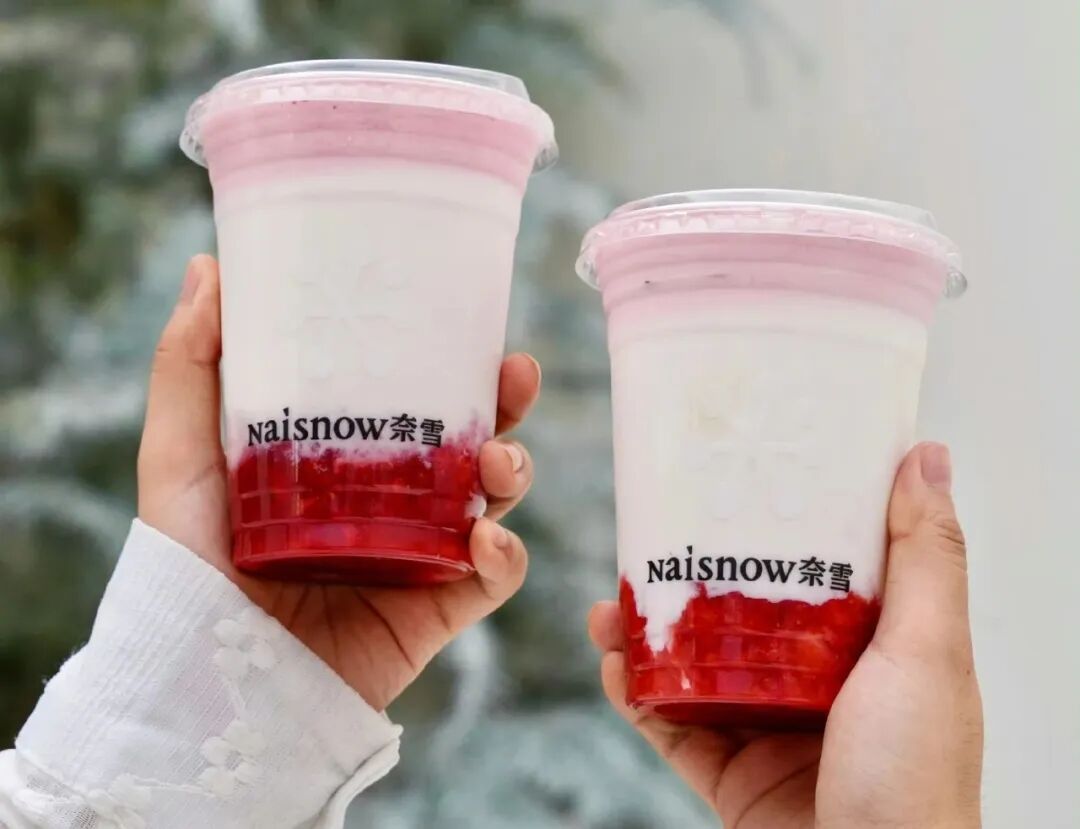
Core Insights - Strawberry has emerged as a dominant flavor in the beverage market, with various brands launching new products featuring this fruit, indicating a significant trend in consumer preferences [1][5][12] Group 1: Market Trends - During the New Year period, Nayuki's "Red Face Strawberry Snow" topped sales charts, showcasing the popularity of strawberry-flavored beverages [1][3] - A total of 71 new strawberry products were launched by 27 brands in the beverage sector, highlighting strawberry's status as a leading fruit in the market [5][12] - The festive season has contributed to the increased demand for strawberry drinks, as they align with celebratory themes and consumer sentiments [5][12] Group 2: Product Innovations - Brands are focusing on "dessertification," transforming traditional fruit teas and milks into drinkable desserts, enhancing the overall consumer experience [7][19] - Popular products include "liquid cakes" that combine multiple ingredients for a richer taste, such as tea, milk, and various dessert elements [7][19] - High visual appeal is becoming a competitive advantage, with brands creating aesthetically pleasing drinks that encourage social media sharing [13][15] Group 3: Flavor and Ingredient Development - Innovative flavor combinations are emerging, with brands experimenting with unique pairings like strawberry with black truffle cheese, expanding the flavor profile of strawberry beverages [16][18] - The use of high-quality ingredients is essential for maintaining the appeal of strawberry drinks throughout different seasons, with a focus on balancing flavors [19][21] - New toppings and ingredients, such as cream and unique dairy products, are being introduced to enhance the texture and flavor of strawberry beverages [21][23]
霸王茶姬“手打奶茶”固废预警,新茶饮遇ESG挑战
2 1 Shi Ji Jing Ji Bao Dao· 2026-01-07 12:20
Core Viewpoint - The new tea beverage industry is facing significant challenges regarding waste management and ESG (Environmental, Social, and Governance) compliance, highlighted by a recent incident involving improper handling of waste materials at a store, which raises food safety concerns [2][8]. Group 1: ESG Reporting and Waste Management - The incident at Bawang Tea Ji occurred shortly after the company released its first ESG report, which promised compliance in waste disposal but lacked specific data [2]. - Waste management is a critical topic in ESG disclosures, with the Chinese government emphasizing solid waste management in its recent action plans [2][6]. - Despite over 3,000 new tea brands in China, only a few leading companies have published ESG reports, indicating a lack of transparency in the industry [2][6]. Group 2: Disclosure Standards and Challenges - There is a lack of unified standards for waste and packaging material disclosures among new tea beverage companies, leading to inconsistencies in data reporting [3][6]. - Among six major new tea brands, only two (Hushang Ayi and Bawang Tea Ji) did not disclose quantitative data on waste and packaging materials, while others like Nayuki Tea and Mixue Ice City provided detailed disclosures [3][4]. - The reporting practices often lack specific tracking data and quantifiable results, making it difficult to assess the effectiveness of environmental initiatives [6]. Group 3: Waste Types and Management Issues - The solid waste generated by new tea beverage companies primarily includes food and beverage material residues and packaging materials, which pose food safety risks if not handled properly [10][11]. - The unique characteristics of waste from the tea beverage industry complicate recycling efforts, as the materials used are often low-value and less appealing for recyclers [7][11]. - The franchise model of many new tea brands complicates waste management, as effective oversight and compliance at individual franchise locations are challenging [8][9]. Group 4: Recommendations for Improvement - Experts suggest that new tea companies should focus on reducing waste at the source, encouraging customers to use reusable cups, and improving waste sorting practices at stores [7][10]. - There is a need for better classification and management of waste materials, particularly in regions with strict regulations [11]. - Companies should establish clear guidelines for waste disposal and recycling to enhance compliance with environmental regulations and improve overall sustainability [10][11].

茶百道(02555) - 截至二零二五年十二月三十一日止月份之股份发行人的证券变动月报表
2026-01-06 08:34
股份發行人及根據《上市規則》第十九B章上市的香港預託證券發行人的證券變動月報表 截至月份: 2025年12月31日 狀態: 新提交 本月底法定/註冊股本總額: RMB 147,763,425 致:香港交易及結算所有限公司 公司名稱: 四川百茶百道實業股份有限公司(「本公司」) 呈交日期: 2026年1月6日 I. 法定/註冊股本變動 | 1. 股份分類 | 普通股 | 股份類別 | H | | 於香港聯交所上市 (註1) | | 是 | | | --- | --- | --- | --- | --- | --- | --- | --- | --- | | 證券代號 (如上市) | 02555 | 說明 | H股 | | | | | | | | | 法定/註冊股份數目 | | | 面值 | | 法定/註冊股本 | | | 上月底結存 | | | 1,477,634,250 | RMB | | 0.1 RMB | | 147,763,425 | | 增加 / 減少 (-) | | | 0 | | | RMB | | 0 | | 本月底結存 | | | 1,477,634,250 | RMB | | 0.1 RMB ...
2026年投资策略-重视服务消费布局元年
2026-01-05 15:42
Summary of Key Points from Conference Call Records Industry Overview - The focus is on the service consumption sector, which is expected to be a key area for investment in 2026, driven by structural opportunities in the consumer market and the shift in consumer behavior from basic needs to entertainment and experience-based consumption [1][4]. Core Insights and Arguments - **Consumer Market Dynamics**: The total retail sales are projected to reach 50 trillion, primarily concentrated in goods and dining, showcasing strong resilience [1]. - **Service Consumption Potential**: There is significant potential in service consumption, supported by policies that increase holidays and enhance consumer capacity. The aging population, particularly the 60s demographic, is driving demand for healthcare and wellness services, making the silver economy a growth engine [1][5]. - **Travel Industry Opportunities**: Key areas in the travel industry include duty-free, hotels, scenic spots, and OTA (Online Travel Agency). The OTA sector has exceeded expectations due to supply chain recovery, while the duty-free sector benefits from a rebound in high-end consumption [1][6]. - **Population Dividend**: Four demographic groups (50s, 60s, 90s, and 10s) present new investment opportunities, corresponding to healthcare, silver economy, single economy, and parent-child education [1][7]. - **Technological Impact**: The application of technology is fostering a positive cycle of supply and demand for emerging products, with innovations attracting consumer interest [1][8]. Additional Important Insights - **Hainan Duty-Free Policy**: The ongoing duty-free policy in Hainan is expected to release significant consumption potential, particularly among local residents, and the introduction of domestic goods in duty-free stores is anticipated to drive growth [1][9][10]. - **Hotel Industry Outlook**: The hotel sector is expected to return to healthy growth in 2026, with leading companies likely to improve their valuations and performance due to supply-side improvements [1][11]. - **Tourism Sector Expectations**: The tourism industry is projected to thrive in 2026, supported by increased holiday days and potential service consumption subsidies, with a focus on the silver economy and pilgrimage tourism [1][12]. - **Restaurant Industry Trends**: The restaurant sector is expected to adapt well in a weak economic environment, with opportunities arising from new business lines and improved operational capabilities [1][14]. Investment Strategies - **Social Service Sector**: Investment strategies for 2026 focus on two main lines: incremental markets with marginal changes (duty-free, hotels, silver economy) and stable long-term opportunities in chain businesses and supply chains [2]. - **Education Sector**: The education sector is expected to see growth in vocational and AI education, with policies supporting resource allocation to match demographic structures [3][19]. Recommendations - **Key Companies to Watch**: - **Vocational Education**: Huatu Shanding, China Oriental Education, Action Education - **AI Education**: Duolingo, Kevin Education, TAL Education, New Oriental, Youdao, and Hong Kong-listed Fenbi [20]. This summary encapsulates the critical insights and strategic directions discussed in the conference call, highlighting the potential investment opportunities across various sectors.
新茶饮2026:一半是深海,一半是远洋
3 6 Ke· 2026-01-05 12:57
Core Insights - The new tea beverage industry is reaching its ceiling, with contrasting signals indicating the end of a chaotic growth phase and a shift towards stability and efficiency [1][2] - The industry growth rate is projected to stabilize between 5%-7% in the first three quarters of 2025, similar to the previous year, leading to a more strategic competition focused on brand loyalty and operational efficiency [2][20] Industry Trends - Product innovation has shifted from a focus on sensory stimulation to becoming a "meaning anchor" for consumers' lifestyle and emotional needs [3] - The controversy surrounding the pricing strategy of brands like Mixue Ice City highlights the risks of straying from established brand perceptions [4][5] Brand Strategies - Successful brands are transitioning towards health-oriented products, emphasizing low-calorie and functional ingredients to align with consumer trends towards healthier lifestyles [6] - The evolution of co-branding strategies reflects a deeper engagement with consumers, moving from simple logo placements to creating shared values and experiences [7] Retail Dynamics - The role of physical stores is evolving from mere distribution points to brand experience centers that collect data and provide localized services [8][9] - The focus is shifting towards optimizing store efficiency and creating unique customer experiences that cannot be replicated online [9][11] Market Expansion - Brands like Mixue Ice City are rapidly expanding internationally, leveraging their successful domestic models in emerging markets, while others like Nayuki and Heytea are focusing on cultural branding in developed markets [17][18] - The competition will increasingly hinge on supply chain efficiency and the ability to adapt to local markets, with successful brands needing to balance cost control with product innovation [14][15][19] Future Outlook - The tea beverage industry is expected to surpass a market size of one trillion yuan by 2026, with growth concentrated among leading brands, making it challenging for smaller players to survive [20][21] - The industry is entering a phase of intense competition and consolidation, where only brands with robust supply chains and operational capabilities will thrive [21]
甜不动了!为什么茶咖品牌集体上新咸奶茶?
东京烘焙职业人· 2026-01-05 08:33
Core Viewpoint - The rise of "salty milk tea" is becoming a significant trend in the beverage industry for the autumn and winter of 2025, driven by innovative product launches from various tea and coffee brands [5][10]. Group 1: Popularity and Market Trends - "Salty milk tea" has gained substantial attention on social media platforms, with over 50 million views on Xiaohongshu and more than 160 million video plays related to the topic on Douyin [5]. - Major brands like Heytea and Luckin Coffee are introducing unique salty milk tea products, with Heytea launching two new flavors that quickly sold out in some locations [10][12]. - Other brands, including Cha Bai Dao and Nayuki, have also released salty milk tea products that have been well-received, with Cha Bai Dao's offerings selling over 1 million cups within 10 days of launch [12][15]. Group 2: Industry Dynamics and Consumer Behavior - The introduction of salty milk tea is a response to the increasing product homogeneity in the ready-to-drink beverage market, where brands are seeking differentiation through innovative flavors [16]. - Salty milk tea appeals to consumers who are experiencing "taste fatigue" from overly sweet beverages, thus stimulating demand and boosting sales for brands [16]. - However, the popularity of salty milk tea is still largely dependent on novelty and differentiation, with mixed consumer reviews indicating that while some enjoy the flavor, others find it underwhelming [18].