SHEIN

Search documents
亚马逊上线低价电商App,狙击Temu 和SHEIN
3 6 Ke· 2025-11-12 04:42
Core Insights - Amazon has launched a new low-cost shopping platform called Bazaar, targeting markets in Asia, Africa, and Latin America, offering products priced under $10 [1][6] - The introduction of Bazaar follows the positive feedback from Amazon Haul, which saw a nearly 400% increase in product variety over the past year [1][2] - The move signifies Amazon's shift from a defensive strategy to an offensive one in response to competition from low-cost platforms like Temu and SHEIN [1][5] Group 1: Amazon Haul and Bazaar Launch - Amazon Haul was tested in the U.S. last year, focusing on low-cost items under $20, but struggled to compete with Temu and SHEIN [2][3] - The new Bazaar platform is independent from the main Amazon app and aims to provide a more engaging shopping experience with interactive features [5][6] - Bazaar has already expanded to 14 markets, including Argentina, Ecuador, and Nigeria, indicating Amazon's proactive approach to capture emerging market growth [1][6] Group 2: Competitive Landscape - The global e-commerce landscape is shifting, with platforms like Temu and TikTok Shop gaining traction, challenging Amazon's traditional market dominance [6][8] - In emerging markets, consumers are highly price-sensitive, making them fertile ground for low-cost competitors like Temu and SHEIN [7][8] - The launch of Bazaar is seen as a strategic response to the growing influence of these competitors, aiming to establish a foothold in markets where brand loyalty is weak [6][9]



高德入局无人驾驶;Temu全球下载量突破12亿次丨出海周报
2 1 Shi Ji Jing Ji Bao Dao· 2025-11-10 12:41
Trade and Economic Performance - In the first ten months of 2025, China's total goods trade value reached 37.31 trillion yuan, reflecting a year-on-year growth of 3.6% [1] - Exports amounted to 22.12 trillion yuan, increasing by 6.2%, while imports were 15.19 trillion yuan, remaining stable compared to the previous year [1] Trade Partnerships - ASEAN became China's largest trading partner, with a trade value of 6.18 trillion yuan, growing by 9.1% and accounting for 16.6% of China's total foreign trade [2] - The EU ranked second with a trade value of 4.88 trillion yuan, up by 4.9%, representing 13.1% of the total [2] - The US fell to third place, with a trade value of 3.38 trillion yuan, down by 15.9%, making up 9% of the total [2] - Trade with Belt and Road Initiative countries totaled 19.28 trillion yuan, marking a growth of 5.9% [2] Automotive Industry - Chinese automotive brands saw a significant increase in sales in the UK, with a 235% year-on-year rise in September, totaling 40,729 units sold [3] - From January to September, cumulative sales reached 142,684 units, a 91% increase [3] - BYD's sales in the UK for September reached 11,271 units, surging by 880% [3] Technology and Innovation - Alibaba's Amap announced a partnership with XPeng Motors to integrate Robotaxi services into its platform, marking a significant step in autonomous driving technology [4] - This collaboration aims to create the largest Robotaxi aggregation platform globally [4] E-commerce Trends - During the first week of the Double 11 shopping festival, the health sector on Taobao experienced double-digit growth in overseas transactions, with significant demand for dietary supplements and traditional health products [5] - Alibaba Health Pharmacy entered the overseas market, adding nearly 150,000 quality products [5] Global App Performance - Temu achieved over 1.2 billion downloads globally by October 2025, maintaining its position as the top shopping app for three consecutive years [6] Logistics and Delivery Services - UPS announced a 5.9% increase in shipping rates effective December 22, 2025, with FedEx planning a similar adjustment in January 2026 [7] Automotive Investments - Geely acquired a 26.4% stake in Renault's Brazilian operations, enabling local production and market expansion in Latin America [8] - BYD plans to launch its luxury brand "Yangwang" in the Middle East in early 2026, with subsequent expansions to Europe and the Americas [9]
理解中国独角兽:如何超越估值泡沫 | 商学院观察
Jing Ji Guan Cha Wang· 2025-11-10 07:31
Group 1 - The core viewpoint emphasizes that unicorn companies must balance development speed and quality, ensuring their growth is based on solid technological foundations and sustainable business logic [2][3] - The global unicorn growth rate is slowing, with investors increasingly scrutinizing profitability models and long-term value, leading to a market correction of previous valuation bubbles [3][6] - "DownRounds" financing is becoming a focal point, indicating companies are facing challenges in meeting growth expectations, prompting a shift from a "burning cash for growth" model to a focus on profitability and sustainability [6][7] Group 2 - The terms "ZIRPicorns" and "Papercorns" have been introduced to describe unicorns that emerged during the zero-interest rate period and those with inflated valuations lacking market validation, respectively [7][8] - Approximately 60% of unicorns in the U.S. fall under the "ZIRPicorns" category, facing challenges in achieving profitability as funding runs out amid rising interest rates [7][8] - "Papercorns" represent 93% of U.S. unicorns, highlighting a significant shift from the original unicorn concept where valuations indicated mature business models with clear exit paths [7][8] Group 3 - Chinese unicorns are characterized as "ecological builders," focusing on rapid scaling and ecosystem collaboration, leveraging existing business models to create stable cash flows [8][9] - Companies like Ant Group and Yuanfudao exemplify this pragmatic innovation approach, enhancing efficiency through technological or model innovations rather than creating entirely new markets [8][9] - In contrast, U.S. unicorns exhibit a "dreamer" mentality, investing in seemingly impossible technologies with the aim of disrupting existing systems rather than optimizing current models [12][13] Group 4 - The innovation paths of Chinese and U.S. unicorns differ significantly, with Chinese firms favoring independent development and collaboration, while U.S. firms focus on market-driven innovation [14][16] - Historical and cultural factors contribute to these differences, with China's innovation historically leaning towards business model innovation due to practical needs [17][18] - Recent trends indicate a shift in China towards accelerated technological innovation, particularly in hard tech sectors like integrated circuits, reflecting a move towards self-sufficiency in key technologies [20][24] Group 5 - The investment landscape shows a stark contrast, with U.S. venture capital heavily focused on AI, while China's investments are more diversified across industry applications and infrastructure [28][29] - As of early 2025, 451 generative AI services have been registered in China, with over 80% being customized solutions for specific verticals, indicating a depth of application [29] - China's complete industrial chain and diverse application environments provide a unique systemic advantage, with the potential for AI integration across various sectors [29]

高德打造Robotaxi聚合平台;京东物流无人配送车出海沙特|36氪出海·要闻回顾
36氪· 2025-11-09 13:35
Core Viewpoint - The article highlights the rapid expansion and collaboration of Chinese companies in the global market, particularly in the fields of autonomous driving, logistics, healthcare technology, and consumer goods, showcasing significant growth and strategic partnerships. Group 1: Autonomous Driving and Mobility - Gaode, a subsidiary of Alibaba, has partnered with XPeng Motors to integrate XPeng's Robotaxi into Gaode's platform, marking a significant step in providing L4 autonomous driving services globally [4] - Luobo Kuaipao has achieved a weekly order volume exceeding 250,000, with all orders being fully autonomous, and has expanded its global coverage to 22 cities [4] - JD Logistics has deployed its sixth-generation smart delivery vehicles in Saudi Arabia, with a reported 700% increase in order volume since launching its B2C brand JoyExpress [4] Group 2: Strategic Partnerships and Collaborations - Yunji Technology has signed a strategic cooperation framework with a Saudi partner to enhance the smart upgrade of the local tourism and hotel industry [5] - AliExpress has formed a strategic partnership with Australian health product company Homart Group, bringing several well-known Australian brands to its platform [7] - Geely has acquired a 26.4% stake in Renault's Brazilian operations, allowing for localized production and sales of Geely's electric vehicles in Brazil [7] Group 3: Healthcare and Technology Innovations - Agile Medical has completed a multi-million RMB Series B financing round to support global commercialization and product development of its surgical robots [11] - Time Technology has secured 300 million RMB in financing to advance its eVTOL technology and global delivery capabilities [9] - The AI glasses market is experiencing rapid growth, with major tech companies accelerating their investments in this sector, projecting significant increases in shipment volumes [13] Group 4: Market Performance and Trends - Chinese automotive brands have seen a 235% increase in sales in the UK, with notable models from Chery, BYD, and MG ranking among the top ten bestsellers [14] - The global demand for solid-state batteries is expected to reach 740 GWh by 2035, driven by applications in electric vehicles and energy storage [13] - The health consumption sector on Taobao has reported double-digit growth in overseas transactions during the Double 11 shopping festival, with significant increases in various health-related product categories [7]

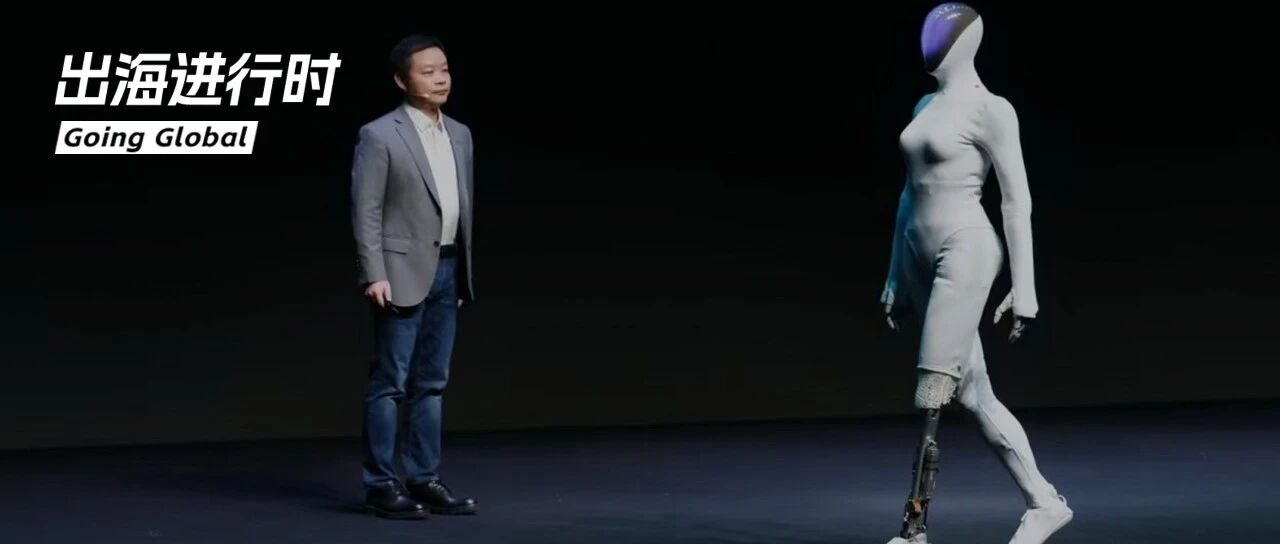
马斯克点赞小鹏机器人;游戏科学冯骥:全球最赚钱10款游戏里,7款与中国公司相关丨Going Global
创业邦· 2025-11-09 10:09
Group 1 - The "Top 50 Globalization Brands Loved by Generation Z" list has been released, with Tencent, Xiaomi, and SHEIN ranking in the top three, and SHEIN leading in the e-commerce category [5][6][7] - TikTok Shop achieved approximately $19 billion in global sales in Q3 2025, with the U.S. market contributing $4 to $4.5 billion, marking a 125% increase from Q2 [8] - AliExpress saw a 181% month-on-month increase in downloads in Japan, becoming the fastest-growing e-commerce app in the market [9] Group 2 - Elon Musk praised Xpeng's robot, indicating that the robot market will be dominated by Tesla and Chinese companies [11][15] - Former Tmall International beauty head joined Sam's Club, raising discussions about the "Alibaba-ization" of the brand [18] - Zhongtong Cloud Warehouse Technology completed nearly 200 million yuan in Series A financing to expand its logistics network and overseas warehouse business [19][20] Group 3 - The latest model from "The Dark Side of the Moon" has a training cost of $4.6 million, which is lower than that of ChatGPT [21][22] - Seven out of the ten highest-grossing games globally are related to Chinese companies, highlighting China's significant role in the gaming industry [24] - Horizon Robotics and Volkswagen announced a partnership to develop advanced driving assistance and autonomous driving systems [26][27] Group 4 - Tesla shareholders approved Musk's compensation plan, which could reach up to $1 trillion based on the company's market value and performance targets [30] - Apple plans to launch its first low-cost MacBook under $1,000 in the first half of next year to compete in the entry-level market [31] - Meta's internal documents revealed that about 10% of its revenue in 2024 could come from scam ads and prohibited product advertisements [32][33] - Nissan is selling its global headquarters for 97 billion yen (approximately 4.5 billion yuan) as part of its restructuring efforts [34][36]
中国公司全球化周报|高德打造最大Robotaxi聚合平台/京东物流无人配送车出海沙特
3 6 Ke· 2025-11-09 07:56
Group 1: Industry Trends - Investment, trade, and technology are currently the most popular directions for Chinese companies expanding into Dubai, with compliance and long-term operations being critical for success [2] - The AI glasses market is experiencing rapid growth, with major tech companies accelerating their investments, indicating a shift towards AI glasses as a new human-computer interaction interface [9] - The global solid-state battery demand is projected to reach 740 GWh by 2035, driven by applications in electric vehicles and energy storage [9] Group 2: Company Developments - Gaode has partnered with XPeng Motors to integrate XPeng's Robotaxi into its platform, aiming to create the largest Robotaxi aggregation platform globally [3] - JD Logistics has begun testing its sixth-generation smart delivery vehicles in Saudi Arabia, with a significant increase in order volume since launching its B2C brand JoyExpress [3] - Yunji Technology has signed a strategic cooperation agreement with a Saudi partner to promote smart upgrades in the local tourism and hotel industry [4] - Geely has acquired a 26.4% stake in Renault's Brazilian operations, facilitating local production and market expansion in Latin America [5] - BYD plans to launch its luxury brand "Yangwang" in the Middle East in early 2026, with subsequent expansions to Europe and the Americas [5] - Yika Technology reported a global order backlog exceeding $2.5 billion, with nearly 10 million vehicles equipped with its technology [6] - Tencent Games, Xiaomi, and SHEIN were recognized in the "Top 50 Favorite Global Brands of Generation Z" list, highlighting their strong market presence [6] Group 3: Financing Activities - Shiji Technology completed a 300 million RMB Series B++ financing round to enhance its eVTOL capabilities and global delivery efforts [7] - Weixin Aerospace has raised nearly 100 million RMB through seed and angel rounds, focusing on technology development and overseas expansion [7] - Dazheng Micro-Nano secured over 100 million RMB in Series A3 financing to build production lines for flexible perovskite solar cells [8] - Agile Medical completed a multi-hundred million RMB Series B financing round to support global commercialization and product development [8] - Thunderbird Innovation raised significant funding in a Series C round to strengthen its position in the global consumer-grade AI+AR glasses market [8]



温峥嵘回击被AI换脸直播卖货丨南财合规周报(第214期)
2 1 Shi Ji Jing Ji Bao Dao· 2025-11-09 05:08
Group 1: AI and Copyright Issues - The first AI copyright infringement case in Shanghai ruled that the AI company is not liable as it complied with the "notice-and-takedown" obligation after being notified of the infringement [2] - An actor, Wen Zhengrong, reported that her identity was impersonated using AI for live-stream selling, leading to Douyin's removal of over 10,000 infringing videos and penalties for 37 accounts [3] Group 2: Legal Actions Against AI Companies - Multiple families in the U.S. and Canada are suing OpenAI, claiming that prolonged interactions with ChatGPT led to harmful delusions and even suicides, with allegations including negligence and assisted suicide [4] Group 3: E-commerce and AI Conflicts - Amazon has initiated legal action against Perplexity AI, accusing it of fraudulently impersonating users to make purchases on its platform, which raises concerns about user privacy and data security [5] Group 4: Regulatory Scrutiny - Taobao is under investigation for misleading advertising practices during the "Double 11" shopping festival, following user complaints about forced redirects to its platform [6] Group 5: Brand Strategy and Market Positioning - Ele.me has rebranded to "Taobao Flash Sale," indicating a strategic shift in the competitive landscape of food delivery services, emphasizing the importance of brand value realignment [7] Group 6: IPO Speculations and Company Statements - OpenAI has denied rumors of an imminent IPO, clarifying that while a public offering is a future goal, there are no specific plans or timelines in place [8] Group 7: International Regulatory Actions - The French government is moving to suspend SHEIN's operations in France until compliance with local laws is demonstrated, highlighting the regulatory challenges faced by international e-commerce platforms [9]
星巴克卖出中国业务60%股权;SHEIN首店落地巴黎遭抗议;金佰利并购科赴丨品牌周报
36氪未来消费· 2025-11-09 02:06
Group 1: Starbucks China Business Sale - Starbucks announced the sale of 60% of its China business to private equity firm Boyu Capital for an estimated valuation of $4 billion, bringing the overall valuation of Starbucks China to over $13 billion [2][3] - The partnership with Boyu Capital will focus on expanding the number of stores in China from nearly 8,000 to 20,000, targeting smaller cities and emerging regions [3] - Starbucks will retain its brand and intellectual property while Boyu Capital will lead local operations, digital transformation, and market expansion [4] Group 2: Kimberly-Clark Acquisition of Kenvue - Kimberly-Clark announced the acquisition of Kenvue for a total valuation of $48.7 billion, combining two companies with similar revenue sizes [5][6] - The merger is expected to reshape the global beauty and personal care market, creating a company with a comprehensive product line across various consumer health segments [6] - Kenvue has faced challenges since its spin-off from Johnson & Johnson, with a significant decline in net profit and sales [6] Group 3: SHEIN's Paris Store Opening - SHEIN opened its first physical store in Paris, attracting both shoppers and protesters, highlighting the brand's controversial presence in the market [7][8] - The French government has called for an investigation into SHEIN due to concerns over illegal products being sold on its platform [9][10] Group 4: Financial Performance of Brands - Coach reported a 22% increase in sales, solidifying its position in the high-end market, while Kate Spade experienced an 8% decline [23] - Estée Lauder's sales rebounded with a 3% organic growth, driven by recovery in the Chinese market and tourism retail [25] - Ralph Lauren's revenue reached $2.01 billion, with a notable 30% increase in the Chinese market despite price hikes [29]




2025年第43周:跨境出海周度市场观察
艾瑞咨询· 2025-11-09 00:05
Group 1: Cross-Border Expansion and Market Trends - China and UAE's bilateral trade has surpassed $100 billion, with over 15,000 Chinese companies operating in the UAE, 90% of which plan to expand into the Middle East market [2][3] - The Dubai IFZA Free Zone has established its first office in Shanghai to facilitate Chinese companies' entry into the UAE and Middle East, aiming for a 30% increase in the number of serviced Chinese companies by 2024 [2][3] - The Chinese gaming industry is experiencing a significant reshuffle in the overseas mobile game market, with Tencent maintaining the top position but slowing growth, while MiHoYo and Muto Technology have seen substantial ranking increases [5] Group 2: Industry-Specific Developments - The global market for AI short dramas is expected to grow significantly by 2025, with China focusing on local production and AI optimization to enhance efficiency and reduce costs [6] - China's commercial aerospace sector is accelerating its international cooperation, with the successful launch of satellites for various countries, showcasing the maturity and cost-effectiveness of its technology [8] - The Chinese home robot market is thriving globally, with a 16.5% year-on-year increase in shipments, and Chinese brands holding four of the top five positions in the global market share [13] Group 3: Brand Strategies and Market Penetration - Chinese tea brands are rapidly expanding overseas, with Mixue Ice Cream and Heytea adopting different strategies to capture markets in Southeast Asia and Europe, respectively [19][20] - The sports goods industry in China is projected to reach an export value of $28.396 billion in 2024, driven by brand building and supply chain efficiency [18] - BYD has achieved impressive overseas sales, with a significant market share in Europe and plans to surpass Toyota by 2025, despite facing challenges in market education and after-sales service [27] Group 4: Technological Innovations and Globalization - Haier Biomedical is transitioning from product export to ecosystem co-building, focusing on laboratory solutions and smart medication to enhance its global competitiveness [28] - Chery Automobile has seen a 26.2% year-on-year increase in exports, emphasizing a strategy of localized production and a comprehensive product matrix [29] - SHEIN is transforming from a super retail entity to a super ecological entity, leveraging flexible supply chains and digital tools to enhance its global manufacturing capabilities [25]

从「中国制造」到「全球风尚」:腾讯、小米、SHEIN问鼎Z世代品牌榜
Xin Lang Ke Ji· 2025-11-07 14:54
Core Insights - The "Top 10 Most Loved Chinese Global Brands by Gen Z" list highlights Tencent, Xiaomi, and SHEIN as the leading brands in their respective categories of gaming, 3C electronics, and e-commerce [1][2][3] Group 1: Brand Rankings - Tencent ranks first in the gaming category with a score of 1391, followed by Xiaomi in 3C with 1241, and SHEIN in e-commerce with 1197 [1] - The list indicates a strong preference among Gen Z for Chinese brands, with Tencent, Xiaomi, and SHEIN being the top three [2] Group 2: Gen Z Consumer Behavior - Gen Z, representing about 25% of the global population, is characterized by a global perspective, digital proficiency, and cultural influence, reshaping the global consumer market [2] - The survey covered various markets, revealing that Gen Z consumers are more discerning and have a higher acceptance of Chinese brands compared to other generations [2] Group 3: Tencent's Globalization Strategy - Tencent has accelerated its globalization efforts, with international market revenue from gaming exceeding 30% in Q2, marking a historical high for four consecutive quarters [3] - The brand leverages popular gaming IPs and community engagement to attract Gen Z, enhancing the gaming experience through social media and AR features [3] Group 4: Xiaomi's Competitive Edge - Xiaomi's success among 3C brands is attributed to its value-for-money proposition, innovative focus on Gen Z needs, and the creation of an interconnected smart ecosystem [3] - The brand's ability to offer high-quality products at reasonable prices aligns with Gen Z's preference for value [3] Group 5: SHEIN's Market Disruption - SHEIN stands out in the e-commerce sector with its "on-demand fashion" model, utilizing a flexible supply chain to minimize inventory and respond quickly to market trends [5] - The brand's digital empowerment of suppliers and commitment to sustainability have positioned it as a leader in the fast-fashion industry [5][6] - SHEIN has invested over 15 billion yuan to build a smart supply chain centered in Guangzhou, enhancing the digital transformation of traditional industries [6]