比亚迪

Search documents
汽车行业周报:低增长之年,追寻高质量发展
Guoyuan Securities· 2026-01-19 05:45
Investment Rating - The report maintains a "Recommended" investment rating for the automotive industry, indicating that the industry index is expected to outperform the benchmark index by more than 10% [6]. Core Insights - The automotive industry is entering a phase of low growth, with a focus on high-quality development opportunities. Key areas of interest include high-growth automotive companies and structural opportunities within the supply chain, particularly in commercial vehicles and automotive technology [4][34]. - The China Association of Automobile Manufacturers (CAAM) forecasts that total vehicle sales in China will reach 34.75 million units in 2026, representing a year-on-year growth of 1%. Passenger vehicle sales are expected to grow by 0.5%, while commercial vehicle sales are projected to increase by 4.7% [3][35]. - New energy vehicles (NEVs) are anticipated to play a crucial role in driving industry growth, with expected sales of 19 million units in 2026, reflecting a significant year-on-year growth of 15.2% [3][35]. Summary by Sections 1. Weekly Market Review (January 10-16, 2026) - The automotive sector index increased by 0.49%, outperforming the Shanghai and Shenzhen 300 index by 1.06 percentage points. The automotive services sector saw the highest growth at 4.51% [12][15]. 2. Weekly Data Tracking (January 10-16, 2026) - From January 1-11, 2026, retail sales of passenger vehicles in China totaled 328,000 units, a 32% decrease year-on-year. Wholesale figures were 381,000 units, down 40% year-on-year [20][21]. 3. Industry News (January 10-16, 2026) - Significant developments include partnerships for advanced driving technologies and the introduction of new vehicle models by major manufacturers, indicating ongoing innovation in the sector [25][29][31]. 4. Key Manufacturer Sales Rankings (2025) - BYD led the passenger vehicle market with sales of 4.55 million units, followed by Geely and Chery. In the NEV segment, BYD also dominated with a market share of 29.7% [23][24]. 5. Future Outlook - The report emphasizes the importance of macroeconomic policies and industry governance in sustaining growth. The focus will be on maintaining competitive advantages in electric and intelligent vehicle technologies [34][36].






汽车行业周报:低增长之年,追寻高质量发展-20260119
Guoyuan Securities· 2026-01-19 05:23
Investment Rating - The report maintains a "Recommended" investment rating for the automotive industry, indicating a positive outlook for certain segments within the sector [6]. Core Insights - The automotive industry is expected to experience low growth in 2026, with total vehicle sales projected to reach 34.75 million units, reflecting a year-on-year increase of 1%. Passenger vehicle sales are anticipated to grow by 0.5%, while commercial vehicle sales are expected to rise by 4.7%. The new energy vehicle (NEV) segment is projected to grow significantly, with sales expected to reach 19 million units, a 15.2% increase year-on-year, highlighting its role as a key growth driver [3][35]. - The report emphasizes the importance of macroeconomic policies and GDP growth targets in influencing vehicle sales, particularly in the passenger vehicle segment. The report suggests that sustained policy support is crucial for maintaining sales momentum [3][35]. Summary by Sections 1. Weekly Market Review (January 10-16, 2026) - The automotive sector index increased by 0.49%, outperforming the Shanghai Composite Index by 1.06 percentage points. The automotive services sector saw the highest gains, with a 4.51% increase [12][15]. 2. Weekly Data Tracking (January 10-16, 2026) - Retail sales of passenger vehicles from January 1-11 totaled 328,000 units, a 32% decrease year-on-year. Wholesale figures showed a similar trend, with 381,000 units sold, down 40% year-on-year. The NEV market also faced declines, with retail sales of 117,000 units, down 38% year-on-year [20][21]. 3. Industry News (January 10-16, 2026) - Key developments include partnerships for advanced driving technologies and initiatives to promote autonomous vehicle testing in regions like Hong Kong. Additionally, the report highlights the ongoing negotiations between China and the EU regarding electric vehicle trade, which could stabilize market conditions [25][28][30]. 4. Investment Recommendations - The report suggests focusing on structural opportunities within the automotive sector, particularly high-growth companies and regions, as well as the recovery of commercial vehicles and advancements in automotive technology [4].
固态电池迈向工程化验证关键期
Zhong Guo Neng Yuan Wang· 2026-01-19 04:57
Market Performance - The electric equipment and new energy sector increased by 0.79% this week, with industrial automation rising by 4.19%, the new energy vehicle index up by 1.44%, the photovoltaic sector up by 0.87%, and the nuclear power sector up by 0.66%. Conversely, the power generation equipment fell by 2.27%, the lithium battery index decreased by 3.55%, and the wind power sector dropped by 4.74% [1][3]. Industry Insights - In the new energy vehicle sector, global sales are expected to grow rapidly, with projections of 16.49 million units sold in 2025, a year-on-year increase of 28.2%, and 19 million units in 2026, a 15.2% growth [4]. - The domestic power battery cumulative installation is projected to reach 769.7 GWh by 2025, reflecting a 40.4% year-on-year growth [4]. - The solid-state battery technology is approaching a critical engineering verification phase, with companies like BYD bidding for GWh-level solid-state battery equipment [4]. - The photovoltaic sector is expected to benefit from regulatory measures aimed at controlling upstream silicon material prices, which may enhance profitability in downstream battery components [2][4]. - Wind power demand is anticipated to continue growing, with government support for new projects [2][4]. Company Highlights - Tianji Co. expects a net profit of 70 million to 105 million yuan in 2025, marking a return to profitability [5]. - Siyuan Electric anticipates a net profit of 3.163 billion yuan in 2025, a 54.35% increase year-on-year [5]. - TCL Zhonghuan forecasts a net loss of 8.2 billion to 9.6 billion yuan in 2025 and plans to invest in new energy to accelerate its integrated strategy [5]. - Rongbai Technology signed a procurement agreement with CATL for lithium iron phosphate materials, with total sales expected to exceed 120 billion yuan [5].

港股速报 | 调整来袭 港股低开 航空股逆势走高
Sou Hu Cai Jing· 2026-01-19 03:17
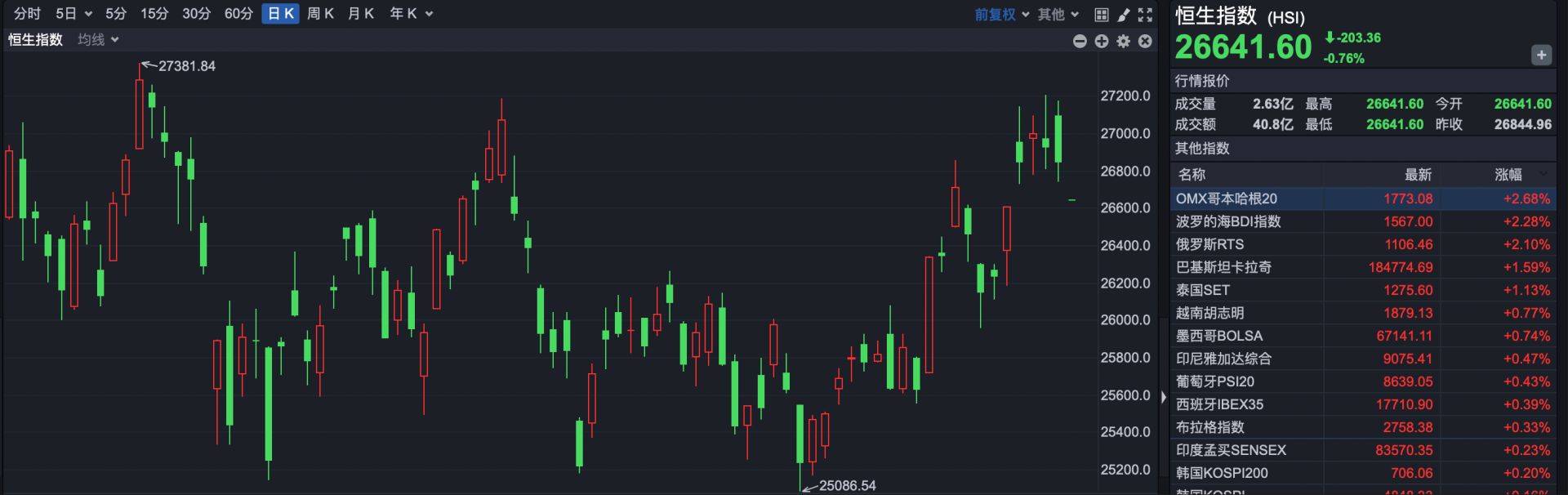
Market Overview - The Hong Kong stock market opened lower on January 19, with the Hang Seng Index at 26,641.60 points, down 203.36 points, a decline of 0.76% [1] - The Hang Seng Tech Index opened at 5,777.07 points, down 45.11 points, a decrease of 0.77% [4] Airline Sector Performance - Airline stocks showed resilience, with China Eastern Airlines (HK00670) rising over 6%, and both China Southern Airlines (HK01055) and Air China (HK00753) increasing by more than 2% [3] - China Eastern Airlines reported a 4.93% year-on-year increase in passenger capacity for December 2025, with passenger turnover up 7.61% and a seat load factor of 85.65%, up 2.14 percentage points [6] - China Southern Airlines announced an 11.89% year-on-year increase in passenger capacity for December 2025, with passenger turnover up 11.20% and a seat load factor of 84.05%, down 0.53 percentage points [7] - Air China reported a 4.0% year-on-year increase in passenger capacity for December 2025, with passenger turnover up 10.0% and a seat load factor of 82.2%, up 4.5 percentage points [7] Other Sector Movements - The technology sector saw widespread declines, with Bilibili dropping over 4%, Alibaba and Kuaishou down over 2%, and Xiaomi and Meituan down over 1% [7] - The metals sector was active, with Zijin Mining opening over 1% higher [7] - The lithium battery sector experienced mostly gains, with BYD rising over 1% [7] - The domestic real estate sector faced declines, with Country Garden falling over 10% [7] - The biopharmaceutical sector opened lower, with Tigermed down over 2% [7] Economic Outlook - According to Galaxy Securities, the U.S. CPI for December 2025 rose 2.7% year-on-year, with core CPI up 2.6%, both in line with previous values [8] - The U.S. PPI for November increased by 3%, exceeding the forecast of 2.7% [8] - Initial jobless claims in the U.S. decreased by 9,000 to 198,000, significantly below the market expectation of 215,000, marking the lowest level since November of the previous year [8] - China's foreign trade in 2025 reached 45.47 trillion yuan, a year-on-year growth of 3.8%, marking nine consecutive years of growth [8] - The M2-M1 spread at the end of December 2025 was 4.7 percentage points, widening from the previous month's 3.1 percentage points [8] Investment Recommendations - The technology sector remains a long-term investment focus, benefiting from price increases in the supply chain, domestic substitution, and accelerated AI applications [8] - The consumer sector is expected to continue benefiting from policy support, with attention needed on policy implementation and improvements in consumption data [8] - Given the escalating geopolitical tensions, precious metals and other safe-haven assets are likely to benefit [8]

涨停潮!601616,一分钟涨停!
Zhong Guo Ji Jin Bao· 2026-01-19 03:05
Market Overview - The A-share market showed positive performance with the Shanghai Composite Index up by 0.50%, the Shenzhen Component Index up by 0.60%, and the ChiNext Index up by 0.39% [2] - The Hong Kong stock market experienced fluctuations, with notable gains in companies like NIO, BYD, and Baidu [2] Electric Power and Grid Sector - The electric power and grid sector saw a strong rally, with stocks like Shuangjie Electric reaching a 20% limit up, and other companies such as Guodian Electric and Hanlan Co. also hitting their upper limits [4] - Significant investments are expected in the sector, with the State Grid announcing a projected fixed asset investment of 4 trillion yuan during the 14th Five-Year Plan, representing a 40% increase compared to the previous plan [6] AI Application Sector - The AI application sector faced a downturn, with significant declines in internet, cultural media, and AI healthcare stocks [7] - Companies like Sanwei Communication and People's Daily experienced substantial drops, with some stocks hitting their daily limit down [8] Company-Specific Developments - Fenglong Co. achieved a remarkable 14 consecutive trading days of limit-up, with a total increase of 280% since December 17, 2025 [10] - The company announced that its stock price has significantly deviated from its fundamental value, indicating potential risks of market overheating and irrational speculation [10]



时隔7月再度握手 中韩双方股东力挺北京现代
Yang Zi Wan Bao Wang· 2026-01-19 02:42
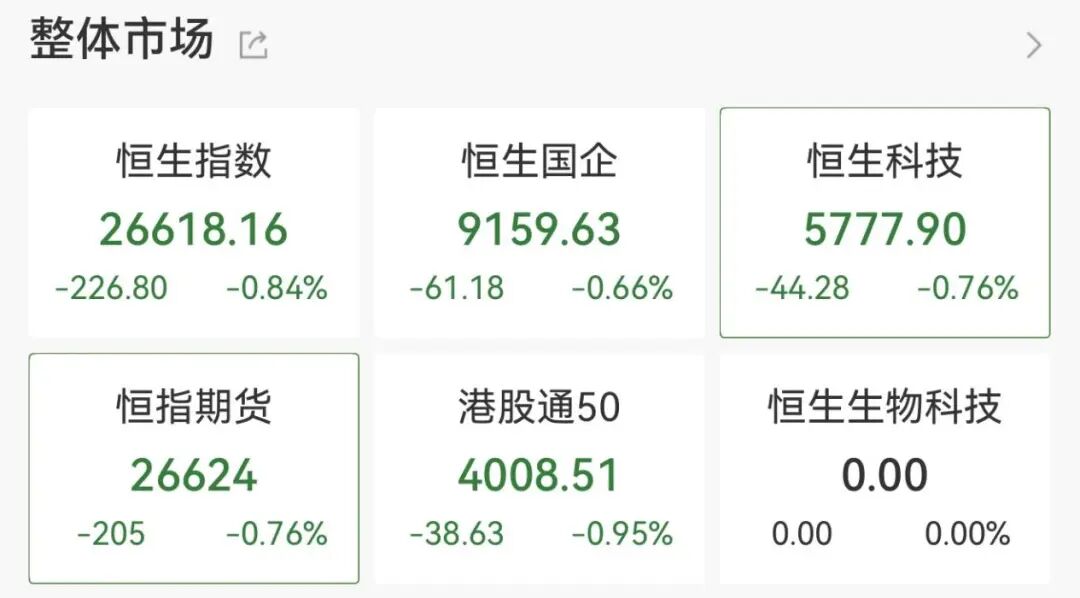
Core Viewpoint - The collaboration between Hyundai Motor and BAIC Group is set to significantly support Beijing Hyundai's transformation, with a focus on strategic cooperation and resource sharing to enhance competitiveness in the Chinese market [1][3][4]. Group 1: Strategic Cooperation - High-level meetings between Hyundai's CEO and BAIC's leadership emphasize a commitment to deepen strategic cooperation and accelerate Beijing Hyundai's transformation [1][3]. - The two companies have reached multiple agreements to enhance support for Beijing Hyundai's development, showcasing a rare collaborative determination from both shareholders [3]. Group 2: Investment and Resource Allocation - Hyundai Motor's commitment to the Chinese market is reflected in a joint investment of 8 billion yuan aimed at enhancing local R&D and transitioning to new energy vehicles [4][7]. - The establishment of a forward-looking R&D center in Shanghai focuses on advanced fields such as autonomous driving and smart cockpits, with over 1,300 engineers in China, 90% of whom are local employees [7][9]. Group 3: Product Development and Market Strategy - Beijing Hyundai plans to launch 20 new products over the next 4-5 years, including the EO electric SUV designed specifically for the Chinese market, utilizing local supply chains [7][9]. - The company aims to increase the global share of electric models to 60% by 2030, while simultaneously advancing hybrid, pure electric, extended-range, and hydrogen fuel cell technologies [7][9]. Group 4: Support from BAIC Group - BAIC Group's strong performance, with a target of 1.752 million vehicle sales in 2025, provides a solid foundation for Beijing Hyundai's transformation [10]. - The collaboration will include talent transfer, joint marketing efforts, and support for Beijing Hyundai's "Smart 2030 Plan," aiming to establish it as a benchmark for high-quality transformation among joint venture automakers [12][14].
八成市场,两家瓜分:智能驾驶第三方赛道马太效应显现,Momenta、华为占据头部
Di Yi Cai Jing Zi Xun· 2026-01-19 02:34
Core Insights - The report indicates that by November 2025, the cumulative sales of passenger cars equipped with urban NOA (Navigation Assisted Driving) in China reached 3.129 million units, marking a shift from high-end differentiation to mainstream adoption [1][3] Group 1: Market Dynamics - Urban NOA has transitioned from niche to mainstream, impacting vehicle delivery schedules, user experience, and brand risks [3] - The market is maturing rapidly, leading to a clear "Matthew Effect," where leading players dominate the market [6][16] - Momenta and Huawei's HI model together hold over 80% of the urban NOA third-party supplier market, with Momenta leading at approximately 61.06% market share [3][12] Group 2: Competitive Landscape - The industry is witnessing a dual-leader scenario, with Momenta and Huawei establishing a strong competitive position [13][16] - Momenta's urban NOA deployment reached 414,400 units from January to November 2025, reinforcing its leadership in the third-party supplier market [12][22] - Collaborations with major automotive brands like BMW and Mercedes-Benz highlight the importance of ongoing technological iteration and reliability in the competitive landscape [15][20] Group 3: Technological Advancements - The evolution of urban NOA is driven by three mechanisms: algorithmic advancement, data feedback loops, and accumulated trust through reliability [9][10][12] - Momenta's R6 reinforcement learning model exemplifies the shift towards advanced algorithms that enhance decision-making capabilities beyond human replication [9] - The data advantage gained through large-scale deployment leads to exponential growth in algorithm training effectiveness, making it difficult for latecomers to catch up [11] Group 4: Global Expansion - Momenta is actively expanding its global footprint, partnering with Southeast Asian platforms and international automotive brands to promote Chinese smart driving technology [18][20] - The adaptability of Chinese smart driving solutions to various global markets is attributed to the complex urban traffic conditions in China, which serve as a robust training environment [19] Group 5: Future Outlook - The Ministry of Industry and Information Technology predicts that by 2030, the integration of advanced driving assistance and connected features will create a trillion-level value increment for the automotive industry [21] - Urban NOA is expected to evolve from a high-end feature to a fundamental capability in new vehicles, influencing user experience and brand trust [21][22] - The competition in urban NOA is likened to a marathon, with Momenta's comprehensive capabilities making it difficult for competitors to replicate [22][23]
中国市场每周前瞻 - 离岸市场涨 2%;监管收紧两融要求;央行推出信贷宽松一揽子措施;12 月信贷数据超预期
2026-01-19 02:29
Summary of Key Points from the Conference Call Industry Overview - The report discusses the performance of the Chinese stock market, specifically focusing on A-shares and offshore markets, with A-shares losing 1% while offshore gained 2% [1] - The People's Bank of China (PBoC) introduced credit easing measures, including a 25 basis point cut in rates on various monetary policy tools [1] - Regulatory tightening was noted, particularly with margin lending requirements being increased from 80% to 100% for new contracts [1] Market Performance - MXCN gained 1.6% while CSI300 lost 0.6% during the week [1] - A-shares daily turnover reached a record high of approximately RMB 4 trillion on January 14 [1] - Southbound inflows amounted to US$1.3 billion for the week, with year-to-date inflows reaching US$5 billion [3] Economic Indicators - Loan and credit data exceeded market expectations, indicating a positive trend in credit conditions [1] - The largest-ever foreign exchange inflows since 2015 were recorded in December, according to SAFE data [1] Regulatory Developments - The State Administration for Market Regulation (SAMR) launched a probe into Trip.com for alleged antitrust conduct [1] - President Xi Jinping emphasized the importance of advancing a new strategic partnership with Canada during a meeting with Prime Minister Mark Carney [1] Sector Performance - Consumer Discretionary and New China sectors outperformed, while Utilities and Value sectors lagged [8] - Information Technology and Growth sectors also showed strong performance, while Communication Services and Value sectors underperformed [8] Earnings and Valuations - The forward price-to-earnings ratios for MXCN and CSI300 are 12.8x and 14.8x, respectively [9] - Consensus estimates for EPS growth in 2025/26 are 4%/14% for MXCN and 15%/14% for CSI300 [9] - Health Care and Materials sectors saw the most upward revisions in earnings estimates [9] Investment Opportunities - The report suggests that investors should consider the outlined factors in their investment decisions, including sector performance and regulatory changes [7] - The report indicates a potential for recovery in fundraising activities, with expectations to normalize to historical averages in 2026 [38] Additional Insights - The report highlights that over 300 companies are in the pipeline for Hong Kong listings, indicating a robust IPO market [41] - Recent Hong Kong IPOs attracted significant global long-term capital as cornerstone investors [40] - The average post-IPO returns for participants over the past two years were approximately 50% in the first six months [42] Conclusion - The overall sentiment in the market appears cautiously optimistic, with regulatory easing and strong credit data providing a supportive backdrop for potential investment opportunities in various sectors, particularly in technology and consumer discretionary areas [1][9][38]
政策与技术双驱-智驾L3与L4的变局
2026-01-19 02:29
Summary of Conference Call Records Industry Overview - The conference call discusses the developments in the autonomous driving industry, particularly focusing on the advancements in L3 and L4 technologies, as well as the impact of NVIDIA's open-source Alpaca model on the Robotaxi market and L2+ technology adoption [1][2]. Key Points and Arguments NVIDIA's Open-Source Model - NVIDIA's Alpaca model, with approximately 10 billion parameters, has been released as an open-source project, which includes weights, inference scripts, simulation frameworks, and a physical AI open dataset. This initiative aims to lower the technical barriers for Robotaxi scalability and L2+ technology adoption [2]. - The open-source ecosystem provided by NVIDIA allows companies to operate and optimize their models without starting from scratch, thus reducing trial and error costs [2]. Regulatory Changes in North America - Recent regulatory changes in North America have simplified approval processes and relaxed safety requirements for autonomous vehicles, promoting innovation and commercialization. This creates a more efficient and flexible R&D environment for both domestic and global automakers [5][6]. - The new policies include exemptions for vehicles without steering wheels or pedals, allowing faster testing and deployment of non-compliant vehicles [6]. Technical Challenges and Solutions - Key challenges in autonomous driving technology include adaptation to extreme weather, construction zone recognition, and building user trust. Solutions involve enhancing modal strategies, combining visual and language understanding, and implementing redundant designs in control systems [7][8]. - The need for explainable decision-making and transparency is emphasized to build user trust, with companies encouraged to disclose decision-making processes [8]. Market Projections for 2026 - Significant advancements in China's smart driving sector are expected in 2026, including conditional commercialization of L3 technology, expansion of Robotaxi fleets, and iterative optimization of models and methodologies by autonomous driving companies [11]. - The penetration rate for L2 assisted driving is projected to reach 70%, with urban NOA penetration exceeding 15%. L3 technology is expected to account for 1%-2% of the market, primarily in mid-range vehicles [16]. Competitive Landscape - The competitive landscape is evolving, with major players like Huawei, Xiaopeng, and others continuously iterating their technology solutions. The performance of new models is under scrutiny, with some experiencing regressions in capabilities [12][14]. - The industry is anticipated to see significant changes in rankings and performance, with some manufacturers potentially being eliminated due to competitive pressures [15]. Additional Important Insights - The conference highlights the importance of simulation and physical AI applications in enhancing model performance, particularly in special scenarios that are not well-represented in real-world driving data [10]. - The establishment of a national-level autonomous driving technology assessment framework in China is suggested to facilitate the evaluation and regulation of L3 and L4 technologies [10]. This summary encapsulates the critical insights and projections regarding the autonomous driving industry, emphasizing the role of technology, regulatory changes, and competitive dynamics shaping the market landscape.
济南将争取国家“人工智能+工业软件”中试基地项目落地建设
Qi Lu Wan Bao· 2026-01-19 02:14
Core Viewpoint - Jinan aims to implement an industrial strong city strategy by 2026, focusing on building a modern industrial system Group 1: Strengthening Advantageous Industries - The city will focus on electronic information, automotive, high-end software, and modern medicine industries, aiming to enhance scale, extend chains, and grow enterprises [2] - In the electronic information sector, Jinan plans to achieve an industry scale of 240 billion yuan by accelerating the construction of semiconductor and micro-display projects [2] - The automotive industry aims for a scale of 180 billion yuan, supporting companies like BYD and Geely in introducing high-end models and promoting collaborative development [2] - The high-end software sector targets a scale of 130 billion yuan, emphasizing the development of industrial software and AI applications [2] - The modern medicine industry, relying on key enterprises, aims for a scale of 52 billion yuan by enhancing various pharmaceutical sectors [2] Group 2: Cultivating Characteristic Industries - Jinan will focus on high-end CNC machine tools, robotics, specialized equipment, steel, advanced materials, and food and bio-manufacturing, aiming to create competitive industrial clusters [4] - The high-end CNC machine tools and robotics sector targets a scale of 55 billion yuan, with key projects like the industrial mother machine park [4] - The specialized equipment industry aims for a scale of 115 billion yuan, with support for leading companies and project expansions [4] - The steel industry will focus on green low-carbon transformation, targeting a scale of 165 billion yuan by developing high-value products [4] - The advanced materials sector aims for a scale of 35 billion yuan, promoting innovation and expansion in chemical and metal materials [4] - The food and bio-manufacturing industry targets a scale of 77.5 billion yuan, supporting innovative development of key enterprises [4]