
京东集团

Search documents
2025年中国经济热词
Zhong Guo Xin Wen Wang· 2026-01-14 03:31
Economic Development - In 2025, China's economy is expected to deliver a resilient performance as it transitions towards high-quality development during the conclusion of the "14th Five-Year Plan" [1] - The "15th Five-Year Plan" is set to outline the economic and social development direction for the next five years, emphasizing public participation and national unity [2] Trade and Investment - The Hainan Free Trade Port will officially implement full island closure on December 18, 2025, marking a significant step in China's commitment to high-level opening-up and the construction of an open world economy [3] - The government aims to increase investments in human capital and public welfare, creating a virtuous cycle that boosts economic growth through enhanced human capabilities and increased consumer spending [4] Consumer Policies - A special national bond of 300 billion yuan will support consumption through a "trade-in" policy, directly stimulating consumer demand and stabilizing the consumption market [5] - The introduction of a universal child-rearing subsidy of 3,600 yuan per child per year aims to alleviate family burdens and support long-term population balance [6] Technological Advancements - The "Artificial Intelligence+" initiative is set to accelerate the integration of AI across various industries, transforming it from a concept into a practical tool for enhancing productivity and improving life experiences [7] - The concept of "embodied intelligence" has been included in government reports, indicating its potential as a core direction for future industries and a significant market opportunity [9] Supply Chain and Manufacturing - China remains the world's largest manufacturing country, with a robust production system that plays a critical role in global supply chains [10] - The "super supply chain" model, exemplified by companies like JD.com, enhances supply chain resilience and efficiency, contributing to high-quality development of the real economy [10] Emerging Markets - The low-altitude economy is entering a rapid growth phase, with applications like drone logistics and urban air transport becoming increasingly viable, projected to exceed a market size of 3.5 trillion yuan by 2035 [11] - The "millet economy," representing the secondary cultural economy, reflects the rise of emotional and self-satisfying consumption, showcasing the innovative vitality of China's cultural industry [12]
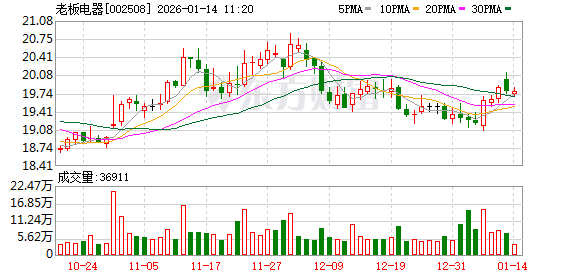
老板电器战略投资优特智厨,加码AI炒菜机器人赛道
2 1 Shi Ji Jing Ji Bao Dao· 2026-01-14 03:21
Core Insights - The company is transforming its future by investing 100 million yuan in the smart cooking robot company Utcook Intelligence International Holdings Limited, establishing commercial kitchens as its second growth curve [2] - As a leader in the Chinese kitchen appliance industry for 47 years, the company is seeking high-potential new markets amid challenges in the real estate cycle and intensified competition in home appliances [2] Group 1: Strategic Investment and Market Positioning - The investment in Utcook is seen as a strategic move to penetrate the commercial kitchen market, which is valued at over 1 trillion yuan and has a smart penetration rate of less than 10% [2] - The company aims to leverage its core technology and extensive cooking data to create a replicable and evolving smart cooking capability rather than just selling cooking equipment [3] Group 2: Technological Development - The AI model "Shishen," developed by the company's research institute, is based on 50 million real cooking data points and boasts an accuracy rate of over 98% for dish recognition and health management [3] - The integration of precise temperature control and patented algorithms with the AI system addresses key pain points in the restaurant industry, such as chef shortages and inconsistent flavors [3] Group 3: Ecosystem Collaboration - The company is deepening strategic collaborations with leading platforms, transitioning from traditional government and enterprise clients to chain restaurant channels [4] - Partnerships with Baidu and JD Qixian Xiaochu are aimed at providing integrated AI cooking terminals and standardized kitchen equipment to support rapid expansion in the restaurant network starting in 2026 [6] Group 4: Growth Metrics - In 2025, the company's commercial kitchen business is expected to experience explosive growth, with significant increases in contract amounts, invoicing, and payment collections, alongside a 70% growth in new customer acquisition [7] - The collaboration with Utcook is anticipated to enhance the company's market presence and create a comprehensive solution for commercial kitchen hardware and digital solutions [7] Group 5: Future Outlook - The partnership is set to reshape the kitchen ecosystem, combining smart cooking robots with the company's AI products to create a more complete solution [8] - A more intelligent and responsive commercial cooking service network is being constructed, driven by shared cooking data that will continuously inform technological iterations [9] - The company's transition from a home appliance manufacturer to a smart cooking service provider marks a significant evolution, positioning it to capitalize on the historical turning point in the commercial kitchen sector [10]


恒指收升239点,三连升累涨699点
Guodu Securities Hongkong· 2026-01-14 03:17
Market Overview - The Hang Seng Index rose by 239 points or 0.9%, closing at 26,848 points, marking a three-day increase totaling 699 points or 2.67% [3] - The total market turnover was 315.19 billion, with a net inflow of 1.296 billion from northbound trading [3] Company News - Kuaishou plans to issue USD and RMB senior notes, with net proceeds intended for general corporate purposes; specific terms are yet to be determined [10] - Vanke Enterprises is convening a bondholder meeting to discuss adjustments related to the repayment of its housing rental special corporate bonds [11] - JD Logistics announced plans to acquire the remaining shares of Deppon Logistics at a price of 19 RMB per share, leading to Deppon's delisting from the Shanghai Stock Exchange [12] - Zhixing Technology has been selected as a supplier for advanced driving assistance solutions by a South Korean automotive group, with expected sales reaching one million units over the lifecycle of four models from 2026 to 2033 [13] Industry Dynamics - A report by UOB and the Hong Kong Trade Development Council indicates that 73% of surveyed enterprises in the Greater Bay Area plan to accelerate their business development in ASEAN markets, highlighting the increasing importance of ASEAN as a growth engine amid global trade tensions [8]
京东集团-SW(09618):25Q4前瞻:Q4国补退坡影响带电增速,外卖单量稳健亏损环比改善
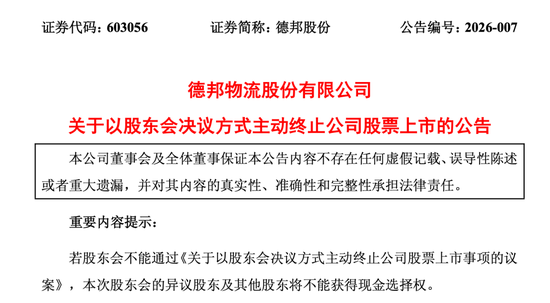
CMS· 2026-01-14 01:37
Investment Rating - The report maintains a "Strong Buy" rating for JD Group with a target price range of HKD 125 to 150, while the current stock price is HKD 117.4 [2][5]. Core Insights - JD Group's total revenue is expected to see a slight year-on-year increase in Q4 2025, with a projected Non-GAAP net profit of approximately 480 million yuan [1][5]. - The report highlights that the decline in revenue growth for the electric category is due to the reduction of national subsidies and a high comparative base from the previous year, while daily necessities and third-party (3P) revenues are expected to maintain double-digit growth [1][5]. - The report expresses a long-term positive outlook on the company's growth resilience under its self-operated model and strong supply chain bargaining power, which is expected to enhance profit margins [1][5]. Financial Data and Valuation - For the fiscal years 2023 to 2027, the projected main revenue (in million yuan) is as follows: 1,084,662 (2023), 1,158,819 (2024), 1,305,167 (2025E), 1,361,675 (2026E), and 1,419,895 (2027E), with year-on-year growth rates of 4%, 7%, 13%, 4%, and 4% respectively [2][6]. - The Non-GAAP net profit projections are: 35,200 (2023), 47,827 (2024), 26,428 (2025E), 32,720 (2026E), and 50,951 (2027E), with significant fluctuations in growth rates [2][6]. - The report indicates a P/E ratio forecast of 8.7 (2023), 6.4 (2024), 11.6 (2025E), 9.4 (2026E), and 6.0 (2027E) [2][9]. Stock Performance - The stock has shown an absolute performance of 9.1% over the past month, 17.6% over six months, and 20.0% over the past year [4]. - Relative performance indicates a 6.0% outperformance over one month, 2.4% over six months, but a 9.8% underperformance over the past year [4]. Business Segment Insights - The report notes that the new business segment is expected to reduce losses in Q4, with improvements in delivery volume and user experience (UE) for the food delivery service [1][5]. - The report anticipates that the food delivery business will continue to improve in 2026, with a focus on enhancing user experience [1][5]. Shareholder Information - The total share capital is 3,188 million shares, with 2,865 million shares listed in Hong Kong [3]. - The major shareholder, Max Smart Limited, holds a 9.6007% stake in the company [3]. Financial Ratios - The report provides key financial ratios, including a return on equity (ROE) of 17.8% and a debt-to-asset ratio of 57.3% [3][9]. - The projected earnings per share (EPS) for the years 2023 to 2027 are 8.34, 14.27, 5.85, 9.26, and 14.87 respectively [2][9].

港股开盘:恒指涨0.46%、科指涨0.42%,消费股及创新药概念股走高,AI应用板块回暖,汽车股走低
Jin Rong Jie· 2026-01-14 01:30
Market Overview - The Hong Kong stock market opened higher on January 14, with the Hang Seng Index rising by 0.46% to 26,971.97 points, the Hang Seng Tech Index up by 0.42% to 5,894.63 points, the State-Owned Enterprises Index increasing by 0.46% to 9,328.05 points, and the Red Chip Index gaining 0.25% to 4,156.46 points [1] Company News - Q Technology (01478.HK) expects a net profit growth of approximately 400% to 450% for the year ending December 31, 2025 [2] - China Coal Energy (01898.HK) anticipates a 10.2% decrease in coal sales volume to approximately 256 million tons for 2025, with December sales down by 23% year-on-year to 21.88 million tons [2] - Zhixing Technology (01274.HK) has been selected as a supplier for a Korean automotive group's driver assistance solutions for four vehicle models [2] - Country Garden (00832.HK) projects a total property contract sales amount of 8.467 billion yuan for 2025, a decrease of 16.3% year-on-year [3] - Hopson Development (00754.HK) expects total contract sales of approximately 15.607 billion yuan for 2025, down 6.15% year-on-year [4] - Chuangjie Tong (01588.HK) anticipates a profit attributable to the parent company between 76 million and 85 million yuan for 2025, representing a year-on-year increase of 127% to 154% [4] - SUTENG (02498.HK) forecasts laser radar product sales of approximately 912,000 units for 2025 [5] - Xiaocaiyuan (00999.HK) plans to establish a joint venture to develop an online mall and "community ready-to-eat stores" [6] - GDS Holdings (09698.HK) has recovered approximately 95% of the investment principal from DayOne, with an investment return rate of nearly 6.5 times [7] - China Biologic Products (01177.HK) intends to acquire 100% of Hejiya for a maximum base price of 12 million yuan to accelerate the development of its siRNA liver delivery platform [7] - Innovent Biologics (02696.HK) has had its Biologics License Application for Hanbeitai® (Bevacizumab Injection) accepted by the FDA [7] - Xiaomi Group (01810.HK) repurchased 4 million shares for 152 million HKD at prices between 37.94 and 38.04 HKD [8] - Tencent Holdings (00700.HK) repurchased 1.012 million shares for 636 million HKD at prices between 623 and 638 HKD [9] - Sunny Optical Technology (02382.HK) repurchased 640,000 shares for 41.7878 million HKD at prices between 64.55 and 65.8 HKD [10] Institutional Insights - Dongwu Securities suggests that the window for the Federal Reserve to cut interest rates this year is limited, and the impact of fiscal policies on the economy is still forthcoming. If the Fed does not cut rates in the first quarter, the rebound pace of the Hong Kong stock market will depend more on fundamental factors. The overall allocation strategy for Hong Kong stocks remains a barbell strategy, recommending a controlled allocation while waiting for more news [11] - Wanlian Securities highlights that policy opinions indicate a push to accelerate the industrialization and commercialization of brain-computer interfaces. The global competitive landscape in this sector shows the U.S. leading in invasive methods while China leads in non-invasive methods, focusing on key elements such as electrodes, chips, and algorithms [11][12]



中国金龙指数跌1.84%,摩根大通重挫超4%拖累主要股指高位回落,芯片与工业板块逆势创新高
Di Yi Cai Jing· 2026-01-14 00:11
Core Viewpoint - The financial sector is underperforming, dragging down overall market performance, while semiconductor stocks and industrial sectors continue to show strength, with the Philadelphia Semiconductor Index reaching a new closing high [1][2]. Financial Sector Performance - The financial sector led the decline, falling by 1.84%, marking a cumulative drop of 2.6% for the week, the largest two-day decline since mid-November [4]. - JPMorgan Chase reported a 4.2% drop in stock price, with adjusted revenue for Q4 2025 at $46.77 billion and net profit at $13 billion, exceeding market expectations due to strong performance in market trading [4]. - However, the investment banking segment underperformed, with revenues of $2.35 billion for Q4 2025, a 5% year-over-year decline, contrasting with prior expectations of low single-digit growth [4]. Market Reactions - Investor sentiment was negatively impacted by JPMorgan's earnings report and concerns over President Trump's proposed credit card interest rate cap, which could compress financial institutions' profit margins and affect consumer credit [2][5]. - Major credit card companies, Visa and Mastercard, saw declines of 4.5% and 4.3%, respectively, reflecting ongoing pressure in the financial sector [6]. Technology Sector Performance - In the technology sector, notable gains were observed with Intel rising by 7.33%, AMD up by 6.39%, and Alphabet's A and C shares increasing by 1.24% and 1.11%, respectively [3]. - Conversely, major tech stocks like Microsoft, Meta Platforms, and Amazon experienced declines, with Microsoft down 1.36% and Meta down 1.69% [3]. Economic Indicators - The U.S. Consumer Price Index (CPI) for December showed a year-over-year increase of 2.7%, with core CPI at 2.6%, both unchanged from November and below market expectations [6]. - Following the CPI data release, U.S. Treasury yields declined, with the 10-year yield falling by 2.4 basis points to 4.175% [7]. Commodity Market Performance - In the commodities market, international oil prices increased, with light crude oil futures for February rising by $1.65 to $61.15 per barrel, a 2.77% increase [8]. - Gold prices saw a slight decline, with spot gold down 0.19% to $4,588.82 per ounce, despite reaching an intraday high of $4,644 [8].

美股收盘走低,中概股普遍承压
第一财经· 2026-01-13 23:24
Core Viewpoint - The U.S. stock market closed lower, primarily driven by the financial sector, as investors reacted coldly to JPMorgan Chase's earnings report and expressed concerns over President Trump's proposed credit card interest rate cap, which could compress financial institutions' profit margins and impact consumer credit and the economy [3][4]. Financial Sector Performance - The financial sector was the biggest loser among the 11 major sectors of the S&P 500, falling by 1.84%, with a cumulative decline of 2.6% for the week, marking the largest two-day drop since mid-November [4]. - The S&P Bank Subindex dropped by 2.4% on the same day [4]. JPMorgan Chase Earnings Report - JPMorgan Chase's stock fell by 4.2% after reporting Q4 2025 adjusted revenue of $46.77 billion and net profit of $13 billion, with earnings per share of $4.63, exceeding market expectations due to strong performance in market trading [5]. - However, the investment banking segment underperformed, with revenues of $2.35 billion, a year-on-year decline of 5%, contrasting with prior expectations of low single-digit growth [5]. - Bond underwriting fees unexpectedly fell by 2%, against an anticipated growth of 19% [5]. Market Reactions to Interest Rate Cap - Trump's call for a 10% cap on credit card interest rates, effective January 20, negatively affected financial stock sentiment, with major players like Visa and Mastercard seeing declines of 4.5% and 4.3%, respectively [6]. - JPMorgan's CEO warned that the interest rate cap could erode bank profits and potentially lead to reduced credit limits for lower credit score consumers, impacting both consumers and the economy [6]. Economic Indicators - The U.S. Consumer Price Index (CPI) for December rose by 2.7% year-on-year, with core CPI also up by 2.6%, remaining stable compared to November and below market expectations [6]. - Following the CPI data release, U.S. Treasury yields fell, with the 10-year yield down by 2.4 basis points to 4.175% and the 2-year yield down by 2.5 basis points to 3.522% [6]. Commodity Market Insights - In the commodities market, international oil prices increased, with light crude oil futures for February delivery rising by $1.65 to $61.15 per barrel, a gain of 2.77% [6]. - Gold prices saw a slight decline, with spot gold down by 0.19% to $4,588.82 per ounce, while COMEX gold futures fell by 0.43% to $4,595 per ounce [7].

603056,拟主动退市
Xin Lang Cai Jing· 2026-01-13 23:20
1月13日晚间,德邦股份(603056)停牌谜底揭晓:公司拟主动终止在A股上市。公司将为异议股东提 供现金选择权,行权价格比该股停牌前的价格高。 公告显示,为了更好地顺应物流行业的发展趋势,更为高效、有力地统筹协调与整合JD Logistics, Inc.(京东物流股份有限公司,下称"京东物流")体系内的物流资源,亦考虑积极践行公司间接控股 股东宿迁京东卓风企业管理有限公司(下称"京东卓风")收购德邦物流时作出的关于同业竞争的承诺, 根据相关法律、法规及规范性文件的规定,经京东卓风提议,并经公司董事会审议通过,公司拟以股东 会决议方式,主动撤回A股股票在上交所的上市交易,并在取得上交所终止上市决定后,申请在全国中 小企业股份转让系统退市板块继续交易。 德邦股份于2018年1月在上交所主板上市,控股股东为德邦投资控股股份有限公司。2022年7月,京东集 团通过下属境内子公司京东卓风,获得了德邦控股的控制权。目前,京东卓风持有德邦控股99.987%的 表决权,成为德邦控股的控股股东。 财报数据显示,2025年前三季度,德邦股份营业收入为302.7亿元,同比增长6.97%;归母净利润为-2.77 亿元,同比下降15 ...

智通ADR统计 | 1月14日
智通财经网· 2026-01-13 22:43
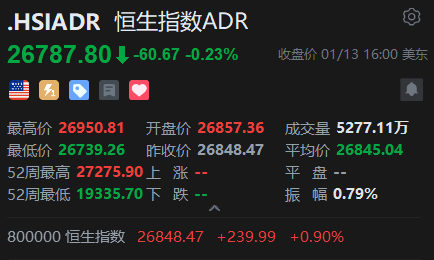
Core Viewpoint - The Hang Seng Index (HSI) experienced a slight decline, closing at 26,787.80, down 0.23% from the previous close, indicating a mixed performance in the Hong Kong stock market [1]. Group 1: Market Performance - The Hang Seng Index closed at 26,787.80, down 60.67 points or 0.23% [1]. - The index reached a high of 26,950.81 and a low of 26,739.26 during the trading session, with a trading volume of 52.77 million shares [1]. - The average price for the session was 26,845.04, with a 52-week high of 27,275.90 and a low of 19,335.70 [1]. Group 2: Major Blue-Chip Stocks - HSBC Holdings closed at HKD 127.188, up 0.62% compared to the previous close [2]. - Tencent Holdings closed at HKD 624.864, down 0.42% from the previous close [2]. - Alibaba Group saw a price increase of 3.63%, closing at HKD 159.900 [3]. - Other notable performances include AIA Group up 0.84% at HKD 84.400 and China Construction Bank up 1.17% at HKD 7.810 [3].




AI玩具赛道能否跑出下一个LABUBU?
Zheng Quan Ri Bao· 2026-01-13 16:49
Core Insights - The AI toy market is experiencing unprecedented growth, with sales in the first half of 2025 increasing by 600% quarter-on-quarter and over 200% year-on-year, driven by consumer demand and significant investment activity [1][2] - The industry is characterized by a diverse range of players, including tech startups, traditional toy manufacturers, and internet giants, all vying for a share of the AI toy market [2][4] - The pursuit of "realistic emotional interaction" has become a consensus among AI toy manufacturers, with competition shifting towards enhancing user experience [4][7] Market Dynamics - As of June 2025, there are 1,766 active companies in the AI toy sector, indicating a robust entry of various enterprises into this market [2] - The average return rate for AI toys is reported to be between 30% and 40%, significantly higher than the 15% for traditional toys, highlighting challenges in consumer acceptance [7] - AI toys generally have a higher profit margin compared to traditional toys, with prices ranging from 200 to 700 yuan, and some products priced significantly higher due to advanced features [5][6] Technological Integration - Companies are integrating advanced AI technologies into toys, enabling features such as memory retention and interactive dialogue, which enhance the emotional connection with users [2][3] - The development of multi-modal large models is a focus for traditional hardware companies, aiming to create more engaging AI toy experiences [3][4] - The industry is leveraging China's robust manufacturing capabilities, with domestic chips expected to account for 82% of AI toy components by 2025, providing a cost advantage [6] Commercial Strategies - AI toys are adopting a business model that combines one-time hardware sales with ongoing software subscription fees, extending product lifecycles [6] - Companies are exploring B2B solutions, offering comprehensive AI toy packages to small and medium enterprises, thereby creating additional revenue streams [6] - The industry is encouraged to maintain originality and avoid imitation, as suggested by industry leaders, to foster innovation and long-term growth [7] Regulatory Environment - The Ministry of Industry and Information Technology is working on revising national standards for toy safety, particularly concerning privacy and data security for AI toys that interact frequently with children [8] - The government aims to guide toy companies in applying AI technology to create new consumer demands, indicating a supportive regulatory framework for the industry [8]