茶百道

Search documents
2026消费前瞻:为「活人感」买单
投中网· 2026-01-05 07:32
Core Insights - The consumption market in 2025 cannot be simply categorized as "recovery" or "weakness," as it reflects a shift in consumer behavior towards price sensitivity and rational consumption, emphasizing the importance of "human experience" [5][22][25] Group 1: Dining Industry - The offline dining sector is facing a decline in foot traffic, with average monthly customer visits dropping to 5,681, a decrease of 0.66% year-on-year, and a more significant decline of 4.1% after June 2025 [8] - To attract customers, many dining brands are adopting price reduction strategies, with self-service hot pot and street food becoming representative categories of this approach [8] - Innovative dining experiences, such as "dining + performance" concepts, are emerging to create new reasons for customers to visit, enhancing the atmosphere and encouraging social sharing [9] - Street food stalls have gained popularity, offering affordable home-style dishes priced between 10-30 yuan, effectively capturing additional customer flow and expanding revenue channels for restaurants [10] Group 2: New Tea Beverage Market - The new tea beverage market in 2025 is stabilizing, with a market size of 374.93 billion yuan, growing by 5.7% year-on-year, a slowdown from 6.4% in 2024 [12] - The total number of tea beverage stores has exceeded 415,000, but the net number of new openings is lower than closures, resulting in a decrease of 39,000 stores [12] - Major brands like Mixue Ice City and Bawang Tea Ji are expanding rapidly, while others like Heytea are experiencing significant store closures, with a reduction of 711 stores, or 15.41% year-on-year [13] - Consumer preferences are shifting towards fresh, health-oriented products, with a growing demand for fresh fruit and low-calorie options [14][15] Group 3: Cultural and Tourism Market - The cultural and tourism market is experiencing significant growth, with domestic travel reaching 4.998 billion trips in the first three quarters of 2025, an increase of 18% year-on-year [17] - Total spending on domestic travel reached 4.85 trillion yuan, reflecting a year-on-year increase of 11.5% [18] - Innovative experiences, such as city walks and rural tourism, are gaining traction, providing consumers with engaging and authentic experiences [20][19]


“投资21万,一天卖不到300元”,第一批糖水铺开始关店?
3 6 Ke· 2026-01-05 00:49
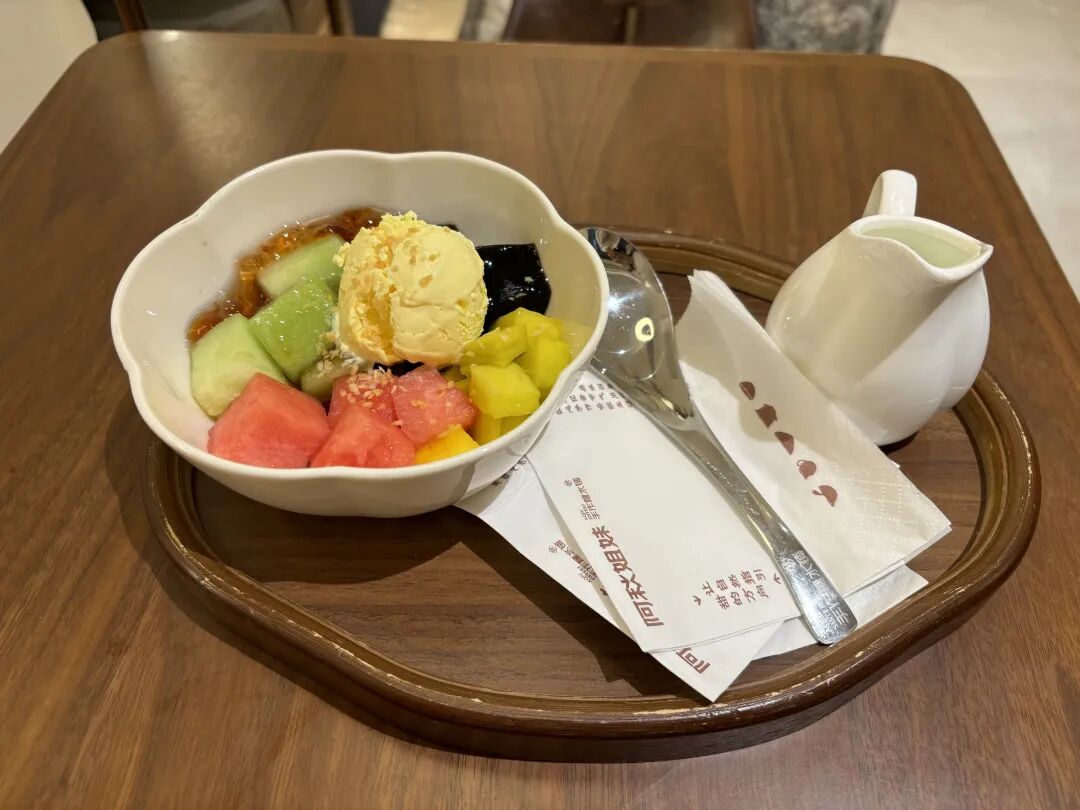
Core Insights - The sugar water market is experiencing a stark contrast, with major brands expanding rapidly while many single-store operators struggle to survive [1][3][5] Market Overview - Major brands like Gu Ming, Cha Bai Dao, CoCo, and 7 Fen Tian are entering the sugar water market, while established players like Man Ji and Xian Yu Xian continue to deepen their presence [1] - New brands such as Mai Ji and Tang Xu are also expanding quickly, with nearly 1,000 new stores opened this year [1] Challenges Faced by Single-Store Operators - Many single-store operators report daily sales struggling to exceed 300 yuan, with some experiencing a significant drop in revenue shortly after opening [3][5] - Common complaints include low customer traffic and insufficient sales to cover basic operational costs, leading to a sense of despair among owners [3][5] Consumer Behavior and Market Dynamics - Sugar water consumption is characterized by lower frequency compared to tea, as it is often seen as a dessert rather than a quick beverage [5][7] - The average daily customer flow for sugar water shops is around 20, with sales averaging only 360 yuan, which is insufficient to cover costs [7][9] Competitive Landscape - The entry of large chain brands has intensified competition, with prices for similar products dropping, making it difficult for smaller operators to compete [9][11] - Major brands benefit from economies of scale in sourcing and distribution, allowing them to offer lower prices and better quality [11] Operational Challenges - Sugar water preparation is labor-intensive and time-consuming, leading to high operational costs and wastage [12][14] - The complexity of managing diverse ingredients and maintaining freshness adds to the challenges faced by operators [12][14] Seasonal Variability - The sugar water market is highly seasonal, with significant drops in sales during colder months, making year-round profitability difficult [15] Future Outlook - Despite the challenges, there is potential for differentiation and growth in the sugar water market, particularly in untapped lower-tier markets [19][20] - Brands that can effectively understand consumer preferences and offer unique products may still find success in this evolving landscape [20]
4家消费公司拿到新钱;火山引擎与春晚达成合作;喜茶与星星人联名又上新|创投大视野
36氪未来消费· 2026-01-03 12:00
Group 1 - The core viewpoint of the article highlights significant investments in various consumer sectors, particularly in the toy and pet industries, indicating a growing interest in innovative products and market expansion strategies [3][5][7][8]. Group 2 - The潮玩 brand "黑玩" has completed over 100 million RMB in Series A financing, led by Jinding Capital, with plans to enhance online and offline channel integration and expand into key overseas markets [3][4]. - "杰森娱乐" has secured several hundred million RMB in strategic financing, focusing on product innovation and market expansion, with a portfolio of over 500 IPs [5][6]. - The pet service platform "宠乐Go" has raised over 40 million RMB in angel round financing, aiming to integrate AI technology into its product offerings and supply chain management [7]. - "深庭纪智能," a Chinese robotics company, has completed a 100 million RMB angel round financing, focusing on outdoor AI companion robots with advanced environmental perception capabilities [8]. Group 3 - ByteDance's AI assistant application "Dola" has surpassed 10 million daily active users in overseas markets, indicating strong growth and user engagement [9][11]. - The company has also announced its partnership with the Central Broadcasting Television Station as the exclusive AI cloud partner for the Spring Festival Gala, showcasing its technological capabilities [12]. Group 4 - The film "疯狂动物城2" has become the box office champion for imported films in 2025, grossing 4.022 billion RMB [20]. - The domestic film box office in 2025 reached 51.832 billion RMB, reflecting a year-on-year growth of 21.95% [21]. Group 5 - The Chinese government has introduced a subsidy policy for consumers purchasing certain home appliances and digital products, aiming to stimulate consumption [22]. - During the New Year holiday, Hainan's duty-free sales saw a significant increase, with sales amounting to 251 million RMB, a year-on-year growth of 93.8% [23].

2026消费前瞻:为“活人感”买单
虎嗅APP· 2026-01-02 09:36
Core Viewpoint - The consumption market in 2025 cannot be simply categorized as "recovery" or "weakness," as it reflects a transformation in consumer behavior, emphasizing "human feeling" as a core element of consumption [4][24]. Group 1: Eating - A Fine Calculation of Experience - The offline dining industry faces significant challenges, with a decline in foot traffic, as evidenced by a 0.66% decrease in average monthly customer visits in the first eight months of 2025, which worsened to a 4.1% decline after June [6][12]. - To attract customers, many dining brands are resorting to price reductions, with self-service hot pot and street food becoming representative categories of this strategy [7]. - A new approach to finding growth is the "dining + performance" model, which enhances the dining experience through entertainment, creating a compelling reason for customers to visit [8][12]. - Street vending has gained popularity since July 2025, with well-known brands setting up stalls, offering affordable home-style dishes priced between 10 to 30 yuan, thus broadening revenue channels [9][10][12]. Group 2: Drinking - Adding More Sweetness to Life - The new tea beverage market in 2025 is stabilizing, with a market size of 374.93 billion yuan, reflecting a growth rate of 5.7%, down from 6.4% in 2024 [14]. - The total number of tea beverage stores exceeded 415,000, but the net number of new openings was lower than closures, resulting in a decrease of 39,000 stores [14]. - The market is witnessing a shift in consumer preferences towards healthier options, with products like fresh fruit teas gaining popularity [15][17]. - The competition in the new tea beverage sector will increasingly focus on creating perceived value for consumers, as loyalty to specific brands diminishes [17][24]. Group 3: Entertainment - Experience Over Arrival - The cultural tourism market is thriving, with domestic travel reaching 4.998 billion trips in the first three quarters of 2025, a year-on-year increase of 18% [19]. - This surge in travel has stimulated significant consumer spending, with total expenditures reaching 4.85 trillion yuan, up 11.5% from the previous year [19]. - Innovative experiential offerings, such as city walks and interactive theme parks, are emerging to attract tourists, emphasizing engagement and participation [20][21]. Group 4: Summary - The overall consumption market in 2025 is stable, with retail sales expected to exceed 50 trillion yuan, maintaining a contribution rate of around 60% to GDP growth [23]. - Consumers are increasingly selective, rejecting products that lack emotional resonance, indicating a shift from accumulating assets to seeking meaningful experiences [24][25]. - The focus on "human feeling" reflects a collective return to valuing real experiences and immediate feedback in an uncertain economic environment [26].

扩张集体放缓,新茶饮第一梯队踩下急刹车
3 6 Ke· 2025-12-31 00:49
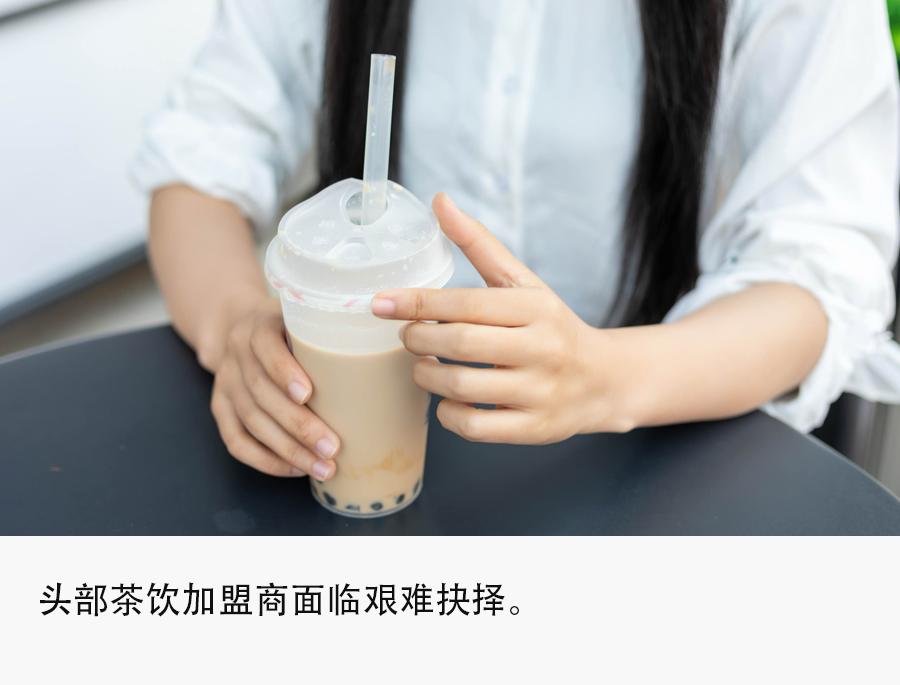
Core Insights - The leading new tea beverage brands, represented by Heytea, are experiencing a significant slowdown in expansion, with a notable decrease in the number of stores from 4,610 in October 2024 to 3,930 by October 2025, resulting in a net closure of 680 stores within a year [2] - The challenges faced by franchisees include high operational costs, particularly due to the expensive raw materials and short shelf life of fresh ingredients, which contribute to profitability pressures [8][9] - The competitive landscape is shifting, with brands like Bawang Chaji rapidly expanding through a "big single product" strategy, yet also facing challenges related to market saturation and product innovation [9][10] Group 1: Expansion Trends - Heytea's franchise model, which previously allowed for rapid expansion, has now hit a brake, with the company halting new franchise applications as of February 2023 [4] - The number of operational stores for Heytea as of December 29, 2023, is reported at 3,883, consistent with the previous year's figures, indicating a plateau in growth [2] - Naixue's Tea is also seeing a reduction in store numbers, with operational stores at 1,570, down from 1,798 at the end of 2024 [2] Group 2: Franchisee Challenges - Franchisees are facing tough decisions regarding store renewals, with additional renovation costs required for upgrades, leading to closures due to performance pressures [3] - High raw material costs are a significant burden, with reports indicating that material costs for Naixue's Tea reached approximately 740 million yuan, accounting for 34.1% of total revenue [8] - Franchisees have reported that the cost of materials supplied by brands like Heytea can increase by as much as 40%, further straining profitability [8] Group 3: Product Strategy and Market Positioning - The new product launch frequency has increased significantly for Heytea, with new offerings introduced weekly, but this has led to inventory pressures for franchisees [5] - The pricing strategy is shifting back to the 20-30 yuan range for new products, as brands aim to regain high-end market positioning after a period of aggressive discounting during the delivery wars [11] - The competitive dynamics are evolving, with brands like Bawang Chaji focusing on product innovation while also managing the challenges of high store density in key markets [9][10]
霸王茶姬,该晴天修屋顶了
3 6 Ke· 2025-12-30 07:08
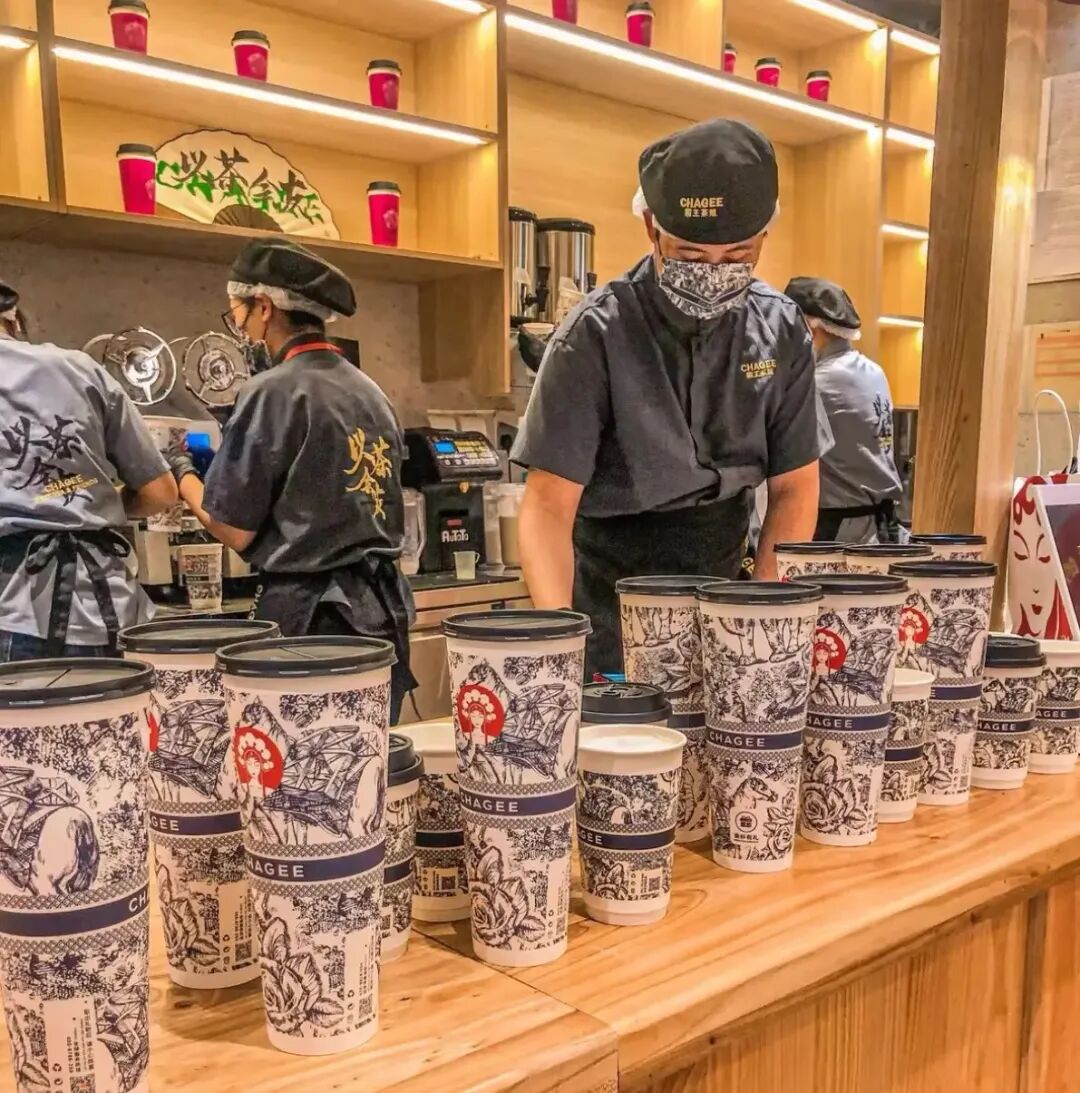
Core Viewpoint - The article discusses the challenges faced by the tea brand "霸王茶姬" (Ba Wang Cha Ji), particularly its rapid employee growth outpacing business growth, leading to organizational inefficiencies and potential risks to profitability [1][3][8]. Group 1: Employee Growth and Organizational Structure - Ba Wang Cha Ji's full-time employee count increased from 1,959 to 4,800 from the end of 2023 to the end of 2024, more than doubling its workforce [1]. - The company has a significantly higher employee-to-revenue ratio compared to industry peers, with over 39 employees per billion yuan in revenue, and 1.3 headquarters staff per store, which is nearly three times the industry average [6][8]. - This excessive growth in personnel may lead to "Parkinson's Law," where organizations expand beyond their needs, resulting in decreased efficiency and increased costs [6][10]. Group 2: Industry Comparisons - In contrast, industry leaders like 瑞幸咖啡 (Luckin Coffee) and 古茗茶饮 (Gu Ming Tea) maintain a leaner workforce, with Luckin having about 15,000 employees for over 18,000 stores and Gu Ming employing around 2,700 for nearly 10,000 stores [4][6]. - The article highlights that efficient models in the tea industry suggest an optimal employee count of 30-50 per billion yuan in revenue, emphasizing the inefficiency of Ba Wang Cha Ji's current structure [6]. Group 3: Organizational Reform and Strategies - The article suggests that Ba Wang Cha Ji needs a comprehensive organizational efficiency diagnosis to identify and eliminate unnecessary processes and meetings [12]. - It recommends adopting a model similar to Amazon's "two-pizza team" principle, breaking down larger teams into smaller, cross-functional units to enhance agility [12]. - The establishment of a dynamic human resource allocation model is advised, allowing for a mix of fixed and flexible staffing to adapt to market demands [12]. Group 4: Brand Strength and Market Position - Ba Wang Cha Ji's unique brand positioning in the competitive market, emphasizing cultural depth and aesthetic value, provides a competitive edge that functional tea products cannot match [14]. - The brand has shown strong growth in overseas markets, with GMV increasing over 75% for two consecutive quarters, indicating the global adaptability of its "tea + culture" business model [14]. - Recent adjustments in franchise models, product innovation, and store upgrades suggest that management is aware of the need for internal reform [14][15].
港股新消费概念股盘中回调,老铺黄金、泡泡玛特跌超5%
Xin Lang Cai Jing· 2025-12-30 03:38
Group 1 - The core viewpoint of the article highlights a market correction in Hong Kong's new consumption concept stocks on December 30, with significant declines observed in various companies [1] Group 2 - Lao Pu Gold and Pop Mart both experienced declines exceeding 5% [1] - Bluco saw a drop of over 4% [1] - Other companies such as Mao Ge Ping, Wei Long, Juzi Biological, Mixue Group, Gu Ming, and Cha Bai Dao all fell by more than 2% [1]

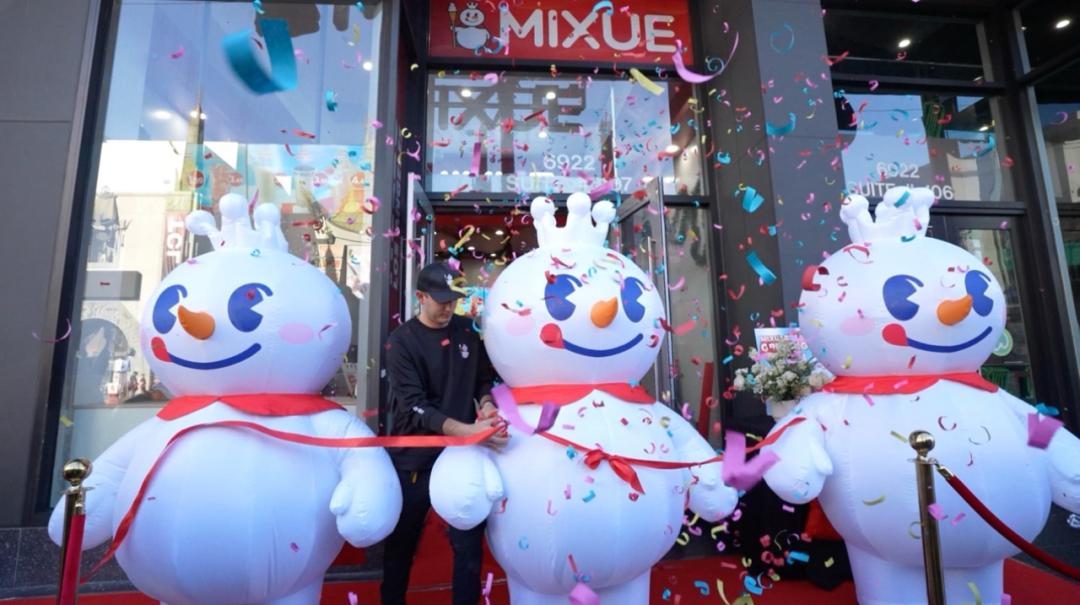
“雪王”出海纽约、好莱坞:6天开3店,给美国人提供200%甜度
3 6 Ke· 2025-12-30 00:47
Core Insights - Mixue Ice Cream & Tea has successfully opened its first three stores in the United States within six days, marking a significant expansion from the West Coast in Los Angeles to the East Coast in New York [1][3][4] Store Openings - The first store opened on December 20, 2025, in Hollywood, Los Angeles, located opposite the famous Chinese Theatre [4] - On December 25, 2025, two additional stores opened in New York City, situated on 8th Avenue and Broadway, both in high-traffic areas [6][9] - The geographical spread of the stores is notable, covering approximately 4,000 kilometers between Los Angeles and New York, indicating a strategic approach to market penetration [9] Consumer Response - There has been a strong consumer interest, with long queues reported at the Hollywood store even before its official opening, and similar enthusiasm observed in New York [11][13] - Social media discussions about Mixue's U.S. launch have gained traction, with consumers expressing desires for further expansion into other countries [11][13] Product Localization - Mixue has tailored its menu for the U.S. market, allowing for sweetness levels up to 200%, and featuring soft serve ice cream more prominently than tea [3][19] - The menu includes options for plant-based milk, catering to health-conscious consumers and those with lactose intolerance [19][21] - Prices are set competitively, with items like soft serve starting at $1.19, which is lower than many local competitors [22][25] Marketing Strategies - The brand has employed various promotional activities, including advertising in Times Square and offering free ice cream for social media engagement [13] - The theme song has been localized to resonate better with American consumers, reflecting a broader trend of adapting branding for different markets [16][27] Future Plans - Mixue has plans for further expansion in the U.S., with a third New York location set to open soon, indicating a commitment to establishing a strong presence in the market [15][17]

2025,中产都抛弃了哪些消费品牌?
阿尔法工场研究院· 2025-12-30 00:02
Core Viewpoint - The article discusses the stark contrast in China's consumer market in 2025, highlighting a significant divide between thriving companies and those that have collapsed, marking a shift from a "growth at all costs" mentality to a focus on efficiency and sustainability in business models [5][6][11]. Group 1: Market Dynamics - In 2025, the consumer market experienced a "violent clearing," with many once-prominent unicorns collapsing, signaling the end of an era characterized by unsustainable growth strategies [6][8]. - The year 2025 is described as a "tombstone" for new consumption, as the last illusions surrounding high prices and influencer-driven brands were shattered, exemplified by the downfall of brands like Zhong Xuegao [8][9]. - The collapse of established giants like Christine and Xu Li Shan reflects a failure to adapt to changing consumer preferences and market conditions, leading to their eventual exit from the market [9][10]. Group 2: Survivors and New Trends - Despite the failures, a new wave of companies thrived in 2025, particularly in the new tea beverage sector, with brands like Mixue Ice City and Tea Baidao successfully going public [15][16]. - The success of these companies is attributed to their focus on supply chain efficiency and cost control, moving away from traditional notions of craftsmanship to a more industrialized approach [16][17]. - The "lipstick effect" emerged as consumers shifted spending from large purchases to small, affordable pleasures, benefiting brands like Bubble Mart and new tea beverage companies [18]. Group 3: Investment Landscape - The investment landscape in 2025 saw a dramatic reduction in financing activities, with only 74 rounds of funding compared to 133 in the previous year, indicating a shift away from reckless spending [23][24]. - The restaurant sector remained a focal point for investment, accounting for 45 out of the 74 financing rounds, as capital sought safety in high-frequency, essential consumer needs [24][26]. - Brands that demonstrated strong supply chain control and technological integration, such as those in the coffee sector, began to attract significant investment, reflecting a new focus on efficiency and innovation [27][28]. Group 4: Future Outlook - The article suggests that the consumer market in 2026 will prioritize global distribution over domestic expansion, as companies seek to leverage their efficiencies in international markets [31][32]. - The survival of brands in the coming years will depend on their ability to adapt to changing consumer behaviors and market conditions, emphasizing the importance of supply chain management and genuine consumer engagement [33][34].
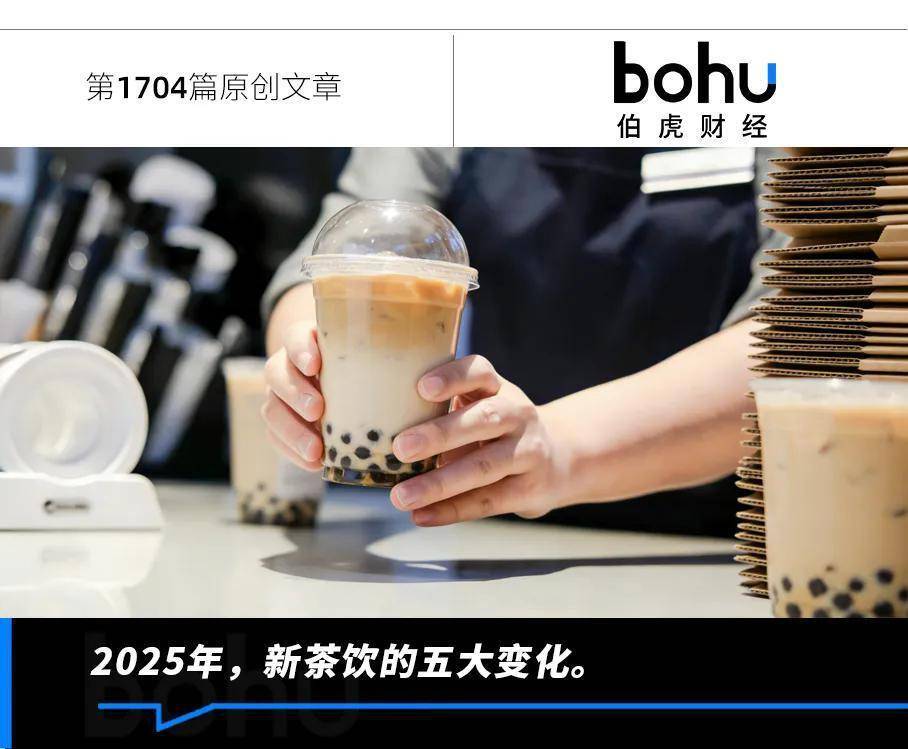
透过五大变化,预判新茶饮的 2026 年
Sou Hu Cai Jing· 2025-12-29 20:10
Core Insights - In 2025, the Chinese new tea beverage industry is at a critical turning point from "scale expansion" to "value cultivation" [3] - New consumer demands and development models are emerging, reshaping the future direction of the tea beverage industry [3] Group 1: Market Dynamics - The "0 Yuan Milk Tea" promotion, driven by massive subsidies, sparked a temporary surge in the tea beverage market, significantly impacting brand operations [3] - According to Zhejiang Securities, the average single-store sales revenue for Mixue Group reached 278,000 yuan in the first half of the year, a year-on-year increase of 13.2% [3] - Tea Baidao reported that promotional activities boosted store sales, with a second-quarter average daily GMV reaching its highest level in nearly a year, up approximately 15% from the first quarter [3] Group 2: Brand Expansion and Challenges - Gu Ming's store count increased from about 9,914 at the beginning of 2025 to over 12,000 by the end of August, maintaining an average of 7 new store openings per day [3] - However, the sustainability of the delivery war is questioned due to low profit margins and potential losses [3][5] - Naixue's financial report indicated that delivery service fees paid to third-party platforms reached 200 million yuan, rising from 6.7% to 9.2% of total revenue year-on-year [4] Group 3: International Expansion - Overseas markets are becoming a crucial source of growth for tea brands, with Ba Wang Cha Ji becoming the first new tea company to list on NASDAQ in April 2025 [7] - Ba Wang Cha Ji opened its first U.S. store in May, selling over 5,000 cups on the first day, and entered the Philippines market in August, selling over 23,000 cups in three days [7] - Other brands like Mixue Ice City and Tianlala are also expanding internationally, with Mixue covering 12 countries and over 4,700 overseas stores [7] Group 4: Health Trends - The "Skinny Milk Tea" trend is emerging as a new growth engine in the industry, with kale becoming a core ingredient [8] - The price of kale surged from 0.8 yuan per jin in 2024 to 3.5 yuan per jin in March 2025, reflecting a price increase of over 300% due to rising demand [9] Group 5: Market Segmentation - The pearl milk tea segment is gaining traction, with brands like Bao Jin Zhu focusing on low-cost, single-product strategies, rapidly expanding to over 1,800 stores in four years [10][12] - These brands are achieving significant sales, with single-store daily revenues between 1,500 and 1,800 yuan, and a projected 80% growth in store count for 2025 [12] Group 6: Industry Transition - The new tea beverage industry is shifting from quantity to quality, with brands like Heytea and Naixue closing underperforming stores and slowing down expansion [13][14] - As of October 2025, Heytea's store count decreased by 680 to 3,930, while Naixue closed 160 stores, reducing its total to 1,638 [13] - The focus is now on enhancing single-store value, tightening franchise management, and upgrading product structures [14]