
铠侠

Search documents
日本突发7.6级地震,对半导体产业影响几何?
Sou Hu Cai Jing· 2025-12-09 02:17
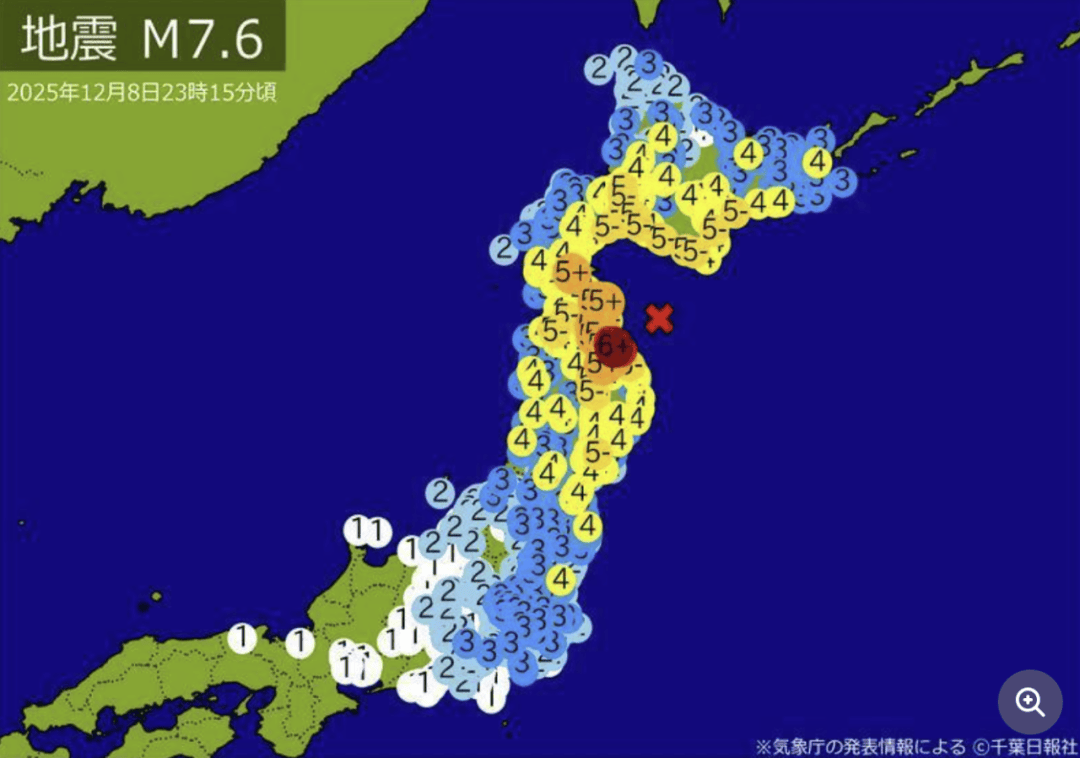
Group 1 - A 7.6 magnitude earthquake struck the eastern sea area of Aomori Prefecture, Japan, on December 8, causing significant tremors and tsunami warnings in Aomori, Iwate, and Hokkaido [1][5] - The earthquake resulted in tsunami waves reaching up to 70 cm in Iwate, 50 cm in Hokkaido, and 40 cm in Aomori, with Aomori experiencing intense shaking classified as "upper six" on the Japanese seismic intensity scale [5] - Approximately 2,700 households in Aomori experienced power outages due to the earthquake, while nuclear power plants in the affected regions reported no abnormalities [5] Group 2 - The earthquake's impact on Japan's semiconductor industry is a concern, as the affected areas include regions critical to semiconductor manufacturing [5] - Major semiconductor companies located in Iwate Prefecture include Kioxia's Fab 1 and Fab 2, Toshiba Semiconductor, and Japan Semiconductor Corporation, all of which are situated in areas with a seismic intensity of "4" [6][8] - In Aomori, semiconductor testing equipment manufacturer MJC and PVD equipment manufacturer ULVAC have facilities in areas with seismic intensities of "4" and "6+" respectively, while the only semiconductor manufacturer in Hokkaido, Rapidus, is constructing a 2nm wafer plant in an area with a seismic intensity of "5-" [8] - While some semiconductor companies near the epicenter may face operational disruptions, the overall impact on the global semiconductor supply chain is expected to be limited, although any disruption at Kioxia's NAND Flash facility could exacerbate current shortages and price increases [8]

计算机行业跟踪周报:构建数据库的“CUDA”,英伟达存储变革下软件重构-20251207
Soochow Securities· 2025-12-07 08:46
Investment Rating - The report maintains an "Overweight" rating for the computer industry [1] Core Insights - The emergence of AI inference necessitates a new storage architecture centered around GPU directly connected to SSD, which will replace the CPU-dominated era [9][14] - The shift from CPU-centric to GPU-centric architecture will drive significant changes in database software design, optimizing for GPU's data processing capabilities [18][19] - The industry is witnessing accelerated advancements in both hardware and software, with notable collaborations and innovations aimed at enhancing performance for AI workloads [22][24] Summary by Sections AI Inference Era and New Storage Architecture - AI inference requires different I/O demands compared to training, with a focus on small data blocks and high concurrency, leading to the need for a new storage architecture [9][10] - The traditional CPU-centric data loading architecture is becoming a bottleneck for AI workloads, necessitating a shift to GPU as the primary controller for data access [11][14] Changes in Database Architecture - The transition to GPU-centric architecture will require a complete redesign of database software, with GPU taking on the role of the main computing unit [18][19] - Key components such as storage engines and query execution engines will need to be restructured to optimize for GPU capabilities and direct SSD connections [19][21] Industry Progress - Hardware advancements include the development of High Bandwidth Flash (HBF) technology, which is expected to play a crucial role in the future of AI storage solutions [22] - Collaborations between companies like SanDisk and SK Hynix aim to standardize HBF technology, with initial products expected by 2027 [22] - Software improvements are being made to enhance data orchestration and performance, such as Hammerspace's advancements in metadata reading and Cloudian HyperStore's object storage capabilities [24] Investment Recommendations - The report suggests that as AI inference grows, the importance of GPU will increase, leading to new opportunities in the database industry as software architectures adapt to these changes [25][26]


持续看好AI链,关注存储周期影响
HTSC· 2025-12-05 09:05
Group 1 - The report maintains a positive outlook on the AI chain, emphasizing the impact of the storage cycle and the acceleration of self-control in the industry [1] - In 2026, the focus will be on the AI chain, storage cycles, and the acceleration of self-control, with expectations of continued growth in the electronics sector driven by AI data centers and terminal demand recovery [1][3] - The storage sector is expected to enter a price increase cycle starting in the second half of 2025 due to significant supply-demand imbalances [1][3] Group 2 - The Scaling Law remains effective, transitioning into a 2.0 phase that enhances model capabilities and drives demand for computing power [2][18] - The demand for high-end PCBs is anticipated to increase significantly in 2026, driven by the upgrade of AI server platforms and the growth of cloud service providers' self-developed ASICs [2][73] - The AI-driven demand for storage is expected to grow rapidly, with major storage manufacturers like SanDisk, Micron, and Samsung announcing price increases, indicating a sustained upward trend in storage prices [3][60] Group 3 - The domestic storage chip and module manufacturers are expected to benefit from the upward cycle in storage prices, with a focus on DRAM and NAND markets [3][4] - The trend towards domestic production in the storage sector is expected to continue, with companies like Changxin and Changcun expanding capacity and market share [4][66] - The consumer electronics sector may face pressure from rising storage prices, particularly affecting Android smartphones and PCs, while new product innovations could catalyze market recovery [5][72] Group 4 - The report highlights the importance of advanced processes and domestic production in the semiconductor industry, with a focus on improving production capacity and technology [4][68] - The AI chip market is projected to grow significantly, with a compound annual growth rate (CAGR) of 35.19% expected from 2025 to 2030, driven by strong demand for AI training and inference [60][66] - The custom AI chip market is anticipated to expand rapidly, with a forecasted CAGR of 53% from 2024 to 2028, as domestic internet companies increasingly adopt a dual approach of third-party procurement and self-developed ASICs [72][73]


华宝基金:部分科技板块已经历深度调整,空间或基本到位
Sou Hu Cai Jing· 2025-12-05 06:21
Group 1 - The technology sector has undergone a month and a half of adjustments, with expectations that a bottom may be reached around mid to late November [1] - The current view is that the low points of the bottom sector are becoming clearer, allowing for gradual attention to broad technology ETF products [1] - There is ongoing debate about whether high-positioned sectors may face further declines, while the next core direction for growth remains uncertain, with opportunities primarily in low-positioned varieties [1] Group 2 - A review of the A-share and US stock markets post-November 12 indicates that major companies like Nvidia, Tesla, and Kioxia have experienced significant declines due to cooling expectations of interest rate cuts [2] - The A-share technology sector is characterized by a "top sector shrinking circle" and "bottom sector overselling," with strong fundamental companies being deeply supported while weaker sectors face continuous selling [2] - New themes such as Google's TPU computing power and AI applications are trading based on marginal information [2] Group 3 - The current situation in the technology sector suggests that short-term rebounds are primarily liquidity-driven, with limited industrial logic, indicating a general rebound without a clear industry-level focus [3] - High-positioned sectors like Zhongji Xuchuang have not seen significant declines, while low-positioned sectors such as edge chips and domestic robots have returned to early May levels, indicating deep adjustments [3] Group 4 - Google's combination of large models and chips is strong, but significant short-term price increases for companies with nearly $4 trillion in market value may be challenging [4] - The competition surrounding large models is still unresolved, and Google's TPU's cost-effectiveness is weaker than Nvidia's offerings, suggesting that the potential disruption of Nvidia by TPU is not yet fully realized [4] - The ongoing competition and uncertainty regarding TPU's impact on Nvidia will continue into the first half of 2026, requiring further observation [4] Group 5 - The current ETF allocation strategy suggests that with the US stock market showing signs of a significant rebound, the main downward trend may have ended, making broad technology ETFs more valuable [5] - The focus should be on ETFs with certain safety margins, including the Huabao AI ETF and various Hong Kong technology ETFs, as the market has reached a favorable entry point for "buying the dip" [5]
华宝基金:市场已经达到“低吸”的较好“击球点”
Xin Lang Cai Jing· 2025-12-05 04:02
Group 1 - The technology sector has undergone a one-and-a-half-month adjustment, with expectations that a bottom may be reached around mid to late November [1][10] - The low point of the bottom sector is becoming clearer, allowing for gradual attention to broad technology ETF products [1][10] - There is ongoing speculation about whether high-positioned sectors will experience further declines, while the next core direction for growth remains uncertain [1][10] Group 2 - Following the review of the A-share and US stock markets post-November 12, several companies, including Nvidia, Tesla, and Kioxia, have shown indiscriminate declines due to reduced expectations for a December interest rate cut [2][11] - The A-share technology sector is experiencing a "top sector contraction" while the bottom sector is facing overselling, with strong fundamental companies like Zhongji Xuchuang being deeply supported [2][11] - Weak sectors such as robotics and edge chips have entered a continuous oversold phase, indicating a risk-averse sell-off by investors [2][11] Group 3 - The current rebound in the technology sector is primarily driven by liquidity rather than clear industrial logic, suggesting a general rebound without a defined industry-level focus [3][12] - High-positioned stocks like Zhongji Xuchuang have not significantly declined, while low-positioned sectors such as edge chips and domestic robotics have returned to early May levels, indicating deep adjustments [3][13] Group 4 - The combination of Google's large model and chips is strong, but significant short-term price increases for companies nearing a $4 trillion market cap are challenging [4][13] - Google's v6p chip has a lower cost-performance ratio compared to Nvidia's B200, and the competitive dynamics between Google TPU and Nvidia are still unfolding [4][13] - The potential disruption of Nvidia by TPU could lead to declines in the performance of the Huabao AI ETF, indicating ongoing uncertainty in this competitive landscape [4][13] Group 5 - The current ETF allocation strategy suggests that with the US stock market showing signs of a significant bottom rebound, the configuration of broad technology ETFs has become valuable [5][14] - The focus should be on ETFs with certain safety margins, including the Huabao AI ETF, Hong Kong Information Technology ETF, and Financial Technology ETF, among others [5][14]
内地需求端温度有望边际回升:环球市场动态2025年12月4日
citic securities· 2025-12-04 02:19
Market Overview - A-shares declined on Wednesday, with the Shanghai Composite Index falling 0.51% to 3,878 points, while the Shenzhen Component Index dropped 0.78% and the ChiNext Index fell 1.12%[16] - The Hang Seng Index closed down 1.28%, falling below the 26,000-point mark, driven by weak sentiment in the property sector and declines in major tech stocks[11] - European markets showed mixed results, with the pan-European Stoxx 600 index rising 0.18% while the DAX and FTSE 100 experienced slight declines[9] Economic Indicators - The ADP employment report for November showed a surprising drop of 32,000 jobs, reinforcing expectations for a Federal Reserve interest rate cut, with a nearly 90% probability priced in for December[30] - China's November industrial output growth is expected to remain low, influenced by fewer working days compared to last year, while export growth may see a slight increase due to a low base effect from the previous year[6] Commodity and Currency Trends - Copper prices surged by 3.07% to a record high of $11,487.5 per ton, driven by increased warehouse delivery requests amid supply concerns[27] - The U.S. dollar index fell for the eighth consecutive day, down 0.5%, reflecting ongoing weakness in the dollar[26] - International gold prices rose, with New York gold futures increasing by 0.3% to $4,199.3 per ounce[27] Sector Performance - In the U.S. stock market, nine out of eleven S&P sectors rose, with the energy sector leading gains at 1.83% due to ongoing supply constraints from Russia[9] - The materials sector in the Latin American markets showed resilience, with the Brazilian IBOVESPA index rising 0.41%[9] Investment Insights - Companies with over 10% of their revenue from overseas and experiencing over 50% growth in that segment could see overall revenue growth increase by 5%, suggesting a focus on AI application companies with strong international sales[20] - The polyurethane industry is expected to benefit from rising MDI and TDI prices, with leading firms likely to see significant earnings elasticity[20]

【NAND产能收紧与国产替代机遇并存!芯片ETF(159995.SZ)短线冲高涨0.36%】
Mei Ri Jing Ji Xin Wen· 2025-12-03 02:59
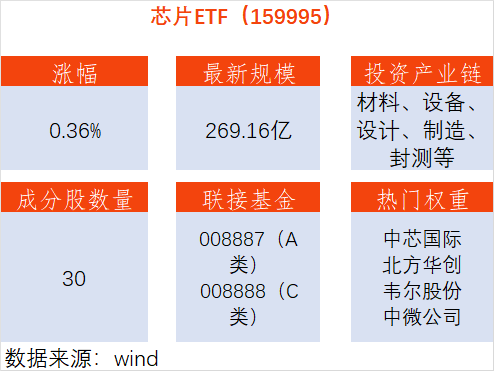
Group 1 - The A-share market showed mixed performance on December 3, with the Shanghai Composite Index down by 0.13%, while sectors such as telecommunications, home appliances, and banking saw gains [1] - The chip technology sector is experiencing a period of consolidation, with the chip ETF (159995.SZ) rising by 0.36% and notable increases in component stocks like Zhongwei Company (up 2.35%) and Tuojing Technology (up 1.80%) [1] Group 2 - Major NAND manufacturers are adopting strict production control strategies for 2025, with Samsung Electronics reducing its wafer production by approximately 7% to 4.72 million pieces, and Kioxia lowering its forecast from 4.8 million pieces to 4.69 million pieces [3] - The overall NAND capacity is tightening due to leading manufacturers actively limiting production, which may benefit domestic storage companies by increasing their market share [3] - The chip ETF (159995) tracks the National Chip Index, including leading companies in materials, equipment, design, manufacturing, packaging, and testing within the A-share chip industry [3]
传日本断供光刻胶,可能严重影响中国半导体产业活力
是说芯语· 2025-12-01 09:44
Core Viewpoint - Japan has reportedly ceased exports of photoresist to China, which is seen as a significant escalation in tensions between the two countries and poses a threat to China's semiconductor industry [1][3]. Group 1: Impact on Semiconductor Industry - The semiconductor market is experiencing a general supply shortage, with demand for DRAM and HBM rising sharply, presenting an opportunity for Chinese companies to grow [3]. - The interruption of photoresist exports from Japan is expected to undermine the expansion plans of Chinese semiconductor manufacturers like CXMT and SMIC, as unstable procurement of core materials could hinder their market entry speed [3]. - The disruption may lead to a global supply chain restructuring and changes in overall price structures within the semiconductor market [3]. Group 2: Japan-China Relations and Supply Chain Dynamics - The export restrictions are seen as a move to increase the distance between Japanese and Chinese companies, while simultaneously strengthening the supply chain ties between South Korea and Japan [3]. - As Japan tightens its control over photoresist exports, South Korean companies are likely to seek more stable cooperation with Japanese SMEs, potentially positioning South Korea as a central axis in the semiconductor supply chain between China and Japan [3]. - The ongoing tensions are expected to have broader implications for the semiconductor supply chain, with South Korean industries closely monitoring the situation for potential impacts on their operations [3]. Group 3: Photoresist Market Overview - Photoresist is a critical material in semiconductor manufacturing, with Japan holding over 70% of the global market share, making it a key leverage point in geopolitical conflicts [4]. - The recent export halt is viewed as a significant setback for China's semiconductor ambitions, particularly affecting companies like SMIC and ChangXin Memory, which are looking to expand production amid rising DRAM prices [4]. - Japan's export controls may gradually extend beyond photoresist, as evidenced by the recent cessation of imports of Chinese DRAM by Japanese semiconductor firm Kioxia due to quality and safety concerns [4].
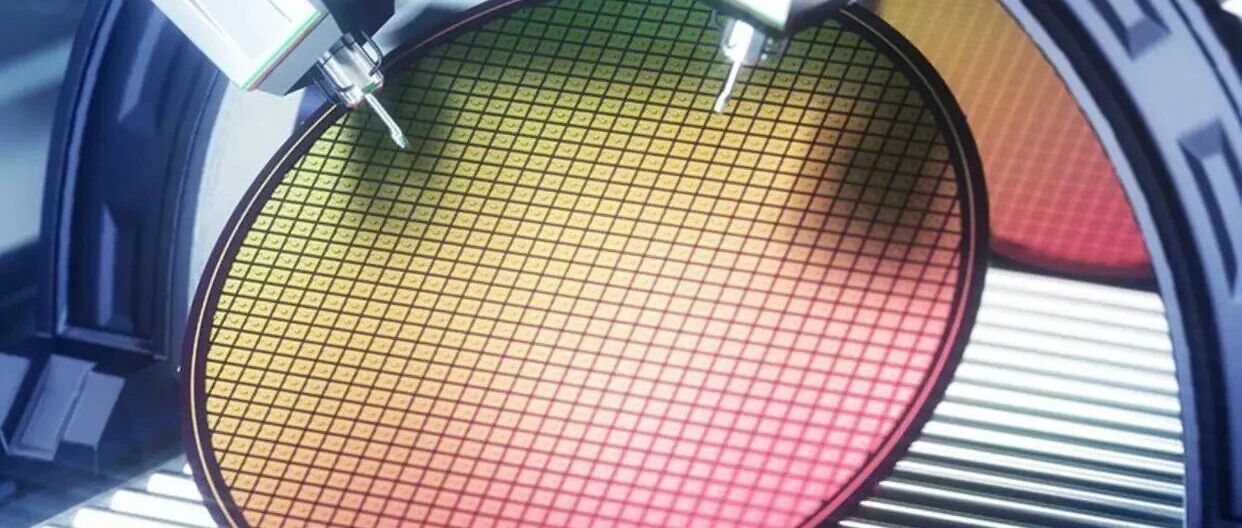
集体大涨!芯片,重大利好传来!
天天基金网· 2025-11-29 02:26
Core Viewpoint - The article discusses the significant price increase of storage chips, particularly DRAM, driven by surging demand from AI infrastructure and a supply shortage, with expectations of further price hikes in the coming months and years [2][3][5]. Group 1: Market Dynamics - The global DRAM market is experiencing a supply-demand imbalance, leading to rapid price increases, with 512GB storage prices rising nearly 500 yuan compared to the previous month [2][3]. - Major tech companies like Dell and HP have issued warnings about potential storage chip shortages due to increased demand for AI infrastructure, predicting price hikes for their products [3][4]. - Counterpoint Research indicates that memory prices have already risen by 50% this year, with an additional expected increase of 50% by the second quarter of 2026 due to critical chip shortages [5][6]. Group 2: Company Responses - Lenovo's chairman, Yang Yuanqing, anticipates that the shortage and price increases of components, including storage, will persist throughout 2026, driven by the growing demand for AI-related infrastructure [4]. - Xiaomi's president, Lu Weibing, noted that the current rise in memory prices is a long-term trend influenced by AI demand, and the company has secured supply agreements for 2026 to mitigate cost pressures [4]. - Companies are adapting by potentially increasing product prices and seeking alternative suppliers to ensure adequate memory supply [3][4]. Group 3: Future Projections - Counterpoint predicts that major chip manufacturers will increase DRAM production by over 20% by 2026, but the current supply constraints primarily affect traditional products, impacting lower-cost consumer electronics [5][6]. - The shift in demand towards advanced memory types, such as LPDDR, poses significant challenges for the supply chain, as major players like NVIDIA are increasing their consumption, further straining resources [5][6]. - Analysts suggest that the current memory chip price surge may continue for several quarters, driven by strong demand across both advanced and traditional memory sectors [6].

深夜,集体大涨!芯片,重大利好传来!
Zheng Quan Shi Bao Wang· 2025-11-29 00:07
Core Insights - The global DRAM market is experiencing a supply-demand imbalance, leading to rapid price increases for storage chips, particularly driven by the surge in AI infrastructure demand [1][2][3] Group 1: Market Dynamics - The price of 512GB storage has increased by nearly 500 yuan compared to the previous month, indicating significant price inflation in the storage chip market [2] - Counterpoint Research reports that memory prices have risen by 50% this year, with an expected additional 50% increase by Q2 2026 due to critical chip shortages [4][5] - Major PC manufacturers like Dell and HP are issuing warnings about potential price hikes for their products due to rising storage chip costs and supply constraints [2][3] Group 2: Company Responses - Lenovo's chairman predicts that the shortage and price increases of components, including storage, will persist throughout 2026, prompting the company to secure optimal contracts with suppliers [3] - Xiaomi has proactively signed supply agreements for 2026 to mitigate the impact of rising storage costs and may consider price adjustments and product upgrades to alleviate cost pressures [3] - SK Hynix and Micron are adjusting their production strategies in response to the increased demand for advanced memory, with expectations of significant production growth in the coming years [5][6] Group 3: Future Outlook - The semiconductor industry is entering what analysts describe as a "super cycle," with manufacturers aggressively stockpiling memory chips amid soaring demand [6] - The shift in demand from traditional LPDDR4 to advanced memory types like HBM is causing market disruptions, with significant implications for supply chains [4][5] - Analysts predict that the price of DDR5 memory modules could double by the end of 2026 due to the ongoing supply constraints and heightened demand from major players like NVIDIA [5][6]


