平安银行

Search documents
险资最新重仓股出炉!这一行业受青睐
Zhong Guo Zheng Quan Bao - Zhong Zheng Wang· 2025-09-04 12:17
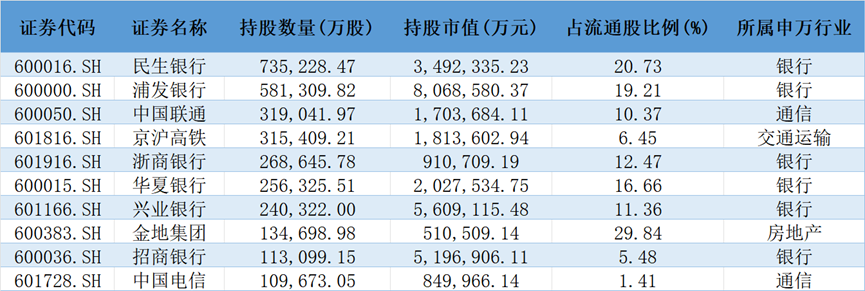
Group 1 - The core viewpoint of the articles indicates that insurance capital (险资) is increasingly favoring bank stocks, with significant holdings in various sectors, particularly banking, transportation, and telecommunications [1][3][5]. - As of the end of Q2 2025, insurance capital held a total of 730 stocks, with a combined holding of 61.919 billion shares valued at 628.985 billion yuan, showing an increase in both quantity and market value compared to Q1 [3][5]. - Among the top ten heavy holdings of insurance capital, six are bank stocks, including Minsheng Bank, Pudong Development Bank, and Zhejiang Bank, highlighting a strong preference for the banking sector [3][4]. Group 2 - Insurance capital is expected to continue optimizing its equity investment structure, focusing on high-dividend stocks and new productive forces in the upcoming quarters [2][8]. - In Q2, insurance capital increased its holdings in several key stocks, including CITIC Bank, Beijing-Shanghai High-Speed Railway, and China Telecom, with significant increases in share quantities [6][7]. - The insurance sector is actively seeking investment opportunities in high-dividend and innovative sectors, with a focus on technology innovation, advanced manufacturing, and new consumption [8].




小行理财子发力明显 头部保险资管净利大增
2 1 Shi Ji Jing Ji Bao Dao· 2025-09-04 12:01
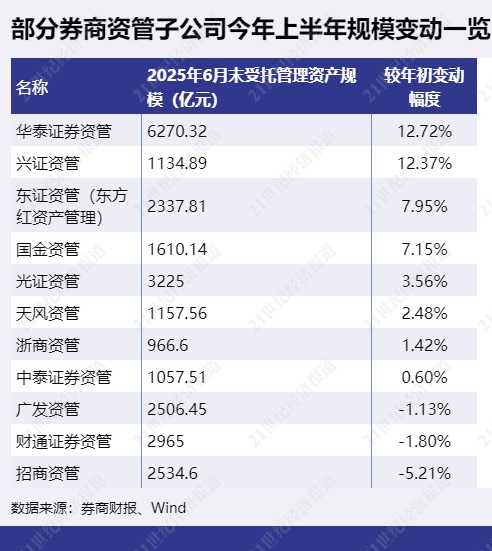
Group 1: Asset Management Companies Performance - Several small and medium-sized asset management companies experienced rapid growth in scale during the first half of the year, while large banks' asset management subsidiaries showed weak growth, with some even reporting negative growth, such as CCB Wealth Management down 11.9% and ABC Wealth Management down 10.98% [1][7] - Among the securities asset management subsidiaries, eight reported negative revenue growth, although the overall situation has improved compared to previous years, with fewer companies experiencing negative growth [2] - Huatai Securities Asset Management was the only subsidiary to exceed 1 billion yuan in revenue during the first half of the year, achieving 1.013 billion yuan, while other companies like Guotai Haitong Asset Management reported close to 1 billion yuan [2][3] Group 2: Revenue and Profit Trends - Huatai Securities Asset Management led in net profit with 713 million yuan, a year-on-year increase of 47.22%, while other companies like Guoxin Asset Management and Xingzheng Asset Management saw net profit growth of 2804.4% and 375% respectively [3] - The total private asset management scale of securities and asset management companies reached 5.78 trillion yuan by the end of July, a 4.71% increase from the end of June [3] Group 3: Wealth Management Companies Insights - Some bank wealth management companies reported significant revenue increases, with Pudong Development Bank Wealth Management seeing a 70.03% year-on-year increase [6] - Six wealth management companies achieved net profits exceeding 1 billion yuan, including China Merchants Bank Wealth Management and Bank of China Wealth Management [6] - The largest wealth management company by total management scale is China Merchants Bank Wealth Management, with a scale of 2.46 trillion yuan, although it experienced a slight decline of 0.5% in the first half of the year [7] Group 4: Insurance Asset Management Performance - China Life Asset Management maintained the top position in revenue and net profit among insurance asset management companies, achieving revenue of 3.554 billion yuan and net profit of 2.076 billion yuan, with year-on-year growth of 23.41% and 35.73% respectively [9] - Some insurance asset management companies, like Taikang Asset Management, reported revenue declines, with a 26.56% drop to 789 million yuan [9]

半年“缩水”2000亿!信用卡,正在失去这届年轻人
Bei Ke Cai Jing· 2025-09-04 11:00
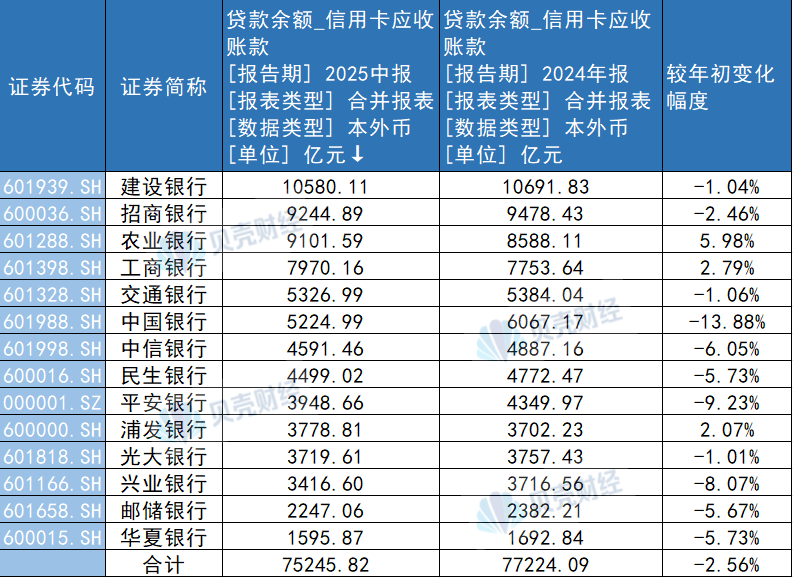
Core Viewpoint - Credit cards, once a symbol of consumer freedom, are gradually losing popularity among younger consumers, who prefer alternative payment methods like Huabei and Meituan Monthly Payment due to concerns over fees and debt risks [1][2][3] Group 1: Consumer Behavior - Young consumers express dissatisfaction with credit cards due to annual fees and the risk of overspending, leading them to favor more manageable payment options [2][4] - The shift in consumer preferences is evident as younger generations find credit cards less appealing compared to newer financial products that offer smaller, more controllable credit limits [8][10] - Concerns about falling into debt traps and the perception that credit cards are primarily used by older generations contribute to the decline in credit card usage [10][11] Group 2: Banking Sector Impact - The decline in credit card usage is reflected in the financial reports of banks, with a total reduction of 200 billion yuan in credit card balances among 14 banks in the first half of 2025 [3][11] - Major banks are experiencing pressure on credit card account openings, leading to increased promotional efforts, including attractive gifts for new cardholders [11][12] - Despite these efforts, most banks report a decrease in credit card loan balances, with notable declines at institutions like Bank of China and Ping An Bank [12][13] Group 3: Financial Performance - As of mid-2025, the total credit card loan balance across 14 banks stands at 7.52 trillion yuan, a year-on-year decrease of 2.56% [13] - Banks like China Merchants Bank and CITIC Bank report significant drops in credit card transaction volumes and revenues, indicating a broader trend of declining profitability in credit card services [13][14] - The rising non-performing loan rates in credit card portfolios signal increasing risks for banks, with several institutions reporting higher rates compared to the beginning of the year [14] Group 4: Industry Trends and Recommendations - The overall decline in credit card issuance is attributed to changing consumer behaviors and regulatory impacts, pushing banks to adapt to a more specialized and high-quality development model [15][16] - Experts suggest that banks should focus on creating differentiated credit card products that cater to specific consumer needs, leveraging technology to enhance user experience and engagement [16][18] - Recommendations include improving the adaptability of credit card products to consumer scenarios, simplifying approval processes, and enhancing repayment reminders to better compete with internet-based credit tools [17][18]
守好“钱袋子”!平安银行理财服务升级
Ren Min Wang· 2025-09-04 10:39
Core Viewpoint - Ping An Bank is upgrading its wealth management services to better serve the public and support the national financial strategy, aiming to redefine "good wealth management" as a reliable means for wealth preservation and growth [2][3]. Group 1: Product and Service Upgrades - Ping An Bank and Ping An Wealth Management launched the "An+Xin Stable and Far-reaching" product brand system, which includes four product series designed to meet diverse customer needs [3]. - The "Anxin" series focuses on cash management, while the "Anwen" series targets absolute return fixed-income products, aiming to be a cornerstone for asset allocation [3]. - The new product system is part of a broader strategy to enhance customer experience and simplify the selection process for wealth management products [3]. Group 2: Market Position and Strategy - As of June this year, Ping An Wealth Management managed assets worth 1.16 trillion yuan and served over 14 million customers, indicating a significant market presence [3]. - The company emphasizes a balanced approach to investment, addressing the "impossible triangle" of return, risk, and liquidity, ensuring that products can withstand market fluctuations [2][3]. - Ping An Bank's commitment to long-term, stable operations is reflected in its focus on customer-centric services and maintaining a strong strategic direction amid market volatility [2][3]. Group 3: Customer-Centric Approach - The bank aims to provide comprehensive financial services, leveraging the strengths of the Ping An Group to offer unique value in both financial and healthcare services [3]. - Ping An Bank has identified five core service advantages: strong capabilities, comprehensive product offerings, warm service, fast transactions, and multiple rights for customers [3]. - The bank's approach is designed to meet the evolving demands of investors, ensuring clarity and confidence in their wealth management choices [3].


大行高歌猛进中小银行疲态尽显,零售银行二元分化格局已确认
Feng Huang Wang· 2025-09-04 09:03
Core Insights - The retail business has become a focal point for banks, with significant growth reported by the six major banks, while smaller banks show weaker performance in personal loans [1][4][5] - There is a divergence in opinions among banks regarding the risk trends in retail loans, with some believing the peak of bad loans has passed, while others see ongoing risk increases [1][2][7] Retail Business Performance - The six major banks have shown strong growth in retail business, with notable increases in personal consumption and operating loans, capturing a significant market share [1][4] - Specific growth figures include: - China Construction Bank's personal operating loans increased by 20.38% - Industrial and Commercial Bank of China’s personal consumption loans grew by 10.2% - Agricultural Bank of China’s personal operating loans rose by 17.2% [4] Divergence Among Banks - Smaller banks, including joint-stock and city commercial banks, have experienced sluggish growth in personal loans, with some reporting negative growth [1][5][6] - For instance, Ping An Bank's personal loan total decreased by 2.3%, while China Everbright Bank's retail loan growth was only 1.57% [5] Market Conditions and Future Outlook - The introduction of consumption loan subsidies is expected to create more variables in the retail market for the fourth quarter and next year [3] - Smaller banks are under pressure from larger banks and are focusing on improving their retail loan offerings, particularly in housing and consumption loans [3][8] Strategies for Growth - Major banks are expected to continue focusing on personal consumption and operating loans, leveraging central policies to support growth [8][9] - Smaller banks are looking to enhance their loan offerings by collaborating with local enterprises and improving loan approval processes to compete with larger banks [7][9]



股份制银行板块9月4日涨0.46%,中信银行领涨,主力资金净流入2.24亿元
Zheng Xing Xing Ye Ri Bao· 2025-09-04 08:48
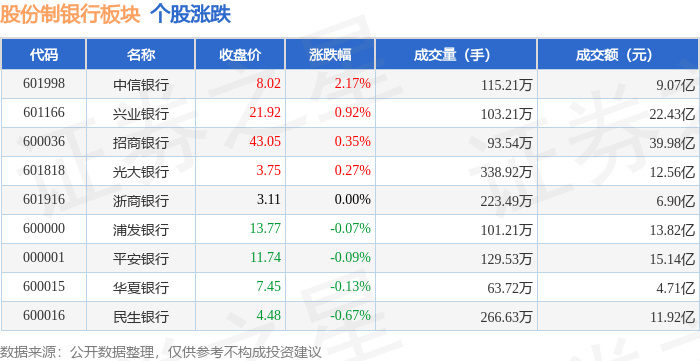
Core Insights - The banking sector saw a slight increase of 0.46% on September 4, with CITIC Bank leading the gains, while the Shanghai Composite Index fell by 1.25% and the Shenzhen Component Index dropped by 2.83% [1] Group 1: Market Performance - CITIC Bank closed at 8.02, up by 2.17%, with a trading volume of 1.15 million shares and a transaction value of 907 million [1] - Other notable banks included Industrial Bank, which rose by 0.92% to 21.92, and China Merchants Bank, which increased by 0.35% to 43.05 [1] - The overall trading volume and transaction values for various banks indicate mixed performance, with some banks experiencing slight declines [1] Group 2: Capital Flow - The banking sector experienced a net inflow of 224 million from institutional investors, while retail investors saw a net outflow of 190 million [1] - Specific banks like Shanghai Pudong Development Bank and China Minsheng Bank faced significant outflows from retail investors, indicating a shift in investor sentiment [2] - The data shows that while some banks attracted institutional investment, others struggled with outflows, reflecting varied investor confidence across the sector [2]

机构看好板块价值重估,银行ETF指数(512730)上涨近1%,上市银行上半年营收及利润增速双双转正
Xin Lang Cai Jing· 2025-09-04 07:18
Group 1 - The core viewpoint is that the banking sector is experiencing a recovery in revenue and profit growth, with overall operating income and net profit growth rates for listed banks turning positive [1][2] - The banking sector is expected to benefit from a stable low interest rate environment, leading investors to prefer lower-risk and more predictable return assets [1][2] - The banking sector's price-to-book (PB) ratio is considered undervalued, especially given the systemic risk concerns have been alleviated [1][2] Group 2 - Recent market conditions have led to increased long-term investments in banks by institutional investors, such as insurance funds and asset management companies [2] - The banking sector's asset quality is stable, and the pressure on interest margins is manageable, with expectations for interest margins to stabilize in the coming quarters [2] - The banking sector is anticipated to enter a new phase of stable return on equity (ROE), supported by fiscal stability and risk management from the central bank [2] Group 3 - The CSI Bank Index closely tracks the performance of the banking sector, with the top ten weighted stocks accounting for 65% of the index [3] - The top ten stocks in the CSI Bank Index include major banks such as China Merchants Bank, Industrial and Commercial Bank of China, and Agricultural Bank of China [3]



银行研究框架及25H1业绩综述:营收及利润增速双双转正
GOLDEN SUN SECURITIES· 2025-09-04 06:14
Investment Rating - The report indicates a positive outlook for the banking industry, with overall revenue and net profit growth rates turning positive in the first half of 2025, at 1.0% and 0.8% respectively, showing improvements from the previous quarter [4]. Core Insights - The banking sector's net interest margin for the first half of 2025 is reported at 1.42%, a decrease of 10 basis points compared to the previous year, but the decline is narrowing due to improved cost management on the liability side [5]. - Non-interest income, particularly from fees and commissions, has increased by 3.1% year-on-year, driven by a recovery in wealth management and a more active market environment [5]. - The asset quality remains stable, with a non-performing loan ratio of 1.23% and a provision coverage ratio of 239%, indicating a solid credit environment [5]. Summary by Sections Financial Performance Overview - The overall revenue and net profit growth for listed banks in the first half of 2025 were 1.0% and 0.8%, respectively, with both metrics showing improvement from the first quarter [4][22]. - The total assets of listed banks reached 321.3 trillion yuan, growing by 6.35% year-to-date, with loans and advances totaling 179.4 trillion yuan, accounting for 55.84% of total assets [21][24]. Income Sources - Net interest income decreased by 1.3% year-on-year, but the decline rate has slowed, reflecting better management of funding costs [5]. - Fee and commission income grew by 3.1% year-on-year, benefiting from a recovering market and the gradual impact of regulatory changes [5]. - Other non-interest income saw a significant increase of 10.7%, primarily due to favorable market conditions in the bond market [5]. Asset Quality and Management - The non-performing loan ratio remained stable at 1.23%, with a provision coverage ratio of 239%, indicating a robust asset quality [5]. - The credit cost for the first half of 2025 was 0.81%, a decrease of 5 basis points year-on-year, suggesting manageable credit risks [5]. Loan Growth and Composition - Loan growth was primarily driven by corporate lending, with significant contributions from infrastructure and manufacturing sectors [20]. - Personal loan growth was weaker, with a year-on-year increase of only 3.6%, reflecting a cautious approach to consumer lending amid rising risks [20]. Investment and Market Conditions - The investment asset proportion decreased to 34% as banks adjusted their strategies in response to market volatility [20]. - The overall yield on bonds fluctuated significantly, prompting banks to engage in tactical trading to enhance returns [20].


A股不止情绪火热 还有庞大增量资金在路上! 桥水在华募资火热 直指中国股市
Zhi Tong Cai Jing· 2025-09-04 05:52
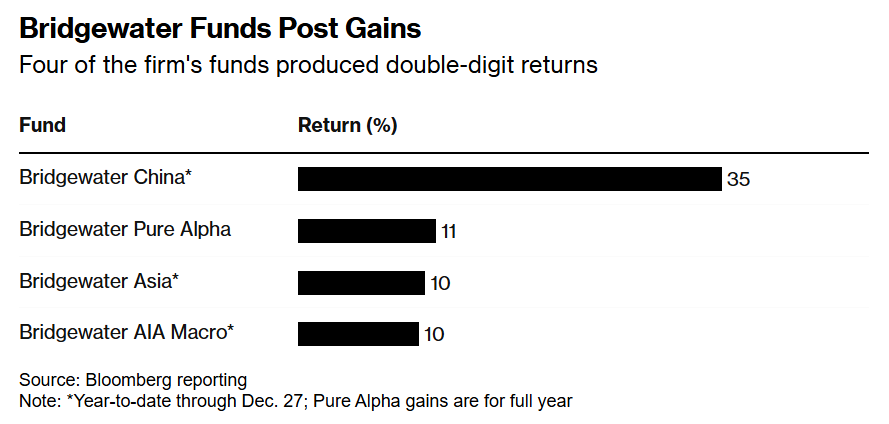
Group 1 - Bridgewater Associates, known as the "king of hedge funds," is experiencing significant demand in the Chinese market, with wealthy investors injecting billions into domestic private banks to gain access to its products [1][2][3] - The hedge fund's investment strategy combines Ray Dalio's risk parity approach with active management, achieving over 35% returns in 2024, significantly outperforming competitors [2][6] - Bridgewater's assets under management in China grew approximately 40% to over 55 billion RMB, highlighting its strong market position compared to other international hedge funds [2][3][6] Group 2 - The scarcity of Bridgewater's products has led to a situation where wealthy clients are often unable to purchase desired fund shares, likening the fund to the luxury brand Hermès in terms of exclusivity [3][6] - In contrast to Bridgewater's success, other major hedge funds like D.E. Shaw and Two Sigma have only managed assets between 5 billion to 10 billion RMB in China, indicating Bridgewater's unique position in the market [3][6] - Bridgewater's strong performance is attributed to its diversified investment across stocks, bonds, and commodities, with significant contributions from gold and active management strategies [7][9] Group 3 - The hedge fund's recent fundraising efforts targeted 2.5 billion RMB, with strong demand leading to oversubscription, particularly from institutions like China Merchants Bank [8] - The ongoing AI and innovative pharmaceutical trends are driving the Chinese stock market's growth, with Bridgewater's strategies aligning well with these market dynamics [9][10] - Morgan Stanley reports that hedge funds, including Bridgewater, are increasing their bullish bets on Chinese stocks, with expectations of continued policy support and low valuations compared to developed markets [10][11] Group 4 - The Shanghai-based fund platform of Bridgewater has seen its onshore asset scale rise to over 60 billion RMB, positioning it alongside major domestic quantitative hedge funds [7][8] - High-net-worth clients are facing increasing competition for Bridgewater's products, with limited allocations being offered even to those with substantial assets [7][8] - The overall market sentiment is positive, with expectations of further gains in the A-share market driven by liquidity improvements and a shift of funds from deposits to equities [11][14]
私人银行半年新增15万高净值客户
2 1 Shi Ji Jing Ji Bao Dao· 2025-09-04 05:32
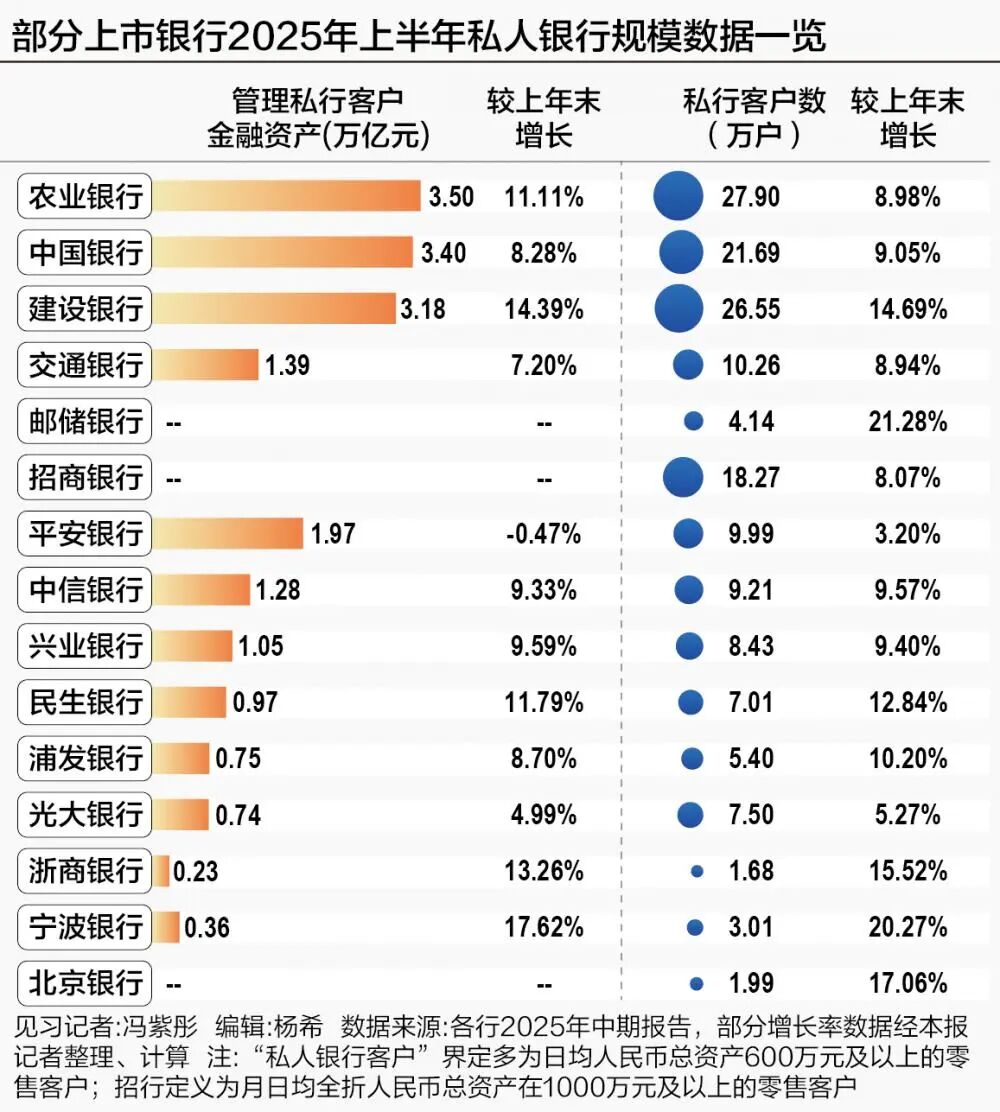
Core Insights - The private banking sector has shown remarkable growth in the first half of 2025, becoming a standout area within the wealth management segment of banks despite a complex economic environment [1][4] - The total number of private banking clients across 15 banks exceeded 1.63 million, with an increase of nearly 150,000 clients, reflecting a growth rate of over 10% [1][4] - Major banks have reported significant increases in Assets Under Management (AUM), with Agricultural Bank leading at 3.5 trillion yuan, followed closely by Bank of China and China Construction Bank [2][4] Growth Metrics - Private banking AUM for Agricultural Bank reached 3.5 trillion yuan, up 11.11% from the previous year, with client numbers increasing by 23,000 to 279,000 [4][5] - Bank of China reported AUM of 3.4 trillion yuan and 216,900 clients, while China Construction Bank's AUM grew to 3.18 trillion yuan with a 14.39% increase [4][5] - The private banking sector is experiencing a shift from rapid expansion to a focus on deepening client relationships and enhancing service quality [1][5] Client Segmentation and Services - Banks are increasingly focusing on ultra-high-net-worth clients and diversifying their service offerings, including family trusts and retirement financial planning [1][8] - Citic Bank has reported a 40.96% increase in ultra-high-net-worth clients, while Everbright Bank is targeting families, women, and business owners with tailored services [7][8] - Family trusts have become a key area of growth, with Everbright Bank's family trust assets increasing by 56.12% year-on-year [8] Revenue Generation and Business Model - The establishment of private banking centers is accelerating, with China Construction Bank setting up 248 centers and Bank of China 205 centers, enhancing client retention and AUM [10][11] - Private banking is becoming a significant contributor to banks' intermediary income, with Beijing Bank reporting a 16.89% increase in product sales, driving a 17.77% rise in intermediary income [10][11] - The focus on personalized services and data-driven client profiling is expected to further enhance revenue streams for banks [11]