洋河股份

Search documents
江苏10家公司进入A股“千亿市值俱乐部” 总数位居全国前列
Zheng Quan Shi Bao Wang· 2025-07-18 05:17
Group 1 - Four companies, including Dongshan Precision, Yanghe Brewery, Hudian Co., and Hengli Hydraulic, have recently surpassed a market capitalization of 100 billion yuan, with Jiangsu province having a total of 10 such companies as of July 18 [1][2] - Dongshan Precision's stock price hit a ceiling on July 17, closing at 55.31 yuan per share, resulting in a market capitalization of 101.3 billion yuan. The company has developed three main sectors: electronic circuits, optoelectronics, and precision manufacturing, ranking second globally in flexible printed circuits (FPC) and third in PCBs based on revenue [1] - Hudian Co. saw an 8.59% increase in stock price on July 17, bringing its market capitalization to 102.2 billion yuan. The company is expected to achieve a net profit of 1.65 to 1.75 billion yuan in the first half of 2025, marking a year-on-year increase of 44.63% to 53.40% [1] Group 2 - Yanghe Brewery, a well-known domestic liquor company, has returned to the 100 billion yuan club, focusing on its major products like "Hai Zhi Lan" and "Meng Zhi Lan M6+" while planning to launch new products priced above 50 yuan [2] - Hengli Hydraulic's stock price has nearly doubled since January, with its market capitalization exceeding 100 billion yuan again. The company has entered mass production for its linear actuator project, which is expected to drive new growth [2] - In addition to the four companies mentioned, Jiangsu province also has six other companies, including Jiangsu Bank and Huatai Securities, in the 100 billion yuan market capitalization club, highlighting Jiangsu's status as a manufacturing powerhouse [3]




A股突发!开盘20%涨停!688585,8连板!
Zheng Quan Shi Bao Wang· 2025-07-18 03:25
Group 1: Stock Performance - The stock of Shangwei New Materials has hit the daily limit for eight consecutive trading days since its resumption, with a 20% increase each day [6][7] - The latest price-to-earnings ratio of Shangwei New Materials is 105.71, significantly higher than the industry average of 23.78 [7] Group 2: Market Trends - The A-share market saw a collective rise in the three major indices, with sectors like brain-computer interfaces, pharmaceutical commerce, and multi-modal AI performing well, while sectors like photovoltaic and diversified finance declined [1] - In the Hong Kong stock market, the Hang Seng Index and Hang Seng Technology Index both rose over 1%, with notable gains from companies like NIO and Nongfu Spring [3] Group 3: Lithium and Silicon Futures - The lithium extraction sector is experiencing a surge, with companies like Fumiao Technology and Jinyuan Co. hitting the daily limit, and the price of lithium carbonate futures rising over 4% to 70,700 yuan per ton [4] - The price of polysilicon futures has also seen a significant increase, with the main contract rising 7.49% to 45,700 yuan per ton, marking a new high since its listing [4] Group 4: AI and Small Metals - The small metals sector is showing positive movement, with companies like Dongfang Zirconium hitting the daily limit, and other companies in the sector also experiencing gains [5] - AI-related stocks are active, with Nanjing Xingshi hitting the daily limit, and other companies in the sector showing strong performance following the release of OpenAI's ChatGPT Agent [5]


A股白酒板块异动拉升,皇台就业涨超5%,泸州老窖、山西汾酒均涨超3%,洋河股份、舍得酒业、酒鬼酒、古井贡酒、贵州茅台等跟涨。
news flash· 2025-07-18 01:59
A股白酒板块异动拉升,皇台就业涨超5%,泸州老窖、山西汾酒均涨超3%,洋河股份、舍得酒业、酒 鬼酒、古井贡酒、贵州茅台等跟涨。 订阅A股市场资讯 +订阅 ...

相继入局低度白酒赛道 低度酒能否成为头部酒企穿越周期的良药?
Sou Hu Cai Jing· 2025-07-17 10:54
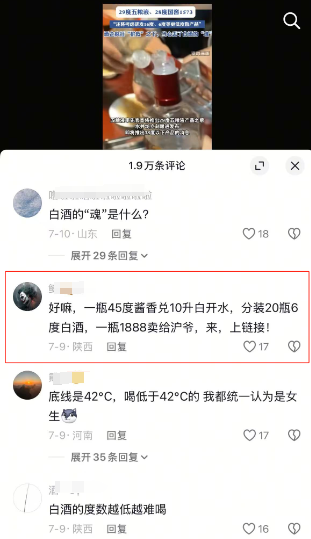
Core Viewpoint - The Chinese liquor industry is facing challenges such as shrinking competition, declining prices, and increasing inventory pressure, prompting leading liquor companies to enter the low-alcohol liquor market to seek growth opportunities [2][6]. Group 1: Industry Trends - Major liquor companies like Wuliangye, Luzhou Laojiao, and Jiugui Liquor are actively discussing the trend towards low-alcohol products during their annual shareholder meetings [2][3]. - The low-alcohol liquor segment is expected to become a new growth area for leading liquor companies, as they adapt to the younger consumer demographic and the trend of lower alcohol content [2][3][6]. Group 2: Company Strategies - Wuliangye plans to reintroduce a 29-degree liquor product after 20 years, with market research already underway for three different flavors, expected to launch in September [3][5]. - Luzhou Laojiao has successfully developed a 28-degree product and is testing even lower alcohol content options [3][5]. - Other companies like Moutai, Shanxi Fenjiu, and Yanghe are also increasing their focus on low-alcohol products, with various new offerings in development [3][5]. Group 3: Market Dynamics - The low-alcohol segment is seen as a potential second growth curve for some liquor companies, with Luzhou Laojiao reporting that the proportion of low-alcohol products in their portfolio has increased from 15% to around 50% [6][8]. - The overall revenue growth for liquor companies has been declining, with only two out of twenty companies achieving double-digit revenue growth in the first quarter of 2025 [6][7]. Group 4: Historical Context - The low-alcohol trend in the Chinese liquor market has historical precedents, with previous waves of low-alcohol product launches occurring in the 1970s and 1980s, but the market has predominantly favored high-alcohol products [8][9][10]. - The introduction of low-alcohol products has often faced challenges, as seen in past attempts where many low-alcohol offerings did not meet market expectations and were eventually discontinued [9][11]. Group 5: Consumer Preferences - A survey indicated that among young consumers aged 25 to 35, only 19% prefer traditional liquor, while 52% favor beer, highlighting the need for liquor companies to adapt to changing consumer preferences [3][6]. - The pricing strategy for low-alcohol products is critical, as companies must balance affordability for younger consumers with maintaining a premium brand image [13][15].




白酒低度化就是“兑水”?泸州老窖已经抓住低度化市场先机
Zhong Guo Chan Ye Jing Ji Xin Xi Wang· 2025-07-17 05:52
Core Viewpoint - The white liquor industry is undergoing a "degree reduction revolution," with major brands launching lower-alcohol products to attract younger consumers and adapt to changing market dynamics [1][15][17]. Group 1: Industry Trends - Major brands like Wuliangye, Luzhou Laojiao, and Yanghe are introducing lower-alcohol products, such as Wuliangye's 29-degree and Luzhou Laojiao's 28-degree offerings, creating a complete low-alcohol product matrix [1][15]. - The market for low-alcohol liquor is emerging as a new growth area, with Luzhou Laojiao's 38-degree product sales reaching approximately 50% of its total sales, nearing 10 billion yuan [1][18]. - The shift towards lower-alcohol products is driven by changing consumer demographics, with younger generations and an increasing female consumer base becoming the primary market [16][17]. Group 2: Consumer Perception - There is skepticism among consumers regarding the quality of lower-alcohol products, with many questioning whether they are merely diluted versions of higher-alcohol liquors [3][7]. - Historically, low-alcohol liquors were associated with inferior quality, but recent developments and recognition from the industry are beginning to change this perception [12][13]. Group 3: Technological Innovations - The production of low-alcohol liquor is complex, requiring advanced techniques to maintain flavor and quality while reducing alcohol content [11][19]. - Luzhou Laojiao employs innovative methods such as "cold filtration" and "old liquor blending" to ensure that their lower-alcohol products retain their unique flavors and aromas [19]. - The industry is leveraging modern technologies, including molecular biology and flavor chemistry, to address the challenges of producing low-alcohol liquor without compromising quality [18][19].
重塑宴会增长逻辑,纳宝科技构建行业领先运营闭环,激活白酒品牌销量引擎!
Sou Hu Cai Jing· 2025-07-17 04:59
Core Insights - The white liquor industry is experiencing a structural transformation in channel strategies, with banquet scenarios emerging as a key growth area for brands [1][4] - Leading companies like Jian Nan Chun, Lang Jiu, and Yang He have established banquet marketing systems to penetrate high-trust consumption occasions such as weddings and graduations [1][4] - Smaller brands are also finding opportunities in this space, focusing on efficient sales and conversion paths within high social interaction environments [1][4] Industry Trends - Banquet marketing is evolving from a tactical activity to a strategic channel, with major liquor companies developing replicable and sustainable business models [4][6] - Jian Nan Chun utilizes customized invitations and interactive mechanisms to transform banquet scenarios into a multi-faceted marketing model [4][5] - Lang Jiu has achieved over 70% market share in wedding scenarios through a comprehensive banquet management system [4][5] - Yang He is leveraging digital technologies to create viral marketing paths, with over 40% of Dream Blue series sales projected to come from banquet scenarios in 2024 [5][6] Brand Growth Strategies - The understanding of banquet marketing is shifting from simple promotions to a core strategy for driving sales, brand communication, and asset accumulation [6][14] - Regional brands like Lao Tan Jiu are also transitioning towards structured transformations in branding, channels, and systems [6][14] - Companies are focusing on building controllable, operational banquet systems to secure long-term value in the banquet market [6][14] Key Components of Banquet Systems - The banquet system is designed to optimize user behavior across three growth phases: pre-banquet, during the banquet, and post-banquet [10][12] - Pre-banquet strategies focus on establishing conversion pathways [10] - During the banquet, interactive mechanisms are employed to enhance user engagement and data collection [12][14] - Post-banquet efforts aim to consolidate user data and drive secondary conversions [14][16] Digital Transformation in Banquet Marketing - The banquet market is transitioning to a systematic operation model driven by digital capabilities, moving away from traditional methods [16] - Brands are seeking to understand the effectiveness of their banquet events, including user engagement and resource utilization [16] - The focus is on creating a sustainable growth model that allows for continuous optimization of marketing strategies [16]

低度酒风暴来袭!吃喝板块开盘拉升,白酒、大众品携手上攻!
Xin Lang Ji Jin· 2025-07-17 02:25
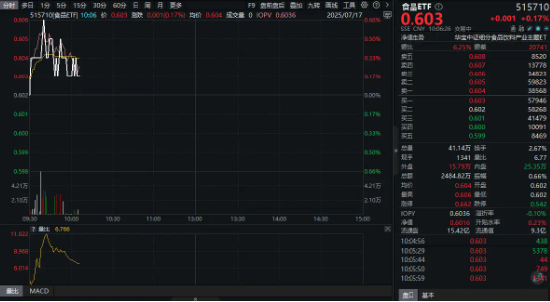
Group 1: Market Performance - The food and beverage sector saw a strong opening on July 17, with the Food ETF (515710) rising by up to 0.66% during the session [1] - Key stocks in the sector, including Dongpeng Beverage and Yili, experienced significant gains, with Dongpeng rising over 3% and several others increasing by more than 1% [1] Group 2: Industry Developments - Multiple liquor companies are actively launching low-alcohol products in response to the challenge of attracting younger consumers [2] - Wuliangye plans to reintroduce a 29-degree liquor product after 20 years, targeting a price point of 500 yuan [2] - Luzhou Laojiao announced the successful development of a 28-degree product, while Yanghe launched a 33.8-degree product earlier this year [2] - Industry experts suggest these moves are a collective response to the loss of young consumer demographics [2] Group 3: Valuation Insights - The current valuation of the food and beverage sector is seen as an attractive investment opportunity, with the Food ETF's underlying index PE ratio at 19.91, marking a low point historically [3] Group 4: Future Outlook - Dongxing Securities anticipates an improvement in the food and beverage sector's overall performance as economic stimulus policies take effect [4] - Open-source Securities highlights potential benefits for the sector from domestic demand policies, suggesting a focus on leading companies in the liquor segment [4] - The Food ETF (515710) is recommended for investors looking to gain exposure to core assets in the food and beverage sector [4]
2025年中期食品饮料行业投资策略报告:政策与新趋势共振,把握结构性机会-20250716
Wanlian Securities· 2025-07-16 09:39
Group 1 - The food and beverage sector experienced a decline in performance and stock prices in the first half of 2025, with revenue growth of 2.46% and net profit growth of 0.28%, both significantly lower than the previous year [1][16] - The food and beverage sector's stock price fell by 7.33%, ranking second to last among 31 sectors in the first half of 2025, with the liquor segment being particularly hard hit [1][26] - The current PE valuation percentile for the food and beverage sector is at 7.26%, indicating a historical low [1][35] Group 2 - Macroeconomic policies aimed at boosting domestic consumption are crucial for achieving GDP growth targets, with a comprehensive consumption promotion plan issued on March 16, 2025 [2] - The Chinese consumption market is witnessing three concurrent trends: rational consumption, emotional consumption, and health-oriented consumption, which are driving changes in the industry [2] - Rational consumption is characterized by a preference for high-quality, low-cost products, leading to rapid growth in discount retail [2] Group 3 - In the beverage segment, energy drinks are experiencing significant growth, with a projected compound annual growth rate of 10.2% from 2024 to 2029 [3] - The snack food sector is seeing growth driven by channel restructuring and product innovation, with new retail formats like bulk snack stores emerging [3] - The health supplement industry is benefiting from increased health awareness among consumers, leading to structural investment opportunities [3] Group 4 - The beer sector is expected to see marginal improvements due to cost reductions and a recovery in mid-to-high-end beer demand driven by restaurant recovery and sports events [8] - The condiment sector is benefiting from continued cost advantages and a growing demand for compound and health-oriented products [8] - The dairy sector is showing signs of cost stabilization, with a potential easing of price wars expected in 2025 [8] Group 5 - The liquor industry is currently in a phase of inventory destocking, with performance under pressure and a prolonged destocking cycle anticipated due to recent "alcohol bans" [8] - The performance of mid-range and mass-market liquor is expected to be relatively better, as they gain favor in a rational consumption environment [8] - The liquor sector is projected to be in a bottoming phase, with low valuations and high dividends providing strong support for stock prices [8]
29度五粮液、28度国窖1573……头部酒企为何集体“降度”?
Sou Hu Cai Jing· 2025-07-16 09:08
Core Viewpoint - The low-alcohol liquor market is experiencing a resurgence after nearly 30 years of dormancy, with major companies like Kweichow Moutai, Wuliangye, Luzhou Laojiao, and Yanghe actively entering this segment to attract younger consumers [3][4][6]. Group 1: Market Trends - The market share of low-alcohol liquor has been rapidly increasing, with its production accounting for approximately 15% in 2022 and projected to exceed 25% by 2024 [3]. - Some companies report that low-alcohol products have captured over 50% of their regional market share, indicating a significant shift in consumer preferences towards younger demographics [3][4]. - The demand for low-alcohol liquor is driven by changing consumer habits, with lower alcohol content products showing better sales performance compared to traditional high-alcohol options [4][19]. Group 2: Company Strategies - Wuliangye plans to launch a new mid-to-high-end 29-degree product named "Yijian Qingxin" in September, while Yanghe will introduce fruit wines and low-alcohol trendy drinks in August and September [6][9]. - Luzhou Laojiao has successfully developed a 28-degree version of its flagship product, Guojiao 1573, and will introduce additional low-alcohol options [6][8]. - Guizhou Moutai is accelerating its low-alcohol beverage brand, Youmi, with 14 new products launched at a recent trade fair and plans for online and offline distribution [13]. Group 3: Industry Challenges - The low-alcohol liquor segment faces challenges such as maintaining flavor balance and quality control, as reducing alcohol content can disrupt the equilibrium of flavor compounds [16]. - There is a risk of market homogenization, with many brands adopting similar "fruit flavor + bubbles" formulas, which may lead to consumer fatigue and a lack of brand loyalty [16][19]. - The industry must focus on technological innovation and cultural engagement to ensure sustainable growth and avoid being trapped in a highly competitive market [19].
一瓶几十元,白酒巨头狂卷光瓶酒
Xin Lang Cai Jing· 2025-07-16 05:50
Group 1 - The core viewpoint of the article highlights the growing popularity of low-priced "light bottle" liquor in the Chinese market, as high-end liquor brands struggle with price declines and sales challenges [1][14][16] - Major liquor companies are launching new products in the light bottle segment, with notable examples including Yanghe's "Yanghe Daqu High Line Light Bottle Liquor" priced at 59 yuan, which sold over 10,000 bottles in 48 hours [1][4] - The light bottle liquor market has reached a scale of approximately 1.5 trillion yuan in 2024, with continued growth expected in 2025, making it one of the most dynamic segments in the liquor industry [3][10] Group 2 - Consumer behavior is shifting towards more rational choices, with a significant portion of consumers prioritizing cost-effectiveness and practicality in their liquor purchases [10][11] - The traditional light bottle liquor market, represented by brands like Niulanshan and Baijiu, has established a strong presence, while new entrants are emerging to capture market share amid changing consumer preferences [7][9] - The competitive landscape is intensifying as more companies enter the light bottle segment, leading to concerns about market saturation and the ability to maintain quality and differentiation [17][18] Group 3 - The high-end liquor market, particularly brands priced above 1,000 yuan, is experiencing significant price declines, with major brands like Moutai and Wuliangye seeing their market prices drop below their official guidance prices [16][17] - The shift towards light bottle liquor reflects a broader trend in the industry where companies are adapting to consumer demands and seeking new growth opportunities in a challenging market environment [15][17] - The light bottle segment is increasingly viewed as a mainstream choice, moving away from its previous perception as a low-end product, and is now seen as a potential growth engine for liquor companies [17][18]