
三星

Search documents
华为折叠屏引领行业七年进化,重塑折叠主力机心智标杆
Xin Lang Cai Jing· 2025-12-25 11:11
Core Insights - The folding screen smartphone market is transitioning from a niche curiosity to a mainstream practical choice, driven by technological maturity and price reductions [1][5][20] - The user base is expanding, with 17.9% of users aged 18-24, and over 90% of consumers considering a folding screen for their next phone [1][8] Market Trends - In 2024, China's folding screen smartphone shipments are expected to reach 9.69 million units, with 7.62 million units shipped in the first three quarters of 2025 [3] - Huawei leads the market with nearly 70% share and has surpassed 15 million cumulative shipments of folding screen devices [3][7] Technological Advancements - The transition is fueled by advancements in hardware technology, particularly in hinge and screen design, moving from basic functionality to comprehensive user experience [5][20] - Huawei has pioneered key technologies such as the water-drop hinge and the Tian Gong hinge system, which significantly enhance the design and functionality of folding screens [7][13] Consumer Demographics - Young users are increasingly attracted to folding screen smartphones for their technological appeal and entertainment capabilities, with a higher percentage citing these reasons compared to the overall consumer base [8][10] - Among young users, women represent a higher proportion, with 34% being regular employees, followed by general management and students [10] Brand Preference - Huawei is the preferred brand for 67.4% of consumers considering a folding screen smartphone, highlighting its strong market position [10] - The company offers a complete range of folding screen designs, differentiating itself from competitors [13] Software and Ecosystem - Huawei's Mate XTs integrates PC-level applications, enhancing productivity across various scenarios, and supports multi-window interactions [15] - The integration of AI capabilities is expected to redefine user interactions with folding screens, making them more efficient and versatile [17][19] Future Outlook - The combination of AI and folding screens is anticipated to drive a new wave of growth, transforming smartphones into intelligent hubs capable of handling complex tasks [22][23] - As folding screens gain mainstream acceptance, they are expected to become a dominant choice in the consumer market, with Huawei continuing to lead the way in innovation and user experience [20][23]


韩国半导体工程师学会预测:到 2040 年芯片制程将突破至0.2纳米
半导体芯闻· 2025-12-25 10:20
Core Viewpoint - The article discusses the future development of semiconductor technology as outlined in the "2026 Semiconductor Technology Roadmap" by the Korean Semiconductor Engineers Society, highlighting significant advancements and challenges in achieving sub-1nm wafer processes over the next 15 years [2][3]. Group 1: Semiconductor Technology Advancements - Samsung has launched the world's first 2nm Gate-All-Around (GAA) chip, Exynos 2600, and aims to achieve 1nm chip production by 2029 [2][3]. - The roadmap predicts that by 2040, semiconductor circuit processes will reach 0.2nm, marking the entry into the angstrom-level technology era [2]. - The roadmap focuses on nine core technology areas, including semiconductor devices and manufacturing processes, AI semiconductors, optical interconnects, and quantum computing [2]. Group 2: Future Projections and Innovations - Samsung plans to upgrade its 2nm GAA technology to a third generation, SF2P+, within two years, and aims to implement a new transistor architecture using complementary FETs (CFET) by 2040 [3]. - In the storage sector, DRAM technology is expected to shrink from 11nm to 6nm, while High Bandwidth Memory (HBM) is projected to upgrade from 12-layer stacking with 2TB/s bandwidth to 30-layer stacking with 128TB/s bandwidth [3]. - SK Hynix has developed a 321-layer stacked QLC NAND flash technology, with future projections indicating the potential for 2000-layer stacked QLC NAND flash [4]. Group 3: AI Chip Performance Expectations - Current AI processors can achieve a maximum computing power of 10 TOPS (trillions of operations per second), with projections indicating that by 15 years from now, chips for model training could reach 1000 TOPS, and those for inference tasks could achieve 100 TOPS [4].

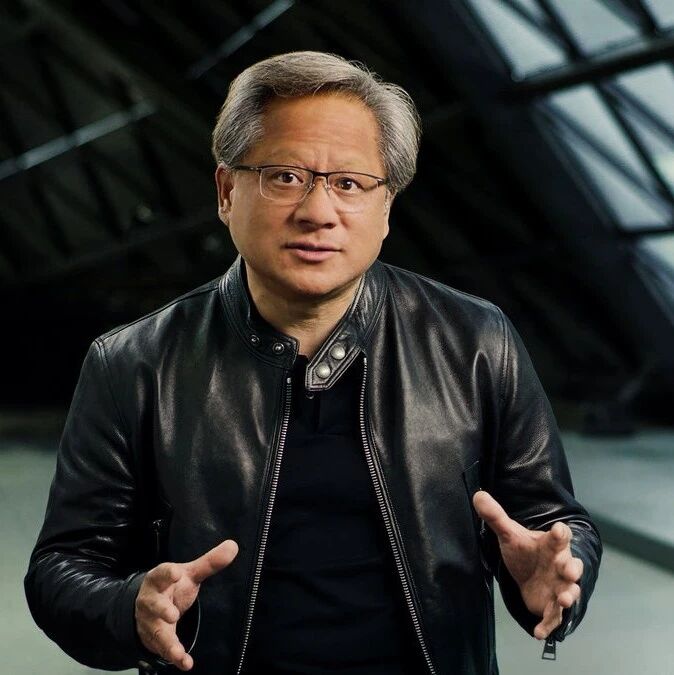
刚刚,黄仁勋回应
半导体芯闻· 2025-12-25 10:20
Core Viewpoint - NVIDIA has agreed to acquire Groq's intellectual property for $20 billion in cash, marking the largest acquisition in NVIDIA's history, although it does not involve the purchase of Groq as a company [2][3]. Group 1: Acquisition Details - The acquisition will allow NVIDIA to integrate Groq's low-latency processors into its AI factory architecture, expanding its capabilities for AI inference and real-time workloads [4]. - Groq's revenue target for this year is set at $500 million, driven by the increasing demand for AI acceleration chips [4]. - Groq will continue to operate as an independent company, with its cloud business, GroqCloud, remaining unaffected by the acquisition [3][4]. Group 2: Financial Context - Prior to this acquisition, NVIDIA's largest acquisition was the $6.9 billion purchase of Mellanox in 2019 [3]. - As of the end of October, NVIDIA holds $60.6 billion in cash and short-term investments, a significant increase from $13.3 billion at the beginning of 2023 [3].

为啥大家都信任台积电?
半导体芯闻· 2025-12-25 10:20
Core Viewpoint - TSMC is recognized as the most trusted semiconductor foundry globally, built on decades of technological leadership, a rigorous business model, excellent operations, and reliability [2][5]. Group 1: Business Model and Trust - TSMC's pure foundry model is the foundation of its reputation, as it does not compete with clients and maintains strict confidentiality, ensuring clients' intellectual property is protected [2][3]. - The company has established deep trust within a vast ecosystem, making it the preferred manufacturing partner for leading chip designers like Apple, AMD, and Qualcomm [2]. Group 2: Technological Leadership - TSMC consistently leads in the production of advanced process nodes such as 7nm, 5nm, and 3nm, maintaining high yield rates, which is crucial for reliable and timely delivery of innovative products [3][5]. - The company's focus on process control and defect management has resulted in industry-leading yield rates, allowing clients to reduce costs and accelerate production ramp-up [3]. Group 3: Intellectual Property and Confidentiality - TSMC has a strong reputation for protecting intellectual property, having proven its ability to handle sensitive data securely through long-term collaborations with thousands of clients [4]. - The company's internal culture and strict access controls contribute to its reliability in safeguarding client information [4]. Group 4: Scale and Ecosystem Integration - TSMC's significant investments in fabs, equipment, and talent have created unmatched manufacturing capabilities, earning client trust [4]. - Collaborations with equipment suppliers and EDA vendors form a robust ecosystem that reduces risks and shortens time-to-market for clients [4]. Group 5: Long-term Strategic Vision - TSMC's proactive investment strategy, often initiated before demand arises, ensures sufficient capacity even during industry fluctuations [5]. - The company's capacity planning during recent global chip shortages has reinforced its image as a stable and responsible industry leader [5]. Group 6: Global Reputation and Governance - TSMC demonstrates transparency and compliance, fostering cooperation with governments and clients worldwide, despite geopolitical risks [5]. - The company's expansion into the US, Japan, and Europe reflects its commitment to supply chain resilience and global trust [5].

存储涨价潮持续 自主扩产还是寻求代工?
2 1 Shi Ji Jing Ji Bao Dao· 2025-12-25 09:23
Core Viewpoint - The demand for data storage driven by AI continues to impact storage prices, with major cloud service providers placing large orders, leading to a supply shortage in the non-server market [1] Group 1: Market Dynamics - The supply-demand relationship for storage chips has remained tight throughout the year, intensifying after the third quarter, resulting in rapid price increases for NAND Flash and DDR4/DDR5 products [2] - Major manufacturers are initiating a new round of price increases starting in Q3 2025, with Samsung planning to raise some DRAM prices by 15%-30% and Micron's new prices increasing by approximately 20% after resuming quotes [3] - The current price fluctuations in the storage market are attributed to a combination of industry cycle and AI demand, creating a new logic of "AI application wave - capacity focus on high-end - accelerated technology evolution - price structure rise" [3] Group 2: Production Shifts - Starting in 2024, major storage manufacturers like Samsung, SK Hynix, and Micron will significantly shift their production capacity towards high-density and high-performance products [4] - Micron announced a strategic contraction of its Crucial brand, which has been operational for nearly 30 years, while still supplying consumer channels until early 2026 [4] - The expansion of high-bandwidth memory (HBM) and DDR5/LPDDR5 production capacity is unprecedented, with Micron and SK Hynix investing in new factories and modifying existing lines to focus on HBM production [5] Group 3: Price Trends - The price of memory has increased by approximately 50% this year, with an expected further rise of 30% in Q4, potentially continuing into early 2026 [6] - The forecast for Q1 2026 indicates continued upward trends in prices for various memory products, including a 25%-30% increase for Mobile eMMC/UFS and 30%-35% for LPDDR4X/5X [6] Group 4: Capacity Expansion and Caution - Despite the demand for storage, manufacturers are adopting a cautious approach to capacity expansion due to past market cycles, where increased supply led to significant losses when demand fell [10] - Some manufacturers, like Demingli, are planning to expand SSD and DRAM production capacity, including both DDR4 and DDR5 technologies [11] - The demand for storage foundry capacity is rising, with companies like SMIC reporting a surge in orders for storage products, indicating a shift in market dynamics favoring smaller suppliers [12] Group 5: Technological Advancements - Domestic manufacturers are leveraging advanced technologies like Xtacking and CBA to enhance 3D NAND and DRAM performance, indicating a competitive edge in the market [13] - The introduction of a contract manufacturing model (TCM) is gaining traction among storage manufacturers, with increased acceptance during rising price phases [13] - The potential for logic wafers to adopt a foundry model could optimize system-level performance, facilitating collaboration between storage and logic industries [14]
存储涨价潮持续,自主扩产还是寻求代工?
2 1 Shi Ji Jing Ji Bao Dao· 2025-12-25 09:16
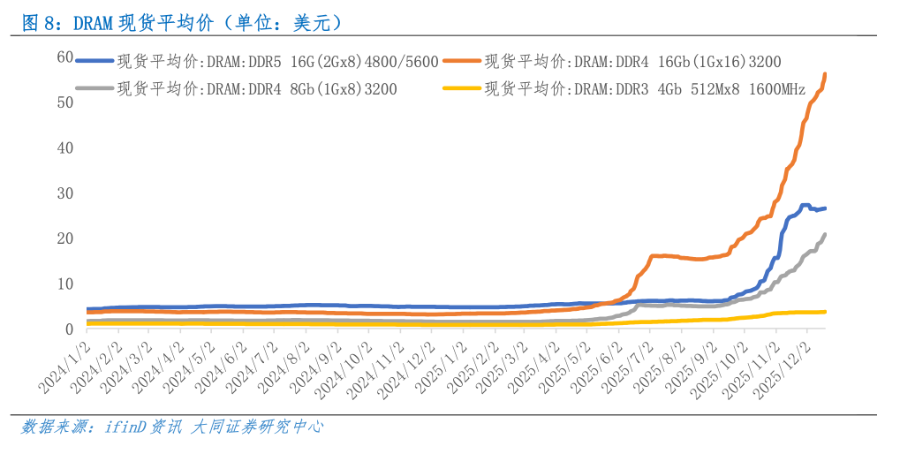
今年以来,存储芯片供需关系持续偏紧,并在第三季度后加剧,推动NAND Flash、DDR4/DDR5等产品价格快速上涨。 "AI驱动下的数据存储需求增长仍在持续影响存储价格,头部云服务商向存储原厂抛出巨额采购订单,加剧原厂将有限的产能向 服务器存储倾斜,非服务器市场面临供应紧缺。"12月23日,德明利(001309.SZ)在特定对象调研时表示。 其中,2025年三季度起,主要厂商发起新一轮涨价:三星计划将部分DRAM价格上调15%-30%;美光科技在9月暂停报价后,恢 复报价的新价格普遍上涨约20%。 紫光计算机科技有限公司产品中心总经理潘睿在接受21世纪经济报道等媒体采访时表示,这一波存储涨价,与产业链周期、AI 需求双重重叠,两者共同导致存储市场价格的异常波动。 不同于存储行业传统的"供需博弈"周期逻辑,AI浪潮之下,业界正形成"AI应用浪潮-产能聚焦高端-技术演进提速-价格结构攀 升"的全新逻辑。 存储原厂转向AI存储,传统存储供需结构性失衡 2024年起,三星、SK海力士、美光三大存储原厂将产能大规模转向高密度和高性能产品。 其标志性事件是,美光在2024年11月宣布,将调整其消费级市场的业务策略。虽 ...
回望2025|内存一天一个价,华强北商家的滚烫“芯事”
Bei Ke Cai Jing· 2025-12-25 07:49
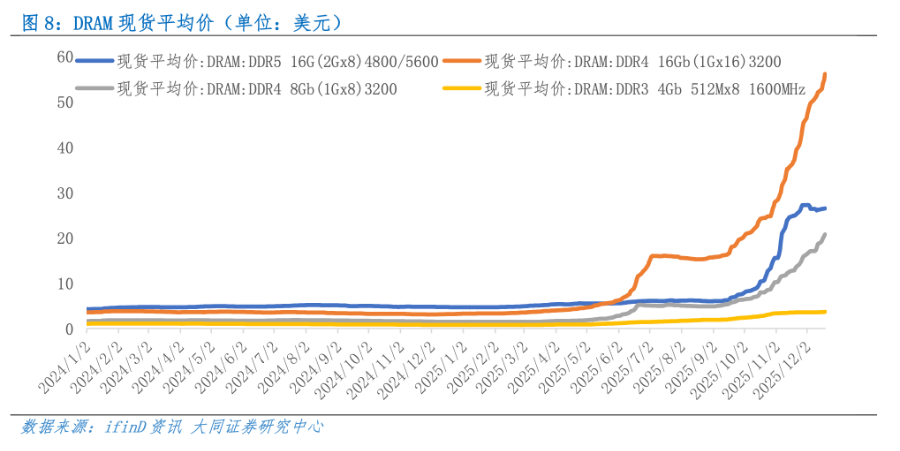
Core Narrative - 2025 is a pivotal year for the global economy and China's industries, marked by deep differentiation and value reshaping, moving beyond merely chasing trends to a more analytical approach towards underlying changes [3] Group 1: Storage Chip Market Dynamics - The storage chip market is experiencing a "super cycle," driven by AI demand and international manufacturers adjusting their production capacities, leading to significant price increases for DRAM and NAND Flash [6][7] - Prices for general DRAM are projected to rise by 18%-23% by Q4 2025, with DDR4 prices skyrocketing from approximately $3 to $70 [8][14] - The market is witnessing a shift as domestic storage chips gain traction due to their mature performance, stable supply, and competitive pricing, indicating a transition from passive replacement to active quality enhancement in Chinese manufacturing [7][30] Group 2: Impact on Trade and Supply Chain - Trade merchants in Shenzhen's Huaqiangbei are adapting to the volatile market by balancing inventory and sales, with many opting for a "buy and sell" strategy to manage rising costs [19][20] - Smaller manufacturers face significant pressure as they struggle to pass on increased costs to consumers and lack the financial capacity to stockpile inventory, often resorting to purchasing old stock or components from dismantled devices [20][21] - The rapid price increases are forcing some manufacturers to alter their procurement strategies, with many now requiring clients to secure storage components before proceeding with projects [21][22] Group 3: Consumer Price Increases - The rising costs of memory and storage chips are being rapidly transmitted to consumer electronics, with companies like Dell and Xiaomi announcing price hikes of 10% to 30% across various product lines [23][24][25] - The price increases are attributed to heightened demand for high-performance computing and data center needs, exacerbated by supply chain constraints [25][27] Group 4: Future Outlook and Market Trends - The current cycle of price increases driven by AI demand is expected to last longer than previous cycles, with predictions suggesting potential shortages extending into 2027 [26][27] - Domestic storage manufacturers are poised to capture market share in niche DRAM segments as international suppliers withdraw, presenting a significant opportunity for growth [32]
思瀚发布《中国电容笔行业技术发展态势及投资战略研究报告》
Sou Hu Cai Jing· 2025-12-25 07:39
Industry Overview - The capacitive pen industry has evolved significantly since the introduction of capacitive touch screens, which replaced resistive screens due to their higher accuracy and reduced mis-touches [2] - The first generation of capacitive pens was passive, lacking internal circuitry, while the second generation, active capacitive pens, became the mainstream product with advanced features such as Bluetooth and pressure sensitivity [2][3] Market Growth - The global capacitive pen market is projected to grow, with sales expected to reach 8.58 million units and a market size of $2.018 billion by 2024, increasing to 13.46 million units and $2.870 billion by 2031, reflecting a compound annual growth rate (CAGR) of 6.65% and 5.16% respectively [9] - The demand for capacitive pens is driven by the increasing use of smart devices such as tablets, learning machines, laptops, and smartphones, which provide a vast market opportunity [10] Key Events and Developments - Significant milestones include the launch of Apple's first active capacitive pen, the Apple Pencil, in 2015, and Microsoft's acquisition of N-Trig for Surface products, which enhanced the technology used in capacitive pens [4][7] - The establishment of the USI Alliance in 2015 aimed to standardize communication between capacitive pens and touch devices, promoting industry growth and technological advancement [4][8] Technological Advancements - The industry is focusing on improving pen tip size and material to enhance writing precision, with advancements in materials like polyaniline and silver nanowires expected to improve durability and sensitivity [19] - Future developments aim to reduce writing latency through hardware improvements and AI-driven predictive algorithms, enhancing user experience [21][24] Integration of AI Technology - The integration of AI technologies is transforming capacitive pens into smart interactive tools, enabling functionalities such as real-time note structuring and content generation based on user commands [24][30] - Capacitive pens are becoming essential in various sectors, including business, education, and creative industries, as they evolve from basic input devices to sophisticated productivity tools [25][30]


扫地机器人:海外市场格局迈入新阶段,期待2026CES引领技术风向
Donghai Securities· 2025-12-25 07:32
Investment Rating - The industry investment rating is "Overweight" [1] Core Insights - The global smart vacuum cleaner market is expected to see significant growth, with a projected shipment of 20.6 million units in 2024, representing a year-on-year increase of 11.2%. The total sales revenue is anticipated to reach $9.31 billion, up 19.7% year-on-year [5] - Chinese brands are solidifying their dominance in the global vacuum cleaner market, with the top five brands all being Chinese. Roborock leads with a market share of 21.7% in the first three quarters of 2025 [4][6] - iRobot, a pioneer in the vacuum cleaner industry, has filed for bankruptcy and will be acquired by Shikawa Robotics, marking a new phase in the industry. This acquisition may lead to a redistribution of market shares, focusing competition among Chinese brands [4][10] Summary by Sections Market Overview - The global smart vacuum cleaner market is projected to ship 17.424 million units in the first three quarters of 2025, reflecting an 18.7% year-on-year growth [4] - The average price of vacuum cleaners is expected to rise by 7.6% to $452 in 2024 due to technological upgrades [5] Competitive Landscape - The top five brands in global shipments are all Chinese, with Roborock and Ecovacs leading the market. Roborock achieved a shipment of 3.788 million units in the first three quarters of 2025 [6] - During major sales events like Black Friday, Roborock captured 40% of the market share in North America and 42% in Europe [6] Technological Innovations - The 2025 CES showcased significant innovations in vacuum cleaner technology, including models with advanced robotic arms capable of picking up objects, expanding their functionality beyond just cleaning [4][16] - Upcoming CES 2026 is expected to feature AI-powered vacuum cleaners with enhanced obstacle recognition and liquid detection capabilities, indicating a trend towards smarter home cleaning solutions [19] Investment Recommendations - The report suggests focusing on domestic vacuum cleaner companies such as Ecovacs and Roborock, which are well-positioned to capitalize on the growing market and technological advancements [4]


出售49%股权,海尔印度仍保持最大单一股东地位
Cai Fu Zai Xian· 2025-12-25 07:23
Core Viewpoint - Haier's sale of 49% stake in its Indian subsidiary has sparked mixed reactions, with some viewing it as a strategic move to recover funds and integrate local resources, while others see it as a forced concession to local and foreign capital [1] Group 1: Investment Environment - India's market demand exceeds $30 billion, making it the third-largest home appliance market globally, following the US and China [2] - The Indian investment environment is characterized by a complex legal system that increases compliance costs and operational risks for foreign companies [2] - The Indian government frequently changes regulations regarding tariffs, foreign ownership, and environmental standards, creating instability for investors [2] Group 2: Challenges for Chinese Companies - Chinese companies face significant challenges in India, as evidenced by the asset freezes of Vivo and Xiaomi, and TikTok's exit, indicating a lack of welcome for foreign control [2] - Despite Haier's 20 years in India with over 100 billion rupees (approximately $12 million) in annual revenue and a vast sales network, it remains an outsider without local support [2][3] Group 3: Strategic Implications of Stake Sale - Selling the stake is seen as a necessary step for Haier to navigate the Indian market, as local partnerships are essential for IPOs, project approvals, and capacity expansion [3] - Haier's decision to sell equity is not a sign of defeat but a strategic move to integrate into the local business ecosystem [4] Group 4: Haier's Competitive Position - Haier retains a 49% stake and remains the largest single shareholder, maintaining control over core operations while incentivizing local management [5] - Haier's market share in the refrigerator segment is 14%, and it is expected to see a 36% revenue increase in 2024, showcasing its competitive strength against major brands [5] Group 5: Lessons for Other Companies - Haier's approach serves as a lesson for other Chinese companies struggling in India, highlighting the importance of local connections and navigating the complex business environment [6] - The Indian market presents significant potential but is fraught with challenges that require more than just product offerings to succeed [6]
