茶百道

Search documents
厉害了!四川这5个县即将代表中国走向世界!快看有你老家吗?
Sou Hu Cai Jing· 2025-12-29 13:14
Group 1 - Salt Edge County's mango and hawthorn dried fruits were showcased at the World Food Forum in Rome, highlighting the region's unique products on an international stage [1] - The local clothing of the Lisu ethnic group was featured at Paris Fashion Week, combining traditional culture with high-tech elements like robotics and AR technology [1] - Salt Edge County has the world's largest EB furnace cluster and ranks first in titanium reserves and third in vanadium reserves, indicating strong resource capabilities [3] Group 2 - Zigong is renowned for its colorful lanterns, holding 85% of the domestic market and 92% of the international market, with over 50 lantern exhibitions held abroad in the first half of the year [3] - The city is developing a hundred billion-level lantern industry and promotes the slogan "A lamp is a city, a city is a lamp" [3] - Qingbaijiang has transformed into an international trade hub due to the Chengdu International Railway Port, facilitating exports of various products including TCL screens and new energy vehicles [5] Group 3 - Jianyang has evolved from an agricultural county to a hub for air transport, attracting foreign investment and establishing a cold chain center for quick import and export of goods [7] - The development of these regions is attributed to policy support, technological investment, talent introduction, and local特色产业 [7] - Each area has its unique development strategy: Salt Edge relies on resources and culture, Zigong on intellectual property, Qingbaijiang on logistics, Qingshen on dual development, and Jianyang on geographical advantages [7]


茉酸奶创始人清仓退出,君乐宝投资加码!门店较巅峰期下降 516家,加盟费用已减半
Sou Hu Cai Jing· 2025-12-29 12:19
Core Insights - The founder of the yogurt brand More Yogurt, Zhao Bohua, has resigned from all positions in the parent company Shanghai Boyi Catering Management Co., Ltd., and has sold his 30% stake, with co-founder Gu Hao taking over as the legal representative [3][4] - The company has faced challenges, including a food safety scandal in May 2024, which has damaged its reputation [8][10] - More Yogurt has significantly reduced its franchise fees and opened up to county-level city franchises to attract new franchisees [8][10] Company Changes - Zhao Bohua has exited the company he founded 11 years ago, with Gu Hao now serving as the legal representative [3][4] - The company has undergone multiple changes in its shareholder structure, with Junlebao Hebei Company becoming the second-largest shareholder with a 42.86% stake [3][4] Sales and Market Position - More Yogurt's original avocado yogurt series sold 21 million cups in 2023, but the company has struggled to produce a second hit product [8][10] - The total number of stores has decreased from a peak of 1,682 to 1,166, a reduction of 516 stores [10][12] Pricing and Franchise Strategy - The price of products has decreased, with the cheapest item now priced at 18 yuan and the most expensive at 30 yuan, down from a previous high of 34 yuan [8][11] - Franchise costs have been slashed from 50-60 thousand yuan to below 25 thousand yuan, with new policies introduced to attract franchisees [8][10] Challenges and Future Outlook - The company faces ongoing issues related to food safety and inconsistent product quality, which are attributed to rapid franchise expansion [12] - Analysts suggest that the investment from Junlebao could provide necessary support, but success will depend on addressing core operational issues [6][12]

2026年度策略暨投资框架更新:餐饮布局正当时,茶饮淘金确定性
Guoxin Securities· 2025-12-28 14:06
Group 1 - The core viewpoint of the report emphasizes that the restaurant industry is experiencing a weak recovery, with leading brands pursuing diversified growth strategies, particularly in the tea beverage sector, which shows promising investment opportunities [3][5][9] - The report highlights that from January to November 2025, the national restaurant revenue increased by 3.3%, lagging behind the 4.1% growth in retail sales, indicating a continued weak recovery in demand [3][13] - The online channel is identified as a structural growth driver, with significant benefits observed in the coffee and tea sectors due to the ongoing competition in instant retail [3][14] Group 2 - The analysis of the market performance indicates that leading tea beverage brands have significantly benefited from the delivery competition, with companies like Luckin Coffee and Mixue Group showing substantial stock price increases of 39.2% and 45.4% respectively [3][33] - The report notes that the performance of restaurant leaders is varied, with some brands like Guoquan and Xiaocaiyuan showing strong same-store sales growth, while others face pressure [3][33] - The investment framework for 2025 suggests that the valuation of leading tea beverage brands is shifting due to changes in performance expectations, with same-store revenue growth serving as a key valuation anchor [3][8][9] Group 3 - The sub-industry analysis reveals that the ready-to-drink tea segment is experiencing a surge in revenue and adjusted net profit, with a year-on-year increase of 32.5% and 58.0% respectively in the first half of 2025 [3][44] - The report indicates that the fast-food sector shows resilience, with brands like KFC and Xiaocaiyuan maintaining stable same-store sales growth despite broader market pressures [3][53] - The report also highlights that the overall restaurant sector is under pressure, particularly in the casual dining segment, which is affected by various factors including the rise of pre-packaged meals [3][53] Group 4 - The investment recommendations maintain an "outperform" rating for the restaurant sector, emphasizing the strong operational capabilities of leading brands and their potential to navigate through market cycles [3][9] - The report suggests that while the tea beverage sector faces growth challenges, leading companies with strong operational and innovative capabilities are expected to gain market share [3][9] - The report identifies specific companies such as Haidilao, Yum China, Guoquan, and Mixue Group as key investment targets for 2026, based on their strong same-store recovery potential and favorable franchisee returns [3][9][66]
茶专家评新茶饮“咖啡因”焦虑:茶叶中的咖啡因是天然植物成分 消除公众恐慌须补上“科普课”
21世纪经济报道· 2025-12-28 09:12
Core Viewpoint - The recent controversy surrounding the tea brand "霸王茶姬" highlights a significant misunderstanding of caffeine in tea, reflecting a broader need for public education about the new tea beverage industry and its health implications [1][3][9]. Group 1: Incident Overview - On December 26, "霸王茶姬" faced a public relations crisis when a media outlet linked caffeine in tea to controlled substances, causing public panic and stock price volatility [1]. - The incident is seen as a stigmatization of the entire new tea beverage industry rather than just one brand [1]. - In response, "霸王茶姬" emphasized product compliance and announced legal actions, while the China Tea Circulation Association provided educational content about tea and caffeine [1]. Group 2: Public Perception and Knowledge Gap - A survey indicated that 52.15% of respondents were unaware that tea contains caffeine, demonstrating a significant knowledge gap among consumers [3]. - The misconception that caffeine is an additive rather than a naturally occurring compound in tea contributes to public confusion [3]. Group 3: Scientific Insights on Tea Components - Experts explain that tea contains both caffeine and the calming amino acid L-theanine, which together create a balanced effect on alertness and relaxation [4]. - Caffeine in tea acts quickly but has a short-lived stimulating effect, while L-theanine provides a more prolonged calming effect [4]. Group 4: Industry Evolution and Consumer Education - The new tea beverage industry is evolving towards transparency and standardization, with brands like "喜茶" categorizing caffeine levels in their products to help consumers make informed choices [9][10]. - The recent controversy serves as a catalyst for the industry to enhance public understanding of tea's health benefits and its natural caffeine content [5][10]. Group 5: Historical Context and Future Directions - The challenges faced by the new tea beverage industry are reminiscent of the historical scrutiny coffee underwent, suggesting that education and cultural promotion are essential for acceptance [8]. - The industry must establish a clear and scientific knowledge framework about tea, akin to what has been achieved for coffee, to enhance its global standing and cultural significance [10].

茶专家评“咖啡因”焦虑:将茶饮与“毒品”绑定是对中国茶文化的污蔑
新华网财经· 2025-12-28 04:35
Core Viewpoint - The incident involving the tea brand BaWang Tea Ji highlights the urgent need for scientific education in China's new tea beverage industry, particularly regarding caffeine content and its effects on health [2][10]. Group 1: Incident Overview - On December 26, BaWang Tea Ji faced a public relations crisis when a self-media outlet linked caffeine in tea to controlled substances, causing public panic and significant stock price fluctuations [1]. - The Chinese Tea Circulation Association responded by educating the public about the relationship between tea and caffeine [1]. Group 2: Public Perception and Knowledge Gap - A survey indicated that 52.15% of respondents were unaware that tea contains caffeine, reflecting a significant knowledge gap among consumers [3]. - The misconception that tea is linked to addiction or harmful effects is a misrepresentation of tea culture and science [5]. Group 3: Scientific Insights on Tea Components - Tea contains both caffeine, which stimulates the central nervous system, and theanine, which has calming effects, creating a balanced experience for consumers [4]. - Caffeine in tea is a natural component, and its concentration in brewed tea is typically between 2% to 4%, insufficient to cause addiction [6]. Group 4: Industry Evolution and Consumer Trends - The new tea beverage industry has transitioned from using powdered ingredients to emphasizing fresh tea leaves and quality, which has led to increased caffeine awareness among consumers [7]. - Leading brands like Heytea and BaWang Tea Ji are adopting transparency in ingredient sourcing and caffeine content, catering to diverse consumer needs [9]. Group 5: Cultural and Historical Context - Tea, as a cultural symbol with a rich history, has faced similar scrutiny as coffee did in its early days, necessitating a collective effort from the industry to educate consumers [8]. - The new tea beverage sector plays a crucial role in modernizing traditional tea practices and making them relevant to younger consumers [9]. Group 6: Future Directions - The "caffeine anxiety" incident underscores the need for the industry to establish a clear and scientific knowledge framework about tea, akin to what has been achieved for coffee [10]. - By eliminating knowledge barriers and promoting standardized practices, the new tea beverage industry can enhance its global standing and cultural significance [10].

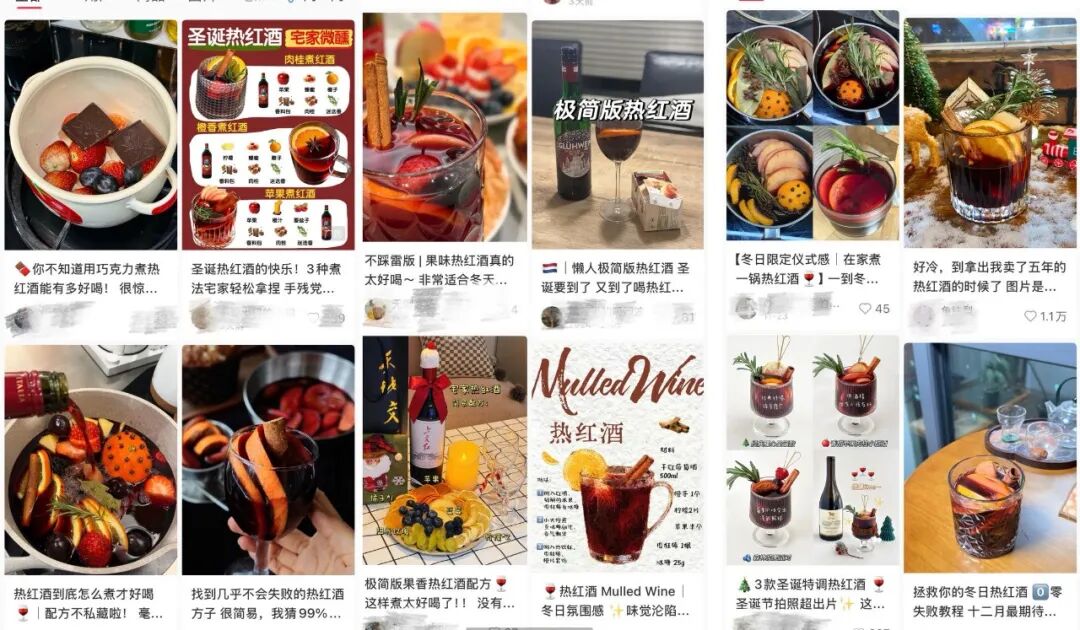
“懒人热红酒”刷屏社交平台,蜜雪冰城意外躺赚?
3 6 Ke· 2025-12-27 03:46
Core Insights - The "lazy version" of mulled wine has gained significant popularity, with related topics reaching over 3 million views on social media platforms [1][3] - This trend reflects a broader movement in the beverage industry towards simplified, DIY drink recipes that resonate with consumers [2][11] Group 1: Product Trends - The "lazy version" of mulled wine involves mixing red wine with orange juice, which is easier and quicker than traditional recipes that require complex spices [8][10] - Social media has played a crucial role in popularizing this drink, with users sharing their own simplified recipes and experiences [3][10] - Other brands have also launched similar products, such as holiday-themed drinks, indicating a trend towards seasonal offerings in the beverage market [3][11] Group 2: Consumer Behavior - Consumers are increasingly favoring low-cost, easy-to-make drinks that still provide a sense of occasion, as seen with the rise of DIY beverage trends [11][24] - The success of these "lazy" drinks is attributed to their accessibility and the low risk of trial, making them highly shareable on social media [24] - Brands that quickly adapt to these trends can capitalize on the resulting consumer interest and engagement [11][24] Group 3: Market Opportunities - The emergence of "lazy" drinks like mulled wine presents opportunities for brands to innovate and create standardized products based on popular DIY recipes [11][24] - The beverage industry is witnessing a shift towards products that are not only easy to make but also visually appealing, which enhances their shareability on social media [18][23] - Brands that can effectively engage with consumer trends and leverage user-generated content are likely to gain a competitive edge in the market [24]

新茶饮上市背后:流水的品牌,铁打的供应链
Ge Long Hui· 2025-12-26 17:52
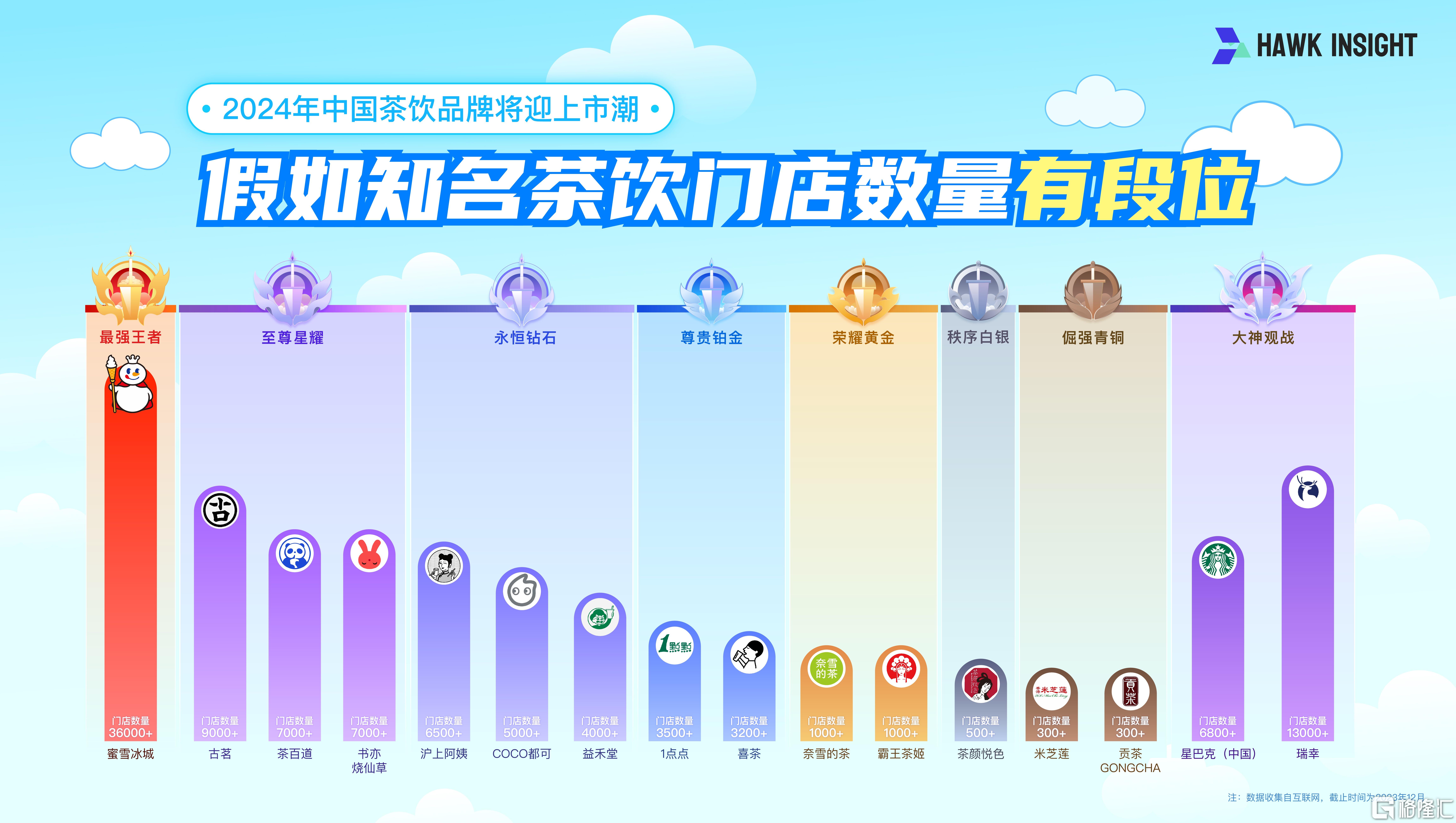
Group 1 - The new tea beverage industry is experiencing a resurgence, with significant interest in new products and flavors, leading to increased activity in the secondary market [2] - Major players like Cha Bai Dao, Mi Xue Bing Cheng, and Gu Ming have submitted IPO applications, indicating a competitive push in the new tea beverage sector [2][3] - The number of stores for the top 20 new tea brands has increased by 32% from 78,324 at the end of 2022 to 103,783 by the end of 2023, reflecting a strong growth trend [2] Group 2 - New tea brands are aggressively pursuing the "10,000 stores" goal as a strategy to capture market share, with Gu Ming reaching 9,001 stores and Mi Xue Bing Cheng leading with 36,000 stores [3][5] - The expansion into lower-tier markets is a key focus, with significant growth in delivery orders from fourth and fifth-tier cities, showing increases of 30% and 36% respectively [5][8] - The price competition in the tea beverage market has intensified, with many brands offering products at promotional prices around 9.9 yuan, reflecting a shift in consumer behavior towards value [7][14] Group 3 - The profitability of tea beverage brands is under pressure, with net profit margins for mature brands ranging from 10% to 15%, significantly lower than expected [8][11] - Companies like Nai Xue's Tea have faced substantial losses, with cumulative losses of 808 million yuan from 2020 to 2022, highlighting the financial challenges in the industry [8][11] - The supply chain has become a critical factor for success, with brands like Mi Xue Bing Cheng generating 98% of their revenue from selling materials and equipment to franchisees, emphasizing the importance of a robust supply chain [15][16] Group 4 - The new tea beverage industry is expected to see a gradual decline in growth rates, with projected market growth rates of 13.4%, 6.4%, and 5.7% from 2023 to 2025 [8] - The industry is characterized by low barriers to entry and high product homogeneity, leading to intense competition and price wars among brands [14][21] - Future trends in the industry are expected to focus on product innovation, supply chain optimization, and channel expansion, with a growing emphasis on the importance of supply chain management [21][22]
现制茶饮巨头齐聚港股冲刺IPO 茶饮第二股将花落谁家?
Ge Long Hui· 2025-12-26 17:52
Core Viewpoint - The competition in the Chinese ready-to-drink tea market is intensifying as multiple brands, including Mixue Ice City, Gu Ming, and Cha Bai Dao, are preparing for IPOs, aiming to become the second listed tea brand after Nayuki Tea [2][27]. Group 1: Market Overview - The Chinese ready-to-drink tea market is projected to reach a scale of 149.8 billion yuan in 2023, with a compound annual growth rate of nearly 20% over the past three years, and is expected to expand to 201.5 billion yuan by 2025 [3]. - As of August 31, 2023, there are approximately 515,000 new tea drink stores in operation, a growth of over 36% from 378,000 stores at the end of 2020 [3]. Group 2: Company Expansion Strategies - Mixue Ice City has over 32,000 stores in China and approximately 4,000 overseas, with a cup output of about 5.8 billion cups in the first nine months of 2023, making it the leading ready-to-drink beverage company in China and the second globally [8]. - Gu Ming has 9,001 stores as of December 31, 2023, a 35% increase from the end of 2022, positioning it as a strong contender to enter the "10,000-store era" [8]. - Cha Bai Dao has 7,111 stores, achieving coverage across all provinces and cities in mainland China, and is also approaching the "10,000-store era" [8]. Group 3: Future Expansion Directions - Gu Ming plans to expand into northern China, where it currently has no presence in 19 provinces, indicating significant growth potential [10]. - Cha Bai Dao aims to increase its penetration in second-tier and lower-tier cities, where it currently has about 60% of its stores, and will focus on enhancing store density in potential business districts [12]. - Mixue Ice City is focusing on international expansion, having opened its first overseas store in Vietnam in 2018 and now operating in 11 countries, with plans to deepen its presence in Southeast Asia [13][15]. Group 4: Supply Chain and Logistics - Mixue Ice City has built a large-scale supply and logistics system, with 26 warehouses totaling over 300,000 square meters, making it the largest in the industry [15][16]. - Gu Ming operates the largest cold chain logistics infrastructure among Chinese ready-to-drink tea brands, with 21 warehouses and a delivery cost of only about 0.9% of GMV [18][19]. - Cha Bai Dao relies on a combination of self-operated and third-party logistics, with 22 high-standard warehouses covering a total area of approximately 80,000 square meters [21][22]. Group 5: Marketing Strategies - Mixue Ice City has successfully created a strong brand IP, "Xue Wang," which has garnered over 87 billion exposures on social media platforms, and has developed various related products and events [23][24]. - Other brands, such as Cha Bai Dao and Gu Ming, have engaged in numerous co-branding marketing events, with over 230 collaborations reported in the first three quarters of 2023 [26]. Group 6: Conclusion - The entry of brands like Cha Bai Dao into the IPO stage suggests a potential reshuffling in the ready-to-drink tea market, with various aspects such as R&D, supply chain, digitalization, cold chain logistics, and marketing presenting opportunities for growth [27].
“读秒捡钱”,这个春节县城奶茶赚疯了
Ge Long Hui· 2025-12-26 14:10
Core Insights - The rapid development of tea beverage brands in county-level markets reflects a significant shift in consumer preferences and market dynamics, with major brands like Starbucks and Heytea expanding into these areas [4][19] - The tea beverage industry experienced a surge in demand during the recent Spring Festival, with a notable increase in delivery orders from county markets, indicating a robust growth potential in these previously underserved regions [6][5] Market Trends - The number of new chain tea beverage stores in county areas exceeded 9,000 in 2022, with an overall opening rate of approximately 36%, showcasing the rapid expansion of this market segment [10] - Major tea brands have reported a 65% year-on-year increase in delivery orders during the Spring Festival period, highlighting the growing consumer base and demand in county markets [6] Consumer Behavior - Consumers in county areas are increasingly seeking diverse beverage options, with a shift from traditional offerings to modern tea drinks, reflecting changing tastes and preferences among younger demographics [5][19] - The average price of a tea beverage ranges from 10 to 20 yuan, making it accessible to a broad consumer base while still generating significant daily revenue for stores [11] Business Strategies - Brands are focusing on improving order fulfillment speed and operational efficiency to capitalize on peak demand periods, with some stores achieving beverage preparation times of around one minute [8][9] - The expansion strategy includes targeting lower-rent locations outside of prime commercial areas, allowing for cost savings while still reaching a wide customer base through delivery services [16][18] Competitive Landscape - The tea beverage market is becoming increasingly competitive, with many brands facing challenges related to product homogeneity and market saturation, prompting a focus on differentiation and innovation [11][12] - The rise of online marketing and delivery platforms has become crucial for brand visibility and sales, particularly in county markets where traditional foot traffic may be lower [18][23]
新茶饮集体去美国开店
Di Yi Cai Jing Zi Xun· 2025-12-25 14:56
Group 1: Industry Overview - The new tea beverage industry in China is expected to reach a market size of over 200 billion yuan by 2025, driven by increasing consumer demand and the entry of multiple brands into the capital market [3][4] - The industry is transitioning from incremental competition to stock competition, with a common phenomenon of "ten tea shops on one street" leading brands to seek differentiation [3][4] - New trends include the solidification and dessertification of beverages, with products like "solid mango sago" gaining popularity among consumers [4][5] Group 2: Market Dynamics - The launch of solid products like "solid mango sago" has led to significant sales, with one brand reporting over 8 million cups sold since its introduction [5] - The trend towards solid and dessert-like beverages aligns with younger consumers' preferences for health-conscious options, incorporating nutritious ingredients [5][6] - The competition in the Southeast Asian market has intensified, prompting brands to shift their focus to North America, where there is perceived growth potential [7][8] Group 3: International Expansion - Brands like Mixue Ice City have opened stores in North America, with strategic locations in Los Angeles and New York, marking a shift from previous focus on Southeast Asia [7][8] - The complexity of establishing overseas supply chains poses significant challenges for brands looking to expand internationally [8] - Successful internationalization requires understanding and catering to local consumer preferences, moving beyond just serving Chinese customers [8][9]