蔚来

Search documents
道指、标普创新高,甲骨文暴跌拖累纳指,金银齐涨
第一财经· 2025-12-11 23:36
2025.12. 12 本文字数:1650,阅读时长大约3分钟 作者 | 第一财经 胡弋杰 当地时间周四(12月11日),美股走势分化,道琼斯工业平均指数与标普500指数在周期股带动下 续创新高,而科技板块则因甲骨文暴跌承压回调。在美联储分歧加大的降息落地后,投资者的交易方 向从高估值科技股明显转向更能受益于经济扩张的板块。 截至收盘,道指收涨646.26点,涨幅1.34%,报48704.01点,全日及盘中均刷新纪录。尽管英伟 达走弱,但维萨在银行上调评级后强劲上行,推动道指续写历史新高。标普500指数涨0.21%,收 于6901.00点,连续第二天刷新收盘纪录。纳斯达克综合指数跌0.26%,至23593.86点,科技板块 跌幅居前。 降息驱动下,小盘股表现尤为亮眼,罗素2000指数收涨1.21%,报2590.61点,盘中亦创历史新 高。小型上市公司融资需求更依赖银行体系,对利率敏感度更高,降息往往能直接改善盈利预期。 甲骨文暴跌10.83%,科技股情绪受明显冲击。公司财报披露云业务收入不及预期,同时宣布未来将 额外投入150亿美元扩建数据中心,引发市场对"AI资本开支过热"的再度担忧。 大型科技股普遍回落, ...


道指涨近650点!甲骨文暴泻近11%拖累纳指,金银齐涨创高位
Sou Hu Cai Jing· 2025-12-11 23:28
Market Overview - The Dow Jones Industrial Average and S&P 500 reached new highs, driven by cyclical stocks, while the tech sector faced pressure due to Oracle's significant drop of 10.83% [1] - The Dow closed up 646.26 points, or 1.34%, at 48,704.01, marking a record high [1] - The S&P 500 rose 0.21% to 6,901.00, also setting a new closing record, while the Nasdaq Composite fell 0.26% to 23,593.86, with the tech sector underperforming [1] - The Russell 2000 index, which tracks small-cap stocks, increased by 1.21% to 2,590.61, reaching a historical high, benefiting from lower interest rates [1] Company Performance - Oracle's stock plummeted by 10.83% after its earnings report revealed cloud business revenue fell short of expectations, raising concerns about "AI capital expenditure overheating" [2] - Major tech stocks generally declined, with Nvidia down 1.55%, Tesla down 1.0%, Broadcom down 1.60%, Google-A down 2.43%, and Apple down 0.27% [2] - In contrast, Microsoft rose by 1.08% and Meta increased by 0.40% [2] - Among Chinese stocks, Pinduoduo fell 2.87%, Alibaba dropped 1.21%, while Baidu rose 1.78% and NIO increased by 1.99% [2] Economic Indicators - The Federal Reserve lowered the policy interest rate to a range of 3.5% to 3.75%, indicating a more moderate easing phase ahead [3] - Initial jobless claims in the U.S. rose to 236,000, significantly above the expected 220,000, marking the largest weekly increase since 2020 [5] - The U.S. trade deficit narrowed to $52.8 billion, the lowest in five years, with exports increasing by 3% and imports rising by only 0.6% [5] Market Sentiment - Analysts suggest that the recent rate cut signals a more cautious approach from the Federal Reserve, with expectations for a slower pace of rate cuts in the coming year [5] - Concerns remain regarding the impact of AI capital expenditures and potential policy uncertainties with a new Federal Reserve chair [6] - The market anticipates a "Santa Claus rally," but risks are expected to increase next year, with predictions of the S&P 500 potentially retreating to 6,500 by the end of 2026 [6]

科技巨头深夜暴跌,发生了什么?
Zheng Quan Shi Bao· 2025-12-11 23:01
Market Overview - US technology stocks experienced a broad decline, with the Dow Jones Industrial Average up by 0.38%, while the S&P 500 and Nasdaq Composite fell by 0.72% and 1.38% respectively [1][2]. Federal Reserve Actions - The Federal Reserve announced a 25 basis point cut in the benchmark interest rate, reducing it to a range of 3.5% to 3.75%. This marks the third consecutive rate cut, totaling a 75 basis point reduction [2][3]. - Market expectations indicate a 22.1% probability of a further 25 basis point cut by January 2026, with a 77.9% chance of maintaining the current rate [2]. Oracle Corporation Performance - Oracle's Q2 fiscal results showed adjusted revenue of $16.1 billion, slightly below the expected $16.21 billion, and an increase from $14.059 billion year-over-year. Cloud business revenue grew by 34% to $7.98 billion, while cloud infrastructure revenue rose by 68% to $4.08 billion, both slightly below analyst expectations [5]. - The company's free cash flow was reported at -$10 billion, raising concerns among analysts regarding cash flow management. Oracle anticipates capital expenditures to reach approximately $50 billion for the year, significantly up from the previous estimate of $35 billion [5]. Analyst Reactions to Oracle's Results - Following Oracle's disappointing earnings report, several financial institutions lowered their target prices for the stock. For instance, JPMorgan reduced its target from $270 to $230, while Baird cut its target from $315 to $300 [6]. Impact on Related Stocks - The decline in Oracle's stock price negatively affected related technology stocks, with Nvidia and Broadcom dropping over 3%, and Micron Technology and AMD falling nearly 4% [7]. - Chinese concept stocks also saw a downturn, with Alibaba, Pinduoduo, and Bilibili each declining over 3%, while other companies like XPeng and NIO fell over 2% [7].
2026年国补政策再升级!5000亿红包来袭,这些领域将迎来爆发
Sou Hu Cai Jing· 2025-12-11 15:45
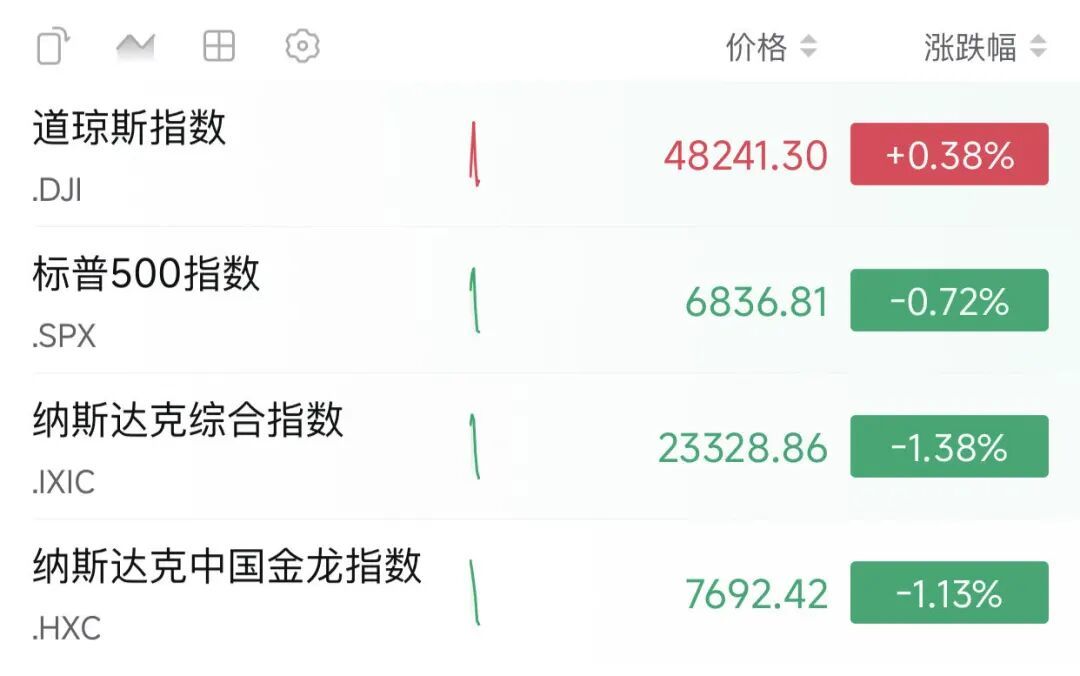
Core Insights - The 2026 "National Subsidy" policy will continue the "old-for-new" consumption initiative with an increased budget of 500 billion yuan, aimed at stimulating consumption and stabilizing economic growth [1][3][16] Group 1: Policy Overview - The "National Subsidy" policy has shown significant results since its launch in 2024, generating over 2.5 trillion yuan in sales and benefiting 360 million people [3] - The policy will focus on three main upgrades: increasing the subsidy amount, expanding coverage to new sectors, and optimizing the distribution process [4][10] Group 2: Sectoral Impacts - Traditional consumption sectors like home appliances and automobiles are expected to see a second wave of growth, with home appliance subsidies potentially increasing from 12.84 million units to 15 million units [6][8] - The service consumption sector, particularly in tourism and health, is anticipated to become a new focal point, with over 100 billion yuan in tourism vouchers expected to be issued [6][10] - Digital and green consumption will be enhanced, with subsidies for smartphones and energy-efficient appliances, benefiting companies like Apple and Huawei [8][10] Group 3: Economic Implications - The policy aims to boost domestic demand and counter economic pressures, with expectations for retail sales growth to rebound to 5%-6% in 2026 [10] - It promotes industrial upgrades by leading consumption upgrades, encouraging innovation in sectors like electric vehicles and smart home appliances [10][14] Group 4: Investment Opportunities - Key investment targets include essential consumer goods like dairy products and condiments, as well as discretionary items like home appliances and new energy vehicles [15] - The policy is seen as a long-term opportunity for investors, with potential for valuation recovery and growth in the consumer sector [16]





深夜!科技巨头暴跌 发生了什么?
Zheng Quan Shi Bao· 2025-12-11 15:28
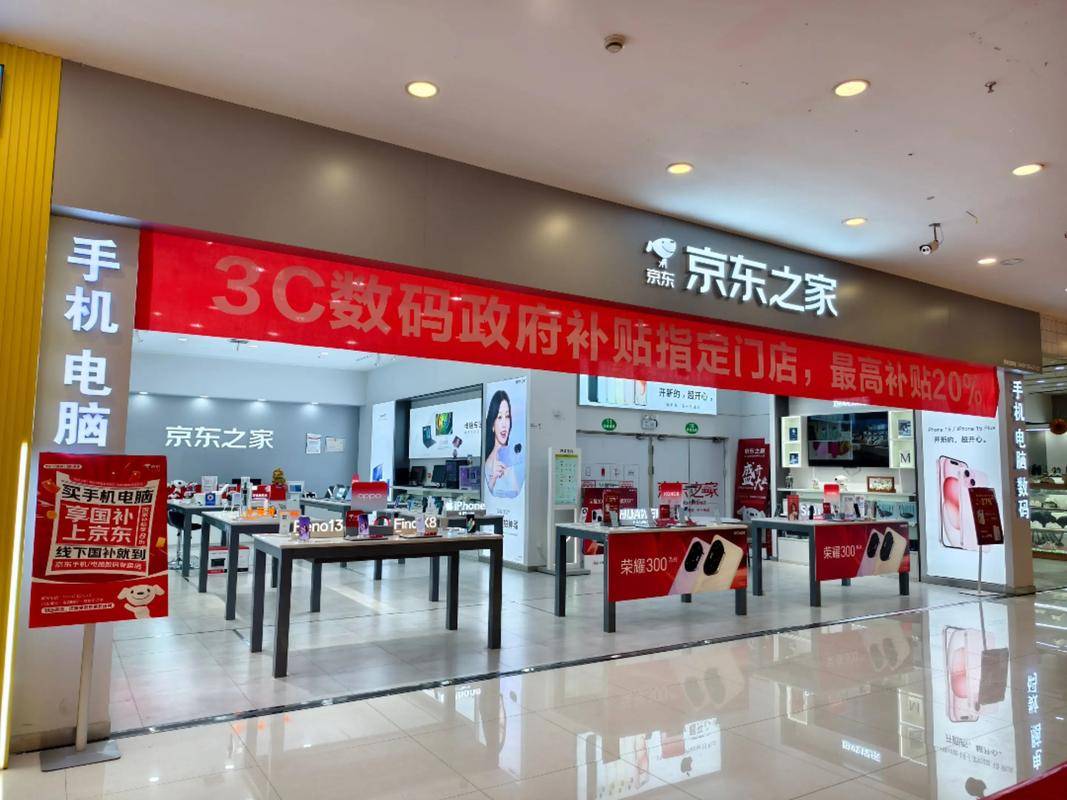
美科技股普跌。 当地时间12月11日,美股三大股指开盘涨跌不一,截至发稿,道指上涨0.38%,标普500指数下跌0.72%,纳指下跌1.38%。 | 0 △ ■ 03 | 价格 = | 涨跌幅 = | | --- | --- | --- | | 道琼斯指数 | 48241.30 | +0.38% | | .DJI | | | | 标普500指数 | 6836.81 | -0.72% | | .SPX | | | | 纳斯达克综合指数 | 23328.86 | -1.38% | | .IXIC | | | | 纳斯达克中国金龙指数 | 7692.42 | -1.13% | | HXC | | | 当地时间12月10日(周三),美联储宣布下调基准利率25个基点,从当前的3.75%—4%区间降至3.5%—3.75%区间。这是美联储连续第3次宣布降息,累 计降息幅度75个基点。 周三盘后,甲骨文公司公布了第二财季财报。财报显示,该公司营收、云业务收入均不及市场预期。 具体来看,甲骨文第二财季调整后营收161亿美元,预估162.1亿美元,去年同期140.59亿美元。云业务销售额增长34%,达到79.8亿美元;云基础设施 ...
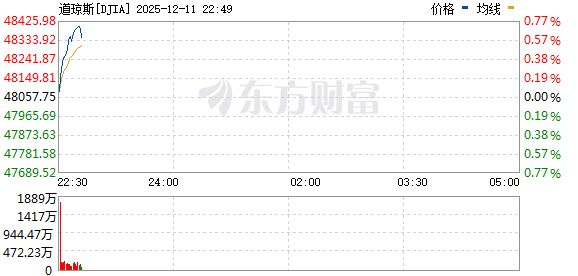
美股三大指数涨跌不一 甲骨文跌超16%
Xin Lang Cai Jing· 2025-12-11 15:21
| | | 标普500[SPX] 2025-12-11 22:50 | | 价格 = 均线 | | | | --- | --- | --- | --- | --- | --- | --- | | 6925.34 | | | | | | 0.56% | | 6915.68 | | | | | | 0.42 % | | 6906.01 | | | | | | 0.28% | | 6896.35 | | | | | | 0.14 % | | 6886.68 | | | | | | 0.00 % | | 6877.01 | | | | | | 0.14% | | 6867.35 | | | | | | 0.28 % | | 6857.68 W | | | | | | 0.42 % | | 6848.02 | | | | | | 0.56% | | | 22:30 | 24:00 | 02:00 | 03:30 | 05:00 | | | 9215万 | | | | | | | | 6911万 | | | | | | | | 4607万 | | | | | | | | 2304万 | | | | | | | | C | ...
甲骨文,市值蒸发超千亿美元
Di Yi Cai Jing Zi Xun· 2025-12-11 15:06
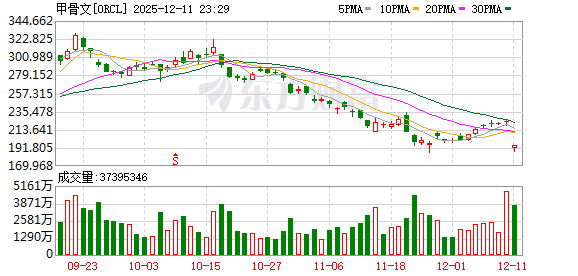
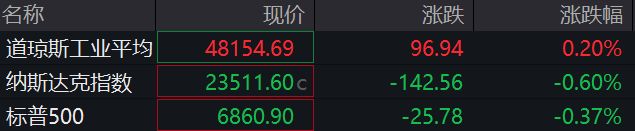
Group 1 - Oracle's stock opened down over 14%, quickly expanding to a 16% drop, marking the largest single-day decline since March 2001, with a market value loss of $102 billion [1] - The company's Q2 revenue and cloud business income fell short of market expectations [1] Group 2 - The Nasdaq opened down 0.60%, while the Dow Jones increased by 0.20%, and the S&P 500 fell by 0.37% [2] - Chinese concept stocks mostly declined, with the Nasdaq Golden Dragon China Index down 0.36%, and companies like Alibaba, iQIYI, and XPeng dropping over 2% [4] Group 3 - Disney opened slightly higher, with initial gains quickly expanding to 2%, following reports of a $1 billion equity investment in OpenAI [4]
甲骨文,市值蒸发超千亿美元
第一财经· 2025-12-11 14:56
Market Overview - The Dow Jones Industrial Average increased by 96.94 points, or 0.20%, closing at 48,154.69 [1] - The Nasdaq Composite Index decreased by 142.56 points, or 0.60%, closing at 23,511.60 [1] - The S&P 500 index fell by 25.78 points, or 0.37%, ending at 6,860.90 [1] Oracle Corporation - Oracle's stock opened with a decline exceeding 14%, which later expanded to a 16% drop, marking the largest single-day decline since March 2001 [2] - The company's market capitalization decreased by $102 billion, with the stock currently down over 14% [2] - Oracle's second fiscal quarter revenue and cloud business revenue fell short of market expectations [2] Other Technology Stocks - Nvidia and Broadcom both experienced declines of over 2%, while Intel dropped nearly 2% and Micron Technology fell close to 1% [4] - The Nasdaq Golden Dragon China Index, which tracks Chinese stocks listed in the U.S., decreased by 0.36%, with Alibaba, iQIYI, and Xpeng all dropping over 2%, and NIO, NetEase, and Bilibili falling over 1% [5] Disney - Disney opened slightly higher and quickly expanded its gains to 2% following reports of a $1 billion equity investment in OpenAI [6]

2026中国经济展望:走出价格低谷(国金宏观孙永乐)
雪涛宏观笔记· 2025-12-11 14:29
Core Viewpoint - The article discusses the transformation of the Chinese economy during the 14th Five-Year Plan, highlighting the shift from real estate as the main economic driver to the emergence of the "three new economies" (new industries, new business formats, and new business models) as the new engine of growth [4][7]. Group 1: Economic Transformation - The real estate sector has gradually exited the central stage of the economy, with GDP growth rates in regions heavily tied to real estate, such as Guangdong, lagging behind others like Jiangsu and Zhejiang [4]. - By 2025, the contribution of real estate development investment to GDP is expected to drop significantly from 10.2% in 2020 to around 5.1% [4][30]. - The "three new economies" are projected to increase their share of China's GDP from 16% in 2020 to 18% by 2024, indicating a growing importance of high-tech manufacturing and information technology investments [7]. Group 2: Credit Market and De-leveraging - The credit market is showing a clear trend of de-leveraging from real estate, with new real estate loans decreasing by 330 billion yuan from 2023 to the first three quarters of 2025 [5]. - The shift reflects a broader economic transition where low-leverage sectors are becoming the main drivers of growth, as households work to reduce debt [5]. Group 3: Export Dynamics - Despite trade tensions, China's export share remained stable at 14.2% in the first half of 2025, with significant growth in exports to Africa and the Middle East [13][21][24]. - The automotive sector, particularly in new energy vehicles, has become a key player in boosting China's export performance, with exports projected to reach 586 million units by 2024, surpassing Germany and Japan [13]. Group 4: Real Estate Market Trends - The real estate market is experiencing a second downturn, with housing prices expected to revert to levels seen in 2016, and total sales area projected to decline by nearly 50% from 2020 highs [30][31]. - The overall demand for real estate is stabilizing, with indicators like the price-to-income ratio and rental yields approaching mid-term stability [30]. Group 5: Consumer Behavior and Spending - The impact of real estate on consumer spending is diminishing, as evidenced by rising retail sales growth in first-tier cities despite falling housing prices [36]. - Service consumption is expected to grow, supported by policy measures, while traditional goods consumption faces challenges due to the decline in "old-for-new" subsidies [43][44]. Group 6: Price Trends and Inflation - The article anticipates a gradual recovery in prices driven by economic recovery, with CPI expected to rise to around 0.2% in 2026, influenced by various factors including the stabilization of housing prices [45][55]. - The PPI is projected to show a "front low, back high" trend, with overall PPI expected to be around -1.3% for the year [55].

月渗透率连超五成、桩车增量比1:1.9,新能源车上位卷“车链”
Bei Jing Shang Bao· 2025-12-11 13:48
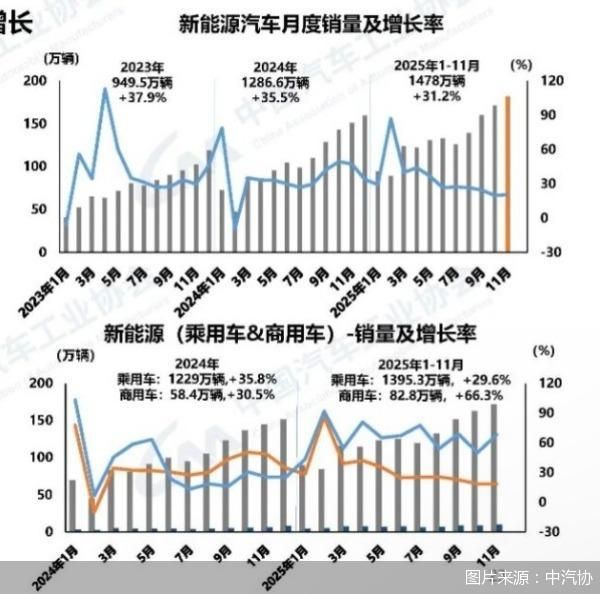
Core Insights - The Chinese automotive market has reported over 30 million vehicle sales this year, with new energy vehicles (NEVs) driving significant growth and influencing upstream and downstream sectors [1] - NEV sales reached 14.78 million units in the first 11 months, achieving a year-on-year growth of 31.2% and a market penetration rate exceeding 50% for two consecutive months [3][4] - Major automotive groups are increasingly dominating the NEV market, with the top 15 groups accounting for 95.2% of total NEV sales [5] Sales Performance - Total automotive sales in China for the first 11 months reached 31.12 million units, a year-on-year increase of 11.4% [1] - NEV sales for the same period were 14.78 million units, with a penetration rate of 47.5% [3] - In November alone, NEV sales surged to 188,000 units, achieving a market share of 53.2% [3] Market Dynamics - The growth in NEV sales is attributed to various vehicle types, with pure electric vehicles and plug-in hybrids showing significant year-on-year increases of 28.9% and 7.9%, respectively [4] - A and B segment vehicles are the primary focus, while A00 and A0 segments have seen remarkable growth rates of 56.9% and 65.1% [4] Competitive Landscape - BYD leads the NEV market with a sales volume of 4.18 million units, capturing 28.3% of the market share [5] - New entrants like Xiaomi and Hongmeng Zhixing have also reported impressive sales figures, with Hongmeng Zhixing delivering over 80,000 units in November, a 89.61% increase [6] Year-End Strategies - As the year-end approaches, automotive companies are intensifying their sales efforts, driven by expiring tax incentives and promotional activities [7][9] - Companies are adopting strategies such as offering existing stock vehicles to meet consumer demand and accelerate sales [8] Supply Chain Impact - The demand for NEVs is boosting the upstream battery market, with battery installation volumes reaching 578 GWh, a 42.4% increase year-on-year [10] - The construction of charging infrastructure is also accelerating, with a 77.2% increase in new charging facilities [10] Future Outlook - The Chinese government aims to enhance charging infrastructure significantly by 2027, targeting 28 million charging facilities to support over 80 million electric vehicles [10][11]