华为

Search documents
存储-超级周期-跟踪调研-26年供需景气度将如何继续演绎
2026-01-20 01:50
Summary of Conference Call on Storage Industry Trends Industry Overview - The conference call focused on the storage industry, particularly the demand and supply dynamics for DRAM and NAND products through 2026 [1][2]. Key Insights Server Storage Demand - Server storage demand is expected to continue strong growth, with servers accounting for 30% of overall storage demand. This growth is driven by AI server markets and overbooking by major cloud service providers like Google, AWS, Meta, and Microsoft, indicating high future demand expectations [2][3]. Mobile Market Dynamics - The mobile market is projected to see sustained growth in the first and second quarters of 2026, driven by new product launches such as iPhone 17, Xiaomi 17, and Huawei Max 6. Increased single-device storage capacity is expected to offset declines in shipment volumes [1][5][16]. PC and Notebook Market - The PC and notebook markets are relatively weak, with DDR4 prices affected by factory shutdowns. This segment accounts for less than 30% of the overall storage market, limiting its impact on total demand [1][6]. Inventory Levels - Current inventory levels are not expected to rise excessively before the third quarter, with DRAM inventory at approximately 1.5-2 months and NAND inventory at 2-2.5 months, compared to a normal balance of 2.5-3 months [10][37]. Price Trends - In Q1 2026, DRAM prices increased by 52% and NAND prices by 47%, reflecting tight supply-demand conditions. Price increases are expected to continue into Q2, with projections of over 30% growth [3][22][34]. AI Applications - AI-related applications are experiencing robust growth, with no current concerns about entering a bubble phase. The demand for storage related to AI is expected to remain strong at least until 2027 [11][12]. Automotive Electronics - The automotive electronics sector, including smart cockpit and autonomous driving applications, is growing rapidly at a rate of about 20%, although it only represents 7-8% of the overall storage market [4]. Future Capacity and Supply - By the end of 2026, an additional 300,000 DRAM and 350,000 NAND units are expected to be added, but actual supply may only reach 1.9-2 million DRAM and 2.2 million NAND due to the release timeline of new capacities [3][27][28]. Additional Insights Consumer Electronics - Despite a slight decline in mobile shipments, the average storage capacity per device is increasing, contributing to overall demand growth [16][17]. Cost Management in Mobile Manufacturing - Mobile manufacturers are expected to manage rising costs by increasing product prices or optimizing material costs, ensuring they do not incur losses [19][20]. Market Share Dynamics - The server and mobile markets are expected to each account for about one-third of total demand, with servers increasing their share from 33% to 35% by 2026 [26]. Technological Upgrades - The storage chip industry is undergoing significant technological upgrades, transitioning to smaller process nodes and increasing layer counts, which will enhance capacity but may have limited overall growth due to previous upgrades [31][32]. Competitive Landscape - Companies like Longsys and Yangtze Memory Technologies are gaining market share in the mid-range product segment, but their impact on the high-end market remains limited due to technological gaps [33]. This summary encapsulates the key points discussed in the conference call, highlighting the trends and expectations for the storage industry through 2026.
2025智驾平权加速-2026智驾-机器人-全球化共振
2026-01-20 01:50
Summary of Key Points from the Conference Call Industry Overview - The automotive industry outlook for 2026 anticipates a continued support for basic demand through vehicle trade-in policies, with wholesale sales expected to grow by 1.0% to 30.3 million units [1][3] - The demand for smart electric components is expected to outperform traditional components, particularly in the field of intelligent robotics, which shows significant growth potential [1] Core Insights and Arguments - Investment strategies are focused on the transformation towards smart electric vehicles and the reshaping of competitive landscapes, with optimism towards domestic brands like Geely and BYD, as well as new players like Huawei and Xiaomi [1] - Chinese automotive parts manufacturers are expected to expand globally, leveraging overseas production capacity and cost advantages, despite facing increased competition from automakers [1][5] - The smart and aftermarket sectors are experiencing significant revenue growth, driven by increased penetration rates and rising demand in Europe and the US [1][8] - Continued subsidy policies are projected to support basic demand and drive positive growth in new energy vehicle wholesale sales [9] Financial Performance - In 2025, domestic wholesale sales are projected to increase by 13.3%, leading to an 8.3% revenue growth in the automotive parts sector, although net profits may see a slight decline due to increased pressure from domestic brands [2] Challenges and Opportunities - The globalization of the automotive parts industry presents challenges such as increased competition from automakers, but also opportunities for new customer acquisition [7][11] - Rising aluminum prices pose cost pressures, while declines in steel and lithium carbonate prices alleviate some cost transmission pressures for automakers [7] Trends in Sub-sectors - The intelligent and aftermarket sectors are seeing significant revenue increases, with the intelligent sector benefiting from rising penetration rates and the aftermarket driven by demand growth in Europe and the US [8] - The tire industry is negatively impacted by tariffs, but other sub-sectors are achieving positive profit growth [8] Policy Impacts - Ongoing subsidy policies are expected to support basic demand and drive approximately 13% growth in new energy vehicle wholesale sales [9] - The US has imposed a 25% tariff on tire exports from China, negatively affecting profits in that sector, while other sectors remain less impacted [9] Future Growth Potential - The single vehicle value metric is crucial for assessing the automotive parts sector, with revenue driven by sales volume and pricing, and industry valuations typically ranging from 15 to 20 times earnings, potentially exceeding 30 times in high-growth scenarios [10] Key Players and Recommendations - Recommended domestic brands include Geely and BYD, along with new players like Huawei and Xiaomi [5] - Notable companies in the intelligent driving sector include Berteli, Horizon Robotics, and Desay SV [6] Robotics Sector Developments - The robotics sector is expected to enter a mass production phase in 2026, with Tesla's Optimus V3 anticipated to significantly impact the market [16] - The integration of VLA technology in autonomous driving is seen as a core improvement, enhancing system intelligence through the incorporation of large language models [17] Conclusion - The automotive parts industry is poised for growth driven by technological advancements, supportive policies, and strategic global expansions, while also facing challenges from competition and cost pressures.

博雷顿20260119
2026-01-20 01:50
Summary of Borayton's Conference Call Company Overview - **Company**: Borayton - **Industry**: Mining Equipment and Renewable Energy Solutions Key Financials and Performance - In 2025, Borayton's overall business scale was approximately **760 million RMB**, with mining truck revenue accounting for over **80%**, showing a year-on-year growth of nearly **80%** [2][4] - The overall performance growth for 2025 was about **20%** [4] - For 2026, Borayton plans to achieve a **120%** increase in wide-body truck revenue, targeting **1,200 units** sold [6] - Expected vehicle revenue for 2026 is over **1.5 billion RMB**, with grid revenue around **300 million RMB** [7] - Total revenue for 2027 is projected to exceed **3 billion RMB**, with power station revenue reaching **750 million RMB** and vehicle revenue over **2 billion RMB** [7] Business Segments and Growth Strategies - Borayton focuses on three main business segments: **photovoltaic power generation**, **electric mining trucks**, and **autonomous driving technology**, creating a closed-loop system [3] - The company has initiated **four photovoltaic power projects** in Africa, providing stable, low-cost electricity to local mining operations [8] - Borayton has signed multiple large-scale delivery agreements to promote autonomous driving technology in coal and metal mines [6] Competitive Advantages - The **cost-effectiveness** of renewable energy mining trucks is highlighted, with significant savings compared to diesel trucks. For instance, the cost per kilometer for electric trucks is **6 RMB**, compared to **21 RMB** for diesel trucks [15] - Borayton's photovoltaic projects, such as the **76 MW Li Zhuba project**, can generate **1.2 billion kWh** of electricity annually, yielding **180 million RMB** in revenue [5][10] - The company has a strategic partnership with **Xinjiang Mingyang** to transition part of their autonomous vehicle operations to Borayton's systems, aiming for reduced operational costs [2] Future Outlook and Market Expansion - Borayton is optimistic about overseas market opportunities, particularly in Africa, where they aim to become a leading provider of integrated solutions for mining operations [13] - The company plans to establish a presence in **Australia** and **South America**, with projects aimed at addressing local energy needs through integrated solutions [19][14] - By 2026, Borayton expects to deliver **300 to 500** electric autonomous vehicles, increasing to **1,000** by 2027 and **3,000 to 5,000** by 2028 [12] Challenges and Considerations - The company faces challenges in project execution in Africa, including high transportation costs and lengthy licensing processes [25] - Maintenance costs for photovoltaic systems are relatively low, but depreciation remains a significant financial consideration [26] Conclusion - Borayton is positioned to capitalize on the growing demand for electric mining solutions and renewable energy, with a clear strategy for market expansion and technological advancement. The company aims to integrate its operations to become a leader in the mining equipment and renewable energy sectors, leveraging its competitive advantages in cost and technology [30]
机器人板块掘金
2026-01-20 01:50
Summary of the Robot Industry Conference Call Industry Overview - The robot sector has shown a fluctuating upward trend since October last year, driven by strong domestic demand and deep collaborations between robot suppliers and major North American clients. The sector is expected to continue its upward trajectory in the first quarter of the year [2][3]. Key Companies and Technologies - Notable companies in the North American chain include established firms like Sanhua Top, Hengli, and Yongtai, which are recognized for their stability and leadership [4]. - Emerging suppliers such as Senlin and Henghui are also worth monitoring due to their potential market impact [4]. - New technology directions include skin-like products and the use of TPE and TPU materials, which are expected to enhance robot applications significantly [4]. Market Trends and Predictions - The robot sector is anticipated to outperform the previous quarter, with a strong likelihood of continued growth in January [3]. - The domestic robot market is expected to see significant changes by 2026, with many companies pursuing backdoor listings or IPOs, which will drive product updates and sales growth. Companies like Xiaopeng, Xiaomi, and Huawei are highlighted for their substantial development potential [6]. Application Scenarios - By 2026, robot applications are projected to expand into logistics (e.g., Dema, Yongchuang), electricity (e.g., Yijiahe), and firefighting (e.g., Qingniao) sectors, which are expected to become key growth areas [7]. - The upcoming wave of domestic robot listings is likely to stimulate the development of various application scenarios, with a focus on companies capable of fulfilling basic application needs and securing large orders [7]. Material Innovations - TPU (Thermoplastic Polyurethane) is becoming a trend in humanoid robot manufacturing due to its durability, oil resistance, and high elasticity, replacing metal components in many applications [8]. - TPU's advantages include: 1. Shell protection that absorbs impact energy during collisions, reducing damage to internal components [9]. 2. Bionic muscle covering that protects joints and mitigates impact forces [9]. 3. Foot cushioning pads that enhance friction and reduce noise during movement [9]. 4. Joint seals and protective covers that extend the lifespan of joints by preventing lubricant leakage [9]. Market Expectations for TPO Materials - The market has high expectations for TPO materials in robotics, with companies like Kaizhong, Yongtai Technology, and Mingji Vision holding competitive advantages in this area [10]. Skin Products vs. Traditional Metal Shells - Skin products, made using low-temperature injection molding, offer enhanced protective features compared to traditional metal shells and are seen as a future platform for integrating electronic skin technology [11]. - Companies such as Henghui Security, Nanshan Zhishang, and Kanglongda are positioned to benefit from advancements in this field [11]. Domestic Transmission Solutions - Domestic transmission solutions have made significant progress, achieving performance levels comparable to leading overseas companies, although there is still a gap in lifespan [12]. - As domestic humanoid robots gain traction, interest in related companies like Henghui Security and Nanshan Zhishang is expected to increase due to rising product quality and new demands [12].


荣耀超薄机配置超苹果,定价比华为Mate80高
Guan Cha Zhe Wang· 2026-01-20 01:27
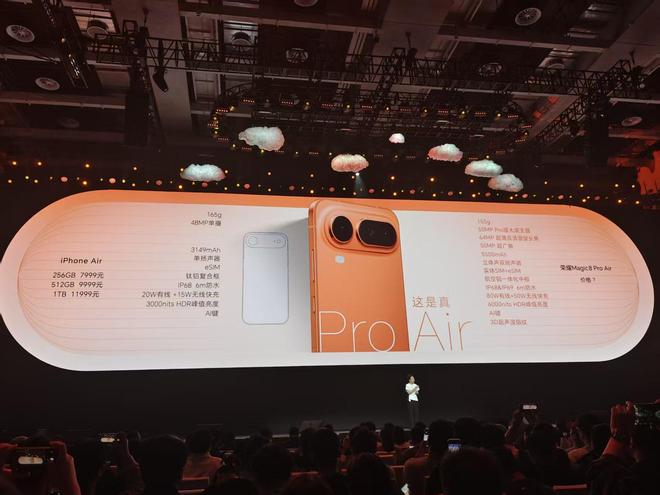
Core Insights - Honor has launched the Magic8 Pro Air, a lightweight smartphone aimed at younger consumers, highlighting its strategy to appeal to a younger demographic [1][6] - The Magic8 Pro Air features a 6.31-inch display, a thickness of 6.1mm, and weighs 155 grams, making it lighter than competitors like Apple's and Huawei's models [1] - The device is equipped with a MediaTek Dimensity 9500 processor, a triple-camera setup with a 64MP periscope lens, a 5500mAh battery, and supports both physical SIM and eSIM [1][2] Pricing Strategy - The starting price for the Magic8 Pro Air is set at 4999 yuan (approximately $700), which is significantly lower than Apple's Air at 7999 yuan but higher than Huawei's Mate70 Air by 800 yuan [4] - The competitive landscape in the 4000-5000 yuan price range includes multiple flagship models from brands like Xiaomi and OPPO, presenting a challenge for Honor's pricing strategy [4] Market Position and Challenges - Honor aims to become the fastest-growing mainstream brand overseas by 2025, targeting markets in Latin America, the Middle East, and Africa, with a goal of exceeding 10 million units shipped [5] - In the domestic market, Honor holds a 13.4% share, ranking sixth, while facing pressure from leading brands like Huawei, Apple, and Vivo, all of which have shares above 16% [5] - The smartphone industry is expected to face challenges in 2026, with projected storage price increases of 40%-50% in Q1 and an additional 20% in Q2, leading to a potential market downturn [5] Strategic Adjustments - Honor is shifting its strategy towards becoming a leading AI terminal ecosystem company, with plans to mass-produce Alpha mobile robots and launch embodied intelligent robots [6] - The company is employing a "product ocean" strategy, having launched seven new smartphone models in the last two months, significantly outpacing competitors [6] - Honor's efforts to appeal to younger consumers are evident in its marketing approach, including changes in presentation style and collaborations with trendy brands [6]

荣耀超薄机配置超苹果:首次用联发科,起售价4999元
Guan Cha Zhe Wang· 2026-01-20 01:25
Group 1 - The core focus of the article is on the launch of Honor's new lightweight smartphone, the Magic8 Pro Air, which aims to appeal to younger consumers and compete with Apple's Air series by offering a more affordable option with superior specifications [1][4] - The Magic8 Pro Air features a 6.31-inch display, a thickness of 6.1mm, and a weight of 155 grams, making it lighter than both Apple's and Huawei's competing models [1] - The device is equipped with a MediaTek Dimensity 9500 processor, a triple-camera setup including a 64MP periscope lens, a 5500mAh battery, dual speakers, and supports both physical SIM and eSIM, along with 50W wireless fast charging [1][2] Group 2 - The starting price of the Magic8 Pro Air is set at 4999 yuan, which is significantly lower than Apple's starting price of 7999 yuan but higher than Huawei's Mate70 Air by 800 yuan [4] - Honor aims to become the fastest-growing mainstream brand overseas by 2025, targeting over 10 million units shipped in regions like Latin America and the Middle East, while facing stiff competition in the domestic market [4][6] - The smartphone industry is expected to face challenges in 2026, with storage prices projected to rise by 40%-50% in Q1 and an additional 20% in Q2, leading to a potential market downturn [5][6] Group 3 - Honor is adjusting its strategy to transition into a leading AI terminal ecosystem company, planning to produce Alpha mobile robots and deepen partnerships within the industry [6] - The company is adopting a "ship more models" strategy, having launched seven new smartphones in the last two months, which is significantly higher than its competitors [6] - Honor's recent marketing efforts, including a shift towards a younger audience and collaborations with trendy brands, indicate its intent to differentiate itself in a competitive market [6]


地平线再下一城......
自动驾驶之心· 2026-01-20 00:39
Core Viewpoint - The article discusses the collaboration models between automotive manufacturers and suppliers in the autonomous driving sector, highlighting the establishment of joint ventures as a strategic approach to enhance product development and brand positioning [4][6][14]. Group 1: Joint Venture Formation - Beijing Zhiyu Technology Co., Ltd. was established as a joint venture between BAIC and Horizon Robotics, with BAIC holding a 65% stake and Horizon 35%, focusing on intelligent assisted driving products [4]. - The joint venture model allows manufacturers to maintain brand identity while leveraging supplier expertise, enhancing the overall value proposition [7]. - This model also enables manufacturers to have greater control over the development process, ensuring alignment with their strategic goals [8]. Group 2: Product Ownership and Development Models - There are primarily two models for product ownership: a one-time buyout where the manufacturer owns the developed product, and a licensing model where the supplier retains ownership and charges per unit sold [9][10]. - The licensing model is becoming more prevalent due to its efficiency and adaptability in a rapidly changing market [11]. - Products developed through joint ventures are typically owned by the joint venture itself, allowing manufacturers to exert more influence over the development process [12]. Group 3: Industry Trends and Challenges - Many traditional manufacturers struggle with in-house development of autonomous driving technologies, often leading to partnerships with suppliers or the formation of joint ventures [18][19]. - The article suggests that as the industry evolves, the trend of forming joint ventures will likely increase, with manufacturers potentially abandoning in-house development in favor of supplier solutions [21]. - The challenges faced by manufacturers include limited technical capabilities and the need for substantial data to effectively develop and iterate autonomous driving models [20].
去年中国GDP增长5%,多家手机厂商下调出货预期 | 财经日日评
吴晓波频道· 2026-01-20 00:30
Economic Overview - In 2025, China's GDP reached 1401879 billion yuan, growing by 5% year-on-year, with quarterly growth rates of 5.4%, 5.2%, 4.8%, and 4.5% respectively [2] - The industrial added value increased by 5.9%, while the service sector grew by 5.4%. Retail sales totaled 501202 billion yuan, up by 3.7% [2] - Fixed asset investment decreased by 3.8%, with a notable decline in real estate investment [3] Trade and Investment - Canada has reduced the import tax on Chinese electric vehicles to 6.1%, allowing an annual quota of 49,000 vehicles, which is a significant policy shift aimed at filling market gaps [4][5] - The adjustment in tariffs is expected to enhance the competitiveness of Chinese electric vehicles in the Canadian market, which has seen a decline in sales due to high costs and tariffs [5] Real Estate Market - In December 2025, new home prices in first-tier cities fell by 0.3%, with a notable increase in Shanghai, while overall new home sales area decreased by 8.7% year-on-year [6] - The real estate market is still in a bottoming phase, with a significant reduction in new supply and ongoing inventory pressure [7] Mobile Phone Industry - Several smartphone manufacturers, including Xiaomi and OPPO, have lowered their annual shipment forecasts due to rising storage costs, with reductions exceeding 20% for some brands [8] - The impact of rising storage prices is uneven across manufacturers, with larger firms like Apple and Samsung less affected [9] Solar Industry - Nine leading solar companies, including LONGi Green Energy and Tongwei Co., have announced expected losses for 2025, with Tongwei projecting a loss of 90 to 100 billion yuan [10] - The solar industry is facing significant challenges, including high inventory levels and price competition, leading to a prolonged period of losses [11] Wealth Disparity - The global wealth of billionaires reached a record 18.3 trillion USD in 2025, with a 16% increase in total wealth, highlighting a growing wealth gap amid stagnant poverty reduction efforts [12][13] - The AI sector's growth has significantly contributed to the increase in billionaire wealth, while ordinary residents face declining purchasing power due to inflation [13] Space Tourism - A startup has announced the opening of reservations for the world's first lunar hotel, aiming to begin operations by 2032, although the feasibility of such a project remains uncertain [14][15]




全球每卖出3部手机,就有1部产自广东
2 1 Shi Ji Jing Ji Bao Dao· 2026-01-20 00:29
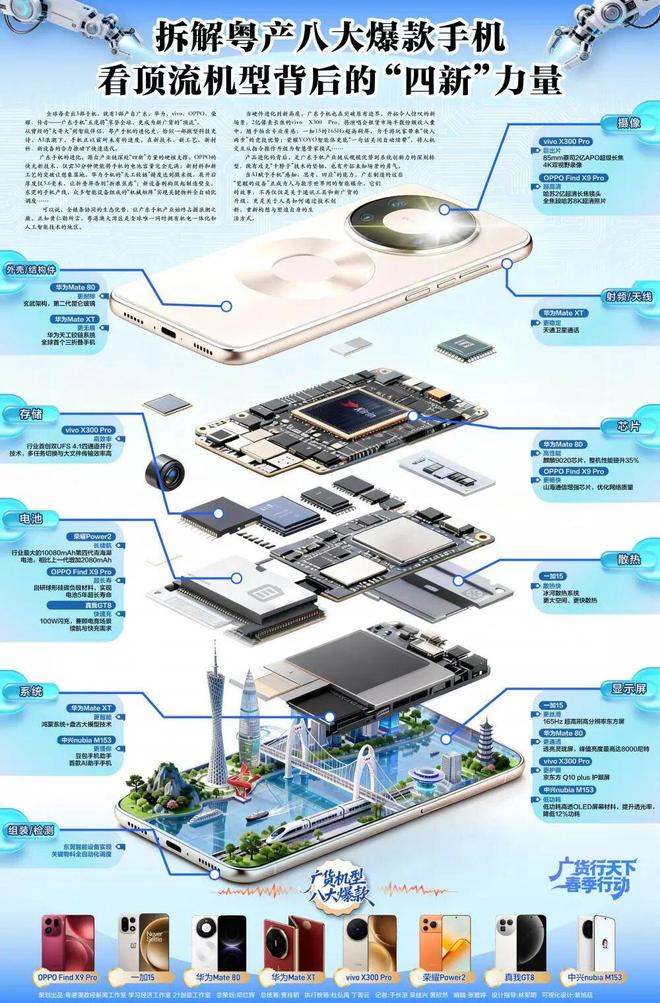
Group 1 - The core viewpoint highlights the evolution of Guangdong's mobile phone industry, showcasing companies like Huawei, vivo, OPPO, Honor, and Transsion as global leaders in technology and innovation [1] - The rapid advancement in mobile technology is driven by new techniques, materials, and automation in manufacturing, with OPPO's fast charging technology fully charging a battery in just 30 minutes and Huawei's precision hinge design achieving a thickness of only 3.6mm [1][2] - The Guangdong mobile phone industry benefits from a collaborative ecosystem that integrates mechanical and AI technologies, positioning the Guangdong-Hong Kong-Macau Greater Bay Area as a unique global hub for these advancements [1] Group 2 - Guangdong mobile phones are expanding beyond traditional boundaries, introducing innovative features such as the 200MP long-focus camera in vivo X300 Pro, which captures professional-quality images, and the 165Hz high refresh rate screen in OnePlus 15, providing competitive advantages for mobile gamers [2] - The transformation of the Guangdong mobile phone industry reflects a shift from scale advantages to systemic innovation, overcoming critical technological challenges while exploring new market scenarios [2] - AI is enhancing mobile devices with capabilities for perception, reasoning, and response, making these "awakened devices" essential intermediaries between humans and the digital world, thus reshaping lifestyles through technological innovation [2]
马年品牌短片比AI还“抽象”
3 6 Ke· 2026-01-20 00:28
Core Insights - The article discusses the innovative marketing strategies employed by various brands for the upcoming Year of the Horse, highlighting the use of humor and abstract concepts in advertisements [5][6][19] Group 1: Brand Strategies - Yili has successfully engaged with internet users by incorporating suggestions for their advertising campaign, featuring actress Ma Yili, which reflects a trend of interactive marketing [8][10] - Mengniu has opted for a different approach by assembling a trio of popular figures to create a narrative that resonates with younger audiences, focusing on the theme of good fortune [12][14] - Jin Zai's collaboration with actress Liu Xiaoqing showcases a modern short-drama marketing style, integrating popular cultural references to enhance viewer engagement [14][15] Group 2: Advertising Trends - The concept of "abstract" has emerged as a key theme in this year's advertising, with brands prioritizing creativity and engagement over traditional storytelling [6][8] - The rise of AI-generated content has prompted brands to emphasize the "human touch" in their advertisements, showcasing genuine emotions and relatable narratives [15][19] - The blending of various content types in advertisements is becoming more prevalent, allowing for a richer and more diverse storytelling approach [17][19]