福田汽车

Search documents
出走中东,又一中国车企深化伊拉克市场建设
Guan Cha Zhe Wang· 2025-08-13 03:23
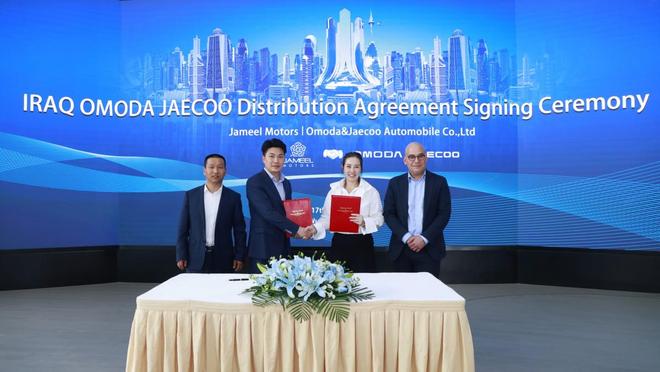
Core Viewpoint - Chery Automobile has signed an agreement with Jameel Motors to launch Omoda and Jaecoo brands in the Iraqi market, indicating a strategic move to expand its presence in the Middle East [1][3]. Group 1: Market Demand and Growth - The Iraqi market has shown strong demand for new vehicles, with new car sales estimated to have increased by over 28%, reaching approximately 161,000 units [3]. - The automotive industry is a key sector in Iraq, accounting for 8%-10% of the country's total imports, which presents new opportunities for Chinese automakers [3]. Group 2: Export and Sales Performance - In the first half of this year, the number of cars exported directly from China to Iraq rose to 18,000 units, a 71.4% increase compared to the same period last year [3]. Group 3: Leadership and Strategy - Jameel Motors' Iraqi operations will be led by Kamal Sultan, who has over ten years of experience in the Iraqi market and has previously established sales networks for brands like Toyota and Nissan [5]. - The Vice President of Jameel Motors, Jasmine Wong, emphasized the importance of careful selection of overseas partners and a long-term investment approach for Chinese automakers, highlighting the need for comprehensive pre-sales and after-sales services to enhance customer satisfaction [5].


华为系新车下饺子,8大新车打满20-50万市场,余承东要给车圈上强度了
3 6 Ke· 2025-08-13 01:20
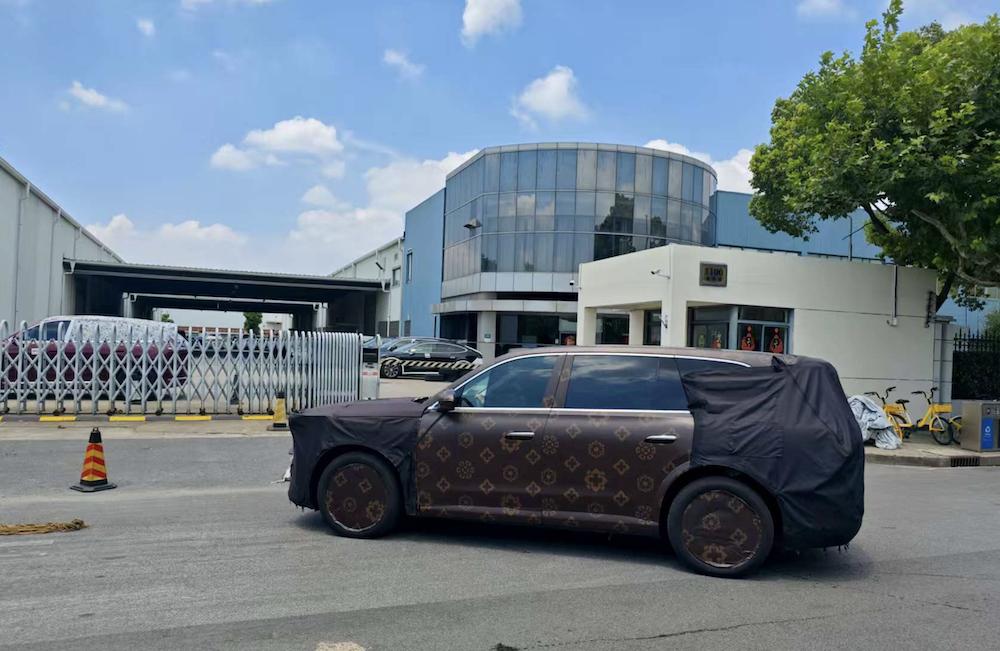
Core Viewpoint - The automotive market is entering a peak sales season, and Hongmeng Zhixing is accelerating the launch of new vehicles in collaboration with major car manufacturers, aiming to strengthen its market presence and competitiveness [1][4]. Group 1: Upcoming Vehicle Launches - Hongmeng Zhixing plans to release 6 new vehicles in the next 49 days, collaborating with four major car manufacturers [2]. - The AITO Wenjie M8 pure electric version is scheduled for launch in late August, while the new models Wenjie M7, Shangjie H5, and Xiangjie S9T will be released in September [2][31]. - The new models include the Zhijie R7 and S7, which have already started pre-sales and are expected to launch by the end of August [2]. Group 2: Vehicle Specifications - The Wenjie M8 pure electric version features a peak power of 227 kW for the single motor version and 160 kW/227 kW for the dual motor version, with a maximum range of 705 km [10][12]. - The new Wenjie M7 has increased dimensions and offers both range-extended and pure electric versions, with the range-extended version achieving over 1600 km and the pure electric version exceeding 700 km [20]. - The Xiangjie S9T will have both pure electric and range-extended options, with the pure electric version offering a maximum range of 801 km [40]. Group 3: Strategic Collaborations and Market Positioning - Huawei and Chery have signed a strategic cooperation agreement, committing over 10 billion yuan and a team of 5,000 for research and development to enhance the Zhijie brand [22]. - The rapid pre-sale success of the Zhijie R7 and S7, with over 20,000 orders in just 8 hours, indicates strong market demand and consumer interest [24]. - The overall expansion of Hongmeng Zhixing's product matrix reflects a strategic response to the trend of intelligent transformation in the automotive industry, reinforcing its competitive edge in the mid-to-high-end electric vehicle market [49].
微商“炫富神车”,不值钱了?
Hu Xiu· 2025-08-13 00:48
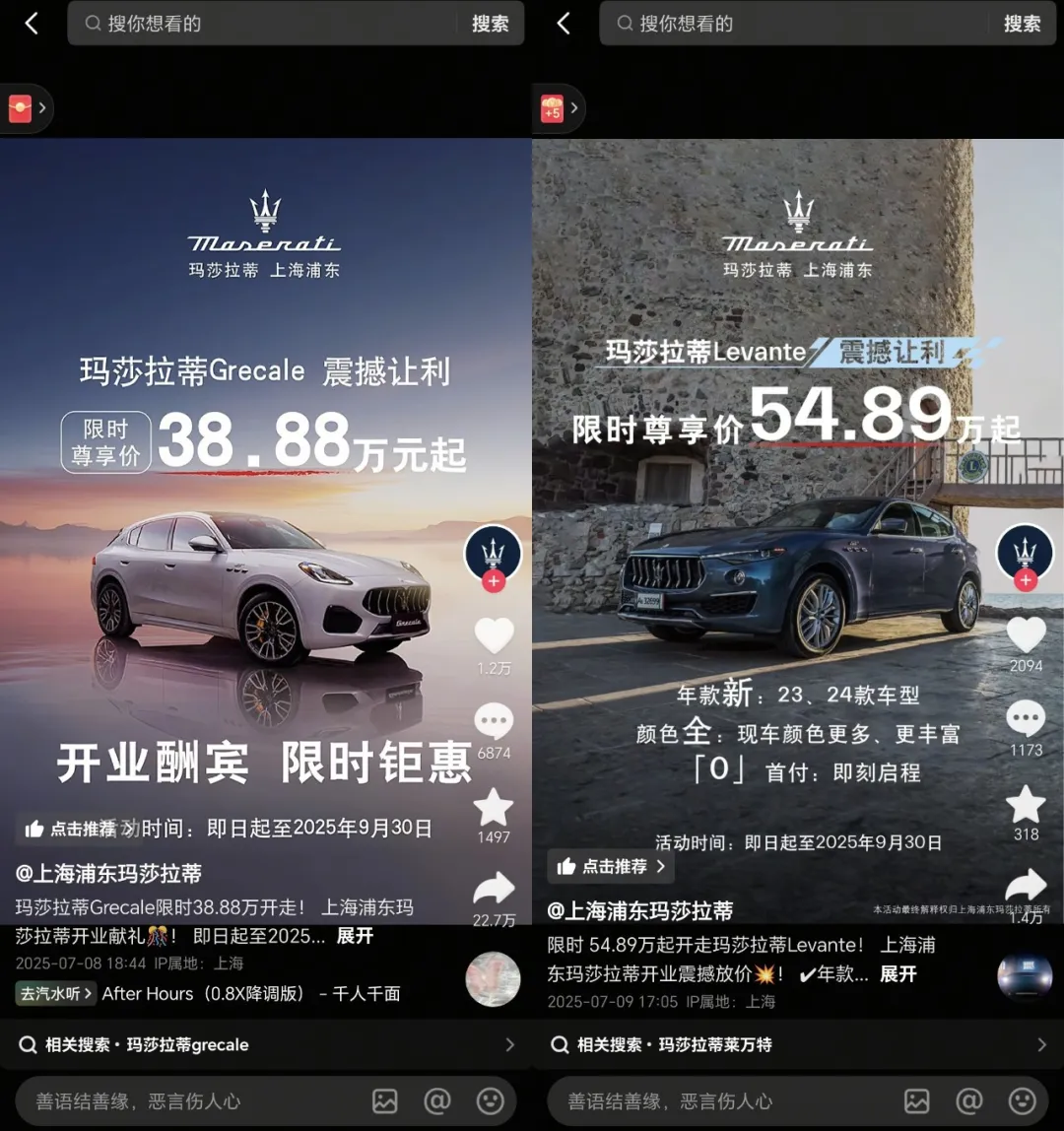
Core Insights - Maserati, once a symbol of luxury, is facing declining interest and sales due to aggressive price cuts and changing consumer perceptions in the ultra-luxury market [1][2][4] Group 1: Sales and Market Position - Maserati's sales in China have plummeted, with only 384 units sold in the first five months of the year, representing a 44% year-on-year decline [7][9] - The brand's total global sales dropped by 57% in 2024, with a reported loss of €2.6 billion (approximately ¥21.8 billion) [9] - The aggressive pricing strategy, with models like the Grecale being offered for as low as ¥38.88 million, has raised concerns about the brand's luxury status [5][7] Group 2: Brand Image and Consumer Perception - Maserati's image has been tarnished by its association with "micro-business" marketing tactics, leading to a perception of being a status symbol for lower-tier consumers [16][17] - The brand's past reputation as a high-end luxury vehicle has been compromised, as it struggles to attract its traditional affluent customer base [16][26] - The shift in consumer interest towards domestic luxury brands, such as BYD's Yangwang, has further pressured Maserati's market position [24] Group 3: Strategic Challenges - Maserati is reportedly considering partnerships, such as a potential collaboration with Chery for electric vehicle platforms, to revitalize its product offerings [2][26] - The brand's failure to effectively transition to the electric vehicle market has left it lagging behind competitors [25][26] - Ongoing financial difficulties have led to speculation about the potential sale of Maserati by its parent company Stellantis [9][26]

【环球财经】机构:今年前七月俄罗斯乘用车产量44.17万辆 中国品牌占比超四成
Xin Hua Cai Jing· 2025-08-12 22:58
Group 1 - The core point of the article highlights a 2% year-on-year decline in Russia's domestic passenger car production, totaling 441,700 units in the first seven months of the year [1] - The Volga Automobile Company accounted for 46.5% of the total production during this period, indicating its significant role in the Russian automotive market [1] - Domestic car production, including contributions from the Ulyanovsk Automobile Plant and the Moskvich brand, reached a combined market share of 49.9% [1] Group 2 - In the same timeframe, Chinese passenger car production in Russia represented 43.7% of the total output, showcasing the growing influence of Chinese manufacturers in the Russian market [1] - Haval and Chery led the Chinese brands with market shares of 16.3% and 13.3%, respectively, indicating strong competition from these companies [1]
7月份重卡市场销售同比大增46% 5家企业销量破万 重汽持续霸榜
智通财经网· 2025-08-12 13:16
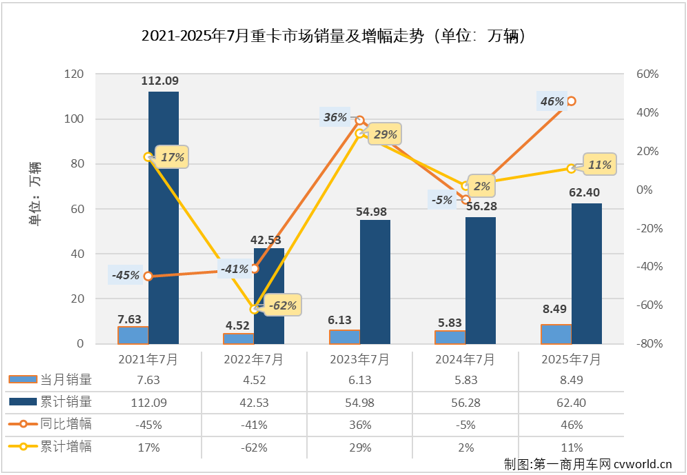
Core Insights - The heavy truck market in China experienced a significant sales increase in July 2025, with sales reaching 84,900 units, marking a year-on-year growth of 46% and achieving a "four consecutive months" increase [1][5][6] - The overall truck market, including chassis and tractors, sold 264,400 units in July, showing a month-on-month decline of 16% but a year-on-year increase of 14% [1][8] - The top five companies in the heavy truck market accounted for over 90% of the total market share, with the top ten companies holding a combined market share of 98.08% [1][5][10] Heavy Truck Market Performance - July 2025 marked the highest sales figure for heavy trucks in the last five years, with 84,900 units sold, surpassing the historical average of 70,800 units for July [2][4] - The year-on-year growth rate for heavy trucks in July 2025 expanded by 9 percentage points compared to June 2025, where the growth rate was 37% [1][5] - The cumulative sales for the first seven months of 2025 reached 624,000 units, representing an 11% increase compared to the same period in 2024 [8][9] Company Performance - In July 2025, five companies sold over 10,000 units each, with Heavy Truck leading at 22,700 units, followed by Jiefang, Dongfeng, Shaanxi, and Foton [1][5][6] - Notably, Foton, Xugong, and Chery saw substantial year-on-year growth rates of 134%, 100%, and 551%, respectively, making them the top performers in July [6] - The market share of the top four companies exceeded 100,000 units each, with Heavy Truck holding a 27.48% market share, followed by Jiefang, Shaanxi, and Dongfeng [9][10]
“60天账期”承诺满两月,车企“解题”赶进度
Bei Jing Shang Bao· 2025-08-12 12:22
Core Viewpoint - The automotive industry is taking steps to address "involution" competition by implementing a "60-day payment term" for suppliers, with several companies successfully executing this commitment, showcasing their methods and results [1][3][9]. Group 1: Commitment Implementation - Multiple automotive companies, starting from June 10, have committed to reducing supplier payment terms to within 60 days, with the Ministry of Industry and Information Technology (MIIT) facilitating this process [3][6]. - By August 11, companies like FAW Group, GAC Group, and Seres Group reported their experiences and successes in fulfilling this commitment [1][3]. - FAW Group has established a cross-departmental task force to ensure seamless management of payment processes, including contract revisions to specify payment terms [3][4]. Group 2: Payment Process and Challenges - The payment initiation time and review process are critical for suppliers, as delays in internal audits can extend the payment timeline [4][8]. - GAC Group has developed a comprehensive control system that digitizes the entire payment process, allowing real-time tracking of order and payment statuses [5][8]. - Seres Group employs a "factory within a factory" model to streamline processes and reduce costs, enhancing payment efficiency [5][8]. Group 3: Industry Response and Trends - Other automotive companies, including Dongfeng, Changan, and Geely, are also actively working to implement the 60-day payment term [6][9]. - The automotive industry has seen a decline in profit margins, dropping from 7.8% in 2017 to 4.3% in 2024, with the first four months of this year showing a further decrease to 4.1% despite increased production and sales [9][11]. - The MIIT and industry associations are monitoring the situation, with a focus on stabilizing the market and reducing price wars that have negatively impacted profitability [10][11]. Group 4: Payment Methods and Supplier Support - The shift in payment methods is crucial, with companies like FAW Group moving to 100% cash payments for recognized small and medium-sized suppliers to alleviate financial pressure [8]. - GAC Group has also prioritized cash payments, achieving a 95% cash transfer rate, which significantly benefits suppliers [8]. - The implementation of the revised "Regulations on Payment for Small and Medium Enterprises" aims to prevent the forced acceptance of non-cash payment methods, ensuring timely payments [7][8].



88款新车助推!前7个月汽车产销均破1820万辆,新能源成出口增长主要动力
Hua Xia Shi Bao· 2025-08-12 12:08
Core Insights - The Chinese automotive market has shown stable growth in the first seven months of 2025, with production and sales reaching 18.235 million and 18.269 million units, respectively, marking year-on-year increases of 12.7% and 12% [1][4] - New energy vehicles (NEVs) have significantly contributed to this growth, accounting for nearly 50% of domestic sales and leading exports with an impressive year-on-year growth rate of 84.6% [1][5] Market Performance - In July, automotive production and sales were 2.591 million and 2.593 million units, respectively, reflecting month-on-month declines of 7.3% and 10.7%, but year-on-year increases of 13.3% and 14.7% [2] - The decline in July sales is attributed to seasonal factors and manufacturers' equipment maintenance schedules, but the market remains stable due to effective policies and new model launches [2][4] New Energy Vehicle Trends - As of July, the automotive industry has launched 88 new models this year, the highest in four years, with NEVs becoming a key competitive factor [3] - In July, NEV production and sales reached 1.243 million and 1.262 million units, respectively, with year-on-year growth of 26.3% and 27.4%, making up 48.7% of total new car sales [3] Export Dynamics - From January to July, China exported 3.68 million vehicles, a year-on-year increase of 12.8%, with NEV exports reaching 1.308 million units, up 84.6%, while traditional fuel vehicle exports fell by 7% [5][6] - In July alone, NEV exports were 225,000 units, showing a month-on-month increase of 10% and a year-on-year increase of 120% [6] Industry Outlook - The automotive sector is expected to continue benefiting from government policies aimed at boosting consumption and stabilizing market conditions [4][7] - The share of Chinese automotive companies in the global market is on the rise, with three Chinese firms among the top ten global automakers as of June 2025 [7]

小马智行发布2025年第二季度财报:营收1.54亿元,Robotaxi收入同比增长157.8%
Mei Ri Jing Ji Xin Wen· 2025-08-12 10:12
在商业化落地方面,今年二季度小马智行Robotaxi注册用户同比增长136%。目前,其Robotaxi服务已覆 盖北京、上海、广州、深圳等一线城市,运营总面积超2000平方公里,涵盖中心城区、机场和高铁站等 关键交通枢纽。此外,小马智行持续加大技术研发投入,今年第二季度经调整研发费用为3.16亿元人民 币。截至二季度末,现金等价物及长短理财投资为53.56亿元人民币(约7.48亿美元)。 8月12日,自动驾驶企业小马智行(NASDAQ:PONY)发布2025年第二季度未经审计财报。财报数据 显示,公司第二季度总营收达1.54亿元人民币(约2150万美元),同比增长75.9%,环比增长53.5%,其 中Robotaxi业务收入达1090万元人民币(约150万美元),同比增长157.8%,来自乘客端的车费收入实 现同比增长超过300%。 据悉,小马智行自6月起与北汽、广汽合作启动第七代Robotaxi量产,已完成产能爬坡并进入稳态生 产,在两个月内生产超200台Robotaxi车辆。"目前,小马智行Robotaxi车辆总数已突破500台,我们非常 有信心在2025年底实现千台Robotaxi目标。"公司联合创始人 ...
荣耀前CEO,明确否认
Nan Fang Du Shi Bao· 2025-08-12 09:51
Group 1 - The core news revolves around the speculation that Zhao Ming, the former CEO of Honor, might join Zhijie Auto, which was denied by both Zhao Ming and Huawei insiders [1] - The background of the speculation is linked to Zhijie's recent announcement of entering its "2.0 phase" and the strategic partnership between Chery and Huawei, which involves an investment of over 10 billion yuan to establish an independent Zhijie New Energy Company [1] - The independent operation aims to address previous challenges related to sales and delivery due to collaboration and supply chain issues, with Huawei taking a leading role in management and strategy while Chery focuses on manufacturing [1] Group 2 - Zhao Ming resigned from his position as CEO of Honor in January 2025 due to health reasons, indicating a need for recovery and family time after years of high-intensity work [2] - He played a crucial role in leading Honor from being a part of Huawei to becoming an independent brand, successfully navigating market challenges and achieving a V-shaped recovery in market share [2]
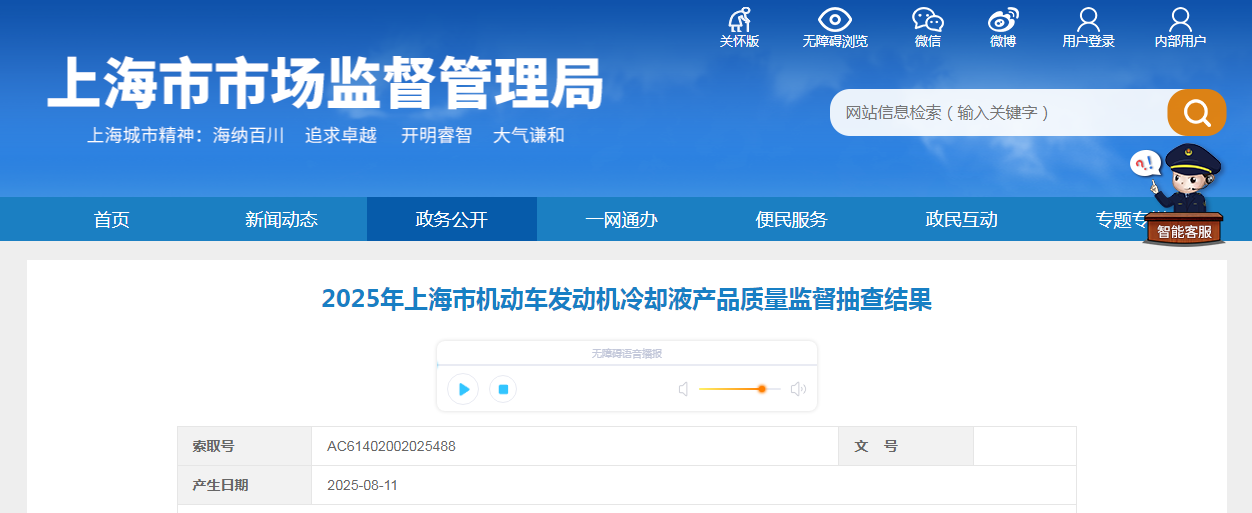
2025年上海市机动车发动机冷却液产品质量监督抽查结果公布
Zhong Guo Zhi Liang Xin Wen Wang· 2025-08-12 08:53
Core Viewpoint - The Shanghai Municipal Market Supervision Administration conducted a quality inspection of automotive engine coolant products, finding no non-compliant samples among the 40 batches tested [1][2]. Group 1: Inspection Results - A total of 40 batches were sampled, including 2 batches from previously non-compliant manufacturers [1]. - The inspection covered 3 batches from production and 32 batches from physical sales, along with 5 batches from e-commerce platforms [1]. - All sampled products met the relevant quality standards, indicating a positive trend in product compliance [1][3]. Group 2: Geographic Coverage - The sampled products originated from 10 provinces and cities, including Shanghai, Beijing, and Guangdong [1]. - Specifically, 12 batches were produced by companies based in Shanghai, while 28 batches were from manufacturers in other provinces [1]. Group 3: Regulatory Framework - The inspection was conducted based on the implementation guidelines outlined in SHSSXZ0019-2025 for automotive engine coolant quality supervision [2].