中国平安

Search documents
“深圳创新四姐妹”年终三重奏:价值重估、AI突围、全球拓局
2 1 Shi Ji Jing Ji Bao Dao· 2025-12-31 11:27
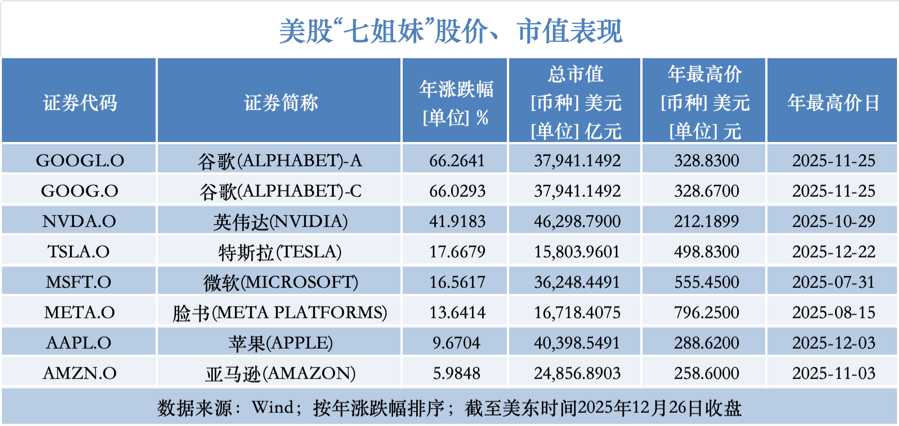
Core Viewpoint - The rapid development of artificial intelligence (AI) is prompting a revaluation of technology assets globally, with Shenzhen emerging as a focal point for investors seeking opportunities in China. The city has produced several leading tech giants, referred to as the "Shenzhen Innovation Four Sisters," including Huawei, Tencent, China Ping An, and BYD, all of which have market capitalizations exceeding 1 trillion yuan and revenues above 600 billion yuan [1][2]. Group 1: Performance and Market Trends - The "Shenzhen Innovation Four Sisters" have experienced significant stock price and market capitalization increases, benefiting from a narrative of asset revaluation in China. Notably, Tencent, Ping An, and BYD have all reached new highs in stock prices and market values this year [1][4]. - The average annual stock price increase for the "Four Sisters" is 44.87%, outperforming the average increase of 27.95% for the "Magnificent Seven" in the U.S. stock market [4][6]. - As of December 29, 2025, China Ping An's stock price increased by 52.25%, Tencent by 44.29%, and BYD by 10.47%, with Ping An leading the group [4][6]. Group 2: AI Development and Talent Acquisition - The "Four Sisters" are heavily investing in AI, with each company focusing on different aspects of AI technology to gain competitive advantages. They are engaged in a talent acquisition race to attract top AI professionals [9][10]. - Huawei's R&D expenditure reached 96.95 billion yuan in the first half of the year, accounting for 22.7% of its revenue, while Tencent's R&D spending in Q3 was 22.82 billion yuan, marking a 28% year-on-year increase [10][11]. - The companies are implementing differentiated AI strategies: Huawei focuses on foundational technologies, Tencent aims to reshape consumer services, Ping An emphasizes specialized AI services, and BYD integrates AI into smart mobility solutions [12][11]. Group 3: Global Expansion and Influence - The global influence of the "Four Sisters" is on the rise, as evidenced by their improved rankings in the 2025 Fortune Global 500 and Kantar BrandZ lists. China Ping An ranks 13th, Huawei 24th, BYD 27th, and Tencent 32nd in the Fortune list [12][13]. - BYD has surpassed Tesla to become the top seller of electric vehicles globally, with exports reaching 878,000 units from January to November, a 144% increase year-on-year [13][14]. - Tencent's international gaming revenue grew by 43% to 20.8 billion yuan in Q3, while Huawei's wearable device shipments exceeded 200 million units globally, maintaining a leading position in the market [13][14].

工行蝉联2025年银行股“股王” 20只个股年内创新高
2 1 Shi Ji Jing Ji Bao Dao· 2025-12-31 11:24
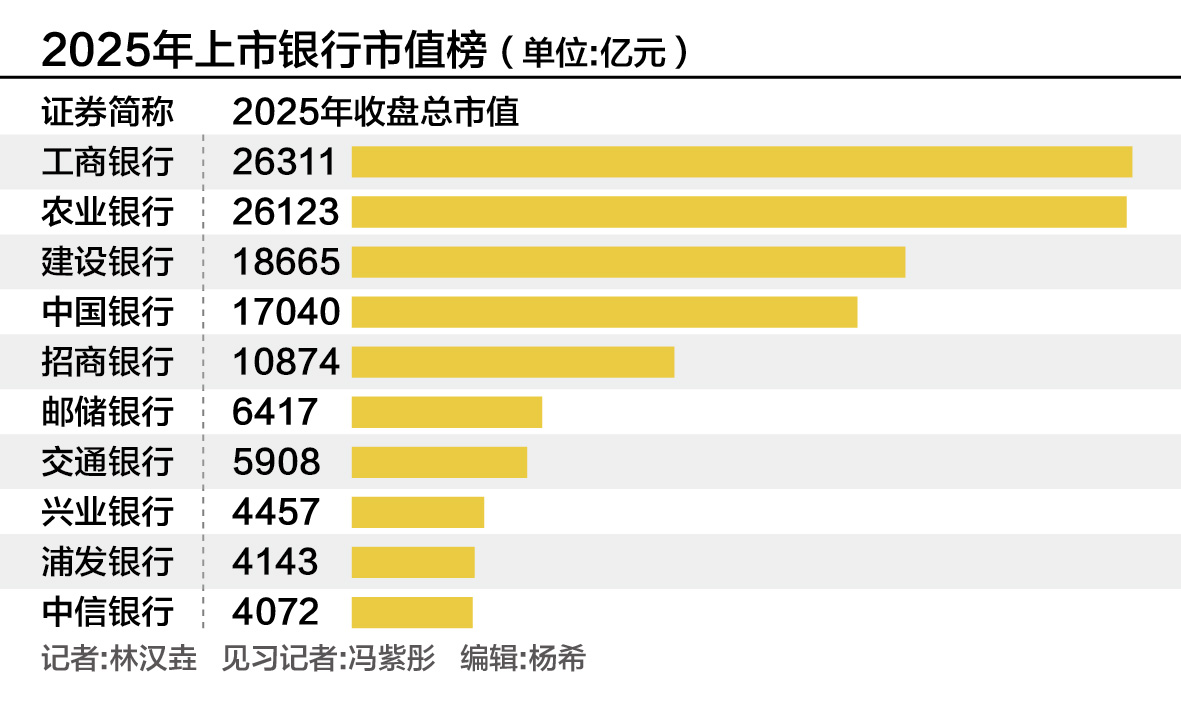
12月31日,上证指数收于3968.84点,深证成指收于13525.02点,为波澜起伏的2025年A股市场画下句点。 作为市场价值"压舱石"的代表,银行板块经历了一整年的"震荡——冲高——回调",最终整体涨幅定格于7%。这一数字与2024年高达34.39%的闪耀收益率 相比稍显平淡,甚至在31个申万一级行业中排名靠后。 但若用一词概括2025年A股银行板块的个股行情,"新高"或许最为精准。平淡的板块指数之下,个股对于"历史最高价"的冲击与创造从未停歇。截至年末收 盘,板块内42只个股中有35家收涨,仅7只下跌;其中,多达20家银行的股价创下了历史新高,更有21家全年涨幅超过10%、6家涨幅超过20%。 尤其引人注目的是,A股"股王"争夺战罕见地在银行板块内部展开了激烈角逐。农业银行年内股价累计涨幅超过52%,市值在2025年11月一度突破3万亿元, 并曾数次超越工商银行、短暂夺得"股王"桂冠。不过,凭借全年的稳健表现,"宇宙行"工商银行成功捍卫地位,截至2025年12月31日收盘以2.63万亿元的总 市值稳坐"股王"宝座,其全年股价亦累计上涨21.54%。 与此同时,对门外众多未上市的中小银行而言,A股的大门 ...
2025年,保险股凭什么成为A股涨幅最大的“意外”
Tai Mei Ti A P P· 2025-12-31 11:23
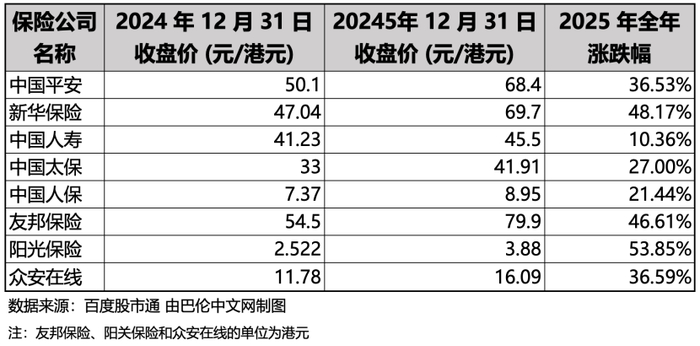
Core Viewpoint - The insurance sector in China's A-share market has emerged as a standout performer in 2025, with significant price increases and a strong upward trend since the lows of 2024, outperforming both banking and non-bank financial sectors [1][6]. Market Performance - The insurance sector index closed at 1554.89 points by December 31, 2025, with notable short-term momentum reflected in its 10-day, 20-day, and 60-day price increases [1]. - The total market capitalization of the five major listed insurance companies grew from approximately 2.16 trillion yuan to over 3.3 trillion yuan, an increase of over 1.1 trillion yuan [5]. Individual Company Performance - New China Life Insurance led the sector with a price increase of over 45% in 2025, driven by high earnings elasticity and a 58.9% year-on-year increase in net profit for the first three quarters [2]. - Ping An Insurance's stock price rose by 36.53% in 2025, reaching a peak of 71.98 yuan per share, attributed to its proactive asset-liability management and strong financial ecosystem [3]. - China Pacific Insurance's stock reached a new high of 43 yuan per share, supported by effective life insurance transformation and improved profitability in property insurance [4]. - China Life and China Re also achieved significant returns, with China Life benefiting from reduced interest rate risks and China Re excelling in property insurance profitability [5]. Valuation and Market Sentiment - Despite the strong stock performance, insurance stocks remain undervalued, with P/EV ratios generally between 0.6 and 0.9, significantly lower than consumer sector valuations [6]. - The market's confidence in the long-term profitability of the insurance sector is gradually recovering, with expectations for P/EV ratios to return to 1.0 in the future [6]. Policy Impact - Regulatory policies have played a crucial role in the sector's performance, focusing on reducing costs, expanding investment opportunities, and promoting market order [7][12]. - The introduction of a dynamic adjustment mechanism for predetermined interest rates has significantly lowered liability costs, enhancing the sector's profitability [8]. - The health insurance market has responded positively to policy changes, with premium income reaching 894.3 billion yuan in the first ten months of 2025 [9]. Future Outlook - The insurance sector is expected to enter a "golden development period" in 2026, with anticipated double-digit growth in new business value and premium income driven by strong demand for dividend insurance and health products [21]. - The investment environment is projected to improve, with a continued focus on high-dividend blue-chip stocks and technology innovation stocks, supporting a stable investment return of around 5% [22]. - The sector's valuation is expected to gradually recover, with many institutions predicting a return to 1.0 P/EV, indicating substantial potential for price appreciation [22][23].
17家寿险公司新会计准则利源分析:息差收入对营业利润的贡献由负转正!
13个精算师· 2025-12-31 11:05
Core Viewpoint - The implementation of new accounting standards (IFRS 9 and IFRS 17) has significantly altered the profit structure of life insurance companies, emphasizing the distinction between insurance service and investment components, which enhances transparency for investors and regulators [4][5][6]. Group 1: Profit Structure Analysis - The profit structure of 17 life insurance companies under the new accounting standards shows a total operating profit of CNY 333.66 billion for 2024 [4][12]. - The contribution of net asset investment income to operating profit is approximately CNY 43.0 billion, accounting for 12.9% [5][13]. - The insurance contract service margin amortization amounts to CNY 207.02 billion, contributing 62.0% to operating profit [5][13]. - Interest income for 2024 is estimated to be CNY 137.82 billion, contributing 41.3% to operating profit, a significant recovery from a -19.5% contribution in 2023 [5][14]. - Operating deviation is recorded at -CNY 6.71 billion, contributing -2.0% to operating profit [5][14]. Group 2: New Accounting Standards Impact - The new accounting standards require life insurance companies to distinctly separate insurance service income from investment components, leading to a more accurate reflection of operational results [6][9]. - The new standards enhance the measurement of contract service margins, allowing for adjustments based on future service provisions, thereby reducing the potential for profit manipulation [9][10]. - The total investment income is calculated as the sum of interest income, investment income, fair value changes, and rental income from investment properties, minus credit impairment losses and other asset impairment losses [10]. Group 3: Regulatory Developments - The new accounting standards were introduced by the Ministry of Finance in 2017 and revised in 2020, with full implementation expected for listed insurance companies in 2023 [4][5]. - The 17 companies implementing these standards represent 75% of the total assets in the life insurance industry [4].
智通港股通活跃成交|12月31日
智通财经网· 2025-12-31 11:03
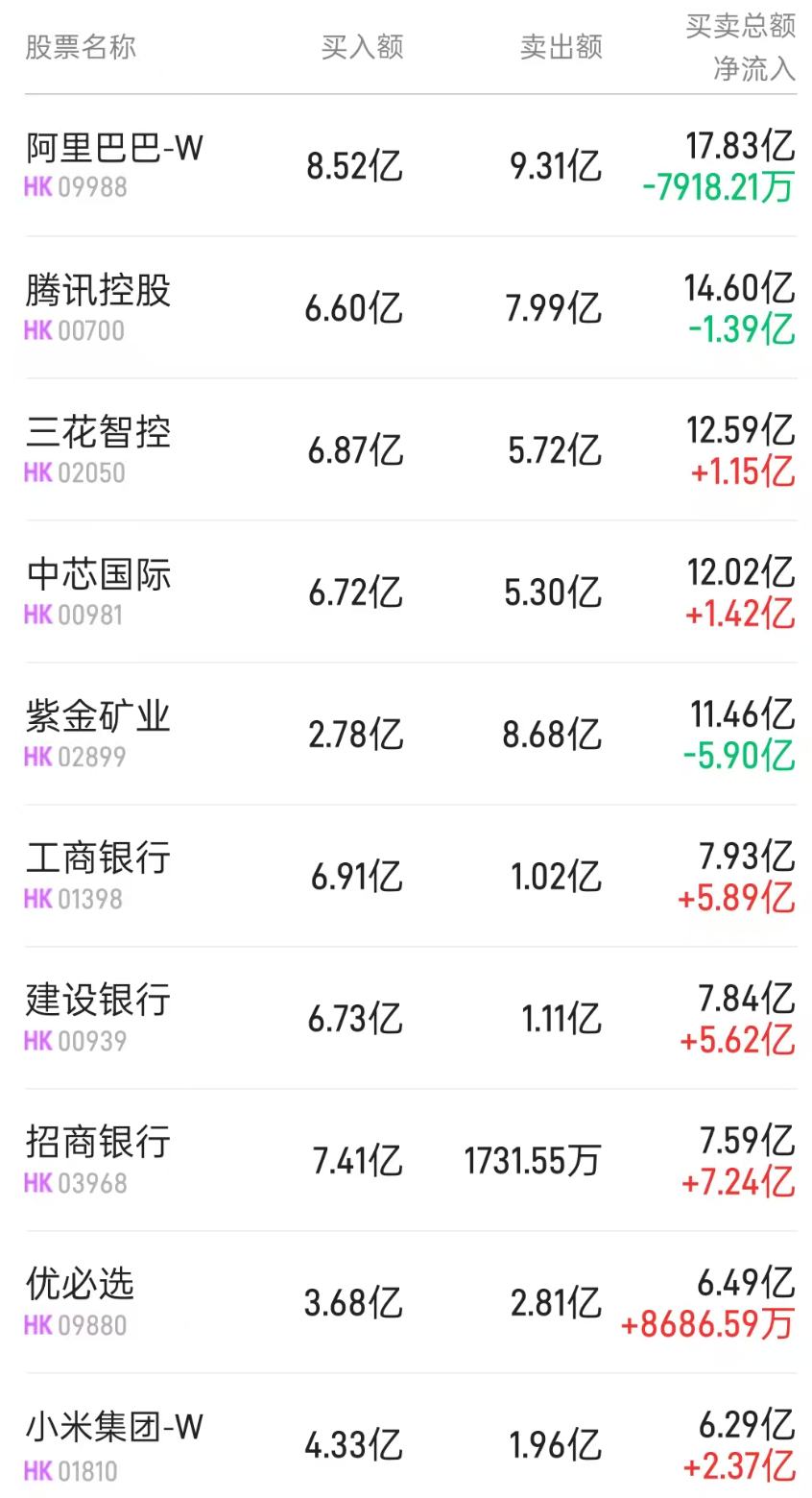
Core Insights - On December 31, 2025, Alibaba-W (09988), Tencent Holdings (00700), and Sanhua Intelligent Control (02050) ranked as the top three companies by trading volume in the Southbound Stock Connect, with trading amounts of 1.783 billion, 1.460 billion, and 1.259 billion respectively [1] - In the Shenzhen-Hong Kong Stock Connect, Tencent Holdings (00700), Alibaba-W (09988), and SMIC (00981) were the top three companies by trading volume, with amounts of 1.218 billion, 1.201 billion, and 0.767 billion respectively [1] Southbound Stock Connect Trading Activity - The top three active companies in the Southbound Stock Connect by trading amount were: - Alibaba-W (09988): 1.783 billion with a net buy of -79.182 million - Tencent Holdings (00700): 1.460 billion with a net buy of -139 million - Sanhua Intelligent Control (02050): 1.259 billion with a net buy of 115 million [2] - Other notable companies included: - SMIC (00981): 1.202 billion with a net buy of 142 million - Zijin Mining (02899): 1.146 billion with a net buy of -590 million [2] Shenzhen-Hong Kong Stock Connect Trading Activity - The top three active companies in the Shenzhen-Hong Kong Stock Connect by trading amount were: - Tencent Holdings (00700): 1.218 billion with a net buy of -508 million - Alibaba-W (09988): 1.201 billion with a net buy of 179 million - SMIC (00981): 0.767 billion with a net buy of 249 million [2] - Other notable companies included: - Sanhua Intelligent Control (02050): 0.534 billion with a net buy of 93.908 million - Huahong Semiconductor (01347): 0.475 billion with a net buy of 69.942 million [2]




财通资管新任一副总 来自平安资管
Xin Lang Cai Jing· 2025-12-31 10:12
Core Viewpoint - The appointment of Zou Guanghang as the new Deputy General Manager and Financial Officer of Caitong Asset Management marks a significant leadership change, reflecting the ongoing transformation and reform within the securities asset management industry in China [1][4][5]. Group 1: Company Overview - Zou Guanghang has 18 years of experience in human resources management within the financial sector, having previously worked at Ping An Asset Management and Oriental Red Asset Management [3][8]. - Caitong Asset Management, established in 2014, is a wholly-owned subsidiary of Caitong Securities and has seen its entrusted asset management scale exceed 300 billion yuan, ranking third among securities asset management institutions in China [4][9]. Group 2: Industry Context - The securities asset management sector is undergoing a significant leadership reshuffle, with several high-profile changes among management teams, indicating a critical period of transformation and reform [4][9]. - As of November 2025, only 14 securities firms and asset management subsidiaries hold public offering qualifications, and many companies have withdrawn their applications for public offering licenses, reflecting a pause in the expansion of public fund management [5][9]. - The industry is experiencing a shift towards high-quality development characterized by stable total assets, optimized structures, and highlighted features, with expectations for continued focus on active management strategies in 2026 [5][10].


北水动向|北水成交净买入34.49亿 北水全年净买入港股逾1.4万亿港元 创历史纪录新高
智通财经网· 2025-12-31 10:07
Group 1 - Northbound capital recorded a net purchase of 34.49 billion HKD in the Hong Kong stock market on December 31, with the Shanghai-Hong Kong Stock Connect contributing 30.97 billion HKD and the Shenzhen-Hong Kong Stock Connect contributing 3.51 billion HKD [1] - The total net purchase of Northbound capital for the year reached a historical high of 1.41 trillion HKD, significantly increasing from approximately 807.9 billion HKD in 2024 [1] - The most purchased stocks by Northbound capital included China Merchants Bank (03968), Industrial and Commercial Bank of China (01398), and China Construction Bank (00939) [1] Group 2 - Alibaba-W (09988) had a net purchase of 850 million HKD, while Tencent Holdings (00700) faced a net sell of 660 million HKD [2] - China Merchants Bank, Industrial and Commercial Bank of China, and China Construction Bank received net purchases of 7.24 billion HKD, 5.88 billion HKD, and 5.61 billion HKD respectively [4] - Semiconductor stocks also saw increased investment, with SMIC (00981) and Hua Hong Semiconductor (01347) receiving net purchases of 391 million HKD and 69.94 million HKD respectively [5] Group 3 - Xiaomi Group-W (01810) received a net purchase of 237 million HKD, supported by government policies promoting consumption [5] - Jiangxi Copper Co. (00358) had a net purchase of 158 million HKD, while Zijin Mining (02899) experienced a net sell of 682 million HKD [6] - UBTECH Robotics (09880) received a net purchase of 86.86 million HKD, as it announced plans to acquire a controlling stake in Fenglong Co. [6]



中国平安(601318) - 中国平安H股公告
2025-12-31 09:45
股份發行人及根據《上市規則》第十九B章上市的香港預託證券發行人的證券變動月報表 截至月份: 2025年12月31日 狀態: 新提交 致:香港交易及結算所有限公司 公司名稱: 中国平安保险(集团)股份有限公司 呈交日期: 2025年12月31日 I. 法定/註冊股本變動 | 1. 股份分類 | 普通股 | 股份類別 | A | | | 於香港聯交所上市 (註1) | | 否 | | | --- | --- | --- | --- | --- | --- | --- | --- | --- | --- | | 證券代號 (如上市) | 601318 | 說明 | | | | | | | | | | | 法定/註冊股份數目 | | | 面值 | | | 法定/註冊股本 | | | 上月底結存 | | | 10,660,065,083 | RMB | | 1 | RMB | | 10,660,065,083 | | 增加 / 減少 (-) | | | | | | | RMB | | | | 本月底結存 | | | 10,660,065,083 | RMB | | | 1 RMB | | 10,660,065,083 ...
A股2025市值增长九强省盘点:广东TOP5企业市值增长均超千亿 工业富联贡献全省市值增量的19%
Xin Lang Cai Jing· 2025-12-31 09:36
Core Insights - In 2025, the market capitalization increment of A-share listed companies in Guangdong Province reached 42.7 billion, representing a growth of 27.95% compared to the beginning of the year [1] Group 1: Market Capitalization Growth - The top five companies contributing to market capitalization growth all exceeded 100 billion, with Industrial Fulian leading at an increment of 805 billion, marking a growth rate of 188.46% and contributing 18.85% to the total market capitalization increase in the province [1] - The remaining four companies in the top five, namely China Ping An, Shenghong Technology, Luxshare Precision, and Shunyi Technology, each had market capitalization increments below 300 billion, with their contributions to the overall growth rate not exceeding 7% [1] Group 2: Market Capitalization Decline - The companies experiencing the most significant market capitalization decline in Guangdong Province included Mindray Medical, Haitian Flavoring, Huali Group, Poly Development, and Transsion Holdings [1] - Mindray Medical's market capitalization decreased by 78.3 billion, which is significantly higher than the other four companies, each of which saw declines not exceeding 40 billion [1]




年末多家险企密集增资发债,千亿资本将“输血”保险业
Nan Fang Du Shi Bao· 2025-12-31 09:16
Core Viewpoint - The insurance industry is experiencing a capital replenishment wave by the end of 2025, driven by regulatory changes and new accounting standards, with a total capital replenishment exceeding 114 billion yuan throughout the year [2][4][6]. Group 1: Capital Replenishment Trends - Insurance companies have issued a total of 1,013.7 billion yuan in capital supplementary bonds and perpetual bonds in 2025, with 23 companies participating in this issuance [4]. - The issuance of bonds has remained high for three consecutive years, with 1,121.7 billion yuan and 1,175 billion yuan issued in 2023 and 2024 respectively [3]. - The trend of capital replenishment is particularly pronounced in the last months of 2025, with several companies announcing significant bond issuances [3][4]. Group 2: Regulatory and Market Drivers - The tightening of regulatory policies and the complex market environment are key drivers for the capital replenishment, particularly the end of the transitional period for the "Second Generation of Solvency" rules and the implementation of IFRS 17 [6][7]. - The core solvency ratio of insurance companies has decreased to approximately 134.3%, down 4.8 percentage points from the previous year, indicating a pressing need for capital replenishment [7]. - The new accounting standards will increase reserve requirements and financial statement volatility, further pressuring capital levels [7][8]. Group 3: Industry Dynamics and Future Outlook - The capital replenishment wave is expected to lead to increased industry differentiation, with capital strength becoming a core competitive barrier [9]. - Companies with sufficient capital and clear strategies are likely to gain advantages in high-quality development, especially in capital-intensive sectors like pension finance [9]. - The effective allocation of newly raised capital towards high-quality business and risk management will be crucial for sustainable development in the industry [9][10].