
万代南梦宫

Search documents
任天堂收购万代南梦宫新加坡工作室;字节跳动旗下沐瞳科技或被沙特游戏巨头收购|游戏早参
Mei Ri Jing Ji Xin Wen· 2025-11-27 23:11
Group 1 - Nintendo has signed a share transfer agreement to acquire Bandai Namco's Singapore studio, which will be renamed "Nintendo Studios Singapore" and focus on game development [1] - The acquisition will enhance Nintendo's first-party game development capabilities and secure future content for its consoles, supporting the company's long-term value [1] - This move highlights the competition among gaming giants for quality development resources, potentially leading to a reevaluation of talent and studio value in the industry [1] Group 2 - Savvy Games Group from Saudi Arabia is in talks to acquire ByteDance's subsidiary, Shanghai Mutong Technology, indicating a potential restart of ByteDance's sale plans [2] - If the acquisition is successful, it could provide ByteDance with significant cash flow and optimize its asset structure, positively impacting its stock price [2] - Savvy's interest in acquiring Mutong reflects its ambition to expand its global gaming footprint, which may intensify capital consolidation in the gaming industry and boost valuations for companies with strong IP and development capabilities [2] Group 3 - CD Projekt Red (CDPR) reported that global sales of "Cyberpunk 2077" have surpassed 35 million copies, showcasing the strong IP vitality and long-tail effect [3] - The company announced that "Cyberpunk 2" will not be released before 2028, with 135 full-time employees currently working on its development [3] - The positive sales figures and the development of "Cyberpunk 2" stabilize market expectations for CDPR's long-term product line, reinforcing confidence in the value of AAA game IPs and supporting the trend towards high-quality game development in the industry [3]

商社美护行业周报:美丽田园战略升级,珀莱雅入局PDRN-20251126
Guoyuan Securities· 2025-11-26 05:50
Investment Rating - The report maintains an "Overweight" rating for the industry, with a focus on new consumption sectors such as beauty care, IP derivatives, and gold jewelry [6][30]. Core Insights - The beauty care sector is seeing significant developments, including L'Oréal's minority stake investment in the Chinese skincare brand LAN and Proya's entry into the PDRN market with a new trademark [3][23]. - E-commerce company Yatsen reported a Q3 revenue of RMB 998 million, a 47.5% year-on-year increase, indicating strong growth in the beauty sector [3][23]. - The report highlights the strategic upgrades of Meili Tianyuan, focusing on brand enhancement, chain expansion, and digital transformation [3][23]. Market Performance - For the week of November 17-21, 2025, the retail, social services, and beauty care sectors experienced declines of 7.24%, 4.86%, and 4.53% respectively, ranking 28th, 15th, and 12th among 31 primary industries [15][16]. - The report notes a general downturn in consumer-focused sub-sectors, with trade, general retail, and tourism experiencing the largest declines of 9.12%, 7.49%, and 5.75% respectively [15][16]. Key Industry Events and News - L'Oréal announced a minority investment in LAN, marking its first investment in a local skincare brand in China [3][23]. - Proya launched a new product line under the "PROYA MED" brand, focusing on scientific and medical attributes [3][23]. - The report mentions significant revenue growth for companies like Yatsen and Meili Tianyuan, with Yatsen's Q3 revenue up 47.5% and Meili Tianyuan announcing strategic upgrades [3][23][24]. Investment Recommendations - The report recommends focusing on companies such as Proya, Giant Bio, Marubi, Runben, and others within the beauty care and new consumption sectors [6][30].

日经Gaming精选——日本游戏大厂Q3财报:任天堂大涨110%,光荣、SE、SEGA均下滑
日经中文网· 2025-11-26 02:47
Core Insights - The article provides a summary of the financial performance of major Japanese gaming companies for the third quarter of 2025, highlighting trends and challenges faced by each company [3][4]. Company Performance Overview - **Koei Tecmo**: Reported revenue of 31.268 billion yen (approximately 1.441 billion RMB), a year-on-year decline of 11.2%. Net profit was 13.465 billion yen (approximately 619.2 million RMB), down 15.7% [5][6]. - **CAPCOM**: Released the Nintendo Switch 2 version of "Street Fighter 6," relying on nostalgia-driven sales rather than new major titles [4]. - **KONAMI**: Launched remakes of classic games and new titles, including "Silent Hill f," contributing to its performance [4]. - **SQUARE ENIX**: Adjusted its annual performance forecast downward due to special losses from organizational restructuring [4]. - **SEGA**: Experienced significant expenses related to acquisitions, impacting its financial results [4]. - **Bandai Namco**: New releases like "SD Gundam G Generation Eternal" and "Elden Ring: Nightfall" performed well [4]. Financial Highlights - **Koei Tecmo's Q3 Financials**: - Revenue: 31.268 billion yen (approximately 1.441 billion RMB), down 11.2% year-on-year - Operating profit: 7.964 billion yen (approximately 366.49 million RMB), down 25.2% - Ordinary profit: 17.795 billion yen (approximately 818.57 million RMB), down 15.3% - Net profit: 13.465 billion yen (approximately 619.2 million RMB), down 15.7% [5][6][8].

20个日本IP,半年吸金225亿
3 6 Ke· 2025-11-25 03:01
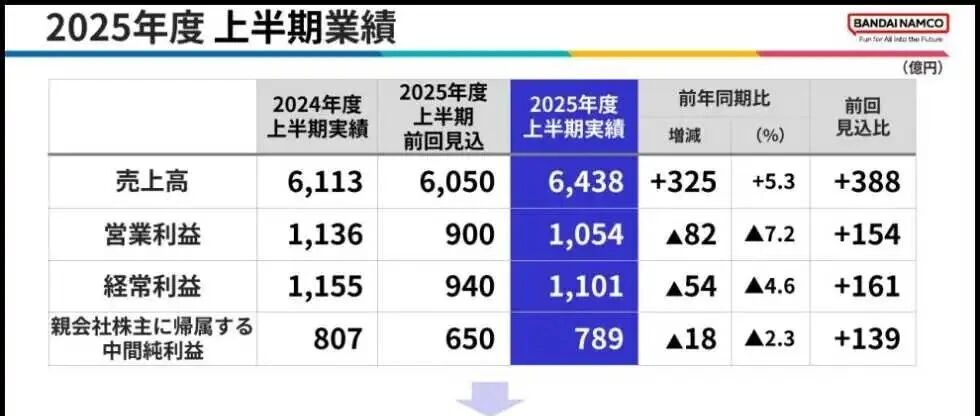
Core Insights - The article highlights the impressive performance of Japanese IPs in the Chinese market during the recent "Double 11" shopping festival, with significant sales figures indicating strong consumer demand and effective commercialization strategies [1][4]. Group 1: Sales Performance and Market Dynamics - Japanese IPs collectively generated approximately 5000 billion yen (about 225 billion RMB) in sales during the first half of the fiscal year 2025 (April to September) [5]. - The revenue structure resembles a pyramid, with Bandai Namco's "Mobile Suit Gundam" leading the top tier with 127.2 billion yen, marking a 66.3% increase [7][8]. - The "Sanrio family" achieved 87.6 billion yen in revenue, reflecting a 39.6% growth, while other major IPs like "Dragon Ball" and "One Piece" experienced declines of 14% and 5.1%, respectively [7][10]. Group 2: IP Growth and Challenges - The growth of "Gundam" and the Sanrio family contrasts sharply with the stagnation of older IPs, indicating varying operational strategies and content cycles [8][10]. - The decline in revenue for "Dragon Ball" and "One Piece" highlights the risks associated with over-reliance on a few top IPs, as they face challenges during content dry spells [10][20]. Group 3: Chinese Market Strategies - Sanrio's Chinese subsidiary reported a 96% increase in revenue, driven by a robust licensing ecosystem and local partnerships, with toys accounting for 31% of licensing income [21][30]. - Conversely, Tsuburaya's "Ultraman" IP saw a 44.2% drop in licensing revenue in China, attributed to inventory issues and changing consumer preferences [24][30]. - Kadokawa's strategy focuses on capital partnerships and a comprehensive industry chain approach, with significant investments aimed at enhancing IP circulation in the Chinese market [25][30]. Group 4: Future Directions - The article emphasizes the need for Japanese IP companies to deepen their integration into the Chinese cultural context and consumer ecosystem, moving beyond simple content output to collaborative value creation [30]. - Successful future strategies will involve understanding local consumer emotional needs and establishing deeper partnerships that go beyond basic licensing agreements [30].

2025年IP+商业专题研究:剖析乐高、三丽鸥及万代经营之道,解锁IP潮玩龙头常青路
Sou Hu Cai Jing· 2025-11-23 07:22
Group 1 - The core viewpoint of the report is that the IP toy industry in China is entering a multi-dimensional opportunity period, driven by emotional consumption upgrades, the maturity of domestic IP industries, AI technology empowerment, and global expansion opportunities [1][2]. - The overall scale of the Chinese toy market reached 104.9 billion yuan in 2023, with a year-on-year growth of over 9%, and IP toys accounted for over 60% of the market share [2][16]. - The report highlights that the main consumer groups, particularly those born in the 90s and 00s, are willing to spend on emotional recognition and cultural symbols, indicating a shift in consumption motives from basic needs to emotional experiences [2][31]. Group 2 - The report analyzes the successful strategies of international IP toy giants such as LEGO, Sanrio, and Bandai Namco, emphasizing innovation, diversification, and globalization as core driving forces [3][4]. - LEGO's success is attributed to continuous product innovation and a systematic approach, including collaborations with top global IPs, which has allowed it to expand into media, games, and education [3][5]. - Sanrio has successfully diversified its IP portfolio beyond Hello Kitty, creating new characters to reach a broader audience, resulting in a V-shaped recovery in performance and a market value exceeding 1 trillion yen [3][4]. - Bandai Namco's success is linked to its "IP axis" strategy, which facilitates cross-business collaboration across toys, games, and entertainment, maximizing IP value [4][5]. Group 3 - The report summarizes that successful IP development requires a keen understanding of social and cultural changes, unique cultural cores, and strong user engagement through co-creation [5]. - The commercial value of IP can be enhanced through cross-media storytelling, which helps to extend the IP lifecycle and mitigate risks associated with short-term trends [5]. - Global expansion must be accompanied by localized narratives and partnerships with local industry players to overcome cultural barriers and achieve effective market penetration [5][31]. Group 4 - The report indicates that the Chinese IP toy industry is at a pivotal moment, with significant growth potential as domestic companies enhance their IP operations and innovation capabilities [1][2][5]. - The competitive landscape remains fragmented, with local leaders like Pop Mart and Blokus emerging in specific segments, yet there is still considerable room for market share improvement compared to mature overseas markets [2][25][26]. - The report suggests that companies capable of accurately identifying consumer needs and possessing strong IP management and global perspectives are likely to thrive in the competitive market [5][31].


2025年IP潮玩经济研究报告
艾瑞咨询· 2025-11-21 00:07
Core Insights - The article emphasizes the growing significance of IP (Intellectual Property) in the潮玩 (trendy toys) market, highlighting its appeal to adults and the emotional and cultural value it brings to consumers [1][2][3] Group 1: Definition and Development of IP潮玩 - IP潮玩 refers to trendy toys with high recognition and independent IP attributes, primarily targeting adults rather than children, focusing on artistic value and collectability [2] - The潮玩 industry has evolved from its inception in the late 1990s to a mature phase, with significant growth driven by local designers and the rise of blind box formats [3][6] Group 2: Market Size and Growth Projections - The Chinese IP潮玩 market is projected to reach approximately 678 billion yuan by 2024, with a CAGR of about 13.8% from 2020 to 2024, and is expected to exceed 1 trillion yuan by 2027 [6] Group 3: Industry Chain and Key Players - The IP潮玩 industry chain consists of three main segments: upstream IP sources, midstream IP operation and production, and downstream sales channels, with some companies managing the entire chain [5] - 泡泡玛特 (Pop Mart) has transformed from a retail brand to a leading player in IP commercialization, achieving significant growth through innovative product offerings and strategic expansions [9][11] Group 4: Consumer Behavior and Trends - Over 60% of consumers frequently purchase blind boxes and figurines, with motivations centered around collection and stress relief, indicating a strong emotional connection to specific IPs [30] - Social media platforms have become the primary source for consumers to obtain information about潮玩, with immersive unboxing videos being the most effective marketing format [33] Group 5: International Expansion and Digital潮玩 - The overseas market presents new growth opportunities for Chinese潮玩 brands, with varying challenges in regions like Europe, Japan, and Southeast Asia [36] - Digital潮玩, supported by blockchain technology and the rise of the metaverse, is gaining traction among younger generations, although it faces challenges such as regulatory uncertainties and market volatility [38]

爱婴室(603214):收入增速边际向上 线下重回扩张轨道加速开店
Xin Lang Cai Jing· 2025-11-19 08:31
Core Viewpoint - The company is accelerating its offline store openings, reflecting the successful implementation of the 6th generation standardized store model, which features smaller store sizes, streamlined SKUs, differentiated products, and transparent sales mechanisms. This has led to increased online revenue and sustained growth in overall income [1][2]. Group 1: Financial Performance - In Q3, the company's revenue increased by 15% year-on-year, with improvements in both online and offline channels. The revenue for Q3 was 889 million, representing a 15.1% increase, while the net profit attributable to the parent company was 6 million, up by 2.4%. The net profit excluding non-recurring items was 2 million, showing a significant increase of 121.8% [1]. - The offline channel saw a net increase of 29 stores quarter-on-quarter and 53 stores year-on-year, which is crucial for driving offline growth. Online self-operated sales improved significantly, while agency operations continued to grow rapidly. However, revenue from supplier services decreased [1]. - The company's net profit margin was 0.6%, a decrease of 0.1 percentage points year-on-year, while the net profit margin excluding non-recurring items was 0.2%, an increase of 1.1 percentage points year-on-year, indicating stable profitability [1]. Group 2: Strategic Initiatives - The company is successfully opening new Gundam bases, which are expected to create a second growth curve. The first Gundam base opened in Suzhou last year, and new stores in Changsha and Shenyang are set to open soon, benefiting from high consumer traffic in these cities [2]. - The collaboration with Bandai Namco is anticipated to strengthen the company's market position and contribute to long-term growth, especially considering the rising trend of the "Guzi economy" in China [2]. - The company is expected to return to an expansion phase in 2025, achieving steady growth, with projected net profits of 140 million and 180 million for 2025 and 2026, respectively. The corresponding price-to-earnings ratios for 2025 and 2026 are estimated to be 18x and 14x [2].

潮玩行业系列深度报告(一):穿越经济周期,拥抱潮流成长
Wanlian Securities· 2025-11-13 11:51
Investment Rating - The report maintains an "Outperform" rating for the industry, indicating a positive outlook for investment opportunities in the潮玩 (trendy toy) sector [4]. Core Insights - The潮玩 industry is characterized by its integration of various cultural elements, including art, design, and popular IPs, leading to a unique product offering that appeals to consumers [2][3]. - The Chinese潮玩 market is experiencing rapid growth, driven by increasing disposable income, the rise of emotional consumption, and the emergence of quality domestic IPs [3][4]. - The competitive landscape is fragmented, with new domestic players leading market growth, while established international brands maintain a significant presence [4][5]. Summary by Sections 1.潮玩 Industry Overview and Value Chain -潮玩 is defined as toys that incorporate trendy culture, featuring high visual recognition and limited release mechanisms [2]. - The value chain consists of three segments: upstream (IP supply and operators), midstream (manufacturers), and downstream (retailers and consumers) [2][3]. 2. Comparison with the Japanese Toy Industry - The Japanese toy industry serves as a reference for China, having evolved through economic cycles, with a notable shift towards virtual entertainment during economic downturns [3][19]. - Despite challenges like declining birth rates, the Japanese market has seen growth in related sectors such as animation and gaming, which has positively impacted the潮玩 industry [3][22]. 3. Growth of the Chinese潮玩 Market - The Chinese潮玩 market is projected to grow from 229 billion yuan in 2020 to 763 billion yuan by 2024, with a CAGR of 35.11% [3][33]. - The market remains fragmented, with the top five players holding a combined market share of 23.7%, indicating potential for consolidation [4][52]. 4. Investment Recommendations - The report suggests focusing on潮玩 companies that cover the entire value chain and possess quality IP resources, as they are likely to outperform in the competitive landscape [4][7].

上海首例AI大模型侵权案,《斗破苍穹》美杜莎被“喂”给AI大模型 法院判侵权
Yang Zi Wan Bao Wang· 2025-11-04 07:20
Core Viewpoint - The case marks the first ruling in Shanghai regarding copyright infringement involving AI large models, highlighting the growing legal challenges in the intersection of AI technology and intellectual property rights [1][2]. Group 1: Case Details - The plaintiff, the copyright holder of the character Medusa from the popular IP "Dou Po Cang Qiong," accused the defendant of copyright infringement for using images of Medusa to train an AI model [2][4]. - The defendant, a company operating an AI image generation platform, claimed that their technology promotes AI development and does not constitute infringement, asserting they took necessary actions to address the issue [4][5]. - The court ruled that the defendant must cease infringement and pay a total of 50,000 yuan (approximately 7,000 USD) in damages and legal costs to the plaintiff [4][5]. Group 2: Industry Implications - The ruling reflects a broader trend of increasing copyright disputes related to AI-generated content, as many users are feeding copyrighted material into AI models without authorization [6][8]. - Major entertainment companies, including Hollywood agencies and Japanese publishers, have begun to take legal action against AI companies like OpenAI for unauthorized use of their intellectual properties [8][9][12]. - The traditional copyright system faces significant challenges as AI technology evolves, leading to systemic risks in copyright infringement that require new governance frameworks [12].

日本出版商结盟抗衡AI侵权:万代南梦宫、SE等联合要求OpenAI停用作品训练Sora 2
Huan Qiu Wang Zi Xun· 2025-11-04 03:01
Group 1 - Major Japanese content companies, including Bandai Namco, Square Enix, and Toei Animation, have formed the Content Overseas Distribution Association (CODA) to address concerns over AI-generated content using their intellectual property [1][3] - CODA has issued a statement demanding OpenAI to cease using its members' creative works for training the Sora 2 video generation model, which can create videos resembling iconic Japanese anime and game characters [1][3] - The association claims that the default training mechanism of Sora 2 poses legal issues, as it uses copyrighted works without prior permission, violating Japanese copyright law [3] Group 2 - CODA consists of 36 leading Japanese companies in gaming, anime, publishing, and film, representing a significant portion of Japan's cultural industry market value [3] - Bandai Namco reported a 31% year-on-year increase in gaming revenue for the first half of the 2024-2025 fiscal year, but its operating profit fell by 73.7% due to rising costs associated with AI infringement [4]
