
光远新材

Search documents
对话华东理工曾惠丹:日本一块布,如何卡住英伟达的“脖子”?中国做不出来吗?
Sou Hu Cai Jing· 2026-02-11 03:00
曾惠丹,华东理工大学教授、博士生导师,玛丽居里学者。上海电子化学品创新研究院首席研究员、中国硅酸盐学会理事,主要研究方向为特种玻璃和电子 浆料,研究应用于光电子器件、半导体和电子元件的特种钝化材料/封装基板和电极浆料。 出品|搜狐科技 作者|张雅婷 编辑|杨锦 或许很少有人能料到,一种来自日本的布,竟会掐住全球AI芯片巨头的"咽喉"。 搜狐科技《思想大爆炸——对话科学家》栏目第148期,对话华东理工大学教授、博士生导师曾惠丹。 嘉宾简介: 高端电子玻璃纤维布,是芯片基板和印刷电路板不可或缺的核心骨架,由大概100-200 根单丝直径为4-7微米的玻璃纱股编织而成布后,再与树脂、铜箔等材 料复合,经过图形蚀刻、钻孔镀铜等精密工艺制成。 随着AI热潮带来的AI芯片需求爆发式增长,日东纺生产的高端电子玻璃纤维布供应日趋紧张,甚至陷入"一布难求"的局面。为确保供应稳定,英伟达CEO黄 仁勋近日亲自登门拜访日东纺,苹果公司也正积极向日本政府官员寻求支援。 在这场没有硝烟的供应链战争中,日东纺成为了最大赢家。这个成立于1923年的日本企业从棉纺织起家,至今已经有100多年的历史,目前在高端玻纤布市 场垄断了全球90%以上 ...


建筑材料行业:普通电子布存供需缺口,步入涨价大周期
GF SECURITIES· 2026-02-08 08:31
[Table_Page] 跟踪分析|建筑材料 证券研究报告 [Table_Title] 建筑材料行业 普通电子布存供需缺口,步入涨价大周期 [Table_Summary] 核心观点: | [Table_Grade] 行业评级 | 持有 | | --- | --- | | 前次评级 | 持有 | | 报告日期 | 2026-02-08 | [Table_PicQuote] 相对市场表现 [分析师: Table_Author]谢璐 SAC 执证号:S0260514080004 SFC CE No. BMB592 -10% 2% 14% 26% 38% 50% 02/25 04/25 06/25 09/25 11/25 01/26 建筑材料 沪深300 | 021-38003688 | | --- | | xielu@gf.com.cn | | 分析师: 张乾 | | SAC 执证号:S0260522080003 | | 021-38003687 | | gzzhangqian@gf.com.cn | | 请注意,张乾并非香港证券及期货事务监察委员会的注册 | | [Table_ 相关研究: DocReport] ...

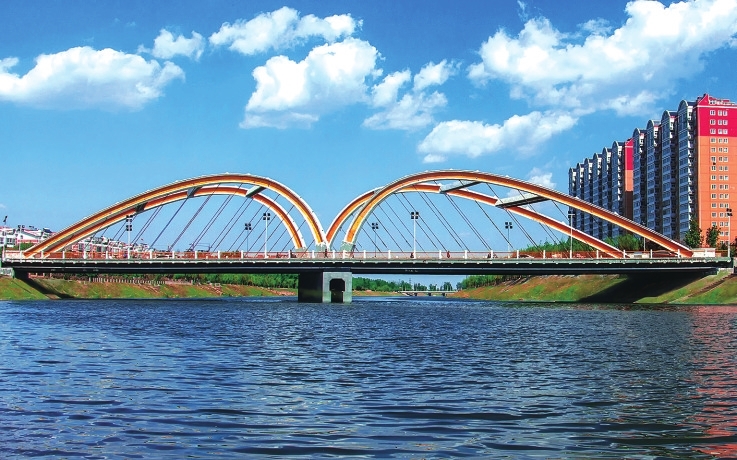
逐绿而行 蓝天为证——安阳生态之路奋进纪实
He Nan Ri Bao· 2026-01-30 08:11
Core Insights - The article highlights the significant improvement in air quality in Anyang, with the air quality index dropping to 4.208, a 12.3% decrease year-on-year, and achieving the best level since monitoring began [1][4] - Anyang's ecological strategy focuses on strict implementation of national and provincial environmental policies, emphasizing a "precise, scientific, and law-based" approach to pollution control [1][4] Environmental Improvements - The comprehensive air quality index decreased from 6.09 to 4.208, PM2.5 concentration fell from 62 micrograms per cubic meter to 43 micrograms per cubic meter, and heavy pollution days reduced from 28 to 5 [4] - Anyang River was recognized as a national-level beautiful river, with seven other rivers receiving provincial honors, marking the highest number in the province [4] Industrial Transformation - Anyang's steel industry is undergoing a transformation from "extensive pollution" to "refined green" practices, with a focus on quality improvement and efficiency [5][6] - The number of steel enterprises in Anyang was reduced from 8 to 4, with crude steel capacity controlled at 13.8 million tons, and 19 outdated facilities shut down [6] Technological Innovation - Anyang is leveraging technology for environmental monitoring, including the use of drones for non-contact inspections of VOC emissions, enhancing regulatory efficiency [13][14] - The establishment of a smart environmental monitoring platform allows for real-time data analysis and pollution source identification, improving response times [15] Energy Transition - Anyang is developing a green energy framework, with plans for a million-kilowatt wind power base and significant investments in solar energy, aiming for a total installed capacity of 7.63 million kilowatts by the end of 2025 [12] - The city is also focusing on reducing coal consumption and promoting clean energy alternatives [12] Community Engagement - The local government emphasizes that pollution control is a fundamental task, not an optional one, fostering a collective responsibility among citizens for environmental protection [8][21] - The community has seen improvements in living conditions, with cleaner air and water contributing to a heightened sense of well-being among residents [16][18]
2025年中国低介电电子布行业发展现状、竞争格局及趋势预测
Sou Hu Cai Jing· 2025-12-04 06:41
Core Insights - The low dielectric electronic fabric is a high-performance textile material with a dielectric constant (εr) lower than traditional electronic fabrics, primarily used in the electronics information field for applications like printed circuit boards (PCBs) and integrated circuit packaging, which helps reduce signal transmission delays and crosstalk, meeting the demands for high integration and high transmission rates in electronic devices [1][6][12]. Industry Overview - The global low dielectric electronic fabric market is experiencing significant growth, with the market size projected to increase from 59 million USD in 2020 to 181 million USD by 2025, reflecting a compound annual growth rate (CAGR) of 24.9%. Further forecasts suggest the market will reach 528 million USD by 2031, with a CAGR of 18.7% from 2025 to 2031, indicating strong development potential and market demand in the coming years [1][16]. Market Dynamics - The PCB industry is witnessing unprecedented growth opportunities driven by the global AI wave, with China's PCB market expected to reach approximately 412.11 billion CNY in 2024, further propelling the low dielectric electronic fabric sector [12][16]. Competitive Landscape - The production of low dielectric electronic fabric is characterized by high technical barriers, resulting in a limited number of manufacturers. Key global players include Nitto Denko (55% market share), Asahi Kasei (31%), and Taiwan Glass Group (11%) as of 2024 [2][19]. Research Methodology - The research team employs a combination of desktop research, quantitative surveys, and qualitative analyses, utilizing various models such as SCP, SWOT, PEST, regression analysis, and SPACE matrix to comprehensively analyze the market environment, industry policies, competitive landscape, technological innovations, and other relevant factors affecting the low dielectric electronic fabric industry [2][29]. Industry Chain Analysis - The upstream of the low dielectric electronic fabric industry includes raw materials and equipment such as high-purity quartz sand, silane coupling agents, and high-end jet looms, while the downstream encompasses applications in copper-clad laminates, PCB manufacturing, and AI servers [9][10].

中国巨石20250829
2025-08-31 16:21
Summary of Conference Call Records Industry Overview - The conference call discusses the electronic fabric industry, specifically focusing on companies like China Jushi, Guangyuan New Materials, and Jiantao Group, which are involved in the production of various types of electronic fabrics and materials [1][3][5][6]. Key Points and Arguments China Jushi - China Jushi has rapidly expanded its market share in the electronic fabric sector through a comprehensive technology coverage strategy, including first-generation, second-generation low dielectric fabrics, low expansion fabrics, and Q fabrics [1][3]. - The company possesses over 10,000 weaving machines, significantly surpassing competitors, and is advancing its production capabilities using both pool kiln and crucible methods for second-generation fabric production [3][10]. - The company is focusing on improving its competitiveness in the second-generation fabric market, where supply is currently scarce, and aims to achieve breakthroughs in production technology [4][14]. Guangyuan New Materials - Guangyuan New Materials holds the highest market share in the electronic fabric sector, leveraging mature pool kiln technology and a strong thin fabric business to enter the special electronic fabric market [1][5]. - The company has achieved stable supply and rapid expansion in the first-generation low dielectric fabric market, with an expected sixfold increase in production capacity by the end of 2025 [5]. - Guangyuan's production costs are significantly lower (30% to 40%) compared to traditional methods, which positions it favorably despite challenges in the third-generation Q fabric market [5][10]. Jiantao Group - Jiantao Group is actively developing special electronic yarn production, planning to build ten special AI electronic yarn production lines, with the first low dielectric kiln already operational [6][7]. - The company plans to add six more kilns in 2026, indicating rapid industry growth and a strategic move to enhance competitiveness in the high-speed board market through upstream material supply chain integration [7][9]. - Jiantao's strategy includes reducing reliance on external supply chains, thereby lowering risks associated with supply disruptions [8][9]. Market Dynamics - The first-generation fabric market is experiencing strong supply and demand, with some companies raising prices in August 2025, indicating rapid industry expansion [13]. - The supply-demand balance for second-generation and low expansion fabrics remains tight, with companies striving for stable, high-yield production to gain competitive advantages [14]. - The quartz fabric sector is characterized by a diverse range of participants, with a low entry barrier due to the separation of the drawing and weaving processes, leading to increased specialization [15]. Emerging Risks and Opportunities - There is a potential risk of price competition in the industry, prompting companies to seek cost-optimized technology routes, with pool kiln technology becoming the mainstream choice due to its cost advantages [2][12]. - The industry is expected to face challenges in meeting demand, particularly for second-generation fabrics, with predictions of supply shortages by 2026 [19][22]. - New emerging companies, such as China Yushi and Linzhou Guangyuan, are noted for their unique strengths and are expected to play significant roles in future competition [20]. Conclusion - The electronic fabric industry is poised for rapid growth, driven by technological advancements and strategic expansions by key players. However, companies must navigate potential risks related to supply shortages and price competition while capitalizing on emerging opportunities in the market [21][22].
大豪科技: 北京大豪科技股份有限公司关于2025年半年度业绩说明会召开情况的公告
Zheng Quan Zhi Xing· 2025-08-25 17:08
Group 1 - The company held a performance briefing on August 25, 2025, to discuss its operating results and financial indicators for the first half of 2025, engaging with investors through an interactive online platform [1][2] - The company achieved total operating revenue of 1.483 billion yuan in the first half of 2025, representing a year-on-year growth of 24.23% compared to the first half of 2024, with a weighted average return on net assets of 16.23% and basic earnings per share of 0.36 yuan [2][3] - The company emphasizes its dual strategy of capital mergers and self-development to enhance competitiveness and achieve diversified growth [3][4] Group 2 - The company’s core business focuses on textile machinery control, smart factory solutions, and cybersecurity, with ongoing development in automation solutions tailored for the textile industry [2][3] - The company has made significant advancements in quantum technology and artificial intelligence, participating in various projects and developing products such as domestic AI training and inference machines [3][4] - The company’s revenue growth in the first half of 2025 was primarily driven by favorable market conditions and strong performance in its core business segments, including embroidery machine control products and smart factory solutions [3][4]

周观点:建材中的“抱团”与“切换”-20250825
GUOTAI HAITONG SECURITIES· 2025-08-25 07:11
Investment Rating - The report maintains a positive outlook on the building materials sector, highlighting potential opportunities in both "grouping" and "switching" strategies within the industry [2][11]. Core Insights - The building materials market is experiencing a shift in focus, with technology stocks gaining momentum while the building materials sector presents viable options for investment [2]. - The report emphasizes the importance of monitoring production capacity and quality improvements in key segments such as electronic fabrics and Q fabrics, which are expected to see increased demand due to advancements in AI and PCB technologies [3][4]. - The report identifies a growing confidence in infrastructure projects in regions like Xinjiang and Tibet, driven by government investments and the necessity of transportation infrastructure [11][12]. - The consumer building materials segment is showing signs of recovery, with expectations of improved revenue performance as the market stabilizes [24][25]. Summary by Sections Grouping in Building Materials - The electronic fabric sector is expected to maintain its performance, with leading companies like Zhongcai Technology reporting strong sales and production growth [3]. - The AI industry's production expectations are advancing, with key suppliers anticipating increased output of Q fabrics by the end of the year [4]. - The report highlights the importance of monitoring the production capacity and quality of Q fabrics, which will determine the actual supply capabilities of companies [4]. Switching in Building Materials - Infrastructure projects in Xinjiang and Tibet are gaining traction, with significant government backing and a strong demand for cement due to the region's unique geographical advantages [11][12]. - The consumer building materials sector is entering a recovery phase, with sales and construction data indicating a bottoming out of the market [13][14]. - The report notes that the cement industry is poised for potential growth, driven by policy improvements and governance enhancements [15][29]. Cement Industry - The cement sector is entering a peak season, but market performance remains subdued due to high comparative bases from the previous year [29][30]. - The report emphasizes the importance of policy measures to limit overproduction in the cement industry, which could enhance profitability [30][33]. - Companies like Conch Cement and Huaxin Cement are highlighted for their strong cash flow and potential for shareholder returns [34][38]. Glass Industry - The float glass market is experiencing price stabilization, with environmental regulations expected to impact production costs [40][41]. - The report indicates that the glass industry is facing cash flow challenges, with many companies operating at a loss [42]. - Companies like Xinyi Glass are expected to maintain competitive positions despite market pressures, with a focus on improving operational efficiency [43]. Photovoltaic Glass - The photovoltaic glass segment is seeing a decline in inventory levels, with prices remaining stable amid increased demand from downstream component manufacturers [48]. - The report notes that while domestic prices are under pressure, overseas markets are performing better, which could benefit leading companies in the sector [49]. Fiberglass - The fiberglass market is characterized by a divergence in production and sales, with electronic fabrics maintaining a favorable outlook [50].


周观点:AI材料行情继续扩散,传统建材进入提价旺季-20250818
GUOTAI HAITONG SECURITIES· 2025-08-18 06:11
Investment Rating - The report maintains a positive outlook on the building materials industry, particularly in AI materials and traditional building materials entering a price increase season [1][3]. Core Insights - The AI materials market continues to expand, driven by the anticipation of mass production in the AI industry chain, which is expected to boost demand for related products [2][3]. - The construction materials sector is showing signs of recovery, with consumption fundamentals expected to improve in the second half of 2025 [10][24]. - The cement industry is entering a peak season, with price increases already observed in the Yangtze River Delta region [30][33]. Summary by Sections AI Materials - The M9 production for switches is expected to ramp up ahead of schedule, with core Q fabric suppliers also increasing production capacity [2]. - The demand for low dielectric fabrics is anticipated to rise alongside the production of GB200 and GB300 cabinets [2][3]. - The overall production ramp-up is seen as a key support for market trends [2]. Cement Industry - The opening of major infrastructure projects in Xinjiang and Tibet is expected to enhance market confidence and drive demand for cement [8][30]. - The cement market has seen a slight price increase, with certain regions experiencing price hikes of 10-30 RMB per ton [33][34]. - The report highlights a potential supply reduction in the North China region due to planned production cuts for air quality improvement [32][33]. Building Materials - The report notes a significant policy shift in Beijing aimed at stimulating the real estate market, which is expected to positively impact consumption building materials [10][24]. - Companies in the consumption building materials sector are beginning to stabilize their earnings, with expectations of improved profitability in the coming quarters [25][26]. - The report emphasizes the importance of cost management and pricing strategies among leading companies in the sector [25][26]. Glass Industry - The float glass market is currently facing price pressures, with average prices declining [41][42]. - Environmental regulations are tightening, which may lead to increased costs for glass manufacturers [42][43]. - Companies like Xinyi Glass are expected to maintain competitive positions despite market challenges, with a focus on profitability in their automotive glass segment [44].


AI引领PCB上游材料升级,石英布重塑格局龙头崛起
Minsheng Securities· 2025-08-03 09:21
Investment Rating - The report maintains an "Outperform" rating for the industry [1]. Core Insights - The report highlights that AI is driving upgrades in upstream materials for PCB, with quartz fabric reshaping the competitive landscape and leading companies emerging [1]. Summary by Sections Section 1: Copper Clad Laminate (CCL) - The performance requirements for CCL are increasing due to enhanced computational efficiency [3]. - CCL is an essential material in PCB manufacturing, made from reinforced materials like glass fiber cloth and resin, coated with copper foil [8]. - High-frequency and high-speed CCL are designed for high-frequency signal transmission, requiring low dielectric constant and loss [11]. - The demand for CCL is expected to rise as AI development and data transmission speeds increase, with Df values projected to drop below 0.006 [16]. - The PCB industry is projected to grow approximately 5% year-on-year in 2024, with the global server PCB market expected to reach $16 billion by 2026, reflecting a CAGR of 12.8% from 2022 to 2026 [19]. Section 2: Electronic Fabric - The quality requirements for electronic-grade glass fiber fabric are high, with Low-Dk electronic yarn being a core material for high-frequency PCBs [34]. - Different grades of electronic fabric have varying performance indicators, with Q fabric currently being the best choice [38]. - The demand for electronic fabric is increasing due to the high-performance requirements of AI servers and 5G base stations [48]. Section 3: Quartz Fiber - Quartz fiber, with a silica content of over 99.90%, exhibits excellent thermal resistance and electrical insulation properties, making it suitable for aerospace, military, and semiconductor applications [58]. - The production of high-purity quartz fiber involves complex processes, and companies like Feilihua have established significant capabilities in this area [66][72]. - The competitive landscape for quartz fiber is evolving, with high-purity quartz fibers expected to dominate the third-generation electronic fabric market [59].

从下游覆铜板看玻纤电子布需求和格局
2025-07-02 15:49
Summary of Conference Call on CCL and Glass Fiber Demand Industry Overview - The conference call primarily discusses the **Copper Clad Laminate (CCL)** industry and the demand for **low DK glass fiber** materials, particularly in the context of AI technology and ASIC applications [1][2][4]. Key Points and Arguments 1. **Increased Demand for Low DK Glass Fiber**: The demand for low DK glass fiber is expected to exceed **7-8 million square meters** in 2025, primarily for ASIC and GPU applications [1][4]. 2. **Material Shortages**: There is a significant shortage of both low DK glass fiber and **马 8级别 (Level 8)** materials, which are crucial for AI accelerator cards [2][5]. 3. **Market Share of Glass Fiber Types**: The CCL industry predominantly uses first-generation glass fiber, which holds an **80% market share** in AI accelerator cards. Second-generation glass fiber is mainly used in Ethernet switches, while third-generation glass fiber is anticipated for future products but currently has limited capacity [1][8]. 4. **Price Sensitivity Among Customers**: Different customers exhibit varying sensitivity to material prices. North American clients prioritize performance over cost, while others focus on cost-effectiveness [10]. 5. **Production Capacity Expansion**: The CCL industry is expected to expand production capacity by **30%-40%** in 2026, with an increase in the number of product layers, such as the potential increase from **26 to 34 layers** for Google's next-generation TPU [11][12][32]. 6. **Performance Differences in Domestic vs. Imported Materials**: Domestic low DK glass fiber has shown performance improvements but still lags behind Japanese and Taiwanese products in terms of stability [6][21]. 7. **Certification Process**: The certification process for new low DK glass fiber typically takes about **one year**, depending on company strategies and customer requirements [7]. 8. **Future of Second-Generation Glass Fiber**: Second-generation glass fiber has limited applications primarily in specific areas like Google's TPU, and its future depends on cost reductions and increased production capacity [9]. 9. **Production Statistics**: South Korean suppliers produce approximately **1.4 million square meters** of CCL monthly, with **700,000 square meters** being Level 8 materials [14]. 10. **Price Gradients of Glass Fiber**: The price of first-generation glass fiber is around **$6 per square meter**, with second-generation being approximately **30% more expensive**, and third-generation costing about **30% more than the second** [15]. Additional Important Insights - **Market Gaps**: There is a potential gap in production capacity if market demand increases significantly [19]. - **Testing and Development**: Chinese companies are actively testing third-generation glass fiber, while Japanese firms are more conservative in their approach [18]. - **Material Composition**: CCL typically consists of four layers of copper foil, three layers of glass fiber, and three layers of resin, adhering to a **433 ratio** [23]. - **Profit Margins**: The profit margins for different types of CCL vary, with Level 9 materials expected to be priced at **double that of Level 8** materials upon mass production [28][29]. This summary encapsulates the critical insights from the conference call, highlighting the current state and future outlook of the CCL and glass fiber industry.
