
高盛

Search documents
2025年港股IPO绿鞋观察:中资护盘积极却跌幅更大 建投保荐海螺材料跌幅近50% 外资破发率高但跌幅可控
Xin Lang Cai Jing· 2026-01-16 09:30
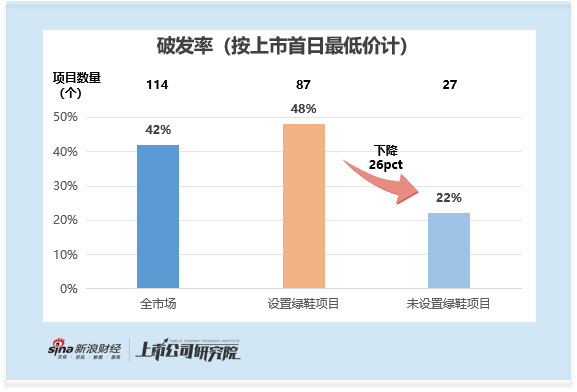
Group 1 - The core viewpoint of the article highlights the strong recovery of the Hong Kong IPO market in 2025, with 114 companies completing listings and raising a total of 285.6 billion HKD, making it the largest IPO fundraising exchange globally [1][13] - The average first-day gain for newly listed companies was 37%, significantly higher than the previous year's 8%, although over 40% of the projects experienced a first-day drop [1][13] - The green shoe mechanism, typically intended to stabilize new stock prices, showed limitations in 2025, with a first-day drop rate of 42%, and projects with green shoes had a higher drop rate of 48% compared to 22% for those without [1][15] Group 2 - The execution of the green shoe mechanism is closely tied to market demand, as it is allocated to non-anchor institutional investors, leading to a higher drop rate for projects with green shoes when demand is insufficient [3][15] - The strategy of green shoe funds typically involves controlling price declines rather than immediate full support, with concentrated buying near the market close to achieve a favorable closing price [3][15] - The performance of market stabilizers, such as CICC, showed a 44% drop rate based on intraday lows, which narrowed to 30% based on closing prices, indicating the effectiveness of their strategy [9][18] Group 3 - There is a notable difference in the green shoe execution strategies between Chinese and foreign institutions, with foreign investment banks generally exhibiting higher drop rates, such as Goldman Sachs at 75% and Morgan Stanley at 58% [6][20] - Chinese investment banks, such as CICC and CITIC Securities, reported lower drop rates of 41% and 25% respectively, indicating better performance among leading underwriters [6][20] - The average minimum drop for projects under Chinese investment banks was significantly higher, ranging from 14% to 32%, compared to 6% to 12% for foreign banks, highlighting greater volatility in the former's projects [10][22]




2025年港股承销格局全景:大摩双赛道均衡发力稳居总榜第三 高盛靠两单超大再融资夺回总榜第四
Xin Lang Cai Jing· 2026-01-16 09:18
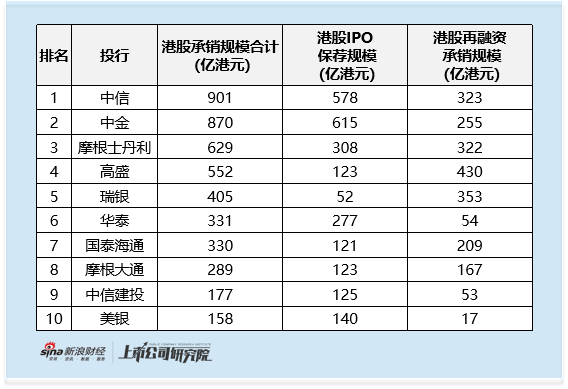
Core Viewpoint - The Hong Kong stock market in 2025 is characterized by a "dual-driven" capital active state of "IPO + refinancing," with both segments experiencing significant recovery, raising a total of 285.6 billion HKD in IPOs and 273.5 billion HKD in refinancing, indicating equal importance in the competition for underwriting strength in the Hong Kong equity financing market [1][7]. Group 1: Market Overview - The total IPO fundraising in the Hong Kong market reached 285.6 billion HKD as of January 16, 2026, while refinancing (including convertible bonds) amounted to 273.5 billion HKD, showing a balanced financing scale [1][7]. - The competition among major players such as CITIC, CICC, Morgan Stanley, and Goldman Sachs has led to distinct competitive paths, with domestic institutions focusing on the IPO track and foreign institutions concentrating on the refinancing track [1][7]. Group 2: Major Players and Their Strategies - CITIC Securities led the underwriting market with a total underwriting scale of 90.1 billion HKD, including 57.8 billion HKD in IPOs and 32.3 billion HKD in refinancing [2][8]. - Morgan Stanley achieved a total underwriting scale of 62.9 billion HKD, with nearly equal contributions from IPOs (30.8 billion HKD) and refinancing (32.2 billion HKD), making it one of the few firms excelling in both areas [3][9]. - Goldman Sachs focused heavily on the refinancing sector, leading with an underwriting scale of 43 billion HKD, primarily through large projects like BYD and Xiaomi, while only participating in 8 IPOs throughout the year [5][11]. Group 3: Project Highlights - Morgan Stanley's top IPO projects included Zijin Mining International (28.7 billion HKD), Hengrui Medicine (11.4 billion HKD), and Haitian Flavoring & Food (10.6 billion HKD) [4][10]. - Goldman Sachs' notable refinancing projects included BYD (43.5 billion HKD) and Xiaomi (42.6 billion HKD), which accounted for 90% of its refinancing scale [6][12].






每日投资策略-20260116
Zhao Yin Guo Ji· 2026-01-16 03:31
Macro Commentary - The Chinese economy shows signs of moderate monetary policy easing, with a continued slowdown in the growth of social financing stock expected by the end of 2025, and a significant decline in M1 growth, indicating weakened economic activity and private sector confidence [2][6] - The credit structure reveals an imbalance in economic supply and demand, with the corporate sector remaining the main driver of credit expansion, while the household sector continues to deleverage [2] Global Market Performance - Major global stock indices showed varied performance, with the Hang Seng Index closing at 26,924, down 0.28% for the day but up 5.05% year-to-date [3] - The US stock market experienced a rebound, with utilities, industrials, and real estate leading gains, while energy, healthcare, and communication services sectors declined [5] Sector Performance in Hong Kong - In Hong Kong, the consumer discretionary, healthcare, and information technology sectors led declines, while real estate, energy, and industrial sectors saw gains [5] - The Hang Seng Financial Index rose by 0.68% to 50,996, while the Hang Seng Real Estate Index increased by 1.32% to 19,105 [4] Company Analysis - Jitu (1519 HK) is rated as a "Buy" with a target price of HKD 13.4, following a share swap agreement with SF Express, which is expected to enhance product offerings and market reach [6] - WuXi AppTec (2268 HK) is also rated as a "Buy" with a target price of HKD 88.00, anticipating a revenue increase of at least 45% and net profit growth of at least 38% for 2025 [7][10] - WuXi AppTec's strong performance is attributed to a record number of new contracts in drug development and production, with significant growth in XDC projects and a strategic acquisition of Dongyao Pharmaceutical to enhance production capacity [8][9][10]
国泰君安期货所长早读-20260116
Guo Tai Jun An Qi Huo· 2026-01-16 01:38
Report Industry Investment Ratings Not provided in the document. Core Views of the Report - The central bank has lowered the interest rates of various structural monetary policy tools by 0.25 percentage points, and there is still room for reserve requirement ratio cuts and interest rate cuts this year. The bond market fluctuations are concentrated in the ultra - long - term, and the A - share market is expected to maintain a stable growth trend in 2026. The market sentiment of treasury bond futures remains oscillating and bearish since mid - last year, with short - term resilience and a possible slight recovery in the long - term [7][9]. - Affected by the expected US biodiesel policy, rapeseed oil is expected to shift from a recent weak trend to a wide - range oscillating trend. The valuation of PX has returned with the cost - end adjustment, and the supply is expected to gradually loosen. PTA's polyester production cut plan has increased, and the actual implementation needs attention. MEG's supply pressure has eased, and the short - term is expected to rebound strongly [10][81]. Summary by Related Catalogs 1. Treasury Bonds - Central bank policies: Lowered the interest rates of various structural monetary policy tools by 0.25 percentage points, with the one - year re - loan rate dropping to 1.25%. There is still room for reserve requirement ratio cuts and interest rate cuts this year [7]. - Market analysis: The bond market fluctuations are concentrated in the ultra - long - term. Treasury bond futures maintain an oscillating and bearish view since mid - last year. Short - term has resilience, and the long - term may have a slight recovery. It is recommended to conduct 30 - 10 spread compression trading and long - position substitution in the short - term, and continue to recommend hedging at high levels, long - spread trading, and positive spread trading in the medium - term [9]. 2. Rapeseed Oil - Policy impact: The expected US biodiesel policy is expected to boost global oil and fat consumption and support the international rapeseed oil price. The domestic rapeseed oil market is in a situation of strong current reality but weak expectations, and it is expected to shift from a weak trend to a wide - range oscillating trend [10]. 3. PX, PTA, MEG - PX: The valuation has returned with the cost - end adjustment, and the supply is expected to gradually loosen. Overseas processing fee hedging has entered the market, and domestic PX factories' hedging positions have increased. The downstream PTA and polyester's future production is expected to decline [81]. - PTA: The processing fee is at a high level. The supply side's production increase space is limited, and the polyester production cut plan has further increased. The actual implementation needs to be observed. The unilateral price has limited downward space [82]. - MEG: The short - term is expected to rebound strongly, and short positions should be closed. Attention should be paid to the spring maintenance implementation of coal - chemical ethylene glycol plants, and long the 5 - 9 spread at low levels [82]. 4. Other Commodities - Gold: Safe - haven sentiment has rebounded [16]. - Copper: The strengthening of the US dollar restricts price increases [16]. - Zinc: It is easy to rise but difficult to fall [16]. - Lead: The decrease in LME inventory supports the price [16]. - Tin: It is consolidating at a high level [16]. - Aluminum: Slightly under pressure [16]. - Alumina: Oscillating downward [16]. - Platinum: Oscillating upward [16]. - Palladium: Following the upward oscillation [16]. - Nickel: There is a game between industrial and secondary funds, and it operates in a wide - range oscillation [16]. - Stainless steel: The price center of gravity is lifted by ferronickel, and the market is speculating on Indonesian policies [16]. - Lithium carbonate: With inventory reduction and increased purchasing willingness, there may be support at the bottom [16]. - Industrial silicon: Downstream production cuts, and it is advisable to short at high levels [16]. - Polysilicon: In an oscillating state [16]. - Iron ore: The valuation is high, and it is necessary to be cautious about chasing up [16]. - Rebar: Oscillating repeatedly [16]. - Hot - rolled coil: Oscillating repeatedly [16]. - Ferrosilicon: The raw material cost is loosening, and it oscillates in a wide range [16]. - Silicomanganese: The demand side is slightly tightening, and it oscillates in a wide range [16]. - Coke: Oscillating at a high level [16]. - Coking coal: Oscillating at a high level [16]. - Steam coal: The supply - demand contradiction is not prominent, and the price is adjusted narrowly in the short term [16]. - Log: Oscillating repeatedly [16]. - Rubber: Oscillating weakly [16]. - Synthetic rubber: Oscillating at a high level [16]. - LLDPE: The production of standard products remains at a low level, and spot transactions have weakened [16]. - PP: The monomer prices continue to diverge, and the cost support is relatively strong [16]. - Caustic soda: Oscillating weakly [16]. - Pulp: Oscillating weakly [16]. - Glass: The price of the original sheet is stable [16]. - Methanol: Oscillating and falling following the commodity index [16]. - Urea: Oscillating in the short term and the central price is expected to rise in the medium term [16]. - Styrene: Oscillating in the short term [16]. - Soda ash: The spot market has little change [16]. - LPG: The short - term supply is tight, and geopolitical disturbances are strong [128]. - Propylene: The spot supply and demand are tightening, and the trend is strong [129]. - PVC: Oscillating weakly [16]. - Fuel oil: The night - session decline has paused the upward trend [16]. - Low - sulfur fuel oil: Turning to decline, and the spot high - low sulfur spread in the overseas market continues to shrink [16]. - Container Freight Index (European Line): Oscillating weakly; pay attention to the resumption of shipping expectations for the far - month contracts [16]. - Short - fiber: In a short - term oscillating market [16]. - Bottle chips: In a short - term oscillating market [16]. - Offset printing paper: Consider closing short positions opportunistically [16]. - Pure benzene: Oscillating mainly in the short term [16]. - Palm oil: The sentiment in the oil and fat sector has warmed up as the US biodiesel policy is approaching implementation [16]. - Soybean oil: The rebound height is limited due to the lack of soybean - related themes [16]. - Soybean meal: Wait and see, pending the progress of China - Canada trade consultations [16]. - Soybean: Rebounding and oscillating [16]. - Corn: Pay attention to the spot price [16]. - Sugar: Mainly operating weakly [16]. - Cotton: Continuing the adjustment trend [16]. - Eggs: The spot market is profitable, and the sentiment for far - month contracts has weakened [16]. - Hogs: The demand expectation has been priced in advance [16]. - Peanuts: Oscillating [16].
美股强势反弹:芯片股因台积电财报创新高,金融股业绩亮眼带动回暖,油价大跌拖累能源股
Sou Hu Cai Jing· 2026-01-16 00:14
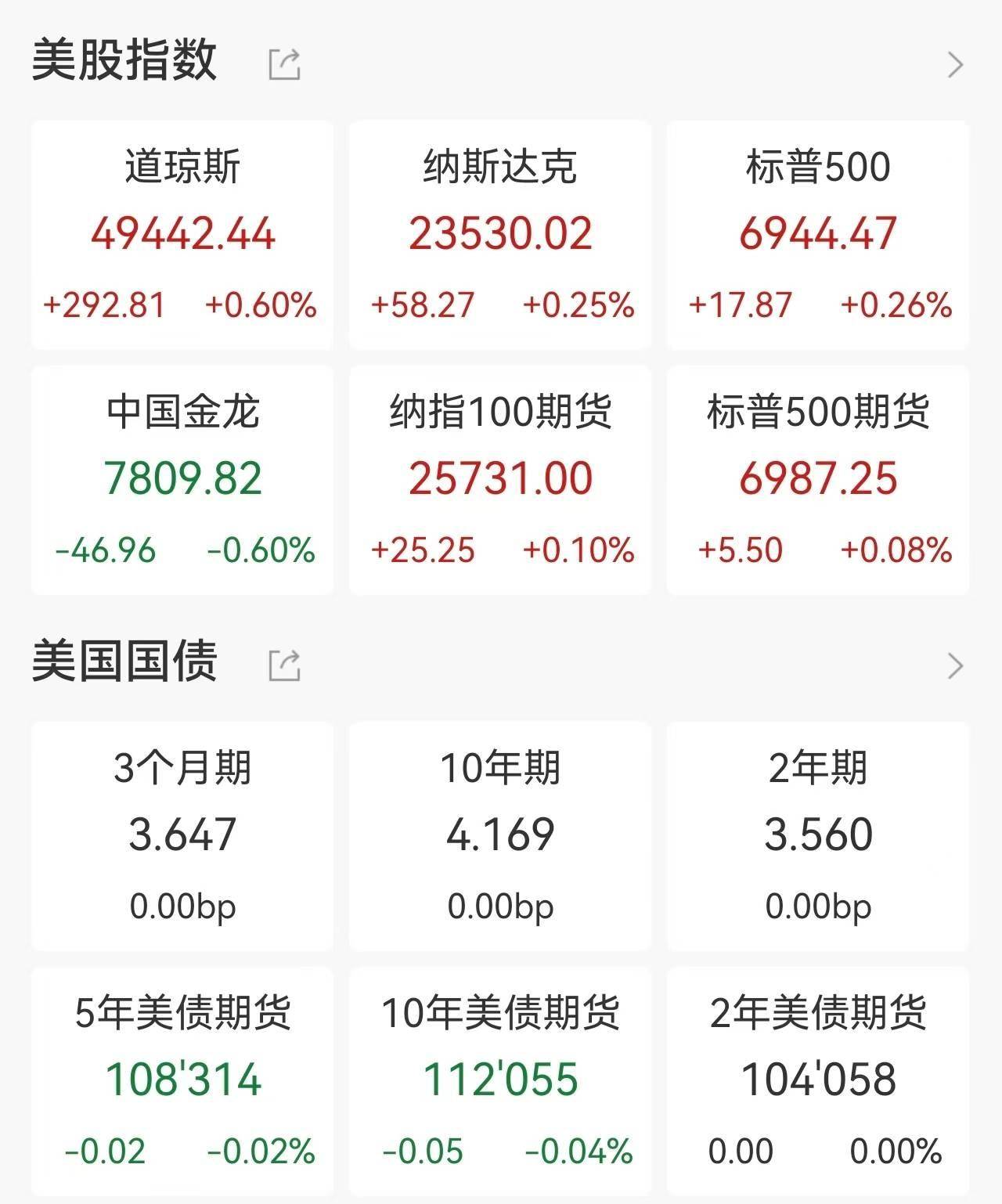
Market Performance - Major U.S. stock indices collectively rose on January 15 after two days of decline, driven primarily by the technology and financial sectors [1] - The Dow Jones Industrial Average increased by 292.81 points, or 0.60%, closing at 49,442.44 points; the Nasdaq Composite rose by 58.27 points, or 0.25%, to 23,530.02 points; and the S&P 500 gained 17.87 points, or 0.26%, ending at 6,944.47 points [1] Sector Highlights - The financial sector played a crucial role in supporting the market, with Morgan Stanley and Goldman Sachs reporting quarterly earnings that exceeded expectations, leading to stock price increases of 5.8% and 4.6%, respectively [4] - Goldman Sachs reported a 12% year-over-year increase in net profit to $4.6 billion, while Morgan Stanley's net profit grew by 18% to $4.4 billion, with investment banking revenue soaring by 47% [4] - BlackRock's assets under management reached a record high of $14 trillion, resulting in a stock price increase of 5.9% [4] Chinese Stocks - The Nasdaq Golden Dragon China Index fell by 0.60%, with most Chinese concept stocks declining [4] - New energy vehicle companies such as NIO, Xpeng Motors, and Li Auto saw slight increases, while Tencent Music and Trip.com experienced significant declines [4] Commodity Market - International oil prices experienced a significant drop, with New York light crude oil futures falling by 4.56% to $59.19 per barrel, and Brent crude oil futures decreasing by 4.15% [6] - The decline in oil prices was attributed to easing supply concerns rather than heightened geopolitical risk premiums due to U.S. actions against Iranian oil tankers [6] - Gold prices slightly decreased to around $4,615 per ounce, while silver experienced a sharp decline after reaching a historical high, with intraday volatility exceeding 7% [6] Economic Data - Initial jobless claims in the U.S. fell to 198,000, below market expectations, indicating resilience in the labor market [6] - This data did not strengthen expectations for a Federal Reserve rate cut, with futures indicating only about a 5% probability of a cut in January [6] - Several Federal Reserve officials emphasized the need to remain vigilant regarding inflation, with Kansas City Fed President Esther George describing inflation as "overheated" [6]
1月16日早餐 | 央行下调再贷款、再贴现利率;台积电业绩大增
Xuan Gu Bao· 2026-01-16 00:12
Market Overview - US stock market rebounded with major indices reversing two consecutive declines; S&P 500 rose by 0.26%, Dow Jones increased by 0.60%, and Nasdaq gained 0.25% [1] - TSMC's strong earnings boosted chip stocks, with the chip index rising nearly 2%; TSMC's US shares surged over 4%, reaching a historical high [1] - The Nasdaq Golden Dragon China Index fell by 0.60%, with notable declines in Tencent Music (down 4.9%) and Kingsoft Cloud (down 4.6%) [1] Economic Indicators - US unemployment data release led to a rapid increase in US Treasury yields; the US dollar index accelerated its rebound, reaching a six-week high [2] - Offshore RMB rebounded over 100 points, surpassing 6.97, marking a 20-month high [2] Commodity Market - Precious metals experienced a pullback; gold fell over 1% and silver dropped over 7% during intraday trading [3] - Oil prices plummeted, closing down over 4%, marking the largest decline in nearly seven months [4] Semiconductor Industry - TSMC reported a 35% year-on-year increase in Q4 net profit, significantly exceeding market expectations; projected capital expenditures for 2025 are $40.9 billion, with guidance for 2026 raised to $52-56 billion [17] - The semiconductor industry is expected to see continued demand, with TSMC planning to raise wafer foundry prices over the next four years due to ongoing supply shortages [20] Storage Sector - Bernstein analysts highlighted an unprecedented storage supercycle driven by AI, raising SanDisk's target price from $300 to $580 [21] - The average selling prices of NAND and DRAM are experiencing sharp increases due to supply-demand imbalances [22] Carbon Fiber Development - A breakthrough in high-performance T1000-grade carbon fiber has been achieved, enhancing China's competitiveness in high-end materials [23] - The carbon fiber industry is expected to see significant growth, with projections indicating that by 2030, China's carbon fiber capacity will exceed 250,000 tons, capturing over 50% of global demand [23] Power Grid Investment - The State Grid's 14th Five-Year Plan anticipates fixed asset investments of 4 trillion yuan, a 40% increase from the previous plan, focusing on green transformation and new power systems [24] New Stock Offerings - Hengyun Chang, a semiconductor equipment supplier, is set to launch an IPO on the Sci-Tech Innovation Board with a subscription price of 92.18 yuan per share [25]
今夜,科技股暴涨
Zhong Guo Ji Jin Bao· 2026-01-15 22:44
Group 1: Market Performance - US stock market saw significant gains on January 15, with technology stocks, particularly semiconductor companies, leading the rally. The Dow Jones increased by 0.65%, the Nasdaq Composite rose by 0.79%, and the S&P 500 gained 0.61% [1] - The semiconductor sector's strength was driven by TSMC's latest earnings report, which showed a 35% year-over-year profit increase, boosting investor confidence in AI themes [1][12] - TSMC's stock surged over 6%, reaching a historic high with a market capitalization exceeding $1.8 trillion, surpassing Broadcom to become the sixth largest company in the US stock market [1] Group 2: Individual Stock Movements - Notable stock movements included Sandisk Corporation up by 7.07%, AMD up by 6.11%, TSMC up by 5.99%, ASML up by 5.61%, Micron Technology up by 3.24%, and Broadcom up by 2.82% [2] - The Philadelphia Semiconductor Index experienced a significant increase of 3% [1] Group 3: Economic Indicators - The market is also reacting to macroeconomic data, with the US labor market showing resilience. Initial jobless claims unexpectedly fell to 198,000, the lowest since November, indicating that layoffs have not significantly increased at the start of the year [12] - New York state manufacturing activity is expanding, and the US dollar is strengthening [12] Group 4: Oil Market Reaction - International oil prices plummeted following President Trump's comments that alleviated market fears regarding potential military action against Iran [14][16] - Trump's statement was interpreted as a signal that the US might delay any military response, impacting Brent crude prices, which remain above last week's low of $60 per barrel [16]


太会买了!紫金矿业连涨4天,这家机构15只基金集体“吃肉”超亿元
Hua Xia Shi Bao· 2026-01-15 14:40
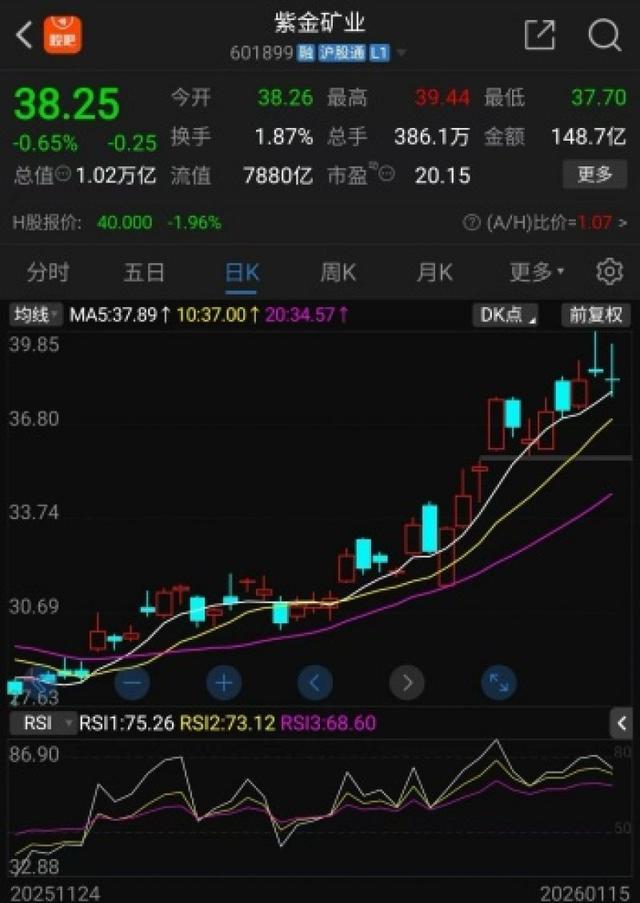
Core Viewpoint - Zijin Mining experienced a stock price correction after four consecutive days of increase, closing at 38.25 yuan on January 15, down 0.65% from the previous day, while maintaining a market capitalization above 1 trillion yuan [2][3]. Group 1: Stock Performance and Institutional Holdings - Zijin Mining's stock rose 6.06% over the previous four trading days, leading to significant paper profits for institutional investors, particularly for Oriental Red Asset Management [3]. - Oriental Red Asset Management holds a total of 49.41 million shares of Zijin Mining across 15 funds, with a daily floating profit of approximately 12.84 million yuan on January 14, and a cumulative floating profit of 109 million yuan during the four-day increase [3]. - Different fund managers within Oriental Red Asset Management exhibited varied strategies regarding Zijin Mining, with some reducing their holdings while others increased them significantly [4][5]. Group 2: Fund Manager Strategies - Zhang Weifeng, managing the Oriental Red Ruixi three-year holding mixed fund, reduced his holdings in Zijin Mining by 30.79%, indicating a strategy to realize profits and manage risk [4]. - In contrast, Wang Zhuo and Miao Yu, managing the Oriental Red Industry Upgrade mixed fund, increased their holdings by 84.30%, reflecting a positive outlook on the company's short-term performance and long-term value [5]. - Other funds managed by Kong Lingchao also included Zijin Mining among their top holdings, with varying degrees of increases [5]. Group 3: Market Dynamics and Metal Demand - The divergence in institutional strategies is attributed to evolving perceptions of non-ferrous metals, with copper being viewed as a strategic resource akin to oil in previous decades [8]. - The demand for metals is expected to be driven by global inflation expectations and the transition to green energy, although macroeconomic uncertainties, such as U.S. Federal Reserve policies, may create volatility [7][8]. - Analysts predict that Zijin Mining will maintain strong profit growth through 2025-2026, supported by rising copper and gold prices, despite facing cost pressures from mining operations [9]. Group 4: Company Growth and Production Capacity - Zijin Mining is actively expanding its production capacity, with the domestic Jilong copper mine's second phase expected to contribute significant copper output by the end of 2025 [10]. - The company's gold segment is also projected to grow, with Zijin Gold International expected to contribute approximately 46.5 tons of gold, representing over 50% of the company's total gold production [10].

传长和拟年中分拆屈臣氏于香港和伦敦双重上市 目标估值300亿美元
Zhi Tong Cai Jing· 2026-01-15 12:55
Core Viewpoint - CK Hutchison Holdings (00001) is seeking to spin off Watsons Group for a dual listing in Hong Kong and London, targeting a valuation of approximately $30 billion (around HKD 234 billion) [1] Group 1: IPO Plans - CK Hutchison has begun assessing investor interest for Watsons Group's initial public offering (IPO), aiming to complete the dual listing by mid-year, although the exact timeline is not finalized [1] - Previous reports indicated that CK Hutchison had initiated plans for the spin-off in November, with expectations to raise up to $2 billion (approximately HKD 156 billion) [1] - If successful, this IPO could become one of the largest consumer retail IPOs in Hong Kong in recent years [1] Group 2: Shareholding and Stake Exit - Temasek, which holds a 25% stake in Watsons Group, is reportedly looking to exit its investment during the IPO phase [1] - CK Hutchison sold a 25% stake in Watsons Group to Singapore's sovereign wealth fund Temasek for $5.7 billion in 2014, with plans to list the retail division at an appropriate time [1] - The listing has been delayed multiple times due to the pandemic and a weak new stock market, with CK Hutchison currently holding approximately 75% of Watsons Group [1]

新股消息 | 传长和(00001)拟年中分拆屈臣氏于香港和伦敦双重上市 目标估值300亿美元
智通财经网· 2026-01-15 12:51
Core Viewpoint - CK Hutchison Holdings (长和) is seeking to spin off Watsons Group for a dual listing in Hong Kong and London, targeting a valuation of approximately $30 billion (around HKD 234 billion) [1] Group 1: IPO Plans - CK Hutchison has begun assessing investor interest for Watsons Group's initial public offering (IPO) and aims to complete the dual listing by mid-year, although the specific timeline is not finalized [1] - Last week, it was reported that CK Hutchison has selected Goldman Sachs and UBS to facilitate the IPO of Watsons Group [1] - In November of last year, market rumors indicated that CK Hutchison had initiated plans for the spin-off and dual listing of Watsons Group, with expected fundraising of up to $2 billion (approximately HKD 156 billion) [1] Group 2: Shareholding and Exit Strategy - Temasek, which holds a 25% stake in Watsons Group, is looking to exit its investment during the IPO phase [1] - CK Hutchison sold a 25% stake in Watsons Group to Singapore's sovereign wealth fund Temasek for $5.7 billion in 2014, with plans to list the retail division at an appropriate time, which has been delayed due to the pandemic and weak IPO market [1] - Currently, CK Hutchison retains approximately 75% ownership of Watsons Group [1]