
LG

Search documents
TCL李东生:将中国制造产业优势,扩展到全球
2 1 Shi Ji Jing Ji Bao Dao· 2025-12-27 10:58
Core Viewpoint - Tijuana, located on the US-Mexico border, is emerging as a critical hub for cross-border manufacturing and trade, with a focus on electronics, automotive, and medical devices, as global supply chains are restructured, making Mexico a key destination for Chinese companies like TCL [1][10] Group 1: Globalization and Market Strategy - TCL's approach to globalization is not merely market expansion but involves long-term planning around industrial capabilities and organizational structure, establishing regional operational centers to enhance its global operational system [4][5] - The company aims to create five localized TCL entities globally, enhancing brand influence and supporting global business expansion through local production and supply chains [4][5] - TCL's overseas sales now account for 60% of its smart terminal business, indicating that international markets are crucial for revenue and profit growth [5][11] Group 2: Challenges and New Cycles - TCL identifies two overlapping new cycles: a new global economic pattern and a technological transformation, both presenting challenges and opportunities for Chinese enterprises [5][6] - The shift towards localization and regionalization in global trade rules is reshaping the global economic landscape, which could benefit Chinese companies while also posing challenges [5][10] Group 3: Industrial Capability Building - The logic of overseas expansion is shifting from mere production to collaborative capability building, with TCL focusing on establishing local supply chains and enhancing local manufacturing capabilities [7][9] - TCL's manufacturing base in Mexico, particularly the MOKA factory, has evolved from initial capacity expansion to enhancing profitability, with an annual production capacity now reaching approximately 3 million units [8] Group 4: New Trade Ecosystem - The global manufacturing system is characterized by interdependence among industries and economies, with recent trade tensions complicating this ecosystem, yet fostering industrial development in countries like Mexico and Vietnam [10][11] - Chinese companies, including TCL, are playing a pivotal role in this new trade ecosystem, enhancing their survival and competitiveness in the global market [10][11] Group 5: Competitive Landscape - The competition in the consumer electronics market is intensifying, with TCL emerging as a leading player, facing challenges from both domestic and international brands [11][12] - The necessity for Chinese companies to engage in international competition is underscored by domestic market pressures and the need for differentiation in global markets [11][12]



21专访|TCL李东生:将中国制造产业优势,扩展到全球
2 1 Shi Ji Jing Ji Bao Dao· 2025-12-27 10:05
Core Viewpoint - Tijuana, located on the US-Mexico border, is emerging as a critical hub for global manufacturing and trade, particularly for electronics, automotive, and medical devices, as companies like TCL expand their production bases in response to global supply chain restructuring [2][3] Group 1: Globalization and Business Strategy - TCL's approach to globalization is not merely market expansion but involves a long-term strategy focused on industrial capabilities and organizational structure, with a systematic upgrade of its global operations [3] - The company aims to establish five regional centers globally, enhancing local production, assembly, and supply chains to increase brand influence and business value [3] - TCL's overseas sales now account for 60% of its smart terminal business, highlighting the importance of international markets for revenue and profit growth [3] Group 2: Challenges and New Cycles - The current global landscape presents two overlapping challenges: a new cycle in global economic and trade patterns and a technological transformation cycle [5] - The shift towards localization and regionalization in global trade is creating both opportunities and challenges for Chinese enterprises, including TCL [5] - The rise of artificial intelligence and green development is reshaping business models and necessitating a focus on sustainability for Chinese companies [5][9] Group 3: Industrial Capability and Local Integration - The logic of overseas expansion is shifting from mere production to collaborative capability building, emphasizing the construction of supply chains and R&D capabilities [6] - TCL's strategy includes establishing local supply chains and manufacturing bases, as seen in its operations in Vietnam and Poland, which integrate local resources and talent [6][7] - The MOKA factory in Tijuana has evolved from a production facility to a key player in the local industrial ecosystem, enhancing its profitability and operational capacity [7] Group 4: New Trade Ecosystem - The global manufacturing system is characterized by interdependent relationships among industries and economies, which are being reshaped by recent trade dynamics [10] - Chinese companies, including TCL, are playing a crucial role in developing new trade ecosystems in countries like Mexico and Vietnam, enhancing their competitiveness in the global market [10][11] - The expansion of Chinese enterprises into international markets is driven by domestic pressures and the need to compete with multinational corporations [11][12] Group 5: Future Outlook - Participation in international competition is essential for Chinese companies to overcome growth limitations and achieve global leadership [12] - The ongoing evolution of globalization is complex and decentralized, requiring companies to focus on capabilities, organization, and resilience in their international strategies [12]
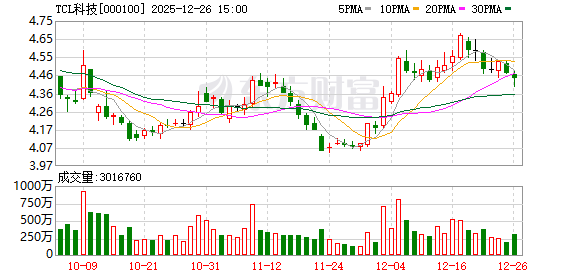
家电行业专题研究:拥抱龙头,重视出海
Xin Lang Cai Jing· 2025-12-26 12:24
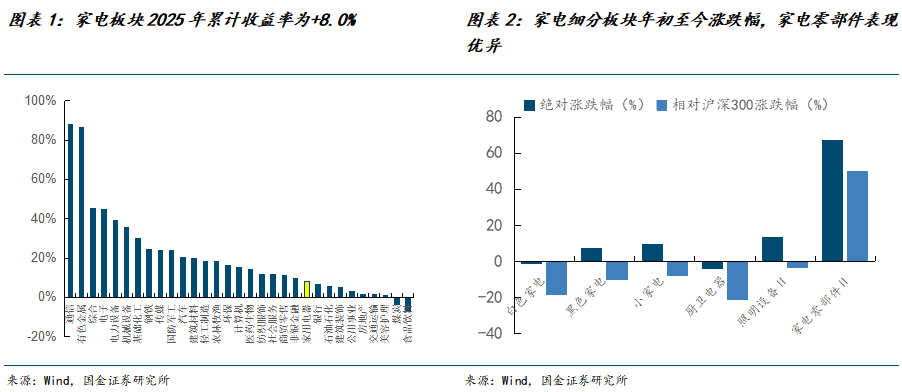
Group 1: Domestic Demand and Market Outlook - The home appliance sector is expected to show a "high first half and stable second half" trend in 2025, driven by policy continuation and consumption peaks [1] - In the first three quarters of 2025, air conditioner shipments increased by 8.4%, refrigerators by 2.4%, and washing machines by 4.1% year-on-year [1][13] - For 2026, the continuation of subsidies is anticipated to mitigate the impact of high base effects and demand pull-forward, with projected declines in overall appliance sales of -4% to -7.3% under various subsidy scenarios [1][16][19] Group 2: Export Performance and Global Market Trends - Home appliance exports have slowed down due to tariff policies and global supply chain adjustments, but still show resilience and structural highlights [2] - In 2025, the export growth rate for air conditioners is expected to be weaker than that of washing machines and refrigerators, primarily due to adverse weather conditions affecting overseas demand [2][39] - The U.S. market is projected to benefit from a rate cut, which may enhance demand for home appliances, while the European market is expected to maintain a slow recovery [42][44][50] Group 3: Investment Themes - The narrative in the black appliance sector is shifting from "market share chasing" to "profit and pricing power," with Chinese brands like Hisense and TCL expected to convert market share into higher profits [3][55] - White appliances are seen as having strong growth potential due to their historical resilience through cycles, with leading brands like Midea and Haier expected to maintain stable growth and generous dividends [3][83] - The global competition in new consumer products, particularly in smart imaging and robotic vacuum cleaners, is expected to favor Chinese brands, highlighting their competitive advantages [3] Group 4: Financial Metrics and Valuation - As of December 22, 2025, the home appliance sector's PE TTM is 16.27 times, remaining below the 10-year average of 32.8% [7] - The white appliance segment's current PE is 11.22, while black appliances stand at 25.94, indicating varying levels of market valuation [9] - The home appliance sector has seen a decline in public fund holdings, with a heavy allocation of only 2.46% in Q3 2025, reflecting concerns over demand in 2026 [9]



出售49%股权,海尔印度仍保持最大单一股东地位
Cai Fu Zai Xian· 2025-12-25 07:23
Core Viewpoint - Haier's sale of 49% stake in its Indian subsidiary has sparked mixed reactions, with some viewing it as a strategic move to recover funds and integrate local resources, while others see it as a forced concession to local and foreign capital [1] Group 1: Investment Environment - India's market demand exceeds $30 billion, making it the third-largest home appliance market globally, following the US and China [2] - The Indian investment environment is characterized by a complex legal system that increases compliance costs and operational risks for foreign companies [2] - The Indian government frequently changes regulations regarding tariffs, foreign ownership, and environmental standards, creating instability for investors [2] Group 2: Challenges for Chinese Companies - Chinese companies face significant challenges in India, as evidenced by the asset freezes of Vivo and Xiaomi, and TikTok's exit, indicating a lack of welcome for foreign control [2] - Despite Haier's 20 years in India with over 100 billion rupees (approximately $12 million) in annual revenue and a vast sales network, it remains an outsider without local support [2][3] Group 3: Strategic Implications of Stake Sale - Selling the stake is seen as a necessary step for Haier to navigate the Indian market, as local partnerships are essential for IPOs, project approvals, and capacity expansion [3] - Haier's decision to sell equity is not a sign of defeat but a strategic move to integrate into the local business ecosystem [4] Group 4: Haier's Competitive Position - Haier retains a 49% stake and remains the largest single shareholder, maintaining control over core operations while incentivizing local management [5] - Haier's market share in the refrigerator segment is 14%, and it is expected to see a 36% revenue increase in 2024, showcasing its competitive strength against major brands [5] Group 5: Lessons for Other Companies - Haier's approach serves as a lesson for other Chinese companies struggling in India, highlighting the importance of local connections and navigating the complex business environment [6] - The Indian market presents significant potential but is fraught with challenges that require more than just product offerings to succeed [6]
金田股份20251224
2025-12-25 02:43
Summary of Conference Call on JinTian Co., Ltd. and Aluminum-Copper Substitution in the Air Conditioning Industry Industry Overview - The air conditioning industry is experiencing a shift from copper to aluminum due to high copper prices, with aluminum offering significant cost advantages. For instance, a 1.5 HP air conditioner can save over 300 yuan by using aluminum instead of copper [2][6]. - The current usage of aluminum in the air conditioning sector is minimal, with projections indicating that by 2025, aluminum pipes will account for less than 5% of the market [2][9]. Key Points and Arguments - **Technological Challenges**: The transition to aluminum is hindered by technical barriers such as corrosion resistance, weldability, and energy efficiency. These issues need to be addressed for widespread adoption [3][6]. - **Production Line Transition**: Switching production lines from copper to aluminum typically takes 12 to 16 months, resulting in a 40%-50% reduction in capacity during the transition [10]. This aligns with the expected decrease in aluminum usage per air conditioner [10]. - **Market Acceptance**: While manufacturers are optimistic about aluminum, consumer acceptance remains a critical factor. There is a perception that aluminum may be seen as a cost-cutting measure, necessitating industry-wide efforts to mitigate brand damage [6][7]. - **Future Projections**: If market acceptance increases and technology matures, it is anticipated that within 3-5 years, 1/3 to 1/2 of copper pipes will be replaced by aluminum pipes [2][16]. Company Initiatives - **JinTian Co., Ltd. Plans**: The company plans to build a state-of-the-art fully automated production line for internal threaded aluminum pipes in Guangdong and convert some existing copper pipe production lines to aluminum [5][17]. - **Production Capacity**: The first new production line is expected to be operational by the end of 2026, with a capacity of 10,000 tons [17]. However, the industry as a whole is cautious about large-scale aluminum production due to uncertainties in market transition [17]. Market Dynamics - **Commercial vs. Domestic Markets**: The commercial and overseas markets are advancing faster in adopting aluminum materials compared to the domestic household market, where consumer psychology and competition slow down the transition [14]. - **Current Production Statistics**: In 2025, the estimated production of internal threaded aluminum pipes will be less than 10,000 tons, while copper pipe production is projected at 2 million tons [8]. Additional Insights - **Welding and Reliability**: Welding issues have largely been resolved, allowing for better integration of aluminum in air conditioning systems. Collaborative efforts with clients have addressed surface treatment and corrosion resistance [20]. - **Certification Processes**: The certification process for manufacturers varies, with overseas firms facing longer timelines compared to domestic ones. However, established relationships with manufacturers can expedite this process [22]. Conclusion The air conditioning industry is on the brink of a significant material shift from copper to aluminum, driven by cost considerations and technological advancements. JinTian Co., Ltd. is positioning itself to capitalize on this trend through strategic investments in production capabilities, although challenges related to consumer acceptance and production transition remain critical factors for success.

【新华财经调查】中国家电扎根“全球最难市场” 未来存在四大挑战
Xin Hua Cai Jing· 2025-12-24 11:56
尽管增长迅速、前景广阔,但巴西市场的复杂性、多变性和高门槛,使其被业内普遍视为"全球最具挑战的家电市场之一"。中国品牌在享受增长红利的同 时,也面临着一系列严峻而长期的考验。 新华财经圣保罗12月24日电(记者 杨家和 翟淑睿)在巴西贝伦近日闭幕的第三十届联合国气候变化大会(COP30)上,中国家电企业集中展示绿色节能 技术,与巴西能源转型议程同频共振。这一亮相背后,折射出中国家电企业在拉美最大家电市场——巴西,正经历从"规模扩张"向"价值竞争"的阶段性跃 迁,从传统消费品制造商,向绿色能源转型参与者角色延展。 中国家电企业在巴西的这场转型,发生在独特而复杂的历史节点。中国机电产品进出口商会数据显示,仅2024年前三季度,中国家电对拉美出口96.7亿美 元,同比增长33.5%,其中对巴西增长52%以上。这个曾经以"中国制造"性价比优势闻名的产业,正从简单的商品输出,转向技术输出、标准输出和价值 共创的新阶段。 行业统计显示,巴西家用空调普及率仍不足四分之一,远低于全球平均水平;电视机市场则在大屏化和智能化浪潮中持续迭代更新,正经历消费升级与绿 色转型的双重浪潮。与此同时,巴西市场以税制复杂、认证严苛、渠道分散 ...

欧陆通(300870):首次覆盖报告:高功率服务器电源加速出海
Shanghai Aijian Securities· 2025-12-22 08:31
Investment Rating - The report assigns a "Buy" rating for the company, indicating a positive outlook on its stock performance [5]. Core Insights - The company is well-positioned in the power supply sector, particularly benefiting from the demand for high-power server power supplies driven by the AIDC wave. The expected growth in net profit for 2025-2027 is projected at 326 million, 464 million, and 804 million CNY, respectively, with corresponding PE ratios of 69.4, 48.8, and 28.1 [5]. - The company has established itself as a leading supplier of high-power server power supplies in China, with products that meet international high-end standards. It is one of the few suppliers capable of large-scale sales of high-power server power supplies, which positions it to capitalize on opportunities in AI and domestic substitution [5][32]. - The report highlights the company's strategic partnerships with major domestic server manufacturers and its ongoing collaboration with leading internet companies, which enhances its market presence [5]. Financial Data and Profit Forecast - Total revenue projections for the company are as follows: 2,870 million CNY in 2023, 3,798 million CNY in 2024, 4,817 million CNY in 2025, 6,082 million CNY in 2026, and 7,448 million CNY in 2027, with year-on-year growth rates of 6.2%, 32.3%, 26.8%, 26.3%, and 22.5% respectively [4]. - The net profit forecast shows significant growth, with expected figures of 196 million CNY in 2023, 268 million CNY in 2024, 326 million CNY in 2025, 464 million CNY in 2026, and 804 million CNY in 2027, reflecting growth rates of 117.1%, 36.9%, 21.7%, 42.4%, and 73.2% respectively [4][36]. - The company's gross margin is projected to improve, with estimates of 19.7% in 2023, 21.4% in 2024, 21.3% in 2025, 24.0% in 2026, and 26.6% in 2027 [36]. Market Position and Competitive Landscape - The company ranks as the 12th largest power supply manufacturer globally in 2024, with sales of approximately 521 million USD, indicating a strong competitive position in the market [17]. - The report emphasizes the company's ability to meet the growing demand for high-power server power supplies, particularly in the context of the expanding global server market, which is expected to reach a scale of 282.35 billion CNY in China by 2025 [5][30]. - The company is strategically positioned to leverage its global production capabilities in Vietnam and Mexico to meet North American customer demands, enhancing its competitive edge [5].
How to disable ACR on your TV (and why you should do it ASAP)
ZDNET· 2025-12-19 19:02
Core Insights - The article discusses the use of Automatic Content Recognition (ACR) technology in smart TVs, which tracks viewing habits and collects data for targeted advertising [3][12][17] - In 2022, advertisers spent approximately $18.6 billion on smart TV ads, with expectations for continued growth in this area [4] - ACR technology captures up to 7,200 images per hour, providing detailed insights into viewer preferences and personal information [6][17] Group 1: ACR Technology Overview - ACR operates in the background, identifying content displayed on screens by capturing screenshots and cross-referencing them with a media database [5][12] - The technology allows marketers to tailor content recommendations and track the effectiveness of advertisements [7][12] Group 2: Privacy Concerns - There are significant privacy risks associated with ACR, including potential exploitation of sensitive information, which could lead to identity theft [8][18] - Many users are unaware of ACR's presence and find it challenging to opt out due to complex settings [9][12] Group 3: Disabling ACR - The article provides detailed instructions on how to disable ACR on various smart TV brands, including Samsung, LG, Sony, Hisense, and TCL [10][11][20] - Disabling ACR may limit some smart features but enhances user privacy [16][18]

LG forced a Copilot web app onto its TVs #Vergecast
The Verge· 2025-12-19 18:55
User Experience & Customer Choice - LG TV users discovered a pre-installed Microsoft Copilot icon in webOS that they couldn't delete, causing dissatisfaction [1] - The issue gained traction on social media, with a post on Reddit's "mildly infuriating" subreddit receiving 36 thousand upvotes [2] - LG initially installed Copilot as a browser shortcut, leading to criticism regarding default home screen placement [2][3] - Following user feedback, LG committed to allowing users to delete the Copilot shortcut icon, acknowledging consumer choice [4] AI Integration & Software Updates - The integration of Copilot on LG TVs was implemented as a browser shortcut rather than a dedicated app [2] - The company's decision to pre-install a browser shortcut to Copilot on the web was questioned for its relevance to TV users [3] - The company will take steps to allow users to delete the shortcut icon if they wish [4]

X @Bloomberg
Bloomberg· 2025-12-18 19:56
LG will let owners of its televisions delete Microsoft’s artificial intelligence software amid a consumer backlash https://t.co/4S3jKsoHSh ...
