中央汇金

Search documents
中国国新首批增持800亿元维护市场稳定,科创AIETF(588790)涨近2%,虹软科技领涨
Xin Lang Cai Jing· 2025-04-08 02:01
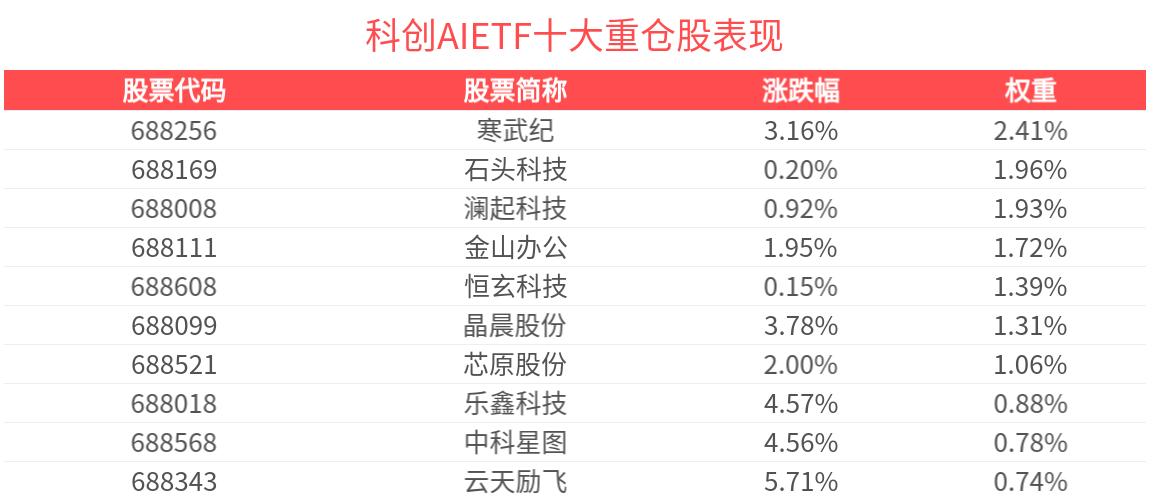
Core Viewpoint - Central financial institutions in China, including Central Huijin and China Chengtong, have announced significant stock purchases, indicating confidence in the Chinese capital market and the value of A-shares [1][2] Group 1: Market Performance - As of April 8, 2025, the Shanghai Stock Exchange Sci-Tech Innovation Board Artificial Intelligence Index (950180) rose by 2.72%, with notable increases in constituent stocks such as Hongsoft Technology (688088) up 9.11% and Chipsea Technologies (688595) up 8.11% [1] - The Sci-Tech AI ETF (588790) increased by 1.96%, with the latest price at 0.52 yuan [1] Group 2: Institutional Actions - Central Huijin announced further purchases of exchange-traded funds (ETFs) to support market stability, emphasizing a positive outlook on the development of the Chinese capital market [1] - China Guoxin stated that its investment arm will increase holdings in central enterprise stocks, technology innovation stocks, and ETFs, with an initial amount of 80 billion yuan [1] Group 3: ETF Performance Metrics - The Sci-Tech AI ETF recorded a turnover rate of 3.06% and a transaction volume of 76.25 million yuan on April 7, 2025, with an average daily transaction volume of 333.2 million yuan over the past month, ranking first among comparable funds [3] - The latest scale of the Sci-Tech AI ETF reached 2.43 billion yuan, placing it in the top fifth among comparable funds [4] - The ETF's share count reached 4.792 billion, marking a new high since its inception and also ranking in the top fifth among comparable funds [5] Group 4: Fund Inflows and Returns - The Sci-Tech AI ETF experienced continuous net inflows over six days, with a peak single-day net inflow of 145 million yuan, totaling 354 million yuan, averaging 59.04 million yuan in daily net inflows [6] - Since its inception, the ETF achieved a maximum monthly return of 15.59%, with a historical holding period of three months showing a 100% probability of profit [6] Group 5: Fee Structure and Tracking Accuracy - The management fee for the Sci-Tech AI ETF is 0.50%, and the custody fee is 0.10%, making it the lowest among comparable funds [7] - As of April 7, 2025, the ETF's tracking error over the past month was 0.010%, indicating the highest tracking precision among comparable funds [8] Group 6: Top Holdings - As of March 31, 2025, the top ten weighted stocks in the Sci-Tech Innovation Board Artificial Intelligence Index accounted for 70.57% of the index, with companies like Lattice Semiconductor (688008) and Cambricon Technologies (688256) among the top performers [8][10]


中泰期货晨会纪要-2025-04-08
Zhong Tai Qi Huo· 2025-04-08 01:48
Report Industry Investment Rating No relevant content provided. Core View of the Report - The market is affected by tariff conflicts, with high uncertainty. The global recession model remains the baseline expectation. The weakening of equity expectations is the main short - term logic, and there are many uncertainties in the medium - term. It is recommended to be cautious, considering short - selling or hedging [4][5]. - For the bond market, the trading logic has shifted from concerns about the capital side to the fundamentals. With the high uncertainty of tariff conflicts, monetary easing may be on the way. It is recommended to consider simple and effective unilateral strategies and also consider steepening the yield curve [6]. Summary by Related Catalogs Macro Information - A - shares adjusted on Monday due to overseas tariff shocks. Central Huijin, China Chengtong, and China Guoxin increased their holdings of ETFs and stocks to maintain the stability of the capital market. China has sufficient room for policy adjustment in monetary and fiscal policies and will take measures to boost domestic consumption and stabilize the capital market. China Guoxin's subsidiary will increase its holdings of stocks and ETFs with an initial amount of 80 billion yuan [4]. - The land markets in hot cities are hot, and the real estate trading volume in first - tier and core second - tier cities continues to recover. The "Silver April" is an important node for the property market [4]. - The White House denied the news of a 90 - day tariff suspension. The EU proposed to impose a 25% tariff on a series of US imports starting from May 16 and removed US bourbon whiskey from the counter - tariff list [4]. - The Fed held a closed - door meeting to review and determine interest rates. Goldman Sachs raised the probability of a US recession in the next 12 months to 45% and lowered the GDP growth forecast for Q4 2025 to 0.5% [4]. - Trump threatened to impose an additional 50% tariff on China if China does not withdraw the 34% tariff retaliation by April 8 [4]. - Eurozone's February retail sales increased by 0.3% month - on - month, and the April Sentix investor confidence index was - 19.5 [4]. Stock Index Futures - The market declined significantly due to tariff conflicts. The uncertainty of tariff conflicts remains, and the global recession model is the baseline expectation. It is recommended to consider short - selling or hedging, being cautious [4][5]. Treasury Bond Futures - The recession expectation pushed the bond market to open higher, but capital net withdrawal and exchange - rate depreciation pressure restricted the bond market. The trading logic has shifted to the fundamentals, and monetary easing may be coming. It is recommended to consider simple unilateral strategies and steepening the yield curve [6]. Container Shipping on European Routes - If the tariff policy is implemented, the shipping volume on the US routes will face pressure, and the overflow of capacity to European routes may suppress freight rates. In the short - term, the improvement of supply - demand is difficult to achieve, and the market's expectation of the peak season may be restricted. It is recommended to do an EC2506/EC2510 reverse spread [7]. Cotton - The price of US cotton was affected by Trump's "reciprocal tariff" order. The domestic cotton price is expected to be weak due to concerns about external demand, high inventory, and the contradiction between domestic demand expansion and weak external demand [8]. Sugar - The sugar price was under pressure due to the US tariff policy and higher - than - expected domestic production. In the future, factors such as India's production cut, Brazil's new harvest season, and Thailand's production increase will affect the price. The sugar price is expected to fluctuate and be resistant to decline [8][9][10]. Oilseeds and Oils - Palm oil may face a decline in the far - month contracts due to the drop in international crude oil prices and the weakening of the driving force for the rise in domestic oils. The price of soybean meal rose due to China's tariff on US imports. In the short - term, it may be strong, but there is also hedging pressure. It is recommended to go long on the far - month soybean meal contracts [10][11]. Eggs - The egg futures rebounded due to factors such as faster spot sales and feed price increase expectations but then fell back due to the overall loose supply - demand situation. In the future, the supply is expected to increase, and the demand has unfavorable factors. Feed price increase may support the far - month contracts and strengthen the pattern of near - weak and far - strong. It is recommended to short - sell on the 05 - 07 rebound and consider a short - 7 long - 9 reverse spread [11][12][13]. Apples - The apple price was supported by factors such as strong spot prices, fast inventory clearance, and high delivery costs. It is recommended to buy on dips with a light position [14]. Red Dates - The red date market was less affected by the external environment due to its self - sufficient nature. With the increase in seasonal fresh fruits, the demand for red dates decreased, and the inventory was high. It is recommended to hold short positions and pay attention to roll - over risks [14]. Pigs - The pig price rebounded due to the reduction in supply by leading enterprises. In the future, the supply pressure will continue to be realized, and the consumption is in the off - season. It is recommended to wait and see in the short - term and look for short - selling opportunities on rallies in the medium - term [15]. Crude Oil - The international oil price fell due to the US tariff policy. In the long - term, the supply will increase, and the demand is weak. The oil price is in a panic - selling stage, and there is no sign of stabilization [15][16]. Fuel Oil - The fuel oil price was affected by the trade war. The impact on import - export shipping demand is significant, and the price has not bottomed out, depending on the market's interpretation of the trade war [17][18]. Plastics - In the long - term, tariffs will suppress export demand. In the short - term, factors such as reduced imports and potential production cuts in PP may have a greater impact. It is recommended to be bearish on L and wait and see for PP [19]. Methanol - The demand for methanol is expected to weaken due to the US - China tariff war and the increase in import supply. The market has different views on methanol pricing. It is recommended to have a bearish view [20]. Caustic Soda - The spot price of caustic soda in Shandong declined. The Trump tariff policy has a negative impact on the demand for caustic soda. It is recommended to have a bearish view on caustic soda futures [20][21]. Soda Ash and Glass - The price of soda ash opened low and rebounded. The supply is at a high level, and there is a risk of inventory accumulation. The glass price opened low and then strengthened, with good short - term sales and inventory reduction. It is recommended to wait and see and consider a long - glass and short - soda - ash spread [22][23]. Liquefied Petroleum Gas (LPG) - The LPG price was affected by the counter - tariff and the drop in crude oil prices. The import cost has increased, and the demand is affected by the global recession expectation. The price increase is restricted [23]. Pulp - The pulp price fell due to the macro - economic situation. The demand is weak, and the inventory is high. In the medium - term, the supply of coniferous pulp may be tight due to the tariff on US imports [23]. Logs - The log market is in a stable and oscillating state. The demand has improved, and the inventory is decreasing. Attention should be paid to the impact of Sino - US trade friction [23]. Urea - The spot price of urea is weak, and the futures price has no obvious upward momentum in the short - term. There is a demand for bargain - hunting in the future. It is recommended to change from a bearish to a bullish view when the market improves [23][24]. Synthetic Rubber - The synthetic rubber market was affected by the macro - environment and stopped trading at the daily limit. It is recommended to wait and see [25]. Aluminum and Alumina - The price of aluminum was affected by the Trump tariff, with a short - term emotional impact. It is recommended to go short on rallies. The alumina market has an oversupply problem, and it is also recommended to go short on rallies in the short - term [25][26]. Lithium Carbonate - The lithium carbonate price was affected by the US tariff policy. The direct impact on the lithium salt end is limited, and the demand on the finished - product end may be restricted. The short - term price is mainly affected by its own supply - demand [27][28]. Steel and Iron Ore - The prices of steel and iron ore declined due to the US tariff policy. The current price decline may have reflected the negative impact, and it is difficult to rebound significantly in the short - term. The supply - demand is neutral, and it is recommended to wait and see or go short on rallies [29][30]. Coking Coal and Coke - The prices of coking coal and coke were weak due to the tariff policy. The production enthusiasm of coking coal mines is affected, but large - scale production cuts are unlikely in the short - term. The demand may improve, but it needs to be observed. It is recommended not to go long until there are signs of large - scale production cuts or a decline in Mongolian coal imports [31]. Ferroalloys - The prices of ferrosilicon and silicomanganese opened lower and then rebounded. The supply - demand contradiction is not significant, and the cost is under downward pressure. It is recommended to go short on rallies [32].
国泰君安:4月11日起A股证券简称变更为国泰海通;基金年内分红近680亿元 | 券商基金早参
Mei Ri Jing Ji Xin Wen· 2025-04-08 00:46
Group 1 - Guotai Junan will change its A-share stock name to Guotai Haitong starting April 11, 2025, following the approval of a merger with Haitong Securities [1] - The name change signifies a deep integration between the two brokerages, potentially enhancing overall competitiveness [1] - Market will focus on the synergistic effects and business integration post-merger, which may influence stock prices and the brokerage sector [1] Group 2 - Significant inflow of funds into ETFs, with a net inflow of over 49 billion yuan in a single day, indicating strong market support [2] - Major contributors include Huatai-PineBridge CSI 300 ETF and E Fund CSI 300 ETF, which received net inflows of 17.564 billion yuan and 9.2 billion yuan respectively [2] - This influx of capital is expected to stabilize the stock market and enhance investor confidence [2] Group 3 - Public funds have distributed nearly 68 billion yuan in dividends this year, reflecting robust performance and a strong willingness to return profits to investors [3] - Leading fund companies in terms of total dividends include Huaxia Fund, Bank of China Fund, and E Fund, with distributions of 4.727 billion yuan, 4.478 billion yuan, and 4.175 billion yuan respectively [3] - The trend of large-scale dividends may influence the asset size of related fund products and the overall service quality in the public fund industry [3] Group 4 - Zhongtai Securities has received approval to issue company bonds totaling up to 20 billion yuan, enhancing its capital strength [4] - This move is expected to expand business scale and improve market competitiveness [4] - The approval reflects regulatory support for market financing functions, which may boost market confidence and stability [4]



“国家队”相继宣布增持!上市公司也纷纷行动,宁德时代豪掷80亿元回购
2 1 Shi Ji Jing Ji Bao Dao· 2025-04-08 00:23
Group 1 - The A-share market experienced significant adjustments on April 7, prompting major state-owned enterprises like Central Huijin, China Chengtong, and China Guoxin to increase their holdings in Chinese stocks to stabilize the market [1][2] - China Electronics Technology Group announced it has completed a stock repurchase of over 2 billion yuan, reinforcing its commitment to the capital market and supporting high-quality development of listed companies [1] - China Chengtong's subsidiaries increased their holdings in ETFs and central enterprise stocks, expressing confidence in the future of the Chinese capital market [1] Group 2 - Central Huijin reaffirmed its positive outlook on the Chinese capital market and has increased its holdings in ETFs, indicating a commitment to maintaining market stability [2] - A number of A-share listed companies announced share repurchases, including CATL, which plans to repurchase between 4 billion and 8 billion yuan of its shares [3] - Haier Smart Home's executives plan to increase their holdings by approximately 20.85 million to 41.7 million yuan [3] Group 3 - Wanhuah Chemical's chairman proposed a share repurchase of 300 million to 500 million yuan, while Guodian NARI's chairman suggested a repurchase of 500 million to 1 billion yuan [4] - Several companies, including China Merchants Shekou and China Merchants Jinling, announced accelerated share repurchase plans based on confidence in their future development [4] - Jiashi Fund emphasized the importance of maintaining a balanced investment strategy in response to market volatility [4] Group 4 - Jiashi Fund recommended strategies to enhance portfolio resilience, including global multi-asset allocation and structured strategies with a focus on dividend yield [5] - The investment opportunity in cross-border municipal bonds is highlighted due to their attractive yields in a low domestic interest rate environment [8] - The importance of macro-hedging strategies to seize unique opportunities in the market is also noted [8]

深夜大乌龙!美股巨震,白宫辟谣!A50拉升,“国家队”再出手
21世纪经济报道· 2025-04-07 15:35
Market Overview - On April 7, U.S. stocks opened lower but later surged, with the Nasdaq index rising over 4% before retreating. By the end of the trading session, the Dow Jones Industrial Average fell by over 390 points, a decline of 1.02% [1] - The Chinese A50 index futures initially surged over 4%, but the gains narrowed to 3.38% by the end of the session [7] Economic Policy Impact - Reports indicated that Kevin Hassett, Director of the White House National Economic Council, suggested that President Trump is considering a 90-day suspension of tariffs on certain countries. However, this was later denied by the White House, leading to volatility in the stock market [3][4] - The market reacted to the news of potential tariff suspensions, initially turning positive before reversing course due to the denial [4] Technology Sector Performance - In the technology sector, Nvidia saw a nearly 4% increase, while Apple and Tesla both dropped over 2% [5][6] Commodity Market Trends - Gold prices fell sharply, dropping below $3,000 per ounce, trading at $2,991.73 [11] - WTI and Brent crude oil futures continued to decline, with WTI falling below $60 per barrel, marking the lowest level since April 2021. Both crude oil benchmarks have dropped over 20% from their January highs of approximately $80 per barrel, entering a bear market [12][14] OPEC+ Production Decisions - OPEC+ announced plans to increase production starting in May, with an additional 410,000 barrels per day, which has contributed to the downward pressure on oil prices [15] U.S. Economic Outlook - Federal Reserve Chairman Jerome Powell expressed concerns about rising inflation and low growth, indicating a cautious approach to monetary policy amid increasing economic uncertainty [17] - The upcoming earnings reports from U.S. companies will provide insights into the microeconomic conditions and potential recession timelines [17]

“关税风暴”席卷A股,三大股指跌超7%,公募券商如何看后市
Bei Jing Shang Bao· 2025-04-07 11:14
"关税风暴"席卷全球,A股遇"黑色星期一"。4月7日,A股三大股指均低开,截至当日收盘,上证综指、深证成指、创业板指分别下跌7.34%、9.66%、 12.5%,超5000家上市公司下跌。盘后,中央汇金宣布出手,充分认可当前A股配置价值,已再次增持了交易型开放式指数基金(ETF)。据了解,4月7日A 股下跌是受到美国总统特朗普"对等关税"、外围市场巨震影响,上述背景下,多家公募、券商认为,中国资本市场抗跌韧性仍存,展望后市,内需、红利、 农业板块投资价值可能进一步凸显。 三大股指跌超7% 4月7日,包含A股在内的全球股市遭遇大跌,"全球股市巨震"相关词条登顶微博热搜,同时,"上证指数"词条也登上热搜。截至4月7日收盘,沪指跌破3100 点,报收3096.58点,下跌7.34%。同期,深证成指跌幅达9.66%,报收9364.5点;创业板指跌幅达12.5%,报收1807.21点。 方正证券首席经济学家燕翔表示,在此关税阴霾导致全球市场动荡之际,A股市场或走出独立性行情,整体好于全球其他市场表现。具体来看,燕翔表示, A股整体受关税的影响,不必过于悲观。虽然我国作为出口大国难免受到关税影响,但应注意到,当前我国对美 ...
ETF周观察第73期(3.31-4.3)
Southwest Securities· 2025-04-07 04:01
Report Industry Investment Rating No relevant content provided. Core Viewpoints - The Shenzhen Stock Exchange suspended trading of the Yin Hua New Economy ETF (QDII) due to the un - receding premium in secondary - market trading prices on March 31, 2025 [2][14]. - As of the end of 2024, Central Huijin's holdings of ETFs reached 317.3 billion shares, with a market value of 1.05 trillion yuan, an increase of 81.6 billion shares and 462.4 billion yuan in market value compared to June 2024. Huijin covered the A - share market through three broad - based products [2][14]. Summary by Directory 1 ETF and Index Product Focus - On March 31, 2025, the Shenzhen Stock Exchange suspended the trading of the Silver Hua Industrial Bank Southern Dongying S&P China New Economy Industry ETF (QDII) from 11:12 until the market closed due to the un - receding premium in secondary - market trading prices [2][14]. - By the end of 2024, Central Huijin's ETF holdings reached 317.3 billion shares, worth 1.05 trillion yuan, with significant increases in holdings of CSI 300, CSI 1000, and STAR Market - related ETFs [2][14]. 2 Last Week's Market Performance Review 2.1 Main Asset Index Performance - Last week, domestic equity broad - based indices all declined, with the ChiNext Index, CSI 300, CSI 500, STAR 50, and SSE 50 down 2.95%, 1.37%, 1.19%, 1.11%, and 0.65% respectively. Major bond indices all rose, and overseas equity and commodity indices all fell [3][15]. 2.2 Shenwan Primary Industry Performance - Most Shenwan primary industries declined last week. Utilities, agriculture, forestry, animal husbandry, and fishery, and pharmaceutical and biological sectors led the gains, while the automobile, power equipment, and household appliance sectors led the losses [19]. 3 Valuation - Last week, most valuation quantiles of major equity broad - based indices declined. Only the Wind All - A and CSI 500 valuations rose by 0.29% and 0.04% respectively. Most Shenwan primary industry valuation quantiles also declined [22][29]. 4 ETF Scale Changes and Trading Volume 4.1 ETF Scale Changes - Last week, non - monetary ETF scale decreased by 6.476 billion yuan, with a net inflow of 37.013 billion yuan. Commodity, bond, and cross - border non - Hong Kong stock ETFs saw scale increases, while cross - border Hong Kong stock and equity ETFs saw scale decreases [34]. - Among equity broad - based ETFs, the Guozheng 2000 theme ETF had the largest scale increase, and the CSI 300 theme ETF had the largest scale decrease. The CSI 300 theme ETF had the largest net inflow, and the CSI 500 theme ETF had the largest net outflow [34]. 4.2 ETF Trading Volume - Compared with the week before last, the daily average trading volume of some ETFs increased significantly, including the GF CSI Hong Kong Innovative Drug ETF in cross - border non - Hong Kong stock ETFs, etc. [48]. 5 ETF Performance - Last week, the Southern Hang Seng Biotechnology ETF in cross - border non - Hong Kong stock ETFs, the Invesco Great Wall CSI Hong Kong Stock Connect Innovative Drug ETF in cross - border Hong Kong stock ETFs, etc., performed best in their respective categories [7][51]. 6 ETF Margin Trading and Short Selling - This week, the total margin buying amount was 48.535 billion yuan, a decrease of 11.578 billion yuan from last week. The total margin selling volume was 171 million shares, a decrease of 70 million shares from last week [54]. 7 Current ETF Market Scale - As of last Thursday (April 3, 2025), there were 1,111 listed ETFs in the market, with a total scale of 3.804346 trillion yuan. Among equity ETFs, scale - based index ETFs had the largest scale [55]. 8 ETF Listing and Issuance - Last week, 4 ETFs were listed for trading, and 11 new ETFs were established, mostly passive index funds. Since April, 4 ETFs have been issued, with a total issuance scale of 30.35 billion yuan [8][67][68].
中央汇金持有ETF市值超万亿【国信金工】
量化藏经阁· 2025-04-06 12:59
Market Review - The A-share market saw a decline across major broad-based indices, with the Shanghai Composite Index, CSI 1000, and STAR 50 Index showing returns of -0.28%, -1.04%, and -1.11% respectively, while the ChiNext Index, SME Index, and Shenzhen Component Index lagged with returns of -2.95%, -2.93%, and -2.28% respectively [6][13] - The total trading volume for major indices decreased, with the average daily trading volume for the past month also declining, placing indices within the 20%-55% historical percentile range over the past 52 weeks [16][17] - In terms of sector performance, electricity and public utilities, agriculture, forestry, animal husbandry, and medicine had positive returns of 2.53%, 1.56%, and 1.15% respectively, while the automotive, electric equipment and new energy, and home appliance sectors had negative returns of -3.54%, -3.14%, and -3.13% respectively [19][21] Fund Performance - A total of 18 new funds were established last week, with a total issuance scale of 4.713 billion yuan, a decrease from the previous week. Additionally, 24 funds entered the issuance phase, and 40 funds are set to begin issuance this week [3][4] - The median returns for active equity, flexible allocation, and balanced mixed funds were -1.52%, -1.06%, and -0.87% respectively last week. Year-to-date, alternative funds have performed the best with a median return of 8.86% [6][33][35] - The median performance of target date funds was the best among open-end public funds, with a cumulative return of 1.92% this year [40] ETF Holdings - Central Huijin's ETF investment scale has reached 1.05 trillion yuan, covering 48 ETFs with a total holding of 371.6 billion shares. The top holdings include the Huatai-PB CSI 300 ETF and E Fund CSI 300 ETF [8][11] - The largest increase in holdings was seen in the Huatai-PB CSI 300 ETF, with an increase of 25.893 billion shares, followed by the E Fund CSI 50 ETF with an increase of 11.785 billion shares [11][12] Bond Market - As of last Friday, the central bank's reverse repos net drained 501.9 billion yuan, with a total of 1.1868 trillion yuan maturing and a net open market injection of 684.9 billion yuan. The repo rates for different maturities have decreased, with the 7-day rate down by 51.42 basis points [22][23] - The median conversion premium rate for convertible bonds was 28.47%, an increase of 1.29% from the previous week, while the pure bond premium rate decreased by 0.60% to 15.35% [27]

金融市场流动性与监管动态周报:ETF重回净流入,四季度个人投资者增持ETF及联接基金-2025-04-01
CMS· 2025-04-01 14:03
Group 1 - The report highlights that individual investors and central Huijin contributed the main incremental growth in ETF holdings, with individual investors' share slightly decreasing to 41.2% and institutional investors' share increasing to 58.2% as of Q4 2024 [4][9]. - Individual investors are accelerating their market entry through fund-of-funds (FOFs), with the scale of ETF FOFs growing rapidly to 490 billion, reflecting high enthusiasm among individual investors [4][9]. - Individual investors hold a higher proportion of industry, style, and thematic ETFs, while large-scale index ETFs like the CSI 300 are primarily held by institutional investors [4][9]. Group 2 - The report indicates that the liquidity in the secondary market is tight, with a net outflow of 147.9 billion in financing funds, while ETFs saw a net inflow of 20.4 billion [4][31]. - The report notes that the net inflow of stocks in the ETF category was highest for the technology sector, while the pharmaceutical sector experienced significant redemptions [55][56]. - The report identifies that sectors such as non-ferrous metals, basic chemicals, and banks received substantial net inflows from various funds, indicating a preference for these industries [50][51].
持仓超1万亿!中央汇金大笔加仓
天天基金网· 2025-04-01 11:15
Group 1 - The core viewpoint of the article highlights that Central Huijin's ETF holdings have exceeded 1 trillion yuan, indicating a significant increase in investment in various ETFs, particularly in large-cap and technology-focused sectors [2][3] Group 2 - As of the end of 2024, Central Huijin holds a total of 3.173 billion shares of ETFs, with a market value of 1.05 trillion yuan, reflecting an increase of 816 million shares and 462.4 billion yuan in market value compared to June 2024 [2] - The major ETFs that saw increased holdings include the four leading Hu-Shen 300 ETFs, where the shareholding rose from 1.337 billion shares in mid-2024 to 1.720 billion shares by year-end, with a total market value of 690.5 billion yuan [2] - Central Huijin also significantly increased its holdings in the CSI 1000 ETFs, with shares nearly doubling from 189 million to 373 million, and the market value rising from 53.2 billion yuan to 90.3 billion yuan [2] - The increase in holdings of the Sci-Tech Innovation Board related ETFs is notable, with a total of 1.84 billion shares held by year-end, up over 5.6 million shares from mid-2024, and the market value increasing from 9.3 billion yuan to 18.7 billion yuan [3] - Central Huijin's strategy reflects a comprehensive layout in the A-share market, targeting large-cap blue chips, small and medium enterprises, and technology innovation companies [3]