米哈游

Search documents
MiniMax上市!AI最快IPO背后:红杉、IDG、基石资本等成赢家
新华网财经· 2026-01-09 02:57
Core Viewpoint - MiniMax, a young AI model company, successfully went public on the Hong Kong Stock Exchange, becoming the fastest IPO in the AI model sector, supported by multiple venture capital firms [2]. Investment Background - MiniMax has undergone seven rounds of financing, with early investors including prominent firms such as Yunqi Capital, IDG, Hillhouse Capital, and MiHoYo. Tencent and Alibaba participated in its Series A and B rounds, with the latest round in August last year raising approximately $390 million, leading to a valuation exceeding $4.2 billion [2]. - The company has a diverse investor base, including internet giants like Alibaba and Tencent, venture capital firms such as Sequoia and IDG Capital, and sovereign wealth funds [3]. Investment Matrix - The investment matrix of MiniMax includes industrial capital, well-known venture capital, and international capital, providing a synergistic value and global perspective. This structure allows for a clear path to value realization post-IPO [4]. - Industrial investors, holding over 25% of shares, have established business collaborations with MiniMax, creating a win-win situation by providing market channels and technical support for AI transformation [4]. - The presence of international capital highlights global recognition of Chinese AI technology, with early-stage investors supporting the company's growth [4]. Future Prospects - The financial performance will be a critical test for MiniMax in the Hong Kong market, which emphasizes commercialization and profit levels. The company is expected to enhance its model capabilities, leading to new applications and software forms [5]. - The youthful composition of the board, with members around 30 years old, is seen as a core advantage for MiniMax in understanding user demands in social and entertainment sectors [5].


MiniMax上市!AI最快IPO背后:红杉、IDG、基石资本等成赢家
Zheng Quan Shi Bao Wang· 2026-01-09 01:49
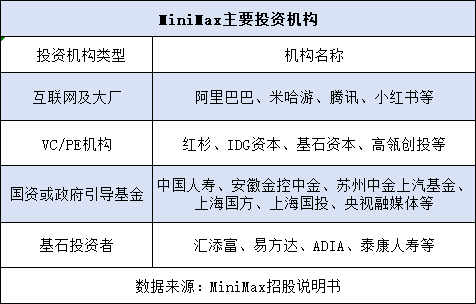
记者查阅公司招股书发现,MiniMax的股东名单,几乎集齐了中国互联网、内容和硬科技投资圈的核心 玩家。 在战略投资人中,包括米哈游、阿里巴巴、腾讯、小红书、小米、金山、正大集团等;在财务投资人 中,则包括红杉、经纬、基石资本、云启资本、IDG、高瓴创投、明势创投等。 1月9日,成立仅四年的人工智能大模型企业MiniMax(稀宇科技,0100.HK)正式登陆港交所。这家 以"Intelligence with Everyone"为愿景的年轻企业,凭借全模态自研技术和全球化商业布局在一众大模型 初创企业中脱颖而出,成为全球最快IPO的大模型企业。而上市背后,则是多家创投机构的一路鼎力支 持。 投资机构星光熠熠 上市前,MiniMax历经了7轮融资,早期投资方包括云启资本、IDG、高瓴创投、明势创投、米哈游 等,后腾讯、阿里巴巴参与了其A轮和B轮融资。最近的一轮融资在去年8月,融资金额约3.9亿美元, 此轮融资后其估值超过42亿美元。 | Iini ax主要投资机构 | | | --- | --- | | 投资机构类型 | 机构名称 | | 互联网及大厂 | 阿里巴巴、米哈游、腾讯、小红书等 | | VC/PE机 ...
MINIMAX-WP(0100.HK)招股中,募超40亿,基石占67.88%
Ge Long Hui· 2026-01-09 01:20
Core Viewpoint - MiniMax-WP (2675.HK) is currently in the process of an IPO, with a global offering of approximately 25.39 million shares, aiming for a market capitalization of around HKD 46.12 billion to HKD 50.40 billion upon listing [1][11]. Company Overview - MiniMax is a global AI large model company founded by forward-thinking engineers, focusing on advancing AI technology to perform various human intelligence tasks, including learning, reasoning, planning, and generalizing knowledge across multiple domains [7]. - The company has developed a rich portfolio of large models, including large language models (MiniMax M series), video generation models (Hailuo-02), and speech and music generation models (Speech-02) [7]. IPO Details - The IPO subscription period is from December 31, 2025, to January 6, 2026, with the expected listing date on January 9, 2026 [1]. - The offering price is set between HKD 151.00 and HKD 165.00, with a total fundraising amount of approximately HKD 4.01 billion based on the midpoint price of HKD 158.00 [1]. - The public offering will initially account for 5% of the total shares, with a maximum possible reallocation to 20% [1][12]. Investor Participation - The cornerstone investment portion is approximately HKD 38.11 billion, with 14 cornerstone investors participating, including notable entities such as Abu Dhabi Investment Authority, Alibaba, and IDG, collectively investing around USD 350 million, which represents 67.88% of the global offering [1][38]. - The total margin subscription amount reached approximately HKD 20.46 billion, with a subscription multiple of about 97.67 times as of January 2, 2026 [3]. Financial Performance - For the first nine months of 2025, the company reported revenues of USD 53 million, reflecting a year-on-year increase of 174.68%, while the net loss expanded to USD 512 million, a year-on-year increase of 68.24% [15][16]. - The revenue breakdown indicates that AI-native products account for 71.1% of total revenue, while open platform and other AI-based enterprise services contribute 28.9% [21][22]. Use of Proceeds - Approximately 90% of the raised funds will be allocated to research and development [37]. - The net proceeds will be used as follows: 70% for large model development, 20% for AI-native product development and scaling, and 10% for working capital and general corporate purposes [41].
MiniMax 上市,“多巴胺”能否供养“AGI 野心”?
3 6 Ke· 2026-01-09 00:19
Core Insights - The article discusses the emergence of MiniMax as a unique player in the AI industry, showcasing a different approach to achieving AGI (Artificial General Intelligence) compared to traditional models like OpenAI [1][4][16] - MiniMax's strategy emphasizes efficiency and monetization capabilities, contrasting with the heavy investment and large teams typical of other AI companies [1][4][16] Company Overview - MiniMax, founded by former SenseTime executive Yan Junjie, has adopted a "light asset, heavy model, high human efficiency" approach, allowing it to maintain a cash reserve of $1.102 billion, sufficient for 53 months of operations [5][16] - The company has spent approximately $500 million since its inception, significantly less than OpenAI's estimated expenditure of $40-55 billion, highlighting its financial efficiency [4][16] Business Model - MiniMax's revenue model is heavily reliant on its C-end business, which contributed over 71% of its revenue as of September 30, 2025, primarily from the Talkie platform [6][11] - The company faces challenges in being perceived as merely a gaming company, which could affect its valuation in the market [8][10] B-end Strategy - MiniMax's B-end business, which generated $1.542 million in revenue and saw a 161% year-on-year increase, is crucial for validating its AGI capabilities and supporting ongoing technological iterations [11][15] - The B-end strategy focuses on providing standardized API services rather than customized solutions, allowing MiniMax to collaborate with over 130,000 enterprise clients globally [13][15] Technological Development - MiniMax integrates AI deeply into its workflows, with approximately 80% of its programming code generated by AI, showcasing a collaborative evolution between AI and human efforts [2][4] - The company aims to position itself as a leader in AGI by embedding its technology into various products, moving beyond the perception of being a mere entertainment platform [10][14] Market Positioning - MiniMax's dual approach of leveraging C-end revenue to support B-end technological advancements is seen as a pragmatic solution to the challenges faced by AI startups [16] - The company is actively working to redefine its identity in the market, distancing itself from gaming associations while emphasizing its technological prowess and AGI ambitions [10][16]
腾讯阿里的子弹,命中同一IPO
虎嗅APP· 2026-01-09 00:10
Core Viewpoint - The article highlights the rapid rise of MiniMax (稀宇科技) in the AI industry, emphasizing its successful IPO on the Hong Kong Stock Exchange and the significant market interest it has generated, with a potential market valuation exceeding 50 billion HKD [6][7]. Group 1: IPO and Market Response - MiniMax's IPO on January 9, 2024, was marked by unprecedented subscription enthusiasm, with a total subscription amount exceeding 253.3 billion HKD and an oversubscription rate of 1,209 times, setting a record for institutional subscriptions in Hong Kong [6]. - The stock opened strong, reaching a peak of 211.2 HKD per share, closing at 205.6 HKD, reflecting a 24.6% increase on its first day [7]. Group 2: Company Background and Leadership - MiniMax was founded by Yan Junjie, a former vice president at SenseTime, who has a strong background in AI technology, particularly in facial recognition and natural language processing [12][20]. - The company has a notably young team, with an average employee age of 29, yet it has achieved significant productivity, with a research and development investment of only 500 million USD compared to OpenAI's estimated 40-55 billion USD [12][20]. Group 3: Technological Advancements and Product Development - MiniMax has focused on developing a full-stack AI business model, achieving significant milestones in various AI modalities, including text, audio, and video generation [20][22]. - The company launched its AI social platform Talkie, which allows users to create virtual intelligent agents, and has developed the MoE (Mixture of Experts) model, becoming the first in Asia to commercialize this architecture [16][20]. Group 4: Financial Performance and Growth - In the first three quarters of 2025, MiniMax reported revenues of 53.4 million USD, surpassing the total revenue of 30.5 million USD for the entire year of 2024, marking it as one of the few AI companies in China to achieve over 100 million USD in annual revenue [23][24]. - The company has shown a significant improvement in gross margin, increasing from -24.7% in 2023 to 23.3% in the first three quarters of 2025 [23]. Group 5: Market Position and Future Outlook - MiniMax's business model is driven by both B2C and B2B segments, with over 2.12 billion users and a notable 71.1% of revenue coming from subscription and paid services [22][24]. - The company has raised over 1.5 billion USD in funding from prominent investors, indicating strong confidence in its technology and growth potential [27][28].
MiniMax港股IPO明日挂牌 暗盘涨超30% 簿记信息意外透露 多家外资主权及长线基金参与认购
Xin Lang Cai Jing· 2026-01-08 11:25
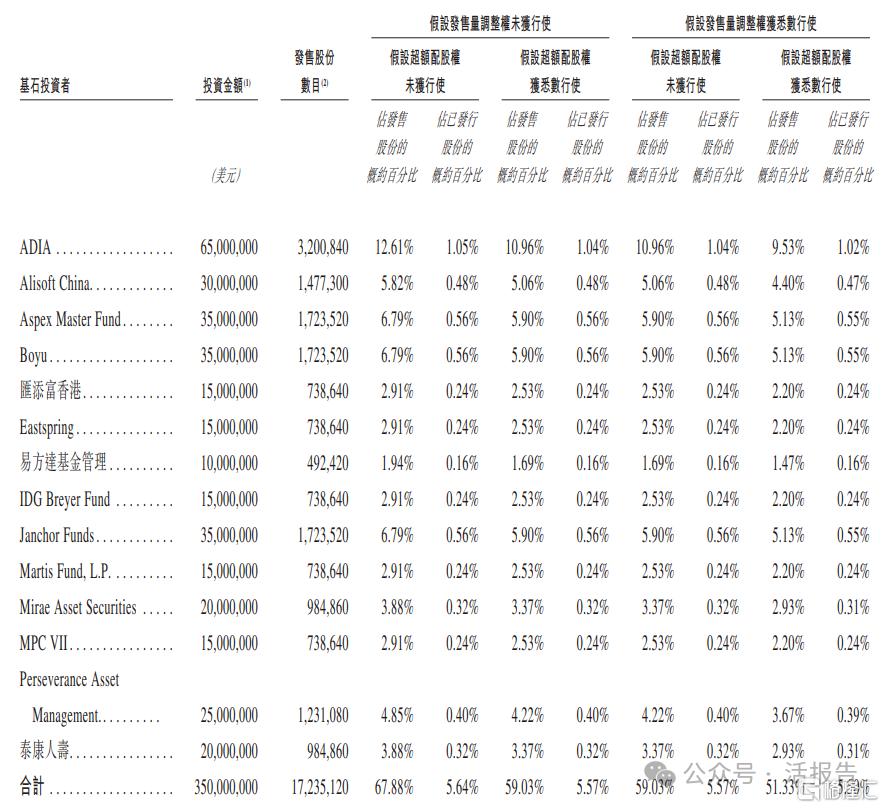
专题:MiniMax递表港交所:米哈游、腾讯、阿里押注,或创下AI最快IPO纪录 备受市场关注的AI大模型企业MiniMax港股IPO全球发售结束,并将于明日正式在香港交易所挂牌交 易。本次IPO发行价为165港元,位于价格区间上限,发售量调整权全额行使后,融资规模达48亿港 元。市场表现方面,根据华盛通交易数据显示,MiniMax股价一度上涨32%,触及每股218港元。 回溯过往,MiniMax已获得米哈游、阿里、腾讯、小红书、高瓴、IDG、红杉、经纬等多家头部机构的 前期投资与支持。本次IPO更是成功引入14家实力雄厚的基石投资者,合计认购金额达3.5亿美元。其 中,阿布扎比投资局认购6500万美元,阿里旗下Alisoft China认购3000万美元,另外还有外资长线基金 Eastspring、Mirae,中资公募汇添富、易方达,中资保险泰康人寿,中资知名私募博裕、高毅等其他投 资者参与认购。 据彭博社报道,知情人士透露面向机构投资者发行的股份(不含基石投资者部分)获得了超70倍的超额 认购,累计收到超过460份机构投资者报价。其中,全球知名投资机构柏基投资(Baillie Gifford)、新 加坡政 ...
大麦娱乐携手2026原神嘉年华,以品牌创新合作构建用户沟通桥梁
Huan Qiu Wang· 2026-01-08 06:25
Core Insights - The third "Genshin Impact☆FES" held in Shanghai attracted over 80,000 attendees, with nearly 80% coming from other cities, showcasing the event's broad appeal and the popularity of the Genshin Impact IP [1][8] - The collaboration between Damai Entertainment and Genshin Impact FES has evolved from ticketing to a comprehensive brand partnership, enhancing user engagement through various online and offline activities [3][9] Group 1: Event Overview - The event lasted for four days and was characterized by high attendance, indicating strong interest in the Genshin Impact franchise [1][8] - Damai Entertainment's innovative brand collaboration included interactive experiences and travel packages, enhancing the overall attendee experience [3][5] Group 2: Brand Engagement - Online initiatives included customized event pages, electronic commemorative tickets, and interactive tasks to foster player engagement [3] - Offline, the event featured a dedicated brand booth with interactive elements, such as a themed photo booth and exclusive merchandise, promoting direct interaction between the brand and users [5][7] Group 3: Market Trends - The success of the Genshin Impact FES reflects the growing potential of anime IPs in driving offline events and community engagement [8] - Damai's platform shows a strong affinity among the younger demographic, with 41.4% of users being from the post-2000 generation, indicating a trend towards high-interaction entertainment activities [8][9] Group 4: Future Directions - Damai Entertainment plans to continue focusing on user-centered brand innovation and collaboration with quality IPs to expand the boundaries of real-world entertainment [9]

卡游IPO对赌倒计时,米哈游投资的Suplay想反超抢滩“卡牌第一股”?|观察
Sou Hu Cai Jing· 2026-01-08 03:39
Core Viewpoint - Suplay, a trendy IP consumer goods company, has submitted its IPO application to compete for the title of "first card stock" amidst challenges faced by the card gaming industry, particularly with the ongoing struggles of its competitor, 卡游 [1][2]. Company Overview - Founded in late 2019, Suplay focuses on global IP collectibles and consumer products, achieving nearly 300 million RMB in revenue within six years [3]. - The company has a unique positioning targeting adult collectors, with over 99% of its buyers being 18 years or older, distancing itself from the issues associated with younger consumers [1][2]. - Suplay's revenue is heavily reliant on external licensed IPs, with only 4% of its income coming from its own IPs, indicating a significant dependency on external sources [1][16][17]. Financial Performance - Suplay's revenue for 2023, 2024, and the first three quarters of 2025 is projected to be 145.725 million RMB, 280.504 million RMB, and 283.293 million RMB, respectively [5][10]. - The net profit for the same periods is expected to be 2.949 million RMB, 49.115 million RMB, and 37.074 million RMB [5][10]. - The gross profit margins for Suplay are 41.7%, 45.8%, and 54.5% for the respective years, which are lower than its competitor 卡游's margins [14]. Market Position and Strategy - Suplay claims the top position in the Chinese collectible non-combat card market, surpassing the combined revenue of its closest competitors [3]. - The company has shifted its focus from consumer products to collectible cards, with the latter's revenue share increasing from 32.9% in 2023 to 70% in 2025 [9][10]. - Suplay's pricing strategy for collectible cards is significantly higher than that of 卡游, with average sales prices for collectible cards being 31 RMB, 42.3 RMB, and 43 RMB for the respective years [12]. IP Dependency and Risks - The majority of Suplay's revenue comes from a few licensed IPs, with the top five contributing approximately 47.8%, 61.5%, and 77.7% of total revenue over the years [19]. - The company faces challenges in maintaining the popularity of its own IPs, which have shown weak market performance [19]. - Suplay's reliance on external IPs poses risks, as many of these agreements are non-exclusive and subject to market fluctuations [16][19]. Distribution and Channel Management - A significant portion of Suplay's revenue (74.1% to 81.8%) comes from distributor channels, which the company admits to having limited control over [22]. - The company does not own any production facilities, relying entirely on third-party manufacturers, which raises concerns about quality control and adherence to specifications [22]. - Suplay's business model includes products with "blind box" mechanisms, which are under regulatory scrutiny, adding another layer of risk to its operations [24].

Suplay递表港交所 卡牌行业角逐升温
Bei Jing Shang Bao· 2026-01-07 15:39
Core Viewpoint - Suplay Inc. has submitted its IPO application to the Hong Kong Stock Exchange, focusing on high-end collectible non-battle cards, but faces risks related to its reliance on licensed IPs and increasing competition in the card industry [1][5]. Company Overview - Suplay was founded in 2019 and initially sold trendy toys through a WeChat mini-program. It acquired a toy design and manufacturing company in 2021 and launched its own brands, becoming a significant player in the collectible card market [2]. - The company ranks first in China's collectible non-battle card market by GMV and is the only Chinese brand among the top five global collectible non-battle card brands [2]. Market Strategy - Suplay targets adult consumers with a strong emotional connection to classic Western IPs, offering collectible items that are more accessible than their Western counterparts. The company emphasizes high-end products with a single card price exceeding RMB 10 [3]. - Approximately 99.5% of Suplay's collectible card consumers are adults, with women making up 52.7% of the customer base [3]. Financial Performance - Suplay's revenue from collectible and consumer products is growing, with revenues of RMB 146 million, RMB 281 million, and RMB 283 million projected for 2023, 2024, and the first three quarters of 2025, respectively [3]. - The revenue share from collectible products has increased significantly, rising to 70% in the first three quarters of 2025, while consumer products dropped to 30% [4]. IP Dependency Risks - Suplay heavily relies on licensed IPs, with revenue from licensed IPs increasing to 95% by the first three quarters of 2025, while revenue from self-owned IPs has decreased to 4.1% [5]. - The company faces uncertainty regarding its largest revenue-generating IP, as its licensing agreement has expired, and there is no guarantee of renewal [6]. Competitive Landscape - The card industry is experiencing rapid growth and increased competition, with several companies pursuing IPOs and significant investments in the sector [7]. - Despite the industry's attractiveness, the path to capitalization remains challenging, with no pure card companies having successfully gone public yet [7].
「港股IPO观察」IP授权依赖症下的资本游戏,Suplay抢跑IPO,卡牌“第一股”谁先撞线
Hua Xia Shi Bao· 2026-01-07 14:54
Core Viewpoint - The card game industry is witnessing a competitive landscape with Suplay making a push for an IPO in Hong Kong, while another company, Kayo, faces setbacks with its own IPO, raising questions about who will emerge as the "first card stock" [1][8]. Group 1: Suplay's Business Model and Growth - Suplay, established in late 2019, has rapidly evolved from an online mini-program to a comprehensive trend IP consumer goods company, focusing on high-margin card products [2]. - The revenue from Suplay's collectibles (mainly trading cards) is projected to grow from 47.946 million yuan in 2023 to 117 million yuan in 2024, and further to 198 million yuan in the first three quarters of 2025, with gross margins increasing from 57.9% to 69.5% during the same period [2][9]. - Suplay's self-owned IP products contributed approximately 40.6%, 14.4%, and 4.1% to total revenue in 2023, 2024, and the first nine months of 2025, respectively, while revenue from licensed IP has surged to 95% in the same period [6]. Group 2: Market Position and Competitive Landscape - Suplay is positioned as a leader in the non-combat collectible card segment in China, according to data from Frost & Sullivan, despite its smaller scale compared to Kayo [2]. - Kayo, established in 2011, primarily focuses on trading card games (TCG) but faces challenges in a market that is still maturing, while Suplay targets the high-end collectible card market [8]. - The competition between Suplay and Kayo for the title of "first card stock" is intensified by Kayo's recent IPO setbacks, highlighting the uncertainty in the market [8]. Group 3: Financial Backing and Investor Relations - Suplay has received significant investment, including an $8 million injection from miHoYo, which also holds an 11.86% stake as the largest external shareholder [5]. - The company has a strong consumer loyalty, with a repurchase rate exceeding 75% for collectibles through its WeChat mini-program channels [10]. - Despite its growth, Suplay's reliance on licensed IP poses risks, as the expiration of key licensing agreements could impact revenue stability [6][11].