
沃尔玛

Search documents
对话市商务局局长张非梦:深圳外贸“含新量”不断上升
Nan Fang Du Shi Bao· 2025-08-15 03:09
Core Viewpoint - Shenzhen is set to enhance its role as a high-level international trade hub, driven by the recent policy document issued by the central government, amidst a complex international landscape and trade uncertainties [2][4][6]. Economic Performance - Shenzhen's economy shows resilience and positive momentum, with foreign trade import and export volumes leading among mainland cities, and a notable increase in high-tech product exports [2][7]. Policy Initiatives - The "2025 Shenzhen Foreign Trade Support Policy" and "2025 Shenzhen Service Trade Development Support Policy" have been introduced to stabilize foreign trade and promote consumption, with a focus on supporting enterprises in expanding international markets [10][20]. Trade Facilitation - Efforts are being made to enhance cross-border trade facilitation, including the establishment of a favorable institutional environment for new trade models and the promotion of comprehensive pilot zones for cross-border e-commerce [8][11]. Consumer Market - The Shenzhen government has implemented 39 measures to boost consumption, including a successful "old-for-new" policy that has benefited over 11 million people and generated significant sales [20][21]. Service Trade Development - Shenzhen is advancing service trade innovation, with a focus on creating demonstration platforms and enhancing the integration of service and goods trade [13][14]. Future Outlook - The city aims to continue expanding its international competitiveness through initiatives like the promotion of high-value-added customs maintenance services and the development of new retail formats [16][17][23].


亚马逊点燃美国生鲜外卖大战
Bei Jing Shang Bao· 2025-08-14 14:57
Group 1 - Amazon plans to double its fresh grocery same-day delivery service in the U.S. by the end of the year, expanding to over 2,300 cities [2] - The service allows customers to order fresh groceries alongside other items for delivery within hours, with Prime members enjoying free shipping on orders over $25 [2] - Amazon's CEO of global stores emphasized the company's commitment to innovating and simplifying the grocery shopping experience for customers [2] Group 2 - The U.S. grocery market is valued at $1 trillion annually, with online grocery sales accounting for less than 20% of this market [3] - Walmart holds over 20% market share in the grocery retail sector, with grocery sales making up about 60% of its total U.S. sales [3] - Amazon reported a 13% year-over-year revenue growth to $167.7 billion in Q2, with net profit increasing by 35% to $18.164 billion [3] Group 3 - Following Amazon's announcement, stock prices of several grocery delivery companies, including Instacart and DoorDash, experienced significant declines [4] - Instacart, which has over 5 million paid users, was noted for its rapid delivery capabilities, achieving "one-hour delivery" [4] - DoorDash had previously attempted to acquire Instacart for around $30 billion, but negotiations fell through due to regulatory concerns [5] Group 4 - The fresh grocery sector is characterized as a "blue ocean" market, but profitability remains challenging due to high costs associated with storage, spoilage, and labor [6] - Amazon's extensive logistics infrastructure positions it favorably compared to other online grocery retailers, potentially enabling it to achieve profitable growth [6] - Walmart is also enhancing its delivery capabilities, aiming to provide three-hour delivery service to 95% of Americans [7]
《天才法案》点燃稳定币发行热潮 但实际用例扩张却难题重重
智通财经网· 2025-08-12 13:04
Core Insights - The new U.S. law, known as the GENIUS Act, establishes the first federal regulations for stablecoins, paving the way for their integration into mainstream finance [1][5] - Major financial institutions, including Bank of America and Citigroup, are preparing to launch their own dollar-backed stablecoins, indicating a shift towards "on-chain finance" [1][8] - The rise of stablecoins is linked to the increasing demand for efficient payment systems and cross-border transactions, with significant growth in their usage observed [2][3] Regulatory Framework - The GENIUS Act, signed into law by President Trump, aims to promote the use of digital assets and provides official guidelines for stablecoins, which are typically pegged to the U.S. dollar [1][5] - The act requires issuers to comply with anti-money laundering (AML) and Know Your Customer (KYC) regulations, adding compliance costs for non-bank financial institutions [7][8] Market Dynamics - Stablecoins are seen as "on-chain dollars," backed 1:1 by high-liquidity dollar assets, offering a new payment medium that combines stability and efficiency [2][3] - The monthly settlement volume of stablecoins has reached approximately $650 billion to $700 billion, demonstrating their growing role in financial transactions [3] Tokenization Trends - The concept of tokenization, particularly Real-World Assets (RWA), is gaining traction, with predictions that the market for tokenized assets could exceed $18 trillion by 2033, growing at a CAGR of 53% since 2025 [4] - Tokenization allows traditional assets to be represented as digital tokens on the blockchain, enhancing efficiency and reducing settlement risks [3][4] Challenges and Considerations - Experts caution that the new regulations will not immediately simplify the process for companies looking to adopt stablecoins, as they must navigate complex regulatory and technological challenges [5][6] - Companies must determine the specific use cases for stablecoins, which could influence their decision to create proprietary stablecoins or integrate existing ones [7][8] Institutional Interest - Major banks are actively considering the issuance of their own stablecoins, with executives from Bank of America and Citigroup expressing interest in this area [8] - The regulatory landscape will significantly impact how banks approach stablecoin issuance, particularly regarding capital requirements and liquidity management [8][9] Blockchain Considerations - The choice between public and private blockchains for stablecoin issuance is a critical decision for companies, with banks likely favoring private or permissioned blockchains for enhanced governance and control [9][10] - The ongoing interest in established blockchain networks highlights the importance of reliability and scalability in the stablecoin ecosystem [10][11]


太疯狂了:OpenAI最新估值5000亿美元
3 6 Ke· 2025-08-07 00:46
Core Viewpoint - OpenAI is negotiating a secondary sale of employee stock, potentially reaching a valuation of $500 billion, which would make it the highest-valued private company globally [1][7]. Group 1: OpenAI Valuation - OpenAI's valuation is expected to reach $500 billion, surpassing the current highest private company valuation held by ByteDance at $300 billion [1]. - The rapid increase in OpenAI's valuation is notable, having reached $300 billion after a $40 billion funding round in April 2025 [3][7]. - The valuation growth is attributed to significant investments, including $30 billion from SoftBank during the previous funding round [7]. Group 2: Comparisons with Other Companies - In the U.S. stock market, companies with market capitalizations exceeding $500 billion include Nvidia, Microsoft, Apple, Google, Amazon, and others, totaling around 20 entities [3]. - Other AI companies like Anthropic and xAI are also experiencing substantial valuations, with Anthropic recently valued at $170 billion and xAI at $800 billion after recent funding rounds [4][6]. Group 3: Market Dynamics - The U.S. AI financing market is characterized by rapid valuation increases, with primary market valuations growing faster than secondary market valuations [7]. - OpenAI's valuation strategy may be a response to competitive pressures from companies like Meta, which has been actively recruiting AI talent from OpenAI [7]. - The trend of high valuations in the AI sector reflects a broader phenomenon in the U.S. capital markets, where companies are achieving unprecedented market caps [9][10].

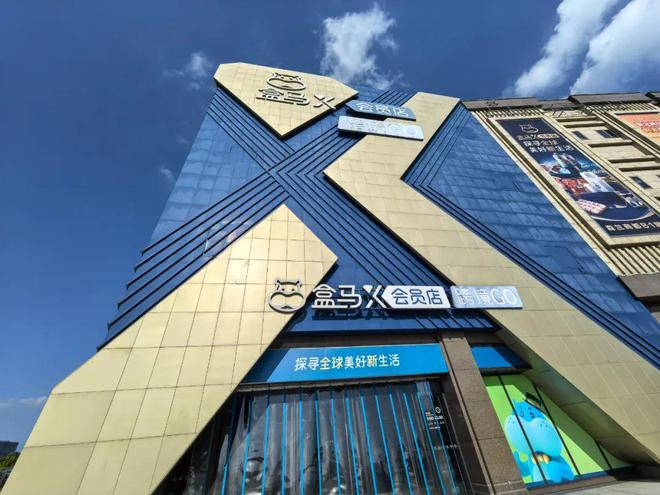
实探全国最后一家盒马X会员店:货架多已清空
Xin Jing Bao· 2025-08-05 16:08
新京报贝壳财经记者 俞金旻 编辑 陈莉 校对 穆祥桐 8月初,全国最后一家盒马X会员店即将停业的消息引爆社交平台。 8月5日消息,盒马X会员店上海森兰商都店将在8月31日停止营业,这是盒马在全国仅余的一家会员 店。 新京报贝壳财经记者注意到,其实早在7月中旬,全国多家盒马X会员店已相继宣布停止营业。7月31 日,盒马X会员店北京世界之花门店、盒马X会员店的苏州相城店、南京燕子矶店相继宣布停止营业。 今年4月1日,盒马X会员店上海高青店、大场店、东虹桥店暂停营业。 对于盒马X会员店全部停业,贝壳财经记者从盒马官方人士处获悉,此次关店系盒马主动做的业务调 整。 8月5日下午,贝壳财经记者实地探访上海乃至全国仅剩"独苗"的盒马X会员森兰店。该店位于上海浦东 新区东北部的外高桥地区,走进大门,在明显的位置记者就看到标牌显示,门店将于8月31日停止营 业。 ▲ 全国"独苗",仍在营业的盒马X会员上海森兰商都店。新京报贝壳财经记者俞金旻 摄 实探全国"独苗"盒马X会员门店,货架大部分已清空 贝壳财经记者注意到,店内绝大部分货架已清空,仅剩下部分盒马玩偶、矿泉水、方便面、酒等商品还 在销售。在生鲜、冷藏等区域均已清空歇业, ...
“黑天鹅”突袭!“瑞士概念股”全线大跌!
Zheng Quan Shi Bao Wang· 2025-08-04 00:08
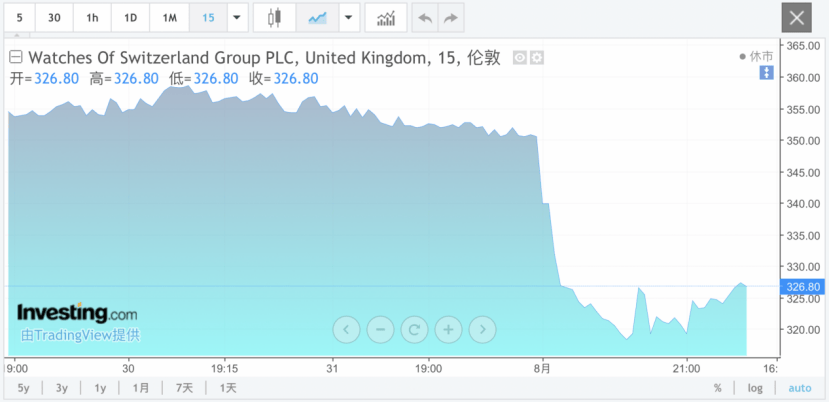
Core Viewpoint - The announcement of a 39% tariff on Swiss goods by President Trump is seen as a "black swan" event, leading to significant declines in Swiss stocks and raising concerns about the impact on the Swiss economy and export-dependent companies [1][4][8]. Group 1: Market Reaction - Following the tariff announcement, Swiss stocks experienced a sharp decline, with UBS Group dropping nearly 4% and Swiss watchmakers falling by 6.8% in London trading [1][4]. - The Swiss stock market's reaction was delayed due to the national holiday coinciding with the tariff announcement, resulting in heightened anticipation for the market's opening [4][8]. Group 2: Economic Impact - The Swiss economy is expected to suffer a "devastating blow" due to the high tariff, particularly affecting the export-driven sectors [4][5]. - The Swissmem association indicated that the 39% tariff would have an "extremely severe impact" on Switzerland's technology industry and overall exports [5]. Group 3: Trade Negotiations - The tariff decision came as a surprise during the final moments of trade negotiations, where significant disagreements on trade balance were revealed [8]. - The Swiss government had previously approved a trade agreement framework with the U.S., which was overturned by Trump's unilateral decision [8]. Group 4: Future Projections - Analysts predict that if the 39% tariff remains in place, it could lead to a GDP loss of approximately 0.6% for Switzerland, with potential further losses if additional tariffs on pharmaceuticals are implemented [7]. - Companies like Richemont and Swatch Group are expected to face substantial challenges due to the new tariff regime [7].
“黑天鹅”突袭!全线大跌!
券商中国· 2025-08-03 23:41
Core Viewpoint - The unexpected announcement of a 39% tariff on Swiss goods by President Trump is viewed as a "black swan" event, leading to significant declines in Swiss stocks and raising concerns about the impact on the Swiss economy and export-dependent companies [1][6][9]. Group 1: Tariff Announcement and Market Reaction - The Swiss stock market's reaction to the tariff announcement was delayed due to the holiday, with significant declines expected upon reopening [1][4]. - The 39% tariff is among the highest globally, second only to Syria's 41%, and is seen as a devastating blow to the Swiss economy and its export-driven market [5][6]. - Major Swiss companies, including UBS and Swatch Group, experienced sharp declines in their stock prices following the announcement [1][8]. Group 2: Economic Impact - Analysts predict that if the 39% tariff remains in place, it could lead to a GDP loss of approximately 0.6% for Switzerland, with further losses possible if additional tariffs on pharmaceuticals are implemented [8]. - The Swiss technology industry and overall exports are expected to face "extremely severe" impacts due to the high tariff rate [7][8]. - The sudden reversal in trade negotiations highlights the unpredictability of Trump's trade policies, even after prior agreements had been reached [9][10]. Group 3: Broader Trade Implications - The new tariff policy is part of a broader trend that could elevate the U.S. actual tariff rate to 17%, marking the highest level since the Smoot-Hawley Tariff Act of 1933, which had severe consequences for international trade [11][12]. - Experts describe the day of the tariff announcement as a "dark day" for global trade, indicating long-term challenges for the established trade system [13].

白酒在胖东来、山姆、盒马找到“新卖场”
Tai Mei Ti A P P· 2025-08-01 00:32
Core Insights - The rise of new retail formats such as supermarkets is creating new opportunities for the Chinese liquor industry, particularly in the white liquor segment [1][2] - The collaboration between new supermarkets and liquor companies is reshaping distribution channels, moving away from traditional methods that have proven difficult for profitability [2][4] Group 1: New Retail Formats - New supermarkets like Pinduoduo, Sam's Club, and Hema are leveraging their pricing, supply chain, and brand advantages to promote private label white liquors, creating a new channel for growth [1][2] - The launch of "Jiu Gui • Zi You Ai" by Pinduoduo and Jiu Gui Jiu Co. has generated significant market interest, with the product selling out on its first day [2][3] - Hema's self-branded white liquor products have also seen substantial sales growth, with "Qing Xiang Yi Hao" achieving over 20 million yuan in sales within six months, marking an 80% year-on-year increase [2][3] Group 2: Market Trends - The trend towards lower-priced white liquors is evident, with products like "Bao Feng • Zi You Ai" priced at 75 yuan and "Jiu Gui • Zi You Ai" at 200 yuan, appealing to cost-conscious consumers [3][4] - Traditional supermarkets are struggling, with major players like Carrefour and Yonghui closing numerous stores and experiencing significant revenue declines [5][6] - The total number of stores among the top 100 supermarket chains in China has decreased by 9.8%, indicating a contraction in traditional retail [5] Group 3: Industry Dynamics - The shift towards new retail formats is seen as a necessary response to the declining traditional distribution channels, with white liquor brands needing to adapt quickly to remain competitive [6][7] - The traditional liquor distribution model is under pressure, with a notable decrease in the number of distributors for publicly listed liquor companies, dropping from 58,437 in 2023 to 56,747 in 2024 [6][7] - The competitive landscape is evolving, with traditional liquor chains lacking pricing power and facing challenges in profitability, leading to a potential consolidation towards larger retail brands and online platforms [9]

爆改,大卖场“改”向何方
Xin Hua Ri Bao· 2025-07-31 23:48
Core Viewpoint - Traditional hypermarkets in Nanjing, such as Carrefour and Walmart, are facing significant challenges and are undergoing transformations into community commercial complexes and cultural tourism centers due to the rise of new generation complexes and online retail [1][4][6]. Group 1: Transformation Projects - The newly opened Daxing Palace Underground Square, covering over 40,000 square meters, has been transformed into a tourism distribution center themed around Yangtze River city culture, featuring a parking area for over 500 cars and 50 tourist buses [2][3]. - The former Carrefour store on Dajie South Road has been converted into a 20,000 square meter community commercial complex, with the main store, Hema, attracting 3,000 to 4,000 customers daily and generating over 500,000 yuan in revenue within the first five days [2][3]. Group 2: Challenges Facing Traditional Hypermarkets - Traditional hypermarkets are struggling due to the emergence of larger, more diverse commercial complexes and the impact of online retail, leading to a significant decline in customer traffic and sales [4][5]. - The number of large chain supermarket stores in China decreased by 8.7% year-on-year, with 1,263 closures, marking the highest number in nearly a decade [8]. Group 3: Successful Adaptations - Some hypermarkets, like Walmart's Sam's Club, have successfully adapted by focusing on high-end customer segments, increasing membership, and enhancing online delivery services, achieving annual sales of 2.7 billion yuan [9]. - Dazhonghua's M membership stores have seen significant growth, with one store achieving annual sales of 2 to 3 billion yuan after transformation [10]. Group 4: Future Directions - The transformation of hypermarkets should focus on community integration, emphasizing daily needs and convenience, as seen in the successful adaptations of Carrefour and Walmart in Nanjing [6][11]. - Innovations in operational models, such as the introduction of community markets and enhanced customer experiences, are essential for traditional hypermarkets to remain competitive in the evolving retail landscape [7][11].

连亏4年,没了上百亿!又一“零售巨头”顶不住,如今狼狈退市
Sou Hu Cai Jing· 2025-07-31 19:26
Core Insights - The article discusses the decline of Renrenle, once a leading supermarket chain in China, which officially delisted on July 4, marking the end of its prominence in the retail sector [1] - It highlights the broader challenges faced by traditional supermarkets in China, many of which are struggling to adapt to the rise of new retail models and are closing stores [12][36] Group 1: Renrenle's Journey - Renrenle opened its first store in Shenzhen in 1996, competing against larger brands like Carrefour and Walmart, and initially succeeded through strategic pricing and understanding competitors [4][6] - The company expanded rapidly, reaching over 150 stores nationwide and achieving annual revenues exceeding 10 billion in 2010 [8][10] - However, aggressive expansion led to operational issues and mounting debts, with liabilities reaching 5 billion by 2015, prompting asset sales and store closures [10][12] Group 2: Industry Challenges - The retail sector is facing significant challenges, with many traditional supermarkets, including Dazhonghua and Walmart, closing numerous stores due to increased competition and rising operational costs [13][17] - The rise of new retail models, such as online shopping and delivery services, has further pressured traditional supermarkets, leading to a decline in foot traffic and sales [20][24] - Supermarkets are increasingly engaging in price wars to attract customers, which diminishes profit margins while costs continue to rise [18][35] Group 3: Successful Transformations - Some retailers, like Yonghui Supermarket, have successfully adapted by learning from innovative business models, resulting in significant increases in sales and customer traffic [27][29] - Bitouyou Supermarket also managed to reverse its fortunes by adjusting pricing strategies and forming partnerships with suppliers, leading to revenue growth from 5.4 billion in 2023 to an expected 10 billion by 2025 [31][33] - The article emphasizes that traditional retailers must innovate and reduce operational costs while enhancing customer service to remain competitive in the evolving market [35][36]

