长江存储

Search documents
兴福电子(688545):湿化学品领先企业,国际化与多元化持续推进
Shenwan Hongyuan Securities· 2025-12-29 02:58
Investment Rating - The report initiates coverage with a rating of "Buy" for the company [2]. Core Insights - The company is positioned as a leading enterprise in wet chemical products, focusing on semiconductor applications and expanding its international and diversified strategies to become a world-class electronic materials company [7][19]. - The semiconductor industry is entering a prosperous cycle, with significant capacity expansion in wafer fabs, which is expected to benefit material suppliers like the company [7][41]. - The company has a robust product matrix, including electronic-grade phosphoric acid and sulfuric acid, which are pivotal for its growth, especially in functional wet chemical products [8][9]. Summary by Sections 1. Company Overview - The company, established in 2008, specializes in the research, production, and sales of wet electronic chemicals, with a focus on semiconductor applications [16]. - It has developed a comprehensive product system, including electronic-grade phosphoric acid, sulfuric acid, and hydrogen peroxide, achieving high standards recognized by major semiconductor manufacturers [16][18]. 2. Industry Outlook - The semiconductor industry is experiencing a "super cycle," with rising demand for storage chips and increased wafer fab utilization, leading to a favorable environment for material suppliers [41][43]. - The report highlights that domestic semiconductor companies are ramping up production, which will further enhance the demand for the company's products [46]. 3. Financial Performance - The company has shown steady revenue growth, with total revenue projected to reach 1,459 million yuan in 2025, reflecting a year-on-year growth rate of 28.3% [6]. - The net profit attributable to the parent company is expected to grow significantly, reaching 227 million yuan in 2025, with a projected PE ratio of 59 [6][8]. 4. Product Development - The company is expanding its product offerings in functional wet chemicals, with a focus on electronic gases and advanced electronic materials, which are expected to contribute to long-term growth [19][20]. - The report indicates that the company has a strong pipeline of new products, with 35 products successfully tested by advanced process customers [19]. 5. Market Position - The company benefits from its affiliation with Xingfa Group, a leading player in the phosphorus chemical industry, providing a strong supply chain advantage [22]. - The company’s market share in electronic-grade phosphoric acid is the highest in China, with significant production capacity planned for the coming years [20][24].

半导体设备零部件迎来新一轮fab扩产周期,板块如何布局?
2025-12-29 01:04
Summary of Semiconductor Equipment and Components Conference Call Industry Overview - The global memory chip market is currently in a high prosperity cycle, with prices continuously exceeding expectations, benefiting domestic memory manufacturers such as Yangtze Memory Technologies and Changxin Memory Technologies [1][3] - If memory chip prices remain high next year, large-scale expansions will shorten the investment payback period, making next year a significant year for domestic memory expansion [3] Key Insights - The semiconductor equipment market outlook is positive for 2026, driven by increased shipments of domestic AI chips and a peak demand for advanced processes [1][5] - The end of this year and the beginning of next year is a critical period for ordering semiconductor equipment, with a delivery cycle of 6-8 months [5] - SMIC has completed its expansion plan for the SN1 factory at 35,000 wafers per month, with plans to continue expanding the SN2 factory by the same amount [6] - Hua Hong Semiconductor has made significant progress in its 7th and 9th factories, each ramping up to 40,000 wafers per month, with the remaining capacity of the 9th factory expected to be operational next year [6] Production Capacity and Goals - Yangtze Memory's monthly production capacity is approximately 130,000 wafers, while Changxin Memory exceeds 200,000 wafers [7] - The goal for both companies is to catch up with SK Hynix's 500,000 wafers per month and Micron's 300,000 wafers per month by expanding their capacities by over 200,000 and 100,000 wafers monthly, respectively [7][8] - Domestic memory manufacturers have significantly greater expansion flexibility compared to logic manufacturers [8] Investment Opportunities - Companies such as Tuojing Technology, Zhongwei Company, Huahai Qingke, and Northern Huachuang show high certainty in investment potential [9] - From an investment sequence perspective, it is recommended to first focus on upstream AI chips, followed by wafer manufacturing, semiconductor equipment, and component materials [2][9] - The enhancement of domestic production rates is a crucial factor for industry development, with only four processes exceeding a 30% domestic rate, while critical processes like deposition and CMP coating remain below 20% [4][10] Areas of Focus - Low domestic production rates in high-value segments such as metrology and lithography present significant investment opportunities [4][10] - Companies like Zhongke Feimeng and Jingce Electronics have established competitive advantages in metrology, while Xinyuan Micro is noteworthy in the coating and developing segment [10]

科技•存储行业更新
2025-12-29 01:04
Summary of Key Points from the Conference Call Industry Overview - The storage industry is experiencing significant growth driven by AI server demand, with an annual growth rate exceeding 50%, replacing smartphones as the key market. Future industry dynamics will heavily depend on changes in server-side demand [1][4] - The global storage market is facing a supply-demand gap, with a projected DRAM shortfall of 10%-15% and NAND shortfall of 5%-6% by 2026, primarily due to a substantial increase in orders from major cloud providers, which will provide strong support for storage product prices [1][7] Price Trends - Storage product prices have been on the rise, with DRAM shipment prices increasing by 10%-15% quarter-over-quarter in Q3/Q4 2023. A further increase of 20% is expected in Q4 2025, and a sequential growth of 10%-15% is anticipated in the first half of 2026 [1][8] - High prices in the storage market are likely to persist, although the rate of increase may gradually narrow over time due to supply constraints and potential pushback from downstream customers [1][9] Supply Chain Dynamics - The production of High Bandwidth Memory (HBM) is significantly encroaching on DRAM capacity, consuming 2-3 times more than DRAM. This, combined with limited new factory investments from major manufacturers, will restrict supply growth in the short term, although a larger capacity release is expected around 2027 [1][5][6] - Major companies like Micron and SK Hynix have increased capital expenditures by approximately 50% this year, with an expected further expansion of 30% next year, leading to a gradual release of new capacity around 2027 [1][5][6] Market Demand and Trends - The demand cycle in the storage industry is shifting, with servers now being the core market, particularly driven by AI applications. This shift is expected to continue, even as traditional consumer electronics show signs of weakness [1][4][6] - Despite a projected decline of 5%-6% in total smartphone shipments in 2026, high-end brands like Samsung, Apple, and Huawei are expected to be less affected. AI applications may also drive new demands for storage capacity on the terminal side [1][5] Regional Insights - Taiwanese niche storage companies have begun to raise prices due to the exit of low-end overseas capacity and an increase in high-end product production. This has allowed mainland Chinese and Taiwanese manufacturers to capture part of the market, leading to a phase of improved market conditions [1][11] - Local mature process wafer fabs in China, such as SMIC and Hua Hong Semiconductor, are operating at high capacity utilization rates of 96% and 110%, respectively. An increase in storage orders could squeeze the capacity of other categories, potentially leading to price increases in those areas, although the overall demand in consumer electronics and industrial sectors remains weak [2][12] Conclusion - The storage industry is poised for a significant transformation driven by AI and server demand, with strong price support expected due to supply constraints. The dynamics of the market will be influenced by both demand shifts and supply chain adjustments, particularly in the context of emerging technologies and regional market developments [1][6][10]

博弈升级!美国告知中国第2轮交锋即将开始,中方不怵任何施压
Sou Hu Cai Jing· 2025-12-26 05:42
Group 1 - The U.S. government plans to impose tariffs on China's mature process chips by 2027, but has provided an 18-month "buffer period," indicating a new phase in the semiconductor competition between the two countries [1][3] - The U.S. strategy towards China’s semiconductor industry has evolved, with previous sanctions failing to halt China's advancements, as evidenced by Yangtze Memory Technologies' breakthroughs in NAND flash memory [3][5] - The focus on mature process chips is due to their extensive applications in critical sectors like automotive and industrial equipment, with China holding a significant share of global production capacity [3][5] Group 2 - The 18-month grace period reflects U.S. strategic hesitation, as American companies face pressures from supply chain disruptions and the need to maintain market share in China, which accounts for one-third of global chip demand [5][7] - China's self-sufficiency in chips has improved to 26% in 2023, with domestic chips gaining cost advantages and stable supply capabilities, embedding deeply into the global supply chain [5][9] - Technological breakthroughs, such as the rise of RISC-V architecture and Chiplet technology, are key for China to circumvent U.S. restrictions, allowing for high-performance computing and innovative solutions [7][9] Group 3 - The competition in the semiconductor sector has transcended simple tariff conflicts, evolving into a comprehensive contest over technology standards, industrial ecosystems, and global supply chains [9] - The U.S. aims to slow down China's development through regulatory measures, while China is building a self-sufficient chip ecosystem through innovation and market penetration [9]



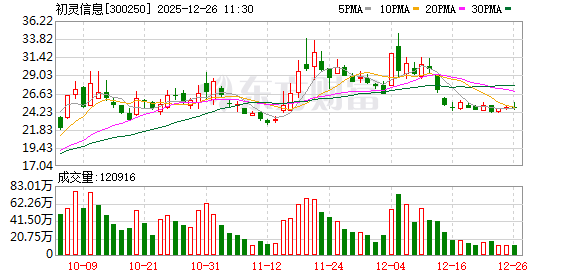
初灵信息:公司没有与长江存储以及母公司合作业务
Xin Lang Cai Jing· 2025-12-26 05:05
(文章来源:每日经济新闻) 每经AI快讯,有投资者在投资者互动平台提问:请问公司与长江存储以及母公司是否有关系或合作业 务?或有竞品? 初灵信息(维权)(300250.SZ)12月26日在投资者互动平台表示,公司没有与长江存储以及母公司合 作业务。 (文章来源:每日经济新闻) 每经AI快讯,有投资者在投资者互动平台提问:请问公司与长江存储以及母公司是否有关系或合作业 务?或有竞品? 初灵信息(维权)(300250.SZ)12月26日在投资者互动平台表示,公司没有与长江存储以及母公司合 作业务。 ...

美国宣布18个月后对我半导体产品加征关税?对我们有多大影响?
Sou Hu Cai Jing· 2025-12-25 04:26
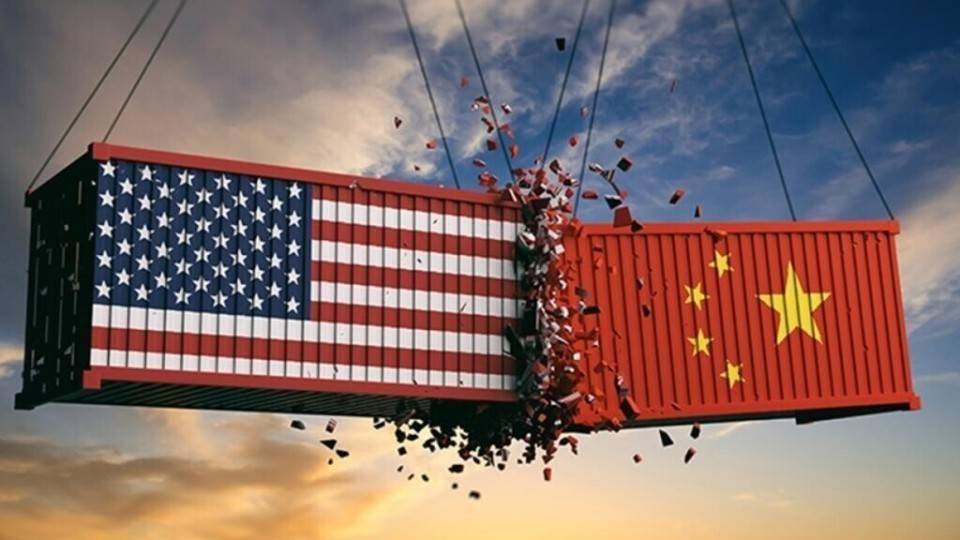
Group 1 - The U.S. Trade Representative (USTR) announced an 18-month delay before imposing tariffs on Chinese semiconductor products, set to begin on June 23, 2027, with the specific tax rate to be announced 30 days prior to implementation [1][3] - The investigation leading to this decision concluded that China aims to dominate the global semiconductor market through unfair subsidies and market practices, which harm U.S. trade interests [3] - In 2024, China's semiconductor exports are projected to reach $160 billion, with only about 5% directed to the U.S., indicating limited direct impact from the tariffs [5][9] Group 2 - The majority of China's semiconductor exports are concentrated in Asian markets, with Hong Kong, South Korea, and Taiwan being the top destinations, highlighting the reliance on regional supply chains [5][7] - The structure of China's semiconductor exports primarily consists of mid-to-low-end integrated circuits, with a significant portion being re-exported after processing in Hong Kong [8] - The potential for other developed countries to follow the U.S. in imposing tariffs poses a risk to China's position in the global semiconductor supply chain, as collective actions could disrupt trade and impact employment [11][13] Group 3 - The announcement serves more as a political signal rather than an immediate economic threat, as the U.S. still relies on global supply chains for semiconductor production [9] - The tariffs could lead to increased pressure on China to enhance domestic production capabilities and expand its market reach, particularly in emerging markets [13]
日本发出警告;中国这项技术,一旦成熟日本材料霸权会崩塌
Sou Hu Cai Jing· 2025-12-24 03:11
Core Viewpoint - The article discusses the significant shift in the global semiconductor industry, highlighting China's advancements in semiconductor materials and the potential challenges faced by Japan's long-standing dominance in this sector [1][3][18]. Group 1: China's Semiconductor Advancements - Chinese researchers have made a breakthrough in extreme ultraviolet (EUV) lithography materials, developing a new type of photoresist based on poly(thiophene) [3][15]. - By 2025, China's market share in mature chips is expected to reach 28%, indicating rapid expansion in the mature process sector [5]. - The self-sufficiency rate of 12-inch silicon wafers in China is nearing 50%, with local manufacturers offering prices significantly lower than their Japanese counterparts [6]. Group 2: Market Dynamics and Competition - The market share of domestic DRAM in China is projected to increase from less than 5% in 2023 to 12% by 2025, showcasing the swift pace of domestic substitution [6]. - Japan's Rapidus company has announced plans to mass-produce 2nm chips by 2027, backed by substantial government subsidies totaling 1.8 trillion yen [8]. - The competition is intensifying as Japan faces challenges in talent retention, with the workforce in integrated circuits shrinking from approximately 150,000 in 1999 to about 60,000 in 2023 [10]. Group 3: Implications for Global Supply Chains - The ongoing changes in the semiconductor industry are reshaping the value chain, with profits shifting from downstream manufacturers back to upstream wafer producers [10]. - China's semiconductor industry is increasingly viewed as a catalyst for upgrading, especially in response to external pressures such as the U.S. sanctions on Chinese companies [11][13]. - The rise of China's semiconductor capabilities poses a structural challenge to Japan's material dominance, as China aims to establish a self-sufficient semiconductor supply chain [17][18].
存储产业链全景汇报 - 周期与国产共振 细探存储原厂、设备、封测 产业链投资机会
2025-12-22 15:47
Summary of Storage Industry Conference Call Industry Overview - The storage industry is expected to see a demand growth of approximately 30% for DRAM and NAND Flash from overseas CSPs and domestic internet companies between 2026 and 2027, driven by increased capital expenditure [1][2] - Major manufacturers have not significantly expanded production capacity in recent years, with new capital expenditures primarily focused on HBM, leading to a supply-demand imbalance in the storage sector [1][2] Key Insights and Arguments - Storage prices began to rise in Q2 2025 and are expected to continue increasing steadily from Q1 2026 onwards, particularly for AI-related storage due to strong demand and tight supply [1][5] - Micron has raised its capital expenditure guidance by $2 billion to $20 billion, indicating a positive outlook for the supply chain amid ongoing supply constraints [5] - The storage industry is projected to remain in a supply-demand deficit for the next two years, with new production capacity unlikely to be realized until late 2027 or later [4] Company-Specific Highlights - **兆易创新 (GigaDevice)**: Expected to achieve a profit of 3.5 to 4 billion RMB in 2026, with a market cap target of around 40 times its earnings. The company is well-positioned to leverage its customized storage products and strong customer relationships [1][7] - **北京君正 (Beijing Junzheng)**: Anticipates a comprehensive price increase in the automotive-grade DRAM market, projecting profits of 1.5 billion RMB in 2026, with potential for 50% to 100% growth [1][8] - **聚辰股份 (Jucheng)**: Aiming for small-scale production of a new enterprise-level SSD product in 2026, targeting a 50% market share, which could add 500 to 600 million RMB in profits [1][9] - **澜起科技 (Lanqi Technology)**: Benefiting from the increased penetration of DDR5, with expectations for continued growth driven by AI server and general server shipments [3][10] Additional Important Insights - The upstream supply chain of the storage industry is benefiting from the expanding supply-demand gap and rising prices, with significant capital expenditure increases from companies like Micron [12] - The potential for significant growth in the IC design sector is highlighted, with companies like GigaDevice, Beijing Junzheng, Jucheng, and Lanqi being recommended for investment [11] - The packaging and testing sector is evolving, with new players like 新风科技 (New Wind Technology) rapidly expanding and focusing on high-end packaging solutions [16][18] Conclusion The storage industry is poised for significant growth driven by AI-related demand and a supply-demand imbalance. Key companies within the sector are expected to capitalize on these trends, presenting potential investment opportunities.


机构指向强确定性和弹性兼备的科技主线!半导体设备大涨4%
Jin Rong Jie· 2025-12-22 06:09
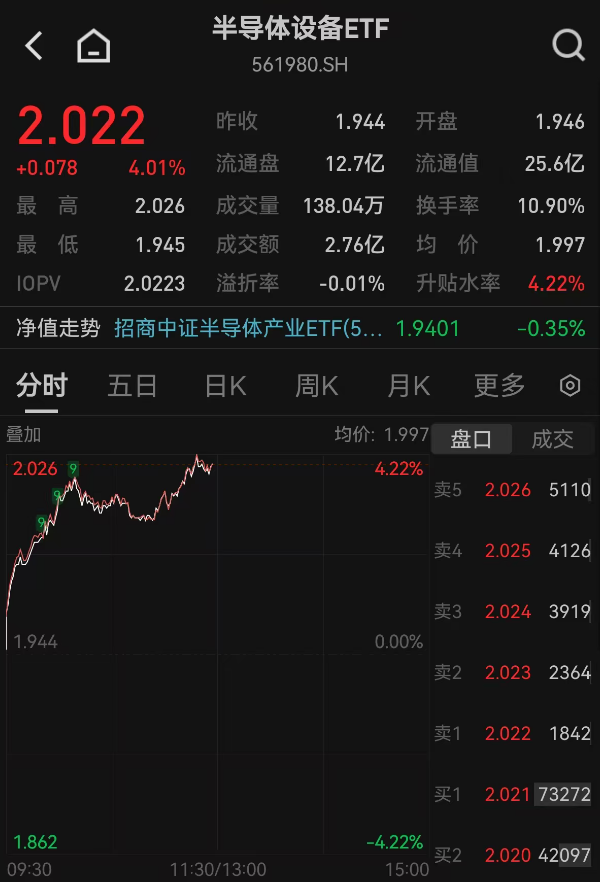
Group 1 - The semiconductor chip market is experiencing significant activity, with Kema Technology hitting the daily limit up, and the semiconductor equipment ETF (561980) rising over 4% this week, with a trading volume of 276 million yuan [1][11] - Major stocks in the semiconductor equipment sector, including Kema Technology, Shanghai Xinyang, and Aisen Co., have shown strong performance, with Kema Technology reaching the daily limit and others like Shanghai Xinyang and Aisen Co. increasing by over 17% and 16% respectively [1][14] - The semiconductor equipment ETF (561980) tracks the CSI semiconductor index, with nearly 60% of its components being equipment-related, and it has achieved a year-to-date increase of 54.82%, ranking first among major semiconductor indices [1][11][14] Group 2 - The rapid development of Chinese chip technology is expected to disrupt companies like Nvidia by 2026 or 2027, as highlighted by Bloomberg and supported by analysts from major financial institutions [3] - The ongoing AI infrastructure boom is driving demand for advanced chips, with a focus on 3nm and below processes, indicating a robust long-term bull market for semiconductor equipment [3][11] - Domestic chip companies are accelerating their globalization and capitalization processes, with significant IPOs such as Moore Threads and Muxi Technology marking a notable trend in the industry [4][5] Group 3 - The storage chip sector is also seeing a surge in IPO activities, with companies like Changxin Technology and Yangtze Memory Technologies planning to go public, which is expected to enhance capacity construction [5][6] - According to CFM's market outlook, there is a projected supply shortage for server eSSD and DDR5 RDIMM, with prices expected to rise significantly, indicating strong demand driven by AI [6][8] - The global semiconductor sales forecast for 2026 has been revised upwards to $975.4 billion, reflecting a recovery driven by sustained AI demand [8][11]


AI推理驱动存储需求高增 东方证券:国产存储产业链迎历史性机遇
Ge Long Hui· 2025-12-22 06:08
相关标的: 国内半导体设备企业中微公司、京仪装备、微导纳米、拓荆科技、北方华创等; 布局端侧AI存储方案的兆易创新、北京君正等; 受益存储技术迭代的澜起科技、联芸科技等; 近日,东方证券发布研报称,AI推理需求有望带动存储芯片需求高速成长。部分投资者对于AI对存储 芯片需求的带动幅度仍有低估。 研报中称,未来AI应用的推理需求将带动活跃数据存储需求大幅提升,进而推动存储芯片需求高速成 长。AI大模型推理过程中需要通过高频次地访问数据,来实现高质量内容生成。例如,检索增强生成 (RAG)技术允许LLM从知识库提取相关信息,而针对RAG数据库的近似性查询属于极为密集的随机读操 作。此外,大语言模型推理过程中需要使用KV缓存来加速推理过程。整体来看,AI推理过程将使得存 储结构发生较大变化,有望提升对活跃数据存储的需求。而当前数据中心存储中占据主要地位的机械硬 盘难以满足高速读取活跃数据的需求,SSD等有望在AI推理中持续扩大应用。未来随着AI应用更加广 泛,AI推理需求持续提升,有望带动存储芯片需求持续高速成长。 存储供不应求持续,国内两存扩产迎来历史性机遇。当前,国内两大存储芯片厂商合肥长鑫/长江存储 在DRA ...