淘宝

Search documents
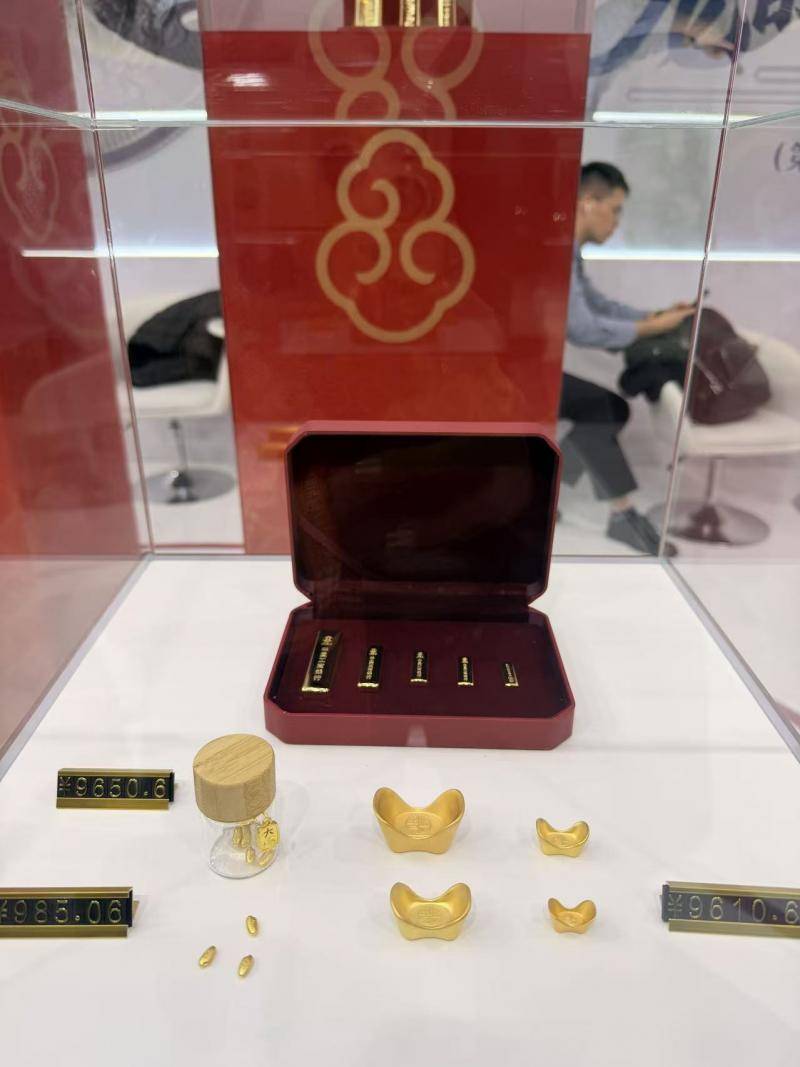
黄金税收新政后 在哪儿买 “金条”更划算|LIN眼相看
Sou Hu Cai Jing· 2025-11-13 05:08
Core Viewpoint - The new tax policy on gold, effective from November 1, 2023, aims to clarify the distinction between investment and non-investment uses of gold, introducing differentiated VAT rules to address tax evasion issues in the gold market [3][4]. Group 1: Tax Policy Details - The new tax regulations categorize gold based on purity and function, defining investment gold and non-investment gold, with specific VAT implications for each category [3][4]. - Investment gold includes items like gold bars and coins with a purity of 99.5% or higher, while non-investment gold refers to all other uses [3]. - For physical delivery transactions, investment gold will have VAT refunded immediately, but sales must issue regular invoices to prevent tax evasion [4]. Group 2: Market Impact - Following the announcement of the new tax policy, gold jewelry prices have increased significantly, with some brands raising prices by over 5% within days [5]. - The price of gold per gram has risen from approximately 930 yuan to over 1000 yuan, reflecting a 7% increase due to the new tax regulations [5]. - Retailers are expected to pass on increased costs to consumers, leading to higher prices for gold jewelry and bars [4][5]. Group 3: Investment Shifts - The new tax policy is likely to decrease the attractiveness of non-exchange physical gold investments, while bank products like gold accumulation plans and ETFs may become more appealing [8][10]. - Several banks have raised the minimum investment thresholds for gold accumulation plans, indicating a shift in consumer behavior towards more structured gold investment products [8][10]. - The domestic gold ETF holdings have seen a significant increase, with a year-on-year growth of 164.03% in the first three quarters of 2025, suggesting a growing preference for ETF investments over physical gold [10].

淘宝争夺 AI 电商定义权
Sou Hu Cai Jing· 2025-11-12 11:05
Core Insights - OpenAI's collaboration with Walmart signifies a shift in retail experiences, moving AI from backend advertising to frontend consumer interactions, which has positively impacted stock prices of involved companies [1] - The competitive landscape in e-commerce is intensifying, with platforms like Taobao responding to AI advancements by integrating AI into their operations to enhance user experience and operational efficiency [2][7] Group 1: AI Integration in E-commerce - Taobao has initiated a significant paradigm shift by utilizing AI to drive its entire system during the Double 11 shopping festival, with over 15 billion calls to its AI model on the first day of pre-sales [3][9] - The company aims for a systematic overhaul rather than superficial AI integration, focusing on enhancing user interactions and operational processes [8][9] - Taobao's AI-driven tools are designed to improve efficiency for small and medium-sized businesses, automating tasks such as data analysis and marketing [11][13] Group 2: Competitive Landscape and Market Position - The competition from platforms like Pinduoduo, JD.com, and Douyin is increasing, prompting Taobao to leverage AI as a means to build technological barriers and enhance user retention [7][26] - Alibaba's market value is under pressure from competitors, highlighting the urgency for Taobao to demonstrate the effectiveness of its AI initiatives during major sales events [7][26] - The introduction of AI tools has led to significant improvements in operational efficiency, with reports indicating that AI pricing systems and advertising models have enhanced return on investment by 12% [15][18] Group 3: User Experience and Interaction - Taobao is shifting from traditional search interfaces to conversational decision-making interfaces, allowing for a more intuitive user experience [24] - New AI features such as "AI万能搜" and "AI帮我挑" are designed to facilitate user decision-making through natural language processing and multi-modal understanding [22][24] - The transition to AI-driven interactions aims to reduce communication costs for users and improve conversion rates for the platform [24][25]

董事长张轩松,减持永辉超市丨消费参考
2 1 Shi Ji Jing Ji Bao Dao· 2025-11-12 04:16
Core Viewpoint - Zhang Xuansong, the chairman of Yonghui Supermarket, plans to reduce his stake in the company by selling up to 90,750,000 shares, which is no more than 1% of the total share capital, due to personal financial needs [1][2]. Company Summary - As of June 30, 2025, Zhang Xuansong and his associates hold a total of 1,274,987,806 shares in Yonghui Supermarket, accounting for 14.05% of the company [2]. - In 2024, Miniso's wholly-owned subsidiary, Jun Cai International, acquired 29.4% of Yonghui Supermarket for 6.27 billion yuan, making Miniso the largest shareholder [3]. - Yonghui Supermarket is undergoing significant adjustments, including the establishment of a reform leadership group led by Miniso's controlling person, Ye Guofu, to accelerate its transformation [3][5]. - The company appointed Wang Shoucheng as CEO on September 18, 2025, indicating a shift in leadership dynamics [3][4]. Financial Performance - In the third quarter, Yonghui Supermarket reported a revenue decline of 25.55% year-on-year to 12.486 billion yuan, with a net loss of 469 million yuan, an increase in losses of 116 million yuan compared to the previous year [6]. - The company attributes the revenue decline to intense industry competition, changing consumer habits, and a decrease in foot traffic and average spending at existing stores [6]. - Yonghui is optimizing its store operations, having remodeled 222 stores by the end of the third quarter, with plans to reach 300 remodeled stores by the 2026 Spring Festival, which is expected to significantly enhance contributions from these stores [6].

中国消费向新而行丨今年“双11” 融合有新意
Ren Min Ri Bao· 2025-11-12 02:15
Core Viewpoint - The article emphasizes the importance of expanding domestic demand as a strategic foundation, integrating consumer needs with supply, and enhancing the internal circulation of the economy during the "Double 11" shopping festival [1] Group 1: Online and Offline Integration - The "Double 11" event showcased a deep integration of online and offline shopping experiences, allowing consumers to experience products in-store while also having the option to order online for home delivery [2] - The Ministry of Commerce's initiative aims to promote the deep integration of physical retail and digital economy, enhancing retail efficiency and creating new productive forces [2] Group 2: Consumption Data and Trends - During the "Double 11" period, JD MALL's foot traffic increased by 30% year-on-year, with home goods sales rising by 191% and full-home customization sales growing nearly 7 times [3] - Meituan reported that nearly one million offline stores participated in its "Double 11" event, with significant sales increases in various categories, including over 100% growth for brands like Xiaomi and OPPO [3] Group 3: Consumption Experience and Service Integration - The event highlighted a shift from product purchasing to service enjoyment, with a focus on creating richer consumer experiences and breaking down industry barriers [4] - The automotive aftermarket saw significant growth, with tire sales on JD increasing over 4 times and car service orders rising by 165% during the event [4] Group 4: Global Market Expansion - The "Double 11" event expanded its reach to global markets, with significant sales growth in countries like Japan, South Korea, and Australia, and cross-border services seeing over 300% growth in transaction volume [5] - Taobao's international marketing efforts included a 1 billion yuan investment to help 100,000 merchants achieve doubled overseas sales during the event [5] Group 5: Supply and Demand Matching - The C2M (Customer-to-Manufacturer) model was highlighted as a successful approach for precise matching of supply and demand, with notable sales records for customized products [6] - In the 3C digital sector, the C2M model led to over 100% growth in sales, with significant customization ratios for gaming laptops and AI products [6] Group 6: Automotive Sector Innovations - The automotive sector is experiencing renewed vitality through supply-demand integration, with new energy vehicles being developed based on consumer preferences for price, space, safety, and range [7]

“双11”:新看点与新期待
Jin Rong Shi Bao· 2025-11-12 02:02
Core Insights - The "Double 11" shopping festival has evolved significantly, with a focus on broader product categories and international reach rather than just sales volume [2] - AI technology is being fully integrated into the shopping experience, enhancing efficiency and customer service for merchants [2] - There are ongoing issues such as price manipulation, prompting regulatory bodies to enforce stricter compliance measures [3][4] Group 1: Trends and Innovations - The festival features a wider range of products, including exclusive items like a custom car sold on JD, and significant marketing investments in international markets by platforms like Taobao [2] - AI applications are transforming the shopping landscape, with tools like "AI万能搜" and "京小智" improving customer interaction and operational efficiency [2] - Clear discount mechanisms are being favored over complex pricing strategies, making it easier for consumers to understand deals [2] Group 2: Challenges and Regulatory Actions - The phenomenon of "price inflation followed by discounts" remains prevalent, leading to consumer dissatisfaction and prompting regulatory scrutiny [3] - Regulatory bodies are urging e-commerce platforms to adopt transparent pricing practices and penalize deceptive pricing strategies [4] - Platforms are encouraged to support small and medium-sized businesses through better resource allocation and technological assistance [4] Group 3: Future Expectations - There is a call for a healthier and more sustainable consumption ecosystem, focusing on product quality and service rather than just price competition [3] - E-commerce platforms are expected to take on greater responsibility in market regulation and consumer protection [4] - The overall goal is to create a more balanced and effective consumer market that benefits all stakeholders involved [4]
“双11”17年,今年有哪些新变化
Zhong Guo Qing Nian Bao· 2025-11-12 01:13
Core Insights - The "Double 11" shopping festival has evolved into a longer event, with major platforms extending the promotional period to over 30 days, reflecting a shift towards more rational consumer behavior [1] - AI technology is enhancing the shopping experience, with platforms like Taobao and JD.com utilizing AI to provide personalized shopping lists and improve customer service efficiency [2] - Instant retail is becoming a significant trend, with platforms integrating online and offline resources to enhance delivery efficiency and consumer satisfaction [3][5] Group 1: Changes in Consumer Behavior - This year's "Double 11" has seen a shift from price sensitivity to a focus on quality and rational consumption, as consumers approach the event with a more balanced mindset [1] - The promotional strategies have changed, with platforms simplifying discount calculations and emphasizing direct price reductions [1] Group 2: AI Integration - AI tools are being used to address consumer needs, with Taobao's "AI Universal Search" handling nearly 50 million queries and providing around 2 million customized shopping lists [2] - The shift in traffic logic from "hot product recommendations" to "target audience matching" allows smaller businesses to gain visibility through well-defined product information [2] Group 3: Instant Retail Development - Instant retail has gained traction, with over 30,000 brands and 400,000 stores participating in platforms like Taobao Flash Purchase, leading to significant sales increases for many retailers [5] - The integration of online and offline resources is creating a synergistic effect, enhancing the overall retail experience and driving digital transformation in the industry [5]
打造消费新供给、新场景 今年“双11”融合有新意
Ren Min Ri Bao· 2025-11-12 00:31
Core Insights - The article emphasizes the integration of online and offline retail experiences during this year's "Double 11" shopping festival, highlighting the importance of new consumer demands and innovative supply chains to stimulate market potential [1][2]. Group 1: Online and Offline Integration - The "Double 11" event showcased a deep integration of online and offline shopping, allowing consumers to experience products in-store while also having the option to order online for home delivery [2]. - Data from JD MALL indicated a 30% year-on-year increase in foot traffic, with home goods sales surging by 191% and full-home customization sales increasing nearly sevenfold [3]. Group 2: Consumer Experience and Service Innovation - The event marked a shift from merely purchasing products to enjoying services, with various consumer experiences being enriched through the blending of different retail formats [4]. - The automotive aftermarket saw significant growth, with tire sales on JD increasing over four times and car service orders rising by 165% during the event [4]. Group 3: Global Market Expansion - The "Double 11" festival expanded its reach to global markets, with JD reporting over 100% growth in transaction volume and order quantity across several countries [5]. - Taobao's international efforts included launching in 20 countries and regions, supported by a marketing budget of 1 billion yuan to help merchants double their overseas sales [5]. Group 4: Supply and Demand Alignment - The C2M (Customer-to-Manufacturer) model was highlighted as a successful approach for aligning supply with consumer demand, leading to more efficient production processes [6]. - Notable successes included a record-breaking sales performance for a jointly launched thermos by Fuguang and JD, demonstrating the effectiveness of reverse customization [6]. Group 5: Automotive Sector Dynamics - The automotive sector, particularly in large-item consumption, is experiencing revitalization through enhanced supply-demand integration, as seen with the launch of a new electric vehicle model by GAC Aion in collaboration with JD [7].
“双11”17年,今年有哪些新变化?
Xin Hua She· 2025-11-11 12:52
Group 1: Core Trends in "Double 11" - The "Double 11" shopping festival has evolved into a longer event, with an average promotional period exceeding 30 days across major e-commerce platforms, reflecting a shift towards more rational consumer behavior [1] - Consumers are increasingly prioritizing quality over price sensitivity, as evidenced by the rise of professional content and user trust in e-commerce, moving away from mere traffic-driven sales [1] - AI technology is enhancing consumer experience, with platforms like Taobao and JD.com utilizing AI to provide personalized shopping assistance and improve conversion rates [3] Group 2: Market Dynamics - Instant retail has gained traction, with over 30,000 brands and 400,000 stores participating in platforms like Taobao Flash Purchase, showcasing the integration of online and offline resources [4] - The rapid growth of niche markets is notable, with specific categories like pet products and traditional accessories seeing significant sales increases during the festival [3] - The festival continues to play a crucial role in stimulating consumer spending and driving industry upgrades, despite ongoing issues such as price manipulation and consumer protection challenges [5]


即时零售平台首迎“双十一”大考 线上仍以外卖为主 未出现订单高峰
Di Yi Cai Jing· 2025-11-11 12:07
Core Insights - This year's "Double Eleven" event sees a shift in instant retail from bulk purchasing to immediate consumption, with platforms like Taobao Flash Sale and JD Instant Delivery integrating inventory from front warehouses and offline stores into the promotion [1] Group 1: Operational Insights - Current platform operations still primarily focus on takeaway orders, with a lower volume of express delivery orders, indicating no significant peak in overall order volume [1] - Delivery costs remain stable at approximately 5 yuan per order [1] Group 2: Cost Structure - At a JD front warehouse in Shenzhen, operational costs remain high; after deducting platform commissions, delivery fees, and red envelope subsidies, only 2,500 yuan is retained from sales of 10,000 yuan worth of goods [1]
电商“双11”迎来价值重构 AI与即时零售开启新战事
3 6 Ke· 2025-11-11 11:08
Core Insights - The "Double 11" shopping festival has undergone a significant value reconstruction, shifting focus from GMV to user experience and technological empowerment [1][12] - Simplification of promotional strategies has become a consensus among platforms, enhancing consumer satisfaction and engagement [2][4] Group 1: Changes in Promotional Strategies - The primary change this year is the elimination of complex discount calculations, allowing consumers to shop more easily [2] - Major platforms like JD.com and Pinduoduo have adopted straightforward discount strategies, such as "official direct discounts" and "hundred billion subsidies," respectively [4] - A survey indicated that 62.9% of consumers prioritize transparency and sincerity from platforms, reflecting a growing demand for better shopping experiences [4] Group 2: AI Integration - AI has become an integral part of the shopping process, enhancing consumer decision-making and operational efficiency [5][6] - Platforms like Taobao and Tmall introduced multiple AI shopping tools to assist consumers in making quicker and more informed purchasing decisions [7] - JD.com's AI customer service, 京小智5.0, has significantly reduced labor costs and improved user satisfaction, with a 37% increase in conversion rates for pre-sale consultations [8] Group 3: Rise of Instant Retail - Instant retail emerged as a key highlight, with platforms like Taobao and JD.com incorporating it into their promotional strategies [9][11] - Taobao's instant shopping attracted over 1 million new users during the "Double 11" period, while JD.com reported a 117% increase in user orders [11] - The integration of instant retail with traditional e-commerce has improved operational efficiency and accelerated product turnover [11]