福耀玻璃

Search documents
2026年度固收策略电话会议
2025-12-31 16:02
Summary of the 2026 Fixed Income Strategy Conference Call Industry Overview - The conference call focused on the fixed income market and monetary policy outlook for 2026, emphasizing government bonds and credit strategies. Key Points and Arguments Monetary Policy Expectations - A moderate easing of monetary policy is anticipated in 2026, with a potential interest rate cut likely after the Spring Festival, although the probability of a January cut is low [1][3] - The central bank may maintain liquidity through reverse repos or reserve requirement ratio cuts to support government bond issuance [1][4] Inflation and Economic Indicators - Inflation is expected to rebound in 2026, with CPI averaging around 0.5%, PPI at approximately -1.1%, and GDP deflator at about 0.3% [1][5] - This inflation rebound is projected to raise the 10-year government bond yield by nearly 10 basis points, keeping the annual interest rate around 1.8-1.85% if a 10 basis point cut occurs [1][5] Investment Strategies - A 2-3 year credit carry strategy is recommended, with a net carry of over 40 basis points, potentially yielding returns of 2-2.1% [1][10] - Focus on low-frequency, high-probability, high-reward strategies, particularly in the context of rising interest rate expectations for 5-year and 10-year bonds [1][10] Government Bond Supply and Fiscal Policy - Government bond supply pressure is expected to peak in the first quarter, May-June, and August-September, with the central bank likely providing liquidity support during these periods [1][18] - Fiscal expansion is anticipated, but at a slower pace than the previous year, with total fiscal scale projected to reach around 15 trillion yuan [1][16] Credit and Local Government Bonds - Local government bonds should be monitored for issuance rhythm and supply pressure, with a recommendation to increase allocation under a loose monetary policy [6][18] - Credit bonds should be selected based on corporate fundamentals and industry outlook, with a focus on high-quality enterprises during economic recovery [6][38] Convertible Bonds and Equity Strategies - The convertible bond market is expected to exhibit institutional characteristics, with high premium new bonds favored [3][27] - Strategies should adapt to equity market performance, increasing exposure to high-conversion value convertible bonds when market conditions are favorable [7][8] Risk Management and Market Environment - The overall market environment in 2026 is expected to remain stable, with limited upward movement in interest rates unless inflation significantly exceeds expectations [12][19] - Emphasis on capturing opportunities through logical, high-probability strategies, particularly around anticipated interest rate cuts [12][10] Specific Investment Recommendations - Short-term strategies should focus on short-end government bonds, policy financial bonds, and certificates of deposit, particularly 2-3 year credit bonds and 5-year government bonds [11][19] - Long-end active bonds may be considered if the central bank exceeds expectations in rate cuts or bond purchases; otherwise, short-term high-frequency trading is advised [11][19] Conclusion - The 2026 fixed income market is characterized by a cautious yet optimistic outlook, with strategies focusing on credit carry, local government bonds, and convertible bonds, while maintaining vigilance against potential risks in the credit market [12][38]

华为乾崑启境的商业模式,给中国汽车发展带来了哪些启发?
第一财经· 2025-12-31 12:24
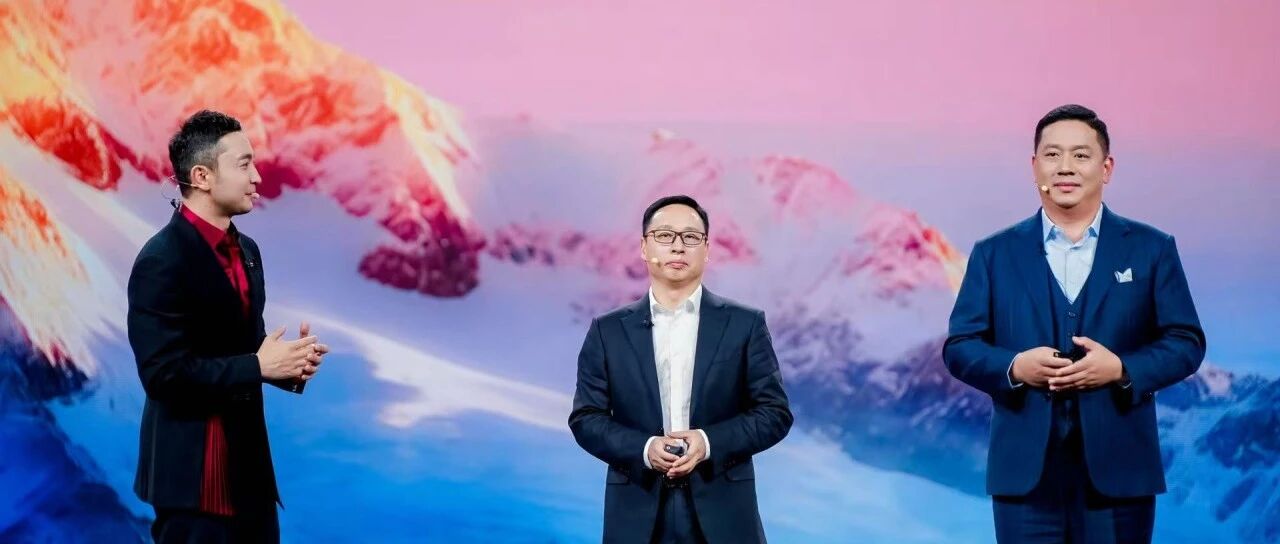
Core Viewpoint - The automotive industry in China is transitioning into the second half of the intelligentization phase, with significant advancements in smart driving technologies and a shift in consumer expectations towards intelligent features in vehicles [1][6]. Group 1: Industry Trends - In November 2025, the penetration rate of new energy vehicles in China reached 59.3%, indicating that nearly 6 out of every 10 new cars sold are electric [1]. - The penetration rate of intelligent driving passenger cars has exceeded 68%, marking a transition from quantity growth to quality breakthroughs in the industry [1]. - Consumers are increasingly prioritizing features such as smart cockpits and advanced driver assistance systems in their purchasing decisions, necessitating collaboration between automakers and leading tech companies [1][2]. Group 2: Innovative Business Models - Huawei's QianKun "First Realm" represents a new collaborative model in the intelligent automotive sector, integrating technology, teams, processes, and concepts to enhance product value [2][4]. - The "First Realm" model emphasizes a comprehensive approach to manufacturing and intelligence, moving away from isolated competition to a more collaborative framework [4][11]. - The new business model proposed by QianKun allows for a shorter return on investment cycle compared to traditional automotive investments, which typically require over 10 years and more than 30 billion yuan [11]. Group 3: Product Development and Market Positioning - The first model from QianKun, positioned as a "Chinese-style shooting brake," is expected to elevate expectations for high-end quality in new energy vehicles [4][19]. - The vehicle will feature a million-level design, control, and intelligence, aiming to provide a luxury experience comparable to high-end imported vehicles [15][16]. - QianKun's collaboration with top suppliers aims to integrate high-end configurations into their vehicles, setting a new standard for luxury electric vehicles [16][19]. Group 4: Market Strategy and Consumer Engagement - QianKun is attracting traditional luxury brand dealers to join its network, indicating strong confidence in the new luxury segment of Chinese brands [19]. - The company is shifting from a "recruitment" model to a "co-construction" model, enhancing its service philosophy to provide a high-end customer experience [20]. - By focusing on a comprehensive service experience, QianKun aims to build consumer loyalty and differentiate itself in a competitive market [19][20]. Group 5: Future Outlook - With the commencement of nationwide road testing and partnerships with leading suppliers, QianKun is poised to redefine the standards for high-end brands in the new energy vehicle market [21]. - The ongoing increase in new energy vehicle penetration in China positions QianKun as a key player in the next wave of transformation in the automotive industry, showcasing the potential for integrated software and hardware solutions [21].


华为乾崑启境的商业模式,给中国汽车发展带来了哪些启发?
Di Yi Cai Jing· 2025-12-31 11:39
Group 1 - The core theme of the automotive industry in 2025 is "intelligentization," marking a shift towards advanced driving technologies and smart features in electric vehicles [1] - In November 2025, the penetration rate of new energy vehicles in China reached 59.3%, indicating a significant market trend towards electric vehicles [1] - The current penetration rate of intelligent driving passenger cars in China has exceeded 68%, reflecting a transition from quantity growth to quality breakthroughs in the industry [1] Group 2 - Huawei's QianKun "First Realm" represents a new collaborative model in the smart automotive sector, integrating technology, teams, processes, and concepts [2] - The innovative business model of QianKun emphasizes a comprehensive approach, combining large-scale manufacturing with advanced intelligence to create a competitive edge [4] - The upcoming launch of QianKun's new vehicle is anticipated to elevate expectations for high-end quality in new energy vehicles [4] Group 3 - The smart driving policy is gradually being relaxed, which is expected to drive further growth in related enterprises [5] - Huawei QianKun is set to have a significant product year in 2026, leveraging its strong technological capabilities and resources [5][6] - QianKun's investment in R&D exceeds 10 billion yuan annually, establishing a technological moat in the industry [6] Group 4 - QianKun's approach includes transforming traditional process management to enhance collaboration and efficiency across companies [9] - The collaboration between Huawei and QianKun aims to create a seamless execution chain, improving decision-making and project advancement [9] - The integration of consumer electronics expertise into the automotive sector is expected to enhance the marketing and operational efficiency of QianKun [9] Group 5 - QianKun's new business model offers a faster return on investment compared to traditional automotive enterprises, which typically require over 300 billion yuan and a decade to see returns [11] - The model emphasizes resource efficiency and collaboration, reducing development and operational costs [11] - QianKun's innovative practices are prompting a reevaluation of development paths in the automotive industry, focusing on high-quality growth [11] Group 6 - QianKun has commenced nationwide road testing, marking a critical phase in validating its product capabilities [12] - The first model is designed as a high-performance vehicle, showcasing advanced design and operational features [13][14] - The vehicle will include Huawei's L3-level architecture and a suite of smart technologies, aiming to deliver a luxury experience comparable to high-end vehicles [14][15] Group 7 - QianKun's partnerships with top suppliers aim to provide high-end configurations and create a quality standard for electric vehicles [15] - The engagement of experienced dealers from luxury brands indicates confidence in QianKun's model and its potential in the high-end market [18] - The shift towards a partner-based service system reflects a commitment to enhancing customer experience and loyalty [19] Group 8 - QianKun is positioned to lead the next transformation in the new energy vehicle sector, showcasing the integration of software and hardware [20] - The company aims to contribute to China's automotive industry goals by promoting advanced manufacturing paradigms and management practices [20]
翻开启境供应商名单,每一页都写着“必胜”
2 1 Shi Ji Jing Ji Bao Dao· 2025-12-31 09:40
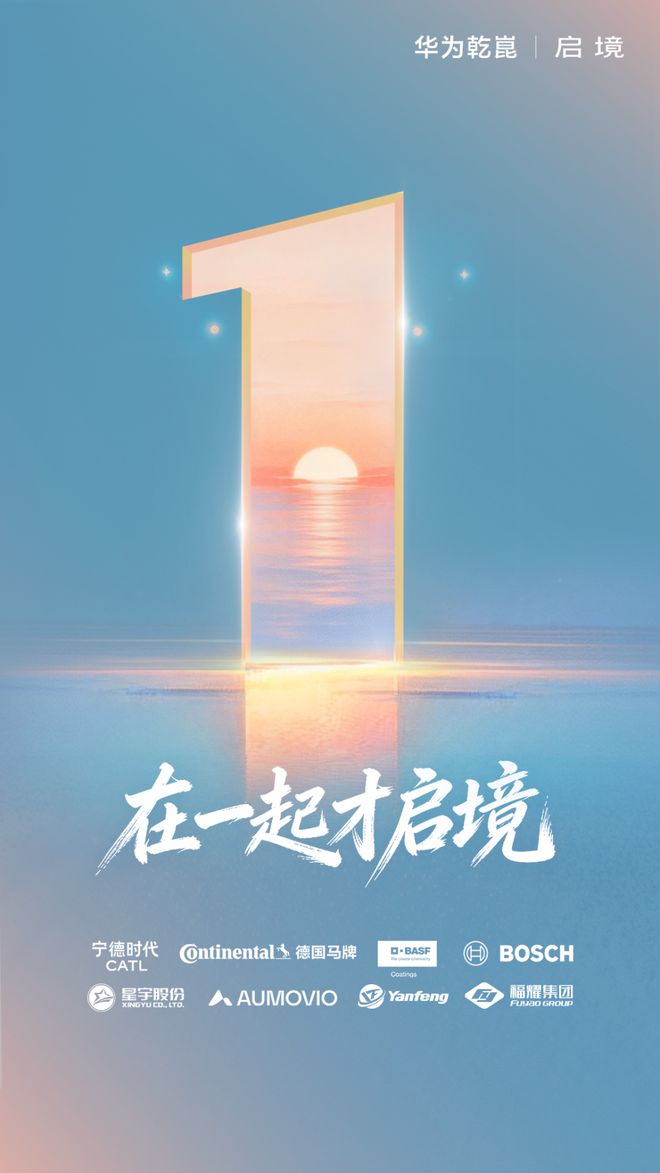
Core Viewpoint - The article discusses how Qijing, a new luxury electric vehicle brand, is preparing for its market entry by leveraging a list of high-end suppliers to establish its luxury credentials in the competitive Chinese automotive market [1][4]. Supplier Strategy - Qijing's strategy involves using a list of top-tier suppliers, including BASF for paint, Audi for headlights, and others, to create a perception of luxury and quality [4][8]. - The collaboration with renowned suppliers like Fuyao, Bosch, and Continental ensures high-quality production using complex and expensive processes, helping to build brand recognition quickly [4][5]. Technological Integration - The core competitive advantage of Qijing lies in the comprehensive release of Huawei's HiCar solutions, which include L3 conditional autonomous driving systems and full-stack technology capabilities [4][5]. - Huawei's involvement in the development process has led to a deep integration of technology across various aspects of the vehicle, including the cockpit, chassis, and braking systems [5][14]. Design and Aesthetics - Qijing's first product is marketed as the "most beautiful hunting-style sedan," with a focus on aesthetics achieved through high-quality materials and design elements [7][8]. - The choice of BASF for paint ensures a luxurious finish, with advanced techniques that enhance durability and visual appeal, similar to those used in high-end brands like Rolls-Royce [9][10]. Performance and Safety - The vehicle emphasizes both aesthetics and driving performance, utilizing Bosch's IPB braking system and high-performance tires from Continental to ensure a premium driving experience [11][14]. - Safety standards are rigorously enforced, with Huawei and Qijing establishing stringent testing protocols that exceed national standards to mitigate risks [17][18]. Market Positioning - Qijing aims to redefine luxury in the automotive sector by combining high-end aesthetics, advanced technology, and superior performance, positioning itself as a strong competitor in the Chinese electric vehicle market [16][17].
翻开启境供应商名单,每一页都写着“必胜”
21世纪经济报道· 2025-12-31 09:37
Core Viewpoint - The article discusses how Qijing, a new luxury electric vehicle brand, is positioning itself in the competitive Chinese automotive market by leveraging high-end suppliers to establish a premium perception among consumers [1][4]. Supplier Strategy - Qijing's strategy includes a supplier list featuring top-tier brands like BASF for paint, Bosch for braking systems, and Fuyao for glass, which helps to create a high-quality perception of its first vehicle [4][6]. - The use of luxury suppliers allows Qijing to avoid the lengthy brand-building process typical for new entrants, instead quickly establishing a high-end image [4][5]. Technological Integration - Qijing's core competitive advantage lies in the comprehensive release of Huawei's HiCar solutions, which include L3 conditional autonomous driving, smart cockpit, and vehicle control technologies [4][5]. - The collaboration between Huawei and GAC has resulted in a new paradigm in the automotive market, with deep integration of technology and design [5][6]. Aesthetic and Performance Focus - Qijing's first product is marketed as the "most beautiful hunting-style sedan," with a focus on aesthetics achieved through high-quality materials and design [6][7]. - The vehicle's paint, developed in collaboration with BASF, aims for a luxurious finish that rivals high-end brands like Rolls-Royce [7][8]. Advanced Features - The vehicle will feature advanced glass technology from Fuyao, including a three-layer silver coating for superior heat reflection and privacy [10]. - Qijing emphasizes performance with a "control triangle" consisting of Bosch braking systems, Continental brake calipers, and premium tires, ensuring a high level of driving dynamics [10][12]. Intelligent Driving Capabilities - Qijing's first model will be equipped with Huawei's advanced ADS 4 Max system, which utilizes a new architecture to simulate extreme driving scenarios, addressing a key challenge in autonomous driving [13][14]. - The system's capabilities include advanced safety features that can predict and respond to potential hazards, enhancing overall driving safety [15][19]. Safety Standards - Qijing has set rigorous safety standards, exceeding national requirements in various tests, including water immersion and mechanical impact tests [19]. - The collaboration between Huawei and GAC reflects a commitment to safety, with extensive testing protocols to ensure the highest safety standards for consumers [19].

福耀玻璃(600660):世界汽车玻璃龙头,智能化助推ASP提升
Dongguan Securities· 2025-12-31 09:04
Investment Rating - The report maintains a "Buy" rating for Fuyao Glass [2] Core Viewpoints - Fuyao Glass is a global leader in the automotive glass industry, with a market share of approximately 37% as of 2025, demonstrating strong resilience and growth potential [6][29] - The company focuses on high-value products, benefiting from the "new four modernizations" in the automotive sector, which drives an upward trend in average selling price (ASP) [6][31] - Fuyao's vertical integration strategy enhances cost control and allows for aggressive capacity expansion, positioning the company to capture global market share [6][38] - The company offers both high growth and high dividend yields, making it a rare quality asset in the market [6][38] - Profit forecasts for 2025-2027 indicate net profits of 98.31 billion, 113.58 billion, and 132.42 billion yuan, with corresponding price-to-earnings ratios of 17.12, 14.82, and 12.71 times, respectively [6] Summary by Sections 1. Automotive Glass Leader with Strong Resilience and Growth Alpha - Fuyao Glass has established a strong competitive moat over its 40 years of development, focusing on the automotive glass sector and achieving significant market share [15][16] - The company has maintained a high revenue concentration in automotive glass, with 91.1% of total revenue coming from this segment in 2025H1 [25][29] 2. Increasing Penetration of New Energy Vehicles and High-Value Products Driving Growth - The penetration rate of new energy vehicles has increased significantly, with high-value products like panoramic roofs and HUDs contributing to revenue growth [43][46] - The ASP of Fuyao's products is expected to continue rising due to the increasing share of high-value products, which accounted for 52.2% of sales by 2025Q3 [46][70] 3. Investment Recommendations - The report suggests that Fuyao Glass is well-positioned for future growth, supported by its strong market position, innovative product offerings, and robust financial performance [6][38]
2026国补来了!汽车消费补贴由“定额”改为“按比例”
Mei Ri Jing Ji Xin Wen· 2025-12-31 01:42
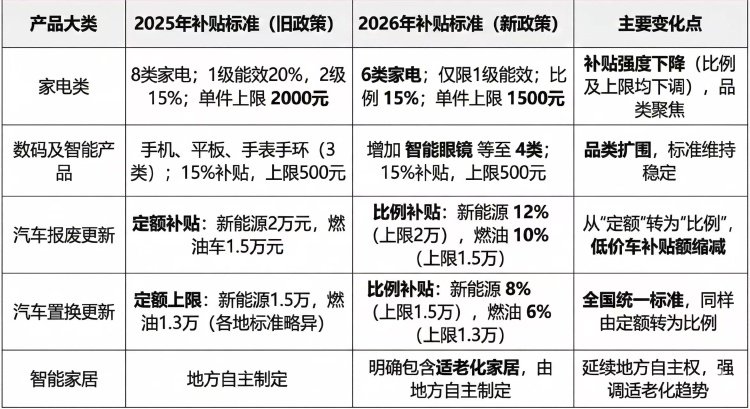
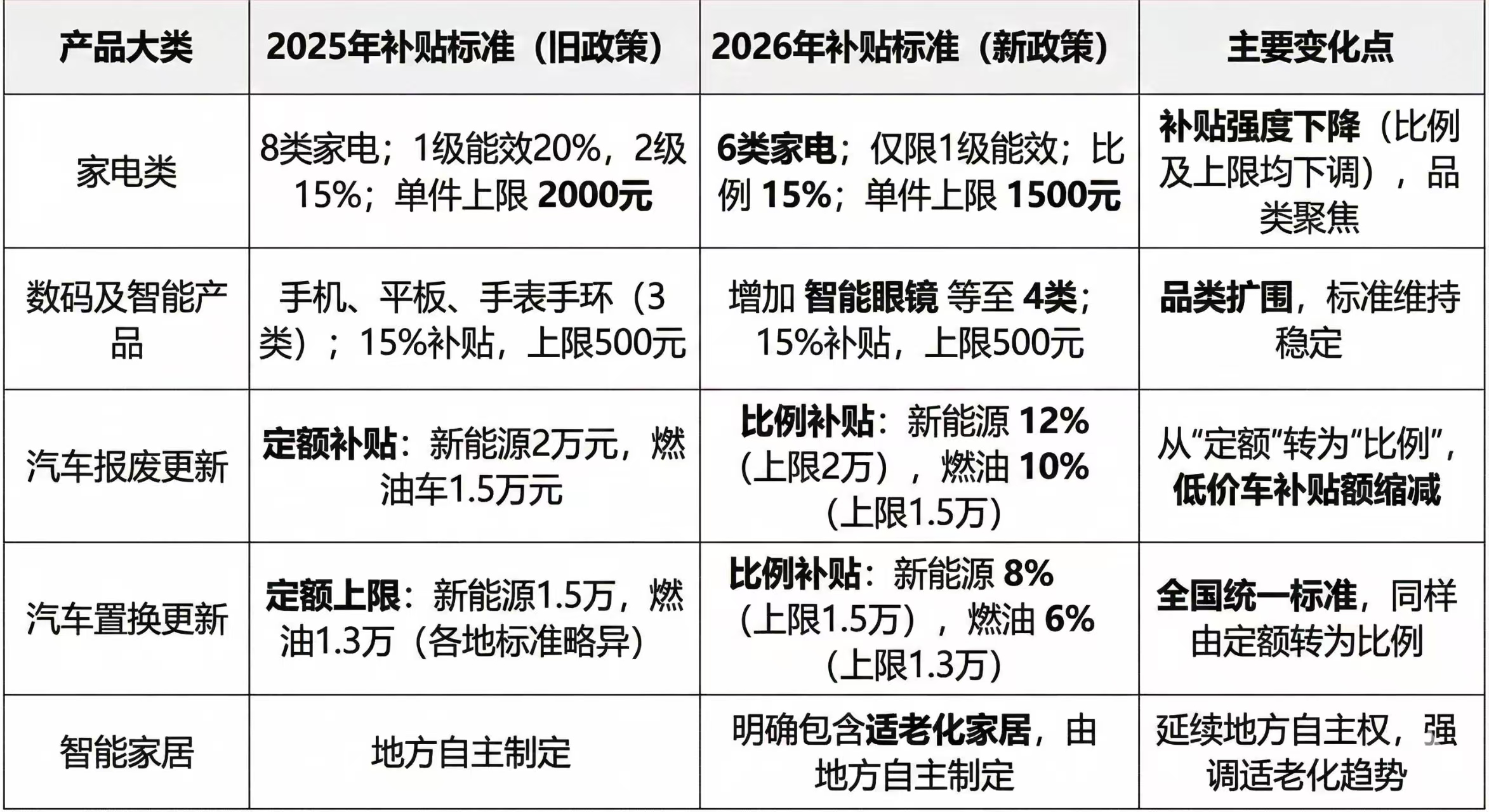
Group 1 - The core viewpoint of the news is the announcement of the 2026 national subsidy policy, which includes subsidies for smart products like AR glasses and emphasizes the importance of expanding domestic demand as a key task for the upcoming year [1][2] - The new subsidy policy for automobiles shifts from a fixed amount to a proportional subsidy, with electric vehicle scrappage subsidies set at 12% of the vehicle price (up to 20,000) and fuel vehicle scrappage subsidies at 8% (up to 15,000) [1][3] - The focus on expanding domestic demand is framed as a strategic deployment to address external shocks and enhance domestic circulation, highlighting the growth potential of discretionary consumption sectors such as retail, new energy vehicles, and smart home appliances [1][2] Group 2 - The optional consumption ETF primarily covers sectors closely related to service consumption and the unified market, with significant weightings in automobiles (46%) and home appliances (34%) [2] - The top ten weighted stocks in the optional consumption ETF include major companies such as Midea Group, BYD, Gree Electric, and Haier Smart Home, indicating a strong representation of leading firms in the consumer sector [2]
2026国补来了!汽车消费补贴由“定额”改为“按比例”(附对照表)
Mei Ri Jing Ji Xin Wen· 2025-12-31 01:11
Group 1 - The core viewpoint of the news is the announcement of the 2026 "National Subsidy" policy by the National Development and Reform Commission (NDRC) and the Ministry of Finance, which includes subsidies for smart products like AR glasses and emphasizes the importance of expanding domestic demand as a key task for the upcoming year [1] - The subsidy for scrapping and updating vehicles has shifted from a fixed amount to a proportional method, with new energy vehicle scrapping subsidies set at 12% of the vehicle price (up to 20,000 yuan), and fuel vehicle scrapping subsidies at 8% (up to 15,000 yuan) [1] - The NDRC's strategy to expand domestic demand is aimed at addressing external shocks and declining external demand, and is seen as crucial for strengthening the domestic circulation and stimulating market vitality [1] Group 2 - The optional consumption ETF primarily covers sectors closely related to service consumption and the unified market, including automobiles (46%), home appliances (34%), and commercial retail (6%) [2] - The top ten weighted stocks in the optional consumption ETF include Midea Group, BYD, Gree Electric, Fuyao Glass, Haier Smart Home, Seres, Sanhua Intelligent Control, China Duty Free Group, SAIC Motor, and Changan Automobile [2] Group 3 - The previous subsidy standards for 2025 included a fixed subsidy for home appliances (up to 2,000 yuan), digital and smart products (up to 500 yuan), and specific amounts for scrapping and updating vehicles [3] - The old policy provided a fixed subsidy of 20,000 yuan for new energy vehicles and 15,000 yuan for fuel vehicles for scrapping, and 15,000 yuan for new energy vehicles and 13,000 yuan for fuel vehicles for replacement [3]
一汽奥迪千万用户里程碑:礼遇先行,智启豪华出行新篇
第一财经网· 2025-12-30 09:49
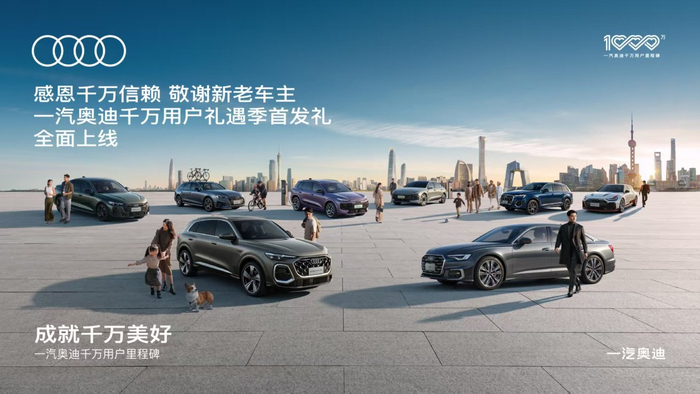
Core Insights - FAW Audi is celebrating the milestone of reaching 10 million users with a series of promotional events and the pre-sale of the new Audi Q5L, marking a new era in luxury B-segment SUVs [1][3] - The brand's success is attributed to nearly 38 years of deep integration with the Chinese automotive industry, reflecting a narrative of growth alongside the country's economic development [3][9] Group 1: User Engagement and Promotions - The "10 Million User Appreciation Season" includes multiple benefits for both new and existing customers, such as exclusive gifts for test drives, hotel upgrades, shopping discounts, and maintenance packages [1][3] - Existing car owners can enjoy significant discounts on maintenance and additional cash subsidies for purchasing or trading in vehicles, along with loyalty rewards [1][3] Group 2: Historical Context and Market Position - FAW Audi was a pioneer in the luxury car market in China, establishing a joint venture in 1988 that filled a gap in domestic luxury car production and set a precedent for future collaborations [4][9] - The introduction of the first domestically produced Audi model in 1989 marked a significant milestone, allowing Chinese consumers to experience luxury vehicles at more accessible prices [4][6] Group 3: Product Development and Innovation - FAW Audi has consistently adapted to market demands, launching extended models like the Audi A6L to meet consumer preferences for spaciousness, which has helped maintain its leadership in the luxury C-segment [6][8] - The brand has embraced a dual-platform strategy for electric and fuel vehicles, ensuring a comprehensive product matrix that caters to diverse consumer needs [11][13] Group 4: Strategic Partnerships and Future Plans - Collaborations with technology companies like Huawei have led to innovative products that integrate advanced driving technologies, showcasing a blend of German engineering and Chinese innovation [11][13] - By 2025, FAW Audi aims to expand its product offerings to 42 models across various segments, enhancing customer experience through upgraded service commitments and community support initiatives [13][15] Group 5: Social Responsibility and Economic Impact - FAW Audi has created nearly 500,000 jobs and contributed over 740 billion yuan in taxes, while also engaging in social initiatives to provide educational opportunities for underprivileged children [15] - The brand's journey reflects the evolution of the Chinese luxury car market, from inception to leadership, and serves as a model for successful joint ventures in the automotive sector [15]
智通AH统计|12月30日
智通财经网· 2025-12-30 08:22
Group 1 - The top three AH premium rates are held by Northeast Electric (00042) at 864.29%, Zhejiang Shibao (01057) at 460.57%, and Hongye Futures (03678) at 286.19% [1][2] - The bottom three AH premium rates are recorded by Ningde Times (03750) at -12.08%, China Merchants Bank (03968) at -4.45%, and Heng Rui Medicine (01276) at 1.09% [1][2] - Zhejiang Shibao (01057), Goldwind Technology (02208), and Zhaoyan New Drug (06127) have the highest deviation values at 162.73%, 44.98%, and 18.82% respectively [1][2] Group 2 - The lowest deviation values are seen in GAC Group (02238) at -23.87%, Northeast Electric (00042) at -19.61%, and Chenming Paper (01812) at -15.51% [1][2] - The top ten AH stocks by premium rate include companies like Fudan Zhangjiang (01349) at 253.76% and Andeli Juice (02218) at 230.43% [2] - The bottom ten AH stocks by premium rate include Weichai Power (02338) at 9.59% and WuXi AppTec (02359) at 10.14% [2]