
零跑

Search documents
新势力 | 8月:车市平稳向上 新势力销量环比增长【民生汽车 崔琰团队】
汽车琰究· 2025-09-02 14:30
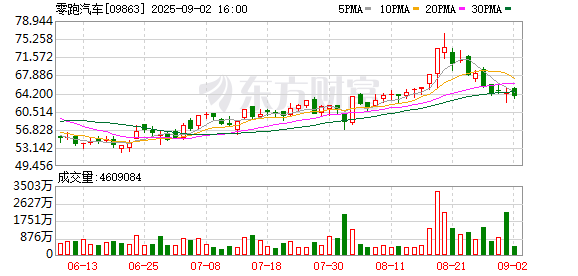
Core Viewpoint - The article highlights the steady growth of the new energy vehicle market in August 2025, with significant delivery increases for various companies, while also noting the competitive landscape and technological advancements in the industry [3][4][10]. Group 1: Market Performance - In August 2025, the retail market for narrow passenger vehicles is estimated at approximately 1.94 million units, representing a year-on-year growth of 2.0% and a month-on-month increase of 6.2% [3]. - The new energy vehicle retail sales are projected to reach 1.1 million units, with a penetration rate of about 56.7% [3]. - Six sample new force car companies (excluding Xiaomi) delivered a total of 199,279 vehicles in August, showing a year-on-year increase of 20.0% and a month-on-month increase of 5.9% [3]. Group 2: Company Deliveries - **Leap Motor**: Delivered 57,066 vehicles in August, up 88.3% year-on-year and 13.8% month-on-month, driven by strong sales of the B10 and C10 models [4]. - **Xpeng**: Reported deliveries of 37,709 vehicles, a year-on-year increase of 168.7% and a month-on-month increase of 2.7% [5]. - **NIO**: Achieved 31,305 vehicle deliveries, reflecting a year-on-year growth of 55.2% and a month-on-month increase of 15.9% [6]. - **Li Auto**: Delivered 28,529 vehicles, but experienced a year-on-year decline of 40.7% and a month-on-month decrease of 7.2% [6]. - **Aion**: Reported 27,044 deliveries, down 23.5% year-on-year but up 1.8% month-on-month [6]. - **Zeekr**: Delivered 17,626 vehicles, showing a slight year-on-year decline of 2.2% but a month-on-month increase of 3.8% [7]. - **Xiaomi**: Exceeded 30,000 vehicle deliveries in August, with strong demand for its new SUV model [7]. Group 3: Technological Advancements - The article discusses the acceleration of end-to-end technology applications in autonomous driving, marking the beginning of a new era in intelligent driving [8][10]. - Companies like Xpeng and those associated with Huawei have been leading the iteration and promotion of intelligent driving technologies since 2024 [10]. - The advancements in intelligent driving technology are expected to lower hardware barriers and expand applications in the mainstream market, particularly for vehicles priced under 200,000 yuan [10]. Group 4: Investment Recommendations - The article suggests a focus on companies with strong autonomous driving capabilities and those that are well-positioned in the new energy vehicle supply chain, including Geely, Xpeng, Li Auto, BYD, and Xiaomi [11][18]. - It emphasizes the importance of intelligent driving as a competitive factor and the potential for domestic suppliers to gain market share through cost-effective and responsive solutions [11].



37天交付破万 零跑B10加速全球化
Guo Ji Jin Rong Bao· 2025-09-02 14:08
Group 1 - The core point of the article highlights Leap Motor's significant milestones in vehicle deliveries and global expansion plans [2][4]. Group 2 - Leap Motor announced the delivery of its 10,000th B01 vehicle just 37 days after its launch [2]. - The B10 model, which is crucial for Leap Motor's sales, was launched in April and surpassed 10,000 deliveries by May, achieving a total of over 50,000 deliveries by the time of the auto show [4]. - The B10 model is set to debut globally at the Paris Auto Show in October 2024, with plans for global road testing starting in June 2025 across 18 countries and 200 cities, and the first batch of vehicles will be sent to Europe in August [4].
8月乘用车:自主海外大比拼、新势力持续狂飙、合资反攻新能源
Zhong Guo Jing Ji Wang· 2025-09-02 13:04
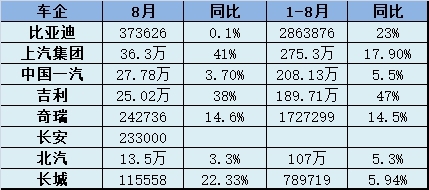
Core Insights - The automotive market in August showed significant growth driven by favorable policies and consumer demand, with domestic brands leading the market while luxury and joint venture brands lagged behind [1] Domestic Brands Performance - BYD achieved sales of 373,626 units in August, a slight increase of 0.1% year-on-year, with cumulative sales of 2,863,876 units for the first eight months, representing a 23% increase [2] - SAIC Group reported sales of 363,700 units in August, up 41% year-on-year, with cumulative sales of 2,753,000 units, a 17.9% increase [2] - Chery exported 129,000 vehicles in August, marking a 32.3% increase year-on-year, and maintained its position as the top exporter of Chinese cars [4] - Geely's new energy vehicle sales reached 147,000 units in August, a remarkable 95% increase year-on-year, making it the second-largest player in the new energy sector after BYD [4] New Energy Vehicle Market - The new energy vehicle segment continues to thrive, with companies like Leap Motor achieving record sales of 57,066 units in August, leading the new force brands [5][6] - Hongmeng Zhixing and Xiaopeng also reported strong sales, with the former selling nearly 50,000 units and the latter launching a new model that boosted sales [6][7] Joint Venture Brands - FAW-Volkswagen sold 135,772 units in August, a 4.2% year-on-year increase, while its Audi brand saw significant sales due to new product launches [8][10] - The joint venture brands are facing challenges from both domestic and new energy brands, with a notable decline in sales for luxury brands like Mercedes-Benz, BMW, and Audi [9][10] Market Outlook - The automotive market is expected to become increasingly competitive as the traditional sales peak season approaches, with ongoing policy support likely to reshape market dynamics [10]


探店16家,新势力一哥为何进入销量迷雾?
3 6 Ke· 2025-09-02 10:21
Core Insights - Li Auto, which has led the new car sales for three consecutive years, is currently facing a sales dilemma despite achieving significant growth in previous years [1][3] - The company experienced a remarkable 182.2% year-on-year sales increase in 2023, reaching 376,000 units, and maintained profitability for the first time [1][3] - However, in 2024, Li Auto's sales growth slowed down, with a cumulative sales of 263,000 units from January to August, reflecting an 8% year-on-year decline [1][3] Sales Performance - In 2022, Li Auto launched the extended-range L series, resulting in a total sales of 133,000 units, marking a 47.2% increase [1] - The company achieved a cumulative sales of 500,500 units in 2024, maintaining its position as the top-selling new energy vehicle brand [1] - The sales trajectory over three years shows a total growth of 450% [1] Market Competition - The competition in the extended-range vehicle market has intensified, particularly with the introduction of the Huawei AITO M9, which has captured significant market share [4][10] - Li Auto's flagship model, the L9, has seen a decline in monthly sales, dropping to around 4,000 units by 2025 [4][8] - The introduction of the M8 model by AITO further challenges Li Auto's market position, as it targets family users with competitive pricing and features [10][11] Product Strategy - Li Auto's product strategy has focused on defining its vehicles as family-oriented, emphasizing comfort and space [20][21] - The company has maintained a low sales expense ratio of 8%, allowing it to penetrate the high-end vehicle market effectively [1] - Continuous product innovation and a strong focus on family user experience have been key to Li Auto's competitive advantage [20][25] Brand Positioning - Li Auto aims to position itself similarly to Apple in terms of brand perception and product quality [1] - The brand has successfully created a strong reputation among family users, particularly children, through features like the "Li Xiang Classmate" voice assistant [22][24] - However, the brand's emphasis on family use may limit its appeal in the broader high-end market, where consumers also seek business and luxury attributes [29][30] Future Outlook - Li Auto's future growth may depend on its ability to innovate and adapt to the rapidly changing market landscape, particularly in the face of increasing competition from both traditional and new energy vehicle brands [30] - The company is currently navigating a challenging environment where competitors are quickly replicating its successful product concepts at lower price points [30]
华为刚注册了「绝界」
3 6 Ke· 2025-09-02 07:38
Core Insights - Huawei has registered a new trademark "绝界" (Absolute Realm), which has sparked discussions and speculation about its implications in the automotive sector [3][4][12] - The move comes amid Huawei's expanding presence in the automotive market, particularly with its "智选车" (Smart Selection Car) initiative led by Yu Chengdong [12][14] Trademark Registration - The "绝界" trademark has been approved and is classified under Class 12 for transportation tools, including electric vehicles, hybrid vehicles, and autonomous driving cars [4] - Huawei has a history of registering numerous trademarks, with over 100 variations of "界" (Realm), indicating a strategy of defensive registration and potential future brand development [8][10] Market Impact - The introduction of "绝界" is seen as a strategic move that could influence not only consumer perception but also the dynamics among automotive manufacturers and suppliers [3][12] - The automotive market is witnessing a trend where more companies are eager to collaborate with Huawei, reflecting a shift in industry sentiment [12][14] Competitive Landscape - Huawei's "智选车" initiative is currently focused on various vehicle segments, including SUVs and sedans, with plans to explore more competitive price points in the market [14][18] - The competition in the automotive sector is intensifying, with many brands vying for market share, particularly in the price-sensitive segment below 150,000 yuan [14][18] Internal Strategy - Huawei is managing multiple lines of business within the automotive sector, including the "Hi模式" (Hi Model), which is rapidly expanding and may lead to increased competition with the "智选车" initiative [16][18] - The strategic registration of trademarks like "尚界" (Shang Realm) suggests that Huawei is preparing for future market entries and partnerships [20]
新势力8月战报出炉,多家车企交付量创下历史新高
第一财经· 2025-09-01 16:08
Core Viewpoint - In August, several new energy vehicle companies reported record delivery numbers, while some others experienced a decline in deliveries, highlighting the varying progress towards annual targets among these companies [3][4]. Group 1: Delivery Performance - Leap Motor achieved a record delivery of 57,066 vehicles in August, marking a 13.84% increase from July, and has completed 56.7% of its annual target of 58,000 to 65,000 vehicles [4][8]. - Xiaopeng Motors delivered 37,709 vehicles in August, with a completion rate of 71.48% towards its annual target of 38,000 vehicles [4][8]. - NIO surpassed Li Auto for the first time in 34 months, delivering 31,305 vehicles in August, but has only completed 37.83% of its annual target of 44,000 vehicles [4][6]. - Li Auto's deliveries fell to 28,529 vehicles in August, marking a decline for three consecutive months, with a completion rate of 37.60% towards its annual target of 70,000 vehicles [4][6]. - Zeekr's two brands delivered 44,843 vehicles in August, maintaining a completion rate of 47.03% towards its annual target [8]. Group 2: Competitive Landscape - The competition between NIO and Li Auto intensified with the launch of new electric SUVs, impacting their sales performance [5]. - NIO's new model, the L90, contributed significantly to its sales growth, delivering 10,575 units in its first month [5]. - Li Auto's CEO expressed a goal to maintain a competitive position in the high-end electric SUV market by the end of the year [5][6]. Group 3: Other Companies' Performance - Lantu Motors delivered 13,505 vehicles in August, achieving a year-on-year growth of 119% and a completion rate of 39.85% towards its annual target of 20,000 vehicles [9]. - Avita delivered 10,565 vehicles in August, with a completion rate of 36.23% towards its annual target [9]. - Xiaomi's delivery volume remained above 30,000 vehicles in August, but it is estimated to have completed only about half of its annual target of over 350,000 vehicles [8].
新能源车ETF(159806)盘中净流入超千万份,行业景气度与技术创新成焦点
Mei Ri Jing Ji Xin Wen· 2025-09-01 06:21
Group 1 - The core viewpoint of the article highlights the significant inflow of funds into the new energy vehicle (NEV) sector, with the NEV ETF (159806) seeing a net inflow of 13 million units, indicating strong market interest in NEV assets [1] - Several major NEV models have recently launched, attracting market attention, including the SAIC and Huawei collaboration on the Shangjie H5, NIO's new ES8 with advanced driving hardware, Tesla's six-seat Model Y L, and the successful low-price strategy of the Extreme Fox T1, which achieved over 15,000 orders in 48 hours [1] - Industry data shows that the retail penetration rate of NEVs reached 58% in the first two weeks of August, reflecting both year-on-year and month-on-month growth, with companies like Leap Motor and Xpeng reporting impressive half-year results, indicating sustained high industry vitality driven by upgrades in intelligent configurations and product matrix expansion [1] Group 2 - The NEV ETF (159806) tracks the CS New Energy Vehicle Index (399976), which selects listed companies involved in key areas such as lithium batteries, motors, electronic controls, and vehicle manufacturing, providing a comprehensive reflection of the overall performance of listed companies in the NEV industry chain [1] - The index is highly concentrated in the manufacturing sector related to NEVs and leans towards a growth style, suggesting a focus on companies with high growth potential [1] - Investors without stock accounts can consider the Guotai Zhongzheng New Energy Vehicle ETF Connect C (009068) and Guotai Zhongzheng New Energy Vehicle ETF Connect A (009067) as alternative investment options [1]
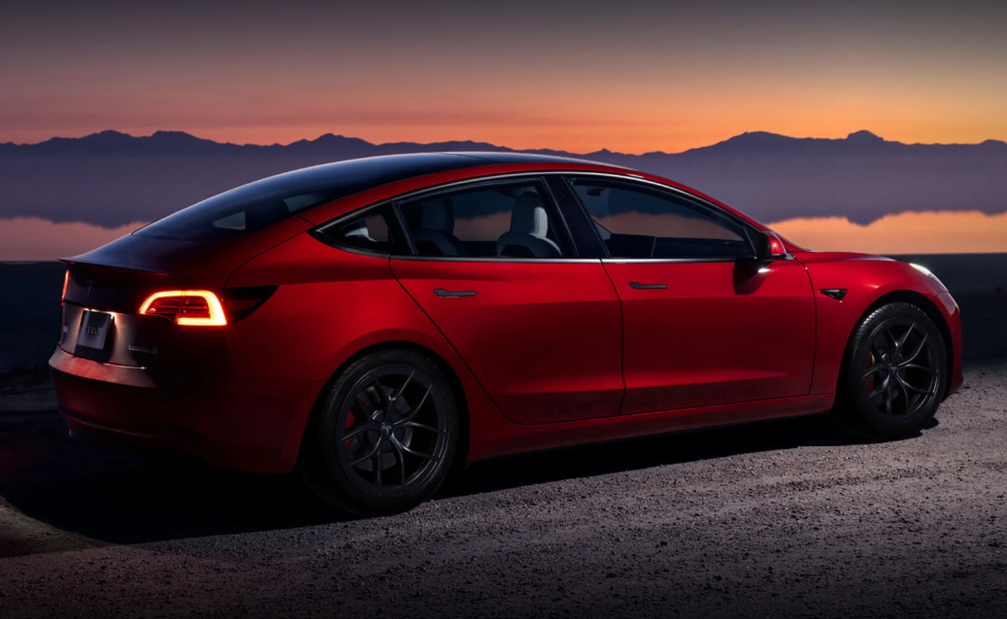
特斯拉Model 3官降1万元,发布不足1个月
Ju Chao Zi Xun· 2025-09-01 02:33
Group 1 - Tesla's Model 3 Long Range RWD version price has been reduced from 269,500 yuan to 259,500 yuan, a decrease of 10,000 yuan [2] - The Model 3 Long Range RWD version, launched on August 12, 2025, has a CLTC range of 830 kilometers with 18-inch wheels and 800 kilometers with 19-inch wheels [2] - The vehicle features a distinctive design with a closed grille and sharp LED headlights, maintaining the current Model 3's design language [2] Group 2 - The Chinese automotive market has entered a new round of price wars since August, affecting both traditional fuel vehicles and electric vehicles [2] - Major traditional car brands like Volkswagen and Audi have also implemented price reductions across various models, with discounts reaching up to 60,000 yuan for some SUVs [2] - New energy vehicle companies, including Li Auto, Aion, Leap Motor, and NIO, have joined the price reduction trend through official price cuts and promotional offers [3]
【2025年半年度报告点评/华达科技】25Q2业绩高增,新能源转型加速
东吴汽车黄细里团队· 2025-08-30 15:23
Core Viewpoint - The company reported a strong performance in the first half of 2025, with significant revenue growth and profitability, driven by its focus on the new energy vehicle sector and cost management strategies [3][4][6]. Financial Performance - The company achieved a revenue of 2.868 billion yuan in H1 2025, representing a year-on-year increase of 22.48%. The net profit attributable to shareholders was 199 million yuan, up 21.17% year-on-year, while the net profit excluding non-recurring items was 183 million yuan, a 15.42% increase year-on-year [3]. - In Q2 2025, the revenue reached 1.869 billion yuan, showing a remarkable year-on-year growth of 94.85% and a quarter-on-quarter increase of 87.04%. The net profit attributable to shareholders surged to 153 million yuan, a staggering year-on-year increase of 3696% and a quarter-on-quarter increase of 234% [3]. Profitability Metrics - The net profit margin for H1 2025 was 6.9%, a slight decrease of 0.1 percentage points year-on-year. The gross profit margin was 15.15%, down 2.58 percentage points year-on-year. In Q2 2025, the net profit margin improved to 8.19%, up 7.77 percentage points year-on-year and 3.61 percentage points quarter-on-quarter [4]. - The company demonstrated effective cost control in Q2 2025, with a significant reduction in the expense ratio, which was 5.44%, down 4.24 percentage points year-on-year and 4.76 percentage points quarter-on-quarter [5]. New Energy Vehicle Sector - In H1 2025, revenue from new energy vehicle components reached 780 million yuan, an increase of 8.2% year-on-year, accounting for 28.6% of the main revenue. The company has established a customer base that includes major domestic new energy battery manufacturers and leading electric vehicle companies [6]. Strategic Developments - The company secured a 3.5 billion yuan project for new energy components, with multiple projects set to commence production in Q3 and Q4 2025. This includes body components, battery box pallets, and aluminum die-casting parts [7]. - The company is expanding into low-altitude economy and robotics sectors, with plans to develop flying cars and humanoid robots, indicating a strategic diversification beyond the automotive industry [8]. Profit Forecast and Investment Rating - The company maintains profit forecasts for 2025-2027, projecting net profits of 470 million yuan, 584 million yuan, and 733 million yuan respectively. The current market capitalization corresponds to price-to-earnings ratios of 43, 35, and 28 times for the respective years, with a "buy" rating maintained [9].


国轩高科营收利润双增,拟80亿加码电池产能
2 1 Shi Ji Jing Ji Bao Dao· 2025-08-30 13:59
Core Viewpoint - Guoxuan High-Tech (002074.SZ) reported significant growth in both net profit and operating cash flow for the first half of 2025, with a notable increase in revenue and market share in the power battery sector [1][3]. Financial Performance - The company achieved operating revenue of 19.394 billion yuan, a year-on-year increase of 15.48% [1]. - Net profit attributable to shareholders reached 367 million yuan, up 35.22% year-on-year, while the non-recurring net profit was 72.87 million yuan, growing by 48.53% [1]. Market Position - Guoxuan High-Tech's global market share for power battery installations rose to 3.6%, with domestic market share increasing to 5.18%, ranking fourth in the industry [1][3]. - The gap with the third-ranked company, Zhongxin Hang, has narrowed to less than 1.5 percentage points [3]. Business Segments - Power battery revenue was 14.034 billion yuan, reflecting a year-on-year growth of 19.94% [3]. - Energy storage battery revenue reached 4.562 billion yuan, with a year-on-year increase of 5.14% [3]. R&D and Production Capacity - The company invested 1.382 billion yuan in R&D during the first half of 2025, a 13.34% increase from the previous year [5]. - Guoxuan High-Tech is advancing its solid-state battery technology, with plans for a 2GWh production line and a 12GWh quasi-solid-state battery production line [1][6]. Investment Plans - The company announced plans to invest up to 4 billion yuan in two new battery manufacturing bases, one in Nanjing and another in Wuhu, each with a capacity of 20GWh [2]. Strategic Initiatives - Guoxuan High-Tech is exploring the small power battery sector, aiming to tap into a market with significant growth potential [4].
