Rokid

Search documents
佰维存储:目前存储行业价格企稳回升,景气度仍会持续
Ju Chao Zi Xun· 2025-08-14 03:01
Industry Overview - The storage industry is experiencing price stabilization and recovery, driven by seasonal stocking momentum and strong demand from emerging applications like AI glasses, indicating continued industry prosperity [3] - Major storage companies such as SanDisk, Longsys, and Micron have issued price increase notices for Q1 2025, with some product prices already stabilizing [3] - The NAND supply-demand imbalance has significantly improved due to production cuts and inventory reduction in the first half of the year [3] - In the DRAM sector, Samsung, Micron, and SK Hynix are focusing on high-end products, reducing supply of DDR4 and Mobile LPDDR4X, leading to shortages and price increases [3] Company Performance - In the mobile sector, the company has achieved continuous breakthroughs with first-tier mobile clients, entering partnerships with vivo and maintaining deep cooperation with OPPO, Transsion, and Motorola [3] - In the PC sector, the company has made further inroads into the global pre-installed market with major PC manufacturers like Lenovo, Xiaomi, Acer, HP, and Tongfang, with Xiaomi being a new client in the first half of 2025 [3] - The company has shown strong performance in the consumer PC market, with continuous revenue growth [3] Product Applications - The company's products are being utilized in AI/AR glasses and smartwatches by renowned companies such as Meta, Google, Xiaomi, and Rokid [4] - In the enterprise sector, the company is rapidly developing, having gained core supplier status with AI server manufacturers and leading internet firms, and is actively deepening its domestic ecosystem partnerships [4] - In the smart automotive sector, the company has delivered LPDDR and eMMC products in bulk to leading automotive manufacturers and is pushing for new product validation [4]

8月14日早餐 | 腾讯二季报表现强劲;首届人形机器人运动会举行
Xuan Gu Bao· 2025-08-14 00:12
Market Overview - The U.S. stock market saw gains with the S&P 500 up 0.32%, the Dow Jones up 1.04%, and the Nasdaq up 0.14% [2] - Major tech companies lagged behind the market, with only Apple and Amazon seeing increases, while Coreweave's stock plummeted by 20% [3] - Chinese concept stocks outperformed the market, with Tencent rising by 7.4% and Alibaba by 3.6% [3] Economic Indicators - U.S. Treasury yields fell, with the 10-year yield dropping by 5.6 basis points [4] - The dollar experienced a decline for two consecutive days, while gold prices saw a slight increase [4] Oil Market - Oil prices dropped to their lowest since early June due to unexpected increases in inventory and lowered demand expectations [5] Technology Developments - Nvidia's 15% chip revenue agreement is being considered as a template for potential expansion into other industries, according to the U.S. Treasury Secretary [6] - Apple is focusing its AI strategy on robotics, realistic Siri, and home security [8] Industry Reports - The IEA's monthly report indicates a potential severe oversupply of global oil next year, which could set a historical record [9] Domestic Economic Developments - The People's Bank of China reported that as of the end of July, the broad money (M2) balance was 329.94 trillion yuan, a year-on-year increase of 8.8% [10] - The Ministry of Commerce has initiated a review of anti-dumping measures on imported single-mode optical fibers from India [14] Corporate Announcements - Tencent's Q2 report showed revenue of 184.5 billion yuan, a 15% year-on-year increase, with gaming revenue up 22% [17][21] - The company also reported a significant increase in its advertising revenue, which grew by 20% to reach 35.8 billion yuan [22] - The National Medical Insurance Administration has approved a preliminary list of innovative drugs for the 2025 insurance directory, highlighting CAR-T therapies [21] Investment Opportunities - The "megawatt supercharging" technology is expected to drive rapid expansion in the electric vehicle sector, with a projected market size of approximately $640.6 million in 2024, growing to $1.5 billion by 2030 [20] - The quantum computing sector is seeing collaborative efforts aimed at addressing cutting-edge issues, with potential applications across finance, pharmaceuticals, and energy [23]



8点1氪丨NIKE起诉陈冠希索赔90万,陈冠希发文;中国恒大8月25日退市;奔驰CEO警告没有燃油车的后果
3 6 Ke· 2025-08-14 00:00
Group 1 - Chipone Technology plans to issue H-shares and apply for listing on the Hong Kong Stock Exchange [1] - Wolong Electric submitted a listing application to the Hong Kong Stock Exchange with joint sponsors including CICC, Huatai International, and GF Securities [2] Group 2 - Nike filed a lawsuit against Edison Chen for breach of contract, claiming $126,000 in unpaid goods [3] - China Evergrande's listing status will be canceled on August 25 due to failure to meet the Hong Kong Stock Exchange's requirements [4] Group 3 - Mercedes-Benz CEO warned that the European automotive industry could face collapse without fuel vehicles [4] - Multiple video platforms have limitations on ad-free experiences for members, with some ads still appearing even for paid subscriptions [5] Group 4 - Li Auto aims to deliver over 8,000 units of the Li i8 by the end of September, with a challenge to reach 10,000 units [6] - Xiaomi appointed several executives for its African market to increase investment and operations [9] Group 5 - Tencent reported Q2 2025 revenue of 184.5 billion yuan, a 15% year-on-year increase, with significant growth in various service segments [20] - Youyan Silicon reported a net profit of 106 million yuan for the first half of 2025, a decline of 18.74% year-on-year [21] - Baolidi achieved a net profit of 63.8 million yuan in the first half of 2025, a 15.19% increase year-on-year [22] - Hatou Co. reported a net profit of 380 million yuan for the first half of 2025, a 233.08% increase year-on-year [23]
WAIC 2025见闻:中国AI产业走到哪一步了?
淡水泉投资· 2025-08-12 08:03
Core Insights - The 2025 World Artificial Intelligence Conference (WAIC) in Shanghai showcased the growing interest in the AI industry from academia, industry, and investors, reflecting a significant shift in focus since the first conference in 2018 [3][4] - The AI landscape is evolving with a shift from homogeneous models to differentiated products, as companies face increasing competition and seek to maintain core advantages [6][7] - Traditional internet giants like Alibaba and Tencent are promoting full-stack AI capabilities, integrating AI models into comprehensive solutions to lower barriers for enterprises [10] Group 1: AI Model Development - The competition among large model companies has intensified, leading to a focus on differentiated product strategies, such as long text processing and multi-modal capabilities [6] - The boundaries between "model" and "application" are blurring, with model companies transitioning to comprehensive AI platforms that integrate various technologies [7] - The emergence of open-source models like DeepSeek R1 is reshaping the competitive landscape, prompting companies to explore new business models [6][7] Group 2: Cloud and AI Integration - Established cloud providers are building AI ecosystems around their models, offering one-stop AI solutions that enhance the accessibility of AI capabilities for enterprises [10] - The shift towards public cloud platforms for AI capabilities is driven by the challenges of private cloud deployment, particularly for small and medium-sized enterprises [10] - The integration of AI modules into existing cloud infrastructures is expected to reshape asset valuation logic in the long term [10] Group 3: Domestic Computing Power - Domestic computing power was prominently featured at the conference, with Huawei showcasing its Ascend 384 super node, which boasts double the computing power of NVIDIA's GB200 NVL72 system [13] - Domestic GPUs are increasingly competitive, although challenges remain in memory bandwidth and interconnect capabilities [14] - The demand for private AI deployment is driving innovation in AI integrated machines, reflecting a strong market need [15] Group 4: Edge AI Development - The WAIC highlighted the innovative potential of edge AI, though the commercialization paths for these products remain limited [18] - Key areas for improvement in edge AI include multi-modal perception and decision-making capabilities, which are critical for applications like robotics and AR [18] - The smartphone is positioned as a likely platform for AI agents due to its proximity to users and strong computational capabilities, although industry caution regarding technology maturity persists [18][19]


硬件只是入场券:AI可穿戴的百万销量背后,软件与场景才是终极战场
AI前线· 2025-08-12 07:22
Core Viewpoint - The integration of AI into hardware is essential for creating valuable services and enhancing user experience, marking a shift towards a collaborative and tool-oriented era for large models [1][4][15]. Group 1: AI Hardware Development - The future of AI hardware will excel in scenarios where traditional hardware falls short, with the integration of software and hardware being key to achieving this [4][15]. - Successful products attract top talent, which is crucial for creating competitive offerings in the market [4][15]. - Companies like Plaud and Rokid have gained early advantages by recognizing real user needs and investing in product development before the rise of large models [6][7]. Group 2: Market Dynamics and User Engagement - Crowdfunding success for Plaud was driven by a combination of genuine user demand and strong design appeal, which is critical for hardware products [7][8]. - The AI integration in hardware has led to increased market recognition, with many manufacturers seeking ways to embed AI into their products [8][9]. - The evolution of hardware focuses on lightweight designs to cater to a broader user base, including children and the elderly [9]. Group 3: Competitive Landscape - The competitive edge lies in the ability to gather contextual information effectively, which is essential for differentiating software capabilities [11][12]. - Large companies often overlook the hardware sector due to its challenges, creating opportunities for startups to thrive [12][16]. - The core value of integrated software and hardware in AI applications is to create a seamless user experience, which requires comprehensive team capabilities [12][13]. Group 4: Technical Challenges and Innovations - Multi-modal interaction presents significant technical challenges, particularly in understanding user intent and context [17][19]. - The integration of various data types (audio, visual, etc.) is crucial for enhancing AI's understanding of user interactions [19][20]. - Ensuring user privacy and data security is paramount as multi-modal capabilities expand [23][20]. Group 5: Future Outlook and Market Education - The market for AI hardware is still in its early stages, requiring patience and education to encourage user adoption [26][28]. - The ultimate form of smart wearable devices will be lightweight and unobtrusive, becoming a part of daily life [33]. - Establishing user trust is critical for the success of AI hardware, as users must feel secure in sharing their data [37].

AI眼镜,可以戴上的“随身视界”
新华网财经· 2025-08-12 04:02
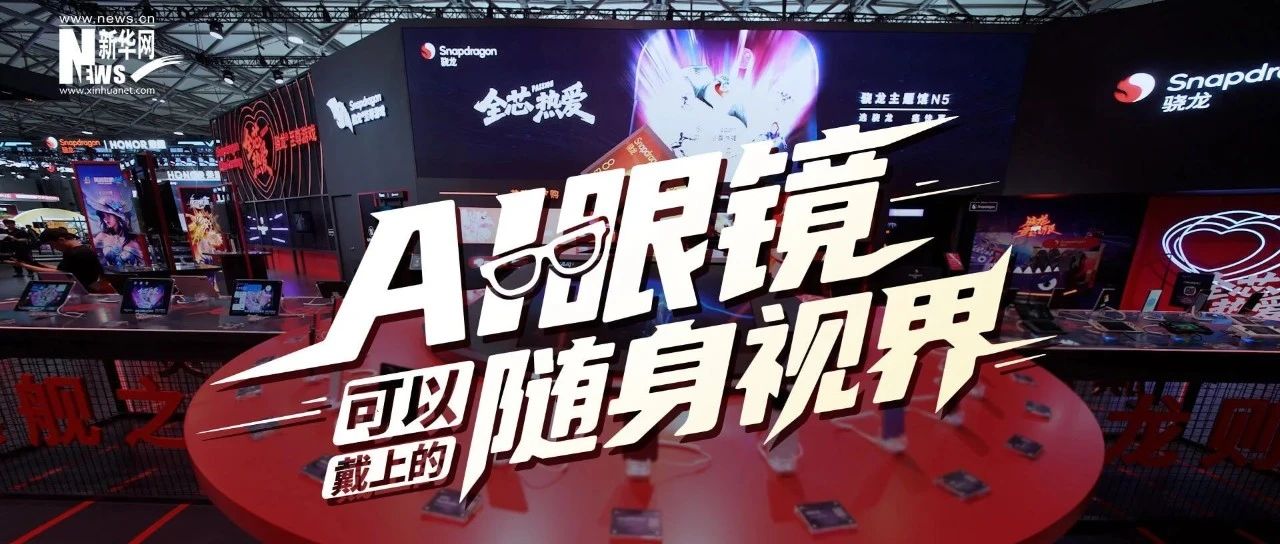
Core Viewpoint - The article discusses the emerging competition in the next-generation wearable device market, particularly focusing on AI glasses, which are expected to redefine human-computer interaction and become a new super terminal for users [2][10]. Group 1: Market Trends and Growth - The Chinese smart glasses market is projected to reach a shipment volume of 2.907 million units in 2023, representing a year-on-year growth of 121.1%, with AI glasses penetration expected to exceed 60% [7]. - The year 2025 is anticipated to be a pivotal year for smart glasses entering the mass market, with a focus on software and hardware integration and industry collaboration [14]. Group 2: Technological Innovations - The first-generation Snapdragon AR1+ platform, which is 20% smaller than its predecessor, enables smart glasses to run a 1 billion parameter language model independently, without relying on cloud or smartphone connectivity [10]. - AI glasses are being designed to provide various functionalities such as navigation, translation, and teleprompter capabilities, enhancing user experience through lightweight and comfortable designs [5][6]. Group 3: Industry Perspectives - Industry experts believe that AI glasses will serve as a key entry point for multi-modal AI, allowing for a seamless integration of AI technologies into consumer experiences [12]. - Companies like Xiaomi are focusing on creating aesthetically pleasing and functional smart glasses, aiming to leverage China's large optical eyewear consumer base to drive industry growth [11][14]. Group 4: Future Outlook - The integration of AI and XR technologies in smart glasses is expected to accelerate the arrival of the metaverse application era, marking a shift from smartphone-based mobile computing to XR glasses as the core computing platform [11][12]. - The development of a robust ecosystem around smart glasses, encompassing various applications and content, is seen as essential for the industry's future success [9][14].

国泰海通|中小与股权研究:AI眼镜爆发有望推动智能眼镜加速迈向千亿市场
国泰海通证券研究· 2025-08-11 14:15
Core Viewpoint - The AI glasses market is poised for explosive growth, driven by lightweight design, essential use cases, and consumer pricing, with a projected 188% increase in sales in China by 2025, potentially creating a trillion-yuan market space [1][2]. Market Dynamics - The evolution of AI glasses is transitioning from separate functional devices to integrated computing solutions, with three main product categories: audio devices, audio + camera devices, and AR integration devices [2]. - Major brands like Meta and Xiaomi are leading the consumer market, while domestic players are catching up in technology and application expansion [2]. Value Chain and Market Estimation - The cost structure of AI glasses shows that the main chip accounts for approximately 33% of total costs, with optical display and computing units making up 43% and 31% respectively [3]. - The global market for AI glasses is expected to exceed 190 billion RMB by 2030, with the Chinese market projected to surpass 50 billion RMB, reflecting a CAGR of over 80% over five years [3]. Industry Structure - The AI glasses industry value chain includes upstream manufacturers of optical modules, chips, and frames; midstream ODM/OEM manufacturers and software suppliers; and downstream brand manufacturers and distributors [3].

对话Rokid副总裁:未来智能眼镜一定会取代手机,大厂加入能进一步教育市场
Guan Cha Zhe Wang· 2025-08-11 06:18
Core Insights - The conversation during the World Artificial Intelligence Conference (WAIC 2025) highlighted the growing interest in AI+AR glasses, particularly focusing on the market status and future trends of these technologies [1][2]. Company Overview - Rokid is positioned as a leading platform company in the AI and AR space, known for its AR glasses, which gained significant attention following a notable event where the founder delivered a speech using the product without a script [2][3]. - The event on February 18 significantly boosted Rokid's visibility and attracted potential partners and investors, enhancing the company's reputation and opportunities in the AR glasses market [2][3]. Product Development and Features - Rokid's AR glasses integrate advanced AI capabilities, with a focus on developing an efficient operating system that minimizes latency and power consumption while enhancing user interaction [3][4]. - The glasses feature a range of practical applications, including an AI-powered teleprompter that can automatically track and display text based on the speaker's voice, and real-time translation capabilities for seamless communication across languages [3][4]. - Collaborations with companies like Amap and Alipay have led to features such as precise navigation and secure payment options, utilizing voice recognition for enhanced security [4][5]. AI Capabilities and Industry Position - Rokid does not engage in the development of foundational AI models but instead focuses on integrating various existing models into its products, allowing users to choose based on their preferences [5][6]. - The company has developed proprietary models for intent recognition, enabling the glasses to respond appropriately to user queries by leveraging different AI models based on context [6][8]. - The current AI capabilities of smart glasses are considered to be at the L2 stage, with some functionalities of L3 beginning to emerge, indicating a mature development phase for AI in this sector [8][9]. Future Trends - The integration of cloud and edge computing is seen as a future trend for smart glasses, enhancing efficiency and privacy [7][8]. - The industry is witnessing a surge in the development of intelligent agents, with Rokid's products positioned to leverage these advancements, particularly in specialized fields where deep expertise is required [9].
中国半导体 - 眼镜中的芯片,中国品牌人工智能-Greater China Semiconductors-Chips in Glasses China brand AI
2025-08-07 05:17
Summary of Key Points from the Conference Call Industry Overview - The conference call focused on the **Greater China Semiconductors** industry, particularly the advancements in **AI and AR glasses** technology [1][4][7]. Core Company Insights - **Alibaba** has launched its **WOW Quark AI+AR glasses**, which utilize a binocular **MicroLED+waveguide system**. The glasses are powered by a mainstream SoC and include a **Bestech BES2800** for improved power efficiency. The MicroLED projector is supplied by **JBD**, featuring a monochrome (green) display [6][7]. - **Rokid** has introduced AI+AR glasses that share similar silicon components with Alibaba's WOW glasses, also using **JBD's MicroLED** technology but with four waveguides to serve both eyes [6][8]. - **Xreal** employs a different approach, utilizing **MicroOLED** technology with a birdbath optical stack, which, while potentially increasing weight, allows for full-color imagery [6][8]. Product Specifications and Technology - **Meta's new AR glasses**, named **Celeste**, are expected to be officially launched at the **Meta Connect Conference** in September. They will feature an **LCOS (Liquid Crystal on Silicon)** + waveguide display module, specifically using **Omnivision's OP03011** panel with a resolution of **648x648** at **120Hz** [2][6]. - A significant concern for AI+AR glasses remains **battery life**. The earlier Orion prototype had a limited runtime of **45 minutes**, and improvements in battery life for Celeste are deemed critical for user adoption [6][11]. Market Dynamics and Trends - The AI glasses market is experiencing rapid growth, with **Meta** reporting a **5% year-over-year increase** in Reality Labs revenue, driven by strong AI glasses sales despite a decline in Quest sales [11]. - The integration of **AR functions** in AI glasses is seen as a potential driver for future smart glasses products, enhancing user interaction with AI [11]. Supply Chain Developments - **SICC** and **Sunny OmniLight** have entered a strategic cooperation agreement to promote **SiC substrates** in the optical field, which could benefit the application of these materials in AI glasses and displays for electric vehicles [10]. Forecasts and Projections - The total addressable market (TAM) for **LCOS in AR devices** is projected to reach **US$153 million** by **2028** [18]. - The **CIS TAM** in AI glasses is expected to grow to **US$273 million** by **2028** [22]. - The **SoC TAM** for AI glasses is forecasted to have an **80% compound annual growth rate (CAGR)** from **2024 to 2028** [24]. Conclusion - The AI and AR glasses market is rapidly evolving, with significant advancements from major players like Alibaba, Rokid, and Meta. The integration of advanced display technologies and improvements in battery life are critical for the adoption and success of these products in the consumer market. The strategic partnerships and supply chain developments further indicate a robust growth trajectory for the industry.

人工智能工厂让AI落地“快而精”
Qi Lu Wan Bao· 2025-08-06 21:05
Group 1 - The core value of the AI factory is its industrialized solution capability, providing a full-stack intelligent manufacturing service from model production to continuous iteration [2] - The factory has enhanced its production capacity to over 1000 order models annually, reducing delivery time from 90 person-days to 20 person-days [2] - The AI factory integrates data, equipment, and research, featuring 61 detailed processes and 113 specialized tools in its intelligent production system [2] Group 2 - The company has developed a specialized model library covering various fields such as manufacturing, government affairs, and water conservancy, leveraging its Hai Ruo large model core engine [3] - The Hai Yue commercial AI platform has integrated over 100 ready-to-use intelligent agents, improving operational efficiency in more than 40 high-value scenarios [3] - The company aims to build the largest distributed intelligent cloud network in China with 122 cloud centers and 557 distributed cloud nodes, making computing power as accessible as water and electricity [3] Group 3 - The AI factory serves as a hub for an open ecosystem, collaborating with over a thousand domestic and international partners to promote AI from isolated breakthroughs to system-level collaboration [3] - The company's vision is to create a world where "intelligence is everywhere with cloud," aiming to help enterprises unleash AI productivity with low barriers and high efficiency [3]