
中航证券

Search documents
中航证券王宏涛:大军工领域新质主题仍将不断深化、反复演绎
Xin Lang Zheng Quan· 2025-05-08 09:10
Core Viewpoint - The military industry sector in A-shares is experiencing a continuation of its upward trend, with nearly 20 stocks hitting the daily limit or rising over 10%. However, the financial performance of military companies shows signs of slowing down, indicating challenges ahead for the sector [1][2]. Group 1: Financial Performance - In 2024, among 239 listed military companies, 88 reported a year-on-year increase in net profit attributable to shareholders, while 151 experienced a decline [1]. - The median revenue growth rate for military enterprises in 2024 is negative for the first time since 2012, and the median net profit growth rate is the lowest in nearly 20 years [1]. - The Q1 2025 financial data for military companies indicates a continuation of the 2024 trend, with further revenue slowdown and negative net profit growth [1]. Group 2: Industry Outlook - The demand for the military industry remains real and urgent, with expectations that downstream demand may be deferred until the end of the "14th Five-Year Plan," setting the stage for a potential rebound [2]. - Recent announcements of large orders from many upstream military companies signal a positive trend in order recovery within the military sector [2]. - The military industry is expected to undergo a revaluation, benefiting from improved asset quality, new growth areas, larger business scales, and higher market ceilings [2]. Group 3: Market Dynamics - The overall sentiment and fundamentals of the military industry are anticipated to recover continuously, with no significant negative factors expected in the near term [2]. - The second half of the year is projected to perform better than the first half, with quarterly performance expected to improve [2]. - Themes such as low-altitude economy, commercial aerospace, deep-sea technology, large aircraft, and military intelligence are expected to remain active and deepen, contributing to a potential resurgence in the military sector [2][3].
关税战火淬炼军工硬核 中航证券王宏涛九大主线解码国防军工投资新逻辑
Xin Lang Zheng Quan· 2025-05-08 08:45
Core Viewpoint - The article discusses the implications of the U.S. "tariff war" and the record-high defense budget proposal of $1 trillion for the fiscal year 2026, which is a 12% increase from 2025, highlighting potential investment opportunities in the military and defense sectors amid rising geopolitical tensions [1][4]. Group 1: Military Technology Trends - The focus on military automation and intelligence is emphasized, with the U.S. defense budget prioritizing AI military capabilities. The emergence of unmanned and intelligent equipment is transforming combat systems, indicating a shift towards autonomous decision-making in military operations [5]. - The acceleration of next-generation weaponry development is anticipated, particularly in strategic weapons, as global military competition intensifies. The ongoing geopolitical conflicts are expected to increase the urgency for countries to enhance their strategic weapon reserves [6]. - The deep-sea military presence is becoming crucial, with nations expanding their underwater monitoring networks to secure maritime resources and trade routes amid rising international competition [7]. Group 2: Material and Technology Development - The tariff increases are driving advancements in 3D printing and recycled materials in the military sector, as companies seek to reduce costs through innovative material manufacturing processes [7]. - The push for self-sufficiency in high-end military electronics and integrated circuits is accelerating, with the domestic semiconductor industry expected to benefit from the ongoing tariff situation, leading to increased market opportunities [8]. - The commercial space sector is rapidly developing integrated aerospace and satellite internet applications, with significant competition from global players like SpaceX, indicating a growing market for satellite technology [8]. Group 3: Economic and Industrial Impacts - The tariff situation is prompting a shift towards domestic production of large aircraft, with the C919 gaining attention due to increased costs associated with U.S. aircraft imports. This shift is expected to enhance the competitiveness of domestically produced aircraft in international markets [9]. - The low-altitude economy is emerging as a new growth engine for local economies, with various regions in China developing low-altitude economic platforms to stimulate industrial transformation [10]. - The robotics industry is becoming a key driver of domestic demand growth, supported by government policies and market needs, with AI-driven automation projected to contribute significantly to GDP growth [11]. - The military trade sector is expected to grow as China's production capabilities improve, with a shift from focusing solely on domestic needs to exploring international markets due to changing global demand dynamics [12].


中航证券王宏涛:军工行业已构筑“十四五”时期的“基本面底”
Xin Lang Zheng Quan· 2025-05-08 08:34
5月8日,A股军工板块延续涨势,近20股涨停或涨超10%,后续行情将如何演绎?中航证券航空航天首 席分析师王宏涛做客新浪证券直播间,为投资者火线解读。直播详情>> 王宏涛判断,在当前基本面看,军工行业在2027年、2035年、以及2050年国防军队现代化建设"三步 走"战略目标下,仍处于高景气发展的大周期内。中期来看,行业在2024年已经构筑"十四五"时期的"基 本面底",军工行业收入增速将再次重新进入上行通道。具体判断因素如下: 中航证券航空航天首席分析师 执业编号: S0640520110001 直播时间: 5月8日 16:00 一是军工行业发展底层增速因素,军费在中长期维持快速增长,政府对国防投入支持力度不断提升,军 贸有望进入上行周期;二是大军工第二增长曲线因素,国家加大对民机、低空经济、商业航天等多 个"大军工"领域的发展支持力度,军工市场天花板持续扩容,构成军工行业发展的新驱动力;三十军工 行业发展计划性因素,"十四五"已进入收官阶段,2025年五年规划目标与2027年建军百年目标的计划性 都将进一步牵引军工行业下游需求提速释放;四是军工行业政策调整及改革深化的阶段性扰动因素,军 工企业受到短期影 ...

军工股集体沸腾!中航王宏涛解读:印巴战火如何撬动中国军贸万亿赛道
Xin Lang Zheng Quan· 2025-05-08 08:20
Core Viewpoint - The geopolitical tensions between India and Pakistan are expected to stimulate the Chinese military industry, particularly in the context of military trade and investment opportunities [1][4]. Group 1: Geopolitical Impact on Military Sector - The conflict in the Kashmir region is closely linked to China, as Pakistan is a significant importer of Chinese military equipment, with 63.02% of China's military exports to Pakistan over the past five years [1]. - The recent policy signals from the Chinese government, including potential interest rate cuts, are likely to improve market risk appetite, providing a supportive environment for the military sector [2]. - The ongoing escalation of the India-Pakistan conflict may lead to a sustained period of heightened military activity, similar to past geopolitical events that have positively influenced military stocks [3]. Group 2: Long-term Military Trade Dynamics - The high dependency of Pakistan on Chinese military imports, especially in high-value sectors like aerospace and naval equipment, positions China favorably in the global military trade landscape [5]. - The current global geopolitical uncertainties, exacerbated by U.S. tariffs, are expected to enhance the demand for military trade, potentially leading to a shift in China's military export strategy from focusing on domestic needs to international markets [5]. - The military trade market in China is anticipated to experience continuous growth, driven by both domestic production capabilities and international demand, particularly as the country aligns its military exports with the Belt and Road Initiative [5].
证券行业2025年一季度市场表现分析
新世纪评级· 2025-04-28 08:45
Investment Rating - The report indicates a strong investment rating for AAA-rated securities companies, with a significant issuance scale of CNY 2,652.20 billion in the first quarter of 2025, accounting for 96.59% of the total issuance [2][4]. Core Insights - The issuance of corporate bonds and short-term financing bonds was prominent in the first quarter of 2025, with year-on-year growth of 36.82% for short-term financing bonds and 5.25% for corporate bonds, while subordinated bonds saw a decline of 30.94% [2][5]. - The report highlights that higher-rated securities companies have better access to public bond issuance channels and narrower spreads, with AAA-rated companies issuing a total of CNY 2,652.20 billion [3][4]. - No changes in credit ratings for securities companies were reported in the first quarter of 2025, indicating stability in the sector [8]. Summary by Sections Bond Issuance and Credit Rating Distribution - In the first quarter of 2025, a total of 49 securities companies issued bonds, with 40 being AAA-rated, 8 AA+-rated, and 1 AA-rated [7]. - The issuance scale for AAA-rated companies increased by CNY 159.30 million year-on-year, while AA+-rated companies saw an increase of CNY 30.50 million [4][7]. Analysis of Major Bond Types and Spreads - A total of 85 corporate bonds, 24 subordinated bonds, and 53 short-term financing bonds were issued in the first quarter of 2025 [9]. - The average spread for AAA-rated corporate bonds decreased across various maturities, while the spread for AA+-rated bonds increased for 3-year maturities [13][14]. - The average spread for short-term financing bonds issued by AAA-rated companies was 53.51 basis points, showing a significant decrease compared to the previous year [16].
美国市场股债汇“三杀”,对金融市场有何影响?机构首席解读
Di Yi Cai Jing· 2025-04-14 07:06
Group 1 - The core viewpoint is that the asset attributes of US Treasuries are being challenged, leading to a renewed credit crisis in the US [2][3][4] - Recent market conditions have resulted in a rare simultaneous decline in stocks, bonds, and the dollar, indicating a trust crisis in dollar assets among global investors [2][3] - The increase in US Treasury supply and a significant change in the holder structure, with a decrease in long-term investors, has raised concerns about liquidity [3] Group 2 - The surge in US Treasury yields and the decline in the dollar index have prompted investors to seek alternative safe-haven assets, resulting in a rise in gold prices and appreciation of currencies like the euro, yen, and yuan [4] - The ongoing trade war initiated by the Trump administration is seen as ineffective in revitalizing US manufacturing, which may exacerbate the credit crisis [4][5] - The collapse of the US Treasury market could impact the government's financing ability and create shocks in global financial markets, forcing the US to make concessions [5] Group 3 - Despite global market volatility, China's stock market remains relatively stable, indicating a reallocation of funds towards Chinese assets as a new choice for investors [6] - The Chinese economy is positioned favorably, with multiple policies aimed at boosting consumption and stabilizing growth, which may enhance confidence in Chinese assets [6][7] - There is an expectation that more global funds will reduce their allocation to dollar assets and increase their weighting in Chinese assets, leading to a systematic increase in the valuation of Chinese assets [7]
债券深度报告:场外兑付怎么看?
Huachuang Securities· 2025-04-10 04:45
1. Report Industry Investment Rating There is no information about the industry investment rating in the report. 2. Core Viewpoints of the Report - The off - market redemption of AVIC Industry Finance reflects that the essence of credit bond risk research is not only the default risk affected by solvency but also the bond valuation fluctuations and liquidity risks caused by short - term risk events of bond - issuing enterprises. In the economic downturn cycle, the importance of fundamental research is highlighted. The risk events of AVIC Industry Finance may not be an isolated case, and the possibility of a new round of credit risks should be noted. If risk events accumulate, the new credit bond pricing logic may shift from "belief - driven" to "cash - flow verification", forming a new trend of expanding the weight of fundamental pricing [5][38]. 3. Summary According to the Table of Contents 3.1 How to Understand "Off - market Redemption"? 3.1.1 Definition and Regulatory Basis - "Off - market redemption" refers to the act where the issuer and bondholders reach an agreement and directly transfer funds to complete the redemption without going through the bond custody and settlement institution. After off - market redemption, the bond will be cancelled, and a new borrowing relationship will be established based on the relevant agreement. If all shares of the corresponding bond are cancelled due to off - market redemption, the issuer can apply for delisting [12]. - In the inter - bank market, the clearing house and the dealer association have regulations on off - market redemption. For off - market redemption, a bondholders' meeting needs to be held for voting. As a special motion, it requires more than two - thirds of the voting rights of the participating bondholders and more than half of the total voting rights of the debt financing instruments. If the motion is passed, the issuer should sign an agreement with the bondholders who agree to cancel, and the shares of the debt financing instruments held by the bondholders who choose not to cancel can continue to exist [13][15]. - The exchange has not issued separate requirements for off - market redemption and mainly relies on the relevant regulations of the bondholders' meeting. If off - market redemption is recognized as a major event, it requires more than two - thirds of the voting rights of all bondholders with voting rights to take effect; if it is a general matter, the corresponding proportion is one - half [15]. 3.1.2 What are the Impacts of Off - market Redemption? - For the issuer, off - market redemption helps maintain the market image and financing ability and relieve short - term liquidity pressure. It can avoid public bond defaults and reduce the negative impact on financing channels [17]. - For investors, off - market redemption may bring risks of reduced liquidity and valuation fluctuations. However, it also helps avoid the issuer's liquidity crisis and substantial bond defaults, which could cause greater losses to investors [17]. 3.2 Analysis of Historical Cases of "Off - market Redemption" - There have been 14 historical cases of off - market redemption, mainly occurring from 2019 to 2022. Most of the cases are due to companies' liquidity shortages, and the triggering entities are mainly private enterprises. The probability of substantial default of off - market redemption entities is relatively high, with 11 out of 14 cases experiencing bond defaults [4][18]. - The common characteristics of off - market redemption cases are: the issuer may not reach an agreement with bondholders before the announcement; the redemption consideration is generally "face value + coupon interest"; usually, not all outstanding bonds are redeemed off - market; off - market redemption does not necessarily trigger an immediate substantial default, but for entities with a large scale of outstanding bonds, the probability of subsequent substantial default is relatively high. However, for central enterprises with strong shareholder backgrounds, the probability of default is relatively small [20][21][22]. 3.3 How to View the "Off - market Redemption" of AVIC Industry Finance? 3.3.1 AVIC Industry Finance's Announcement on Converting its Bonds to "Off - market Redemption" - AVIC Industry Finance announced that it plans to hold a bondholders' meeting to discuss bond cancellation and then convert to off - market redemption. It has also promised to ensure timely and full repayment without default [24]. 3.3.2 Some Bonds in the AVIC Industry Finance System Face Certain Upward Pressure on Valuation - Since the announcement of the proposed off - market delisting on April 1, as of April 7, the valuations of AVIC Industry Finance's outstanding and non - suspended inter - bank bonds have generally increased by about 30bp [27]. - Among other bond - issuing enterprises in the AVIC Industry Finance system, the valuations of ordinary credit bonds of AVIC Leasing have increased significantly, while other entities are relatively stable. The increase in AVIC Leasing's valuation may be related to its large bond outstanding and the uncertainty of shareholder support [28]. 3.3.3 What Key Points are Worth Paying Attention to in the Future? - For AVIC Industry Finance investors, there is currently no default risk in the subsequent off - market redemption, but they need to pay attention to the details of the final redemption plan, such as the specific redemption time and price. There are also issues such as limited liquidity during the period from bond suspension to delisting and redemption, uncertainty about whether all bonds will be redeemed early, and potential losses in capital gains [32]. - The off - market redemption event of AVIC Industry Finance, a central enterprise subsidiary, may trigger the market to actively pay attention to the credit risks of similar non - bank financial bonds of central enterprise subsidiaries. In the future, the credit risk analysis of such bonds may need to be more based on the enterprise's fundamentals. Although the default risk of non - bank financial bonds of central enterprise subsidiaries is controllable in the short term, more attention should be paid to their credit risks [5][35].

清明假期赛事、演出热度同比激增48% 文旅市场消费加速升级迭代
Zhong Guo Jing Ying Bao· 2025-04-04 22:24
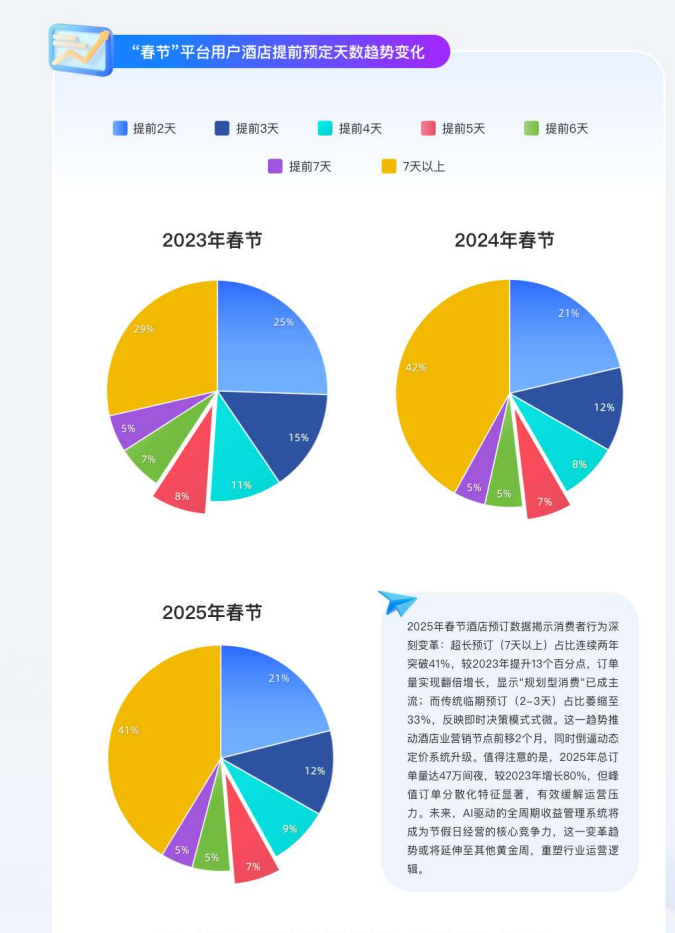
(数据显示,近年来的节假日中,游客的规划型消费渐成主流,即时决策模式式微。受访者/图) 随着慢节奏、疗愈向、松弛感成为今年清明假期的关键词,文旅市场消费升级或将进一步提速。 同程旅行数据显示,踏青、采茶、春日游园等清明节相关的传统文化节俗体验搜索热度同比激增 75%,"踏青赏花"相关主题词的搜索热度同比上升46%,国内体育赛事、音乐演出相关旅游搜索热度同 比激增 48%。 同时,以慢节奏、疗愈向为特点的"躺平式旅行"取代高强度打卡,成为游客释放压力的新选择。2025年 清明假期温泉/SPA类酒店预订热度同比上升23%。城市居民对本地民宿的预订热度增长近三成,成都、 三亚、大理、珠海、厦门等目的地热度居前。 短途游、踏青赏花游也在今年清明假期涌现。据航旅纵横数据,截至3月25日,国内航线机票预订量超 175万张,同比增长约12%。去哪儿大数据显示,清明出游以短途为主,京津冀、江浙沪、成渝、两 湖、粤港澳2小时高铁圈内的游客流动频繁。从酒店预订来看,长三角地区的上海、南京、杭州、苏 州、扬州、无锡等热门目的地酒店预订火爆。 同时,下沉市场中高端酒旅消费保持快速增长,非一线城市中高星级酒店预订占比同比提升6个百分 ...
一季度A股股权融资市场发行节奏平稳 中信证券位居券商总承销金额榜首
智通财经网· 2025-04-01 03:28
Overview of Equity Financing Market - In Q1 2025, the A-share equity financing market maintained a steady issuance rhythm, with a total of 57 financing events, a decrease of 21 events compared to the same period last year, raising a total of 92.255 billion yuan, a year-on-year increase of 14.82% [1][2] - The number of IPOs was 25, down by 6 from the previous year, with a fundraising scale of 15.82 billion yuan, a decline of 41.39% [1][2][16] - The number of private placements was 24, down by 14, raising a total of 62.755 billion yuan, an increase of 24.08% year-on-year [1][2] Financing Method Distribution - In Q1 2025, the distribution of financing methods showed that IPOs accounted for 17.15% of the total, with 25 events raising 15.82 billion yuan; private placements accounted for 68.02%, with 24 events raising 62.755 billion yuan; and convertible bonds accounted for 14.83%, with 8 events raising 13.68 billion yuan [5][8] Industry Distribution of Financing Entities - The hardware equipment industry led the fundraising with 21.3 billion yuan, followed by non-bank financials and public utilities with 12 billion yuan and 11.9 billion yuan, respectively [9] Regional Distribution of Financing Entities - Shanghai ranked first in fundraising with 18.018 billion yuan from 6 projects, primarily due to Guotai Junan's private placement project. Shaanxi followed with 17.439 billion yuan from 1 project, and Guangdong raised 15.891 billion yuan from 9 projects [12][15] IPO Distribution by Board - The innovation and entrepreneurship board led the fundraising with a total of 59.17% of the total IPO amount. The Shanghai main board had 5 IPOs raising 3.507 billion yuan (22.17%), while the Shenzhen main board had 3 IPOs raising 1.656 billion yuan (10.46%) [18][21] Top 10 IPO Financing Amounts - The highest IPO financing in Q1 2025 was from Kaifa Technology, raising 1.169 billion yuan, followed by Xingfu Electronics and Hanshu Technology with 1.168 billion yuan and 1.162 billion yuan, respectively [28][29] Trends in Private Placement Financing - In Q1 2025, the overall financing scale of private placements slightly exceeded the same period last year, with 24 events raising 62.755 billion yuan, an increase of 24.08% year-on-year [30] Top 10 Underwriters by Total Amount - CITIC Securities topped the underwriting amount with 30.352 billion yuan, followed by AVIC Securities with 8.720 billion yuan and Dongfang Securities with 7.141 billion yuan [45][46]


美国2月CPI不及预期,国内政府债券支撑社融增长
AVIC Securities· 2025-03-17 02:23
2025年03月16日 证券研究报告|宏观研究|宏观点评 美国2月 CPI 不及预期、国内政府债券支撑社融增长 2025 年 3 月 10 日-2025 年 3 月 16 日周报 美国2月 CPI 不及预期,美联储3月会议大概率维持利率不变 3 月 12 日,美国劳工部发布数据显示,2025年 2 月美国 CPI 同比为+2.8%,低于 市场预期的+2.9%,录得去年 11月以来新低;CPI 环比+0.2%,低于预期的+0.3%,录 得去年 10月以来新低。剔除掉食品和能源后,2025年 2 月美国核心 CPI 同比为+3.1%, 低于预期的+3.2%,录得 2021 年 4 月以来新低;核心 CPI 环比+0.2%,低于预期的 +0.3%,录得去年 12 月以来新低。 美国2月通胀总体的不及预期、特别是核心通胀的不及预期,一定程度上弱化了市 场对特朗普关税政策之下美国通胀反弹的担忧,截止3月14日,美国5年期和10年期 营亏平衡通胀利率分别为 2.48%和 2.30%,总体上均恢复至年初水平,结束了年初以 来,特别是2月市场对美国的通胀预期逐渐上行的趋势。市场在本周对美国通胀预期的 回调,叠加此前公布的美国 ...