
新石器

Search documents
新石器无人车累计部署超7500辆 占通达系、极兔速递等平台无人配送车订单份额超70%
Mei Ri Jing Ji Xin Wen· 2025-08-05 07:45
Core Insights - New Stone Technology announced that as of the end of July, its autonomous vehicles have been deployed in over 280 cities across 15 countries and regions, with a cumulative total exceeding 7,500 vehicles and L4 autonomous driving mileage surpassing 42 million kilometers. The company is expected to become the first in the world to achieve a fleet size of 10,000 L4 autonomous vehicles within this year [1] Company Positioning - New Stone Technology has become the largest supplier of autonomous delivery vehicles for major companies such as SF Express, JD.com, and China Post, capturing over 90% of their orders for autonomous delivery vehicles. Additionally, it holds over 70% of the orders from other platforms like the "Three Links and One Reach" and Jitu Express [1] Market Expansion - Beyond the express delivery sector, New Stone Technology is exploring the instant logistics market. In July, the company partnered with Didi Chuxing's Didi Delivery, allowing users in cities like Qingdao to summon New Stone's autonomous vehicles via the Didi platform and pay based on service mileage [1]
兆丰股份(300695):深度报告:汽车轮毂轴承领军者,战略投资人形机器人头部主机厂、丝杠产能
ZHESHANG SECURITIES· 2025-08-05 07:39
Investment Rating - The investment rating for the company is "Buy" (initial coverage) [2] Core Views - The company is a leader in automotive wheel hub bearings, with a stable growth in its core business and strategic investments in humanoid robot manufacturers and screw production capacity [6][11] - The company has a competitive advantage with a gross margin exceeding 30%, driven by its focus on high-end products and intelligent manufacturing [6][11] - The company is expanding its business into automotive electronics and high-end industrial bearings, with significant growth potential in these emerging sectors [6][11] Financial Summary - Revenue projections for the company are as follows: - 2024A: 665 million - 2025E: 757 million (+13.7%) - 2026E: 973 million (+28.6%) - 2027E: 1,287 million (+32.3%) [2] - Net profit projections are as follows: - 2024A: 140 million - 2025E: 169 million (+20.7%) - 2026E: 204 million (+20.8%) - 2027E: 248 million (+21.7%) [2] - Earnings per share (EPS) are projected to increase from 2.0 in 2024 to 3.5 in 2027 [2] Business Development - The company has established a dual-driven strategy focusing on both aftermarket and OEM markets, with significant growth in the wheel hub bearing unit [11][12] - The aftermarket business is expected to grow steadily, particularly in the European and American markets, driven by increasing vehicle ownership and aging [6][11][22] - The OEM business is poised for high growth, particularly in the electric vehicle sector, with production expected to ramp up significantly [6][11][30] Emerging Business Areas - The company is actively investing in automotive electronics, with a project for 300,000 sets of vehicle-mounted electronic controls expected to launch by the end of 2025 [6][11] - The company is also developing high-end industrial bearings, with several products in the research and testing phases [6][11] Investment and Profitability - The company has seen a significant increase in investment income, contributing to a 20% year-on-year growth in net profit for Q1 2025 [6][11][48] - The company is building an "automotive + robotics" ecosystem through strategic investments in various companies, enhancing its growth potential [6][11][54] Production Capacity and Industry Trends - The company has established a subsidiary to focus on humanoid robot screw production, with a project for 1 million sets of humanoid robot ball screws approved for production [6][11][61] - The domestic market for ball screws and planetary roller screws is expected to grow significantly, with the company positioned to capture a larger market share [6][11][64]

无人公司的道具们在组团出现,人要去哪里寻找自己的位置?
3 6 Ke· 2025-08-04 02:56
Group 1: Autonomous Vehicles and Robotics - The emergence of RoboTaxi services in Shanghai, with companies like Pony.ai, Baidu, and others leading the charge, marks a significant step towards the integration of autonomous vehicles into everyday life [1][5] - The development of consumer-grade drones and other robotic technologies is transforming various sectors, including urban delivery and agricultural tasks, showcasing the versatility of automation [3][5] - The concept of "无人公司" (unmanned companies) is introduced, where AI-driven systems manage operations without direct human intervention, leading to efficient and cost-effective business models [5][6] Group 2: Economic Implications of AI - AI is seen as a disruptor of traditional economic structures, potentially leading to a new class of "useless people" whose economic value diminishes in the face of automation [6][9] - The article discusses the need for a new economic model that prioritizes wealth distribution and human dignity over traditional employment, suggesting concepts like Universal Basic Income (UBI) as potential solutions [9][10] - The narrative emphasizes the importance of redefining the meaning of work and existence in an AI-driven future, where creativity and personal fulfillment take precedence over conventional job roles [10][11] Group 3: Future Perspectives - The article presents a dichotomy between two potential futures: one where AI leads to a controlled, consumerist society, and another where it fosters freedom and dignity for all individuals [11][12] - The discussion highlights the necessity for a cultural shift to match the technological advancements brought by AI, advocating for trust, connection, and harmony in society [11][12] - Ultimately, the potential of AI to create abundance is juxtaposed with the risk of societal disconnection, emphasizing the need for collective action to harness this technology for the greater good [12][13]

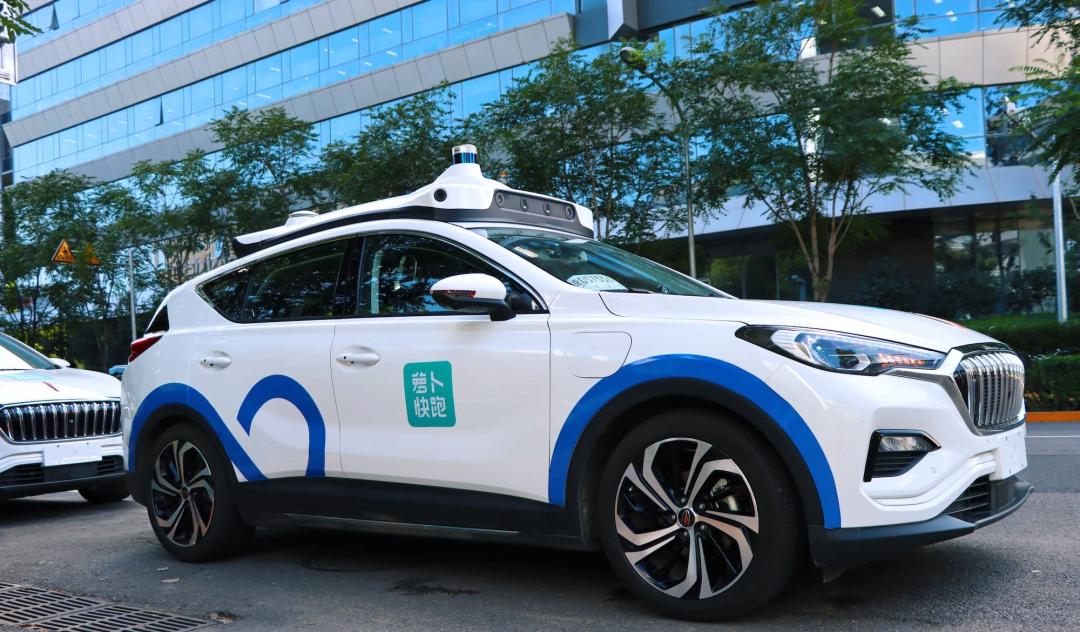
1 万台,无人城配规模之战打响了
3 6 Ke· 2025-07-29 12:50
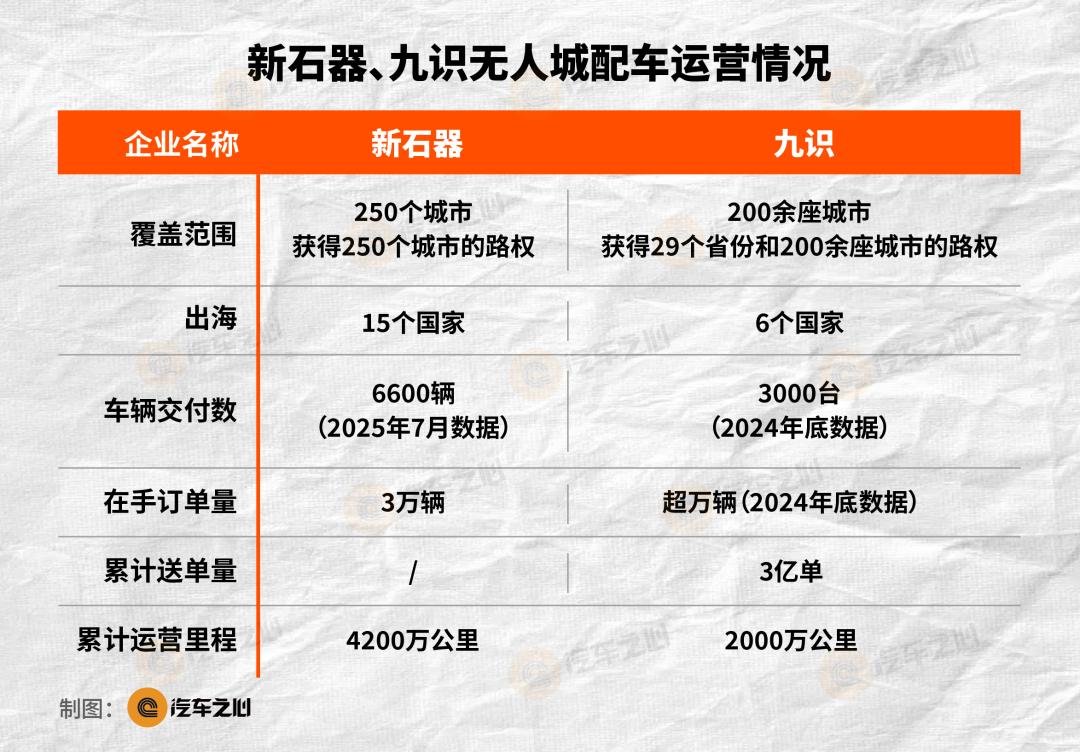
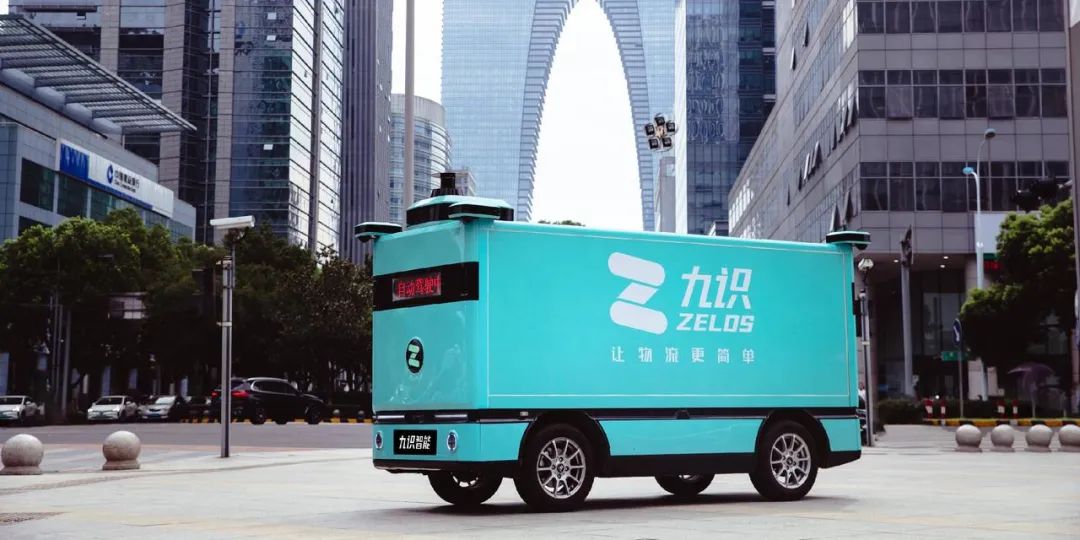
Core Insights - The article discusses the rapid growth and commercialization of autonomous delivery vehicles in China, particularly focusing on companies like New Stone and NineSight, which are leading the charge in this sector [1][2][3] Market Overview - As of 2024, over 6,000 autonomous delivery vehicles have been deployed in China, significantly outpacing the nearly 3,000 Robotaxi vehicles [2] - The market for autonomous delivery vehicles in China grew from 4 billion to 6.5 billion yuan between 2022 and 2023, with a compound annual growth rate exceeding 62%, and is projected to reach 17 billion yuan in 2024 [2] Company Performance - New Stone and NineSight are the first companies to reach the milestone of 10,000 units in production, with New Stone delivering over 6,600 vehicles and NineSight over 5,000 vehicles as of July 2024 [2][3] - New Stone's monthly delivery rate has increased tenfold compared to the previous year, with April 2024 alone surpassing the total deliveries for the entire year of 2024 [2] Competitive Landscape - The article highlights that major players like JD, Meituan, and Cainiao, which initially led the development of autonomous delivery vehicles, are lagging in scaling production compared to New Stone and NineSight [3][4] - New Stone and NineSight have developed strong capabilities in technology maturity, cost control, and operational maintenance, which are critical for achieving large-scale production [5][6] Technological Advancements - Both companies have achieved L4 level autonomous driving capabilities, allowing them to operate in various road conditions and scenarios [5] - New Stone's vehicles can reduce transportation costs from 0.15 yuan per delivery to 0.06 yuan, while NineSight's vehicles can lower costs from 0.17 yuan to 0.1 yuan [9][11] Product Strategy - New Stone and NineSight have diversified their product lines to cater to different transportation needs, offering various models that can handle different load capacities and road conditions [12][14] - New Stone focuses on large clients for bulk sales, while NineSight emphasizes small and medium-sized customers and niche markets [15][16] Financial Backing - Both companies have secured significant funding, with New Stone raising 1 billion yuan in February 2024 and NineSight raising 100 million USD in April 2024, which supports their technology development and production capabilities [16] Industry Challenges - The article notes that achieving the 10,000-unit milestone is a critical point for the industry, as it signifies a transition from small-scale validation to large-scale application [17][18] - The competition is expected to intensify as companies strive to optimize costs, enhance technology, and expand customer bases [27][28] Future Outlook - The next milestone for the industry is projected to be the sale of 100,000 units, with the potential for significant market transformation [42][43] - The article emphasizes the need for patience and observation as the industry navigates through its growth phase and faces challenges in technology validation and business model verification [44][45]
无人车开进公交站,深圳两大公交企业同日签约 “公交+物流” 逐渐成规模
Shen Zhen Shang Bao· 2025-07-22 16:50
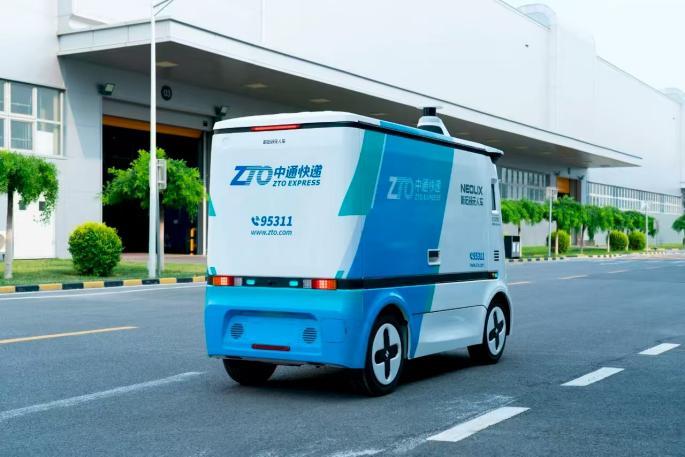
Core Viewpoint - Shenzhen Bus Group and Shenzhen Eastern Bus have signed cooperation agreements with logistics companies to explore the integration of public transport and logistics, aiming to enhance urban automatic delivery systems and address the "last mile" delivery challenges [1][2]. Group 1: Cooperation and Innovation - The collaboration involves utilizing Shenzhen Bus Group's extensive bus station network to transform these stations into efficient and economical "supply stations" and "regional transfer hubs" for unmanned logistics vehicles [1][2]. - The partnership aims to create a nationwide leading model that integrates public transport, logistics, and unmanned systems, enhancing operational efficiency and resource utilization [1][2]. Group 2: Roles and Responsibilities - Shenzhen Bus Group will take on six key roles: route planner, service manager, safety guardian, smart escort, government liaison, and resource provider, to ensure smooth cooperation and maximize social and economic benefits [2]. - The company will leverage big data and network knowledge to optimize delivery routes and establish a unified customer service window for efficient public response [2]. Group 3: Expansion and Market Development - Shenzhen Eastern Bus has also signed a strategic cooperation agreement with YTO Express and New Stone Technology to develop a "public transport + logistics" unmanned delivery model, aiming for scalable applications of autonomous driving in urban logistics [2][3]. - The bus companies are actively expanding their market-oriented diversified businesses, with Shenzhen Bus Group's market-oriented revenue share increasing from 4% in 2023 to 11% in 2024, indicating successful growth in new business areas [4].
无人城配四家争鸣,卡位战升级了
3 6 Ke· 2025-07-17 00:55
Core Insights - The commercialization path for unmanned delivery vehicles appears clearer than that for passenger transport, with companies like New Stone, Nine Intelligence, and White Rhino already operating in urban logistics [1][2] - The unmanned delivery market in China has reached a trillion-level scale, indicating significant growth potential [1][2] - Major players in the unmanned delivery sector include logistics giants like Cainiao, JD, and Meituan, as well as startups like New Stone, Nine Intelligence, and White Rhino, along with new entrants like WeRide [2][3] Market Dynamics - The unmanned delivery sector is still in its early exploratory stage, allowing new entrants to potentially overtake established players through differentiated strategies [4][5] - The competition is shifting towards a focus on technology and product capabilities, making the market increasingly competitive [5][6] - The current market landscape shows that New Stone and Nine Intelligence are leading with an expected 80% market share this year, while White Rhino and WeRide are also making significant strides [10][19] Technological Challenges - Unmanned delivery vehicles face increasing technical challenges as they transition from controlled environments to open urban roads, requiring robust environmental perception and decision-making capabilities [11][12][14] - Companies like Nine Intelligence, White Rhino, and WeRide have strong backgrounds in autonomous driving technology, which aids in quickly establishing their unmanned delivery systems [15][17] Regulatory Environment - Road rights are crucial for the commercialization of unmanned delivery vehicles, with current policies favoring cargo over passenger transport [17][18] - Leading players have successfully navigated regulatory landscapes, with New Stone and Nine Intelligence already covering over 250 cities in China [19][20] Business Models - The business model for unmanned delivery is primarily B2B, focusing on partnerships with major clients to refine products and scale operations [18][21] - Different companies adopt varied approaches: New Stone and Nine Intelligence focus on low-cost strategies to achieve scale, while White Rhino and WeRide leverage lighter asset models and strategic partnerships [21][26] Product Development - New Stone has developed a product matrix with multiple iterations, while Nine Intelligence has a streamlined product line that meets diverse loading needs [24][25] - White Rhino and WeRide focus on fewer models but emphasize high performance and adaptability to various logistics scenarios [26][29] Expansion Strategies - Companies are looking to expand both domestically and internationally, with New Stone and Nine Intelligence already entering markets in Europe and Asia [34][36] - The focus is on building dense transportation networks in cities and exploring opportunities in smaller customer segments for profitability [35][36] Future Outlook - The unmanned delivery sector is on the brink of commercialization, with significant potential for profitability emerging sooner than in the passenger transport sector [40][41] - The competitive landscape is expected to evolve as companies refine their business models and expand their operational capabilities [39][40]
商业化要素齐备,无人物流时代开启
2025-07-14 00:36
Summary of Key Points from the Conference Call Industry Overview - The conference call discusses the **unmanned logistics vehicle industry**, focusing on its rapid development and commercialization potential in China, particularly in urban delivery scenarios [1][6]. Core Insights and Arguments - **Application Scope**: Unmanned logistics vehicles are primarily used for last-mile delivery and short-distance branch transportation, with potential applications extending to food delivery, retail, and fresh produce [2][4]. - **Commercialization Factors**: Key factors for large-scale deployment include: - **Wide Application Range**: Applicable beyond logistics to retail and other sectors [4]. - **Simple Operating Environment**: Less complex than traditional logistics and Robotaxi operations [4]. - **Mature Commercial Conditions**: Supportive policies, technological advancements, and significant cost reductions (e.g., new model priced at 19,800 yuan) [4][7]. - **Market Growth**: The domestic unmanned logistics vehicle market is expected to see sales surpassing 30,000 units by 2025 and potentially exceeding 800,000 units by 2030, with a market size exceeding 10 billion yuan [10]. Important but Overlooked Content - **Cost Structure**: The operating costs of unmanned logistics vehicles are lower due to optimized components and simplified structures, although profitability will likely depend on software services rather than vehicle sales alone [8]. - **Labor Cost Trends**: Rising labor costs (from 17,000 yuan in 2019 to 23,000 yuan by 2025) and increasing logistics demand (projected to reach 361 trillion yuan in 2024) create a favorable environment for unmanned logistics vehicles to fill labor gaps in the industry [9]. - **Beneficiaries in the Supply Chain**: Key beneficiaries include upstream component suppliers (e.g., Nvidia, Horizon Robotics) and chassis manufacturers, as well as startups closely collaborating with major e-commerce platforms [11][13]. - **Innovative Products and Collaborations**: Notable startups like Jiushi Intelligent and New Stone have launched products targeting the logistics sector and formed partnerships with major players like China Post and SF Express [12]. Investment Recommendations - Focus on component suppliers with platform capabilities and strong ties to leading unmanned logistics companies, such as: - Domain controller suppliers like Xiaoma Zhixing and Jingwei Hengrun - Chassis suppliers like Asia Pacific Holdings and Wanlang Magnetic Plastic [13].
无人物流车正欲狂奔街头,黄石一纸叫停为哪般?
3 6 Ke· 2025-07-11 03:37
Core Viewpoint - The unmanned logistics vehicle industry is entering a rapid development phase, but large-scale commercialization faces significant challenges including industry standards, policy support, road rights, and safety issues [1][16]. Group 1: Industry Overview - Unmanned vehicles are transforming the logistics sector, particularly in the "last mile" delivery, with various companies emerging in this space [4][25]. - The market for unmanned delivery vehicles in China was approximately 6.5 billion yuan in 2023, projected to reach 17 billion yuan by 2025 [25]. Group 2: Key Players - New Stone (新石器) has become the largest supplier in the unmanned vehicle sector, with over 90% order share from major logistics companies like SF Express, JD.com, and China Post [8]. - Other notable companies include White Rhino (白犀牛) and Jiushi Intelligent (九识智能), both of which have established partnerships with major delivery firms and are expanding their fleets [10][11]. Group 3: Business Models - The three main companies have distinct business models: Jiushi Intelligent focuses on a "low-cost hardware + subscription service" approach, New Stone emphasizes "scale cost reduction," and White Rhino is deepening its presence in last-mile delivery [11][10]. Group 4: Challenges to Commercialization - Despite rapid advancements, the industry must overcome hurdles related to safety, regulatory frameworks, and public acceptance before achieving large-scale deployment [16][21]. - Recent incidents involving unmanned vehicles, such as accidents and regulatory non-compliance, highlight the need for improved safety measures and clearer legal responsibilities [17][19]. Group 5: Regulatory Environment - Different regions in China are exploring various regulations for unmanned vehicles, with some cities allowing testing under specific conditions while others impose strict operational limits [22][23]. - A unified regulatory framework is essential for the industry to thrive, balancing innovation with safety and compliance [23][27].
从“技术验证”转向“场景落地”自动驾驶赛道万亿级市场开启
Shang Hai Zheng Quan Bao· 2025-07-08 17:46
Group 1: Industry Overview - The autonomous driving market is projected to reach a total scale of $1.2 trillion by 2040, with a significant shift from "technology verification" to "scene implementation" expected by mid-2025 [1][2] - The penetration rate of L2 autonomous driving is increasing, while L3 products are gradually being introduced [1][3] - The release of international standards for autonomous driving testing reflects the global consensus on testing verification technology and highlights the growth of China's autonomous driving industry [1] Group 2: Company Developments - Major automakers such as BYD, Changan, Geely, and others are intensifying their smart driving strategies, with BYD's intelligent driving model sales reaching 231,000 units in May [2] - Huawei and SAIC Group are collaborating on the "Shangjie Automobile," aiming for a 2025 launch, while Momenta has partnered with multiple brands to produce over 130 models [2][3] - The rapid development of the autonomous driving industry is driving capacity increases among upstream and downstream enterprises, with Hesai Technology planning an annual production capacity exceeding 2 million units by 2025 [2] Group 3: Market Trends - The autonomous driving sector is experiencing a "listing boom," with over 10 companies seeking to enter the capital market, including Yikong Zhijia and Yushi Technology [4] - The domestic autonomous driving sector has seen nearly 80 significant financing events in the first half of 2025, with disclosed financing exceeding 13.5 billion yuan [4] Group 4: Specific Applications - L4 autonomous driving companies focusing on mining, ports, and logistics are receiving both policy and financial support, with companies like New Stone and White Rhino making significant progress in logistics applications [5] - The commercial deployment of mining autonomous driving solutions is accelerating, with Yikong Zhijia reporting a 264% revenue increase in 2024 compared to 2023 [5] Group 5: Robotaxi Expansion - 2025 is viewed as the "expansion year" for Robotaxi, with companies like Baidu and Xiaoma Zhixing significantly increasing their fleet sizes and operational areas [6][7] - Xiaoma Zhixing has obtained Robotaxi licenses in multiple countries and plans to expand its services to 15 international cities over the next five years [7] - The commercial viability of Robotaxi hinges on overcoming challenges related to technology, regulations, production capacity, and operational capabilities [8]


AI破壁人:百项科技点亮残特奥会无障碍赛场丨硬核龙岗再观察
2 1 Shi Ji Jing Ji Bao Dao· 2025-07-08 06:37
Group 1 - The core idea of the news is the integration of technology in supporting disabled individuals during the Special Olympics, showcasing local innovations and enhancing accessibility [2][6][9] - The Longgang District has developed a "Barrier-Free Government Affairs System" that translates speech into sign language in real-time, improving communication for hearing-impaired individuals [1][6] - The event has brought together 38 technology companies to provide 108 high-quality products aimed at enhancing the experience of disabled participants, including AI glasses and smart cleaning robots [2][8] Group 2 - The Special Olympics serves as a testing ground for technological advancements in assisting disabled individuals, with plans to apply these innovations in future events [3][4] - The event features a range of technologies, such as high-contrast LED screens and autonomous cleaning robots, which enhance both safety and spectator experience [5][8] - Longgang's "All in AI" strategy is highlighted as a framework for integrating technology into urban development and improving the quality of life for residents [2][4][9] Group 3 - The event has led to the implementation of various accessibility features, including smart elevators and medical support technologies, ensuring a comprehensive service for athletes [7][8] - The government plans to invest significantly in robotics and technology to further enhance public services and urban management, aiming for a robust ecosystem of innovation [8][9] - Longgang's "3+5" industrial service system aims to strengthen enterprise support through innovative application scenarios, resulting in over 1 billion yuan in cooperative projects [9]