优衣库

Search documents
百隆东方20250915
2025-09-15 14:57
Summary of Baolong Oriental Conference Call Company and Industry Overview - Baolong Oriental has established itself as a leading player in the color-spun yarn industry, forming an oligopoly with Huafu Fashion in the domestic market, characterized by high entry barriers including industry experience, capital requirements, and environmental regulations [2][3][5] - The global color-spun yarn market is relatively stable, with the Chinese market valued at over 60 billion yuan [5] Key Financial Insights - The company has maintained a dividend payout ratio above 80% since 2020, indicating a commitment to providing stable returns to investors [2][3] - Cotton constitutes approximately 70% of Baolong Oriental's raw material costs, making the company’s profit margins significantly affected by fluctuations in cotton prices [2][4] Competitive Advantages - Over 80% of Baolong Oriental's production capacity is located in Vietnam, providing a significant tariff advantage under the U.S. equivalent tariff policy compared to competitors in India and other countries [2][8] - The company has strong customer relationships with top garment manufacturers and brands, including Shenzhou, Uniqlo, and Nike, with Shenzhou being the largest customer contributing about 30% of revenue [2][8] Performance and Future Outlook - In the first half of the 2025 fiscal year, Baolong Oriental's non-recurring net profit increased by approximately 240%, driven by improved gross margins and increased investment income [2][7] - The company expects a full-year net profit attributable to shareholders of 710 million yuan, representing a year-on-year growth of over 70% [2][7] Additional Insights - The historical data shows that Baolong Oriental's gross margin trends closely align with cotton price fluctuations, indicating a direct correlation between raw material costs and profitability [4] - The color-spun yarn industry is gaining market share due to its environmental and fashion advantages, positioning Baolong Oriental favorably for future growth [5][6]

日赚1.3亿,创始人光靠卖衣服,八次成为首富
创业家· 2025-09-15 10:16
Core Viewpoint - Uniqlo, founded by Tadashi Yanai, has become a remarkable success story in Japan and China, thriving even during economic downturns, with significant annual profits from the Chinese market [2][3][4]. Group 1: Company Background - Uniqlo is recognized as the most successful company in Japan over the past 30 years, with its founder, Tadashi Yanai, having been the richest person in Japan eight times [3][4]. - The company was established in 1984 during Japan's economic collapse, aligning its brand positioning with the consumer shift towards minimalism and cost-effectiveness [7]. Group 2: Market Performance - As of 2023, Uniqlo operates over 900 stores in China, expanding at a rate of 80 to 100 new stores annually, with the Greater China region contributing 40% to its global revenue [8]. Group 3: Competitive Advantages - High cost-performance ratio: In a trend of consumer downgrading, Uniqlo's products are increasingly valued for their affordability and quality [9]. - Versatile basic styles: The brand focuses on easy-to-wear clothing that appeals to a broad audience, from high-income urban dwellers to budget-conscious consumers [10][11]. - Effective marketing of hit products: Uniqlo excels at creating popular items that enhance brand visibility and drive sales across its product range [12]. Group 4: Product Development Strategy - Uniqlo's success in launching hit products is attributed to the collaborative involvement of various departments in product planning, with store managers having significant input on product improvements and customer feedback [16].


AI如何赋能电商广告?
2025-09-15 01:49
Summary of Key Points from Alibaba's Conference Call Industry Overview - The conference call focuses on the e-commerce advertising industry, specifically Alibaba's advancements in AI technology and its impact on advertising efficiency and user experience. Core Insights and Arguments 1. **AI Empowerment in E-commerce**: Alibaba utilizes AI technology to precisely match users, products, and shopping scenarios, boasting 1 billion users, 10 billion products, and 30 billion shopping scenarios, enhancing operational efficiency through a Micro architecture that supports global localization [1][2][25]. 2. **AIGC Systems**: The AIGC R1 system and AI Xiaowang system improve advertising ROI by automating content generation and keyword matching, significantly reducing labor costs and aiding sellers in managing marketing activities efficiently [1][3][4]. 3. **Multimodal Understanding Model (OVIS)**: This model enhances user experience and conversion rates by deeply understanding usage scenarios, applied across various categories such as baby strollers and jewelry [1][5]. 4. **Support for SMEs**: AI technology addresses the innovation talent and advertising creativity shortages faced by small and medium enterprises (SMEs), streamlining promotional processes and optimizing advertising strategies through a comprehensive data model [1][6][7]. 5. **E-commerce Ecosystem**: Alibaba's multi-layered e-commerce ecosystem integrates various business segments (e.g., Taobao, Tmall) to achieve comprehensive coordination, improving order conversion rates [1][8]. 6. **Competitive Edge**: Unlike competitors relying on low-price strategies, Alibaba's ecosystem approach enhances user retention and satisfaction, with a focus on a well-coordinated user-product-market system [8][9]. 7. **AI Content Generation**: During the 618 shopping festival, the penetration rate of AIGC among top merchants reached nearly 100%, significantly boosting click-through rates and conversion rates, particularly in the fashion and beauty sectors [9]. 8. **Brand Differentiation**: Even with widespread use of similar AI tools, brands can achieve differentiation through personalized adjustments and unique application scenarios, enhancing user experience [18][19]. Additional Important Insights 1. **Impact on Employment**: AI technology is reshaping the commercial structure, leading to significant job reductions in roles such as designers and data analysts, while productivity remains unaffected due to AI's efficiency [20]. 2. **Future Trends in Beauty Industry**: It is anticipated that major beauty brands will develop their own AI systems, focusing on traffic and precise data modeling to enhance competitive advantages [15]. 3. **Global Expansion**: Alibaba is accelerating its internationalization efforts, particularly in Southeast Asia and Europe, with a focus on localizing services and enhancing user satisfaction through multilingual capabilities [25][26]. 4. **AI Adoption Rates**: The adoption of AI tools among merchants is increasing, with nearly 100% usage among Tmall sellers and around 30% among Taobao sellers expected by 2025 [28]. 5. **3D Modeling and AR Solutions**: Alibaba is advancing in 3D modeling and AR technologies, particularly for jewelry and large furniture, to provide high-quality product displays [32]. This summary encapsulates the key points discussed in the conference call, highlighting Alibaba's strategic use of AI in enhancing e-commerce advertising and its broader implications for the industry.

外资零售业争相续写“上海故事” 本土化2.0更聚焦“深度适配” 增强扎根中国市场、赢得消费者的核心竞争力
Jie Fang Ri Bao· 2025-09-15 01:44
Core Insights - The reopening of H&M's flagship store in Shanghai after 3 years reflects the resilience and ongoing investment of foreign retail brands in the city [1][4] - Shanghai continues to attract foreign retail investment, with 554 new stores opened in the first seven months of the year, including 11 global and Asian first stores [3] Group 1: Foreign Retail Investment in Shanghai - Despite global economic challenges, Shanghai remains a competitive market for foreign retail, evidenced by the significant number of new store openings [3] - Notable new entries include HOKA's global experience center and flagship stores for brands like Adidas and Hush Puppies [3] Group 2: H&M's New Strategy - H&M's new store, dubbed "H&M风格之邸," emphasizes a multi-experience retail approach, featuring a home concept store, café, and art exhibitions [4][5] - The store aims to connect more closely with consumers and enhance the shopping experience beyond traditional retail [4] Group 3: Localization 2.0 Strategies - The first strategy focuses on enhancing consumer experience through innovative store designs and services, such as HOKA's full-chain fitness testing space [5] - The second strategy emphasizes value for money, with brands like IKEA and ALDI introducing lower-priced products and discounts tailored to local needs [5][6] - The third strategy involves deepening online integration, with brands like Uniqlo and H&M leveraging e-commerce platforms for enhanced consumer engagement [6] Group 4: Economic Indicators - Shanghai's retail sales grew by 2.5% year-on-year in the first seven months of 2025, with a notable increase of 7.8% in July, indicating strong consumer resilience [6] - The ongoing investment from foreign retail brands is driven by the need to adapt to local market demands and innovate in consumer experience [6]
聚焦"深度适配" 外资零售业争相续写"上海故事"
Sou Hu Cai Jing· 2025-09-15 01:42
Core Insights - H&M has reopened its first store in mainland China after a closure of over three years, now rebranded as "H&M Style Mansion," which serves as the brand's flagship and first experience center in China [1][4] - The reopening reflects a broader trend of foreign retail brands intensifying their localization efforts in Shanghai, focusing on deep adaptation to the Chinese market [2][4] Group 1: Store Reopening and Economic Context - The original H&M store opened in April 2007 and was a significant retail milestone, attracting long queues on its opening day [1] - Despite global economic challenges, Shanghai remains a key destination for foreign retail investment, with 554 new stores opened from January to July this year, including 11 global and Asian first stores [3] Group 2: Localization Strategy - H&M's new store emphasizes experiential consumption, featuring an H&M HOME concept store, an H&M&Café, and an H&M flower shop, along with a dedicated space for high-end collections and exhibitions [4][5] - The brand aims to enhance value-for-money offerings, as seen with IKEA's new initiatives targeting the elderly market and ALDI's price reductions on essential goods [5][6] - H&M is also integrating online and offline experiences, with a dedicated live streaming area in the new store to engage consumers through social media [6] Group 3: Economic Indicators - Shanghai's retail sales grew by 2.5% year-on-year in the first seven months of 2025, with a notable increase of 7.8% in July, indicating strong consumer resilience [6] - The ongoing success of foreign retail brands in Shanghai is attributed to their ability to understand local demands and innovate their experience models [6]
24小时环球政经要闻全览 | 9月15日
Ge Long Hui· 2025-09-15 00:49
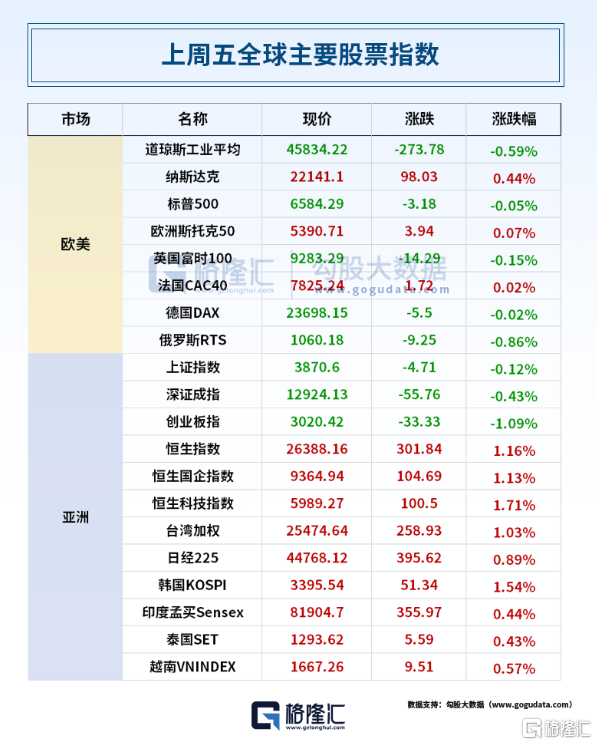
Market Summary - The Dow Jones Industrial Average decreased by 273.78 points, closing at 45834.22, a decline of 0.59% [2] - The Nasdaq increased by 98.03 points, closing at 22141.1, an increase of 0.44% [2] - The S&P 500 saw a slight decrease of 3.18 points, closing at 6584.29, a decline of 0.05% [2] - The Hang Seng Index rose by 301.84 points, closing at 26388.16, an increase of 1.16% [2] - The Nikkei 225 increased by 395.62 points, closing at 44768.12, an increase of 0.89% [2] Trade and Economic Policies - President Trump urged NATO countries to stop purchasing Russian oil and suggested imposing significant tariffs of 50%-100% on China to weaken its economic ties with Russia [2] - The U.S. government is pushing for the approval to dismiss Federal Reserve Governor Cook over allegations of mortgage fraud, aiming to finalize this before the upcoming Federal Reserve interest rate decision [3] Technology Agreements - The UK and the U.S. are preparing to sign a significant technology agreement focusing on key technologies such as AI, semiconductors, telecommunications, and quantum computing [5] International Relations - China and the U.S. held talks in Madrid regarding trade issues, indicating ongoing discussions on economic relations [6] - The U.S. Energy Secretary stated that the EU could eliminate its dependence on Russian natural gas within 6 to 12 months by importing U.S. liquefied natural gas (LNG) [6] Taxation and Market Regulations - South Korea decided to maintain the capital gains tax threshold at 50 million KRW, reversing plans to lower it to 10 million KRW [7] Demographics - Japan's population aged 65 and older reached 36.19 million, accounting for 29.4% of the total population, marking a historical high [8] Corporate Developments - Micron has paused all product pricing and may increase prices by 20%-30% due to significant supply shortages, affecting various memory products [11] - Uniqlo's sales in Japan surpassed 1 trillion JPY, indicating strong market performance [12]
三个月涨粉百万背后的情绪心理学,“拽”
Hu Xiu· 2025-09-14 23:58
这个名为"穿搭显贵的傻瓜公式"的声音,就像不齐舞团捧红了大展宏图一样,成为短视频的万能文案配音,甚至被演绎 出"人基础,内容就不能基础……"等多种文案,成为玩抽象的流行语。 "张琪JIEJI"成了穿搭导师,"基础显贵""白T搭配""万能叠穿"等穿搭内容更是成为用户收藏夹里的常客,数据最好的一条穿 搭视频被超过40万人收藏。 5月17日,"张琪JIEJI"进行了自己的首场带货直播,不到4小时,GMV超过500万元,累计曝光超242万人次,直播间一度 登上抖音电商直播间女装榜TOP4。与其他抖音带货主播不同,"张琪JIEJI"成为抖音时尚作者还不到一年,她的带货生涯 也才刚刚开始。 继"不齐舞团"之后,我又伴随一个抖音号从不到一万粉丝,快速成长为百万粉丝的网红。 或许你并没有进过她的直播间,但你应该听过她的声音:"穿搭要显贵,基础款就不要再搭基础款。下身基础,上身就不 基础;上身基础,下身就不基础;上下都基础,配饰就不基础……" (之前的数据) 可以看出,张琪团队完全没有料到自己的红火,很多单品一上架就卖空,完全没有补货! 作为粉丝的一员,首播时我也在现场,由于现场一件也没有抢到,所以转头去了淘宝下单。 由于没货 ...

星巴克中国借小红书改造门店;淮海路H&M重新升级开业;罗永浩:西贝的事情告一段落|品牌周报
36氪未来消费· 2025-09-14 14:05
Group 1 - Starbucks China announced a deep collaboration with Xiaohongshu to transform 1,800 stores into "interest community spaces" focusing on themes like pets, crafts, cycling, and running [3][4] - The concept of "Third Place," introduced by sociologist Ray Oldenburg, refers to informal public social spaces between home and work, which Starbucks has successfully commercialized [3][4] - The collaboration aims to extend Starbucks' brand experience beyond just coffee, enhancing its social attributes and cultural identity among younger users [4] Group 2 - H&M reopened its first brand experience center, "House of H&M," in Shanghai, featuring a 3,000 square meter space with multiple product categories and a café [5][6] - The H&M home series has primarily been sold online since its launch in mainland China in 2014, with plans for potential independent stores depending on consumer acceptance [6] Group 3 - The public dispute between Xibei's founder and Luo Yonghao over the use of pre-made dishes has led to a significant drop in Xibei's customer traffic and revenue [8][9] - The controversy highlights the lack of national standards for pre-made dishes in China, leading to differing interpretations between consumers and businesses [8][9] Group 4 - Uniqlo hosted a knitting party to promote its knitwear collection, which is a core product line for the brand, especially popular in the fall and winter seasons [11] - Although specific financial data is lacking, knitwear is estimated to contribute significantly to Uniqlo's overall revenue, potentially accounting for 20% to 30% [11] Group 5 - Lululemon celebrated its 10th anniversary on Tmall with a "Scuba Dynamic Theater" event featuring brand ambassadors and performances [13] - Maison Margiela appointed Miley Cyrus as its first-ever brand ambassador, marking a shift in the luxury brand's approach to celebrity endorsements [14][15] Group 6 - La Mer announced a three-year collaboration with the renowned SALK Institute to research cellular vitality and anti-aging, indicating a shift towards technology-driven skincare [17] - Giorgio Armani's will suggests a preference for selling shares to major fashion groups rather than remaining independent, signaling a potential shift in the luxury brand landscape [18] - Kering Group stated it would not sell its 29% stake in Puma, despite previous reports of seeking buyers, indicating stability in its investment strategy [19] - Ermenegildo Zegna reported a 3.4% decline in revenue but a 53% increase in net profit, attributed to improved profit margins following a direct-to-consumer transformation [20]


一个小小的杯子,我卖了近50亿
创业家· 2025-09-13 10:05
Core Insights - The article emphasizes the importance of understanding user needs and perspectives in product design, illustrated through a personal experience of a child suffering from a burn due to hot water [23][28]. - It highlights the successful development of the "55-degree cup," which addresses the unmet need for a product that can safely cool hot water for children, achieving significant sales of nearly 5 billion yuan in its first year [28]. Group 1: Product Development and User Needs - The founder of LKK Design, Jia Wei, reflects on the critical moment that led to the creation of the "55-degree cup," which can cool boiling water to a safe drinking temperature [26][28]. - The article discusses the lack of products designed to prevent burns from hot liquids, indicating a gap in the market that the "55-degree cup" successfully fills [23][24]. - The experience of the child’s injury prompted a deeper understanding of user needs and the importance of empathy in product design [23][25]. Group 2: Product Philosophy and Market Strategy - Jia Wei introduces the concept of "product three views," which includes user perspective, product value, and product worldview, essential for successful product development [29][30]. - The article suggests that to create effective products, companies must establish a correct understanding of these three views, similar to how individuals have their own worldviews [31][32]. - The success of the "55-degree cup" serves as a case study for how aligning product design with user needs can lead to market success [28][29]. Group 3: Industry Insights and Future Trends - The article outlines a course aimed at teaching companies how to innovate products and expand brands in the current market landscape, featuring industry leaders and experts [33][35]. - It discusses the transformation of consumer behavior and the necessity for companies to adapt to these changes through innovative product development and understanding market demands [40][41]. - The course will cover strategies for navigating the challenges of a saturated market and leveraging technology to enhance product offerings [42][43].

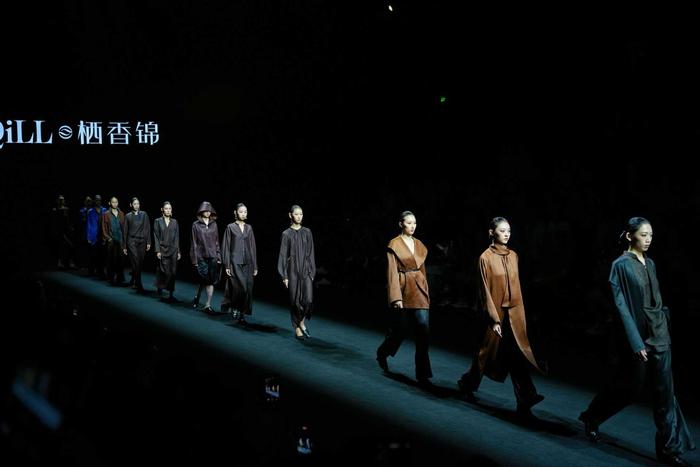
国风审美登上国际秀场 多个淘宝服饰品牌亮相中国国际时装周
Zheng Quan Ri Bao Zhi Sheng· 2025-09-13 04:09
Core Insights - The collaboration between Qixiangjin and Taobao's "Super Fashion Release" attracted nearly one million viewers and achieved a record sales figure of over 5.5 million yuan during the live broadcast [1][4] - Qixiangjin, a brand specializing in Xiangyun fabric, has successfully transitioned from a lesser-known entity to a recognized brand within just two years on Taobao, showcasing the platform's potential for brand development [4][6] Sales Performance - The live broadcast on September 11 resulted in a transaction amount exceeding 5.5 million yuan, with an average transaction value of 13,500 yuan and a customer repurchase rate of 92% [1] - Qixiangjin's sales have significantly increased since joining Taobao, with the platform becoming the main sales channel for the brand [6][7] Brand Development - Qixiangjin's participation in the China International Fashion Week marks a significant milestone, highlighting the brand's rapid growth and the effectiveness of Taobao's support in elevating brand status [4][7] - The "Super Fashion Release" initiative by Taobao aims to enhance brand positioning and has previously helped other brands achieve record sales [6][7] Industry Context - The Xiangyun fabric, a traditional Chinese textile with over 1,700 years of history, has struggled with branding compared to other materials like cashmere, which are heavily promoted by established brands [1][4] - The collaboration between Taobao and the China International Fashion Week reflects a strategic move to leverage Taobao's extensive consumer base and support for original design and personalized fashion [7]