信达证券

Search documents
上证指数再度冲击4000点,科技或仍是行情主线
Mei Ri Jing Ji Xin Wen· 2025-12-29 06:25
Group 1 - A-shares trading volume has rebounded, with significant movements in the technology sector, particularly in artificial intelligence, chips, and 5G communications [1] - The AI ETF (515070) saw a rapid increase in holdings, with stocks like Cambricon Technologies rising over 6%, and other companies such as Tuowei Information and Xiechuang Data also experiencing gains [1] - The automotive parts sector (562700) rose over 1%, with stocks like Siling Zhichu increasing over 13%, and other companies such as Wuzhou Xinchun and Xinquan Co. also seeing substantial increases [1] Group 2 - The central bank stated that artificial intelligence is becoming a crucial engine for high-quality development across various industries, emphasizing its role in the digital transformation of finance [1] - The "14th Five-Year Plan" suggests the comprehensive implementation of the "AI+" initiative to seize the high ground in AI industry applications, with a focus on deepening and expanding AI governance [1] - According to Xinda Securities, the year-end market will rapidly rotate around policies and themes, recommending an increase in value sector allocations, with potential structural rebounds in previously lagging sectors [1] Group 3 - The Smart Car ETF (159888) closely tracks the CS Smart Car index, with constituent stocks primarily distributed across electronics, computers, automotive, and communications sectors, showcasing strong technological attributes [2] - The Automotive Parts ETF (562700) tracks the CSI Automotive Parts Theme Index, covering high-quality parts companies in various automotive fields, benefiting from the trends of electrification and intelligence in the automotive industry [2] - The AI ETF (515070) tracks the CS AI Theme Index, selecting stocks that provide technology, foundational resources, and applications in AI, focusing on the midstream and upstream of the AI industry chain [2]
中国证券行业2025年十大新闻
券商中国· 2025-12-29 04:28
Core Viewpoint - 2025 is a pivotal year for the Chinese securities industry, focusing on deepening functional positioning and high-quality development, with an emphasis on mergers and acquisitions, international expansion, and technological innovation, particularly through AI applications [1][2]. Mergers and Acquisitions - The year marks a critical phase for mergers and acquisitions in the securities industry, with major firms like Guotai Junan and Haitong Securities merging to form Guotai Haitong Securities, and other significant consolidations such as Guolian Securities and Minsheng Securities [3][4]. - The competitive landscape is shifting, with Guotai Haitong leading in net profit, and Guolian Minsheng's ranking improving significantly from around 40th to the top 20 [3]. - New merger cases are emerging, such as CICC's plan to merge with Xinda Securities and Dongxing Securities, potentially creating a new entity with over 1 trillion yuan in total assets [3]. Industry Integration Logic - Two main integration strategies are evident: resource consolidation under the same actual controller and market-driven mergers aimed at enhancing national influence [4]. - Analysts suggest that resource integration may become the most important way for securities firms to quickly enhance scale and comprehensive strength [4]. Classification Evaluation Reform - A significant revision of the classification evaluation for securities firms is underway, emphasizing the need for firms to enhance their functional roles and professional capabilities [5][6]. - The new regulations aim to shift focus from revenue expansion to improving operational efficiency and professional skills, thereby enhancing overall industry competitiveness [5]. Margin Trading Market - The margin trading market is heating up, with a record balance of 2.54 trillion yuan, reflecting a 36.6% increase from the beginning of the year [7]. - Several firms have raised their margin trading limits, and a price war on interest rates has begun, with some firms offering rates below 4% [8][9]. Investment Banking and Technology - The securities industry is adapting to a new era of "hard technology," with reforms aimed at providing more inclusive financing paths for tech companies [10][11]. - Securities firms are establishing research institutes focused on emerging industries and enhancing their service capabilities through collaboration and talent development [11]. AI Integration - The adoption of AI technologies is rapidly transforming the industry, with applications expanding across various business functions, significantly improving efficiency [12][13]. - Firms are moving towards an "AI-native" model, enhancing client engagement and operational management through AI tools [12]. Internationalization of Securities Firms - The internationalization of Chinese securities firms is accelerating, with a focus on comprehensive service capabilities and participation in global market competition [14][15]. - This trend is driven by the growing demand for cross-border services and the strategic goal of building first-class investment banks [14]. Asset Management Transformation - The public offering process for asset management is at a turning point, with firms reassessing their positioning in the broader asset management landscape [16][17]. - The industry is witnessing a decline in the rush for public fund licenses, with many firms withdrawing applications, indicating a shift in focus towards existing business optimization [16]. Impact of Fund Fee Reforms - The implementation of public fund fee reforms is pushing securities firms to enhance their research and wealth management capabilities, with a notable decline in commission revenues [18]. - Firms are transitioning towards a buyer advisory model, focusing on asset management and providing comprehensive solutions rather than merely selling products [18]. Regulatory Environment - Regulatory signals indicate a potential easing of capital requirements for high-quality institutions, aimed at improving capital utilization efficiency [19]. - Analysts suggest that enhancing leverage and capital efficiency could drive growth in high-value capital-intensive businesses [19]. Name Changes Reflecting Strategic Shifts - A wave of name changes among securities firms signifies strategic realignments and resource restructuring following mergers and acquisitions [20][21]. - These changes reflect deeper integration and the influence of new stakeholders, indicating a shift in strategic focus and operational capabilities [20].




滔搏再跌超4% 公司指12月以来终端需求波动加剧 全年财务指引保守
Zhi Tong Cai Jing· 2025-12-29 03:44
Core Viewpoint - Tmall's stock has dropped over 4%, currently trading at HKD 2.88, with a trading volume of HKD 17.4752 million [1] Group 1: Sales Performance - For the third quarter of the fiscal year 2025/26, the total sales amount of the retail and wholesale business experienced a high single-digit decline year-on-year [1] - As of November 30, 2025, the gross sales area of direct-operated stores decreased by 1.3% compared to the previous quarter and by 13.4% year-on-year [1] Group 2: Market Analysis - According to Cinda Securities, the decline in total sales aligns with previous performance guidance trends, indicating that retail business continues to outperform wholesale business [1] - The company has demonstrated strong retail management capabilities, with controllable discount and inventory situations [1] Group 3: Financial Guidance - The company noted increased operational pressure due to heightened fluctuations in terminal demand since December, leading to an expected deviation from the previously set target of "year-on-year net profit remaining flat" within a controllable range [1] - The company maintains a "short-term cautious, long-term optimistic" outlook for the future [1]

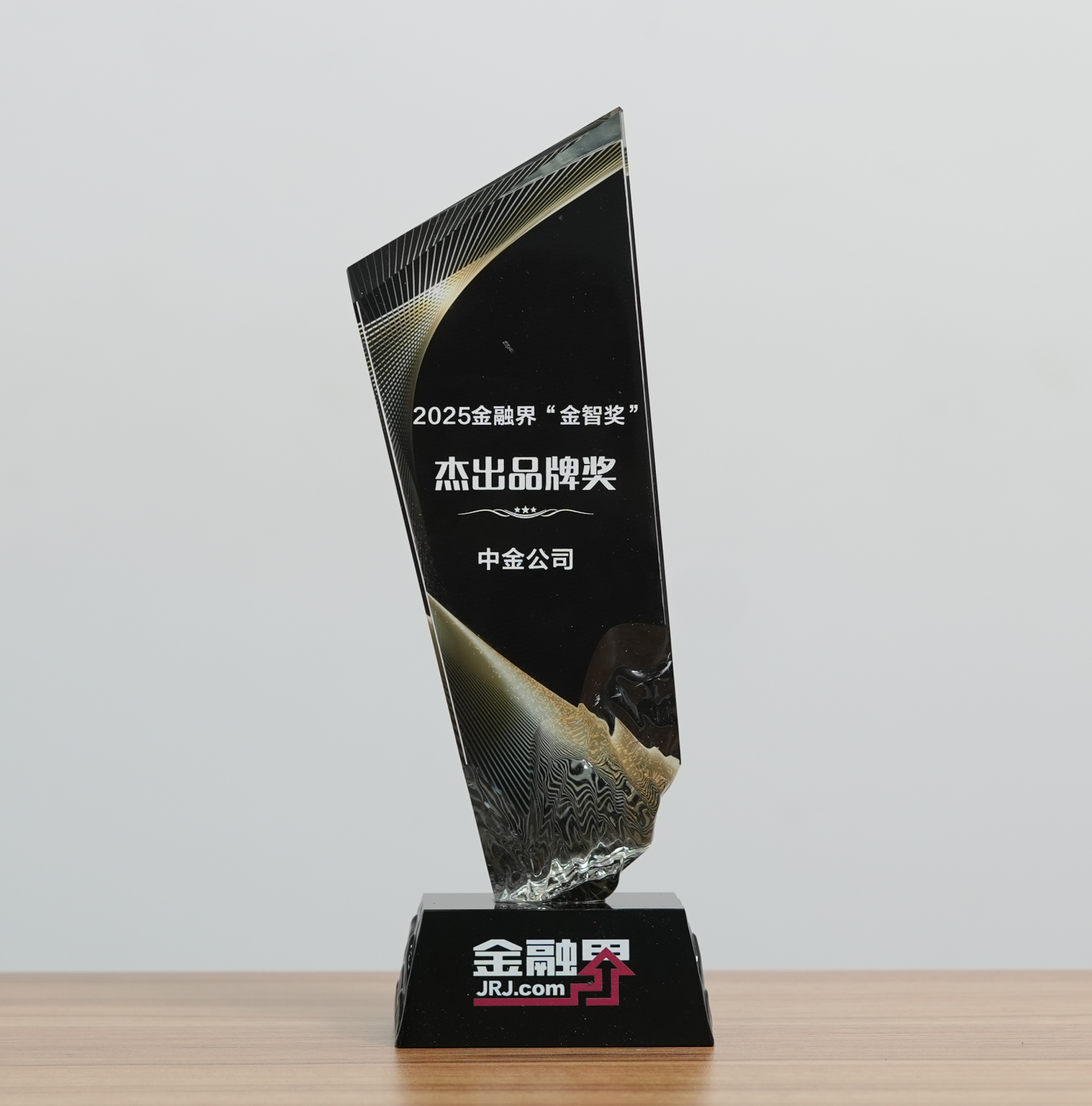
中金公司荣获第十四届金融界“金智奖”杰出品牌奖
Jin Rong Jie· 2025-12-29 03:01
Group 1 - The "Qihang·2025 Financial Summit" was successfully held in Beijing, focusing on the theme of "New Starting Point, New Momentum, New Journey," gathering hundreds of leaders and guests from regulatory bodies, industry associations, financial institutions, listed companies, and media [1] - The 14th "Golden Wisdom Award" results were announced, with China International Capital Corporation (CICC) winning the "Outstanding Brand Award" [1][3] - The "Golden Wisdom Award" aims to establish benchmarks for high-quality development, guiding listed companies to focus on their main businesses, innovate continuously, and fulfill social responsibilities [3] Group 2 - The "Outstanding Brand Award" evaluates comprehensive brand strength based on market recognition, product service innovation, industry influence, and social responsibility, aiming to set industry quality and innovation benchmarks [4] - CICC is celebrating its 30th anniversary in 2025, showcasing brand strength through excellent performance across all business lines and continuous innovation [4] - In the investment banking sector, CICC participated in 7 out of the top 10 A-share IPOs in the past five years and 14 out of the top 20 Hong Kong projects in 2025, maintaining a leading market position [4] - In 2023, CICC facilitated over 1.3 trillion yuan in transactions related to technology finance through equity financing, bond financing, and M&A services, reinforcing the strength of state-owned financial institutions [4] - As of September 2025, CICC's net assets reached 115.5 billion yuan, with multiple core indicators ranking among the industry's top [4] - In December, CICC announced a share-swap merger with Dongxing Securities and Cinda Securities, which is expected to significantly expand the combined entity's net assets and net capital, providing strong support for business expansion and further solidifying brand influence [4]

智驾概念股早盘走高 国内首批L3级自动驾驶汽车开启规模化上路运行
Zhi Tong Cai Jing· 2025-12-29 02:22
Core Viewpoint - The news highlights the positive market response to the launch of L3-level autonomous driving vehicles in China, indicating a growing acceptance and regulatory support for advanced driving technologies in the automotive industry [1] Group 1: Market Performance - Intelligent driving concept stocks saw significant gains, with Youjia Innovation (02431) rising by 8.89% to HKD 13.6, Zhejiang Shibao (002703) increasing by 6.97% to HKD 5.22, and Tudatong (02665) up by 1.98% to HKD 10.82 [1] Group 2: Regulatory Developments - The first batch of L3-level autonomous driving vehicles, totaling 46 units, was officially launched for road use in Chongqing, approved for operation on specific urban expressways [1] Group 3: Industry Trends - According to Xinda Securities (601059), the regulatory framework for intelligent connected vehicles in China is continuously improving, leading to a more standardized industry environment [1] - Domestic brands are accelerating the research and development of intelligent driving technologies, with the penetration rate of L2-level and above driving assistance systems increasing rapidly [1] - The market for Robotaxi is projected to reach a scale of RMB 270 billion by 2030, indicating significant growth potential in the high-level autonomous driving sector [1]

全面回暖!并购上会家数接近翻倍!重大重组交易量超前六年总和!
IPO日报· 2025-12-29 00:33
Core Viewpoint - The Chinese M&A market in 2025 is characterized by significant growth in both quantity and scale, driven by strategic integrations among state-owned enterprises and smaller companies focusing on industrial chain enhancements [1][4][10]. Group 1: Market Growth and Activity - In the first 11 months of 2025, 1,750 listed companies disclosed 2,168 M&A events, an increase from 1,569 companies and 2,056 events in the same period last year [5]. - A total of 4,044 M&A events were disclosed by A-share companies, with 147 classified as major asset restructurings, marking a year-on-year increase of 44.12% [6]. - The China M&A Composite Index rose to 125.9 points by Q3 2025, reflecting a year-on-year increase of 35.5% [7]. Group 2: Sector-Specific Trends - The technology sector, particularly in semiconductors and biomedicine, has seen a surge in M&A activity, with significant transactions such as the acquisition of a controlling stake in a semiconductor design firm for 2.174 billion yuan [9][14]. - The number of major asset restructuring meetings increased to 29 in 2025, nearly doubling from 15 in 2024, with a concentration in hard technology sectors [9]. Group 3: Policy and Regulatory Environment - The M&A market's recovery is primarily driven by systemic support from top-level design, including the implementation of new policies aimed at encouraging industrial mergers and enhancing market efficiency [10][11]. - New regulatory frameworks have streamlined the review process for high-quality large-cap company mergers, significantly reducing approval times [11]. Group 4: Strategic Implications - M&A is increasingly viewed as a core tool for companies to adapt to industry changes and seek growth, particularly in strategic emerging industries [14]. - Traditional industries are also engaging in M&A to optimize resource allocation and enhance competitiveness, with notable examples of large-scale mergers among state-owned enterprises [18]. Group 5: Risks and Challenges - Despite the market's vibrancy, there are concerns about speculative activities and potential risks associated with cross-industry mergers lacking synergy, which could lead to integration failures [19][20]. - The prevalence of high valuation premiums in some transactions raises concerns about future goodwill impairment risks, as seen in cases where acquisition premiums reached as high as 2000% [20].

A股或迎接跨年“小躁动”行情
Mei Ri Jing Ji Xin Wen· 2025-12-28 21:55
Group 1 - The A-share market is experiencing a "small fluctuation" trend as it approaches the end of the year, with the Shanghai Composite Index recording eight consecutive days of gains [1] - Market liquidity is driving the current trend, with total trading volume exceeding 2 trillion yuan on the last Friday, indicating a significant increase in market activity [1] - Key sectors such as non-ferrous metals and lithium mining are benefiting from price increases, while themes like Hainan Free Trade Port and commercial aerospace remain active [1] Group 2 - Institutional buying power is expected to strengthen, with increased allocation of funds as external uncertainties ease, contributing to a positive cross-year market outlook [2] - The rebound of U.S. tech stocks, appreciation of the yuan, and rising prices of non-ferrous metals are identified as catalysts for the upcoming market rally [2] - The cross-year market is anticipated to show a clear characteristic of "growth leading, liquor sector consolidating," with a focus on sectors like snacks and dairy that are showing clear growth potential [3] Group 3 - The liquor sector is currently in a "bottoming out" phase, with demand expected to increase as the Spring Festival approaches, leading to a potential valuation recovery post-holiday [3] - Recent stabilization in prices from leading liquor companies and a decrease in inventory levels are early signs of recovery in the liquor market [3]


机构展望 | 机构资金踊跃布局 本轮“春季躁动”行情或已展开
Shang Hai Zheng Quan Bao· 2025-12-28 19:26
上周,A股市场延续强势表现,截至12月26日,沪指实现8连涨,追平年内连涨纪录,沪深两市成交额 重返2万亿元。2025年交易迎来最后三个交易日,券商策略展望报告一致认为,A股的强劲反弹在年末 关口有望延续。机构资金买入力量不断增强、人民币升值吸引外资流入,构成A股资金面边际改善的两 大主要因素。 机构资金买入力量有望增强 上周证券市场一个值得注意的现象是,中证A500ETF份额数快速上行,成为短期增量资金流入最快的方 向。 对此,华西证券分析称,中证A500ETF净申购成为年末A股重要的增量资金来源之一。根据统计,12月 至今,股票型ETF累计净申购908亿元,为今年4月以来净申购规模最高的月份。其中,增量资金主要来 源于规模居前的中证A500ETF产品的净申购,这反映出年末机构增量资金正在加速流入。 兴业证券分析称,短期来看,企业结汇需求释放的滞后效应,对岁末年初人民币汇率走强仍构成一定助 力,汇率市场与证券市场的"春季躁动"行情有望共振。展望2026年,弱美元为人民币升值提供良好外部 环境。 兴业证券回顾了2016年以来的四轮人民币升值周期,发现区间A股与港股大多实现上涨,即人民币升值 阶段中国资产往往表 ...
2025证券业校准航向 并购、AI、出海驱动高质量发展
Zheng Quan Shi Bao· 2025-12-28 18:05
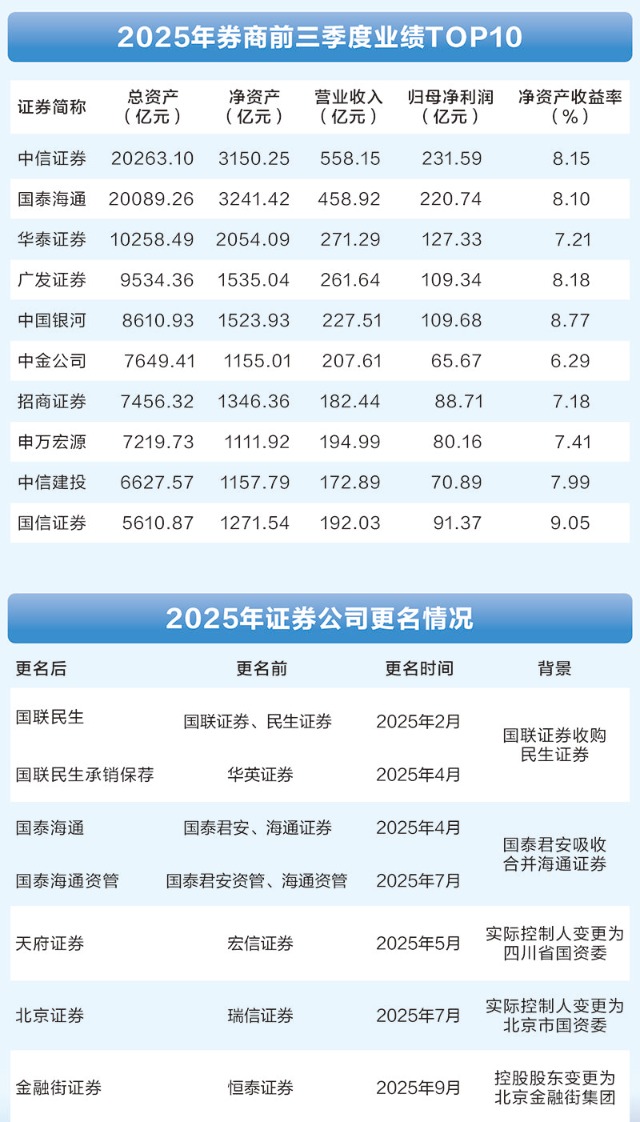
Core Viewpoint - The Chinese securities industry is undergoing significant transformation in 2025, focusing on mergers and acquisitions, high-quality development, and the integration of AI technology to enhance operational efficiency and service models [4][5][10]. Group 1: Industry Performance and Financial Metrics - Major securities firms like CITIC Securities and Guotai Junan have reported substantial total assets and net profits, with CITIC Securities leading at total assets of 2026.31 billion yuan and a net profit of 231.59 billion yuan [1]. - The net asset return rates for leading firms range from 7.21% to 9.05%, indicating competitive performance among top players [1]. Group 2: Mergers and Acquisitions - 2025 marks a pivotal year for mergers in the securities industry, with significant consolidations such as Guotai Junan merging with Haitong Securities and Guolian Securities merging with Minsheng Securities [5]. - The merger activities have reshaped the competitive landscape, with Guotai Haitong now leading in net profit rankings, and Guolian Minsheng's profit ranking improving significantly [5]. Group 3: Regulatory Changes - The classification evaluation for securities firms is undergoing a critical revision aimed at promoting high-quality development, emphasizing professional capabilities over mere revenue growth [6]. - New regulations will encourage firms to enhance their service capabilities and focus on long-term investment strategies [6]. Group 4: Market Trends and Innovations - The margin trading market has seen explosive growth, with a 36.6% increase in financing balance, reaching 2.54 trillion yuan by December 2025 [7]. - Firms are competing aggressively in this space, with some lowering financing rates to attract clients, indicating a shift towards long-term client retention strategies [7][8]. Group 5: Technological Advancements - The integration of AI technologies is transforming the securities industry, with firms adopting AI for wealth management, trading, and operational efficiency, leading to significant improvements in service delivery [10]. - The industry is moving towards an "AI-native" model, enhancing productivity and redefining business ecosystems [10]. Group 6: Internationalization Efforts - Chinese securities firms are deepening their international presence, expanding services beyond traditional offerings to include cross-border wealth management and derivatives trading [12]. - This internationalization is driven by increasing demand for comprehensive financial services from Chinese enterprises and global investors [12]. Group 7: Asset Management Trends - The public offering process for asset management is experiencing a slowdown, with firms reassessing their strategies in the context of regulatory changes and market conditions [13]. - The focus is shifting towards private equity and specialized asset management products as firms adapt to the evolving landscape [13]. Group 8: Fee Structure Reforms - The ongoing reforms in public fund fee structures are prompting securities firms to enhance their research and wealth management capabilities, shifting towards a more service-oriented model [14]. - Firms are increasingly focusing on providing tailored investment solutions rather than merely selling products [14]. Group 9: Capital Regulation Changes - Regulatory bodies are signaling a shift towards more flexible capital management for high-quality firms, aiming to improve capital efficiency while maintaining overall industry stability [15][16]. - This change is expected to enhance the return on equity (ROE) for securities firms, aligning them more closely with international standards [16]. Group 10: Rebranding Trends - A wave of rebranding among securities firms reflects strategic realignments following mergers and changes in ownership, indicating a shift in focus and resource allocation [17]. - These name changes are seen as signals of deeper strategic transformations within the firms, aimed at enhancing their market positioning [17].
【十大券商一周策略】A股跨年行情已经启动,新的主线浮出水面
Xin Lang Cai Jing· 2025-12-28 15:19
Core Viewpoint - The A-share market is expected to experience a spring rally driven by liquidity, policy expectations, and structural opportunities, with a focus on sectors like AI, commercial aerospace, and non-bank financials [5][10][12]. Group 1: Market Trends and Predictions - 39 out of 360 industry/theme ETFs reached new highs in December, with communication and non-ferrous metals being traditional favorites, while new themes like commercial aerospace are gaining traction [3]. - The A-share market is showing signs of a spring rally, supported by liquidity and positive policy expectations, with a focus on sectors such as technology and advanced manufacturing [5][10]. - The market is expected to maintain a high risk appetite due to favorable conditions, including a weak dollar and the upcoming Chinese New Year and Two Sessions [11][16]. Group 2: Sector Focus and Investment Opportunities - Key sectors to watch include AI, commercial aerospace, and non-ferrous metals, which are expected to benefit from structural changes and increased demand [10][12]. - The manufacturing sector, particularly in chemicals and engineering machinery, is showing signs of recovery and is expected to benefit from the shift in global competition [3][4]. - Non-bank financials, including insurance and brokerage firms, are positioned to benefit from the anticipated capital inflows and improved asset returns [9][12]. Group 3: Currency and Economic Factors - The appreciation of the RMB is expected to lower import costs and enhance domestic purchasing power, benefiting sectors reliant on imports and domestic consumption [7][9]. - The potential for significant capital inflows due to RMB appreciation could lead to a revaluation of Chinese assets, creating a favorable environment for investment [7][9]. - The overall economic environment is improving, with expectations of continued liquidity support and a stable policy backdrop, which is conducive to market growth [5][10].