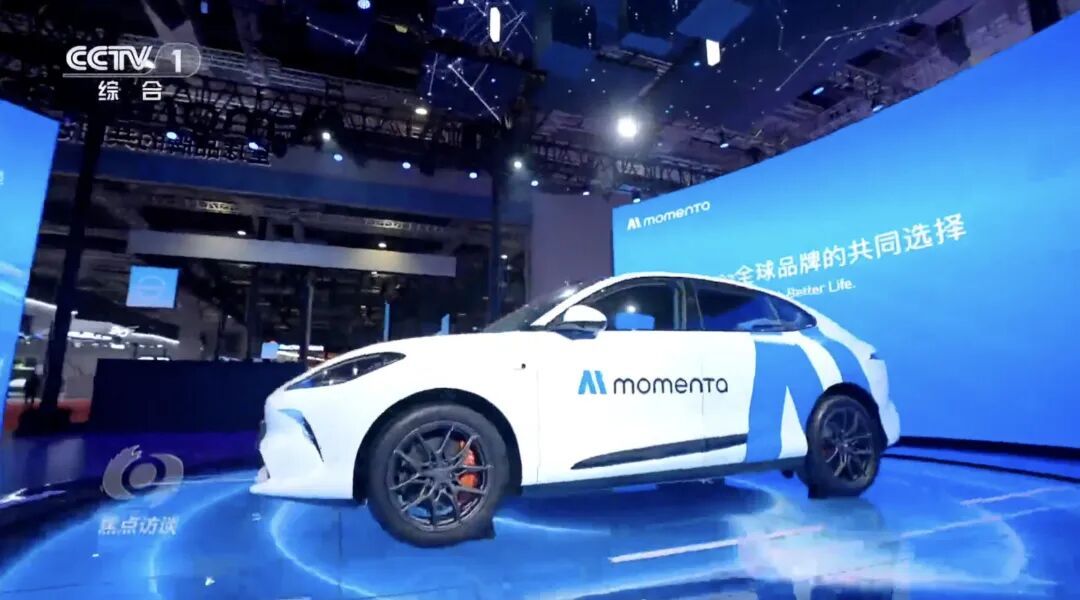
Momenta

Search documents
9个月吸金86亿,资本重仓“无人区”
凤凰网财经· 2025-10-30 13:14
Core Viewpoint - The article highlights the rapid commercialization and growth potential of the unmanned delivery vehicle industry, predicting significant advancements and profitability for leading companies by 2025 [3][6]. Financing and Market Growth - Leading unmanned delivery companies have secured approximately 8.6 billion yuan in financing since the beginning of the year, with notable rounds including 1 billion yuan for New Stone and over 600 million dollars for NineSight [2]. - The industry is expected to reach a market size of around 500 billion yuan, with an anticipated increase of nearly 100,000 units in the coming year [6]. Commercialization Milestones - The critical threshold for the unmanned vehicle business is identified as 10,000 units, which enables a positive cycle of cost reduction, scenario validation, and scale expansion [4]. - New Stone and NineSight have both achieved the delivery of 10,000 vehicles, with New Stone projecting 1 billion yuan in revenue this year and full profitability by 2026 [4][11]. Operational Efficiency - Unmanned delivery vehicles are addressing significant pain points in the logistics sector, such as low vehicle utilization and high personnel costs, leading to cost reductions and efficiency improvements [9]. - For instance, Shunfeng's unmanned vehicles have reduced per-package costs by 1.32 yuan and improved efficiency by 30% [9]. Technological Advancements - The cost of unmanned delivery vehicles has decreased significantly, with New Stone's vehicle costs dropping from 200,000 yuan to 70,000 yuan between 2018 and 2023, and projected prices as low as 19,800 yuan for future models [14]. - The industry is transitioning from a research and testing phase to large-scale commercial operations, with a tenfold increase in development speed compared to the previous year [11]. Challenges and Regulatory Issues - Despite the rapid growth, the industry faces challenges related to technology, standards, and ecosystem development, particularly in maintaining stability during large-scale operations [17]. - Road rights and regulatory frameworks are significant barriers to scaling operations, with a lack of unified standards across regions increasing operational costs [18][19]. Future Outlook - The next decade is expected to see explosive growth in smart mobility, particularly in last-mile logistics and delivery services [16]. - Companies are exploring collaborative models to optimize resource utilization and reduce operational costs, such as partnerships with public transport entities [19].


一家企业融到C13轮了
投中网· 2025-10-30 07:22
Core Insights - The investment enthusiasm in the autonomous driving sector is reportedly returning, with significant financing activities observed recently [3][4][10] - Momenta has completed two rounds of financing this year, with the latest round (C13) valued at $6 billion, indicating a strong interest from large funds in leading autonomous driving companies [2][10] - In the past month alone, over 10 financing events in the domestic autonomous driving sector have occurred, totaling more than 10 billion yuan [6][10] Financing Activities - Didi's autonomous driving subsidiary completed a 2 billion yuan D round financing on October 11, with multiple prominent investors involved [7] - On October 14, Ninebot announced a $100 million B4 round financing led by Ant Group [8] - New Stone Technology secured over $600 million in D round financing on October 23, breaking the record for the largest single financing amount in China's autonomous driving sector [8][10] Market Trends - The number of financing events in the autonomous driving industry in 2023 is approximately 140, with a total amount of around 20 billion yuan, which is less than a quarter of the peak in 2021 [10] - The total financing amount in the sector has exceeded 40 billion yuan this year, indicating a clear "warming" signal in the market [10] Investment Sentiment - Investors are increasingly optimistic about the autonomous driving sector, with many large private equity firms actively investing in multiple projects this year [10][11] - The shift in investment focus is towards L4 level applications with clear use cases, such as RoboVan and Robotaxi, as well as L2 level advanced driving assistance systems [14] Competitive Landscape - Leading companies in the sector, such as New Stone Technology and Didi, are attracting significant investment due to their demonstrated progress in commercialization and operational capabilities [14][15] - The entry of major players like Huawei into the autonomous driving space is seen as a potential game-changer, with expectations that it could significantly impact the competitive landscape [16]

上海Robotaxi冲刺香港IPO:上汽阿里Momenta都是股东
3 6 Ke· 2025-10-29 23:50
Core Insights - The article discusses the rapid expansion of the Robotaxi ecosystem, highlighting the IPO ambitions of Xiangdao Mobility, a subsidiary of SAIC, which positions itself as the first L4 Robotaxi operating platform backed by an automotive company in China [2][21]. Financial Performance - Xiangdao Mobility reported revenues of approximately 4.729 billion RMB, 5.718 billion RMB, 6.395 billion RMB, and 3.013 billion RMB for the fiscal years 2022, 2023, 2024, and the first half of 2025, respectively [3]. - The compound annual growth rate (CAGR) from 2022 to 2024 is projected at 16.3%, with gross profits of approximately 49.487 million RMB, 376 million RMB, 448 million RMB, and 341 million RMB, leading to an increase in gross margin from 1.0% in 2022 to 11.3% in the first half of 2025 [5][8]. Operational Insights - Despite significant revenue growth, Xiangdao Mobility remains in a loss-making state, although losses have narrowed by nearly 80% in the first half of 2025 compared to 2022, and operating cash flow has turned positive [6][8]. - As of June this year, Xiangdao Mobility has over 1.06 million registered drivers and approximately 20,000 self-owned vehicles, covering 95 cities in China [13]. Market Position - In 2024, Xiangdao Mobility's revenue from ride-hailing services is expected to contribute 49.91 billion RMB, accounting for 78.0% of total revenue, indicating a strong reliance on traditional ride-hailing operations [16]. - The company is positioned as a significant player in the Robotaxi market, leveraging partnerships with key industry players like Momenta and Alibaba to enhance its technological capabilities and operational efficiency [16][19]. Industry Trends - The article notes a shift in the Robotaxi narrative from testing to actual operations, driven by technological advancements and supportive policies in major cities like Beijing and Shanghai [17]. - The financing landscape for tech companies looking to go public in Hong Kong has improved, with relaxed requirements for unprofitable companies, facilitating the entry of various Robotaxi players into the market [19][21].
享道出行冲刺港交所 去年网约车服务日均订单超60万单
Zhi Tong Cai Jing· 2025-10-28 11:41
Core Viewpoint - Xiangdao Mobility (Shanghai) Technology Co., Ltd. has submitted its listing application to the Hong Kong Stock Exchange, with CICC and Guotai Junan International as joint sponsors [1] Company Overview - Xiangdao Mobility is a leading comprehensive smart mobility platform in China, offering ride-hailing, vehicle leasing, vehicle sales, and Robotaxi services to meet diverse travel needs [4] - The company was initiated by SAIC Motor Corporation and has attracted key industry investors such as Momenta, AutoNavi, and CATL, integrating resources from automotive manufacturers, autonomous driving solution providers, high-precision digital map service providers, and battery system suppliers [4] Market Position - According to Frost & Sullivan, in 2024, Xiangdao Mobility ranks fifth among domestic ride-hailing platforms by Gross Transaction Value (GTV) and second in Shanghai by completed orders [4] - The company also ranks second in the domestic corporate travel service industry by GTV in 2024 [4] Service Expansion - Xiangdao Mobility has expanded its ride-hailing services from Shanghai to the Yangtze River Delta and further to 85 cities across China by June 30, 2025 [4] - The company achieved an average of over 600,000 daily orders and a GTV exceeding RMB 5.5 billion in 2024 [4] Financial Performance - Revenue for Xiangdao Mobility was approximately RMB 4.73 billion, RMB 5.72 billion, RMB 6.39 billion, and RMB 3.01 billion for the fiscal years 2022, 2023, 2024, and the six months ending June 30, 2025, respectively [5] - Gross profit figures for the same periods were approximately RMB 49.49 million, RMB 376 million, RMB 448 million, and RMB 341 million [5]

深耕技术与场景 安全为基向未来 ——2025世界智能网联汽车大会侧记
Zhong Guo Qi Che Bao Wang· 2025-10-28 02:00
Core Insights - The 2025 World Intelligent Connected Vehicle Conference highlights China's transition from technology exploration to large-scale development in the intelligent connected vehicle industry, with significant advancements in key technologies such as autonomous driving and vehicle-road collaboration [2][3]. Group 1: Competitive Advantages - China possesses three main competitive advantages in the intelligent connected vehicle sector: rich application scenarios and service demands, collaborative innovation in the industrial chain and infrastructure, and a clear national strategy with a systematic policy framework [3]. - The complexity of China's road traffic scenarios provides a vast amount of scenario data, enhancing the development of intelligent connected vehicles [3]. Group 2: Policy and Planning - The Ministry of Industry and Information Technology (MIIT) plans to develop the "14th Five-Year" intelligent connected new energy vehicle industry development plan to promote high-quality industry growth [4]. - The MIIT aims to support technological innovation and deepen the integration of artificial intelligence with the automotive industry, focusing on breakthroughs in key technologies such as next-generation electronic and electrical architecture and high-performance chips [4]. Group 3: Industry Collaboration and Innovation - The "Vehicle-Road-Cloud Integration" application pilot has identified ten key functional scenarios for promotion, including traffic signal information services and collaborative emergency avoidance [4][5]. - The establishment of a national-level collaborative innovation platform is proposed to address challenges in key technology areas such as chips and operating systems, and to enhance resource sharing among industry players [7]. Group 4: Safety and Standards - The development of mandatory national standards for combined driving assistance systems is seen as a crucial step towards industry maturity and high-quality development [11][12]. - The focus on safety in autonomous driving systems is emphasized, with a call for prioritizing accident reduction as a key mission of the industry [10][11]. Group 5: Future Trends - The future of intelligent connected vehicles is expected to involve deeper integration of vehicles with their environment, transforming them into proactive decision-makers and emotional companions [8]. - The industry anticipates that a significant portion of vehicle journeys will be managed by Level 3 and Level 4 autonomous driving systems by 2030 [11].

EnjoyGo Technology Limited(H0096) - Application Proof (1st submission)
2025-10-27 16:00
The Stock Exchange of Hong Kong Limited and the Securities and Futures Commission take no responsibility for the contents of this Application Proof, make no representation as to its accuracy or completeness and expressly disclaim any liability whatsoever for any loss howsoever arising from or in reliance upon the whole or any part of the contents of this Application Proof. Application Proof of EnjoyGo Technology Limited 享道出行(上海)科技股份有限公司 (the "Company") (A joint stock limited company incorporated in the Peop ...
给热到发烫的无人车,泼盆冷水
汽车商业评论· 2025-10-24 02:40
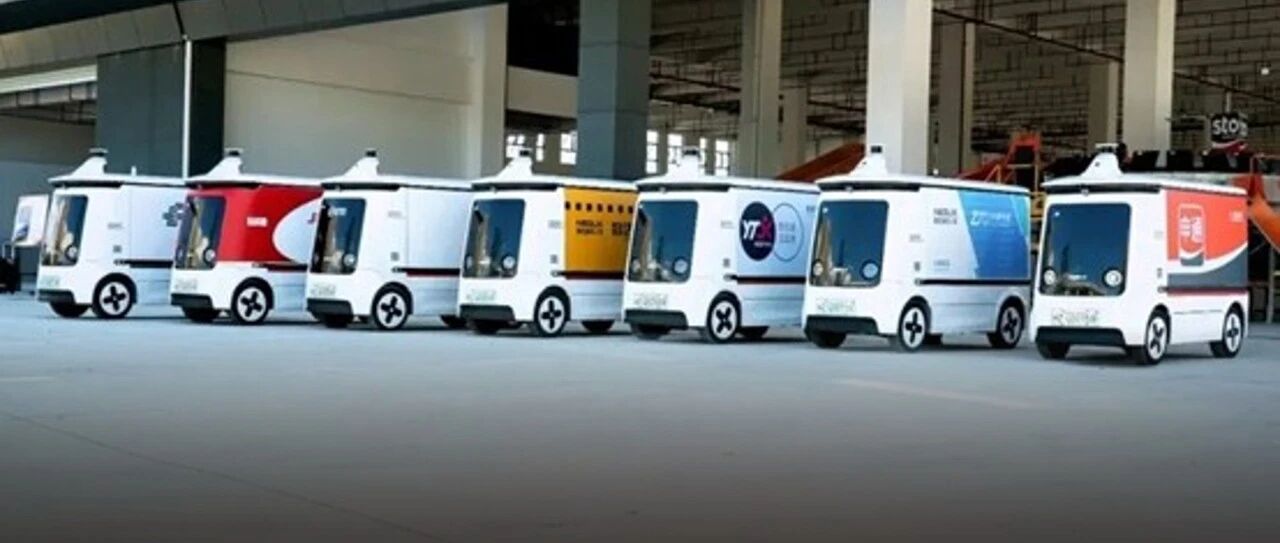
Core Viewpoint - The article discusses the rapid development and investment in the low-speed autonomous vehicle market in China, highlighting significant financing events and the increasing adoption of autonomous vehicles in logistics and delivery sectors [4][11]. Investment and Financing - New Stone Technology announced the completion of over $600 million in Series D financing, marking it as the largest private equity financing in China's autonomous driving sector to date [4]. - In 2025, several companies, including New Stone and NineSight, secured substantial funding, indicating strong investor interest in the autonomous vehicle market [10][11]. Market Dynamics - The low-speed autonomous vehicle market is experiencing a shift, with companies like Desay SV and New Stone entering the space, showcasing strong execution capabilities [6][9]. - The logistics sector, particularly the express delivery industry, is a major driver for the adoption of autonomous vehicles, with significant orders for autonomous delivery vehicles already placed [13][15]. Industry Trends - The period from 2018 to 2023 was characterized as a demonstration phase for autonomous vehicles, with companies exploring various application scenarios and refining AI technologies [9]. - By 2024, the industry is expected to enter a growth phase, with commercial value becoming more apparent and market demand beginning to surge [9][10]. Competitive Landscape - The express delivery sector has become a key player in the autonomous vehicle market, with major companies like Jitu Express and SF Express investing heavily in autonomous delivery vehicles [15][18]. - New Stone and NineSight dominate the market, holding a combined 90% share of the autonomous vehicle orders in the express delivery sector, making it challenging for new entrants [18]. Future Outlook - The potential market for autonomous delivery vehicles in China is vast, with estimates suggesting a need for 30 million autonomous vehicles for last-mile delivery [24]. - However, there are concerns about the sustainability of the current business models, with industry experts suggesting that the market may not meet overly optimistic capital market expectations [26][27].
一汽、北汽、宝马等企业发声 大咖共议“新汽车”
Zhong Guo Jing Ying Bao· 2025-10-23 14:31
Core Insights - The smart connected vehicle industry in China is transitioning from a technology exploration phase to a critical period of large-scale development, with significant advancements in autonomous driving technology and vehicle-road collaboration [1] - The integration of AI into the automotive sector is reshaping the industry landscape, moving from hardware-driven to software-defined vehicles, which is expected to enhance the overall value chain [2][3] Group 1: Industry Development - China's smart connected vehicle industry is propelled by a combination of policy support, market drive, and technological breakthroughs, allowing it to transition from a follower to a leader in the global market [2] - The industry is experiencing a transformation where AI is fundamentally reshaping the underlying logic of the industry, product value models, and user experience ecosystems [2][3] Group 2: Technological Advancements - The year 2025 is anticipated to be a turning point for the commercialization of AI in the automotive sector, marking a shift from experimental scenarios to large-scale implementation [3] - Companies are developing differentiated strategies for smart connected technologies across various vehicle models, with L2-level assisted driving becoming standard [6] Group 3: Collaboration and Ecosystem - The development of smart connected vehicles is viewed as a collaborative effort rather than a competitive sprint, emphasizing the importance of open cooperation and innovation [7][8] - Industry leaders are advocating for a national-level collaborative innovation platform to address challenges such as technology barriers and standardization issues [8][9] Group 4: Market Opportunities - The automotive industry is expected to see a shift in business models, with potential monthly subscription services for autonomous driving as L4/L5 technologies mature [4] - The integration of AI capabilities across different scenarios and devices is projected to create vast opportunities within the automotive ecosystem [3]
奔驰开启大规模裁员,约4000人离职!在华销量垫底“BBA”
Guo Ji Jin Rong Bao· 2025-10-23 11:48
Core Viewpoint - Mercedes-Benz is undergoing a significant layoff plan, with approximately 4,000 employees already accepting severance packages, driven by declining financial performance and market conditions [1][3]. Group 1: Layoff Details - The layoff plan includes a tiered severance compensation structure linked to job level and tenure, with "accelerated bonuses" to incentivize early decisions, offering up to €500,000 for senior management [1][3]. - The voluntary departure scheme was initiated in April, targeting engineers, administrative, and IT staff, with the goal of encouraging around 30,000 employees to leave by March 2026 [3]. Group 2: Financial Performance - Mercedes-Benz's revenue for 2024 has decreased by 4.5%, falling to €145.594 billion, with gross profit and net profit declining by 19.5% and 28.4%, respectively [3]. - In the first half of the year, sales revenue dropped by 8.6% to €66.377 billion, while net profit plummeted by 55.8% from €6.087 billion to €2.688 billion [4]. Group 3: Sales Decline - Global sales in Q3 reached 525,300 units, down 12% year-on-year and 4% quarter-on-quarter, with total sales for the first three quarters at 1.6016 million units, a 9% decrease [5]. - The passenger car segment saw an 8% decline, totaling 1.3414 million units sold [5]. Group 4: Market Challenges - The Chinese market is identified as a significant area of concern, with Q3 sales dropping by 27% year-on-year to 125,100 units, marking the largest decline among all global markets [6]. - The slow transition to electric vehicles is a key factor in the sales decline in China, with poor sales figures for core electric models launched in 2016 [7]. Group 5: Competitive Landscape - In the luxury car market, Mercedes-Benz is lagging behind competitors, with BMW achieving a sales increase of 8.8% in Q3, while Audi's decline was less severe at 2.5% [10][11]. - In China, BMW's sales only slightly decreased by 0.4%, maintaining a leading position in the BBA group, while Mercedes-Benz's sales gap with BMW has widened to 45,700 units [11].

年底前实现Robotaxi“车端无人” Momenta曹旭东:中国AI正走向世界
Mei Ri Jing Ji Xin Wen· 2025-10-23 11:19
Core Insights - The importance of intelligent assisted driving systems is increasing, with the expectation that they will become standard features in vehicles due to the decreasing hardware costs and improving product experiences driven by Moore's Law [1] - Momenta has established partnerships with over 160 vehicle models, collaborating with both international automakers like BMW, Audi, and Toyota, as well as domestic companies such as BYD and SAIC [1] Industry Trends - The application service market for intelligent connected vehicles in China is projected to reach 222.3 billion yuan by 2025, with McKinsey forecasting that China will become the largest autonomous driving market globally by 2030, generating over 500 billion USD (approximately 35,619 billion yuan) in revenue [3] - Safety in intelligent driving has become a core variable for the survival and development of companies, with a consensus on prioritizing safety as the industry advances [3] Company Strategy - Momenta has implemented a multi-layered safety protocol, including self-closure loops for functionality testing, inter-team approvals, and extensive scenario testing to ensure product safety [4] - The company views its relationship with automakers as a strategic partnership rather than a simple supplier relationship, emphasizing the importance of technology, product delivery, and meeting stringent safety standards [6] Competitive Landscape - The competitive landscape for urban assisted driving is expected to stabilize next year, with only two to three players remaining in China and three to four globally [9] - Momenta is pursuing a dual product strategy, focusing on mass production of autonomous driving and the development of fully driverless technology, with a goal to achieve Robotaxi capabilities by the end of the year [9]