
小鹏

Search documents
2025年第二季度全球新能源车销量同比增长30%
Zheng Quan Shi Bao Wang· 2025-08-18 12:55
Group 1 - In Q2 2025, global sales of new energy vehicles (NEVs) reached 4.868 million units, a year-on-year increase of 30% [1] - The sales of battery electric vehicles (BEVs) reached 3.28 million units, growing by 39% year-on-year, with BYD holding the largest market share at 18.3% [1] - The total electric vehicle (EV) sales, including hybrid electric vehicles (HEVs), reached 6.456 million units, accounting for 29% of global automobile sales [1] Group 2 - In Q2 2025, global sales of plug-in hybrid electric vehicles (PHEVs) were 1.587 million units, a year-on-year increase of 15% [2] - BYD's market share in the PHEV segment decreased from nearly 40% to 28.9%, with its sales declining by 12% year-on-year [2] - The introduction of the new model N9 by BYD's sub-brand Tengshi led to a 41% increase in sales, allowing it to enter the top ten for the quarter [2] Group 3 - In the U.S. market, the end of electric vehicle subsidies on September 30 is expected to impact the growth prospects of the EV industry [3] - The global sales forecast for NEVs in 2025 is 19.7 million units, representing a 21% year-on-year increase, with growth expected to slow to 14% in 2026 [3]

我国新能源汽车市场延续快速增长态势
Zhong Guo Chan Ye Jing Ji Xin Xi Wang· 2025-08-18 03:23
Core Viewpoint - The Chinese automotive market is experiencing a steady growth trend, particularly in the new energy vehicle (NEV) sector, with significant year-on-year increases in production and sales, despite a seasonal decline in July [1][2][3]. Production and Sales Data - In July, China's automotive production and sales reached 2.591 million and 2.593 million units, respectively, representing a month-on-month decline of 7.3% and 10.7%, but a year-on-year increase of 13.3% and 14.7% [1][2]. - From January to July, production and sales totaled 18.235 million and 18.269 million units, with year-on-year growth of 12.7% and 12%, showing an acceleration compared to the first half of the year [1][2]. New Energy Vehicle Market - The NEV market continues to show robust growth, with July production and sales reaching 1.243 million and 1.262 million units, marking a year-on-year increase of 26.3% and 27.4% [3]. - NEVs accounted for 45% of total new vehicle sales from January to July, indicating a significant shift in the automotive industry towards electrification [3]. Policy and Market Environment - The government is actively supporting the automotive market through policies such as the "trade-in" program, which is contributing to stable market conditions and growth [2]. - The National Development and Reform Commission announced the allocation of 690 billion yuan for consumer support programs, with plans for further funding to stimulate the market [2]. Innovation and Competition - The automotive industry is undergoing a transformation with a focus on innovation, particularly in smart and connected vehicles, as companies invest in advanced technologies like autonomous driving and intelligent cockpit features [6][7]. - A wave of new vehicle launches is expected to invigorate the market, with various models catering to different consumer needs [6][7]. Charging Infrastructure - The government is enhancing charging infrastructure to alleviate consumer concerns about range anxiety, with plans to establish over 100,000 high-power charging stations by the end of 2027 [4][5].

汽车消费便利化提速 统一大市场构建亟须攻克
Zhong Guo Chan Ye Jing Ji Xin Xi Wang· 2025-08-14 22:46
Group 1 - The automotive industry is a crucial pillar of the national economy, and the convenience and intelligence of the consumption process directly impact market vitality and consumer experience [1] - Since July, various regions have been promoting online services for new car purchases, insurance, tax payments, and license plate registration to enhance consumer experience and support the construction of a unified online automotive market [1][2] Group 2 - The Chinese government has been accelerating the establishment of a unified national market, with recent policies aimed at creating an efficient, fair, and open market for the automotive industry [2] - Long-standing issues in the automotive consumption process, such as multiple steps and lengthy procedures, have hindered market vitality and negatively affected consumer experiences [2] Group 3 - The Ministry of Public Security has launched a pilot program for new car registration across several cities, enhancing the efficiency of the car purchasing process [3] - The "Traffic Management 12123" app has been upgraded to provide a one-stop service for new car selection, insurance purchase, tax payment, and license plate registration, significantly simplifying the process [3][4] Group 4 - The implementation of AI and data sharing technologies has allowed for a significant reduction in vehicle registration times, with some cities reporting efficiency improvements of approximately 60% [4][6] - Several automotive companies are actively participating in digital reform initiatives, with some achieving a 100% inspection rate at the factory level through AI technology [5][6] Group 5 - The automotive market is transitioning from a seller's market to a buyer's market, necessitating better alignment with consumer demands [7] - Common challenges remain in the construction of a unified automotive market, including data barriers across departments and varying policies affecting online processes [7][8] Group 6 - The industry anticipates a clear timeline and roadmap for the establishment of a unified market, including the standardization of vehicle inspection processes and the expansion of the "Traffic Management 12123" app's functionalities [8] - Collaborative efforts among government, automotive companies, and service providers are essential for optimizing services and enhancing user experience in the automotive sector [8]


政治漩涡中销量逆势大增24%!挪威车主用钱包投票支持特斯拉(TSLA.US)
智通财经网· 2025-08-14 09:24
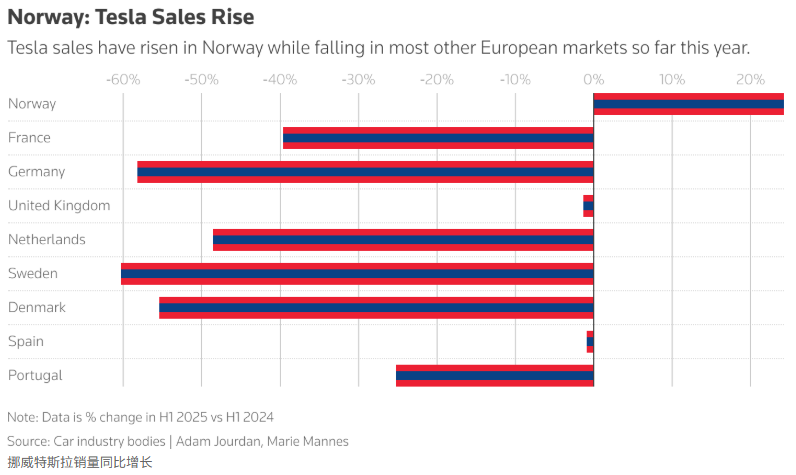
Core Viewpoint - Despite growing consumer backlash against Elon Musk's political stance, Tesla continues to see sales growth in Norway, highlighting the brand's strong loyalty among Norwegian consumers [1][3]. Group 1: Sales Performance - Tesla's sales in Norway increased by 24% year-on-year in the first half of the year, making it the second-largest market for Tesla in Europe, while sales in Germany, Sweden, Denmark, and the Netherlands saw a significant decline [1][3]. - In 2021, Tesla was the best-selling car brand in Norway, maintaining a new car registration share of 11%-20% over the past five years [3]. Group 2: Market Dynamics - Norway has played a crucial role in shaping Tesla's brand, being the first country outside North America to introduce the Model S and establishing the first Supercharger network outside North America [3]. - Electric vehicles now account for 94% of new car sales in Norway, with Tesla's Model S quickly becoming a top seller [3]. Group 3: Consumer Sentiment - Despite 40% of Tesla owners believing Musk's political activities harm the brand, over half of the surveyed owners indicated they would consider purchasing another Tesla [6]. - Promotional strategies, such as zero-interest loans and free supercharging, led to a 213% increase in new Tesla registrations in May [6].


双林股份:公司并未直接或间接参股宇树机器人
Mei Ri Jing Ji Xin Wen· 2025-08-13 01:27
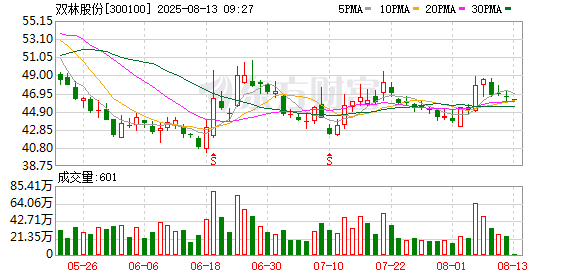
(文章来源:每日经济新闻) 双林股份(300100.SZ)8月13日在投资者互动平台表示,1、在人形机器人业务方面,公司已经成功开 发出了人形机器人行星滚柱丝杠、灵巧手应用的滚珠丝杠、关节模组等产品,并已向数家客户送样,目 前正在验证阶段。截止目前上述产品尚未获取正式定点,请投资者注意投资风险,公司将密切关注并推 进人形机器人相关丝杠项目进展,详细情况请以公司披露的信息为准。 2、公司并未直接或间接参股宇 树机器人,公司具体业务及合作情况请以公司公开披露的信息为准。 3、关于公司融资融券相关信息, 您可登录巨潮资讯网融资融券界面进行查阅。 每经AI快讯,有投资者在投资者互动平台提问:现在大家都非常关注公司的行星滚柱丝杠、灵巧手、 关节模组等产品的订单问题,特别是送样宇树/特斯拉/小米/小鹏等机器人正式定点情况,以及公司有没 有直接或间接参股宇树机器人?另公司有没有购进宇树机器人进行自动化生产来提高效能? ...


飞行汽车逐渐“飞入”现实 多家上市公司抢先布局
Xin Hua Wang· 2025-08-12 05:47
Group 1 - The core viewpoint of the articles is that flying cars, particularly electric vertical takeoff and landing (eVTOL) vehicles, are emerging as a revolutionary mode of urban transportation with significant social and commercial value, attracting substantial investment and competition among companies [1][2]. - Wan Feng Ao Wei has seen a surge in stock prices, achieving a limit-up on February 7, with a closing order of 110,000 shares, marking two consecutive limit-up days and positioning itself as a leader in the flying car concept stocks [1]. - The global market for flying cars is projected to reach $9 trillion by 2050, with China's potential market size estimated at $2.1 trillion, indicating a strong growth trajectory for the industry [2]. Group 2 - The flying car industry is at a critical point of industrialization, with a comprehensive supply chain that includes components such as servos, flight control systems, sensors, navigation solutions, batteries, and power systems, and applications in emergency rescue, logistics, sightseeing, and urban transportation [3]. - Over 20 companies in the A-share market are directly or indirectly involved in the flying car sector, with notable developments including the first test flights of eVTOL prototypes and collaborations with major automotive manufacturers [3][4]. - Eight flying car concept stocks are expected to see net profit growth rates exceeding 20% in the next two years, with significant trading activity observed in these stocks, indicating strong investor interest [6][7].

需求推动叠加政策助力 人形机器人进入爆发期
Xin Hua Wang· 2025-08-12 05:47
Core Insights - The humanoid robot Walker S by UBTECH has made significant advancements in industrial applications, performing tasks such as quality inspection of door locks and safety belts, showcasing its dexterity and potential in manufacturing settings [1][2] - UBTECH has become the first humanoid robot company to go public, listing on the Hong Kong Stock Exchange on December 29, 2023, marking a milestone for the industry [2] - The humanoid robot industry is gaining traction with government support and increasing interest from various companies, indicating a potential shift in manufacturing and service sectors [1][3][4] Industry Developments - The humanoid robot Walker S is being tested in automotive manufacturing, indicating a strategic entry point for humanoid robots into industrial environments [2] - Other companies, such as Xiaomi and XPeng, are also developing humanoid robots, highlighting a competitive landscape in the sector [3] - Startups like Zhujidi Power and Xingdong Jiyuan are emerging, focusing on commercial applications of humanoid robots, with significant funding backing their innovations [4][5] Investment Trends - The humanoid robot sector has attracted substantial investment, with nine companies in China raising over 1.9 billion yuan in 2023 alone [5][6] - Notable funding rounds include over 1 billion yuan for Xingdong Jiyuan and nearly 1 billion yuan for Yushu Technology, indicating strong investor confidence in the market [6] Technological Advancements - The humanoid robot industry is supported by a well-developed supply chain, with key components including sensory, control, and execution systems being produced domestically [7] - The rise of generative AI is enhancing the capabilities of humanoid robots, making them more adaptable and improving their interaction with humans [8] Challenges and Recommendations - Industry experts have identified challenges such as high product costs and the need for improved key technologies, which could hinder the commercialization of humanoid robots [9][10] - Recommendations include establishing national innovation platforms and enhancing collaboration between academia and industry to accelerate technological advancements [10]
汽车周报:机器人大会应用及降本双提速智能化再成能力瓶颈-20250811
Shenwan Hongyuan Securities· 2025-08-11 15:21
Investment Rating - The report maintains a positive investment rating for the automotive industry, highlighting strong performance in the mid-to-high-end market and the potential for growth driven by supply and strong alpha companies [4][22]. Core Insights - The report emphasizes the significant advancements in robotics showcased at the World Robot Conference, indicating a strong potential for cost reduction and application in various sectors, including logistics and industrial automation [4][5]. - The automotive market is expected to see a surge in new model launches and deliveries in August, with a focus on mid-to-high-end market performance and strong alpha companies like NIO, JAC, Li Auto, and Xiaomi [4][22]. - The report notes a 5.24% increase in retail sales of passenger cars week-on-week, with a total of 462,000 units sold, while the penetration rate of new energy vehicles reached 53.03% [4][22]. Industry Updates - Retail sales of passenger cars for the week of July 28 to August 3, 2025, totaled 462,000 units, with traditional energy vehicles accounting for 217,000 units and new energy vehicles for 245,000 units, reflecting a year-on-year growth of 7.46% for new energy vehicles [4]. - The automotive industry recorded a total transaction value of 523.07 billion yuan for the week, marking an 11.53% increase compared to the previous week [4][22]. - The report highlights the rise in raw material prices for both traditional and new energy vehicles, with increases of 0.9% and 0.8% respectively over the past week [4]. Market Situation - The automotive industry index rose by 2.68% to 7283.17 points, outperforming the Shanghai Composite Index, which increased by 1.23% [4][22]. - A total of 259 automotive stocks rose, while 31 fell, with the largest gainers being Zhongma Transmission, Huami New Materials, and Aerospace Science and Technology, which saw increases of 49.5%, 34.0%, and 31.6% respectively [4][22]. Investment Recommendations - The report recommends focusing on strong alpha manufacturers such as Li Auto, NIO, Xiaomi, and Xpeng, as well as companies involved in the integration of technology and high-end products [4]. - It suggests monitoring state-owned enterprise reforms, particularly with SAIC and Dongfeng, and highlights component manufacturers with strong growth potential and overseas expansion capabilities [4].
珠城科技:公司下属参股公司德维嘉下游客户包括奇瑞、长安、上汽、大众奥迪、小鹏等
Mei Ri Jing Ji Xin Wen· 2025-08-11 04:53
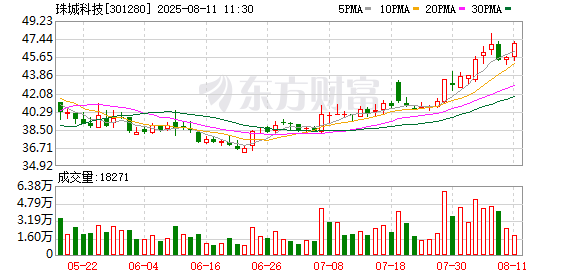
Group 1 - The company is focused on the research and manufacturing of high-frequency and high-speed automotive connectors, with main products including Fakra, HFM, HSD, and H-MTD connectors [2] - These connectors are primarily used in intelligent driving systems, smart cockpit systems, and in-car infotainment systems [2] - Key downstream customers include Chery, Changan, SAIC, Audi, and Xiaopeng [2] Group 2 - The company aims to overcome certification barriers, product technology barriers, and management barriers for domestic new energy vehicle customers [2] - There is a strategy to introduce a new business team to accelerate the integration of channel resources and sales networks [2] - The company is committed to providing more efficient and reliable products and services [2]
多家车企发布7月份销售数据,智能网联汽车ETF(159872)上涨近2%
Xin Lang Cai Jing· 2025-08-11 03:34
Group 1 - The China Securities Car Networking Theme Index (930725) has seen a strong increase of 1.64%, with significant gains in constituent stocks such as Wutong Technology (002331) up 10.06%, Aerospace Science and Technology (000901) up 10.03%, and Dongfeng Technology (600081) up 4.89% [1] - BYD continues to lead the market with July sales of 344,300 vehicles, showing a year-on-year growth of only 0.6%, but cumulative sales for the year are approaching 2.5 million units, indicating sustained scale effects [1] - SAIC Motor's vehicle sales reached 338,000 units in July, marking a year-on-year increase of 34.2%, achieving seven consecutive months of growth [1] - Geely Automobile Group reported July sales of 237,700 vehicles, a year-on-year increase of 58%, with sales exceeding 200,000 units for 11 consecutive months [1] - The new energy vehicle sector showed remarkable performance with monthly sales of 130,100 units, a year-on-year increase of 120%, and a penetration rate of 55% [1] - New entrants in the market, such as Leap Motor and Xpeng, have experienced significant growth driven by popular products [1] Group 2 - Everbright Securities highlights that the commercialization scale of domestic and international Robotaxi may reach a turning point, favoring autonomous driving companies with advantages in technology, ecosystem, and operations [2] - The industry is expected to shift from price-cutting strategies to technology upgrades and cost reductions, with attention on the implementation of anti-involution strategies at the local level [2] - The Smart Connected Vehicle ETF closely tracks the China Securities Car Networking Theme Index, which includes companies related to content and service providers, software providers, hardware providers, and automobile manufacturers to reflect the overall performance of car networking listed companies [2] - As of July 31, 2025, the top ten weighted stocks in the China Securities Car Networking Theme Index include SAIC Motor (600104), CATL (300750), Hongfa Technology (600885), Dahua Technology (002236), Desay SV (002920), iFlytek (002230), Huichuan Technology (300124), Huayu Automotive (600741), OFILM (002456), and BYD (002594), collectively accounting for 49.41% of the index [2]
