燕京啤酒

Search documents
顺义的京蒙协作新答卷
Xin Lang Cai Jing· 2025-12-20 01:35
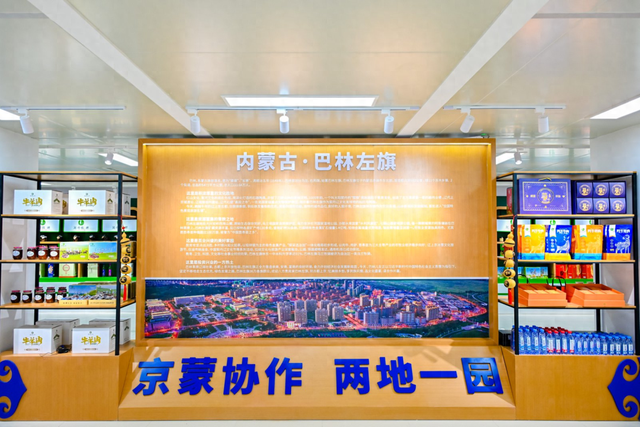
Core Viewpoint - The collaboration between Beijing and Inner Mongolia is enhancing logistics, agricultural product sales, and local employment, showcasing a successful model of mutual benefit and development [1][9]. Group 1: Logistics and Agricultural Products - The "Beijing Shunyi Logistics Transfer Warehouse" in Zhaoquanying Town has become a crucial hub connecting high-quality agricultural products from Inner Mongolia to the Beijing market, reducing delivery costs by 35% [1]. - By 2025, the logistics center will feature 20 categories and 380 products, with over 30 enterprises participating and partnerships with major platforms like JD.com and Taobao [3]. Group 2: Technological Advancements in Agriculture - The introduction of enzyme fermentation feed technology is transforming traditional livestock farming, improving feed conversion rates and reducing costs by approximately 1,200 yuan per cow annually [7]. - This technology is being applied to 12,846 cattle across multiple towns and villages, enhancing immunity and meat quality, thus supporting rural revitalization [7]. Group 3: Employment and Economic Development - In 2025, Shunyi District allocated 149 million yuan for 33 assistance projects, resulting in 7.3 billion yuan in sales of Inner Mongolian agricultural products and creating over 6,000 local jobs [1][9]. - The collaboration has led to significant investments, with 8,760 million yuan brought in by teams working in Ba Lin Zuoqi, creating local employment opportunities [9]. Group 4: Cultural and Educational Exchange - Educational initiatives include sending 43 teachers from Shunyi to Inner Mongolia and receiving 73 local educators for training, fostering strong emotional connections between teachers and students [13]. - Cultural promotion activities have increased tourism and consumption in key scenic areas, with a 15% rise in visitor numbers and nearly one million yuan in increased cultural spending [11]. Group 5: Healthcare Collaboration - The healthcare partnership involves sending 34 medical professionals to Inner Mongolia and receiving 48 local staff for training, improving medical services and filling gaps in various specialties [15]. - The collaboration has led to the standardization of treatment processes and the introduction of new medical technologies in local hospitals [15].

啤酒概念涨1.63%,主力资金净流入这些股
Xin Lang Cai Jing· 2025-12-18 09:03
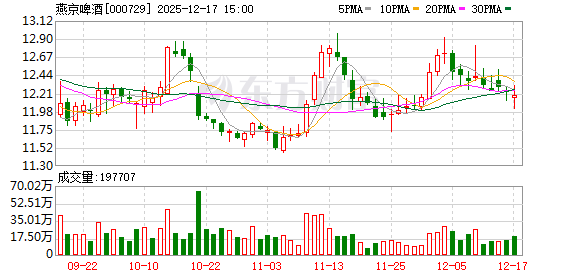
Group 1 - The beer concept index rose by 1.63%, ranking 7th among concept sectors, with 18 stocks increasing in value, including Jia Mei Packaging, Huang Shi Group, and Zhong Yao Holdings reaching the daily limit, while ST Xi Fa, Jin Hui Jiu, and Yan Jing Jiu saw declines [1][4] - The leading gainers in the beer sector included Kai Mei Te Qi, which increased by 7.72%, Tian Hong Co., which rose by 3.68%, and Hui Quan Beer, which went up by 2.18% [1][4] - The sector experienced a net inflow of 1.282 billion yuan, with 12 stocks receiving net inflows, and five stocks exceeding 10 million yuan in net inflow, led by Kai Mei Te Qi with 909 million yuan [2][6] Group 2 - The top three stocks by net inflow ratio were Jia Mei Packaging at 90.12%, Zhong Yao Holdings at 35.75%, and Kai Mei Te Qi at 26.45% [3][6] - The trading volume for Kai Mei Te Qi was 90.9018 million yuan, while Zhong Yao Holdings had a trading volume of 24.63017 million yuan, and Huang Shi Group reached 13.78175 million yuan [3][6] - The beer concept sector's performance was contrasted by declines in stocks such as ST Xi Fa, which fell by 1.14%, Jin Hui Jiu by 0.90%, and Yan Jing Jiu by 0.49% [1][4]






研判2025!中国啤酒花提取物行业产业链、市场规模、进出口、竞争格局和未来趋势分析:精酿啤酒爆发式增长,推动高端啤酒花提取物需求上涨[图]
Chan Ye Xin Xi Wang· 2025-12-18 01:16
Core Insights - The increasing consumer focus on health has led to a growing preference for health foods and natural herbs, with hop extracts gaining popularity as a natural plant extract [1] - The market for hop extracts in China has shown a trend of initial decline followed by recovery, with a projected market size of 360 million yuan by 2024 [1][6] Industry Overview - Hop extracts are derived from hops and contain active compounds such as alpha acids, flavonoids, and polyphenols, which have various health benefits including anti-tumor and antioxidant properties [3] - The extraction methods for hop extracts include solvent extraction, supercritical fluid extraction, and steam distillation, with solvent extraction being the most common [3][4] Market Trends - The hop extract market in China experienced a 23% decline in 2022 due to the pandemic, but is expected to recover as normalcy returns, with a market size of 360 million yuan anticipated by 2024 [1][6] - The planting area for hops in China is projected to reach 2,778 hectares by 2024, an increase of 6.8% year-on-year, with production expected to reach 7,146 tons, up 8.6% [5][6] Import and Export Dynamics - In the first ten months of 2025, China imported 3,234 kg of hop juice and extracts, a 5.1% increase year-on-year, while exports reached 63,602 kg, up 49.5% [8] Competitive Landscape - The hop extract market is characterized by high competition and product homogeneity, with numerous players including companies like Shaanxi Xintianyu Biotechnology Co., Ltd. and Xi'an Ruibo Biotechnology Co., Ltd. [9][10] Future Development Trends - Technological innovation is crucial for the development of the hop extract industry, with advancements in cultivation and processing techniques expected to enhance production efficiency and product quality [10] - The demand for high-end hop extracts is rising, particularly in the craft beer sector, where unique flavor profiles are created through the use of various hop extracts [11] - The application of hop extracts is expanding beyond brewing to health foods and personal care products, driven by their natural antibacterial properties [12]

中金2026年展望 | 食品饮料:筑底接近尾声,聚焦高质量增长
中金点睛· 2025-12-17 23:54
Core Viewpoint - The food and beverage industry is experiencing a new normal with a weak overall consumption environment, emphasizing high quality-price ratios, functionality, health, and emotional consumption trends. The liquor industry continues to face weak demand, while snacks and beverages show better performance. The industry is expected to maintain a weak recovery with strong differentiation, relying on product innovation, fragmented channel layouts, and expanding consumer demographics [2][3][10]. Liquor Industry - The liquor industry is undergoing significant adjustments due to weak demand and new regulations, with expectations for a turning point in the first half of 2026 as the supply-demand balance improves. The impact of policies on demand is expected to weaken, leading to a gradual recovery in consumption [6][7]. - The strategic focus of liquor companies has shifted from inventory pressure to exploring new growth areas, such as targeting younger consumers and embracing new retail channels. This shift is expected to lead to a clearer upward trend in financial reports by 2026 [8][9]. - High-end liquor is anticipated to lead the overall recovery, benefiting from brand loyalty and the resumption of business activities. The mid-range segment may face challenges but is also expected to see some recovery [9]. Snack and Beverage Industry - The overall demand for snacks is stabilizing at a low level, with a focus on quality-price ratios and emotional value. The snack industry is expected to continue expanding, particularly in channels like bulk snacks and membership supermarkets [11][12]. - The beverage industry is benefiting from health trends, with a notable increase in demand for low-sugar and functional drinks. The market for instant retail is also growing, with significant sales increases in snack brands through platforms like Meituan [21][22]. - The competition in the beverage sector is expected to remain intense, but price competition is easing, allowing for improved profit margins for leading companies [22][23]. Dairy and Frozen Food Industry - The dairy industry is experiencing a recovery in operational performance, with expectations for improved profitability as raw milk prices stabilize. The demand for liquid milk is projected to stabilize in 2026, with a potential turning point in the raw milk supply-demand balance [33][34][37]. - The frozen food industry is facing pressure from weak demand but is seeing a stabilization in competition. Companies are focusing on product innovation and new channel development to improve profitability [42][43]. Condiments and Health Products - The condiment industry is expected to see stable demand in 2025, with a focus on product upgrades and innovation from leading companies. The overall competitive landscape is anticipated to become less aggressive as inventory levels normalize [44][48]. - The health product sector is experiencing a shift towards online sales and long-tail brand growth. Leading brands are expected to stabilize their market share through channel expansion and product diversification [55][56].

燕京啤酒党委书记、董事长耿超: 推动可持续发展理念深度融入经营实践
Zheng Quan Shi Bao· 2025-12-17 19:50
Group 1 - The core viewpoint of the articles highlights the recognition of the Chairman of Yanjing Beer, Geng Chao, as an ESG pioneer at the 19th Listed Company Value Forum, emphasizing his strategic vision for the company's sustainable development [2] - Geng Chao has proposed a "second entrepreneurship, revitalizing Yanjing" strategy, defining the "14th Five-Year Plan" period as a strategic restructuring phase for the company, with clear goals outlined in the "Five Battles, Five Victories" strategy [2] - The company has actively embraced and implemented ESG principles, aiming to improve governance, operational efficiency, and innovation quality, while integrating sustainable development into its business practices [2] Group 2 - In 2025, Yanjing Beer achieved an upgrade in its Wind ESG rating from A to AA, ranking 4th in the beverage industry, and its Huazheng ESG rating improved from BBB to AA, indicating a leading position in the domestic beer industry [3] - The company has received over 20 honors, including "Best Practice Case for Sustainable Development of Listed Companies" and "ESG Excellent Case in Governance" among others, showcasing its commitment to sustainability [3] - The 2024 Sustainable Development Report will feature an independent third-party verification statement for the first time, enhancing transparency and communication regarding the company's sustainable development progress [2]

新质生产力三重演进 共促企业价值提升
Zheng Quan Shi Bao· 2025-12-17 19:27
Core Viewpoint - The "New Quality Productivity" is fundamentally reshaping corporate growth logic and creating new avenues for development, emphasizing the need for companies to leverage rapidly growing AI tools to enhance self-awareness and capabilities, thereby transforming new quality productivity into corporate value [1] Group 1: Empowerment through New Quality Productivity - New quality productivity is essential for high-quality development, as highlighted in the 15th Five-Year Plan, and serves as a critical focus for enterprises [2] - Companies can enhance core competitiveness through systematic upgrades, efficiency revolutions, and value reconstruction, shifting from isolated breakthroughs to ecological competition [2] Group 2: Three Evolutionary Paths - The industrial logic of new quality productivity involves three evolutionary paths: traditional industry replacement and upgrade, integration and growth of emerging industries, and forward-looking layout of future industries [3] - The application of artificial intelligence in the industrial sector has already generated tangible value, linking various production stages and facilitating a growth path of "replacement-integration-leap" for domestic enterprises [3][4] Group 3: Industry-Specific Insights - In the pharmaceutical sector, AI significantly reduces the time required for new drug development from years to mere months, as exemplified by companies like Yabton Chemical [5] - Consulting firms are increasingly required to utilize data more effectively to gain client trust in the AI era, leading to the establishment of vertical models for enhanced data application [5] - The traditional Chinese medicine sector is also embracing AI to improve production control, quality inspection, and sales transparency [5] Group 4: Challenges in Implementation - The fast-moving consumer goods (FMCG) sector faces unique challenges in digitalization due to product variety and market constraints, yet companies are committed to strengthening their digital core strategies [6] - Data security remains a significant concern, as AI enhances management efficiency but poses risks during data exchange processes [6] - The industrial X-ray intelligent detection industry encounters dual challenges in hardware and software, necessitating continuous updates in material design and theoretical calculations [6] Group 5: Integration and Innovation - The difficulty of achieving integration in industries is highlighted, with a focus on understanding the industry thoroughly before implementing digital twin technologies [7] - Companies must embrace advanced technologies while being mindful of their financial health, as innovation should aim to create a value loop rather than being an end in itself [7] - The development of new quality productivity fundamentally relies on human involvement, encouraging a culture of creativity among younger employees to foster value creation [7]

燕京啤酒(000729) - 000729燕京啤酒投资者关系管理信息20251217
2025-12-17 10:42
Group 1: Strategic Achievements - The "14th Five-Year Plan" is a crucial strategic restructuring period for Yanjing Beer, focusing on transformation and strong brand development, resulting in continuous growth in key economic indicators for five consecutive years [2][3] - The implementation of a major product strategy has effectively upgraded the product structure, with significant improvements in operational efficiency and development quality [2][3] Group 2: Transformation Initiatives - The company views transformation as essential for survival and development, emphasizing ideological, governance, organizational, operational, production, marketing, research and development, and cultural changes to enhance management effectiveness and team vitality [2][3] - A robust organizational mechanism has been established to activate internal motivation and vitality, marking growth and transformation as key themes during the "14th Five-Year Plan" [2][3] Group 3: Major Product Strategy - Yanjing Beer is committed to advancing the major product strategy centered around Yanjing U8, increasing the proportion of mid-to-high-end products, which has positively impacted product structure optimization and profitability [4] - The Yanjing U8 has received widespread consumer acclaim, maintaining strong growth since its launch, and is recognized as one of the most promising national products in recent years [4] Group 4: ESG Governance and Management - The company integrates ESG principles into its development strategy and operations, establishing a "green brewing-responsible supply chain-value co-creation" system to promote sustainable and high-quality development [5][6] - Achievements include certifications in ESG management, compliance management, innovation management, and anti-bribery management systems, reflecting a significant upgrade in governance capabilities [6]
华润啤酒东北大撤退:告别老工厂,押注新未来,一个时代的背影
Sou Hu Cai Jing· 2025-12-16 06:49
Core Insights - The closure of the China Resources Snow Beer (Changchun) factory marks the end of an era for the company in Northeast China, with the factory officially deregistered after six years of inactivity [1][3] - China Resources Beer has shut down 36 factories since 2017, resulting in nearly 30,000 layoffs as part of its operational optimization strategy [1][5] Group 1: Company Strategy and Operations - The Changchun factory was part of China Resources Beer's strategic presence in Northeast China, reflecting the company's 30-year development in the region [3] - The company has reduced the number of operational breweries in mainland China from 98 to 62 between 2016 and 2023 as part of its "streamlining" plan [5] - The chairman of China Resources Beer, Hou Xiaohai, explained that the closures were driven by competitors achieving higher profits with fewer employees [6] Group 2: Market Dynamics - The Chinese beer market has shifted from a fragmented landscape to a competitive environment dominated by five major players, including China Resources Snow Beer and Tsingtao Brewery [12] - From 2017 to 2022, the market share of high-end beer products in China increased from 9.66% to 12.61%, with revenue share rising from 30.4% to 36.48% [8] - To address its shortcomings in the high-end market, China Resources Beer acquired Heineken China in April 2019 and established a high-end brand matrix [13] Group 3: Future Developments - Despite the closures, China Resources Beer is not completely exiting Northeast China; a new brewery project in Chaoyang with an annual production capacity of 300,000 kiloliters is under construction, expected to start trial production in October 2025 [10] - This new project is anticipated to generate an annual output value of 1 billion yuan and create 1,000 jobs [10] - The city of Shenyang is actively promoting itself as "China's Beer Capital," with its beer production in 2023 reaching 694,000 kiloliters, accounting for 41.6% of the province's total output [15]

食品饮料2026年度策略:大年起点,持旧迎新
2025-12-16 03:26
Summary of the Food and Beverage Industry Conference Call Industry Overview - The food and beverage industry is entering a pivotal year in 2026, characterized as a "starting point for a big year" with expectations for absolute returns across the sector [2][3] - The industry has seen a decline in valuations to reasonable levels, with performance being the core issue [3] Key Insights and Arguments - **Consumer Demand Trends**: Anticipated L-shaped recovery in consumer demand driven by the repair of household balance sheets and economic structural transformation [3] - **Traditional vs. New Consumption**: Both traditional and new consumption are expected to coexist, with traditional consumption showing signs of bottoming out and potential recovery [2][8] - **Investment Recommendations**: - Prioritize investments in frozen food companies, followed by the liquor sector [5] - Companies like Anjuke, Qianqianwei, and Sanquan in the frozen food sector are expected to optimize competition through B-end transformations [5] - High market share beer companies such as Yanjing and Zhujiang are seen as having good growth potential [5] New Consumption Opportunities - The new consumption sector is expected to benefit from structural dividends, with significant growth potential for companies like New Dairy and Yanjing Zhujiang [4][10] - New channels and product categories are anticipated to drive performance growth in beverages and snacks, even in the current economic environment [6][12] Liquor Industry Insights - The liquor sector, characterized by strong commercial barriers and high inventory accumulation, is expected to see improvements in Q1 2026 as inventory levels decrease [7] - The stability of liquor prices or an L-shaped trend is viewed as an attractive investment opportunity, with companies like Wuliangye, Yanghe, and Moutai being highlighted as good choices [7][9] Market Characteristics and Future Outlook - The future consumer market in China is expected to exhibit three main characteristics: large market size, high innovation in channels and categories, and a trend towards international expansion to address supply-demand imbalances [11] - Structural dividends are anticipated to arise from new channels, new product categories, and new markets [11] Specific Investment Targets - In the snack sector, companies with strong channel adjustment and category expansion capabilities, such as Weilong and Yanjin, are recommended [12] - In the beverage sector, functional drinks and sugar-free tea segments are highlighted, with companies like Dongpeng and Nongfu Spring expected to maintain leading growth [12] Strategic Recommendations - The investment strategy for 2026 emphasizes that the food and beverage sector is likely to rise, with a focus on performance recovery, particularly in the liquor sector [13] - The strategy includes holding traditional consumption while embracing new consumption, indicating a balanced approach to investment [14]
啤酒行业更新点评:歪马送酒门店持续扩张,啤酒即时零售进程延续
Changjiang Securities· 2025-12-15 23:30
Investment Rating - The investment rating for the beer industry is "Positive" and is maintained [6]. Core Insights - As of December 12, 2025, Meituan's liquor instant retail platform "Yaimasongjiu" has surpassed 2,000 stores, serving nearly 30 million users, with a transaction volume exceeding 6 billion yuan, entering the top three liquor brands, indicating strong growth momentum [2][4]. - The instant retail platform leverages digitalization to better understand consumer preferences and trends, allowing beer companies that can quickly respond to market demands and create popular products to gain larger market shares in new channels [2][4]. Summary by Sections Industry Overview - The rapid expansion of the instant retail platform has prompted beer companies to increasingly engage in this sector. By early 2025, several beer brands have indicated their plans to enter the instant retail market [4]. - Qingdao Beer, for instance, has been strengthening its layout in instant retail and flash warehouse models, while China Resources Beer has collaborated with "Yaimasongjiu" to launch self-operated products [4]. Market Dynamics - The traditional beer sales channels are primarily focused on dining and distribution, where suppliers have more control. The open nature of instant retail platforms challenges these traditional barriers, presenting opportunities for the beer industry [4]. - Companies that can quickly adapt to market needs and create hit products are expected to thrive in this competitive landscape [4]. Recommended Companies - The report specifically recommends investing in Qingdao Beer, Yanjing Beer, China Resources Beer, and Chongqing Beer due to their strong positioning in the evolving market [2][4].