联发科

Search documents
联发科开辟芯片新赛道
半导体芯闻· 2025-11-26 10:49
Core Insights - Major international companies are investing heavily in AI self-developed chip markets, creating new business opportunities. MediaTek is leveraging its years of R&D strength to enter the ASIC design service market, targeting high-end orders and expanding into the AI sector within cloud data centers [1][2]. Group 1: Market Potential and Growth - MediaTek has revised its total addressable market (TAM) for data center ASICs from $40 billion to $50 billion, driven by increased capital expenditures from cloud service providers [2]. - The company aims to capture a market share of approximately 10% to 15% within the next two years, with expectations of stable growth even if its market share remains constant [2]. - The first ASIC project is expected to contribute several billion dollars in revenue starting in 2027, with a second project anticipated to begin generating revenue in 2028 [2][6]. Group 2: Technological Advancements - MediaTek is actively investing in high-speed interconnects and silicon photonics, focusing on chip-to-chip and chip-to-rack connectivity, while also advancing 2nm process technology and 3.5D packaging [3]. - The company emphasizes its long-term technological foundation and R&D investments as key advantages in the ASIC field, enhancing its capabilities in data center technology and communication with local customers [2][6]. Group 3: Competitive Landscape - The AI ASIC market is projected to grow from $12 billion in 2024 to $30 billion by 2027, with a compound annual growth rate (CAGR) of 34% [5]. - Major tech giants, including Google, Tesla, Amazon, Microsoft, and Meta, are all investing in ASIC chip development, indicating a competitive and rapidly evolving market [5]. - MediaTek's collaboration with Google to develop the next-generation TPU, expected to be produced by 2026, highlights the strategic partnerships forming within the industry [6].

CoWOS,迎来劲敌
半导体行业观察· 2025-11-26 00:39
Core Insights - The article discusses the increasing demand for advanced packaging technologies in the semiconductor industry, particularly due to the tight capacity of TSMC's CoWoS technology, which has led companies to consider Intel's EMIB as an alternative solution [1][2]. Group 1: TSMC's CoWoS Capacity Constraints - TSMC's CoWoS advanced packaging capacity is highly constrained, making it difficult for many ASIC and second-tier AI chip manufacturers to secure sufficient support [1]. - The demand for cloud AI chips has surged, leading to full capacity utilization at TSMC and its associated testing supply chain [2]. - There is a growing need for local production in the U.S., which TSMC currently cannot fully meet due to the requirement of returning the backend processes to Taiwan [2]. Group 2: Intel's EMIB Technology - Intel's EMIB technology is gaining attention due to its cost-effectiveness and good thermal performance, making it suitable for products with lower technical specifications [2][3]. - Companies like Marvell and MediaTek are reportedly exploring EMIB to offer more affordable solutions to their customers [2]. - EMIB is seen as a mature technology that can support urgent Tier 2 projects that require quick design-to-production timelines [3][4]. Group 3: Industry Movements and Collaborations - Major companies like Apple and Qualcomm are actively recruiting talent with knowledge of EMIB technology, indicating a strategic shift towards this packaging method [3]. - The integration of TSMC's front-end wafer fabrication with Intel's EMIB backend is being considered as a viable business model for AI chip supply chains [5]. - There is a trend of increasing collaboration among companies testing EMIB, which may lead to stable order volumes in the long term if successful [4][6].


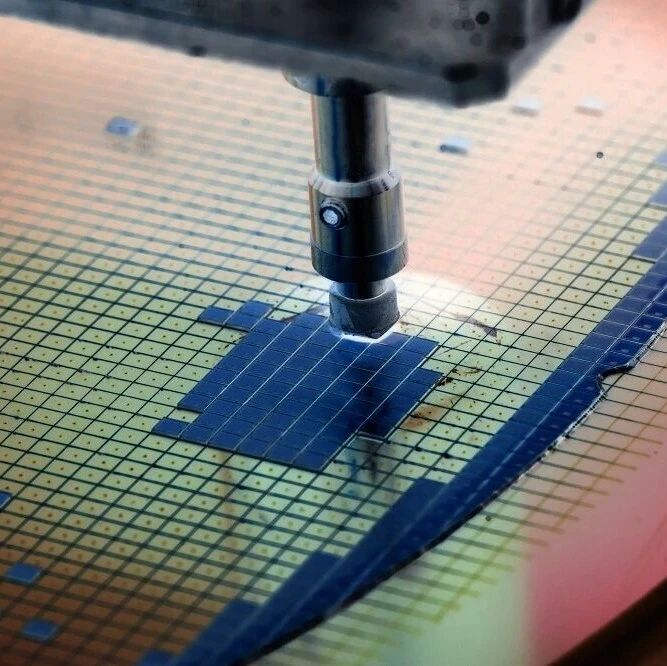
高通的焦虑,藏在收购中
半导体行业观察· 2025-11-26 00:39
Core Insights - The article expresses concern over Qualcomm's seemingly erratic behavior and strategic decisions, particularly regarding its acquisitions and partnerships in the semiconductor industry [1][6]. Group 1: Qualcomm's Strategic Moves - Qualcomm's partnership with NVIDIA and its acquisition of Alphawave Semi raise questions about its long-term strategy, especially as it attempts to expand into the server market [1][13]. - The acquisition of Arduino is viewed as puzzling, as it may not significantly enhance Qualcomm's product offerings in the IoT space [11][12]. Group 2: Comparison with Intel - Qualcomm's current situation is likened to Intel's challenges around 2013-2014, where Intel was heavily reliant on its x86 architecture and faced declining margins [2][3]. - Intel's experience with acquisitions under CEO Brian Krzanich, which totaled approximately $33.7 billion, serves as a cautionary tale for Qualcomm as it navigates its own acquisition strategy [4][5]. Group 3: Financial Performance - Qualcomm's financial performance shows a steady revenue stream, with projected sales of $27.79 billion from mobile business and $3.96 billion from automotive by 2025, indicating growth in non-mobile sectors but still heavily reliant on mobile [9][10]. - The failure of the NXP acquisition is highlighted as a significant setback for Qualcomm, impacting its ability to diversify its revenue streams effectively [10]. Group 4: Market Dynamics - The server market is evolving, with a shift towards hybrid GPUs, and Qualcomm's previous attempts to enter this market have not been successful, raising doubts about its current strategy [1][13]. - The article notes that many companies have attempted to penetrate the server market but have failed, suggesting that Qualcomm's current approach may face similar challenges [15][16]. Group 5: Future Outlook - The acquisition of Alphawave Semi is seen as a potential misstep, as it may not align with Qualcomm's core competencies and could complicate its server business ambitions [17][18]. - The article concludes with skepticism about Qualcomm's ability to leverage its acquisitions effectively without a clear growth strategy, echoing concerns about its future direction [18].

英特尔封装或抢单台积电!
国芯网· 2025-11-25 10:54
Core Insights - The semiconductor industry is increasingly seeking alternative solutions due to the ongoing tight capacity for advanced packaging at TSMC, with Marvell and MediaTek evaluating the integration of Intel's EMIB technology into their ASIC chip designs [2][4]. Group 1: Industry Challenges - TSMC faces dual challenges: the inability to rapidly expand its advanced packaging capacity in the short term and the demand from U.S. clients for localizing the entire supply chain, which TSMC's U.S. backend capacity is not yet fully equipped to meet [4]. Group 2: Technological Developments - Intel's EMIB technology, which utilizes a 2.5D packaging architecture, is gaining attention for its unique advantages in heterogeneous chip integration [4]. - Recent job postings from leading companies like Apple, Qualcomm, and Broadcom explicitly mention EMIB-related positions, indicating a proactive approach to talent acquisition in the advanced packaging sector [4]. - Intel's newly launched 3.5D packaging technology achieves higher chip interconnect density through more precise silicon vias, further enhancing its competitive edge [4]. Group 3: Market Dynamics - The embedded bridge solution used in EMIB offers advantages in cost control and yield improvement compared to traditional intermediary layer designs, making it a key focus as advanced process evolution slows down [4]. - The shift of multiple companies towards the EMIB solution not only reflects current supply chain adaptation strategies but may also reshape the competitive landscape of the semiconductor packaging industry [4].

形势严峻,全球12大半导体厂商,中国仅1家上榜,还是台企
Xin Lang Cai Jing· 2025-11-25 10:22
Core Insights - The semiconductor industry is characterized by high barriers to entry, long cycles, significant capital investment, and advanced technology, leading to a "winner-takes-all" scenario where smaller companies face immense pressure [1][3] - Continuous investment and long-term research and development are essential for semiconductor companies to achieve substantial performance and returns [3] Revenue Rankings - Recent reports have compiled the revenue data of major semiconductor companies for the first three quarters of 2025, listing the top 12 firms, which include IDM and Fabless companies but exclude pure foundry firms like TSMC and SMIC [5] - The top 10 companies by revenue include Nvidia, Samsung, SK Hynix, Intel, Qualcomm, Micron, Broadcom, AMD, MediaTek, and Texas Instruments, with Infineon and NXP following [5] Market Share Insights - Nvidia holds a dominant market share of 27%, while the last-ranked NXP has a share of only 2%, indicating that no semiconductor company from mainland China has reached even 2% market share [6] - Among the top 10 companies, only one Chinese enterprise is listed, with a market share of approximately 3%, and it is a Taiwanese company, highlighting the significant gap in scale between Chinese semiconductor firms and their global counterparts [6][8] Implications for Chinese Semiconductor Firms - The data suggests that Chinese semiconductor companies have considerable room for improvement and are significantly lagging behind established global giants in terms of scale and market presence [8]

康希通信(688653.SH):正在和国内外多个SoC主芯片等进行Wi-Fi 8参考设计的相关工作
Ge Long Hui· 2025-11-25 08:01
Core Viewpoint - 康希通信 is actively involved in the development and discussion of Wi-Fi 8 protocols and products, collaborating with major manufacturers like Qualcomm, MediaTek, and Broadcom [1] Group 1: Company Involvement - 康希通信 is a key partner for major manufacturers in the Wi-Fi 8 development [1] - The company is engaged in reference design work for Wi-Fi 8 with various SoC chip manufacturers both domestically and internationally [1] Group 2: Product Development - 康希通信 is committed to the development of Wi-Fi RF front-end chip products [1] - The company aims to leverage its first-mover advantage in new product research and development [1]
马斯克:特斯拉AI5芯片即将完成流片,已着手研发AI6芯片;中国首个规模化专用光量子计算机制造工厂落地深圳南山丨智能制造日报
创业邦· 2025-11-25 05:08
Group 1 - Tesla is nearing the completion of the AI5 chip and has begun development on the AI6 chip, with a goal to release a new AI chip every 12 months, expecting to surpass the total production of all other AI chips combined [2] - The average capacity utilization rate of major global wafer fabs is projected to be around 86% in Q3 2025, reflecting a year-on-year increase of approximately 6 percentage points, with optimistic recovery trends expected to reach over 90% by 2026 [2] - Media reports indicate that MediaTek and other companies are considering integrating Intel's EMIB advanced packaging into their ASIC chip designs due to ongoing tight supply of TSMC's CoWoS advanced packaging [2] - The first large-scale dedicated optical quantum computer manufacturing plant in China has been established in Shenzhen, marking a significant step from experimental validation to engineering mass production, with plans for annual production capacity of several dozen dedicated optical quantum computers [2]


网红面包鼻祖85度C关闭多地门店|首席资讯日报
首席商业评论· 2025-11-25 05:03
Group 1 - The core point of the article highlights the contrasting trends in the baking industry, with rising prices due to increased raw material costs, while popular brands like 85°C are closing multiple stores due to brand aging and intensified market competition [2] - 85°C has closed its last store in Beijing and is reducing operations in cities like Hangzhou, Shanghai, and Nanjing [2] - The demand for advanced packaging solutions in the semiconductor industry is increasing, leading companies like 美满电子 and 联发科 to consider Intel's EMIB technology for ASIC chip designs [2] Group 2 - 华夏幸福 is undergoing financial due diligence by a debt committee, with the company unable to define its obligations to cooperate [3] - 优必选 has secured a 2.64 billion yuan order for humanoid robots, expected to be delivered in December [4][6] - The holiday season in the U.S. is anticipated to maintain stable consumer spending despite higher prices due to new tariffs, with retailers like Walmart and Target showing positive early signals for sales [5] Group 3 - 高盛 has set a target price of 53.5 HKD for 小米集团-W, anticipating more AI-related achievements that will enhance its ecosystem [6] - 美团's subsidiary, 昆明团骑信息科技, has increased its registered capital by 75% to 70 million USD, indicating growth in its software and technology services [7] - 蚂蚁集团 and 紫金矿业 have invested in the fusion technology research company 星能玄光, which focuses on innovative energy solutions [8] Group 4 - 茅台 has denied rumors about plans to establish 850 direct stores nationwide, clarifying that such information is false and damaging to its brand image [9] - 阿里巴巴's AI assistant app, 千问, has achieved over 10 million downloads in its first week of public testing, making it the fastest-growing AI application [10] - The movie "Zootopia 2" has set a record for pre-sale box office for imported animated films in China, surpassing 1.82 billion yuan [11] - Apple is streamlining some positions in its sales department to enhance customer engagement, while still continuing to hire [12]



芯片战争迎来拐点?传Meta(META.US)斥资数十亿投奔谷歌TPU,英伟达(NVDA.US)王座遭最强挑战
Zhi Tong Cai Jing· 2025-11-25 03:12
Core Insights - Google is significantly upgrading its competition with Nvidia in the AI chip market, with Meta emerging as a potential multi-billion dollar customer [1][2] - Google is now marketing its custom Tensor Processing Units (TPUs) for deployment in customer data centers, marking a strategic shift from its previous model of limiting TPU use to its own cloud data centers [1][2] - Meta is reportedly in discussions to invest billions to integrate Google's TPUs into its data centers starting in 2027, while also planning to rent TPUs from Google Cloud as early as next year [1][2] Industry Impact - The explosive growth in AI computing demand and Nvidia's continued dominance in the supply chain indicate that Google's push for TPUs signifies a more competitive phase in the AI chip war [2] - Google Cloud executives have suggested that expanding TPU adoption could help the company capture 10% of Nvidia's annual revenue, representing a multi-billion dollar opportunity [2] - If the deal with Meta is finalized, it would validate Google's hardware ambitions and establish TPUs as a viable alternative to Nvidia's chips [3] Market Reactions - Following the news, Google's stock rose over 3% in after-hours trading, while Nvidia's stock fell by more than 2% [3] - Analysts suggest that Meta's potential use of Google's TPUs indicates that third-party large language model providers may consider Google as a secondary supplier for inference acceleration chips [3] - Related Asian stocks saw significant gains, with IsuPetasys in South Korea rising 18% and MediaTek in Taiwan increasing nearly 5% [3] Technological Advancements - Google's TPU technology, particularly the seventh-generation "Ironwood," is designed to handle a variety of computing tasks from training large language models to real-time chatbot operations [4] - The Ironwood chip can connect up to 9,216 TPUs in a single rack, effectively eliminating data bottlenecks for complex models and enabling customers to run and scale the largest AI models [4]


联发科开辟芯片新赛道
半导体行业观察· 2025-11-24 01:34
Core Insights - Major international companies are investing heavily in AI self-developed chips, creating new business opportunities. MediaTek is leveraging its years of R&D strength to enter the ASIC design service market, targeting high-end orders and expanding into the AI sector within cloud data centers [1][2]. Group 1: Market Potential and Growth - MediaTek has revised its total addressable market (TAM) for data center ASICs from $40 billion to $50 billion, driven by increased capital expenditures from cloud service providers [2][3]. - The company aims to capture a market share of approximately 10% to 15% within the next two years, with expectations of steady growth even if its market share remains stable [2][3]. Group 2: Project Developments - MediaTek's first ASIC project is expected to contribute several billion dollars in revenue starting in 2027, with a second project anticipated to begin generating revenue in 2028 [2][3]. - The company is actively engaging with a second large-scale data center operator to discuss new ASIC projects, indicating strong confidence in future business growth [1][2]. Group 3: Technological Advancements - MediaTek is investing in key areas such as high-speed interconnects and silicon photonics, alongside advancing 2nm process technology and 3.5D packaging to build a comprehensive high-performance computing platform [3]. - The company emphasizes its long-term technological foundation and R&D investments as key advantages in the ASIC field, enhancing its capabilities in design and supply chain management [2][3]. Group 4: Competitive Landscape - The AI ASIC market is projected to grow significantly, with estimates suggesting it will increase from $12 billion in 2024 to $30 billion by 2027, reflecting a compound annual growth rate of 34% [5]. - Major tech companies, including Google, Tesla, and Amazon, are heavily investing in ASIC chip development, indicating a competitive and rapidly evolving market landscape [5][6].