西门子

Search documents
全球SAF产业迎来技术革命
Zhong Guo Hua Gong Bao· 2025-12-03 03:33
Core Insights - The sustainable aviation fuel (SAF) industry is on the brink of explosive growth driven by the deep integration of artificial intelligence, new materials, and digital technologies [1] - SAF is transitioning from concept to reality, moving from demonstration to large-scale commercialization, providing robust technical support for the green transformation of the global aviation industry [1] Group 1: Technological Innovations - AI-driven molecular design and revolutionary power-to-liquid technologies are reshaping the production pathways and efficiency boundaries of SAF [1] - A generative AI model developed by Stanford University can autonomously design new molecular structures with specific combustion characteristics, generating over 50,000 candidate molecules and identifying 128 promising SAF components [2] - ExxonMobil and MIT's digital twin platform simulates the entire production process, optimizing reaction conditions and improving product yield by 18% [2] - Shell's automated robotic lab in Amsterdam can conduct experiments that would traditionally take months in just one week, integrating machine learning for real-time data analysis [2] Group 2: Efficiency and Cost Reduction - The latest report from the International Energy Agency indicates that AI-assisted SAF projects have reduced R&D cycles by 80% and development costs by 60% [3] - Innovations in catalyst and reactor technologies are driving SAF production towards higher efficiency and lower costs, with a new metal-organic framework catalyst achieving a carbon monoxide conversion rate of 92% [4] - A third-generation microchannel reactor developed by BASF and Munich University has improved heat transfer efficiency by tenfold and production efficiency by fivefold [4] - Cambridge University's low-temperature plasma catalytic system operates at 200°C, achieving conversion efficiencies that traditionally require 350°C, reducing energy consumption by 30% [4] Group 3: Smart Production Facilities - SAF production facilities are evolving towards high levels of intelligence, with TotalEnergies' smart factory in Le Havre utilizing over 20,000 sensors to predict equipment anomalies and reduce unplanned downtime by 85% [5] - Siemens' AI predictive maintenance system for Nordic Renewable Fuels can forecast mechanical failures seven days in advance, lowering maintenance costs by 32% and increasing equipment utilization to 99.2% [6] - BP's Rotterdam SAF plant employs advanced smart grid technology to enhance the direct use of renewable energy to 65% and improve overall energy efficiency by 15% [6] - Modular SAF units developed by Rhein Group can switch production processes within 72 hours based on raw material supply and market demand, with operational costs 25% to 30% lower than traditional plants [6]
应流股份20251202
2025-12-03 02:12
Summary of Yingliu Co., Ltd. Conference Call Industry and Company Overview - **Company**: Yingliu Co., Ltd. (应流股份) - **Industry**: High-temperature alloys, precision casting, gas turbines, nuclear energy materials, and low-altitude economy Key Points and Arguments Business Segmentation and Strategy - Yingliu has restructured its revenue reporting into three main segments: high-temperature alloys and precision cast steel products, new materials and equipment, and nuclear power and other large castings, enhancing clarity on its core competencies and future direction [2][5][6] - The company has extended its value chain from casting to encompass upstream and downstream processes, focusing on high-value, high-difficulty areas, thereby increasing its technical barriers and profitability [2][7] Growth Drivers - The two-machine business (aviation engines and gas turbines) is a significant growth driver, projected to account for 37.8% of revenue in 2024 with a gross margin exceeding 40%, outperforming other segments [2][8] - The surge in electricity consumption by data centers is expected to boost gas turbine demand, with North America's installed capacity forecasted to grow from nearly zero in 2024 to 10.6 GW by 2028, presenting growth potential for Yingliu [2][9][10] Market Dynamics - The global gas turbine market is dominated by Siemens, GE, and Mitsubishi, which together hold over 80% market share. Yingliu has established partnerships with Siemens and Baker Hughes, indicating significant potential for expansion in overseas markets [2][11] - The pandemic has negatively impacted aviation engine demand, leading to a tight supply of high-temperature alloy castings and capacity constraints in the two-machine industry due to labor market and supply chain challenges [2][14] Low-altitude Economy - Yingliu is developing a full industry chain in the low-altitude economy, including turboshaft engines and helicopter technology, although this segment is currently operating at a loss. Revenue is expected to gradually increase over the next few years [3][18][19] Nuclear Power Business - The nuclear power equipment business has stabilized since the resumption of project approvals in 2019, with a stable order outlook for the next two to three years. The company is involved in various nuclear materials, which are widely used in advanced nuclear energy applications [2][16][22] Future Outlook - Yingliu aims to achieve a revenue target of 10 billion RMB within five years, with specific contributions from traditional business, nuclear power, and the two-machine business. The company anticipates a net profit margin increase to 18%, corresponding to a profit target of 1.8 billion RMB [2][23][24] Additional Important Insights - The company has a strong cost advantage in core components, with a self-manufacturing rate of 40% to 70% for its turboshaft engines, enhancing its competitive position in the low-altitude economy [18][19] - The domestic heavy gas turbine manufacturing sector is in a breakthrough phase, with significant potential benefits for local component manufacturers if breakthroughs are achieved [12][13] - The two-machine business is expected to see substantial growth driven by military and civil aviation opportunities, with a projected revenue of 5 billion RMB by 2030 [20][21]

英伟达20亿美元入股EDA龙头,或重塑从芯片到系统整个设计流程
Xuan Gu Bao· 2025-12-02 00:33
Group 1 - Nvidia has announced a strategic partnership with Synopsys, investing $2 billion to integrate AI computing technology into industrial design and engineering [1] - EDA tools are essential in the integrated circuit industry, serving as a strategic foundation for the entire supply chain [1] - The EDA industry is experiencing a shift towards AI, cloud integration, and system integration, driven by rising design costs in advanced processes [1] Group 2 - The EDA sector is expected to see a new wave of mergers and acquisitions in 2024, with major players like Synopsys, Siemens EDA, and Cadence enhancing their ecosystems through acquisitions [1] - Despite being dominated by three international giants, local EDA suppliers are gaining market share in China and excelling in specific niches [1] - Domestic EDA companies are rapidly improving their competitiveness through a combination of self-research and acquisitions, aiming for full localization of EDA tools [1] Group 3 - Notable domestic EDA leaders include Huada Jiutian, Gaon Electronics, Guangli Micro, Canxin Co., and Anlu Technology [1]


IDC:2024年中国MES解决方案总市场规模达159.1亿元 年增长率为11.4%
智通财经网· 2025-12-01 05:57
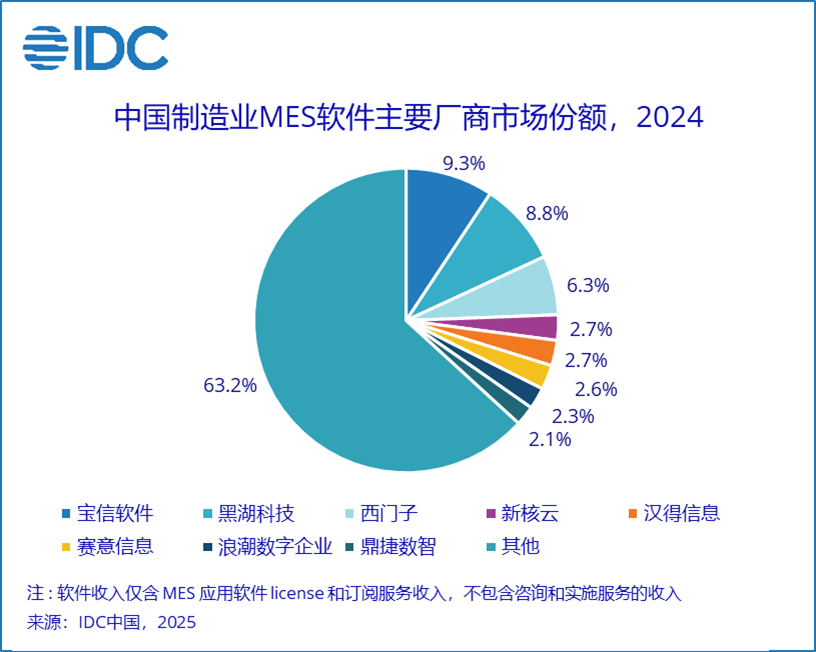
Core Insights - The report by IDC indicates that the total market size for MES solutions in China's manufacturing industry will reach 15.91 billion RMB in 2024, with a year-on-year growth rate of 11.4% [1][5] - The MES software market alone is projected to reach 6.29 billion RMB, growing at a rate of 16.3%, although this represents a slight decline in growth speed [1][5] - The competitive landscape in the MES software market is dominated by Baoxin Software, Heihuke Technology, and Siemens, with Siemens experiencing a drop in market share from 7.5% to 6.3% [1][5] Market Segmentation - The public cloud SaaS MES software market in China is expected to reach 1.005 billion RMB in 2024, accounting for 16.0% of the overall MES software market, with a year-on-year growth of 15.2% [3] - The core competitive advantage of SaaS is shifting from "low cost and rapid replication" to "multi-factory and cross-organization collaborative management," enhancing its connection to the supply chain [3] - The report highlights significant growth in specific sectors such as high-tech electronics, shipbuilding, automotive parts, and equipment manufacturing, driven by digital transformation and large-scale industrial equipment updates [5][13] Industry Trends - The report notes that AI is increasingly integrated into MES and various industrial software, moving from concept validation to large-scale implementation, which is expected to drive a new wave of growth and structural change in the MES market [13] - The competition in the MES market is intense, with many local manufacturers breaking the long-standing market structure through advancements in industry depth and product breadth [13] - The report emphasizes the importance of cash flow management, deepening AI technology integration, and focusing on industry-specific solutions as key strategies for technology service providers [13]

CES2026超前瞻:AI是核心议题,中国企业或将再度霸展
3 6 Ke· 2025-12-01 04:09
Core Insights - CES 2026 is set to showcase significant advancements in AI technology, with major companies like Siemens, Caterpillar, AMD, and Lenovo focusing on AI in their presentations [5][8][19] - The event will highlight a variety of AI hardware products, including AI glasses, AI PCs, AI smartphones, and humanoid robots, indicating a strong trend towards AI integration in consumer electronics [18][19] - Chinese brands are expected to dominate CES, showcasing their technological innovations across various categories, reflecting their growing influence in the global market [40][41] AI as the Central Theme - AI will be the overarching theme of CES 2026, with confirmed keynote speeches from industry leaders emphasizing its importance [5][19] - Companies like Siemens will demonstrate how AI and digital twin technology can transform manufacturing and infrastructure [8] - Lenovo plans to unveil innovations related to AI-driven experiences, including applications in sports and personalized user interactions [11] PC and Gaming Innovations - Intel, AMD, and NVIDIA are anticipated to launch new products, including Intel's Panther Lake mobile processors and AMD's R9 9950X3D processor with enhanced cache capabilities [19][21] - The introduction of new gaming processors and graphics cards is expected to attract significant attention from the gaming community [21][22] Display Technology Competition - Major TV manufacturers, including TCL and Hisense, are expected to showcase advancements in RGB display technology, competing with international brands like LG and Samsung [25][26] - The CES 2026 will feature a variety of display technologies, including Micro RGB LCD and Mini LED, highlighting the competitive landscape in the display sector [25][26] Smart Cleaning Devices - Chinese smart cleaning brands are set to unveil new products, including robotic vacuums and lawn mowers, reinforcing their leadership in the global smart cleaning market [27][30] - The focus will be on comprehensive cleaning solutions that leverage AI and advanced navigation technologies [30] Accessory and Audio Innovations - Accessory brands like Baseus and Ugreen are expected to expand their product lines beyond traditional charging devices, venturing into audio and smart home solutions [31][34] - The introduction of high-end audio products and smart home security devices will be a key focus for these brands at CES 2026 [36] AI Glasses and New Hardware - AI glasses are anticipated to be a major highlight, with various brands competing in this emerging category [38] - The presence of established players and new entrants in the AI hardware space will create a dynamic showcase of innovative products [39] Chinese Brands' Dominance - Chinese companies are projected to play a pivotal role at CES, with a significant share of exhibitors and a focus on technological innovation rather than just cost competitiveness [40][41] - The event serves as a platform for Chinese brands to demonstrate their rapid product development and engineering capabilities across multiple tech sectors [40][41]



研判2025!中国电缆接线盒行业产业链全景、发展现状、需求市场、企业布局及未来发展趋势分析:电网升级叠加新兴领域驱动,电缆接线盒行业前景广阔[图]
Chan Ye Xin Xi Wang· 2025-12-01 01:09
Core Insights - The cable and wire industry is a foundational sector of the national economy, supporting efficient operations in power transmission and communication [1] - The cable junction box industry is experiencing robust growth, with market size expected to reach 257 billion yuan in 2024 and surpass 280 billion yuan in 2025, driven primarily by photovoltaic junction boxes [1][7] Industry Overview - The cable junction box is an electrical accessory used for connecting, branching, and terminating cables, designed to ensure safe and reliable electrical connections while providing insulation and protection [2][5] - The industry is characterized by diverse classifications based on installation environment, material, and functionality, catering to various electrical connection needs [3][4] Current Development Status - The cable and wire industry in China is projected to grow at a compound annual growth rate (CAGR) of 6.28% from 2018 to 2024, with production increasing from 45.32 million kilometers to 65.31 million kilometers [6] - The market size of the cable and wire industry is expected to expand from 1.08 trillion yuan in 2020 to 1.35 trillion yuan in 2024, with a forecast to exceed 1.41 trillion yuan by 2025 [6][7] Industry Chain Analysis - The upstream of the cable junction box industry focuses on materials like copper, aluminum, and engineering plastics, with fluctuations in copper prices significantly impacting costs [8] - The midstream consists of manufacturing enterprises primarily located in regions like the Yangtze River Delta and the Pearl River Delta, with a low industry concentration and ongoing improvements in production efficiency [8] Application Market - The downstream application market for cable junction boxes is diverse, with the power system being the dominant demand source, followed by stable contributions from construction and industrial manufacturing [9][10] - The rapid growth of distributed photovoltaic installations is driving demand for specialized junction boxes, particularly those with high corrosion resistance and intelligent monitoring capabilities [10][11] Competitive Landscape - The competitive landscape of the cable junction box industry is characterized by a mix of leading domestic companies, foreign firms focusing on high-end markets, and numerous specialized small and medium-sized enterprises [12] - Major domestic players like Zhongtian Technology, Chint Electric, and Hengtong Optic-Electric are enhancing their market positions through technological investments and industry integration [12] Future Development Trends - The industry is expected to evolve towards smart, high-end, and specialized products, with a focus on integrating intelligent features and innovative materials [13] - Market concentration is anticipated to increase, with leading companies gaining more market share while smaller firms focus on niche segments [14] - The expansion of high-value application scenarios and globalization efforts will drive industry growth, with a shift towards comprehensive solution offerings [15]

电力设备与新能源行业周观察:燃气轮机出海持续突破,全球储能迎高景气度
HUAXI Securities· 2025-11-30 14:26
Investment Rating - The industry rating is "Recommended" [5] Core Insights - The humanoid robot sector is expected to see accelerated commercialization due to advancements in AI technology and strong domestic demand for core components [1][13] - The electric vehicle battery industry is experiencing a rebound in profitability driven by a reduction in oversupply and increasing global demand for energy storage [2][16] - North America's energy storage market is witnessing rapid growth, with companies like Fluence reporting record orders and revenue, indicating a high level of market activity [3][27] - The gas turbine market is thriving due to overseas demand, with leading domestic companies poised to benefit from this trend [8] Summary by Sections Humanoid Robots - The humanoid robot sector is gaining traction with a recent order of 143 million yuan for a data collection project, indicating strong market potential [1][13] - Key components such as dexterous hands and lightweight materials are critical for commercialization, with domestic manufacturers expected to benefit significantly [1][15] Electric Vehicles - The Ministry of Industry and Information Technology is promoting a "de-involution" strategy in the battery industry to combat irrational competition and improve profitability [2][16] - Global energy storage demand is projected to reach 500 GWh by 2025, with lithium iron phosphate battery shipments expected to hit 1,300 GWh [2][22] Renewable Energy - Fluence's FY2025 results show a strong order backlog, with North American energy storage demand driven by renewable energy integration and data center needs [3][28] - The European offshore wind market is also expanding, with significant projects underway, indicating a robust growth outlook for companies involved in this sector [3][29] Power Equipment & AIDC - The gas turbine market is experiencing high demand, with leading companies like Harbin Electric and Shanghai Electric expected to benefit from increased overseas orders [8][30] - The transition to a DAP export model has improved profit margins for companies involved in the construction and transportation of offshore wind projects [7][30]
富强与共同富裕的目标与路径差异
Sou Hu Cai Jing· 2025-11-30 10:53
Core Insights - The article emphasizes that achieving common prosperity requires a scientific and systematic social security system, rather than relying solely on individual and institutional charitable donations or simple wealth redistribution [2][8]. Group 1: Development Models and Economic Structures - The article categorizes countries' development models into three types based on their Gini coefficients: Neo-liberalism, Social Democracy, and State Capitalism, highlighting that high Gini coefficient countries like the US achieve wealth but not common prosperity [3][8]. - The US is presented as a unique case of achieving wealth and strength through a mature market economy, but it struggles with income inequality and social mobility issues [4][8]. - In contrast, Western European countries combine efficient market economies with strong government-led redistribution mechanisms, effectively reducing wealth disparity and promoting social mobility [9][10]. Group 2: Economic Indicators and Comparisons - The US is projected to have a nominal GDP of $29.18 trillion in 2024, accounting for 26.22% of the global economy, with a per capita GDP of $85,810 [4]. - In 2023, US social security and education spending accounted for 36.1% of GDP, while charitable donations reached $557.16 billion, approximately 2.04% of GDP [7][8]. - Western European countries exhibit lower Gini coefficients, with the EU's Gini coefficient at 0.276 compared to the US's 0.488, indicating a more equitable wealth distribution [9][10]. Group 3: Case Studies of Common Prosperity - Japan transitioned from a focus on national strength to common prosperity post-World War II, achieving a high percentage of middle-class citizens [13][14]. - Germany's post-war reconstruction led to the establishment of a social market economy that balances efficiency and equity, contributing to its status as a leading economy in common prosperity [15][16]. - The article suggests that the experiences of the US, Japan, and Germany provide valuable insights for other populous nations like China, India, and Brazil in their pursuit of development goals [17].

德媒:中企正攻击德国工业的最后堡垒
Xin Lang Cai Jing· 2025-11-30 09:25
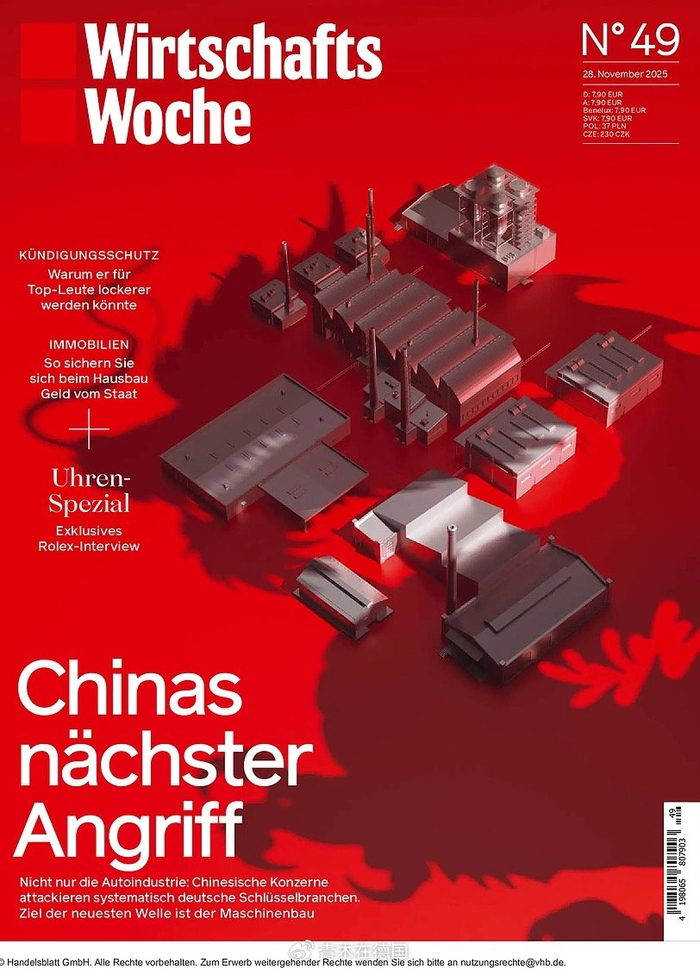
Core Insights - The article discusses the strategic challenge posed by Chinese companies to Germany's mechanical engineering sector, which is considered the last major stronghold of German industry [1][4]. Group 1: Competitive Landscape - A study by Infront reveals that over 60% of European mechanical manufacturers feel they have lost or will lose their technological, quality, or brand advantages by the end of this decade [4]. - 75% of European mechanical manufacturers view competition from Chinese rivals as the "most pressing strategic challenge" globally [4]. - Chinese competitors are increasingly replacing German products in various sectors, such as Sany's forklifts overtaking Jungheinrich's models and Mindray's medical equipment competing with Siemens Healthineers [7]. Group 2: Industry Dynamics - The competitive edge of German mechanical engineering is declining due to late product launches, high prices, and insufficient user focus, leading to a loss of value associated with high-end European products [5][10]. - The COVID-19 pandemic has accelerated the shift, allowing Chinese manufacturers to capture market share as German companies cut production [10]. - Chinese executives perceive the current state of European mechanical engineering as lacking practicality, speed, and scalable innovation [10]. Group 3: Strategic Recommendations - German companies need to adopt more flexible business models and continuously adjust their product range and quality to compete effectively [12]. - Decisions aimed at the Chinese market may increasingly need to be made within China, as exemplified by Volkswagen's ability to independently develop and produce vehicles for the Chinese market [12]. - The value of the "Made in Germany" label is diminishing, while "Made in China" is becoming synonymous with innovation, cost-effectiveness, and new designs [12].
澳洲稀土巨头突然倒戈!拒美2.4亿投向中国,美媒:稀土替代梦碎
Sou Hu Cai Jing· 2025-11-29 10:40
Core Viewpoint - The acquisition of the Ngualla rare earth mine in Tanzania by China's Shenghe Resources marks a significant shift in the global rare earth landscape, undermining Western aspirations for self-sufficiency in this strategic resource [1][3]. Group 1: Acquisition Details - Shenghe Resources completed the acquisition of Australian Peak Rare Earths for AUD 195 million, securing control over a world-class rare earth mine [1]. - The Peak board rejected a higher offer of AUD 240 million from another investment firm, indicating a strategic preference for Shenghe Resources [3]. Group 2: Importance of Ngualla Mine - The Ngualla mine contains 887,000 tons of high-quality neodymium-praseodymium ore, representing 15% of the world's proven high-quality rare earth resources [5]. - Neodymium-praseodymium is essential for manufacturing permanent magnets, which are critical components in electric vehicles and wind turbines [5]. Group 3: Western Challenges - The former CEO of Peak stated that while they possess resources, they struggle to convert them into products, highlighting a broader issue within the Western rare earth sector [6]. - The lack of a complete industrial chain is a fundamental reason why the West has failed to maintain control over this strategic resource [5]. Group 4: China's Dominance in Rare Earths - China dominates the global rare earth industry, accounting for 58.6% of mining, 85.4% of refining, and 91.6% of permanent magnet production [8]. - This dominance means that 9 out of every 10 permanent magnet motors in electric vehicles rely on Chinese rare earth materials [8]. Group 5: Strategic Insights - China's advantage in the rare earth permanent magnet sector is estimated to be 8-10 years ahead of the West, according to a report by the State Council Development Research Center [10]. - The technical barriers and high costs associated with establishing a complete rare earth supply chain pose significant challenges for Western investors [12]. Group 6: Future Outlook - Short-term reliance on China for rare earths is expected to continue, with predictions indicating that by 2030, 91% of the West's heavy rare earth demand will depend on China [19]. - Establishing a non-Chinese rare earth supply chain could require an investment of USD 120 billion, with product costs potentially increasing by 3-5 times [19]. - Long-term cooperation is suggested as a viable solution, with the potential for rare earths to serve as a bridge for collaboration rather than a tool for competition [21].