胖东来

Search documents
胖东来模式落子港城 永辉秦皇岛茂业店焕新开业
Zheng Quan Shi Bao Wang· 2025-12-26 07:55
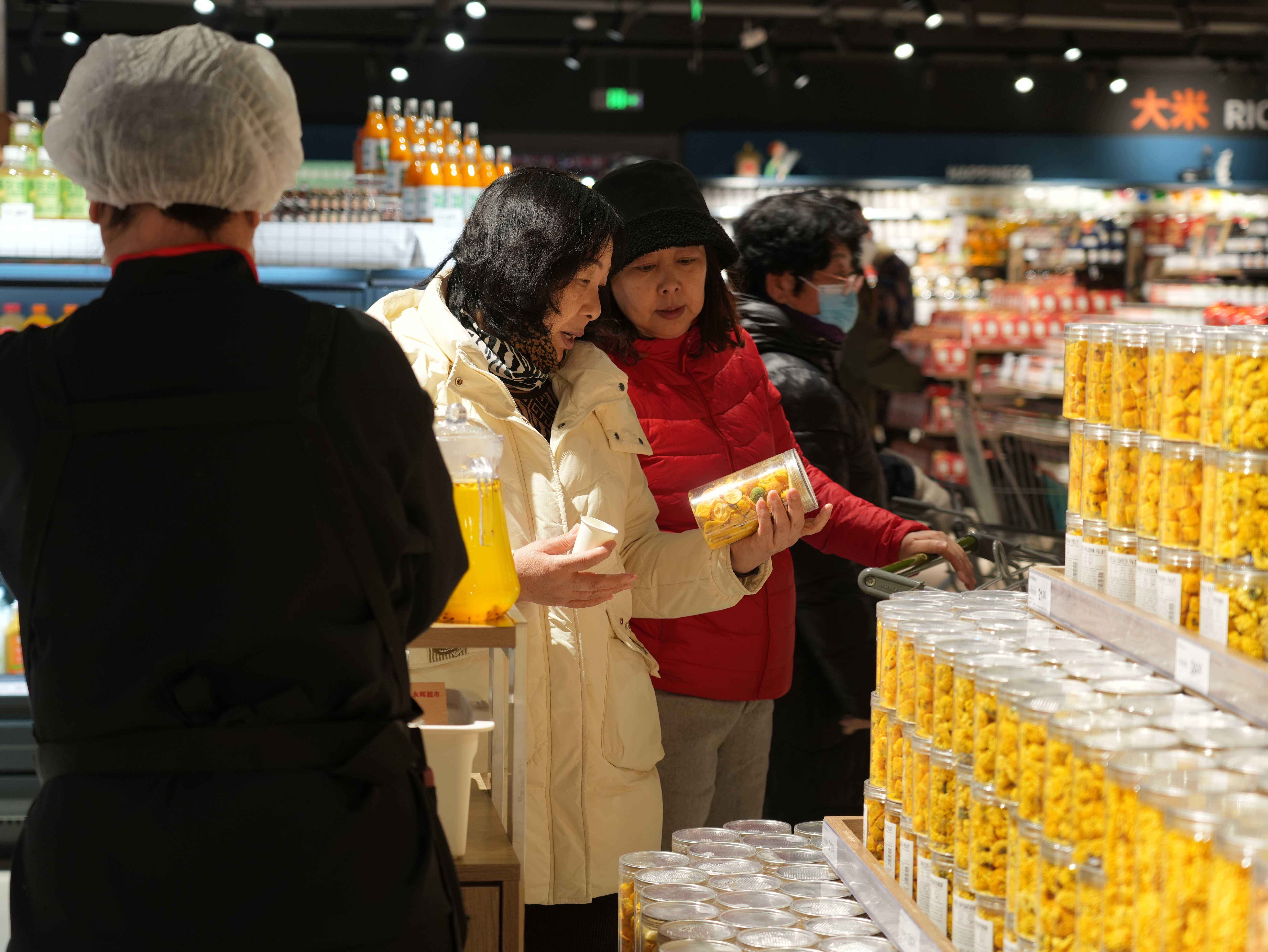
Core Insights - Yonghui Supermarket has opened its second "Learning from Pang Donglai" self-reformed store, the Maoye Tiandi store, in Qinhuangdao on December 26, following the successful opening of the Haigang Wanda Plaza store on August 15, indicating a nationwide quality transformation trend [1] - The Ministry of Commerce and other departments have issued a notice to boost consumer confidence, providing a positive outlook for the year-end consumption market [1] Store Transformation - The Maoye Tiandi store underwent a significant overhaul, optimizing its product structure by removing over 7,000 SKUs and increasing the proportion of new products by over 60%, achieving 80% alignment with Pang Donglai's product structure [1] - The share of imported products has risen to nearly 15%, while the proportion of fresh food items, including baked goods and ready-to-eat meals, has increased from 7% to 25% [1] Product Offerings - The store features a dedicated area for Pang Donglai-branded products, including popular items like DL fruit and vegetable utensils and DL natural mineral water, all maintaining the same source, quality, and pricing as those in Pang Donglai's stores [5] - Yonghui's own brand, "Quality Yonghui," has introduced high-frequency household items that have passed 439 safety checks, while "Yonghui Custom" includes products developed in collaboration with leading brands like Yili [5] Customer Experience and Local Adaptation - Enhanced customer service features include wet hand dispensers at the bagging area and free cutting services for whole fruits like watermelons and durians [5] - The store has localized its offerings to cater to the winter dietary preferences of Qinhuangdao residents, incorporating popular domestic flavors and international cuisines, particularly seafood [5] Employee Engagement - Post-transformation, the store has significantly increased its workforce and average salaries, offering 10 days of paid annual leave after one year of employment [5] - Yonghui's "Craftsman Program" aims to incentivize employee skill development [5] Market Performance - The first reformed store in Haigang Wanda Plaza has seen rising customer repurchase rates and satisfaction since its opening, validating the acceptance of the "Pang Yonghui" model in Qinhuangdao [6] - Other locations in Hebei, such as Zhangjiakou and Baoding, are also undergoing similar transformations, with new openings scheduled [7]


先跟讲道理的人讲道理
3 6 Ke· 2025-12-26 02:45
Core Viewpoint - Companies are increasingly misjudging their communication strategies by focusing on engaging with the emotional "C" group rather than the rational "B" group, leading to potential reputational risks and crises [2][5][9] Group 1: Miscommunication and Crisis Management - Many companies, including Xiaomi and Wahaha, have made the mistake of trying to reason with the emotional "C" group instead of the rational "B" group during crises [2][5] - The shift in communication strategy has led to a significant increase in resources allocated to "C" channels, such as short videos, while reducing engagement with "B" [4][5] - The failure to maintain a relationship with the "B" group can result in long-term reputational damage, as seen in the cases of Li Auto and Xiaomi [11][12] Group 2: Understanding B and C Groups - The "B" group consists of knowledgeable individuals who can influence the "C" group, which is characterized by emotional and impulsive reactions [4][6] - The current trend shows that the "C" group is more vocal and engaged, often leading to a chaotic communication environment where the "B" group struggles to assert rational discourse [9][10] - Companies must recognize that while "C" can create immediate noise, it is the "B" group that ultimately shapes long-term perceptions and consensus [9][10] Group 3: Strategies for Maintaining B Relationships - Companies should regularly engage with media, academics, and other stakeholders to gather feedback on their products and services, ensuring they do not lose touch with the "B" group [12][14] - Transparency and open communication are crucial in crisis situations, as the "B" group values honesty and accountability over defensive tactics [15][19] - Successful crisis management involves addressing issues directly and clearly, rather than resorting to denial or obfuscation [19][20]

胖东来提高了服务业的退赔标准(念念有余)
Zheng Quan Shi Bao Wang· 2025-12-25 14:58
Group 1 - A hot pot restaurant in Beijing faced backlash after a video showed a woman allowing her pet dog to lick raw lamb slices on the dining table, leading to the restaurant's immediate closure and a full refund plus compensation for affected customers [1] - The restaurant's response included a complete disinfection of the premises and replacement of all utensils, with plans to seek compensation from the woman involved [1] - Similar incidents have occurred, such as two teenagers urinating on a hot pot table, resulting in a significant compensation payout and legal action against them, highlighting the importance of brand reputation management [1] Group 2 - The company "胖东来" (Pang Dong Lai) has demonstrated a proactive approach to quality issues, offering full refunds and substantial compensation to customers affected by food safety concerns, setting a high standard in customer service [2][3] - In response to a hygiene complaint, Pang Dong Lai refunded 8,833 customers and rewarded the whistleblower, showcasing a commitment to quality control and customer satisfaction [2] - The company's compensation practices emphasize high standards, quick resolution times, and a focus on customer trust, contrasting with other businesses that may avoid accountability [3] Group 3 - Pang Dong Lai's compensation strategy includes not only direct refunds but also rewards for whistleblowers, encouraging public participation in quality oversight [3] - The company has established a reputation for handling complaints swiftly, often resolving issues within three days, which minimizes negative customer experiences [3] - Despite its customer-centric approach, Pang Dong Lai also defends its brand reputation against unfounded claims, as seen in a case where it successfully sued a blogger for defamation after proving product compliance with standards [4]
胖东来黄金销售火爆引跨省抢购 工艺费25元代购称得提前两天联系
Sou Hu Cai Jing· 2025-12-25 13:57
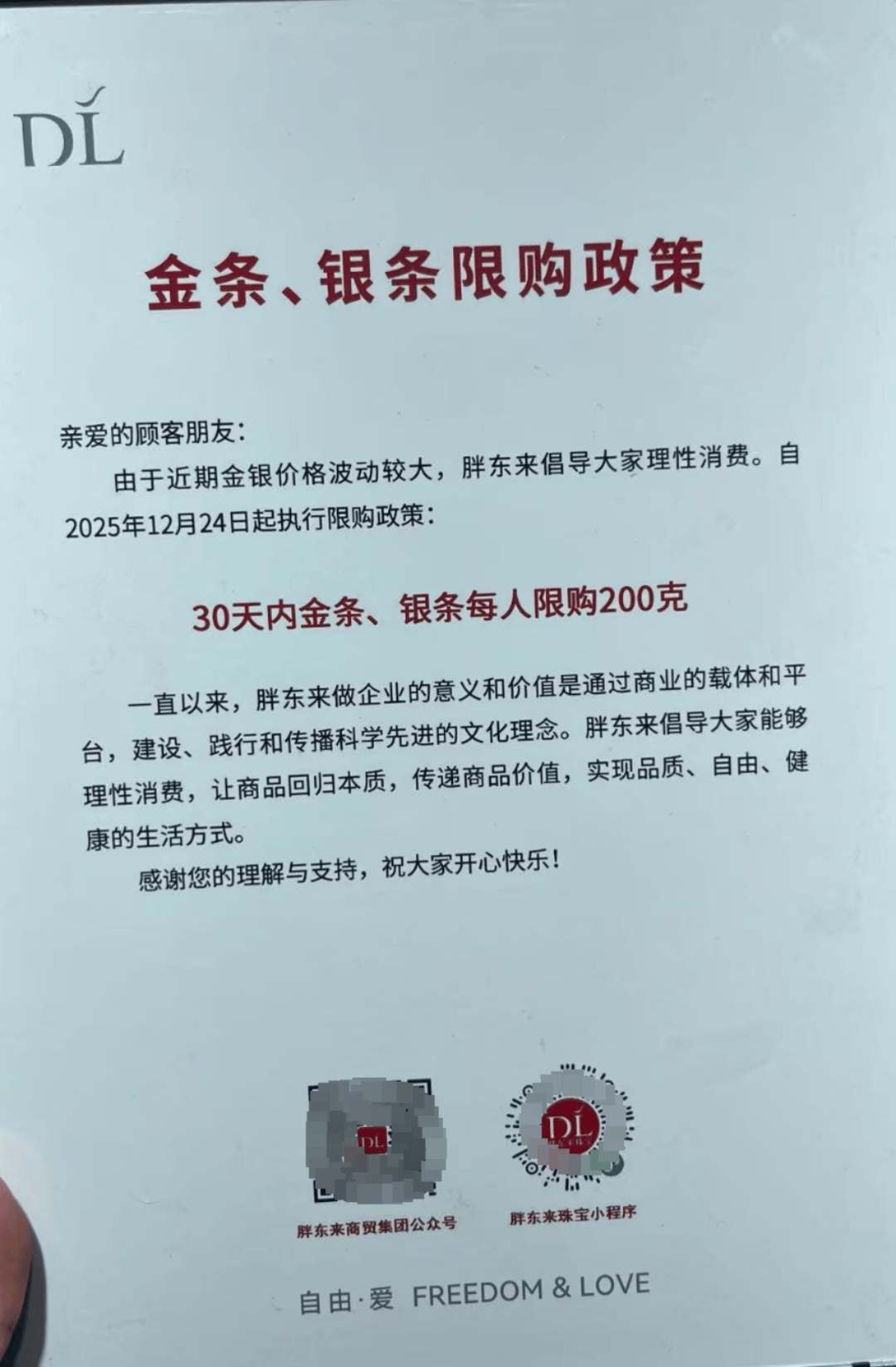
Core Insights - The surge in consumer interest at the Pang Donglai jewelry counter is driven by its transparent pricing mechanism, with a flat processing fee of only 25 yuan, contrasting sharply with traditional gold stores where fees can exceed 100 yuan per gram [1][5][6] Group 1: Consumer Behavior - Consumers from various provinces, including Jiangsu, Beijing, and Xi'an, are willing to wait for hours to purchase gold, indicating a strong demand for the products offered by Pang Donglai [1][5] - Many customers express that despite the long wait times, the transparent pricing and high value for money make the experience worthwhile, as local gold stores often charge significantly higher processing fees [5][6] Group 2: Pricing Strategy - Pang Donglai's pricing strategy includes a one-price system for processing fees, with many products having no processing fee at all, which is a significant departure from the traditional model where fees are charged per gram [6][10] - The company also displays the purchase price on the tags, enhancing transparency and allowing consumers to understand the cost structure better [6][10] Group 3: Appointment and Resale Market - Due to the increasing customer flow, Pang Donglai has implemented an appointment system for purchasing gold, with the first batch of appointment numbers selling out in under 10 seconds each morning [9][10] - The rise of a resale market has emerged, where resellers use multiple accounts to secure appointment numbers and charge a fee for their services, prompting the company to consider stricter regulations to ensure fair access for regular consumers [10][11] Group 4: Brand Trust and Marketing Strategy - The success of Pang Donglai is attributed to its commitment to transparency and building brand trust, which has created a "safe island" for consumers, simplifying their purchasing decisions [11] - The company's marketing approach is characterized as "anti-marketing," focusing on honesty and transparency, which has transformed the traditional sales model into one that emphasizes trust and reliability [11]
2026年,钱从哪挣?
创业家· 2025-12-25 10:15
Core Insights - The article discusses the importance of finding new revenue sources for businesses in 2026, emphasizing the need for companies to adapt to changing market conditions and explore international opportunities [2] Group 1: Value Chain and International Expansion - Companies are facing insufficient domestic demand, leading to increased competition and reduced profits, prompting the need for international expansion [2] - The concept of "going overseas" has evolved from merely exporting products to relocating entire value chains, as exemplified by Miniso, which engages with its overseas customers and establishes a brand presence [2] - Leading companies are not just building factories abroad but are also integrating their supply chains to ensure operational efficiency, as seen with Tesla's Shanghai factory, which relies on a robust local supply chain [3] Group 2: Leveraging Unique Advantages - Businesses are finding success in international markets by leveraging unique advantages such as cost and product innovation [3] - For instance, some manufacturers in Yiwu are capitalizing on higher overseas prices by selling on cross-border platforms, while companies like Mech-Mind Robotics are innovating with advanced industrial robots [3] Group 3: Building Long-Term Trust - Establishing long-term trust in unfamiliar markets is crucial, as demonstrated by the success of companies like Pang Donglai, which focuses on customer service and employee satisfaction to foster loyalty [4][5][6] - By ensuring employees are well-compensated and respected, companies can enhance customer interactions and feedback, leading to improved business outcomes [6] Group 4: Meeting Evolving Consumer Needs - The article highlights a shift in consumer behavior towards seeking better experiences, with examples of services like travel photography gaining popularity among retirees [6] - As traditional mass-market opportunities decline, businesses are encouraged to focus on niche markets and personalized services that resonate with consumers' aspirations for a better life [6][7] Group 5: Strategic Planning for 2026 - Companies are urged to engage in strategic planning to navigate the complexities of the evolving market landscape, emphasizing the importance of aligning business strategies with macroeconomic trends and consumer demands [7][8]



雀巢新帅谈裁员1.6万:把资源更多投入到销售团队丨消费参考
2 1 Shi Ji Jing Ji Bao Dao· 2025-12-25 08:19
Group 1 - Nestlé plans to cut approximately 16,000 jobs over the next two years, which is about 6% of its total workforce, including 12,000 white-collar positions across all functions and regions [1] - The new CEO, Philipp Navratil, indicated that the layoffs are part of a broader efficiency evaluation, particularly focusing on marketing processes and reallocating resources to sales teams [2][3] - The layoffs are a response to declining growth, with Nestlé's total sales for the first nine months of the year at 65.9 billion Swiss francs, a year-on-year decrease of 1.9% [4] Group 2 - The Greater China region has been a significant drag on Nestlé's performance, with an organic growth rate of -10.4% in Q3, continuing a downward trend from Q2 [5] - The company is working on rebuilding its team in China, emphasizing the need for improved innovation and targeted strategies in the rapidly growing e-commerce channel [5]


从宝洁架构调整,看品牌人未来职业发展方向
3 6 Ke· 2025-12-25 01:54
Core Insights - The article discusses the evolution of brand management, highlighting the initial establishment of the brand manager role at Procter & Gamble (P&G) and its significance in systematic brand development [1][3][4] - It contrasts the original intent of brand management with the current trend where many companies are downsizing or eliminating brand departments, leading to a perception of brand roles as expendable [5][6][7] - The article emphasizes the need for a new approach to brand management that integrates comprehensive skills and responsibilities, as demonstrated by P&G's recent restructuring into a "Brand Growth Department" [15][16][21] Group 1: Historical Context of Brand Management - In 1931, Neil McElroy proposed the brand manager system at P&G to address inefficiencies in brand advertising and sales, leading to a structured approach to brand management [1][3] - The brand manager's role was defined as akin to a small CEO, responsible for all aspects of brand development and marketing [3][4] - P&G's systematic approach to brand management has been a key factor in its success, establishing it as a leader in the branding industry [3][4] Group 2: Current Trends and Challenges - Recent layoffs in various companies, including JD.com and Lenovo, have targeted brand and marketing departments, indicating a shift in how brands are perceived within organizations [5][6] - Many brand departments have become mere "decorative" entities, lacking real influence on business operations and often being the first to face cuts during financial downturns [6][7] - The article argues that the focus on short-term profitability has led to a neglect of the deeper, strategic aspects of brand management [9][10] Group 3: Future Directions in Brand Management - P&G's creation of the "Brand Growth Department" signifies a shift towards integrating brand management with business growth strategies, emphasizing the need for leaders who can navigate both marketing and operational challenges [15][16][21] - The new role requires skills in consumer insight, product innovation, and integrated marketing strategies, moving away from traditional siloed functions [18][20] - The article suggests that the future of brand management lies in developing leaders who can oversee the entire brand lifecycle and drive growth through a holistic understanding of the market [22][23]


8点1氪:官方回应吸毒记录封存相关问题;强生爽身粉致癌案判赔女子约110亿元;俞敏洪敲定东方甄选接班人
36氪· 2025-12-25 00:26
Group 1 - The revised Public Security Administration Punishment Law will take effect on January 1, 2026, and has garnered significant attention from media and the public regarding Article 136 [4][5] - The law's revision process included public consultations during its initial and second readings in August 2023 and June 2024, respectively, with specific provisions for sealing records of minor offenders [5][6] Group 2 - The law's provisions for sealing public security violation records apply to minors, covering various types of violations [5] - The law aims to address public concerns and clarify the implications of sealing records for individuals involved in minor offenses [4][5] Group 3 - The law's revisions reflect a broader trend in legal reforms aimed at balancing public safety with the rehabilitation of young offenders [5][6] - The law's implementation is expected to influence public perception and legal practices surrounding juvenile offenses in China [4][5]




8点1氪|官方回应吸毒记录封存相关问题;强生爽身粉致癌案判赔女子约110亿元;俞敏洪敲定东方甄选接班人
3 6 Ke· 2025-12-24 23:57
Group 1 - The revised Public Security Administration Punishment Law will take effect on January 1, 2026, with a focus on sealing records of minor offenses, particularly for minors [2][3] - The law aims to prevent the lifelong consequences of a single punishment, providing a framework for sealing minor offense records, which will still be recorded but not publicly accessible [4][5] - The law clarifies the relationship between the Public Security Administration Punishment Law and the Criminal Law, stating that criminal acts must be prosecuted under criminal law, while non-criminal acts are subject to administrative penalties [6][7] Group 2 - The sealing of drug-related records is included in the law, emphasizing that drug use is treated as a violation rather than a crime, with a strong focus on rehabilitation and prevention of drug abuse [8][9] - The government has established a comprehensive system for drug rehabilitation, including voluntary and mandatory rehabilitation measures, and emphasizes the importance of confidentiality regarding the personal information of drug users [9][10] Group 3 - The law has received no objections since its announcement on June 27, 2025, indicating broad acceptance and support from the public [3][4] - The law's provisions are designed to ensure that all citizens are treated equally under the law, reinforcing the principle of equality before the law [2][5]
超市推火锅堂食再拼“餐饮+”
Bei Jing Shang Bao· 2025-12-23 16:04
Core Insights - The retail transformation is cyclical, with supermarkets refocusing on in-store dining, particularly hot pot services, as a response to e-commerce and community fresh food competition [1][3] - Supermarkets are leveraging their fresh supply chain advantages to offer a full range of hot pot ingredients, indicating a shift in traditional supermarket strategies [1][4] Group 1: Hot Pot Offerings - Recent observations show that Hema and Yonghui supermarkets have launched hot pot dining options, with prices ranging from 78 to 88 yuan for set meals and 3 to 15 yuan per ingredient [3][5] - The introduction of self-service hot pot at Yonghui is currently limited to select locations, with a focus on enhancing the in-store dining experience [3][6] Group 2: Consumer Experience and Engagement - The shift from selling products to selling experiences is evident, as supermarkets seek to innovate and expand service boundaries [4][6] - The hot pot dining experience is seen as a way to attract customers back to physical stores, with potential for increased impulse purchases during visits [6][7] Group 3: Strategic Considerations - Supermarkets are advised to pilot their dining initiatives in high-traffic locations and focus on specific categories like hot pot to refine their models before broader implementation [7][8] - The success of this dining integration depends on metrics such as repeat purchase rates, overall sales growth, and supply chain efficiency [7][8] Group 4: Challenges and Opportunities - The integration of dining and retail operations presents both challenges and opportunities, requiring careful management of space and customer experience [8] - The hot pot segment is viewed as a promising area for growth, combining family dining and social interaction, but it also necessitates adaptation to flexible production and rapid response in product development [7][8]