
圣农发展

Search documents
告别泡沫叙事:九大关键词看懂2025中国消费
Xin Lang Cai Jing· 2026-02-20 02:07
Group 1: Chinese Consumption Market Trends in 2025 - The Chinese consumption market in 2025 is characterized by both chaos and transformation, moving away from bubble narratives towards efficiency, value, and trust as core competitive elements [1] - The delivery service battle resulted in a loss of at least 30 billion yuan in Q2 2025, significantly impacting small businesses and delivery personnel [3][4] - The pre-prepared food crisis highlighted a significant trust gap between consumers and the food industry, leading to a call for national standards [6][8] Group 2: Delivery Service Battle - The delivery service war was ignited by JD's aggressive entry into the market, leading to a fierce subsidy competition among major players like Meituan and Alibaba [3][4] - The battle resulted in a dramatic increase in active users for JD and Meituan, but ultimately led to unsustainable financial losses [3][4] - The strategic rationale for giants like Alibaba and JD was to cultivate consumer habits of ordering food through their platforms, thereby enhancing their core e-commerce businesses [4] Group 3: Pre-prepared Food Crisis - The pre-prepared food crisis began with a public dispute involving a well-known restaurant, revealing deep-seated issues in the food industry's industrial transformation [6][7] - The crisis underscored the clash between consumer rights and the interests of food enterprises, with consumers demanding transparency [8][9] - The industry is expected to undergo significant regulatory changes, with new national standards being proposed to ensure consumer awareness and rights [9][10] Group 4: Discount Retail Trends - The discount retail sector in China is experiencing rapid expansion, with new players entering the market and established brands accelerating their store openings [11][12] - Hard discount models are thriving due to their focus on private label products and supply chain efficiency, while soft discount models are struggling [11][13] - The competition has shifted from price wars to a broader focus on supply chain efficiency and operational capabilities [13][14] Group 5: Health and Wellness Trends - The market for health and wellness products, particularly those related to traditional Chinese medicine, has surpassed 370 billion yuan, indicating a growing consumer interest in health [18][19] - The product offerings in this sector are diversifying, with new ingredients being added to the list of approved health foods [19][20] - Retail channels are increasingly focusing on health products, with major retailers launching specialized health product lines [22] Group 6: International Brands Selling Out - In 2025, several international brands, including Starbucks and Burger King, opted to sell their Chinese operations to local partners, indicating a shift in market strategy [23][24] - The decline in market share for these brands is attributed to their inability to adapt to the fast-paced and competitive Chinese market [24][25] - Successful local brands have demonstrated the potential for growth and profitability in the Chinese market, contrasting with the struggles of foreign brands [26] Group 7: Middle-Class Consumer Sentiment - The middle-class consumer segment in 2025 is experiencing significant discontent, driven by rising prices and perceived value discrepancies [28][30] - This demographic is increasingly critical of brands that do not meet their expectations for quality and value, leading to a reevaluation of brand loyalty [30][31] - The notion of the middle class is being challenged, with discussions around its existence and relevance in the current economic landscape [30] Group 8: Weight Management as a National Strategy - 2025 has been designated as the "Year of Weight Management," with government initiatives promoting healthy eating and lifestyle choices [33][34] - The market for weight management products is projected to reach 326 billion yuan, with a significant increase in demand for functional foods [35][36] - The trend reflects a broader societal shift towards health consciousness, influencing various sectors including food and fitness [36] Group 9: IPO Activity in Hong Kong - The Hong Kong stock market saw a surge in IPO activity in 2025, with 111 companies raising a total of 250.56 billion yuan, surpassing previous expectations [37][38] - The consumer sector was a major focus, with numerous retail and consumption-related companies going public [38][39] - The trend of dual listings (A+H shares) is gaining momentum, indicating a strategic move by companies to enhance their market presence [40]
300万厨师缺口!用工成本飙至35%,炒菜机器人成餐饮老板的救命稻草?
机器人大讲堂· 2026-02-19 13:26
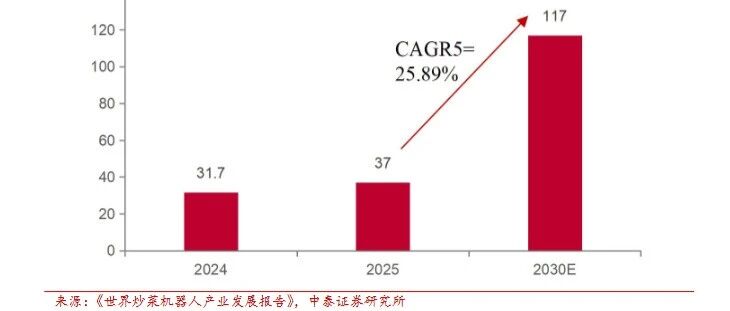
曾几何时,凌晨两点的餐饮老板还在朋友圈疯狂发招聘:"招厨师,月薪8000+包吃住,熟手优先!",可翻 遍通讯录,连个靠谱的配菜工都招不到;旺季后厨忙到飞起,厨师一句"不干了",门店直接停摆;好不容易 招到人,培训半个月就离职,65%的员工流动率让老板成了免费"厨师培训班校长"。 武汉的董泽军就曾被厨师愁到夜不能寐,3个厨师占了门店一半人力成本,还消极怠工,口味忽好忽坏,老 顾客投诉不断,生意直接下滑30%。直到他把两台炒菜机器人请进后厨,一切都变了。一个员工能同时操作 两台机器人,2-3分钟出一锅菜,酸辣豆芽炒出了老厨的功力,顾客吃了半年还回头,后厨再也不用为招人 发愁。 这不是个例,而是整个餐饮行业的缩影。当用工成本居高不下,300万厨师缺口悬在头顶,当78%的餐饮企 业旺季缺人超30%,炒菜机器人不再是"科技噱头",而是餐饮人活下去、跑起来的 必答题 。 中泰证券最新研报显示,2025年餐饮行业用工成本占比已达28.6%,合规化后将突破35%,而智能炒菜机器 人的渗透率正加速提升,2030年市场规模将达117亿,团餐快餐赛道2028年渗透率将冲50%。一场由机器人 掀起的餐饮效率革命,已经全面打响。 01 ...

马年,盛产首富和科技狂人
吴晓波频道· 2026-02-17 00:29
Core Viewpoint - The article discusses the complex narratives of three prominent Chinese entrepreneurs born in the Year of the Horse, highlighting their distinct paths and contributions to China's industrial upgrade amidst economic transformations. Group 1: Wang Jianlin - Wang Jianlin, once a three-time richest man in China, has faced significant challenges, including asset sales and debt issues, reflecting the broader real estate cycle in China [3][6][7] - He has sold over 85 Wanda Plaza locations and exited various sectors, including sports and film, to manage debt and maintain cash flow [7] - Despite his struggles, Wang demonstrates resilience and strategic asset management to preserve Wanda's credit standing [6][7] Group 2: Zhong Shanshan - Zhong Shanshan, founder of Nongfu Spring, became the richest man in China for the fourth time, with a net worth of 530 billion yuan, setting a new record [8][9] - He faced public scrutiny but actively addressed it through media engagement and product innovation, launching "green bottle" water to capture market share [9][10] - Zhong's wealth is primarily derived from the bottled water business, which benefits from a stable cash flow and high profit margins, contrasting with the volatility of tech sectors [10] Group 3: Wang Chuanfu - Wang Chuanfu, founder of BYD, represents the rise of Chinese electric vehicle manufacturers, with BYD's sales projected to reach approximately 2.26 million units in 2025, a 27.86% increase year-on-year [14] - The shift in perception of BYD from being underestimated to recognized as a strong competitor by global leaders like Elon Musk illustrates the changing dynamics in the EV market [13][14] - Wang's leadership reflects China's ambition to reshape global supply chains and technology leadership in the automotive sector [16] Group 4: Demographic Insights - The article notes that 47.5% of the Horse zodiac billionaires are aged 57, representing a significant portion of the wealth accumulation in sectors like new energy and technology [17] - The younger generation of entrepreneurs, born in 1978, is characterized by their digital-savvy approaches, leveraging the internet and technology for business growth [24] - The article highlights the generational divide, with older entrepreneurs having built wealth in traditional industries, while younger ones thrive in digital and tech-driven markets [24][25]



福建公务员靠“做鸡”,干出351亿的商业帝国
Sou Hu Cai Jing· 2026-02-14 13:38
要说起吃鸡,中国在全世界当属第一大消费国。 一年下来,中国人能吃掉约70亿只白羽肉鸡!而这些白羽肉鸡从哪里来? 福建一家企业一年出栏8亿羽肉鸡,其生产的鸡肉占领了全球70%;在中国,则贡献近50%的产量。 这家企业就是福建圣农控股集团。 圣农集团因具备完整产业链而成为亚洲养鸡行业的龙头企业,一体化规模堪称全世界第一,市值一度达到了205亿元。 2025年圣农集团营收高达351.13亿,一只鸡撑起了一个商业帝国,造就了一个百亿富豪。 圣农集团是怎么一个企业? 它在中国白羽肉鸡市场占比最大,在养鸡领域是最大的上市公司。 不止如此,圣农集团把一只鸡开发得很彻底,生肉熟肉都在生产,甚至鸡血、鸡毛、鸡粪都利用了起来。 圣农集团最开始只是福建山坳里一个养鸡场,后来鸡肉业务量增大。 创始人傅光明考虑到人工杀鸡不卫生也不环保,国产杀鸡设备也存在一些卫生问题,便花30万美元购买了一套进口全自动的冻肉加工设备。 圣农在"装备"上一下子与同行(同行用的都是国产杀鸡设备)拉开了距离,意外撞开了现代化国际的大门。 因为购买进口设备,圣农集团吸引到了肯德基的注意。 当时肯德基准备落户福州,急需找到一个有质量保证且提供大量鸡肉的商家。 这 ...


炒菜机器人渗透率提升,助推餐饮品牌规模化扩张
ZHONGTAI SECURITIES· 2026-02-13 10:45
Investment Rating - The industry investment rating is "Increase" [2][18] Core Insights - The penetration rate of cooking robots is increasing, driving the scale expansion of restaurant brands. The cooking robot market is expected to grow significantly, with a projected market size of 3.17 billion in 2024 and 11.7 billion by 2030 [7][12] - Labor costs in the restaurant industry are rising, with the proportion of labor costs reaching 28.6% in 2025, potentially exceeding 35% due to minimum wage increases and social security regulations. The shortage of chefs is projected to reach 3 million by 2025, making cooking robots essential for improving operational efficiency [8][12] - Major companies are investing in cooking robots to enhance operational efficiency, with deployment expected to exceed 150,000 restaurant locations by 2027. Cooking robots can reduce meal preparation time from 5-10 minutes to an average of 2-3 minutes, improving efficiency by over 40% and reducing labor costs by 40-60% [15][16] Summary by Sections Industry Overview - The industry comprises 128 listed companies with a total market value of 4,540.967 billion [4] Market Trends - The cooking robot market is rapidly expanding, with applications primarily in community canteens, group meals, and fast food scenarios. By 2028, the penetration rate in group meals and fast food is expected to reach around 50% [12][15] Company Developments - Companies like Guoquan, JD, and Zhengda are actively investing in the cooking robot sector, with significant deployments already in place. For instance, Guoquan plans to invest in cooking robot companies and has launched new projects [16]
农林牧渔行业双周报(2026、1、30-2026、2、12):关注产能去化进程-20260213
Dongguan Securities· 2026-02-13 07:27
Investment Rating - The report maintains an "Overweight" rating for the agriculture, forestry, animal husbandry, and fishery industry [1][53]. Core Insights - The SW agriculture, forestry, animal husbandry, and fishery industry slightly underperformed the CSI 300 index, declining by 2.88% from January 30, 2026, to February 12, 2026, which is approximately 2.16 percentage points lower than the index [7][14]. - Among the sub-sectors, only the fishery sector recorded positive returns, increasing by 0.27%, while feed, breeding, planting, agricultural product processing, and animal health sectors all experienced negative returns, with declines of 1.36%, 2.02%, 4.45%, 4.8%, and 7.3% respectively [15][19]. - The overall price-to-book (PB) ratio for the industry is approximately 2.61 times, reflecting a slight decline in valuation, and is at about 58.7% of the historical average since 2006, indicating a relatively low historical valuation level [22][24]. Industry Important Data - **Pig Farming**: - The average price of the national external three-line pigs fell from 12.52 CNY/kg to 11.57 CNY/kg during the reporting period [25]. - The cost of corn and soybean meal slightly decreased, with corn priced at 2372.16 CNY/ton and soybean meal at 3164 CNY/ton as of February 12, 2026 [27]. - Profitability for self-bred pigs was reported at -98.32 CNY/head, while for purchased piglets, it was 53.1 CNY/head, both showing a decline compared to the previous week [31]. - **Poultry Farming**: - The average price of broiler chicks increased to 2.4 CNY/chick, while the price for layer chicks remained stable at 3.2 CNY/chick as of February 13, 2026 [33]. - The average price for white feather broilers decreased to 7.48 CNY/kg, with profitability reported at -0.2 CNY/chick, indicating a decline from the previous week [36]. Industry News - The report highlights that the breeding capacity of sows is expected to continue decreasing in 2025, leading to a gradual reduction in pig supply and a potential increase in pig prices in 2026, which may improve breeding profitability [53]. - The report emphasizes the importance of monitoring the capacity reduction and the expected profitability improvement, particularly for leading companies in pig farming and poultry sectors [53]. Company Highlights - Key companies to watch include: - Muyuan Foods (牧原股份, 002714): A leading pig farming company with cost and scale advantages. - Wens Foodstuff Group (温氏股份, 300498): A major player in both pig and poultry farming with strong cost control. - Haida Group (海大集团, 002311): A leading feed company expected to maintain steady market share growth. - Shengnong Development (圣农发展, 002299): A leader in the white feather broiler industry with a strong supply chain. - Reap Bio (瑞普生物, 300119): A leader in the animal health sector with a growing product matrix for pet health [54].
【山证农业】农业行业周报:猪价在旺季后或存回调压力
Xin Lang Cai Jing· 2026-02-11 10:34
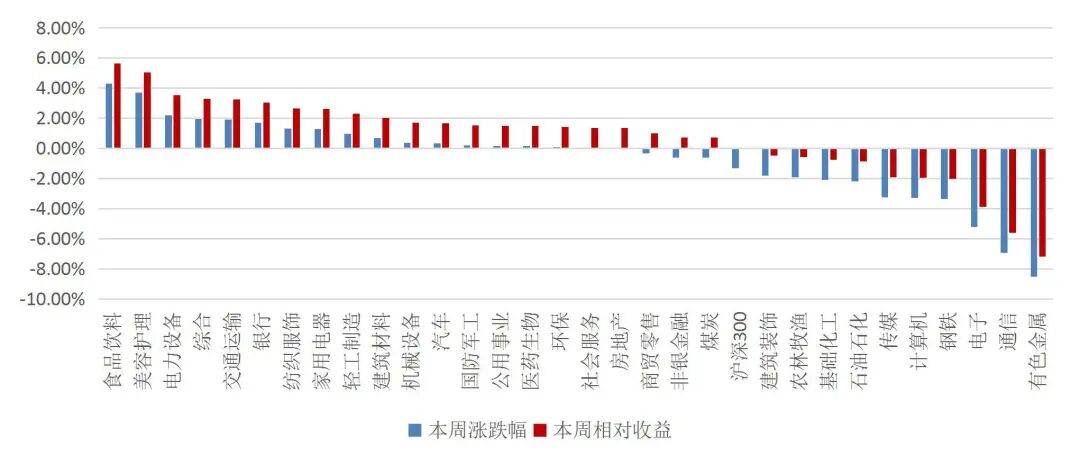
Market Overview - The CSI 300 index decreased by 1.33% during the week of February 2-8, while the agriculture, forestry, animal husbandry, and fishery sector fell by 1.92%, ranking 23rd among sectors [5] - The top-performing sub-industries included food and feed additives, broiler farming, pig farming, aquaculture, and grain and oil processing [5] Pig Farming Industry - Pig prices continued to decline, with self-breeding pig farming profits showing losses. As of February 6, the average prices for external three yuan pigs in Sichuan, Guangdong, and Henan were 11.65, 11.96, and 12.38 yuan/kg, reflecting week-on-week decreases of 4.12%, 1.64%, and 1.98% respectively [13] - The average pork price was 18.34 yuan/kg, down 1.45% from the previous week. The average wholesale price for piglets remained stable at 16.50 yuan/kg [13] - As of February 6, self-breeding farming profits were -38.09 yuan/head, a decrease of 63.19 yuan/head from the previous week, while profits from purchasing piglets were 91.42 yuan/head, down 32.71 yuan/head [13] Feed Industry - The competition in the feed industry has shifted from product competition to value chain competition, leading to accelerated industry consolidation. Market share is increasingly concentrated among leading companies with advantages in R&D, scale, and integrated services [2] - Haida Group is expected to benefit from this trend due to its efficient internal management, effective business incentives, and strong service advantages in the supply chain [2] Broiler Farming Industry - The price of white feather broilers decreased, with a weekly price of 7.53 yuan/kg, down 2.71%. The profit from broiler farming was -0.26 yuan/bird, a significant drop of 166.67% from the previous week [29] - The price of eggs was 8.2 yuan/kg, down 6.82% from the previous week [29] Aquaculture Industry - In the marine product sector, prices for sea cucumbers and shrimp remained stable at 120 yuan/kg and 320 yuan/kg respectively. In freshwater products, prices for various fish showed slight increases [45] - The international spot price for fish meal was 2239.77 USD/ton, unchanged from the previous week [45] Grain and Oil Processing - Grain prices showed mixed trends. As of February 6, corn was priced at 2368.43 yuan/ton (-0.33%), soybeans at 4072.11 yuan/ton (unchanged), and wheat at 2531.11 yuan/ton (+0.05%) [55] - The price of soybean meal was 3159.14 yuan/ton, down 1.19%, while the prices for both soybean oil and rapeseed oil decreased by 1.72% and 1.95% respectively [55]
大侠后宫:“当你拿胶卷机拍了古风片......”哈哈哈哈哈哈这什么阴间滤镜!!
猿大侠· 2026-02-11 04:11
转自:喵大白话 想当年北京还是北平的时候... Cr: xhs@Lynn 暂时不买一次性胶卷相机了 这次拍的质量太差了 感觉不如买个2手几百的胶卷相机好好拍 这次过于阴间了。。 昨天 17:02 上海 %公众号Θ · 廉颇送来荆条当新婚礼物 "挺好看的 亲" 这杯咖啡得溜边喝 Cr: dy@林. 1小时前·浙江 回复 ♡ 569 O 14 适合学生党的情感文案出现了 STER START FOR COLLECTION COLLECTION COLLECT and leaver keron CHER FER KEN KETY INC dy@不是 NEF 这样走不会吗 c 像是听了患者 叨叨一大段后的经验总结 这家孩子立定跳远年年满分吧? 看小图:能有多像? 放大看:确实挺像! 海师傅第二天荣登当地必吃榜第一 海鸥:光顾着咬忘记给你也来一泡了 dy@fang 航司这就有点不懂人情世故了哈哈哈哈哈 真喝了说明是真有问题 大人这招太高了哈哈哈哈哈 误入马达加斯加的企鹅拍摄现场 轻松实现一口吃三个的愿望 Cr: xhs@小白菜 圣农超大翅根 这对吗 跟我手指头一样小的翅根 哈哈哈哈哈哈哈哈哈 哈哈哈哈哈哈哈哈哈哈哈哈哈 ...

福建圣农发展股份有限公司 2026年1月份销售情况简报
Zhong Guo Zheng Quan Bao - Zhong Zheng Wang· 2026-02-10 23:11
Group 1 - The company achieved a sales revenue of 2.021 billion yuan in January 2026, representing a year-on-year increase of 40.48% and a month-on-month increase of 8.60% [1] - In the poultry breeding and processing segment, chicken sales revenue was 1.360 billion yuan, up 45.11% year-on-year, with a month-on-month change of -1.80% [1] - The deep-processed meat products segment generated sales revenue of 1.106 billion yuan, reflecting a year-on-year increase of 52.76% and a month-on-month increase of 16.72% [1] Group 2 - The sales volume for the poultry breeding and processing segment in January was 133,700 tons, a year-on-year increase of 42.79%, with a month-on-month change of -9.40% [1] - The sales volume for deep-processed meat products was 55,000 tons, showing a year-on-year increase of 54.48% and a month-on-month increase of 11.78% [1] - The company expects cumulative data for January and February to return to normal levels due to the impact of the Spring Festival holiday, which increased actual production days compared to the same period last year [2] Group 3 - The company continues to enhance profitability and stability through optimized high-value channels and product structures, alongside systematic improvements in cost control and production efficiency [2] - The comprehensive meat production costs in January further decreased year-on-year, supported by the company's integrated advantages across the entire industry chain [2]
福建圣农发展股份有限公司2026年1月份销售情况简报
Shang Hai Zheng Quan Bao· 2026-02-10 18:53
Sales Performance - In January 2026, the company achieved a sales revenue of 2.021 billion yuan, representing a year-on-year increase of 40.48% and a month-on-month increase of 8.60% [2] - The poultry breeding and processing segment generated chicken sales revenue of 1.36 billion yuan, up 45.11% year-on-year, but down 1.80% month-on-month [2] - The deep-processed meat products segment reported sales revenue of 1.106 billion yuan, reflecting a year-on-year increase of 52.76% and a month-on-month increase of 16.72% [2] Sales Volume - The sales volume for chicken in the poultry breeding and processing segment was 133,700 tons, marking a year-on-year increase of 42.79% and a month-on-month decrease of 9.40% [2] - The sales volume for deep-processed meat products was 55,000 tons, which is a year-on-year increase of 54.48% and a month-on-month increase of 11.78% [2] Operational Insights - The increase in actual production days in January due to the Spring Festival led to significant year-on-year fluctuations in sales volume and operational data, with expectations for cumulative data in January-February to return to normal levels [3] - The company continues to leverage its integrated industry chain advantages, focusing on refined cost control and systematic improvements in production efficiency, resulting in a further year-on-year decrease in comprehensive meat production costs [3] - Ongoing optimization of high-value channels and product structures has effectively enhanced the company's profitability resilience and stability [3]