长江存储

Search documents
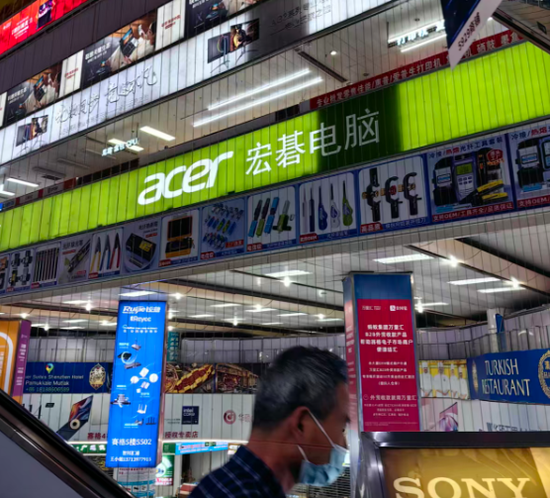
突传内存“闪崩”!记者实探华强北!商家:回调有限
Xin Lang Cai Jing· 2026-02-15 03:40
炒股就看金麒麟分析师研报,权威,专业,及时,全面,助您挖掘潜力主题机会! 春节假期逐渐临近,近期国内陆续传出内存价格"闪崩"等消息,在北美市场,存储巨头股价也出现高位 回调。 近日,证券时报记者实探华强北市场发现,内存现货市场价格有些许回调但幅度有限,炒作心态有所收 敛,但在闪存市场,部分品种出现"补涨"行情。 从供给侧来看,在数据中心需求虹吸效应下,国际存储原厂库存加速消耗,纷纷提高资本开支强度,并 谋求更大的交易话语权;同时,国产存储供应链也在加速扩产,甚至给出了涨价终结预测,供需博弈将 迈入新阶段。 炒作心态偏谨慎 临近春节,不少华强北柜台歇业。对于近期内存DDR4部分规格最高降价20%消息,多位商家向记者表 示实际回调很有限,"DDR4从去年底到现在涨了五六倍,现在只是跌个十几块、几十块,像DDR4有的 型号还是要1800元,比黄金都贵。" 还有商家表示,有的DDR规格都拿不到货,只能先给个报价,"如果电脑还能用,内存还是别换了。" "最近电脑内存(PC DDR)热度下去了,基本维持着去年12月份的价格。"存储代理商向记者表示,内 存价格回调主要是跟过年有关系,厂商回笼资金,但是有海外客户订单支持,所 ...

美国突然把阿里、百度、比亚迪拉入黑名单,转眼就紧急撤回
程序员的那些事· 2026-02-14 14:09
然而更魔幻的是,这份名单刚提交给《联邦公报》准备公示, 短短时间内就被官方紧急撤回 ,全程没有给出 任何理由,五角大楼对此拒绝置评。 该清单虽非直接制裁,但会禁止美国国防部与名单内企业开展合作。 前脚刚拉黑,后脚就撤销 , 动作仓促、 逻辑混乱,更像是一场 目的性极强的政治试探 。 外界普遍认为,此举是为特朗普两个月后访华提前造势施压,结果发现操作太草率,只能紧急 "撤回止损"。 2 月 14 日,美国五角大楼上演了一出让全世界哭笑不得的 光速变脸 。 美方先是突然发布新版 "中国军方企业清单",将 阿里巴巴、比亚迪、百度、药明康德、速腾聚创 等多家中国 企业列入,同时将长江存储从名单中剔除。 (参考:thenationalnews ) ...




美国防部1260H清单更新:78家中企被列入,12家被移除及影响解析
制裁名单· 2026-02-14 05:07
Group 1 - The U.S. Department of Defense released the latest "China Military Enterprises List" (1260H List) on February 13, 2026, including 78 Chinese companies while removing 12 others, marking the fifth update since its initial release in June 2021 [1] - The newly listed companies span critical sectors such as internet, new energy, semiconductors, aerospace, and telecommunications, including major firms like Alibaba, Baidu, Tencent, BYD, CATL, NIO, SMIC, Huawei, DJI, AVIC, and CASIC [1] - Alibaba has publicly stated that its inclusion is baseless, asserting it is not a military enterprise and may consider legal action in response [1] Group 2 - The 12 companies removed from the list include Changxin Storage (CXMT) and Yangtze Memory Technologies (YMTC), primarily involved in electronics, chemicals, and transportation [2] - Being listed does not trigger comprehensive sanctions directly, but it will significantly impact the operations of Chinese companies, particularly with the U.S. Department of Defense prohibiting new procurement contracts with listed companies starting June 30, 2026 [2] - The indirect effects include potential capital market volatility, restricted financing channels for Chinese companies, and challenges in global supply chains due to the risk of technology supply cuts and reduced cooperation from partners [2] Group 3 - Companies on the list may face further inclusion in more stringent U.S. sanctions lists, leading to stricter financial and technological restrictions [3] - The U.S. legislation requires consideration of including other companies from existing U.S. sanctions lists in future updates, potentially expanding the scope of sanctions [3] - The Chinese government has repeatedly opposed the U.S. approach, viewing the list as a continuation of efforts to curb China's technological and economic growth, while Chinese companies are actively seeking to mitigate the negative impacts through appeals and legal actions [3]




京仪装备股价异动,半导体设备板块景气度提升
Jing Ji Guan Cha Wang· 2026-02-14 02:56
Industry Overview - The semiconductor equipment sector has shown strong performance recently, with the semiconductor equipment concept index rising by 1.85% on February 13, making it one of the few sectors to gain that day [1] - According to the Semiconductor Industry Association, global semiconductor sales are projected to reach $791.7 billion by 2025, a year-on-year increase of 25.6%, with sales in China exceeding $200 billion for the first time, growing over 15% [1] - TSMC reported a year-on-year sales increase of 36.8% to NT$401.26 billion in January, and its capital expenditure plan for 2026 (ranging from $52 billion to $56 billion) indicates strong demand for upstream equipment [1] - Factors such as AI computing demand, an upturn in the storage chip cycle, and the penetration of advanced packaging technology are driving equipment demand [1] Company Fundamentals - Jingyi Equipment's revenue for Q3 2025 increased by 37.96% year-on-year to 368 million yuan, with a cumulative revenue growth of 42.81% for the first three quarters [2] - As of the end of Q3 2025, the company's contract liabilities reached 951 million yuan, and inventory increased by 190 million yuan to 2.349 billion yuan, indicating a robust order intake and significant delivery pressure [2] - The company's products are utilized in major domestic wafer fabs such as Yangtze Memory Technologies and SMIC, holding approximately 39% market share in the domestic semiconductor temperature control equipment sector (2024 data) [2] Financial Situation - On February 13, Jingyi Equipment experienced a net outflow of 45.377 million yuan in main funds, but the daily trading volume reached 1.087 billion yuan, with a turnover rate of 7.20%, indicating significant capital divergence [3] - The stock price exhibited considerable volatility on that day, with a high of 128.75 yuan and a low of 117.18 yuan, likely influenced by pre-holiday risk aversion and profit-taking [3] Stock Price Situation - February 13 marked the last trading day before the Lunar New Year, with the A-share market experiencing a general decline (Shanghai Composite Index down 1.26%), as funds shifted from high-position sectors like photovoltaics and small metals to defensive sectors such as semiconductor equipment and military [4] - As a leading player in the semiconductor equipment niche, Jingyi Equipment benefits from the strengthening of domestic substitution logic, with a year-to-date increase of 26.64%, indicating a potential short-term rebound due to technical factors [4] - The recent stock price fluctuations of Jingyi Equipment are attributed to multiple factors, including improved industry sentiment, robust company orders, capital market dynamics, and shifts in market style [4]
强力新材2026-2027年半导体及先进封装材料产线建设计划披露
Jing Ji Guan Cha Wang· 2026-02-14 01:46
Company Project Progression - Strongly New Materials (300429) plans to launch several production lines between 2026 and 2027, focusing on semiconductor materials and advanced packaging [1][2] - In 2026, the company will begin mass production of KrF photoresist materials and related components, with partners including SMIC and Yangtze Memory Technologies [1] - The first phase of the semiconductor mask production line (130-40nm) is set to be fully operational in 2026, while the second phase (40-28nm) will start construction in the same year [1] - The first phase of advanced packaging materials (PSPI) with an annual capacity of 259 tons is expected to be launched in 2026, having already passed validation by Shenghe Jingwei and integrated into Huawei's Ascend supply chain [1] - PCB photoresist and semiconductor-grade PAG from the Nantong base will reach full production in 2026, while environmentally friendly photoresists and UV-LED resin from the Changzhou base are also planned for 2026 [1] Future Developments - In 2027, the second phase of the semiconductor mask production line (40-28nm) is expected to be completed and operational [2] - The second phase of advanced packaging materials (PSPI) with an annual capacity of 136.2 tons is planned for 2027, increasing total capacity to 395.2 tons per year [3] - OLED materials, through a joint venture with Strongly Yulei, aim for mass production of HT/ET organic light-emitting materials in 2027, with a collaborative evaluation laboratory established with LG Chem [3] - The release of these capacities is highly dependent on customer validation results, particularly for PSPI, KrF photoresist, and mask products [3] - 2026 is characterized as a year of concentrated capacity release for semiconductor materials and advanced packaging, while 2027 will focus on advanced processes of 28nm and above, as well as the OLED sector [3]

任泽平带你看前沿科技:2026研学计划
泽平宏观· 2026-02-13 16:33
Core Insights - The article emphasizes the importance of practical learning experiences in cutting-edge technology sectors, aiming to connect entrepreneurs with leading companies and experts in the field [12][24]. - It outlines a series of scheduled visits and closed-door research meetings focused on artificial intelligence and emerging industries, highlighting the commitment to exploring investment opportunities and fostering innovation [5][8][24]. Schedule Overview - The schedule includes visits to major tech companies and universities, such as NVIDIA, Tesla, Stanford University, and Berkeley, from November 4 to November 11, 2025 [7]. - Other notable events include closed-door research meetings in Suzhou and Shenzhen focusing on the power of AI in China, scheduled for March 27-28 and May 22-23, 2025, respectively [8][9]. Learning Objectives - The program aims to provide deep insights into the strategic decisions and technological advancements of leading firms, enabling participants to gain firsthand knowledge of the industry's evolution [12]. - It focuses on three key dimensions: trends in cutting-edge technology, the ecosystem of emerging industries, and innovative business strategies, facilitating a comprehensive understanding of market dynamics [12]. Participant Feedback - Participants have expressed that the program enhances their understanding of macroeconomic trends and provides valuable networking opportunities with industry leaders [46][47]. - The learning experience is described as transformative, allowing entrepreneurs to refine their business strategies and adapt to changing market conditions [46][48].

内存价格暴涨90%创历史,AI算力引爆存储芯片“超级周期”,这三大核心或迎新机遇!
Jin Rong Jie· 2026-02-13 07:19
据《东方财富研究中心》2月13日消息,近日Counterpoint发布的《2月内存价格追踪报告》,截至2026 年第一季度,内存价格环比上涨80%—90%,本轮上涨的主要推手是通用服务器DRAM价格大幅攀升。 以服务器级内存为例,64GB RDIMM合约价已从去年第四季度的450美元,飙升至第一季度的900美元 以上,且二季度有望突破1000美元关口。 Counterpoint高级分析师Jeongku Choi 指出:"存储器行业盈利水平预计将达到前所未有的高度。2025年 第四季度,DRAM营业利润率已达到60%区间,这是通用DRAM利润率首次超过HBM。2026年第一季 度,DRAM利润率将首次突破历史峰值。" 此外,TrendForce集邦咨询最新数据显示,受惠于AI浪潮的推升,存储器与晶圆代工产值均将在2026年 同步创下新高。存储器产业受供给吃紧与价格飙升影响,产值规模大幅扩张至5516亿美元。尽管晶圆代 工产值同步创下2187亿美元的新高纪录,但存储器产值规模已攀升至晶圆代工的2倍以上。 TrendForce集邦咨询表示,随着Inference(推理)AI应用场景扩大,市场对高效能储存设备的需求远 ...
未知机构:在供给短缺持续的背景下上调存储行业预测该股已调入MS-20260213
未知机构· 2026-02-13 02:30
Summary of Conference Call Notes Company and Industry Involved - The notes primarily focus on the semiconductor industry, specifically the memory storage sector, with a particular emphasis on Micron Technology (美光) and its market dynamics [1][2][3][4][5][6][7][8][9]. Core Points and Arguments 1. **Supply Shortage and Price Predictions** - The supply shortage in the memory industry has led to an upward revision of forecasts, with Micron being added to the MSCI index and receiving a strong buy rating [1] - Memory product pricing has already begun to rise since Micron's earnings guidance, indicating that the supply shortage affects nearly all downstream applications [1] - As long as AI demand remains strong, concerns regarding HBM4 uncertainty, disruptions in China, and capital expenditure worries are not seen as major constraints [1] 2. **Pricing Trends and Market Dynamics** - Current spot prices are on an upward trend, with mainstream contract prices potentially lagging behind spot prices by a significant margin [2] - Buyers who failed to lock in prices are purchasing at an average price close to several dollars per GB, reinforcing the likelihood of mainstream prices rising [2] - Micron's guidance for the second fiscal quarter suggests a revenue increase, with DRAM and NAND average prices expected to rise [2] 3. **Earnings Projections** - The market consensus expects Micron's peak earnings around the end of 2027, with projected earnings per share (EPS) of approximately $12, achievable with a 20% to 25% increase in average selling prices [3] - There is a possibility that Micron's EPS could exceed consensus expectations due to higher pricing levels [3] - The current valuation is considered attractive, with a potential EPS of $48 for 2026, suggesting a low valuation multiple for a cyclical company [3] 4. **Cash Flow and Financial Health** - Micron could generate cash flow equivalent to about 10% of its current enterprise value, assuming a quarterly profit of around $10 billion [4] 5. **Supply and Demand Dynamics** - The sustainability of the cycle depends on whether the supply-demand gap can be quickly closed, which is challenging given the high growth in AI demand [5] - Current production inventories are low, and key customers are paying premiums for early delivery, indicating strong demand [5] - Supply improvements are expected but will be gradual, with significant capacity expansions not anticipated until 2027 [5] 6. **AI-Related Revenue Growth** - The memory industry needs to support nearly $200 billion in new AI-related revenue over the next 12 months, which is greater than the entire logic chip market in 2020 [6] - Concerns about Chinese memory manufacturers are noted, as their market share remains low and they face technological and supply chain constraints [6] 7. **Market Signals and Risks** - Early signs of demand reduction are emerging, particularly from Qualcomm's comments regarding Chinese Android customers adjusting shipment plans due to memory shortages [7] - HBM pricing dynamics are acknowledged, with DDR5 prices making it a more attractive market, and concerns about Micron's HBM4 progress are not expected to negatively impact current earnings [7] 8. **Valuation Adjustments** - The target price for Micron has been raised to $450, based on an increased cross-cycle EPS estimate and a maintained valuation multiple of 25x [8] - The new EPS estimate reflects a significant increase from previous assumptions, indicating a strong outlook for the company [8] 9. **Future Earnings Estimates** - Projected revenues for 2025-2027 are estimated at $34 billion, $58.7 billion, and $86.6 billion, with net profits expected to rise significantly during this period [9] - The company is expected to see substantial growth, especially after being added to the MSCI index, indicating a potential for significant stock price appreciation [9] Other Important but Possibly Overlooked Content - The notes highlight the importance of AI demand in shaping the future of the memory market and the potential for significant earnings growth driven by this sector [5][6][7] - The competitive landscape is influenced by technological advancements and supply chain constraints, particularly for Chinese manufacturers, which may limit their ability to impact global supply significantly [6][7] - The overall sentiment from the analysis is bullish, with a focus on the long-term growth potential of Micron and the memory industry as a whole, despite short-term fluctuations [3][4][5][6][8]
电子气体-半导体需求有望加速扩张-国产替代或重塑供给格局
2026-02-13 02:17
Summary of Conference Call on Electronic Gases Industry Industry Overview - The electronic gases market in China is projected to grow from 9.2 billion RMB in 2016 to 19.5 billion RMB by 2024, driven by global semiconductor expansion and technological advancements [2][4] - The global wafer fab equipment spending is expected to reach 374 billion USD from 2026 to 2028, with China leading at 94 billion USD due to policy support, significantly increasing the demand for high-purity electronic gases, especially specialty gases [2][5] Key Insights and Arguments - The complexity of etching processes is increasing geometrically due to advancements in technology, leading to a significant rise in the consumption of high-purity fluorocarbon specialty gases [2][6][7] - By 2030, the market size for specialty gases in China's semiconductor sector is expected to soar from 7.9 billion RMB in 2024 to 39.4 billion RMB, indicating a long-term upward trend in the industry [2][9] - The overall electronic gases market in China, including other sectors, is projected to reach approximately 42 billion RMB by 2024, with bulk electronic gases market size expected to reach 28.8 billion RMB by 2030 [9][10] Competitive Landscape - The global specialty gases market is dominated by four major international players: Linde Group, Air Liquide, Taiyo Nippon Sanso, and Air Products, which hold over 70% of the market share [9][10] - Domestic companies have made significant progress in replacing mid-to-low-end products but still lag in high-end categories, covering only 20%-30% of the required categories for integrated circuit manufacturing [10][11] Policy Impact - Recent policies from the Ministry of Commerce, including restrictions on the export of key semiconductor materials, have increased compliance costs for cross-border procurement, prompting downstream wafer fabs to accelerate the validation of local suppliers [11][12] - These policies create opportunities for domestic companies with high-purity production capabilities to increase market share [11] Investment Considerations - The long-term outlook for China's electronic specialty gases industry is positive, supported by the expansion of wafer fabs, advanced processes, and the growth of 3D NAND technology [12] - Investors are advised to monitor companies like Guanggang, China Shipbuilding, and Jinghong, which have core competitive advantages [12] - Risks to consider include potential underperformance in wafer fab expansions, raw material supply risks, and the lengthy validation period for domestic replacements [12]
对话独角兽 | 英韧科技深耕国产存储:自主技术破局,AI 存力抢先机
Di Yi Cai Jing· 2026-02-12 11:04
Core Insights - Yingrun Technology has developed a series of products tailored for various AI scenarios and is proactively advancing PCIe 6.0 controller research to meet the future demands of high-density AI data center deployments [1][6] - The global storage chip market is experiencing structural expansion opportunities driven by explosive data growth due to AI technology, while also entering a critical phase of domestic substitution [1][4] - Despite progress in technology and products, domestic storage enterprises face multiple challenges in scaling production and achieving profitability [7] Company Overview - Yingrun Technology, established in 2017, focuses on independent research and innovation in storage technology, with core products including SSD controllers, solid-state drives, and various storage system solutions [1][3] - The company has launched 10 controller chips, covering consumer, industrial, and enterprise markets, achieving full-stack coverage from SATA to PCIe 5.0 in the enterprise SSD sector, with a maximum single-disk capacity of 64TB [3][4] Supply Chain Strategy - Yingrun Technology has adopted a strategy of deep integration with domestic supply chains, collaborating with upstream and downstream companies, including Yangtze Memory Technologies, to benefit from the increasing proportion of domestic chip procurement [4][6] - In 2024, the domestic module manufacturers' procurement ratio of domestic chips exceeded 55%, enhancing supply chain stability and mitigating geopolitical risks [4] Technological Development - The company is addressing the new requirements for storage performance, latency, and durability driven by AI applications by launching the "Dongting" series AI SSDs, featuring a flagship product with a random write latency as low as 4μs and a 4K random write performance of 1600K IOPS [6][7] - Yingrun Technology is exploring advanced process technologies and has laid out plans for PCIe 6.0 controller development to meet future AI data center needs [1][6] Industry Challenges - The domestic storage industry still faces technical shortcomings, with the yield rate of domestic DDR5 storage chips at approximately 65%, significantly lower than Samsung's 85% [5] - The transition from laboratory to mass production and from mass production to profitability presents significant challenges, particularly in high-reliability AI storage scenarios [7] - Achieving compatibility and long-term reliability in the enterprise storage market remains a barrier for domestic products to enter core data centers [7]